
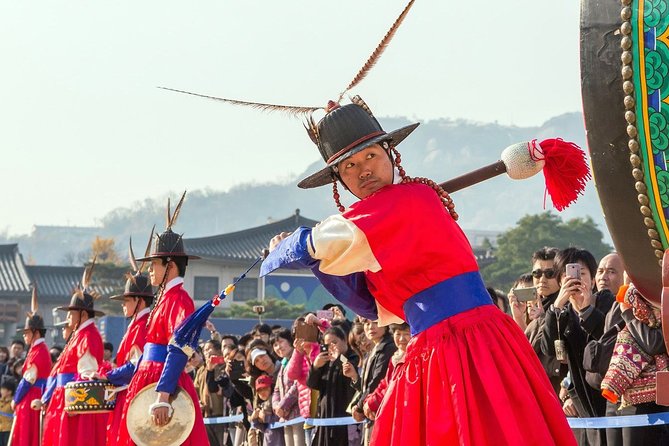
Reviewed · GYEONGBOKGUNG PALACE TOURS
Half day Morning Seoul City Tour(Temple & Gyeongbok Palace)
Gyeongbokgung Palace is the star here, especially if you arrive in time for the royal guard-changing ceremony at Gwanghwamun Gate. In four hours, you move from a working Buddhist temple to a Joseon royal court, then into a museum that explains ordinary Korean life. It is a smart first look at Seoul’s past.
I like the 8:30 am hotel pickup, which removes the morning scramble across a huge city. I also like the finish in Insadong, where you can continue on foot among tea houses, galleries, crafts, and restaurants. The trade-off is pace: the tour covers a lot, and the ginseng museum stop can feel less useful than extra time at the palace.
Key points to know before booking
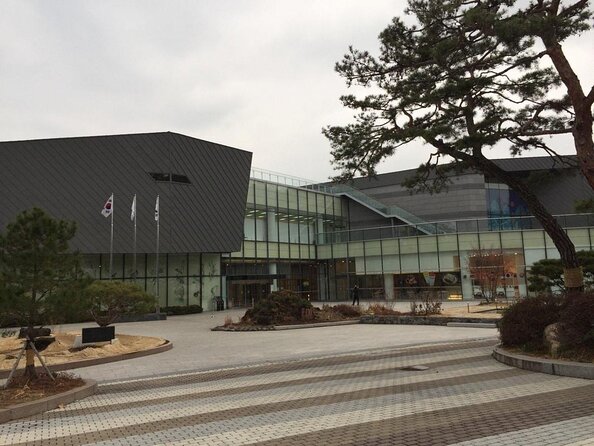
- The palace ceremony is the morning highlight: You may see the guards change at Gwanghwamun Gate, but rain can cancel it.
- Four major cultural stops fit into four hours: Jogyesa Temple, Gyeongbokgung Palace, the National Folk Museum, and a Blue House pass-by.
- Your guide shapes the experience: Cathy, Molly, Rose, KC, JJ, June, Lee, and Moon are praised for clear explanations, patience, and good local advice.
- The tour starts with hotel pickup and ends in Insadong: Separate drop-off back at your hotel is not included.
- The final ginseng stop is partly a shopping visit: It may interest you, but it takes time away from Seoul’s historic sights.
- Admission fees are covered: The listed price is $32 per person, with transportation and an English-speaking guide included.
Why this four-hour route works in Seoul
Seoul can feel hard to read at first. Glass towers, traffic, shopping streets, and old palace roofs all share the same city view. This morning route gives you a clear thread through that mix: Buddhist practice, royal government, daily life, modern politics, and traditional shopping.
The tour begins at 8:30 am, with pickup from your Seoul hotel. Transportation matters here. Gyeongbokgung, Jogyesa Temple, Gwanghwamun Square, and the Blue House area are close enough to connect, but walking between every stop would eat into your sightseeing time.
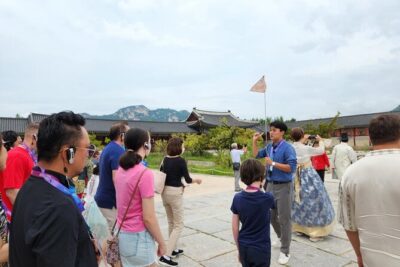
A professional English-speaking guide and driver handle the movement between locations. The group can reach up to 44 people, so do not assume you are booking a private outing. Some departures may feel smaller, and the guide may divide attention across different ages and interests.
The route is best understood as an introduction, not a full study of Seoul. You get about 30 minutes at Jogyesa Temple, one hour at Gyeongbokgung Palace, 45 minutes at the National Folk Museum, 15 minutes passing the Blue House, and 20 minutes at the ginseng museum. Add transitions and the timing is tight.
That structure suits you if you have only a morning, are visiting Seoul for the first time, or want a guided orientation before exploring alone. If you prefer to linger over palace architecture, take photographs at your own pace, or read every museum display, you may find a full-day tour or independent visit more satisfying.
More Korean Temple Tours in Seoul
- Seoul: Mt Seorak + Naksansa Temple or Nami Island Group Tour
★ 4.7 · 422 reviews - Best Things to Do – Half Day Seoul Trip (Seoul Palace & Temple)
★ 5.0 · 190 reviews - Mount Seorak and Naksansa Temple One Day Tour from Seoul
★ 4.5 · 167 reviews
Jogyesa Temple, a calm beginning downtown
Jogyesa Temple offers the sharpest contrast of the morning. It sits in central Seoul, surrounded by the city, yet the grounds provide a quiet pause before the palace portion begins.
The temple is associated with Korea’s living Buddhist tradition and was founded in 1935. That date matters because Jogyesa is not an ancient royal ruin. It is a functioning place of worship, and your guide can help you understand the difference between seeing a historic building and seeing a tradition still practiced today.
You have about 30 minutes here. That is enough for a first look at the temple grounds and an explanation of its role, but not enough for a slow visit or extended personal reflection. Keep your eyes open for architectural details, religious objects, and the way the temple sits beside modern downtown streets.
This is also a good place to start asking questions. Guides including Molly, Cathy, Rose, and JJ have been praised for explaining Korean history and culture in an approachable way. The strongest part of a guided temple visit is not simply identifying what you see. It is learning how the site fits into Korean society.
Gwanghwamun Square and the palace gate
Gwanghwamun Square provides the civic setting for the palace visit. It is a historic public space in the center of Seoul, known for its statues and its connection to Korea’s political and cultural life.
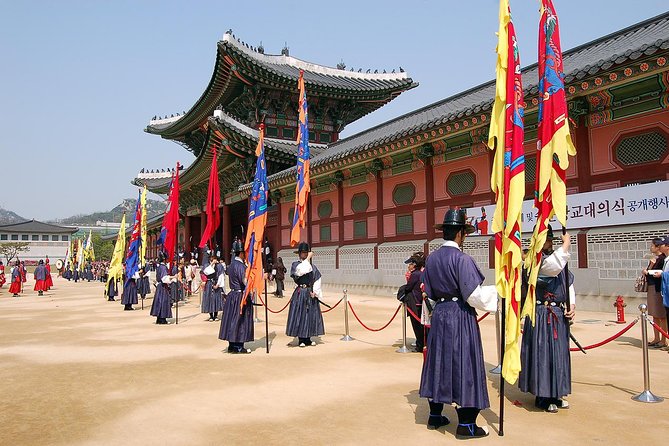
The palace gate, Gwanghwamun, is where the royal guard-changing ceremony takes place when conditions allow. The event marks the change of guards and their identity checks. It gives you a visual introduction to the Joseon court, with uniforms, formal movements, and a strong sense of ceremony.
Timing is important. The tour schedule is designed to reach the palace in the morning, and one guide, Cathy, is specifically praised for getting the group there early enough for good photographs and a clear view of the ceremony. Still, the ceremony is cancelled when it rains, so do not book this experience solely for that event.
Crowds are another practical issue. Gwanghwamun Gate is one of Seoul’s best-known photo spots. A guide who knows where to position the group can make the difference between seeing the ceremony and seeing the backs of other people’s heads. On hot or humid days, a well-managed route also helps you spend less time standing in the wrong place.
Gyeongbokgung Palace in one focused hour
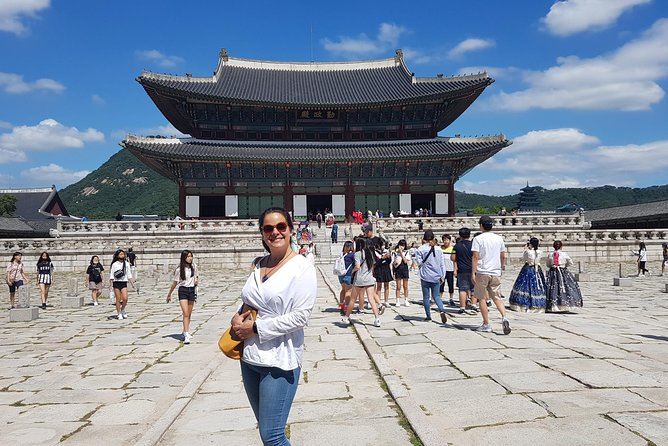
Gyeongbokgung Palace is the main historical stop. Built in the 14th century, it was the principal palace of the Joseon dynasty and remains one of Seoul’s defining sights.
You receive about one hour inside the palace grounds, with admission included. That is enough for a guided introduction to the major structures and the palace layout. It is not enough to inspect every courtyard, building, and detail. The grounds are large, and this is one place where the tour’s efficient pace becomes clear.
The value of the guide is strongest here. A palace can look like a sequence of handsome gates and tiled roofs if you visit without context. With an explanation of the Joseon dynasty, court life, architecture, and royal customs, the buildings become easier to understand. Several guides, including Molly, June, Moon, and KC, are praised for answering questions and explaining Korean history with energy.
You may also see people dressed in traditional Korean clothing taking photographs around the palace, though the supplied tour details do not promise this. The reliable feature is the palace visit itself and, when weather permits, the guard ceremony.
The palace is especially useful for first-time visitors and anyone interested in Korean dramas. One review describes the pleasure of seeing a Korean palace up close after watching K-dramas, along with surprise at the scale of the grounds. That is exactly the kind of expectation this stop can satisfy, provided you accept that the visit is a brisk overview.
Gyeongbokgung is closed on Tuesdays. When that happens, the tour replaces it with another attraction. This is an important booking detail, since Tuesday departures will not follow the advertised palace route.
More Gyeongbokgung Palace Tours in Seoul:
- Seoul: Gyeongbok Palace, Bukchon Village, and Gwangjang Tour
★ 4.9 · 2,321 reviews - Best Seoul City Tour (Gyeongbokgung Palace,Insadong,Namsan Tower)
★ 5.0 · 1,647 reviews - Seoul City Sightseeing Tour Including Gyeongbokgung Palace, N Seoul Tower, and Namsangol Hanok Village
★ 5.0 · 1,423 reviews - Seoul: Gyeongbok Palace, Bukchon Village, and Gwangjang Tour
★ 5.0 · 1,044 reviews
The National Folk Museum and everyday Korea
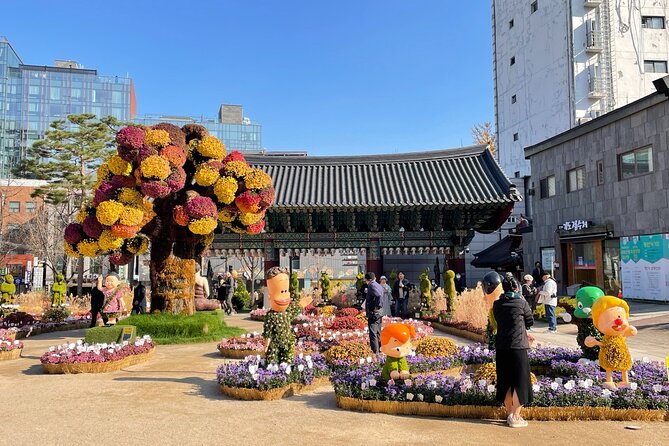
The National Folk Museum of Korea sits within the Gyeongbokgung grounds, making it a practical companion to the palace. After seeing the royal center of Joseon power, you turn toward the daily lives of Korean people through history.
The museum holds thousands of artifacts and covers ordinary customs, work, family life, and material culture. Its role in the morning is valuable because palaces show how rulers lived, while a folk museum helps explain how the wider population lived.
You have about 45 minutes here. I would treat that as a guided sample rather than a complete museum visit. There is enough time to see key sections and listen to the guide’s explanations, but you may want to return later if the museum catches your interest.
One visitor specifically planned to revisit the Folk Museum because the first visit moved quickly. That is useful advice. If you have a free afternoon, keep the museum on your return list rather than trying to absorb every display during the tour.
The museum also works well for families. Children can lose interest during long historical explanations, but the combination of objects, buildings, and stories about daily life offers more variety. A family review describes the children as staying engaged while the group covered the main cultural sites in one morning.
The Blue House pass-by and what you may miss
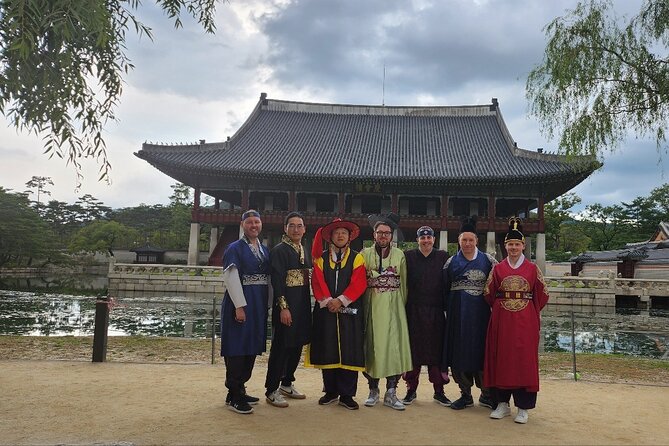
The route passes by Cheongwadae Sarangchae, connected with the Presidential Blue House, or Cheong Wa Dae. The Blue House served as the Korean presidential residence, and the name refers to its distinctive blue roof tiles.
The planned stop lasts about 15 minutes and is mainly a pass-by. Security conditions may prevent the vehicle or group from passing directly by the Presidential Blue House. Treat this as a brief orientation point, not a full visit.
This part of the tour helps connect royal Seoul with modern government, but it is less substantial than the palace and museum. If the Blue House area is a major priority for you, confirm what access is possible on your departure date. The tour information clearly warns that security restrictions can change the route.
The ginseng museum, useful context or a sales stop
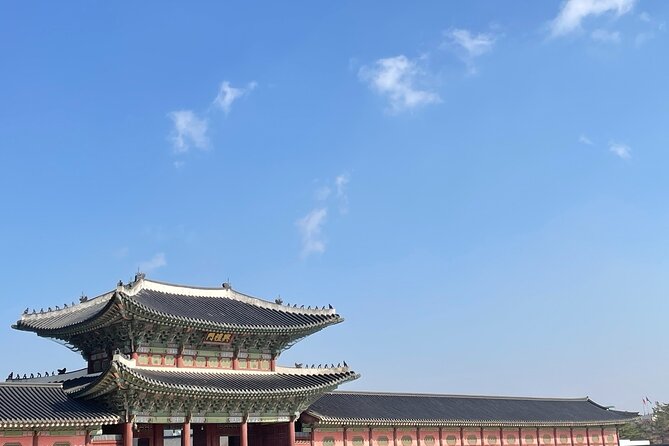
The final stop is the Cheongha Korea Ginseng Museum, with about 20 minutes devoted to ginseng and shopping. You can learn about the plant, its processing, and its place in Korean products.
This is the least essential stop for a visitor focused on architecture, history, or museums. It is also the part most likely to affect your sense of pace. One detailed account felt that too much time was spent on the ginseng explanation and a gentle sales presentation for packaged products, while the main cultural sites felt rushed.
That does not make the stop automatically bad. You may enjoy learning about ginseng, especially if you want to buy a Korean health product or gift. But go in knowing that it has a retail purpose as well as an educational one.
If you would rather spend another 20 minutes at Gyeongbokgung or the Folk Museum, this addition may frustrate you. For some people, it is a small and acceptable shopping stop at the end of a useful morning. For others, it is the clearest reason to choose an independent palace visit instead.
Ending in Insadong, with the afternoon still open
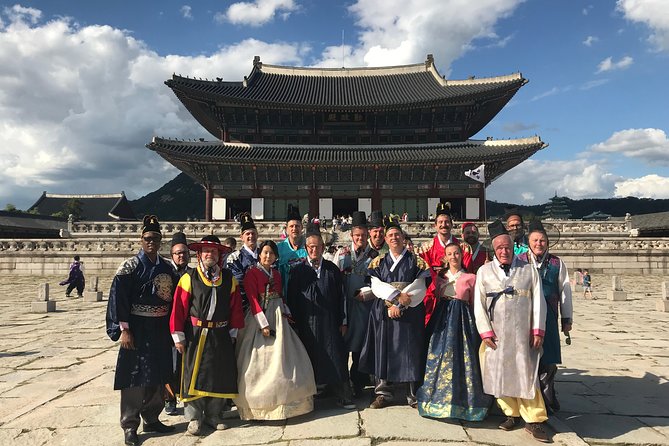
The tour ends in Insadong rather than returning you to your hotel. That is a good design for a half-day city tour because Insadong gives you an easy next step.
You can continue exploring traditional crafts, galleries, tea houses, and places to eat in the area. Several guides have also offered lunch and shopping suggestions, so ask for advice before the group separates. One departure ended near Bukchon Village instead, so the exact final drop-off may vary, and you should check the confirmed details for your booking.
The practical point is simple: hotel pickup is included, but hotel drop-off is not. Plan to remain in central Seoul after the tour or arrange your own return transportation.
Is $32 a fair price?
At $32 per person, this is good value if you want transportation, an English-speaking guide, and admission fees bundled into a four-hour morning. Gyeongbokgung and the National Folk Museum are the costly or time-sensitive parts of the route, while hotel pickup saves you the trouble of working out the first connection of the day.
The price also buys structure. You do not need to plan the order of the temple, palace, museum, and civic sights, or worry about reaching Gwanghwamun in time for the ceremony. That is useful during a short Seoul stay.
The value drops if you dislike group schedules or shopping stops. A group of up to 44 people can make the experience less personal, and the ginseng visit uses time that could go toward the palace. You are paying for a quick, guided overview, not a slow specialist tour.
The rating is listed at 4.8 out of 5 from 54 reviews, with 93 percent recommending it. The praise is consistent around the guides. Cathy, Molly, Rose, KC, JJ, June, Lee, and Moon are described as friendly, attentive, enthusiastic, and strong at explaining Korean history. One small criticism concerned a microphone that was sometimes difficult to understand, a reminder that sound quality can vary in a moving group.
Who should book this morning tour?
I would choose it for a first morning in Seoul, a short stay, a family that wants the logistics handled, or anyone who wants historical context before exploring alone.
It is also a good fit if you care about seeing several major sites rather than spending half a day at one. The route introduces Buddhist practice, royal Korea, daily life, modern government, and a traditional Korean product in one compact outing.
I would hesitate if your priority is photography, museum study, or unhurried palace time. You may prefer to visit Gyeongbokgung and the National Folk Museum independently, then use the rest of the day for the areas that interest you most.
Book with the weather in mind if the guard ceremony matters to you. Also remember that Gyeongbokgung is replaced on Tuesdays, and the Blue House pass-by can change because of security. Free cancellation is available up to 24 hours before the start time, while cancellations or changes inside that window are not refunded.
My call: a strong Seoul orientation with one soft spot
I would book this tour if I had limited time and wanted a clear, useful introduction to Seoul without spending the morning navigating alone. The combination of Gyeongbokgung Palace and the Folk Museum gives you both royal ceremony and everyday culture, while Jogyesa Temple adds a different religious perspective.
The main caution is the clock. Four hours is enough to get your bearings, but not enough to fully explore each site. The ginseng museum can also feel like a sales-oriented detour. If you accept those limits, $32 is a sensible price for a guided morning that ends in one of Seoul’s best areas for continuing your day.
FAQ
How long does the Seoul city tour last?
The tour lasts approximately four hours.
What time does the tour begin?
The listed start time is 8:30 am.
Is hotel pickup included?
Yes. Hotel pickup in Seoul is included.
Does the tour include hotel drop-off?
No. The tour ends in Insadong, and separate drop-off service is not included.
Are admission fees included?
Yes. Admission fees for the included attractions are covered.
What happens if Gyeongbokgung Palace is closed?
Gyeongbokgung Palace is closed on Tuesdays. On those days, the tour replaces it with another tourist attraction.
Will I see the royal guard-changing ceremony?
The itinerary is designed to include the ceremony at Gwanghwamun, but it is cancelled when it rains.
How many people can join the tour?
The activity can have a maximum of 44 travelers.
More Morning in Seoul
- Mt. Seorak+Nami Island+Garden of Morning Calm Day Trip from Seoul
★ 5.0 · 959 reviews - Seoul: Nami Island and Garden of Morning Calm opt Railbike
★ 4.6 · 907 reviews - Day Trip to Nami Island with Rail bike and The Garden of Morning Calm
★ 4.5 · 459 reviews - Trip to Nami Island with Petite France & Italian Village, Garden of Morning Calm
★ 4.5 · 373 reviews
Just added around Seoul
- Gyeongbokgung palace,seoul with gigibebe hanbok rental★ 4.5 · 12 reviews
- Private tour guide service in Seoul, Korea★ 5.0 · 6 reviews
- Alpaca, Nami, Petite Fr, Italian Village, Garden of Morning Calm★ 3.5 · 5 reviews
- Gyeongju UNESCO Sites Tour by KTX train; The Museum Without walls★ 4.5 · 11 reviews
- Private day trip to Korean Folk Village & Dae Jang Geum Park★ 5.0 · 7 reviews
- Private tour Lotte World,Tower,Aquarium(All Tickets are included)★ 5.0 · 12 reviews
- Full Day Private Seoul Tour for foodies★ 5.0 · 3 reviews
- Seoul Private Custom Walking Tour with A Guide (Private Tour)★ 4.5 · 28 reviews
Gyeongbokgung Palace Tours, compared.
Gyeongbok Palace, Bukchon Village, and Gwangjang Tour
Read our review →
Best Seoul City Tour (Gyeongbokgung Palace,Insadong,Namsan Tower)
Read our review →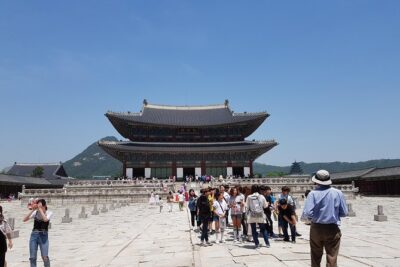
Seoul City Sightseeing Tour Including Gyeongbokgung Palace, N Seoul Tower, and Namsangol Hanok Village
Read our review →Gyeongbok Palace, Bukchon Village, and Gwangjang Tour
Read our review →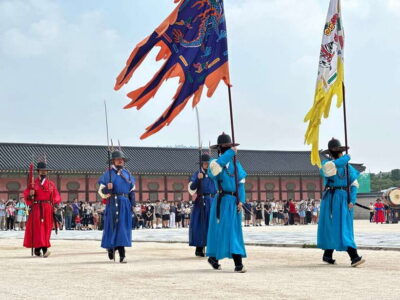
Seoul Highlights: Gyeongbok Palace, Insadong & N Seoul Tower
Read our review →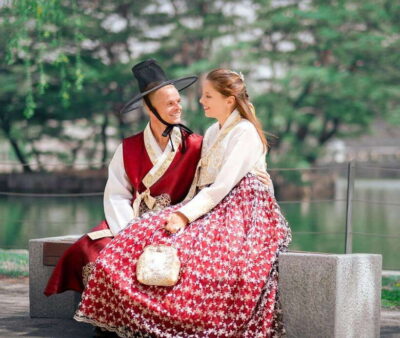
Seoul City Half Day Tour-Gyeongbok Palace Guard Changing Ceremony
Read our review →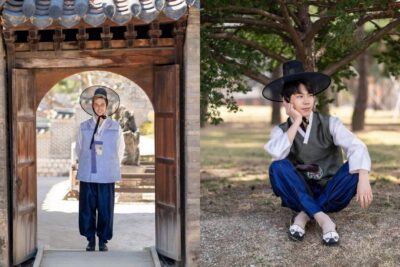
Browse the lists this tour appears in