
Reviewed · GYEONGBOKGUNG PALACE TOURS
Korean Palace and Temple Tour in Seoul: Gyeongbokgung Palace and Jogyesa Temple
Gyeongbokgung Palace gives this Seoul tour its main event: broad courtyards, royal halls, gardens, and a clear look at Joseon-era court life. Jogyesa Temple then shifts the mood from royal ceremony to living Buddhist practice, while the National Folk Museum fills in the everyday story between the two.
I like the hotel pickup and air-conditioned minibus, especially for a short morning when you want to get oriented without sorting out Seoul’s transport system. I also like the guides’ role in making the sites readable. AJ, Katie, Grace, Chloe, Lizzy, and several others are singled out for lively explanations, practical help, and keeping a group moving.
The catch is the ginseng center. It takes about 30 minutes and can feel like a hard sales stop. The tour also moves quickly, and one poor experience involved an itinerary change that left too little time at the palace. Go for an introduction to Seoul, not a slow, detailed palace visit.
Key points to know before booking
- Gyeongbokgung Palace is the centerpiece, with about an hour to see the main royal compound on foot.
- The National Folk Museum sits inside the palace grounds, making it an efficient stop for learning about ordinary Korean life.
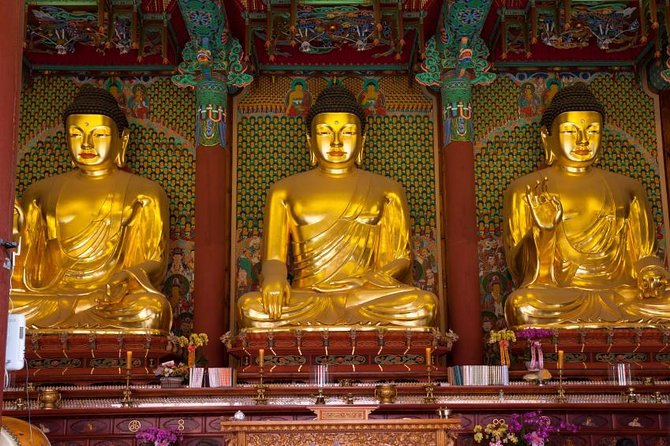
- Jogyesa Temple offers a living religious setting, not just another historic building.
- The guide makes a major difference, with AJ, Katie, Grace, Chloe, Lizzy, Jun, and others praised for warmth, storytelling, and group care.
- A ginseng shopping stop is built into the morning, and the sales approach may not suit everyone.
- The tour ends at Seoul City Hall rather than your hotel, so plan your next move from central Seoul.
A useful first morning in Seoul
This 3.5-hour tour is designed to give you a quick cultural footing in the capital. You are collected from your Seoul hotel at about 8:30 a.m., then travel by air-conditioned vehicle with a guide and a group capped at 20 people.
That setup has real value on a first visit. You can begin the day with the main sights already arranged, and you do not have to work out palace admission, directions, or the order of the stops. The vehicle is also useful for leaving larger items behind while you walk, something one person especially appreciated.
The tour is not a private experience. With up to 20 people, you need to stay near the guide and listen carefully in busy areas. The positive side is that the format is social and efficient. Guides such as AJ and Katie are praised for keeping the group together, answering questions, taking photographs, and sharing ideas for places to visit after the tour.
The tour ends at City Hall after the ginseng center. Hotel drop-off is not included, so treat the final stop as a convenient handoff into central Seoul rather than a return journey.
More Korean Temple Tours in Seoul
- Seoul: Mt Seorak + Naksansa Temple or Nami Island Group Tour
★ 4.7 · 422 reviews - Best Things to Do – Half Day Seoul Trip (Seoul Palace & Temple)
★ 5.0 · 190 reviews - Mount Seorak and Naksansa Temple One Day Tour from Seoul
★ 4.5 · 167 reviews
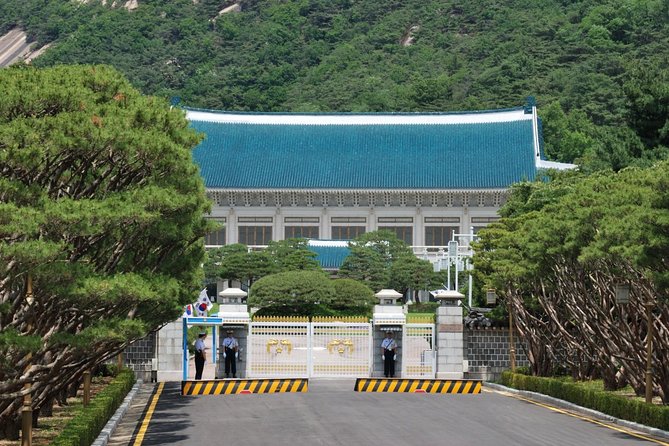
Passing the Blue House
Early in the drive, you pass Cheongwadae, commonly known as the Blue House, the executive office and residence of South Korea’s president. This is a brief drive-by, not a full visit, but it gives the morning a modern political reference before the tour turns to royal Seoul.
That contrast helps set up Gyeongbokgung. The palace was the primary residence of the royal family during the Joseon Dynasty, and the route moves from the country’s present-day leadership to the institutions that shaped earlier Korea.
Do not expect an extended stop here. The value is orientation and context, not time for a detailed look.
Gyeongbokgung Palace: the tour’s main reward
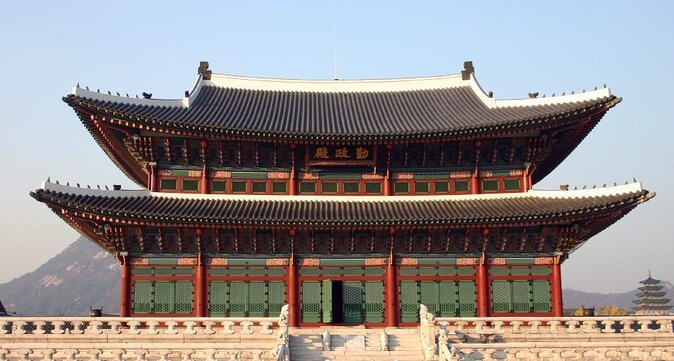
You get about one hour at Gyeongbokgung, with admission included. This is the longest stop and the place where the guide’s explanation matters most.
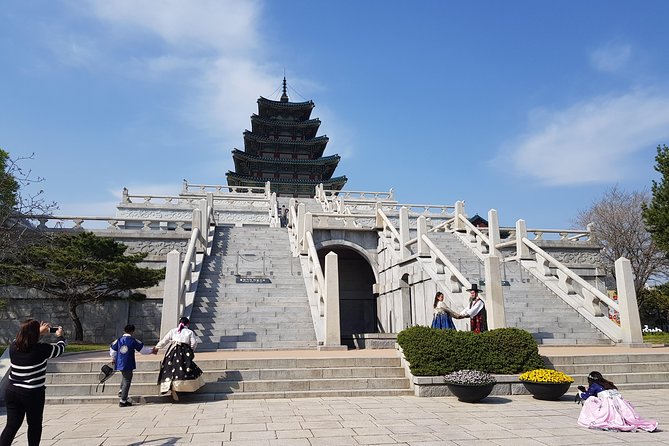
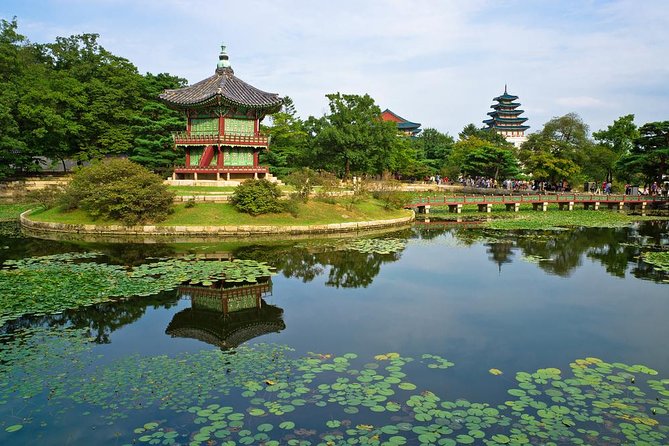
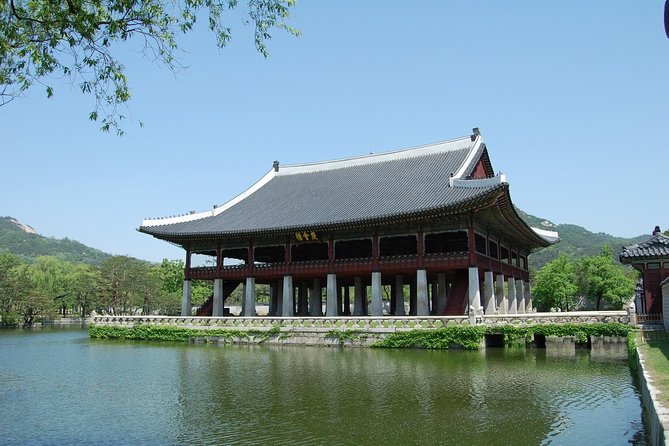
Gyeongbokgung was the largest of Seoul’s Five Grand Palaces and is often considered the city’s most beautiful. Its scale is the first thing you notice. Wide open spaces and formal buildings make it easier to picture the royal court than a quick photograph from outside ever could.
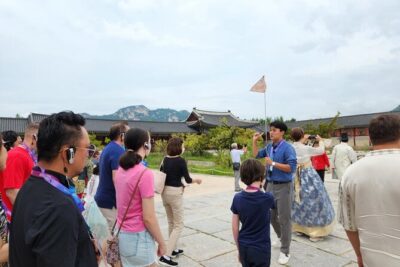
Your guide leads you through the compound on foot, explaining royal life during the Joseon era. The best guides turn architectural details into human stories. AJ, for example, is praised for helping visitors picture daily life in the palace and pointing out details they might have missed alone. Grace is also singled out for clear explanations of palace history, while guides including Sadie and Rebecca are praised for combining information with humor and practical assistance.
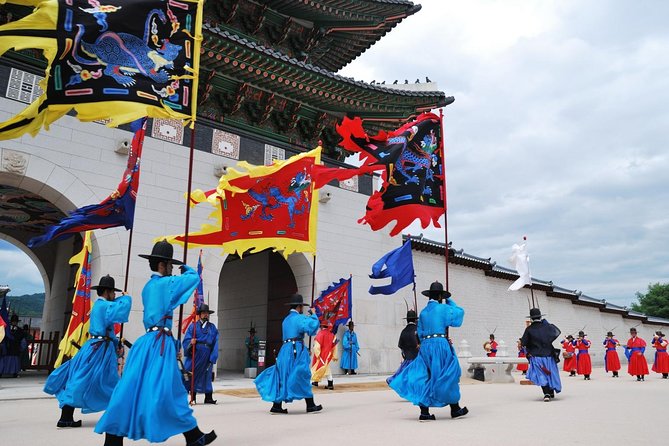
One useful feature is the possibility of seeing the changing of the guard at the front gate, depending on the day’s timing and the guide’s route. One itinerary began at the rear of the palace, continued through the Folk Museum, and reached the front in time for the ceremony. Another person felt rushed when the order changed and the group had to hurry to avoid missing it.
That tells you something important: the palace portion depends on timing. The changing of the guard can be a nice extra, but chasing it should not come at the cost of seeing the palace properly. If the guide changes the order, ask how much time remains for the main courtyards and halls.
The one-hour allocation is enough for an introduction. It is not enough for every corner, a leisurely garden walk, and a detailed architectural study. If Gyeongbokgung is your main reason for visiting Seoul, you may want to return independently for a longer look.
Comfortable shoes are a must. The tour involves a moderate amount of walking, and you will be moving between outdoor spaces rather than simply stepping off the vehicle for photographs.
The National Folk Museum in 20 minutes
The National Folk Museum of Korea is inside the Gyeongbokgung compound, so this stop adds useful context without another long transfer. You get about 20 minutes with the guide.
The museum focuses on how Koreans lived from ancient times to the modern period. Instead of concentrating only on kings and official ceremonies, it brings attention to customs and everyday life. That makes it a good partner to the palace visit. Gyeongbokgung shows the world of the royal family, while the museum helps explain the routines, traditions, and social practices of ordinary people.
Twenty minutes is brief, so think of this as a guided introduction rather than a full museum visit. You will likely see selected areas with an explanation of the customs behind them. If you prefer to read every display or spend time with individual objects, you will need another visit.
The museum stop is especially helpful if you know little about Korea before modernization. Several guides are praised for explaining how older customs connect to Korean life today. That broad frame makes the morning more than a sequence of attractive buildings.
More Gyeongbokgung Palace Tours in Seoul:
- Seoul: Gyeongbok Palace, Bukchon Village, and Gwangjang Tour
★ 4.9 · 2,321 reviews - Best Seoul City Tour (Gyeongbokgung Palace,Insadong,Namsan Tower)
★ 5.0 · 1,647 reviews - Seoul City Sightseeing Tour Including Gyeongbokgung Palace, N Seoul Tower, and Namsangol Hanok Village
★ 5.0 · 1,423 reviews - Seoul: Gyeongbok Palace, Bukchon Village, and Gwangjang Tour
★ 5.0 · 1,044 reviews
Jogyesa Temple and living Buddhism
The final major cultural stop is Jogyesa Temple, one of the leading temples for Zen Buddhism in Korea. You get about 20 minutes here.
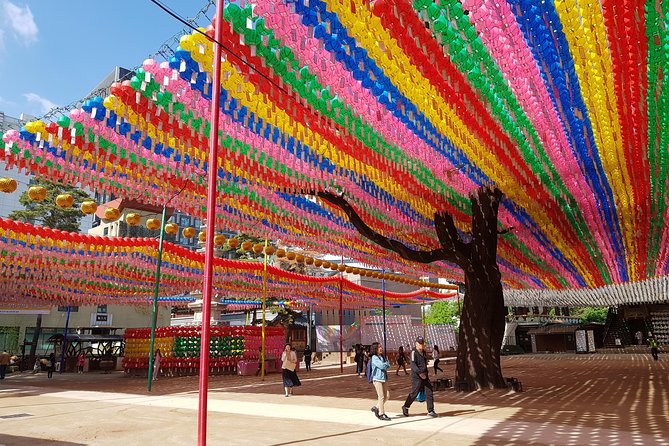
Jogyesa offers a different kind of experience from Gyeongbokgung. The palace presents power, ceremony, and dynastic order. The temple shows Buddhism as a continuing part of Korean culture, within the center of a modern capital. Floral offerings can make the grounds particularly colorful, and you might arrive while prayer or other religious activity is taking place.
That possibility is part of the temple’s appeal. It is not only a historic site explained from a distance. You may see people taking part in prayer, and the atmosphere can feel unexpectedly powerful. One person described the temple as overwhelming after arriving during a prayer service.
Your guide explains Buddhism’s role during the Joseon Dynasty and points out how the temple fits into Korean culture. David was praised for explaining the setting clearly when a prayer leader and worshippers were present. Rebecca was also praised for being helpful and considerate during a rainy visit.
The short time limit is the main weakness. Twenty minutes allows for an introduction, photographs, and a look at the principal area, but not a reflective visit at an unhurried pace. Be respectful, stay close to the guide, and remember that this is an active place of worship.
The ginseng center: useful context, awkward shopping
After the cultural sites, the tour visits a ginseng center for about 30 minutes. This is included in the stated route, although it is easy to overlook when focusing on the palace and temple.
You will learn something about Korean ginseng and its place in local commerce. The problem is that the stop can feel like a sales presentation, with pressure to buy. Several people found the shopping portion uncomfortable or not worth the time, and one person felt that an hour was lost at the center, despite the listed timing being about 30 minutes.
I would treat this as a required commercial stop rather than a sightseeing highlight. If you are interested in ginseng products, it may be informative. If you are not shopping, keep your expectations modest and do not let this stop shape your view of the rest of the tour.
The stop also explains why the price and schedule need a closer look. Part of your morning is devoted to purchasing rather than culture, so the tour offers less time at the main sights than the headline route may first suggest.
How much value do you get for $40?
At $40 per person, the price is reasonable if you want transportation, a guide, and admission bundled into a short introduction. Hotel pickup removes the need to navigate to Gyeongbokgung early in the morning, and the air-conditioned vehicle saves time between central stops.
You are also paying for interpretation. The palace and temple are easy enough to enter independently, but the meaning of the buildings, customs, and religious setting is harder to pick up from signs alone. A strong guide can make a one-hour palace visit feel purposeful rather than rushed.
The value drops if you dislike group tours or prefer to set your own pace. Admission to the cultural sites is not the only issue. You are giving up some independence, and the ginseng stop takes time you could otherwise spend at the palace or temple.
For a first morning in Seoul, I think the price works best when your priorities are orientation, convenience, and a guided introduction. If you already know Seoul well, or if you want several quiet hours at Gyeongbokgung, public transport and independent admission may suit you better.
The guide can make or break the morning
The strongest part of this experience is the human element. Names repeatedly associated with good tours include AJ, Katie, Grace, Chloe, Lizzy, Jun, Sadie, Rebecca, Charles, Eden, David, and Yeoni.
The praise is specific. AJ is described as funny, energetic, and attentive, while also giving useful recommendations for later sightseeing. Katie is praised for punctual organization and for helping with photographs. Chloe and Grace are remembered for clear explanations and a pleasant manner.
Other guides are noted for keeping track of the group, answering questions, speaking English clearly, and checking that everyone is comfortable. That matters in a fast-moving half-day tour. A guide who simply recites dates will not solve the time pressure, but a guide who manages the group well can keep the morning from becoming chaotic.
Guide quality can vary by departure. You cannot assume you will receive a particular person unless the booking specifically confirms it. Still, the repeated pattern is encouraging: the experience depends heavily on the guide, and many of the named guides appear to handle the pace and logistics well.
Who should book this Seoul tour?
I would recommend it to you if:
- You have only one morning for major cultural sights.
- You are staying at a Seoul hotel and value pickup.
- You want history explained in clear English.
- You prefer a planned route to arranging palace admission and transport yourself.
- You are comfortable with moderate walking and a group of up to 20.
- You want both royal heritage and a working Buddhist temple in one outing.
It is less suitable if you want long, quiet visits. It is also a poor match if you strongly dislike shopping stops, since the ginseng center is part of the route and can have a hard-sell feel.
Families and older adults who can manage moderate walking may appreciate the vehicle and the guide’s support, but the pace still requires attention. Wear comfortable shoes, keep valuables with you, and stay close when the group moves between courtyards and streets.
The tour also works well as part of a larger history program. One suggested combination is to pair it with a DMZ visit and the War Memorial of Korea. This palace and temple morning covers royal culture, folk traditions, and Buddhism, while those other sites would address more recent conflict and national division.
Practical details for the morning
Pickup begins around 8:30 a.m. from your Seoul hotel. Confirmation is provided at booking, and mobile tickets are accepted.
Admission fees, the local guide, transport, and hotel pickup are included. Food and drinks are not included, and hotel drop-off is not provided. The final handoff is at Seoul City Hall, which leaves you in a useful central area for continuing your day.
Plan for outdoor walking at Gyeongbokgung and Jogyesa. Comfortable shoes are more important than dressing for a polished photo. You should also allow some flexibility around the changing-of-the-guard timing, since the order of stops may vary.
Free cancellation is available if you cancel at least 24 hours before the start time. Changes or cancellations made within 24 hours are not accepted for a refund.
Should you book it?
Book this tour if you want a well-organized first look at Seoul’s royal and Buddhist heritage and value hotel pickup over complete freedom. The palace, Folk Museum, and Jogyesa Temple form a sensible cultural trio, and a good guide can add much more than a self-guided walk.
Skip it if the ginseng stop would sour the morning for you, or if Gyeongbokgung deserves several hours of your attention. At $40, the tour is fair for convenience and explanation, but it is not a substitute for a full palace day.
My practical advice is simple: book it early in your Seoul stay, use the tour to learn the city’s historical frame, then return independently to the place that interests you most.
FAQ
What does the Korean Palace and Temple Tour include?
The tour includes hotel pickup, an English-speaking local guide, transport in an air-conditioned vehicle, and admission fees. Food, drinks, and hotel drop-off are not included.
What time does the tour start?
The stated start time is 8:30 a.m. Pickup is offered from your Seoul hotel.
How long is the tour?
The experience lasts approximately 3 hours and 30 minutes.
Which main sights are included?
The route includes a pass by the Blue House, Gyeongbokgung Palace, the National Folk Museum of Korea, Jogyesa Temple, a ginseng center, and a finish at Seoul City Hall.
Is the ginseng center part of the tour?
Yes. The itinerary includes a shopping center, identified as a ginseng center, for about 30 minutes. The stop may include a sales presentation.
How much walking is involved?
A moderate amount of walking is involved, mainly at Gyeongbokgung Palace and Jogyesa Temple. Comfortable walking shoes are recommended.
Just added around Seoul
- Private tour guide service in Seoul, Korea★ 5.0 · 6 reviews
- Alpaca, Nami, Petite Fr, Italian Village, Garden of Morning Calm★ 3.5 · 5 reviews
- Gyeongbokgung palace,seoul with gigibebe hanbok rental★ 4.5 · 12 reviews
- Gyeongju UNESCO Sites Tour by KTX train; The Museum Without walls★ 4.5 · 11 reviews
- Private day trip to Korean Folk Village & Dae Jang Geum Park★ 5.0 · 7 reviews
- Private tour Lotte World,Tower,Aquarium(All Tickets are included)★ 5.0 · 12 reviews
- Full Day Private Seoul Tour for foodies★ 5.0 · 3 reviews
- Seoul Private Custom Walking Tour with A Guide (Private Tour)★ 4.5 · 28 reviews
Gyeongbokgung Palace Tours, compared.
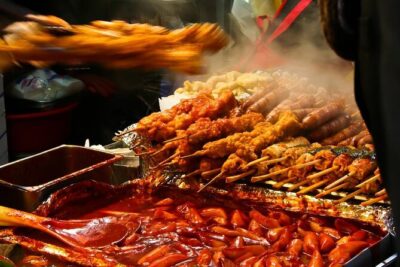
Gyeongbok Palace, Bukchon Village, and Gwangjang Tour
Read our review →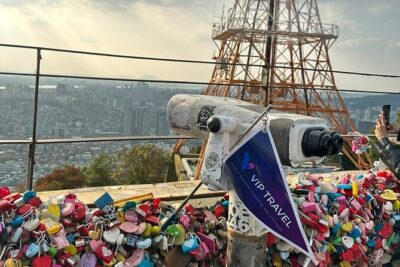
Best Seoul City Tour (Gyeongbokgung Palace,Insadong,Namsan Tower)
Read our review →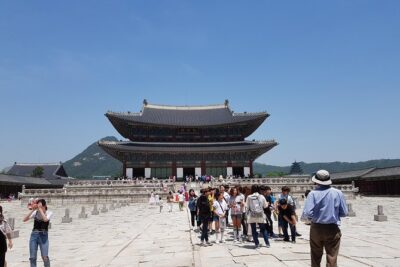
Seoul City Sightseeing Tour Including Gyeongbokgung Palace, N Seoul Tower, and Namsangol Hanok Village
Read our review →Gyeongbok Palace, Bukchon Village, and Gwangjang Tour
Read our review →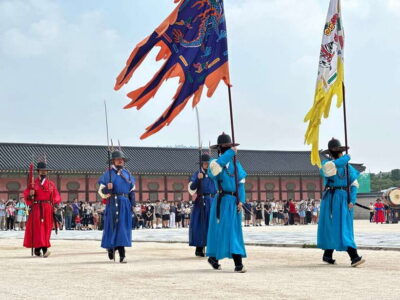
Seoul Highlights: Gyeongbok Palace, Insadong & N Seoul Tower
Read our review →
Seoul City Half Day Tour-Gyeongbok Palace Guard Changing Ceremony
Read our review →
Browse the lists this tour appears in