
Reviewed · JEJU TOURS
Explore Spirited Garden a Cultural Gem in Jeju
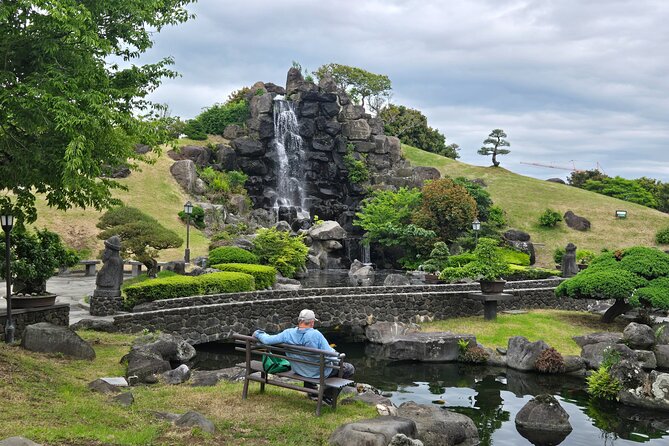
Spirited Garden is less a flower park than a place built around bonsai, volcanic stone, ponds, and silence. The 43,000-square-meter garden in Jeju’s Hangyeong area grew from the long work of farmer Sung Beom-Young, whose personal vision appears in every wall, bridge, tree, and seating area.
I like the garden’s calm pace. You can walk without a guide or fixed schedule, stopping beside koi ponds, small waterfalls, lawns, and carefully placed stones. I also like the sense of personal effort behind the grounds, especially when Sung Beom-Young is present at the information center and speaks with visitors about his work.
The main drawback is size and focus. You can see the garden in 30 minutes if you hurry, and it may feel small for the admission price if you expect acres of flowers or a major botanical collection. Plan closer to an hour if you want to sit, take photos, and let the quieter details work on you.
Key Points
- Seven themed gardens: Each section uses trees, ponds, lawns, small hills, basalt walls, gates, and bridges in a different arrangement.
- Bonsai is the star: Expect impressive old trees and unusual fruiting bonsai, not a flower-heavy park.
- A personal creation: Farmer Sung Beom-Young built the garden over many years and may still greet visitors at the information center.
- A peaceful Jeju stop: The quiet setting suits meditation, photography, and a break from busier sightseeing.
- About one hour: You can rush through in 30 minutes, but slow walking gives the place more value.
- Good price for the right visitor: At the stated $8 admission, it is a fair stop for garden lovers, though the value is weaker if you want a large park.
What Makes Spirited Garden Different
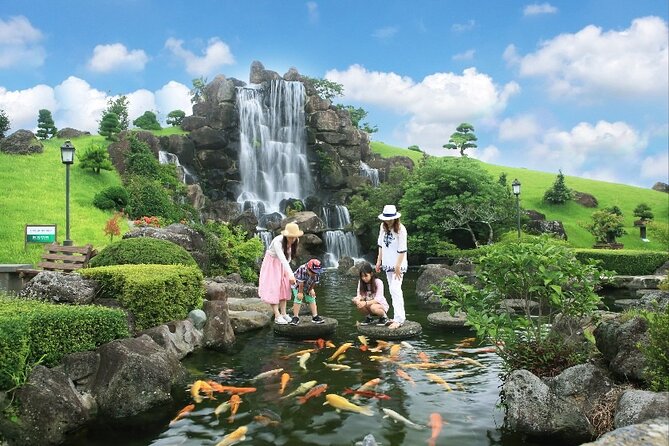
Jeju has no shortage of striking outdoor sights, but Spirited Garden offers a more inward kind of visit. You are not coming for a sweeping mountain view or a long coastal walk. You are coming to look closely at the way a single tree sits beside a stone, how a bridge crosses a narrow stream, or how a wall frames a small pool.
The garden covers roughly 12,000 pyeong, or about 40,000 to 43,000 square meters. That is enough room for several distinct sections, yet the grounds remain manageable. You will not need a full day here unless you prefer long periods of quiet sitting and reflection.
Its unusual character comes from the balance of natural and human-made elements. Jeju’s dark volcanic basalt appears in walls, gates, bridges, and ornaments. Clear ponds and streams soften the stone, while lawns and small oreum, or rounded hills, give the garden shape.
This is also a place with a clear personal story. Sung Beom-Young began the project as a farmer and developed it into one of Korea’s best-known garden attractions. The garden has received attention as one of the world’s leading gardens, and national leaders from more than 10 countries have visited it as a representative Korean garden.
You do not need to know that background to enjoy the setting. Still, it adds meaning to the visit. The garden feels less like a public park designed all at once and more like a life’s work refined over time.
Other Jeju days worth booking alongside this:
- Jeju: Eastern Jeju UNESCO Spots Day Tour
★ 4.9 · 1,148 reviews - Jeju: Western and Southern Sightseeing Day Tour
★ 4.8 · 972 reviews - East Jeju Essentials – Seongsan Ilchulbong (UNESCO) & Haenyeo
★ 5.0 · 939 reviews
Seven Gardens, Seven Ways to Slow Down
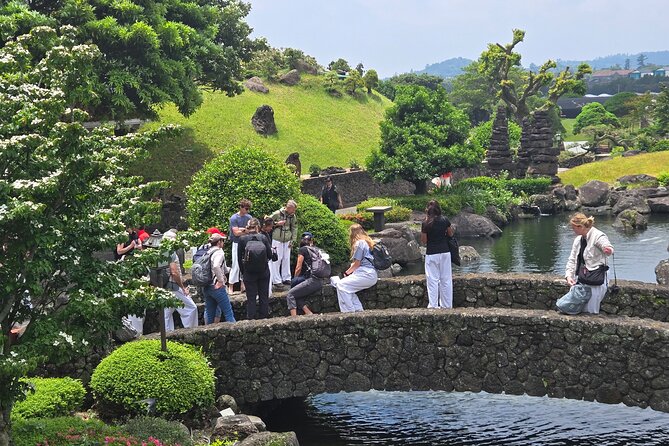
Your visit begins at the ticket office, where admission is included with the activity. From there, you are free to explore the grounds at your own pace. There is no detailed guided schedule, so you can decide how long to spend at each section.
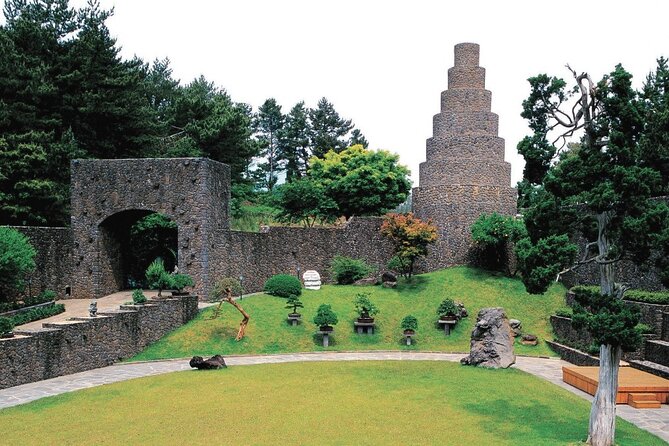
The seven themed gardens are linked by paths and framed by stonework. Each uses a combination of ponds, lawns, small hills, trees, bridges, and gates, but the arrangement changes from one section to the next. This gives the walk a sense of movement without making it tiring or confusing.
I would begin by walking through the full route before choosing a favorite spot. On a first pass, notice the overall design. Then return to the bonsai, ponds, or stone features that catch your eye.
The garden is especially strong in small views. A broad lawn may open around one turn, while another path may lead to a compact pond edged with rock. A gate or bridge can create a clean frame for a tree. These details reward a slow pace more than a quick checklist approach.
You might also find inscriptions throughout the garden. Their purpose is not to provide a formal lesson at every stop. Instead, they encourage you to pause and form your own response to the setting. That approach will appeal to people who like quiet places with room for personal thought.
Bonsai, Native Trees, and Unusual Stones
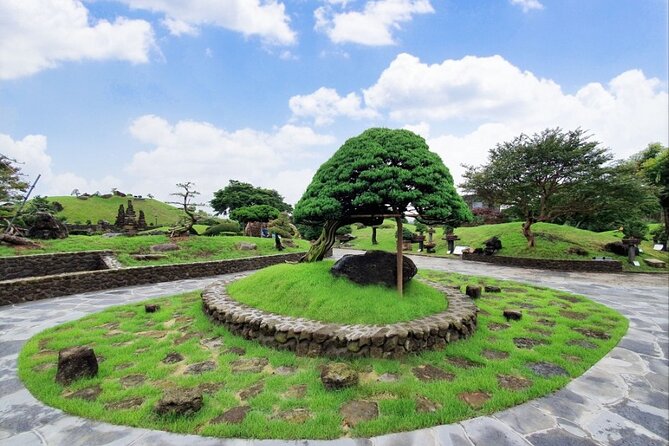
Bonsai is the heart of Spirited Garden. The collection includes Korea’s native garden trees as well as unusual forms that have been shaped and cared for over many years. The fruiting bonsai are particularly memorable, with their small scale making the familiar look strange and precise.
If you usually visit gardens for roses, seasonal beds, or colorful displays, adjust your expectations. This is not mainly a flower garden. Its beauty comes from trunks, branches, bark, roots, stone, water, and the spacing between each feature.
The bonsai also give the garden a sense of time. A flower bed can change dramatically from month to month, but a mature tree has a different presence. You are looking at form developed through long care, careful trimming, and patience.
Native trees help connect the collection to Jeju rather than making it feel like a display removed from its setting. The volcanic rock does the same job. Dark basalt walls and ornaments are not merely decoration. They bring a strong local material into the garden’s design.
Photography is easy here because the garden offers many contained scenes. You can focus on a twisted branch, a reflection in a pond, a bridge over water, or a small hill framed by stone. The quiet atmosphere also makes it a good place for photographs that are less about grand views and more about texture and detail.
Ponds, Streams, and Basalt Details
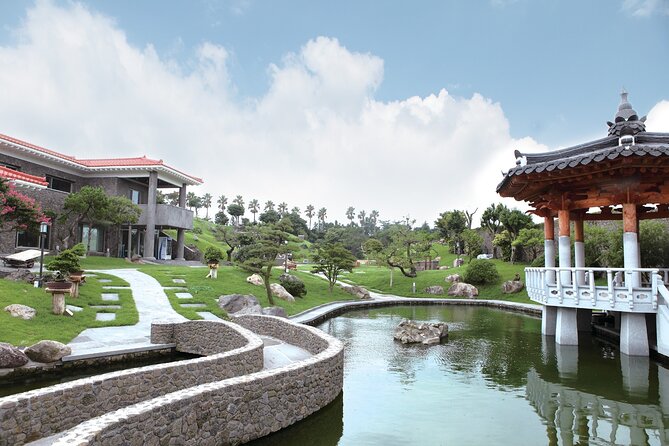
Water changes the mood of the garden. Clear ponds reflect trees and sky, while streams and small waterfalls add movement without making the setting noisy. Koi appear in several pools, giving you another reason to slow down beside the water.
The basalt construction is just as important. Jeju is shaped by volcanic rock, and Spirited Garden uses it in a distinctly local way. Walls define the sections, gates mark transitions, and bridges connect one part of the garden to another.
These elements also make the garden feel sheltered. You are not simply walking across open ground. You move from one framed space to another, with stone guiding your eye and water interrupting the path.
Seating areas add to the relaxed mood. Some are arranged in antique-style wooden structures, giving you places to rest rather than forcing the visit into a nonstop walk. If you enjoy gardens as places to sit and think, this is one of the stronger reasons to come.
The setting can change with the season. A winter visit may bring a spare, quiet look to the trees and stone, and snow can add another layer to the ponds and paths. Since the garden depends more on trees, bonsai, rock, and water than on seasonal flowers, it should retain much of its character outside the main blooming periods.
Same country, a completely different kind of day:
- Jeju: Southern Top UNESCO Spots Bus Tour
★ 4.9 · 648 reviews - South-West Jeju Essentials: Hallasan & Signature Highlights
★ 5.0 · 620 reviews - Jeju Island English Private & Flexible Tour any number anywhere
★ 5.0 · 561 reviews - East Jeju: Day Tour with Seongsan Peak & Haenyeo Performance
★ 4.9 · 478 reviews
Meeting the Founder, Sung Beom-Young
One of the more unusual parts of Spirited Garden is the chance that Sung Beom-Young will be at the information center. He is the farmer who created the garden, and he has remained involved with the site.
Do not treat this as a guaranteed personal meeting or a scheduled talk. The experience is primarily self-guided, and the supplied details do not promise that the founder will be available at every visit. But if he is there, a conversation can give the grounds a more human scale.
His presence helps explain why the garden feels so personal. The stones, trees, and buildings are not random scenic props. They reflect one person’s idea of how a garden can encourage calm and reflection.
Even without meeting him, you can sense that the garden is built around more than decoration. The inscriptions, seating places, and carefully framed views ask you to pause. You are given space to decide what the garden means to you instead of being pushed from one explanation panel to the next.
Is One Hour Enough?
The stated duration is about one hour, and that is a sensible target for most people. You can cover the seven sections at a steady pace, stop for photographs, and spend a few minutes beside the ponds.
A faster visit may take only 30 minutes. That could be enough if you are already in the area and want a quick look at the bonsai. It will not give you much time to sit or notice the smaller design choices, though.
I would allow 60 to 90 minutes if your schedule permits. The extra time is not needed because the paths are difficult. It is useful because the garden works best when you stop moving.
There is also coffee and tea available as an extra, but those refreshments are not included. Lunch is not included either. If you want to turn the visit into a longer break, check the food plan before arriving rather than assuming the admission covers refreshments.
The garden is open daily from 9 a.m. to 5 p.m. for the stated operating period, from June 17, 2025, through February 7, 2027. Since opening information can change, confirm the hours close to your visit.
The $8 Admission and Overall Value
At the stated price of $8 per person, Spirited Garden is reasonably priced for anyone who appreciates bonsai, stone gardens, and quiet outdoor spaces. Admission is included, and the activity uses a mobile ticket, which keeps the entry process simple.
Value depends heavily on your interests. If you love bonsai or want a calm stop between larger Jeju attractions, the price is easy to justify. You receive access to a large garden area with seven themed sections, ponds, streams, bridges, lawns, and seating areas.
If you measure value by time alone, the calculation is less favorable. Someone moving quickly may spend no more than 30 minutes inside. A visitor expecting a huge botanical park filled with flowers may also feel the entry price is high for a medium-sized garden.
The garden’s strength is quality of arrangement, not sheer scale. You are paying for the care visible in each tree and stone, along with the chance to walk through a place shaped by one creator over many years.
The listed information gives a price of $8, while one on-site price recalled by a past visitor was 15,000 Korean won. Because prices can change or differ by booking channel, check the current amount before you go. That small step prevents an awkward surprise at the ticket office.
Who Will Enjoy This Jeju Stop?
I would recommend Spirited Garden to you if you enjoy:
- Bonsai and mature trees
- Japanese-style or Korean garden design
- Quiet walking rather than active sightseeing
- Photography focused on plants, rock, and water
- Places that encourage personal reflection
- Meeting the maker of a cultural attraction, if he happens to be present
It also suits couples, solo visitors, and anyone who wants a gentle pause during a busy Jeju itinerary. Most people can participate, and service animals are allowed. The garden is near public transportation, though the supplied details do not give a route or travel time.
Families may enjoy the ponds, bridges, koi, and unusual trees, but young children who need constant activity may find the visit slow. The same quiet quality that attracts a garden lover may feel uneventful to someone looking for rides, dramatic views, or hands-on entertainment.
You should also consider the weather. Much of the experience takes place outdoors, and the garden’s appeal depends on walking between its sections. A winter day can be beautiful, but bring clothing suited to the conditions.
Booking, Timing, and Cancellation
This is a private activity for your group, with no other group participation listed. That does not turn the visit into a private guided tour. You still explore the garden on your own, with admission included.
Confirmation is provided at booking, and the experience is often reserved well ahead of time, with an average booking lead time of about 29 days. If your Jeju plans are fixed, booking early is sensible, especially if you want a particular day.
Free cancellation is available when you cancel at least 24 hours before the start time. Cancel within 24 hours, or request changes during that period, and the amount paid is not refunded. The cut-off follows local time.
Should You Book Spirited Garden?
Book it if you want a peaceful, carefully arranged garden where bonsai and basalt matter more than flowers. Give yourself at least an hour, and resist the urge to rush through the ponds and stone gates.
Skip it if your ideal garden means vast grounds, bright seasonal blooms, or a full-day attraction. You may find the visit short for the price, especially if you only spend 30 minutes inside.
For the right visitor, Spirited Garden is one of Jeju’s more thoughtful cultural stops. It offers a quiet look at Korean garden design, the local character of volcanic stone, and the patient work of Sung Beom-Young. The best reason to go is simple: you can walk in with no special background, slow down, and leave with your own impression.
FAQ
Where is Spirited Garden located?
Spirited Garden is located at 1534 Jeoji-ri, Hangyeong-myeon, Jeju, Jeju-do, South Korea.
How long does the visit take?
The stated duration is about one hour. You can move through the garden in roughly 30 minutes, but allowing an hour gives you time to explore the seven sections, take photos, and sit beside the ponds.
What is included in the admission?
Admission to Spirited Garden is included. Lunch, coffee, and tea are not included.
What are the opening hours?
The stated hours are 9 a.m. to 5 p.m., Monday through Sunday, for the operating period from June 17, 2025, through February 7, 2027.
Is the founder available to meet?
Sung Beom-Young, the garden’s founder, may be present at the information center. A personal meeting is not guaranteed or listed as a scheduled part of the activity.
Can I cancel for a full refund?
Yes. You can cancel at least 24 hours before the experience start time for a full refund. Cancellations or changes made less than 24 hours before the start time are not accepted for a refund.
Just added around Jeju
- Jeju island: Van tour with a guide who the most loves JEJU★ 5.0 · 7 reviews
- Full Day Jeju Private Customizable highlight Tour★ 5.0 · 5 reviews
- Jeju Unesco Eest course Package Private Van Guided Tour★ 5.0 · 17 reviews
- Full-day Customizable Private Jeju Island Tour★ 5.0 · 8 reviews
- Full Day Essential Jeju Island Private tour for West Course★ 5.0 · 15 reviews
- Jeju Private Tour Package-South of Jeju(Mt.Hallasan & Waterfalls)★ 5.0 · 5 reviews
- Customized private tour in Jeju island★ 5.0 · 19 reviews
- jeju island Jumbo taxi Private tour with Mr.Hong East of jeju★ 5.0 · 19 reviews
Jeju Tours, compared.

East Jeju Essentials – Seongsan Ilchulbong (UNESCO) & Haenyeo
Read our review →

Jeju Island English Private & Flexible Tour any number anywhere
Read our review →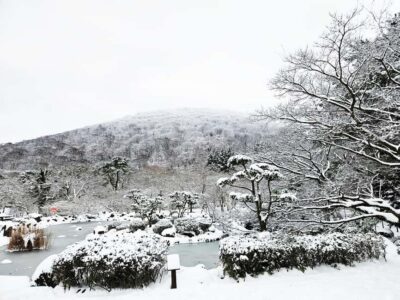
East Jeju: Day Tour with Seongsan Peak & Haenyeo Performance
Read our review →
South-West Jeju Essentials: Hallasan & Signature Highlights
Read our review →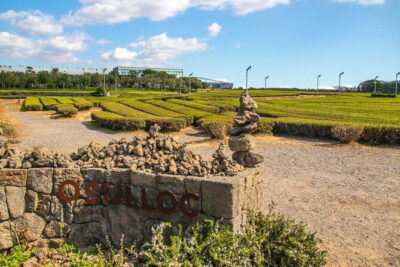
Jeju Southern UNESCO Full Day Tour with Mt.Halla
Read our review →Browse the lists this tour appears in