
Reviewed · GYEONGBOKGUNG PALACE TOURS
Korean Heritage Tour: Palaces and Villages of Seoul Including Gyeongbokgung Palace
Seoul’s past comes into focus on this full-day route, which links the grand halls of Gyeongbokgung Palace with the hands-on traditions of the Korean Folk Village. You’ll move from royal ceremony and Buddhist worship to pottery, weaving, folk tools, and a Korean meal, all without having to piece together the transport yourself.
I like the combination of palace architecture and everyday traditions, since you see both how Korea’s royal court lived and how ordinary households worked. I also like the small group size, capped at 10 people, and the chance to have guides such as Sunny, Winnie, David, or Dora explain the details in English.
The main drawback is the ginseng center, which takes about 30 minutes and can feel like a sales stop rather than part of a heritage tour. Some departures have also included an amethyst presentation, so ask about commercial stops before booking if you want every minute devoted to sightseeing.
Key points to know before booking
- Gyeongbokgung Palace opens the day: Walk through the largest of Seoul’s Five Grand Palaces, with admission included.
- The schedule covers old and everyday Korea: The National Folk Museum, Jogyesa Temple, lunch, and the Korean Folk Village give the tour a broad reach.
- The Korean Folk Village is a living museum: Watch traditional crafts such as pottery, basket weaving, embroidery, and bamboo and brass work.
- Hotel pickup keeps the day simple: Air-conditioned coach transport takes you out and back, with an approximately 8:30 a.m. start.
- The pace can be brisk: Expect a moderate amount of walking and limited time at some stops, especially in the morning.
- Commercial stops are the weak point: The ginseng center is included in the schedule but is not a sightseeing highlight for everyone.
What this Seoul heritage day is really like
This is an orientation tour for someone who wants a broad introduction to Seoul’s traditional side in one day. The route is structured, guided, and efficient. You will not get long, unhurried hours at every site, but you will see several important places without working out subway connections, palace tickets, restaurant arrangements, or the trip to the Korean Folk Village on your own.
The tour lasts about eight and a half hours. Pickup begins in the morning, with the stated start time at 8:30 a.m., and the group travels by air-conditioned coach. The tour requires at least four people and allows no more than 10, a useful middle ground between a large bus outing and a fully private tour.
You should expect a fair amount of walking. Comfortable shoes matter, particularly at Gyeongbokgung, where the grounds are spread across a large walled compound, and at the Korean Folk Village, where you will walk between traditional buildings and craft demonstrations.
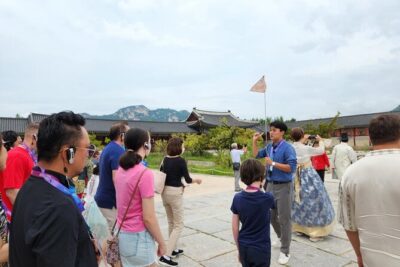
The guide makes a major difference. Several guides have been praised for clear English, humor, and useful explanations, while other departures have been less successful because the guide spoke too softly or gave thin commentary. If you are assigned Sunny, Winnie, David, Dora, or Michelle, you may find the guiding style especially engaging, but the experience can vary by departure and by the number of language groups on the coach.
More Gyeongbokgung Palace Tours in Seoul:
- Seoul: Gyeongbok Palace, Bukchon Village, and Gwangjang Tour
★ 4.9 · 2,321 reviews - Best Seoul City Tour (Gyeongbokgung Palace,Insadong,Namsan Tower)
★ 5.0 · 1,647 reviews - Seoul City Sightseeing Tour Including Gyeongbokgung Palace, N Seoul Tower, and Namsangol Hanok Village
★ 5.0 · 1,423 reviews
Gyeongbokgung Palace and the royal opening act
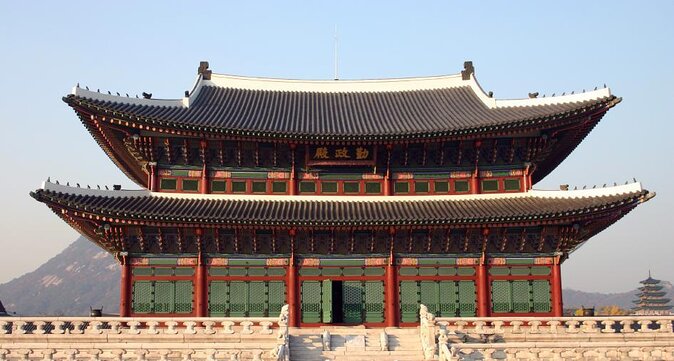
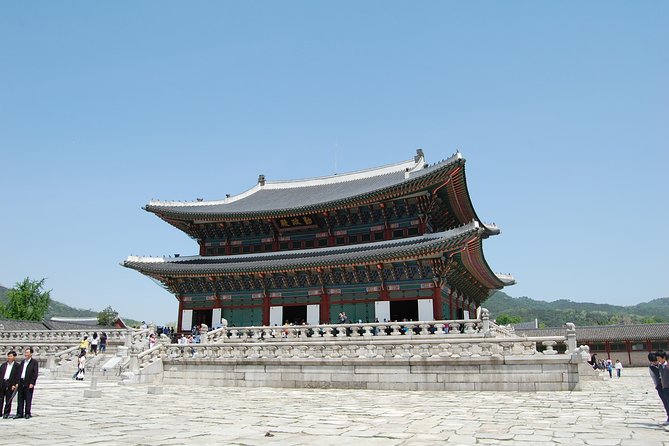
Gyeongbokgung was built in 1395 as the first royal palace of the Joseon Dynasty. It is also the largest of Seoul’s Five Grand Palaces, so this first stop gives you the grandest architectural setting of the day.
Much of the palace was destroyed during the Japanese occupation, and a long restoration effort has rebuilt many of its gates, pavilions, halls, and other structures. That restoration work is important context. What you see is not an untouched medieval complex, but a carefully reconstructed royal center that helps you picture the scale and order of the Joseon court.
You will tour the grounds on foot with the guide, stopping to look at the palace gates, royal halls, and pavilions. The listed visit lasts about one hour, which is enough for an introduction but not enough to inspect every corner at leisure. I would pay close attention during the guide’s opening explanation, then use any free moments for photographs and a closer look at the rooflines and courtyards.
The changing of the guard is a highlight when the timing works. One departure had rain hold off until after the ceremony, and the event was described as a must-see part of the morning. Since the schedule can be affected by timing and daily operations, do not assume it is guaranteed, but be ready to watch if the opportunity appears.
The palace portion can feel rushed if the group is large or the guide is trying to stay on schedule. Keep your expectations realistic: this is a guided survey, not a slow architectural study. Still, for a first visit to Seoul, Gyeongbokgung gives you the strongest visual introduction to the city’s royal past.
The National Folk Museum in just 20 minutes
The National Folk Museum of Korea sits within the palace complex and uses artifacts, replicas, models, and exhibitions to explain Korean life from ancient times through the 20th century. More than 90,000 objects are associated with its collections, covering customs, work, homes, clothing, and daily routines.
The museum adds something the palace alone cannot. At Gyeongbokgung, you see the court’s formal world. Here, you get a picture of how people lived, worked, celebrated, and organized their households across earlier periods.
The scheduled visit is only about 20 minutes. That is the clearest limitation. You can get the museum’s basic idea, but you will not have time to study its many displays in depth. If museum exhibits are a priority for you, consider returning independently on another day or asking the guide which sections deserve your attention first.
For everyone else, treat this as a short visual lesson that makes the rest of the day easier to understand. The craft demonstrations at the Korean Folk Village, for example, become more meaningful when you have already seen how traditional household objects fit into daily life.
A brief stop at Jogyesa Buddhist Temple
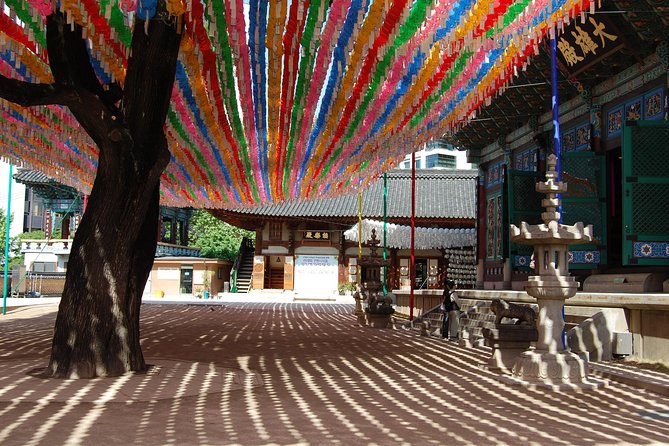
Jogyesa is the chief temple of the Jogye Order of Korean Buddhism. The route includes the temple’s entrance trees and the Daeungjeon, or main hall, where an enlightened Buddha is displayed.
The stop is very short, listed at about two minutes. That means you should think of Jogyesa as a quick cultural pause, not a full temple visit. You will get a glimpse of an active Buddhist setting and hear a short explanation, but you should not expect extended quiet time or a detailed architectural tour.
Even in a compressed schedule, the temple helps broaden the day. The palace represents royal authority, while Jogyesa offers a look at Korea’s Buddhist tradition. The contrast is useful, especially for a first-time visitor trying to understand how different strands of Korean culture fit together.
A few more Seoul trips to weigh up
- Seoul: Evening Dark History, Folklore & Ghost Story Walking Tour
★ 5.0 · 593 reviews - Hanbok Photoshoot and History Tour at Gyeongbokgung Palace
★ 5.0 · 276 reviews - From Seoul: Dae Jang Geum Park Historic K-Drama Set Tour
★ 4.9 · 143 reviews - Seoul: City Highlights and Historical Experience No Shopping
★ 5.0 · 74 reviews
Korean lunch and the ginseng center
Around midday, you stop at a traditional Korean restaurant for lunch. The meal is included, and the food has been a strong part of the day for many people. The restaurant setting can also make the meal feel like a cultural experience rather than a quick roadside break.
Specific menu details are not provided, so you should give the restaurant a little flexibility. If you have dietary requirements, tell the operator when booking. The tour specifically asks you to advise about special diets in advance.
Before lunch, or around the same part of the day, the coach stops at a Korean Ginseng Center for about 30 minutes. Korea is one of the world’s major ginseng-producing countries, and the visit explains the product and its place in Korean health culture.
The practical problem is the sales element. You will have an opportunity to buy ginseng, and the presentation can feel out of place beside the palaces and temple. Some people find it useful, particularly if they want to learn about or purchase Korean ginseng. If you are not interested in shopping, it may feel like time taken from the museum or palace.
Some departures have also included an amethyst factory or presentation. That stop is not part of the core itinerary described here, but because it has appeared on some schedules, I would ask the operator directly about the day’s commercial visits. A clear answer helps you decide if the tour’s value matches your expectations.
The Korean Folk Village: crafts, buildings, and a staged past
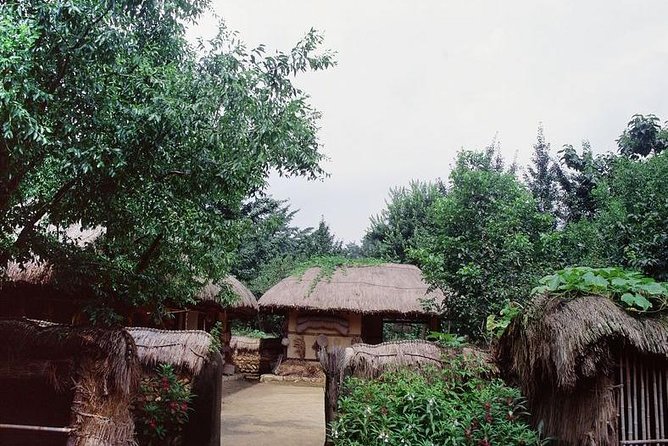
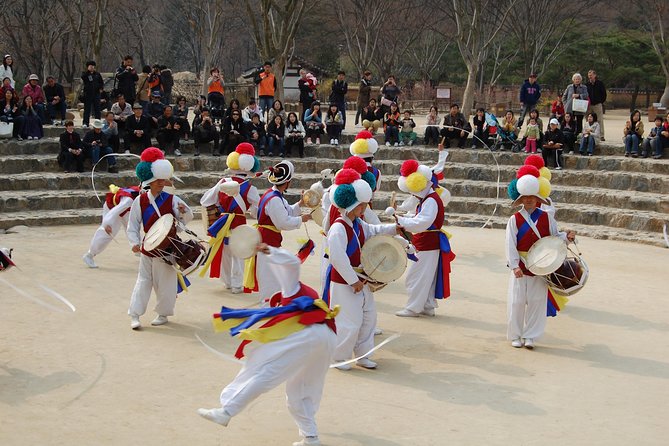
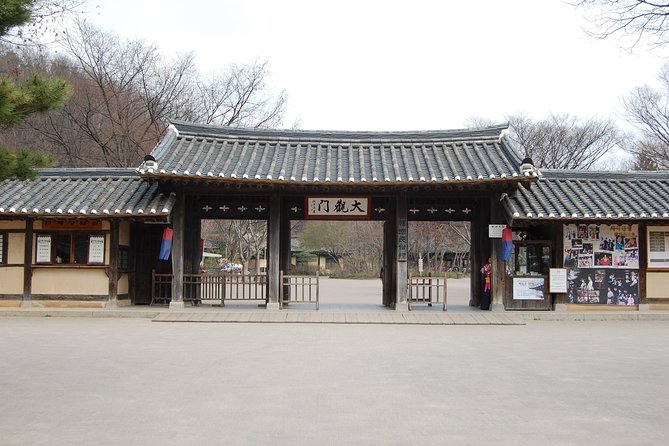
The afternoon belongs to the Korean Folk Village, a living museum presenting traditional Korean life and folk culture. The visit lasts about one hour and 20 minutes, making it the longest sightseeing stop after the palace.
You will walk among preserved traditional-style buildings and watch demonstrations of older crafts. The activities listed include pottery making, basket weaving, hand-making of winnows, musical instruments, embroidery, and bamboo, wood, and brass wares.
This is the most hands-on part of the day. Instead of only looking at old buildings behind barriers, you can see how objects were made and how practical skills shaped household life. For me, that makes the village a useful companion to the National Folk Museum.
You should also understand what kind of place this is. The Korean Folk Village is a recreated cultural attraction, not a normal modern neighborhood where traditional life continues unchanged. One visitor expected a more authentic village and found it closer to a themed or amusement-park-style setting. That reaction is fair. The site presents history for public viewing, with demonstrations and preserved structures arranged for visitors.
If you enjoy crafts, folk customs, and visual demonstrations, the village may be the afternoon highlight. If you prefer original archaeological sites or living urban neighborhoods, it may feel staged. The guide can help give the displays context, though the quality of the explanation depends on the guide assigned to your group.
The afternoon can also feel more relaxed than the morning. One particularly favorable arrangement left only two people on the afternoon portion, allowing the guide to adjust the visit and add or remove some elements. You should not count on a private or customized outing, but a small group can make this part easier to enjoy.
How the pace and guiding affect the experience
The tour is designed to cover a lot. That is its strength and its weakness.
The morning includes the palace, museum, temple, lunch, and ginseng center before the afternoon transfer to the Folk Village. Some guides keep the group moving at a brisk pace, and one account described having to hurry after the guide. At other times, the guide leaves enough free time to look around after the main explanation.
A guide’s speaking volume also matters. One departure had a guide who was difficult to hear, while another had clear, professional English and strong explanations. On a coach tour, especially when traffic or several languages are involved, you may need to stay close to the guide and ask for repetition if you miss something.
The small maximum group of 10 is a real advantage. It should make it easier to hear, gather at meeting points, and ask questions than on a 30 or 40-person bus tour. Still, the tour may operate with two guides, particularly when the morning city visit and afternoon village visit are handled separately.
I would not book this expecting a deep, slow study of each site. I would book it to get a well-organized first look at several major cultural stops, with someone else handling the route.
Is the $140 price fair?
At $140 per person, the tour is not the cheapest way to see Seoul’s palaces. The price includes hotel pickup and drop-off, a professional guide, an air-conditioned vehicle, lunch, and admission to Gyeongbokgung and the Korean Folk Village.
The value is strongest if you are staying outside the central sightseeing area, have only one open day, or do not want to manage public transport to the Folk Village. Transport and lunch take care of two practical concerns, and the guide adds historical context that you would need to research or arrange separately.
The value is weaker if you are comfortable using Seoul’s excellent public transportation, want long visits inside museums, or dislike shopping presentations. You could spend more time at Gyeongbokgung and the National Folk Museum on your own, then choose a separate afternoon activity that better matches your interests.
The 38-day average advance booking suggests that you should not leave this until the last moment if your dates are fixed. Confirmation is provided at booking, and free cancellation is available up to 24 hours before the start time. Gyeongbokgung is closed on Tuesdays, when the route substitutes Deoksugung Palace and the Seoul Museum of History.
Who will enjoy this tour most?
I would recommend this tour to a first-time Seoul visitor who wants a single day of organized sightseeing. It suits you if you value hotel transport, prefer an English-speaking guide, enjoy traditional architecture and crafts, and want lunch included.
It also works well for families and older visitors who would rather ride between districts than plan several separate journeys. Most people can participate, but you should be comfortable with a moderate amount of walking and wear supportive shoes.
You may want a different plan if you want an entirely authentic setting, dislike commercial stops, or want to spend several hours at one palace. Independent visitors can also find better value if they are happy to arrange their own meals, admission, and transport.
Should you book it?
Book this if you want a broad, convenient introduction to Seoul’s royal, Buddhist, museum, culinary, and folk traditions in one day. The palace, lunch, and Korean Folk Village provide the strongest reasons to go, and a good guide can turn a busy schedule into a useful cultural overview.
Think twice if the ginseng stop would annoy you or if you expect every stop to be historically original. Before paying, ask about commercial presentations, the Tuesday palace substitution, and which guide or language arrangement is planned. With those points clear, this is a practical first-day tour, not a flawless heritage deep study, but it can give you a solid sense of where Seoul’s traditional culture comes from.
FAQ
What is included in the tour price?
The price includes hotel pickup and drop-off, a professional guide, an air-conditioned vehicle, lunch, and admission to Gyeongbokgung Palace and the Korean Folk Village.
What time does the tour begin?
The stated start time is 8:30 a.m. Hotel pickup begins the morning portion of the tour.
How long does the experience last?
The full tour lasts approximately eight hours and 30 minutes.
Is Gyeongbokgung Palace visited every day?
Gyeongbokgung Palace is closed on Tuesdays. On those days, the tour visits Deoksugung Palace and the Seoul Museum of History instead.
How much walking is involved?
A moderate amount of walking is involved, especially at Gyeongbokgung Palace and the Korean Folk Village. Comfortable walking shoes are recommended.
Can I cancel for a full refund?
Yes. You can cancel at least 24 hours before the experience start time for a full refund. Cancellations or changes made less than 24 hours before the start time are not accepted for a refund.
Just added around Seoul
- Gyeongbokgung palace,seoul with gigibebe hanbok rental★ 4.5 · 12 reviews
- Private tour guide service in Seoul, Korea★ 5.0 · 6 reviews
- Alpaca, Nami, Petite Fr, Italian Village, Garden of Morning Calm★ 3.5 · 5 reviews
- Gyeongju UNESCO Sites Tour by KTX train; The Museum Without walls★ 4.5 · 11 reviews
- Private day trip to Korean Folk Village & Dae Jang Geum Park★ 5.0 · 7 reviews
- Private tour Lotte World,Tower,Aquarium(All Tickets are included)★ 5.0 · 12 reviews
- Full Day Private Seoul Tour for foodies★ 5.0 · 3 reviews
- Seoul Private Custom Walking Tour with A Guide (Private Tour)★ 4.5 · 28 reviews
Gyeongbokgung Palace Tours, compared.
Gyeongbok Palace, Bukchon Village, and Gwangjang Tour
Read our review →
Best Seoul City Tour (Gyeongbokgung Palace,Insadong,Namsan Tower)
Read our review →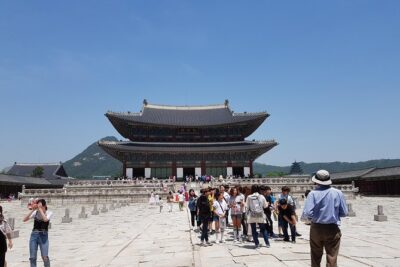
Seoul City Sightseeing Tour Including Gyeongbokgung Palace, N Seoul Tower, and Namsangol Hanok Village
Read our review →Gyeongbok Palace, Bukchon Village, and Gwangjang Tour
Read our review →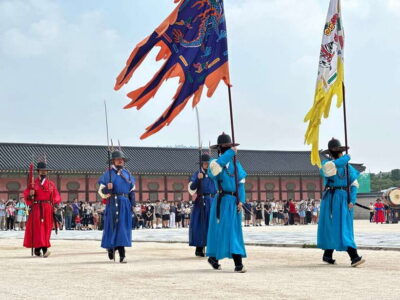
Seoul Highlights: Gyeongbok Palace, Insadong & N Seoul Tower
Read our review →
Seoul City Half Day Tour-Gyeongbok Palace Guard Changing Ceremony
Read our review →
Browse the lists this tour appears in