
Reviewed · GYEONGBOKGUNG PALACE TOURS
Layover tour to Gyeongbokgung-Folk Museum-Bukchon-Insadong
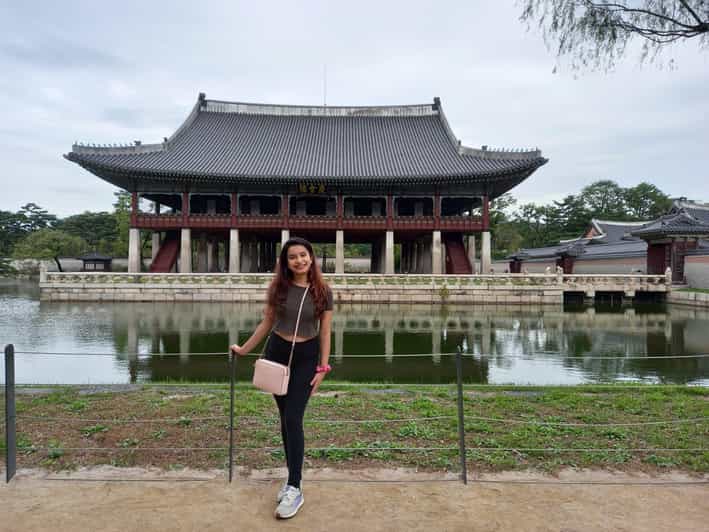
Gyeongbokgung Palace gives this layover tour its center of gravity. You are not simply checking off Seoul sights. With guide Paul Koo, you explore the Joseon Dynasty’s main palace, then connect its Confucian ideas to everyday life at the Folk Museum, old homes in Bukchon, and Buddhist practice at Jogyesa.
I like two things right away: the airport-to-city plan is practical, and the guide stays with you until Seoul Station so you are not left to work out the return trip alone. I also like the cultural thread running through the day, especially the explanation of why Korean palace buildings look and feel different from Chinese or Japanese examples.
The main drawback is the tight schedule. Six hours includes the train ride, walking, and four sightseeing stops, so this is a focused introduction rather than a relaxed day in Seoul. You must also allow enough time for airport procedures after reaching Incheon.
Key points to know before booking
- Gyeongbokgung is the main event: Spend about two hours exploring Korea’s largest Joseon palace complex.
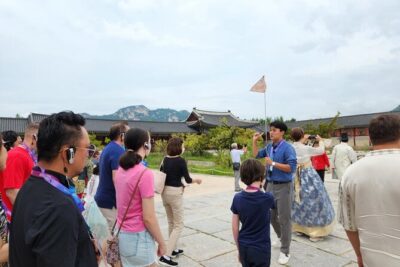
- Paul Koo adds cultural context: His focus on Confucianism and Korean architecture helps you read the buildings instead of simply photographing them.
- AREX keeps the route sensible: The plan uses the express or all-stop airport train between Incheon, Seoul Station, and the city sights.
- Bukchon blends old and new Seoul: Traditional hanok homes sit among modern buildings, with N Seoul Tower visible in the distance.
- Insadong adds a walkable finish: The street gives you time for shops, cafés, and a short visit to Jogyesa Buddhist temple.
- This is a private group tour: The listed price is $254 for a group up to one person, so confirm the final price for your party before paying.
A layover plan built around Seoul Station
The tour begins at Incheon International Airport, with the meeting time chosen after booking. A six-hour example would be a 7 a.m. airport meeting and a 1 p.m. finish at Seoul Station.
That timing matters. The tour does not return you to the airport itself. Paul escorts you to Seoul Station, where you board the AREX train back to Incheon. You should treat the stated finish at Seoul Station as the end of the guided service, then add the train ride and your airport check-in time before your next flight.
The airport train takes about 43 minutes on the express service, according to the tour details, while the normal train takes about an hour. The all-stop option is only around 20 minutes slower, so the guide may use it if waiting for an express departure would take longer.
The express train uses assigned seats and runs roughly once an hour. In busy periods, it may sell out, so advance planning matters. The guide handles the transport arrangements included in the tour, including the return ticket plan, but you should still provide accurate flight information and confirm the meeting details ahead of time.
More Gyeongbokgung Palace Tours in Seoul:
- Seoul: Gyeongbok Palace, Bukchon Village, and Gwangjang Tour
★ 4.9 · 2,321 reviews - Best Seoul City Tour (Gyeongbokgung Palace,Insadong,Namsan Tower)
★ 5.0 · 1,647 reviews - Seoul City Sightseeing Tour Including Gyeongbokgung Palace, N Seoul Tower, and Namsangol Hanok Village
★ 5.0 · 1,423 reviews
Gyeongbokgung, Seoul’s Joseon centerpiece
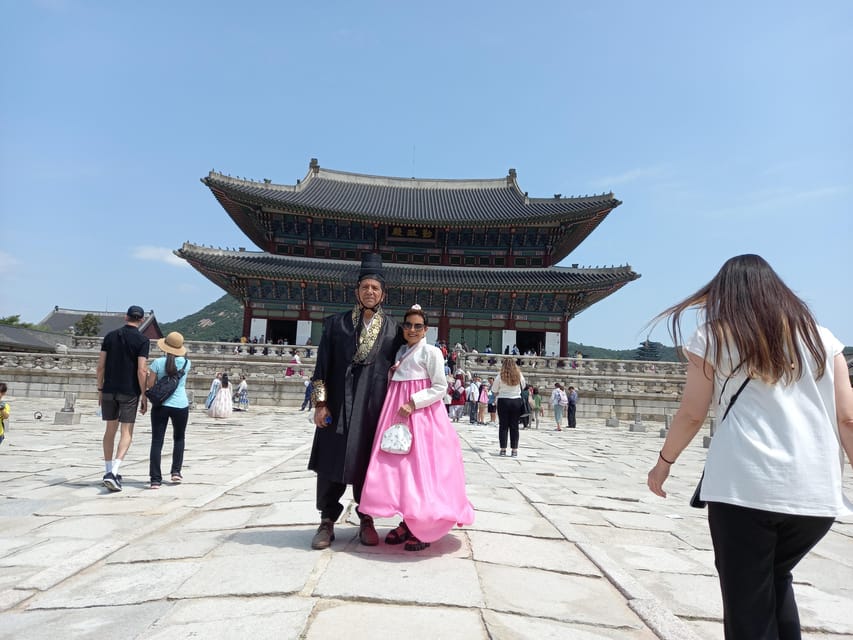
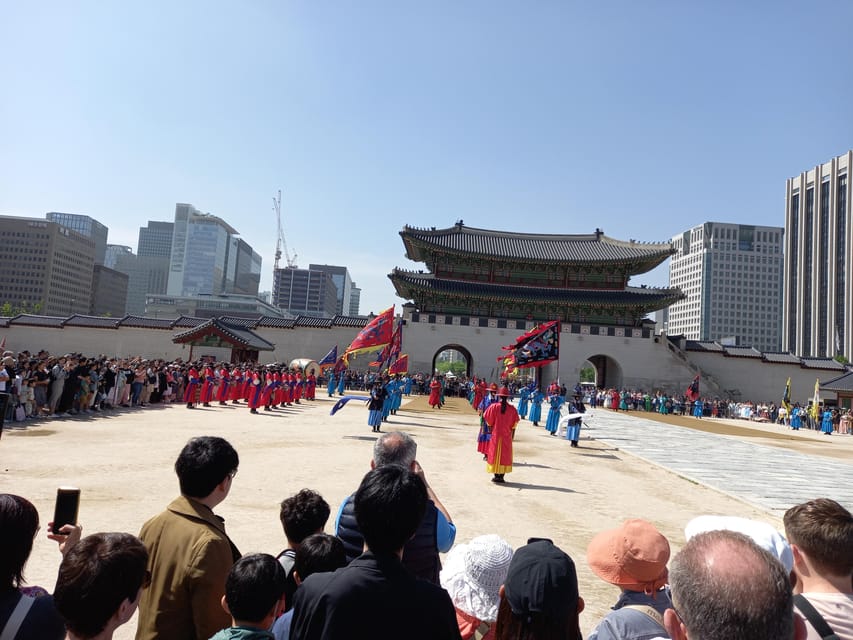
Gyeongbokgung receives about two hours, the longest stop of the day. That is the right choice. This is the palace that best explains the political and cultural ideals of the Joseon Dynasty.
Built in 1395 as Joseon’s first main palace, Gyeongbokgung is the largest of Seoul’s royal palaces. Its position on relatively flat ground and its formal palace layout make it especially useful for understanding traditional Korean planning.
The buildings are more than pretty rooflines. Their arrangement reflects order, rank, ceremony, and the Confucian values that shaped Joseon government and society. That is where Paul’s approach can make a real difference. He focuses on the spirit of the period and on how architectural details reflect the beliefs of the people who built and used the palace.
Without that background, you may notice painted beams, tiled roofs, courtyards, and stone steps. With it, you can begin to understand why the spaces were arranged as they were and why certain structures mattered more than others.
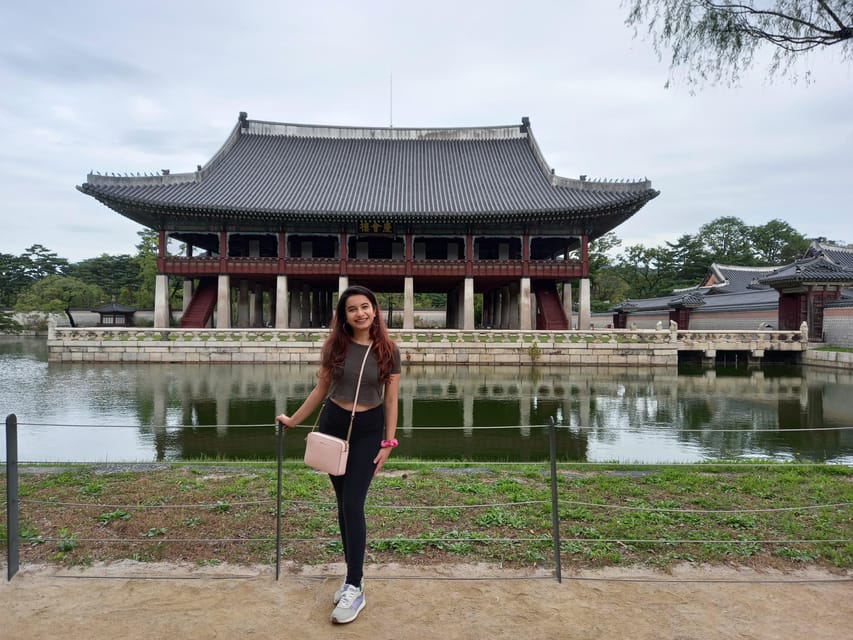
The palace is also the tour’s best photo stop. The guide has been praised for knowing good picture locations and for taking photos for the people he guides, then sending them afterward. That is a useful extra on a short layover, when you are trying to enjoy the visit and document it at the same time.
The limitation is simple: two hours cannot cover every corner of this large complex at a slow pace. Wear comfortable shoes and expect time outdoors. The tour’s value here comes from a clear route and explanation, not from giving you a full morning to wander alone.
The Folk Museum and ordinary Joseon life
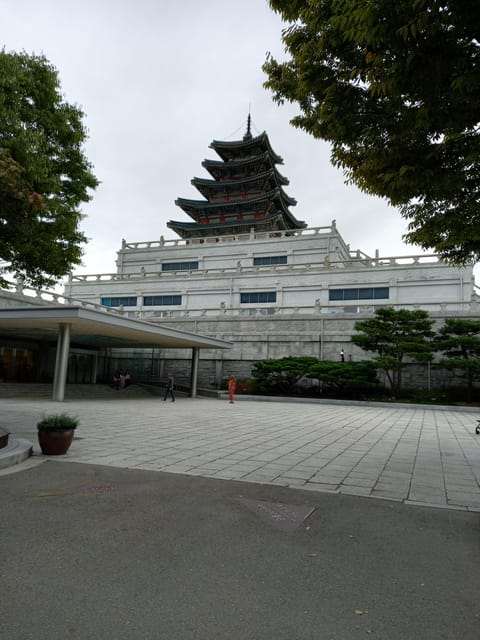
The National Folk Museum of Korea follows with about 30 minutes. That is a short visit, but it changes the focus from royal architecture to everyday people.
The exhibits cover folk customs, seasonal activities, and the stages of life in Joseon society. You can see how birth, growing up, marriage, old age, illness, treatment, and death were marked by ceremonies and shared traditions.
This stop helps answer a useful question: What did Joseon culture mean outside the palace walls? Gyeongbokgung shows official power and court life. The Folk Museum turns toward households, rituals, work, and the calendar of ordinary communities.
Thirty minutes is enough for a guided overview, not enough for every display. If you enjoy museums and want to read each panel, you may wish for more time. If you are using Seoul as a stop between flights, the brisk visit keeps the day moving and gives you essential context without trapping you indoors.
Admission to Gyeongbokgung is included. The supplied details specifically identify palace admission as included, but do not list a separate Folk Museum admission charge, so confirm the exact coverage when booking.
Bukchon Hanok Village, old homes above modern Seoul
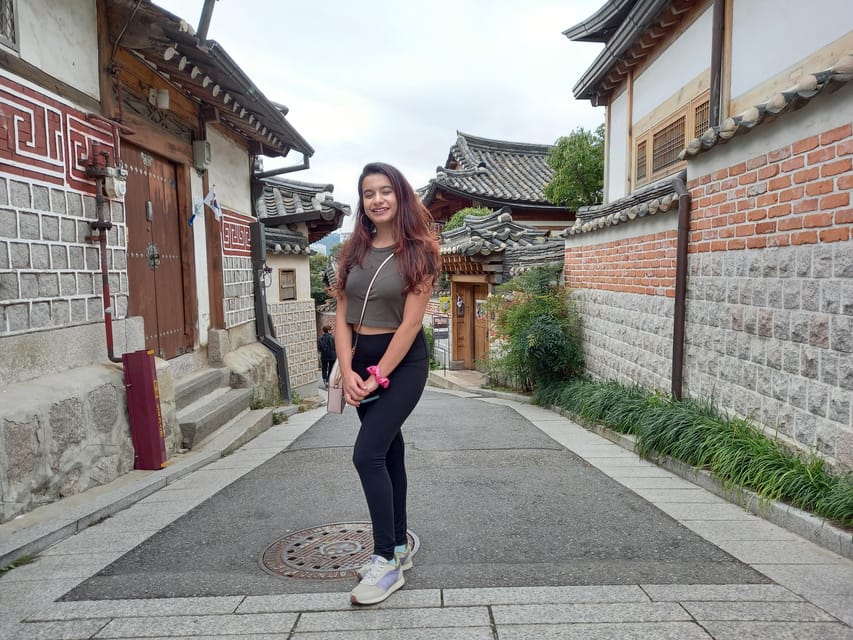
Bukchon Hanok Village receives about 40 minutes. This historic residential district contains the largest cluster of traditional Korean hanok homes, with about 1,000 buildings described in the tour information.
Bukchon is memorable because it does not feel like an isolated historical park. Its traditional houses are set within present-day Seoul, with modern buildings and N Seoul Tower appearing in the background. The contrast gives you a quick visual lesson in how the city has changed without losing every trace of its older form.
The walk is more about streets, roofs, walls, and views than grand monuments. You will want to pay attention to the slope and the changing sightlines as you move through the village. The short stop is useful for photographs and for seeing how traditional housing fits into a large capital city.
There is a practical catch. Bukchon is a real neighborhood, not just a museum display, and the visit is guided and brief. Stay with the group, keep voices low, and do not treat private doorways as photo props. The itinerary does not promise extended free time, so this will be an introduction rather than a full neighborhood exploration.
A few more Seoul trips to weigh up
- Seoul: War Memorial of Korea Private Guided Museum Tour
★ 4.9 · 29 reviews - DMZ Tour + The War Memorial of Korea Museum
★ 5.0 · 28 reviews - Color Pool Museum
★ 4.0 · 22 reviews - SEOUL: Gugak – Korean Traditional Music Museum&Concert Tour
★ 4.7 · 17 reviews
Insadong and Jogyesa’s quieter pause
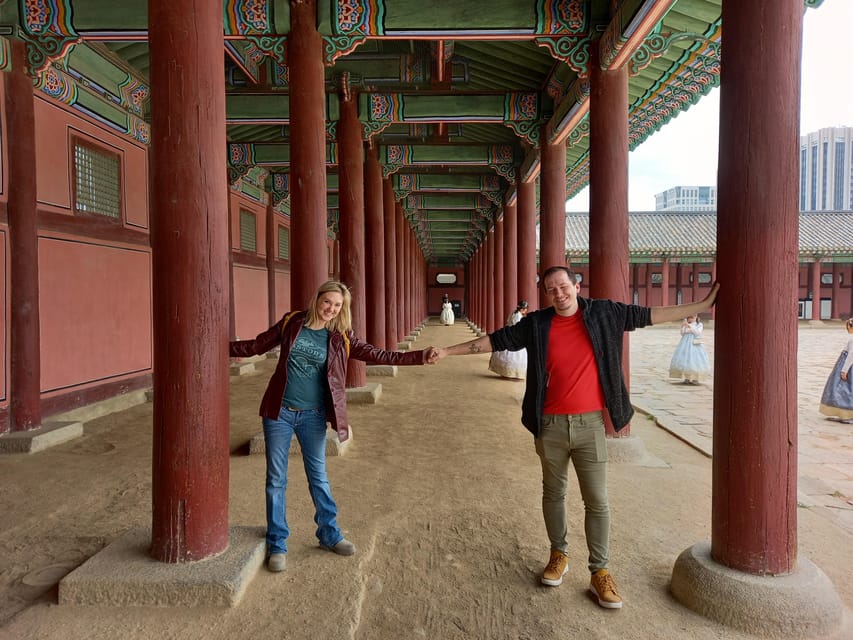
The final major sightseeing area is Insadong, with about an hour. The street is a natural place to finish because it brings together traditional culture, shops, food, and city walking in a compact area.
The tour description also includes Jogyesa Buddhist Temple, located near Gyeongbokgung and in Insadong. Jogyesa is small, but it serves as the headquarters of Korea’s Buddhist organization and was built in 1926.
That makes it a useful counterpoint to the Confucian palace. At Gyeongbokgung, you are looking at the ideals of a royal dynasty. At Jogyesa, you see an active religious center connected to Korean Buddhist practice. The temple does not need a huge footprint to be important.
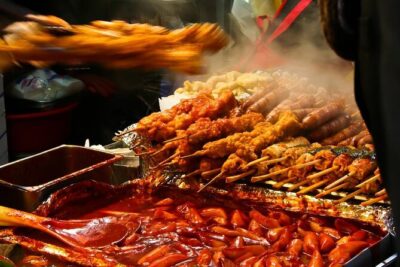
The hour in Insadong can feel flexible compared with the palace visit, but the exact balance between street time and the temple depends on the guide and the day’s pace. Food and drinks are not included, so budget separately if you want a snack or meal. There is no promise of a dedicated food tasting, although one review describes the guide introducing authentic street food as part of the wider experience.
What Paul Koo adds to the day
The guide is Paul Koo, and the strongest praise centers on his explanations, calm handling of public transport, and local knowledge of Seoul. He has studied Korean culture and history for more than 10 years, with particular strength in Confucianism.
That subject can sound abstract in a short city visit. Here, it becomes a way to connect palace gates, courtyards, rank, ritual, and family life. I like that approach because it gives you something to look for at every stop.
Paul also meets you at the airport, which is valuable if Korea is new to you. You do not need to figure out the first train connection, find the right city route, and then repeat the process on your own after a long flight.
The tour is offered in English and is private. That usually means a more direct conversation and a pace shaped around your group, though the six-hour limit still keeps the route brisk. The available information does not promise a particular vehicle, hotel pickup, or a private car. The transport described is public rail and public transport, with escorting by the guide.
Is $254 a fair price for a layover?
The listed price is $254 per group up to one person. That is not a low-cost way to see Seoul, especially when compared with taking the airport train and visiting a few sights independently.
The value comes from the structure. Your transport from Incheon through Seoul and onward to Seoul Station is included, as is the guide for six hours and Gyeongbokgung admission. You also receive airport navigation, an organized route, cultural interpretation, and help with the return train.
For a solo visitor with a short connection, that can be worthwhile. The cost buys time and reduces the risk of missing a train or wasting part of the layover figuring out directions. If you already know Seoul, speak some Korean, and enjoy planning public transport yourself, the price may feel harder to justify.
The group wording deserves attention. The price says up to one person, while the activity is described as a private group. If two or more people are traveling together, check how the operator calculates the total before booking. Food, drinks, and insurance are not included.
Free cancellation is available up to 24 hours before the tour for a full refund, and you can reserve now and pay later. Those terms help if your flight schedule is not fully settled, but your airport connection still needs a generous safety margin.
Who will get the most from this tour?
I would choose this experience for a first visit to Seoul during a long daytime layover. It suits you especially well if you want history explained in plain language, prefer a private guide, and do not want to manage the city’s train system alone.
It is also a good match for couples, families, or solo visitors who want photographs taken along the way. Paul’s reported habit of sending photos afterward is a thoughtful benefit, though you should confirm that this remains part of the current service.
I would look elsewhere if you want a slow palace visit, a long food tour, extensive shopping, or time to explore Bukchon independently. The route gives you a strong cultural sample, but it does not leave much room for detours.
Should you book this Seoul layover tour?
Book it if your priority is to see Seoul’s essential traditional sights without gambling with airport connections. Gyeongbokgung, the Folk Museum, Bukchon, Jogyesa, and Insadong make a sensible cultural route, and Paul’s focus on architecture and Confucian thought gives the day a clear purpose.
Before booking, confirm the meeting time, return flight schedule, final group price, and exactly when you must be back at Incheon. If those details work, this is a well-planned six-hour introduction to Korea that gives you more than a quick palace photograph.
FAQ
Where does the tour begin?
The tour begins at Incheon International Airport. The meeting time can be chosen after booking, subject to confirmation with the guide.
Where does the guided tour end?
The guided portion ends at Seoul Station, specifically at the airport railway area. You then take the train from Seoul Station back to Incheon Airport.
How long is the experience?
The tour lasts six hours. An example given is a 7 a.m. airport meeting with a 1 p.m. finish at Seoul Station.
How do I travel between Incheon Airport and Seoul?
The tour uses the AREX airport railway. Depending on departure times and availability, you may take the express train or the normal all-stop train.
How long does the train journey take?
The express train takes about 43 minutes, while the normal train takes about one hour. The normal train may be used if waiting for the express service would take more than 20 minutes.
What sights are included?
The route includes Gyeongbokgung Palace, the National Folk Museum of Korea, Bukchon Hanok Village, Insadong, and Jogyesa Buddhist Temple.
Is the tour private and what language is offered?
Yes. It is a private group experience with a live English-speaking guide.
Are meals and insurance included?
No. Food, drinks, and insurance are not included. Transportation described in the tour and Gyeongbokgung admission are included.
Just added around Seoul
- Gyeongbokgung palace,seoul with gigibebe hanbok rental★ 4.5 · 12 reviews
- Private tour guide service in Seoul, Korea★ 5.0 · 6 reviews
- Alpaca, Nami, Petite Fr, Italian Village, Garden of Morning Calm★ 3.5 · 5 reviews
- Gyeongju UNESCO Sites Tour by KTX train; The Museum Without walls★ 4.5 · 11 reviews
- Private day trip to Korean Folk Village & Dae Jang Geum Park★ 5.0 · 7 reviews
- Private tour Lotte World,Tower,Aquarium(All Tickets are included)★ 5.0 · 12 reviews
- Full Day Private Seoul Tour for foodies★ 5.0 · 3 reviews
- Seoul Private Custom Walking Tour with A Guide (Private Tour)★ 4.5 · 28 reviews
Gyeongbokgung Palace Tours, compared.
Gyeongbok Palace, Bukchon Village, and Gwangjang Tour
Read our review →
Best Seoul City Tour (Gyeongbokgung Palace,Insadong,Namsan Tower)
Read our review →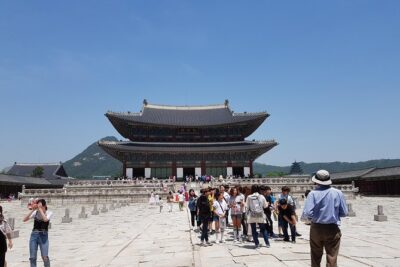
Seoul City Sightseeing Tour Including Gyeongbokgung Palace, N Seoul Tower, and Namsangol Hanok Village
Read our review →Gyeongbok Palace, Bukchon Village, and Gwangjang Tour
Read our review →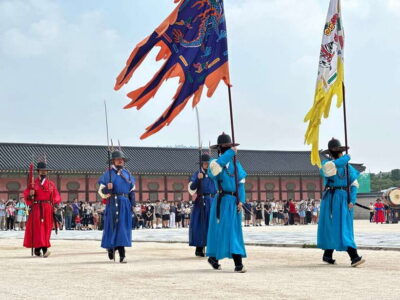
Seoul Highlights: Gyeongbok Palace, Insadong & N Seoul Tower
Read our review →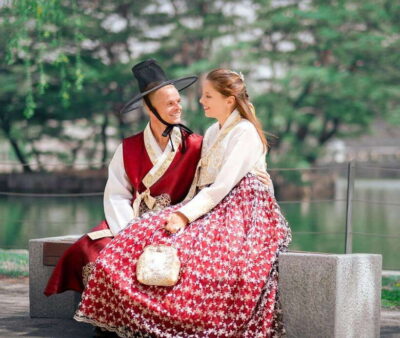
Seoul City Half Day Tour-Gyeongbok Palace Guard Changing Ceremony
Read our review →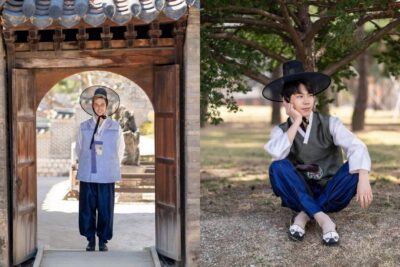
Browse the lists this tour appears in