
Reviewed · EVENING EXPERIENCES
Seoul: Deoksugung Palace Night Tour
Deoksugung Palace takes on a different mood after sunset. Its lit courtyards, stone walls, and mix of Korean and Western buildings tell the story of a country trying to modernize while facing outside pressure. The Korean Empire period, not just the better-known Joseon era, is the focus here.
I like the small-group format, capped at 20 people, and the chance to ask a palace guide direct questions. I also like the practical location beside City Hall Station, which makes this an easy evening activity in central Seoul. The main caution is that the tour needs at least four participants and good weather, so plans can change.
Key points to know before booking
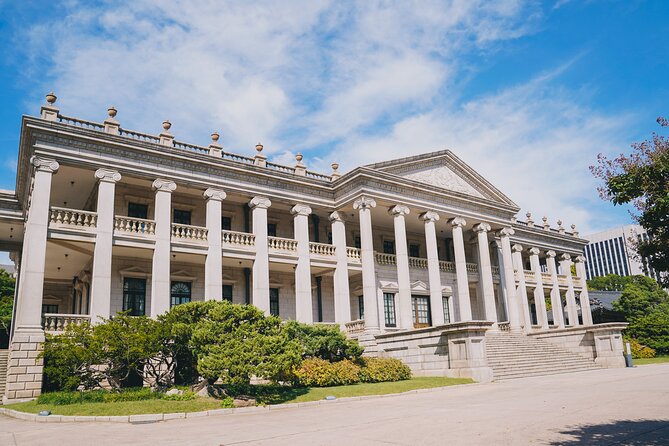
- The palace looks best at dusk and night, when the buildings are lit and the grounds feel quieter.
- The tour centers on Korea’s short-lived Korean Empire period, including King Gojong’s role and the end of the Joseon dynasty.
- You visit five important buildings, including the throne hall, royal bed-chamber, and Western-style Seokjojeon.
- English and Chinese explanations are available, with guides such as Alan Han and Mr. Lee named in the tour information.
- Meet at City Hall Station Exit 1 at about 6:20 p.m., with the tour beginning at approximately 6:30 p.m.
- Monday is a problem, because Deoksugung Palace is closed. On that day, the operator offers a Gyeongbokgung Palace tour instead.
Why Deoksugung works so well at night
Many palace visits in Seoul focus on grand scale. Deoksugung offers something more compact and more historically tense. It became important during the final years of the Joseon dynasty, when Korea was called the Korean Empire and was making its first serious attempts at modernization after centuries of royal rule.
That change appears in the buildings. Traditional Korean halls share the grounds with Western-style structures, a combination you will not see in the same way at Seoul’s other major palaces. The result is not one perfectly matched architectural style. It is a record of a country caught between old royal customs and a new political world.
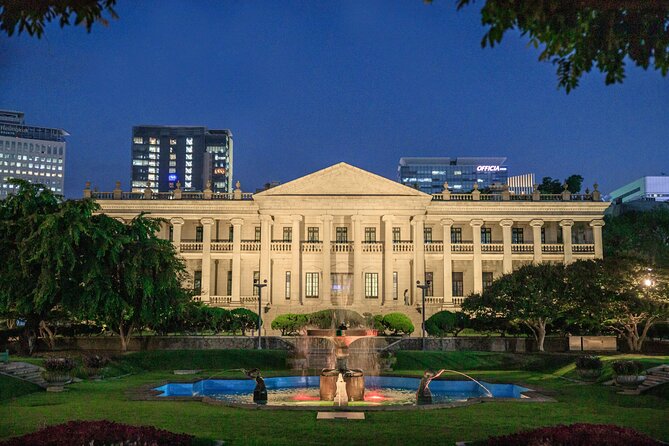
Night lighting gives the palace a calmer feel. The illuminated buildings look formal without feeling overwhelming, and the stone wall beside the palace adds an attractive walk before or after the tour. I would choose this visit if you want history with atmosphere, rather than a large palace complex that takes half a day to cover.
The tour lasts about two hours. That is long enough for a serious explanation of the main buildings, but short enough to fit around dinner or another evening plan. You are not simply walking past photo stops. The guide explains how the palace relates to King Gojong, the Korean Empire, modernization, and the pain caused by Japanese invasion.
A few more Seoul trips to weigh up
- Seoul: Night Market Food Tour with Local Guide
★ 4.9 · 943 reviews - Seoul: Evening Dark History, Folklore & Ghost Story Walking Tour
★ 5.0 · 593 reviews - Seoul Night Palace & Market Food Tour with Vehicle
★ 5.0 · 275 reviews
Meeting at City Hall Station Exit 1
The meeting point is in front of Exit 1 of City Hall Station, served by Seoul Subway Lines 1 and 2. The listed address is 362-1 Taepyeongno 2-ga in Jung District. The tour start time is approximately 6:30 p.m., while the instructions ask you to meet at about 6:20 p.m.
That ten-minute margin matters. The operator says late arrivals cannot join after the tour has started, since waiting would hold up the rest of the group. I would arrive early, find Exit 1, and keep your phone available for messages.
The operator sends meeting details by email or WhatsApp. You must provide a name and a Korean-accessible contact number, or a working service such as WeChat or Line. A wrong number, or one that does not work in Korea, can leave you without useful updates and may affect your ability to join.
The central location is one of this tour’s practical strengths. City Hall Station is near Deoksugung, so you do not need to cross Seoul for a short evening appointment. It is also convenient if you are already sightseeing around City Hall or Gwanghwamun.
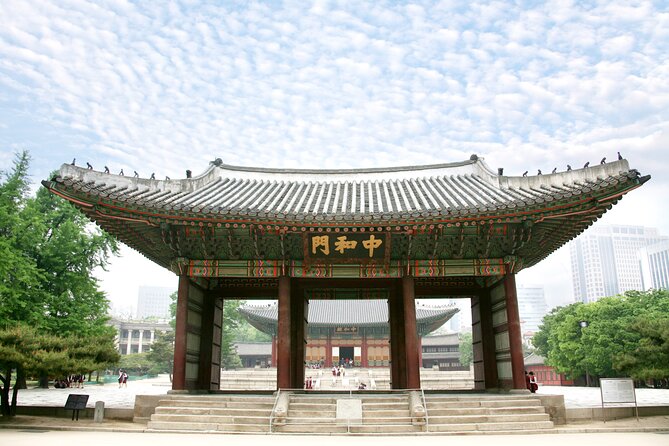
Junghwajeon, the palace throne hall
The first major stop is Junghwajeon, the main throne hall. This is where the tour establishes the palace’s royal importance and gives you a visual starting point for understanding court life.
A guide can add the context that a self-guided walk often misses. Instead of seeing only a decorated hall, you hear how royal authority worked, how the palace functioned during the final Joseon years, and why Deoksugung became so important during the Korean Empire period.
Junghwajeon is likely to be one of the most recognizable stops, but the value lies in the explanation around it. If you are interested in dynastic politics, this is where questions about King Gojong and the transition toward the Korean Empire begin to make sense.
The tour’s guides are specifically presented as available for questions. Alan Han led one highly praised visit, including a private-feeling tour when only one person had booked. Mr. Lee is also described as a strong storyteller with extensive preparation in palace history. Guide quality can vary by date, but the format gives you a chance to ask about details that catch your attention.
Seokjojeon and the palace’s Western turn
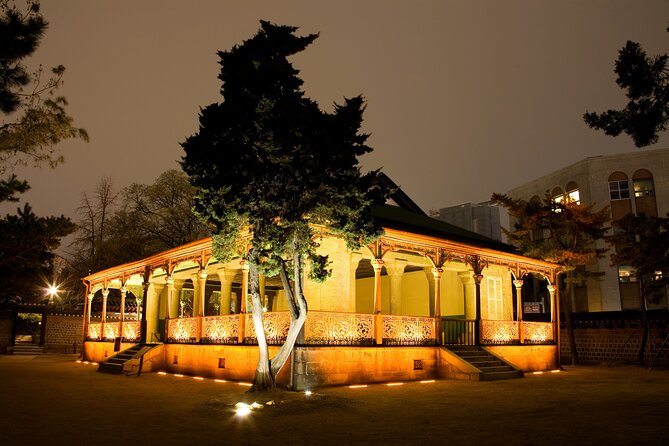
Seokjojeon is the clearest sign that Deoksugung was not simply an old Korean palace preserved in amber. This Western-style building reflects the period’s push toward modernization and the influence of foreign architectural ideas.
Its presence beside traditional halls gives the tour much of its special character. You can compare Korean royal design and Western forms within the same palace grounds, rather than treating modernization as an abstract political idea.
This is also where a guide’s interpretation has real value. Without explanation, Seokjojeon may look like an unusual stone building. With context, it becomes part of the story of Korea’s attempt to change its institutions and public image while royal power was under growing pressure.
The building is especially effective in the evening, when exterior lighting brings out its shape. The tour does not promise interior access to every building, so you should think of this as a guided look at the palace grounds and architecture, not a full museum visit.
Same country, a completely different kind of day:
- Best DMZ Tour Korea from Seoul (Red Suspension Bridge Optional)
★ 5.0 · 41,422 reviews - DMZ Tour: 3rd Tunnel, Option(Suspension Bridge, Boat) from Seoul
★ 5.0 · 21,373 reviews - DMZ tour south Korea from Seoul (NK experience hall, defector)
★ 5.0 · 20,599 reviews - Seoul: DMZ Tour with Optional Suspension Bridge
★ 4.8 · 5,277 reviews
Seokeodang, a favorite of King Gojong
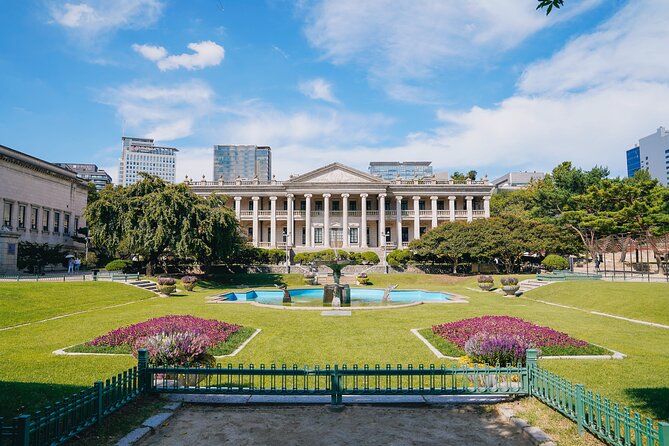
Seokeodang is described as the building most beloved by King Gojong. That detail gives the tour a more personal turn. The palace is not only a collection of official halls. It was also a place where a ruler lived, made decisions, and experienced the strain of a difficult era.
I find details like this useful because they give you a reason to remember one building over another. A throne hall explains public ceremony. A favored residence suggests private preference and daily royal life.
The guide’s job here is to connect the building with Gojong rather than present it as a silent architectural object. You can ask questions about why he valued it and how it fit within the palace. The available information does not promise a particular story or interior access, so expect interpretation from outside and around the structure rather than a guaranteed room-by-room visit.
Hamnyeongjeon, the king’s bed-chamber
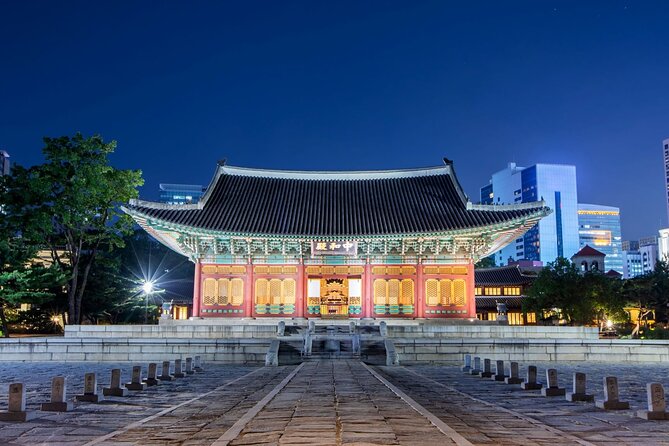
Hamnyeongjeon was the king’s bed-chamber. This stop brings the palace scale down from formal government to the private side of royal life.
A bed-chamber may seem less grand than a throne hall, but it can make the history easier to picture. King Gojong’s position was public and political, yet he also lived within these buildings while Korea faced rapid change and foreign intervention.
The contrast between Hamnyeongjeon and Seokjojeon helps explain why Deoksugung is so interesting. One building belongs to familiar Korean palace traditions, while another reflects modernizing ambitions. Within a short walk, you see the old court world and the pressure to create something new.
The tour is recommended for people interested in history and architecture, but you do not need specialist knowledge. A good guide should help you notice why the buildings differ and what those differences meant at the time.
Jungkwanhun and the tour’s final stop
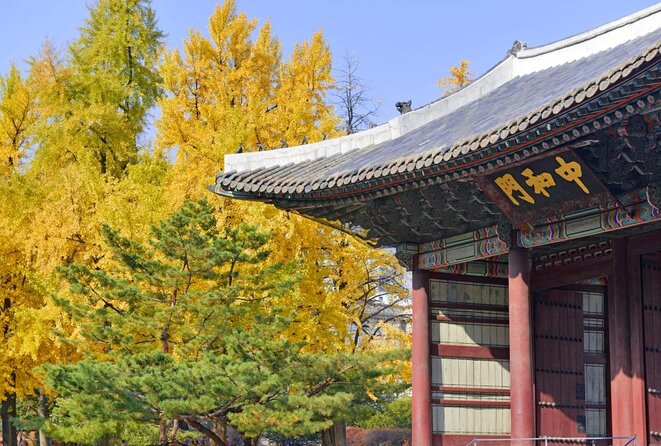
The tour ends at Jungkwanhun, also shown as Jeonggwanheon, a building associated with the final stop. The route information calls it a cafeteria, while the meeting details list the tour ending at Jeonggwanheon on Sejong-daero. You should treat this as the end point rather than assume that food or a café visit is included.
Ending inside the palace grounds is convenient. You can continue your evening in central Seoul without having to return to the original meeting spot. The tour does not provide a separate return transfer, so plan to leave on foot or use public transportation from the City Hall area.
This final stop also gives the guide a natural place to answer remaining questions. That matters because the palace covers several layers of history in only two hours. I would save one or two questions for the end, especially if you want to clarify the Korean Empire period, Gojong, or the Western-style architecture.
What the $35 price gets you
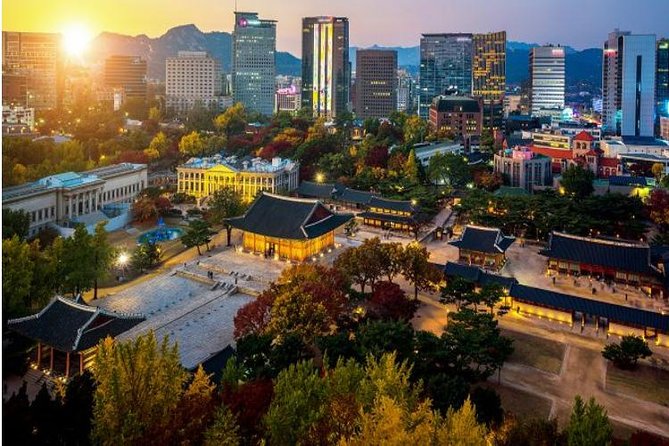
The listed price is $35 per person. For a two-hour guided experience in central Seoul, the value depends mainly on how much you want interpretation rather than a simple palace walk.
The admission line identifies the activity ticket as free, so the $35 appears to cover the guided experience rather than a high entrance charge. You should still check the final booking details for exactly what is included, because the supplied information does not break out every fee.
I think the price is reasonable if you care about the political story and want to ask questions. The palace itself can be visited without a guide, but the mix of buildings is easier to understand when someone explains why a Western structure sits beside traditional royal halls.
The value is less clear if you only want quick night photographs. You would be paying for a two-hour historical explanation, and the tour does not permit recording or filming. That restriction may matter if creating video content is a main goal.
The maximum group size is 20 people. That is not a private tour, though it is smaller than a large coach group. A private tour estimate is available by email if you want a more tailored visit.
Who will enjoy this palace walk most
I would recommend this tour to you if you want:
- A short evening activity near City Hall
- A guide-led explanation of the Korean Empire and late Joseon period
- A closer look at traditional and Western architecture together
- A chance to ask questions in English or Chinese
- A quieter palace visit with evening lighting
- A manageable introduction to Seoul’s royal history
It suits first-time visitors who want context without committing to a full day of palace sightseeing. It also works for repeat visitors who have already seen Gyeongbokgung and want a different architectural story.
Families can participate if children are comfortable with a two-hour history walk, though the operator gives no special children’s program. Pets are not allowed, and there is no stated place to leave them.
People looking for a private experience should request a separate estimate. The regular tour can have up to 20 participants, and the operator may cancel if fewer than four people book. That minimum is the biggest planning concern.
Weather, Mondays, and booking details
The activity depends on good weather. If poor conditions lead to cancellation, you are offered another date or a full refund. The same applies if the minimum number of participants is not reached.
Deoksugung is closed on Mondays. The operator says you can book a Gyeongbokgung Palace tour instead, but you should not assume the same route, guide, or atmosphere. Check the day carefully before booking.
Confirmation arrives when you book, and the operator also uses email or WhatsApp for meeting updates. Free cancellation is available up to 24 hours before the start time. Within 24 hours, refunds and schedule changes are not accepted.
The activity is listed as suitable for most participants and near public transportation. No detailed accessibility information is provided, so you should contact the operator if you need specific mobility arrangements.
My call: book it for the story, not only the lights
Book this Deoksugung night tour if you want the palace to make historical sense. The combination of Junghwajeon, Seokjojeon, Seokeodang, Hamnyeongjeon, and Jungkwanhun gives you a compact route through royal ceremony, private life, modernization, and national crisis.
I especially like the chance to hear a guide such as Alan Han or Mr. Lee explain the buildings and answer questions. The evening setting and City Hall location add real convenience.
Skip it if you want an unstructured photo walk, need a guaranteed private tour, or cannot manage the four-person minimum and weather uncertainty. For most history and architecture fans, though, the $35 fee buys something a self-guided visit may lack: a clear explanation of why this unusual palace mattered when Korea was becoming the Korean Empire.
FAQ
Where does the Deoksugung Palace night tour meet?
The meeting point is in front of Exit 1 at City Hall Station, served by Seoul Subway Lines 1 and 2. The listed address is 362-1 Taepyeongno 2-ga in Seoul’s Jung District.
What time does the tour start?
The tour starts at approximately 6:30 p.m. You are asked to meet at about 6:20 p.m.
How long does the tour last?
The experience lasts approximately two hours.
What language is the tour offered in?
Explanations are available in English and Chinese.
Which buildings are included?
The route includes Junghwajeon, Seokjojeon, Seokeodang, Hamnyeongjeon, and Jungkwanhun, also listed as Jeonggwanheon.
What is the tour price?
The listed price is $35 per person.
Is palace admission included?
The activity information lists the admission ticket as free. Check the final booking details for the exact breakdown of what the $35 price covers.
Is the tour available on Mondays?
Deoksugung Palace is closed on Mondays. The operator says you can book a Gyeongbokgung Palace tour instead.
What happens if the weather is poor?
If the experience is canceled because of poor weather, you are offered a different date or a full refund.
Can I cancel for a full refund?
Yes. You can cancel up to 24 hours before the local start time for a full refund. Cancellations and changes made less than 24 hours before the start time are not accepted.
Just added around Seoul
- Gyeongbokgung palace,seoul with gigibebe hanbok rental★ 4.5 · 12 reviews
- Private tour guide service in Seoul, Korea★ 5.0 · 6 reviews
- Alpaca, Nami, Petite Fr, Italian Village, Garden of Morning Calm★ 3.5 · 5 reviews
- Gyeongju UNESCO Sites Tour by KTX train; The Museum Without walls★ 4.5 · 11 reviews
- Private day trip to Korean Folk Village & Dae Jang Geum Park★ 5.0 · 7 reviews
- Private tour Lotte World,Tower,Aquarium(All Tickets are included)★ 5.0 · 12 reviews
- Full Day Private Seoul Tour for foodies★ 5.0 · 3 reviews
- Seoul Private Custom Walking Tour with A Guide (Private Tour)★ 4.5 · 28 reviews
Evening Experiences, compared.
Evening Dark History, Folklore & Ghost Story Walking Tour
Read our review →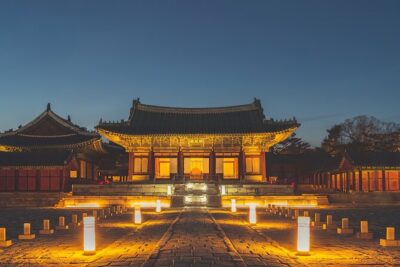
Seoul Night Palace & Market Food Tour with Vehicle
Read our review →
Guided City Wall Sunset Hike with Korean Dinner
Read our review →
Night Viewpoints with Evening Cruise w/ Fireworks
Read our review →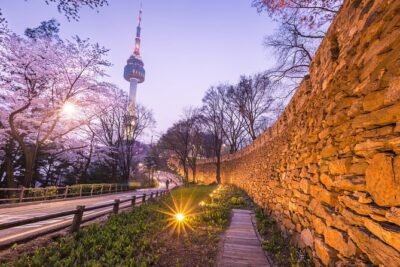
Browse the lists this tour appears in