
Reviewed · WORKSHOPS
Make your K-scent perfume: Modern oneday class in Seoul
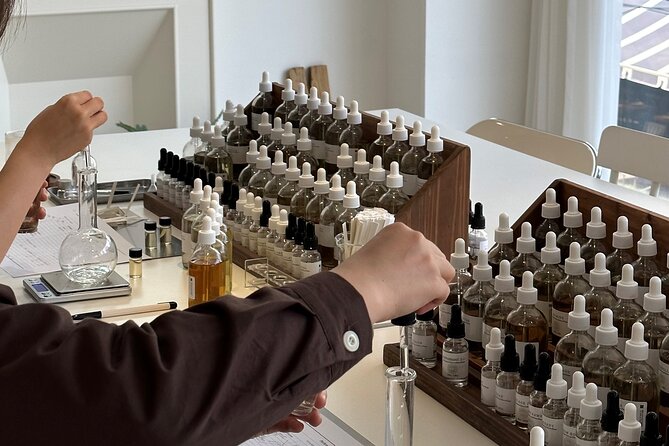
Making perfume at Casamu means you do more than select a pleasant bottle from a shelf. You smell Korean tea and snacks, learn how top, heart, and base notes work, test three small blends, and finally mix a 50ml scent that is genuinely yours. The Korean materials give the class a stronger sense of place than a standard fragrance workshop.
I like the opening tea ritual and the close guidance from the instructor, especially when you are stuck between two possible scents. I also like that you do the actual measuring and blending instead of handing your choices to a staff member. The main consideration is the price: at $96 per person for about two hours, this is a special activity rather than a cheap souvenir stop.
Key points at a glance
- A small Apgujeong class: The maximum group size is four, so you get help while testing scents.
- Korean scent materials: Selected accords include Korean-inspired fragrances, such as green tea, alongside more familiar perfume notes.
- A real blending process: You make three 5ml trials before settling on the final formula.
- Tea and da-gwa first: Seasonal Korean tea and snacks help set the mood and connect scent with memory.
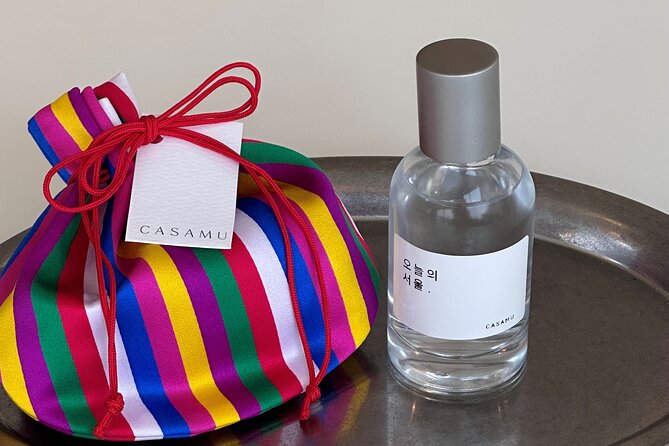
- Several take-home items: The class includes a 50ml perfume, a 10ml travel-sized bottle, trial blends, and a small gift in a Korean blessing pouch.
- A flexible audience: Families, couples, teenagers, solo visitors, and people preparing a signature scent for a wedding or life event can all find a reason to book.
Starting with tea and a memory
Casamu sits on Eonju-ro 164-gil in Seoul’s Gangnam District, near Apgujeong’s fashionable streets. The setting fits the class well: modern, youthful, and connected to the beauty and design culture that makes this part of Seoul popular.
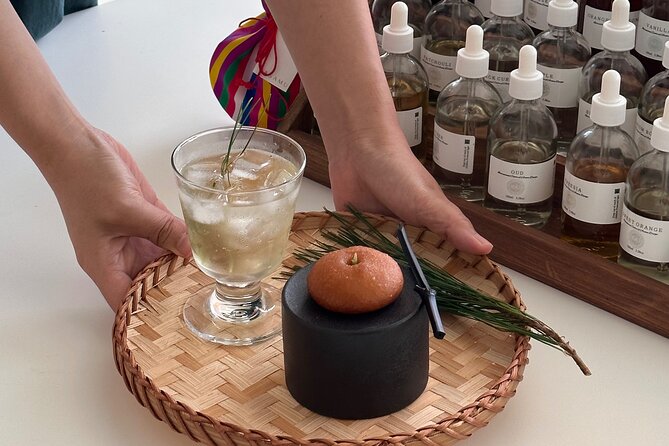
Your session begins with da-gwa time. You taste seasonal Korean tea and snacks while thinking about a favorite memory, place, or feeling you want the perfume to bring back. This is not just a polite refreshment break. It gives you a useful starting point when the scent table later presents more choices than your nose can easily sort.
The idea is simple. A perfume can preserve a moment in a way a photograph does not. A green tea note might recall a quiet afternoon in Korea. A sweet or creamy accord might bring back a birthday, a family trip, or a favorite café. You do not need to arrive with a clear formula in mind. You only need a memory, a mood, or a few smells you already know you like.
The tea and snacks are also one of the class’s strongest cultural touches. Many perfume workshops could take place in any major city. Here, the Korean refreshments and local scent options give the experience a clear connection to Seoul.
A few more Seoul trips to weigh up
- Local Home Korean Cooking Class & Market Adventure in Seoul
★ 5.0 · 1,024 reviews - Seoul: Korean Cooking Class at a Local Home and Market Tour
★ 5.0 · 348 reviews - Yongpyong Ski Resort from Seoul with Optional Lesson and Packages
★ 5.0 · 217 reviews
Learning the olfactory pyramid without getting lost
The instructor explains basic perfume structure through the olfactory pyramid. You learn about top notes, heart notes, and base notes, and how they change the way a fragrance develops.
Top notes are the first impression. Heart notes form the main body of the perfume, while base notes stay longer and give the blend weight. This framework matters because a scent that seems perfect at first sniff may change as the different materials settle together.
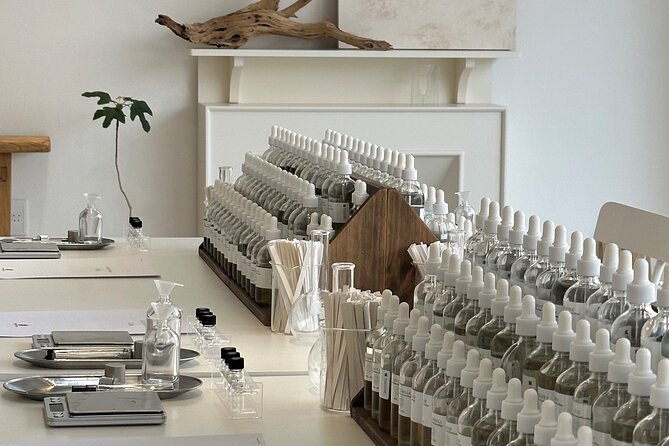
Casamu uses only IFRA-certified fragrance materials for the class. That does not mean you should ignore personal sensitivities, but it does show that safety has been considered in the selection of materials. The class is connected with the ICAD Korean center, and the workshop uses a selected set of 40 accords and natural raw materials from a much larger collection of about 250 fragrances.
That selection is helpful. A table with 250 options could turn creative work into a tiring guessing game. The smaller working set gives you variety without making the process impossible. You still have enough room to build something floral, woody, fresh, sweet, green, or unusual.
Testing scents at the perfume organ
The main working session takes place at an individual perfume organ, the traditional perfumer’s arrangement of scent materials. You smell each option, compare notes, and decide which ones fit the memory or mood you have chosen.
This is where the class becomes personal. You may arrive thinking you like one familiar scent family, then discover that a Korean accord changes the direction of your blend. Korean green tea is a popular example, and it can give a perfume a clean, place-specific character without making the result smell like a novelty souvenir.
The instructor helps you judge combinations and proportions. This support matters because perfume making is not simply a matter of adding every scent you enjoy. Too many strong notes can compete with each other, while a quieter base can help hold the blend together.
The class is conducted in English according to the available details, and Henny is specifically praised for being personable, patient, and supportive. Other Casamu instructors lead sessions as well, but Henny is the named instructor associated with several especially warm accounts of the experience.
I would pay attention to your own nose rather than trying to create a perfume that sounds sophisticated. The best result may be a simple combination of a few notes that reminds you of something important. You are not being graded, and there is no single correct perfume.
Three trial blends before the final bottle
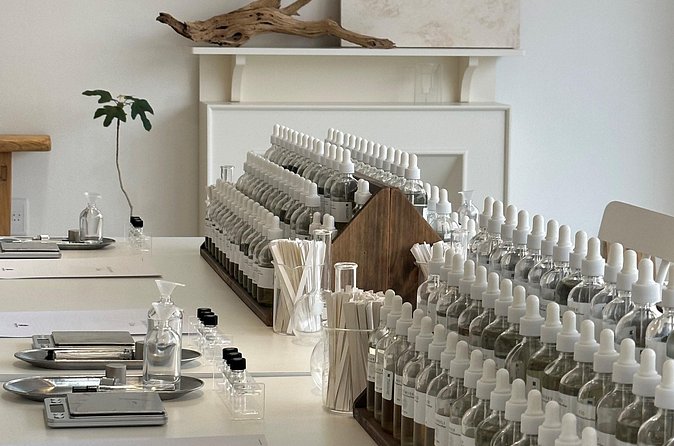
You first create three trial perfumes of 5ml each. This is one of the most useful parts of the format because it lets you compare ideas before committing to the final bottle.
A trial blend also exposes a common perfume-making surprise: two scents that smell good separately may not work well together. You can adjust the balance, remove an ingredient, or try a different direction. If you are indecisive, the instructor can help you compare the options and choose the blend with the best balance.
A 10ml travel-sized bottle is also provided. The stated take-home format includes the three 5ml trials, the 10ml bottle, and the final 50ml perfume. Since package details can sometimes be updated, I would confirm the exact bottle arrangement when you book, but the experience is clearly designed to give you more than one chance to enjoy your formula.
The hands-on approach is a real advantage. You measure and add the essences yourself, so you understand what went into the bottle. That gives the finished scent more meaning than a preselected fragrance with a printed label.
You can also name your perfume. This small step helps turn the bottle into a personal travel keepsake instead of simply another beauty product in your luggage.
Same country, a completely different kind of day:
- Best DMZ Tour Korea from Seoul (Red Suspension Bridge Optional)
★ 5.0 · 41,422 reviews - DMZ Tour: 3rd Tunnel, Option(Suspension Bridge, Boat) from Seoul
★ 5.0 · 21,373 reviews - DMZ tour south Korea from Seoul (NK experience hall, defector)
★ 5.0 · 20,599 reviews - Seoul: DMZ Tour with Optional Suspension Bridge
★ 4.8 · 5,277 reviews
Finishing a 50ml Korean scent
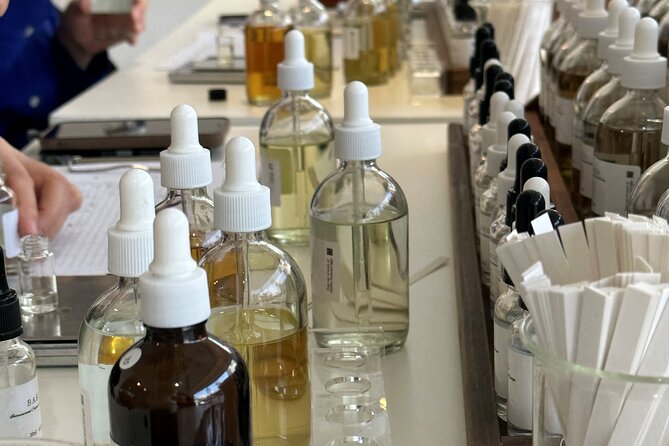
Once you have chosen your preferred direction, you finalize a personalized 50ml perfume. The instructor helps you settle the proportions and complete the blend.
The final bottle is packed in a Korean blessing pouch with a small gift. That packaging makes the result easier to give as a present, but I think it works best as a souvenir for yourself. A bottle of perfume can bring back the mood of a trip long after the details of a busy sightseeing day have faded.
The class is especially good for a meaningful occasion. You might make a signature scent for a wedding, a birthday, a mother-daughter trip, or a family holiday. You might also make a perfume with a teenager who wants a creative activity that feels more grown-up than a standard craft workshop.
The process is not limited to women. The class suits anyone interested in scent, including people looking for a personal cologne or a fragrance that does not fit a conventional category. Several families have used the session as a shared activity, and the small class size makes it easier for each person to make something different.
Why the small group matters
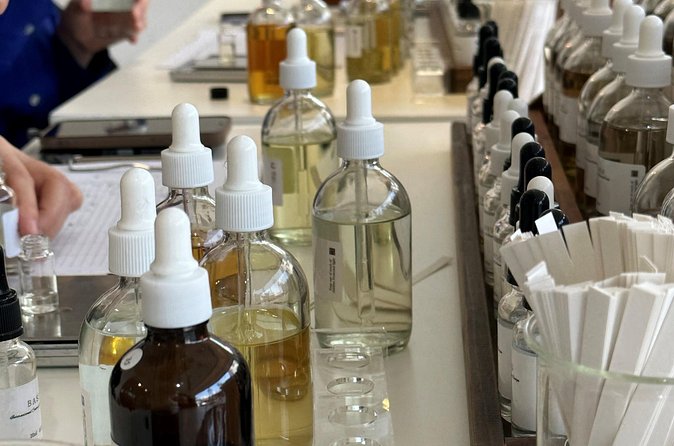
Casamu limits the class to four people. That is a strong feature for a workshop where each person needs time at the scent station and may want advice on several combinations.
A larger class could make the experience feel rushed or impersonal. Here, you have room to ask why one accord works better as a top note and how another changes the final balance. The instructor can also spend time with someone who cannot decide between two blends.
Solo sessions may still go ahead, according to the available details, and one-person appointments have been warmly received. That gives you a calm setting if you prefer to work alone. Couples and families can share the process while still creating separate perfumes.
The class lasts about two hours. That is long enough for the tea, explanation, scent testing, trial blends, and final bottle without taking an entire day from your Seoul plans. Since scent fatigue is real, two hours is also a sensible limit. By the end, your nose may need a rest.
The $96 question: what are you paying for?
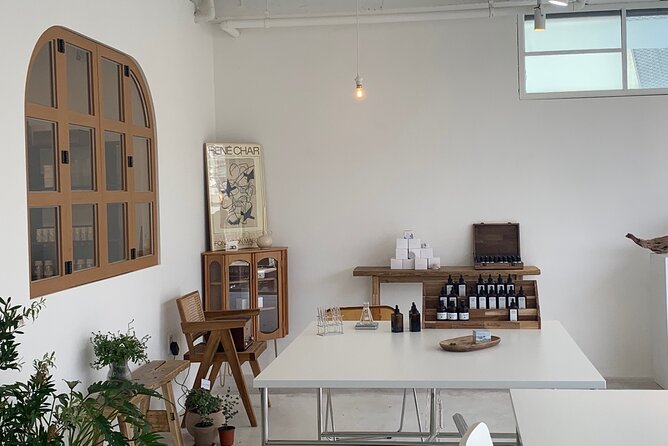
At $96 per person, this is not the choice for anyone who wants the lowest-cost souvenir. You are paying for a guided creative session, a small group, selected fragrance materials, Korean refreshments, multiple trial blends, the 50ml perfume, and additional take-home items.
The value improves if you care about the making process. You are not simply buying a bottle. You learn the basics of fragrance structure, compare materials, measure your own ingredients, and leave with a scent tied to your experience in Seoul.
The price also makes more sense for a shared occasion. A mother and daughter, a couple, or a parent with teenagers can treat the class as the main activity rather than an add-on between major sights. For a solo visitor, the value depends on how much you enjoy hands-on creative work and personal souvenirs.
If you only want to sample Korean beauty products, you can likely spend less elsewhere. If you want something you cannot buy in exactly the same form, Casamu offers a stronger reason to pay the premium.
Timing, location, and practical details
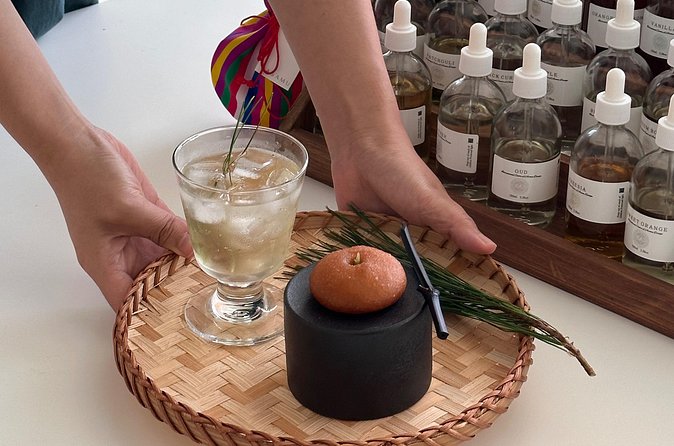
The meeting point is Casamu, at 32 Eonju-ro 164-gil, second floor, in Seoul’s Gangnam District. It is near public transportation, and the activity ends at the same location.
Apgujeong makes a useful pairing with shopping, cafés, and other activities in the area. I would avoid scheduling the perfume class immediately before an important reservation across town. You need to arrive on time, and the stated no-show rule applies after 30 minutes.
Confirmation is provided when you book, and the ticket is mobile, so you can keep the booking on your phone. The class is usually booked about 33 days ahead, which suggests that popular dates can fill early. I would reserve in advance if you want a particular afternoon or need space for a family group.
Free cancellation is available if you cancel at least 24 hours before the start time. Changes or cancellations made later are not accepted for a refund.
Who should book this Casamu class?
I would recommend it to you if you like creative activities, perfume, Korean culture, or souvenirs with a personal story. It is also a good rainy-day or winter option, since the core activity takes place indoors and does not depend on Seoul weather.
Families with teenagers are a particularly good match. The class gives everyone an active role, and the finished bottles are distinct rather than identical. It also suits a solo visitor who wants a quieter experience and does not mind making decisions with the instructor’s help.
Couples can create matching scents, contrasting scents, or one shared memory in two different formulas. The workshop also works for a birthday or a special trip, especially because the tea service and pouch add ceremony without making the session formal.
I would hesitate only if you dislike fragrance, have strong scent sensitivities, or prefer fast sightseeing to a careful creative process. The class asks you to smell, compare, wait, and revise. That is the point, but it will not suit every schedule or nose.
Should you book Make Your K-scent?
Book it if you want a Seoul souvenir that carries a memory rather than a logo. The Korean tea, local-inspired accords, small class, and hands-on blending give the experience a clear identity.
The $96 cost is fair for a two-hour workshop with several bottles and a 50ml final perfume, but it is still a considered purchase. Choose Casamu for the process, personal attention, and chance to make something you cannot pick up ready-made. Skip it if you only want a quick shopping stop.
For most people who enjoy scent and have room in their Seoul plans, this is a smart choice for a birthday, family outing, last-day activity, or calm break from major attractions.
FAQ
Where does the perfume class take place?
The class takes place at Casamu, 32 Eonju-ro 164-gil, second floor, in Seoul’s Gangnam District.
How long does the experience last?
The class lasts approximately two hours.
How many people can join the class?
The activity has a maximum of four people.
What happens at the beginning of the class?
You begin with da-gwa time, including seasonal Korean tea and snacks. This helps you think about a memory or feeling for your personal scent.
How many perfume trials do I make?
You make three trial perfumes of 5ml each before finalizing your scent.
What perfume bottle do I take home?
You finalize a personalized 50ml perfume. A 10ml travel-sized bottle is also provided, along with the trial blends and a small gift in a Korean blessing pouch.
Are the fragrance materials certified?
Casamu states that the class uses IFRA-certified fragrance materials. The materials include selected accords, natural raw materials, and Korean-inspired scents.
What is the cancellation policy?
You can cancel at least 24 hours before the start time for a full refund. Cancellations or changes made less than 24 hours before the experience are not accepted for a refund.
Just added around Seoul
- Alpaca, Nami, Petite Fr, Italian Village, Garden of Morning Calm★ 3.5 · 5 reviews
- Gyeongbokgung palace,seoul with gigibebe hanbok rental★ 4.5 · 12 reviews
- Private tour guide service in Seoul, Korea★ 5.0 · 6 reviews
- Gyeongju UNESCO Sites Tour by KTX train; The Museum Without walls★ 4.5 · 11 reviews
- Private day trip to Korean Folk Village & Dae Jang Geum Park★ 5.0 · 7 reviews
- Private tour Lotte World,Tower,Aquarium(All Tickets are included)★ 5.0 · 12 reviews
- Full Day Private Seoul Tour for foodies★ 5.0 · 3 reviews
- Seoul Private Custom Walking Tour with A Guide (Private Tour)★ 4.5 · 28 reviews
Workshops, compared.
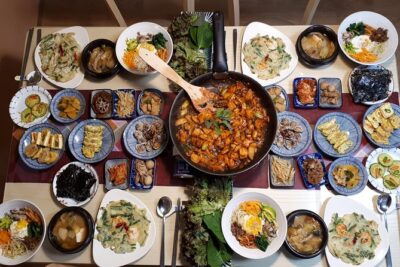
Local Home Korean Cooking Class & Market Adventure in Seoul
Read our review →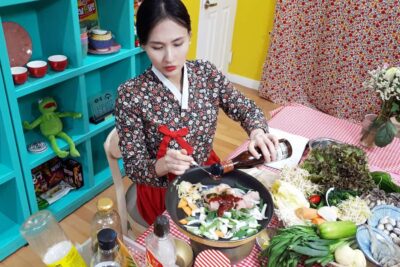
Korean Cooking Class at a Local Home and Market Tour
Read our review →
Yongpyong Ski Resort from Seoul with Optional Lesson and Packages
Read our review →
Korean Cooking Class with Grocery Shopping at Seoul Local Market
Read our review →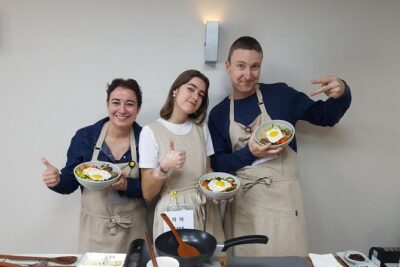
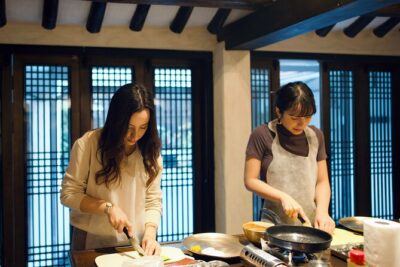
Royal Seoul Cooking Class in a 100-Year-Old Hanok
Read our review →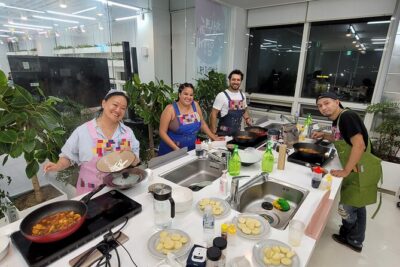
Busan Tailored Korean cooking class (Vegan OK)with market tour
Read our review →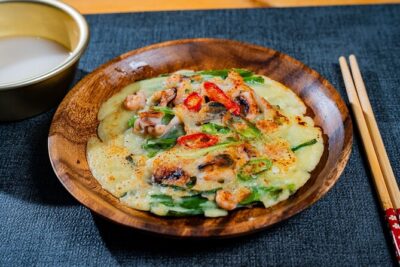
Taste of Korea, Authentic Home-Style Cooking Class
Read our review →Browse the lists this tour appears in