
Reviewed · PHOTOGRAPHY SESSIONS
Seoul High-Quality Night Photography
Seoul’s best night photographs often come from the meeting point between old and new. This tour takes you from neon-lit Euljiro alleys and a former printing district to a traditional pojangmacha street and quiet hanok lanes. I like the strong mix of city moods and the fact that a professional photographer creates more than hurried phone snapshots. I also like the local stories, especially the explanation of how Cheonggyecheon changed over time.
The main consideration is timing. The listed duration is about 1 hour 10 minutes to 1 hour 35 minutes, while the overview describes a longer 2 to 3 hour experience. Confirm the exact schedule before booking, especially if you are planning dinner or another evening activity. Food, drinks, souvenirs, and any entrance fees are extra.
Key points at a glance
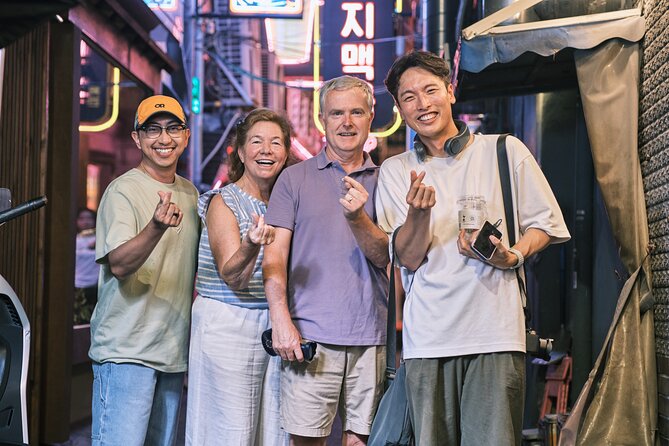
- Neon Euljiro alleys: Photograph narrow streets with signs and lights that give Seoul a slightly Hong Kong-like night feel.
- Former printing district: Learn how Euljiro’s working past connects with its newer restaurants, bars, and creative businesses.
- Cheonggyecheon bridge views: Stop above the stream for night photographs and a short account of its transformation.
- Pojangmacha culture: Walk past traditional outdoor food stalls and hear how this casual street-food tradition began.
- Hanok alley portraits: Finish with Korean architectural detail, tiled roofs, wooden frames, and quieter lanes.
- 50 or more edited photos: Download the finished images through a Microsoft OneDrive link available for one month.
Seoul after dark, framed by a local photographer
This is not just a walk with a camera pointed at buildings. You move through several versions of Seoul in a compact evening outing, and each stop changes the tone of your photographs.
One moment may feel nostalgic, with old signs, narrow alleys, and traditional rooflines. A few minutes later, neon light and polished storefronts put you firmly in the present. That contrast gives the tour its purpose. You are not simply collecting postcard views. You are building a small visual story about how Seoul keeps its older layers while making room for new ones.
The English-speaking cultural guide adds context as you go. The photographer handles the practical side of the session, helping you appear in the frame rather than leaving you to take only self-portraits. If you want photographs that show you in Seoul, not just photographs of Seoul, that is the main reason to consider this outing.
A few more Seoul trips to weigh up
- Hanbok Photoshoot and History Tour at Gyeongbokgung Palace
★ 5.0 · 276 reviews - Street photoshoot and Seoul Hidden gem History Walking Tour
★ 5.0 · 68 reviews - Gyeongbokgung Hanbok Photoshoot
★ 5.0 · 25 reviews
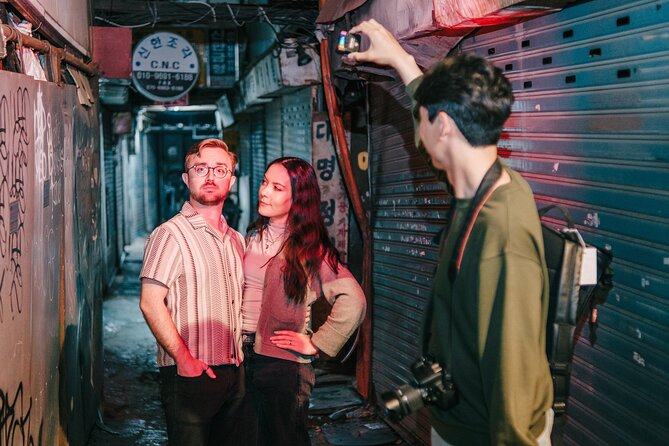
Euljiro’s neon alleys and printing past
The first photo stop is an alley filled with neon signs. The look recalls Hong Kong, with layers of light, tight passageways, and a slightly worn urban character. This is the sort of setting that works well after sunset, when signs become the main source of color and the surrounding streets take on a cinematic feel.
You will also hear about the area’s modern history as a former printing district. That detail matters because it keeps the stop from becoming a generic neon backdrop. Euljiro is presented as a working part of the city with an industrial past, not merely a fashionable night-out area.
The tour describes some of the local places as gentrified, so you may notice an interesting mix of older businesses and newer activity. The exact streets and businesses can vary, but the central idea is clear: this part of Seoul has changed while retaining traces of its earlier trade.
For photographs, this is likely to be the most immediately dramatic stop. Neon can flatter portraits, but it can also create harsh shadows or overpower a face. A professional photographer should help with positioning and light, yet you should still expect an urban night setting rather than a polished studio portrait.
I like this opening because it gives you an instant sense of place. The drawback is that narrow alleys can feel visually crowded. If you prefer broad views and open spaces, the later Cheonggyecheon stop will suit you better.
Cheonggyecheon Stream from the bridge
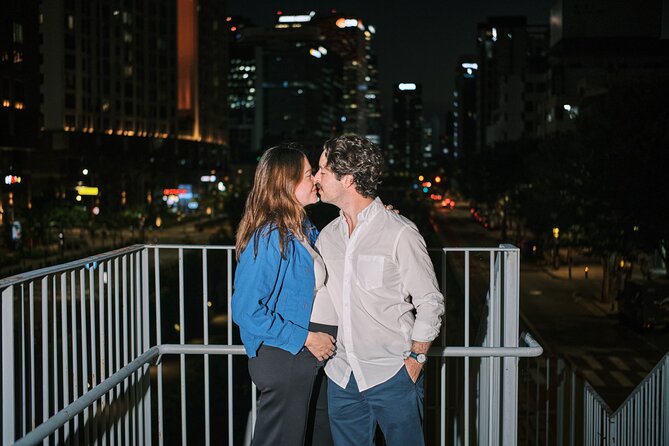
The next major setting is a bridge overlooking Cheonggyecheon Stream. From above, you get a cleaner night view than in the alleys, with the water and urban surroundings creating more breathing room in the frame.
The guide explains the history and transformation of Cheonggyecheon. That story gives the stop more weight than a quick bridge photo. You are seeing a place that has changed in both appearance and public use, and the guide connects the present-day view with that earlier story.
This is a useful point in the tour for variety. After the close-up neon scenes, the stream offers lines, reflections, and a wider composition. You might pose near the bridge rail or use the lights and water as the background. The exact photographs will depend on the photographer and conditions, but the setting gives you a different visual rhythm.
The bridge stop also helps break up the walking. Even though the activity is fairly short, moving between contrasting settings keeps it from feeling like one long portrait session. I would pay attention to the walking pace here, since the tour combines photography with cultural explanation rather than stopping for long sightseeing visits.
Pojangmacha streets and Seoul’s casual food culture
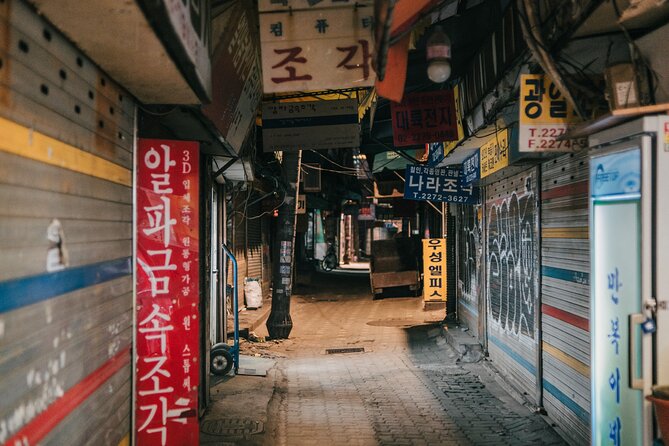
The walk then turns toward a traditional street of pojangmacha, the outdoor food stalls associated with informal Korean eating and drinking. This part adds everyday character to the tour. Instead of focusing only on major sights, you get a look at a familiar part of city life.
The guide explains the origins of pojangmacha culture and shares behind-the-scenes stories. Those details can make the stop more useful than simply photographing a row of stalls. You learn why this type of street food became part of Seoul’s social fabric and how the stalls function as casual gathering places.
Food and drinks are not included, so budget separately if you decide to order something. The tour information does not promise a meal or a tasting, so treat this as a cultural and photographic stop rather than a food tour.
The setting may work especially well for candid-style photographs. Warm stall lighting, signs, cooking activity, and passing street life can create images with a sense of movement. At the same time, food stalls are working businesses. You should be respectful about where you stand and how long you pause for photographs.
This is also a good place to remember that the tour is not designed around famous monuments alone. You are being shown a type of neighborhood scene that helps explain how Seoul is lived in after dark.
Same country, a completely different kind of day:
- Best DMZ Tour Korea from Seoul (Red Suspension Bridge Optional)
★ 5.0 · 41,422 reviews - DMZ Tour: 3rd Tunnel, Option(Suspension Bridge, Boat) from Seoul
★ 5.0 · 21,373 reviews - DMZ tour south Korea from Seoul (NK experience hall, defector)
★ 5.0 · 20,599 reviews - Seoul: DMZ Tour with Optional Suspension Bridge
★ 4.8 · 5,277 reviews
Hanok alleys and traditional Korean design
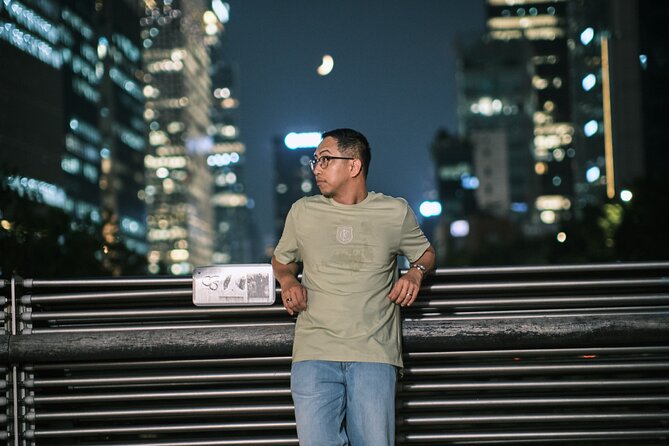
The final setting focuses on picturesque hanok alleyways. Here, the guide explains the origins and structure of traditional Korean hanok houses, giving you a little architectural vocabulary to take away from the experience.
Hanok design can be easy to admire without understanding. The explanation of the structure makes you look more closely at the wooden frames, roof forms, and arrangement of the houses. Even a simple portrait becomes more meaningful when you know what you are seeing behind it.
These lanes should provide a quieter contrast with Euljiro’s neon. The photographs may feel more timeless, with traditional lines and subdued surroundings rather than bright commercial signs. That change of mood is one of the tour’s strongest features.
You should remember that a hanok alley is still part of a neighborhood. Keep voices low, follow the guide’s directions, and avoid treating private doorways as photo props. The tour promises photo opportunities in the lanes, not entry into homes or private buildings.
For someone who wants a single polished Seoul portrait, the hanok stop may be the most versatile. The setting connects you with Korean design while leaving room for the photographer to focus on your expression and pose.
What 50 or more edited photos really means
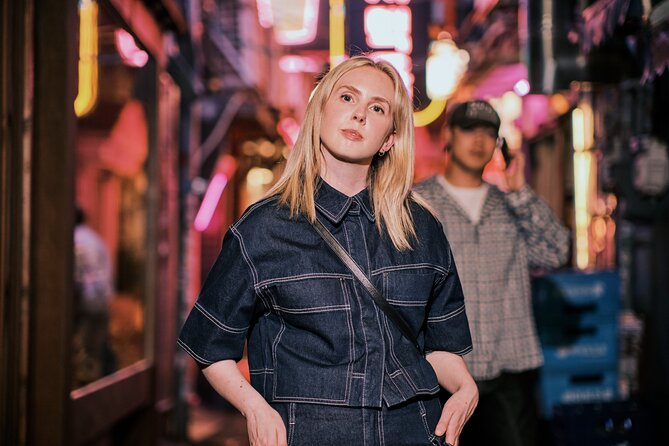
The package includes a professional photoshoot at multiple scenic locations and at least 50 high-quality edited photos per person. The finished images are delivered through a Microsoft OneDrive download link, which remains available for one month.
That is a useful amount of material for a short outing. You should have enough images to choose several favorites, including different backgrounds and poses. The value is strongest if you are traveling alone, celebrating a special occasion, or want photographs that include everyone in your group.
Still, keep the wording in perspective. Fifty or more edited images does not mean fifty completely different setups. Some may be variations from the same location or pose. The supplied information does not specify delivery time, editing style, image resolution, or whether every person receives the same number of individual portraits.
Download the photos before the one-month link expires. OneDrive is convenient, but you should not treat the link as permanent storage. Save copies to your phone, computer, or cloud account once you receive them.
Price, duration, and overall value
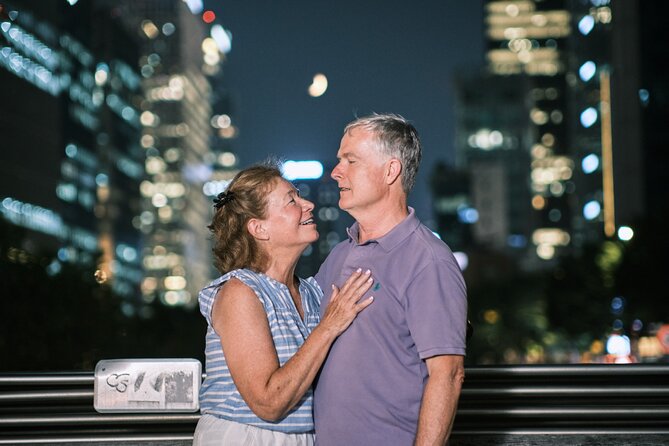
At $84.59 per person, this tour sits above the price of a basic evening walking tour but includes a professional photoshoot and 50 or more edited images. That changes the value calculation.
If you already have a good camera and mainly want local history, you may find a standard neighborhood walk more economical. If you want high-quality photographs of yourself in Seoul, the package can make sense because you are paying for both the guided route and the finished images.
The experience is usually booked about 14 days ahead, which is a useful planning signal. If your dates are fixed, reserve early rather than leaving this for the final night of your trip.
The duration needs careful attention. The tour summary gives an approximate time of 1 hour 10 minutes to 1 hour 35 minutes. The overview describes the outing as 2 to 3 hours. Those figures do not match, so ask the operator to confirm the actual start-to-finish schedule before you commit.
That difference affects more than your calendar. A 70 to 95 minute tour is a compact photo walk with several stops. A 2 to 3 hour outing allows more time for posing, stories, and movement between neighborhoods. The experience may be described broadly in one place and timed more narrowly in another, so clarification is sensible.
Who will get the most from this experience
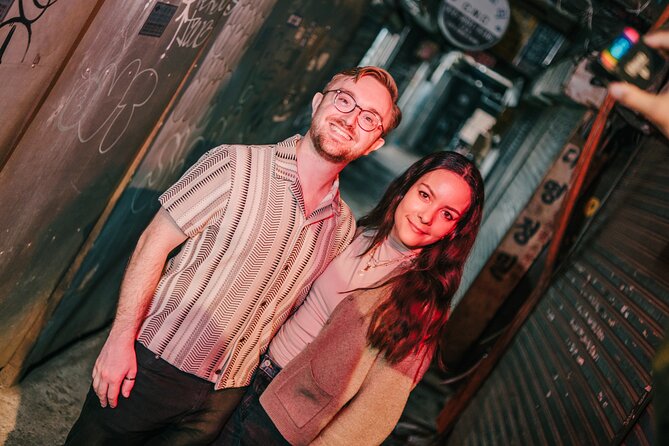
I would recommend this for you if you want three things at once: local stories, atmospheric night scenes, and finished photographs. It is especially useful for solo visitors who cannot easily get good portraits, couples who want more than quick phone pictures, and friends who prefer a guided evening rather than planning their own route.
It also suits repeat visitors who have already seen Seoul’s main daytime sights. Euljiro’s printing background, pojangmacha culture, Cheonggyecheon’s transformation, and hanok architecture provide a more neighborhood-focused view.
You may want to skip it if you dislike being photographed or prefer a long, slow food-focused evening. Personal expenses are not included, and the tour does not promise a meal, entrance visit, or extended time at any one site.
Wear shoes suitable for walking and plan your clothing with night portraits in mind. The tour moves through neon alleys, a bridge, food-stall streets, and hanok lanes, so one outfit may appear against several very different backgrounds.
Practical booking advice for a night photo walk
The mobile ticket makes access simple, but the most important preparation is confirming the time and meeting details. The supplied information identifies Seoul as the location but does not provide a specific meeting address, group size, photographer’s name, or guide’s name.
Ask about the final photo delivery schedule as well as the OneDrive access period. You know that the link is available for one month, but the exact delivery time is not stated.
You should also clarify what happens if you want to buy food or drinks at the pojangmacha stop. They are excluded from the price, and the activity is not presented as a tasting package.
The route combines cultural commentary with portraits, so do not expect a rapid checklist of Seoul landmarks. The reward is a set of changing scenes and a better understanding of the areas you walk through.
Should you book Seoul High-Quality Night Photography?
Book it if you want a compact evening that gives you both a cultural introduction and professional photographs. The strongest reason is the route’s range: neon Euljiro, Cheonggyecheon reflections, pojangmacha street life, and hanok architecture all offer a different look.
At $84.59, the tour is a better deal for people who value the 50 or more edited photos than for people seeking only a guided walk. Before paying, confirm the real duration because the supplied timing varies between roughly 70 to 95 minutes and 2 to 3 hours.
If that timing works for your plans, this is a smart choice for personal portraits and a quick, visually varied look at Seoul after dark.
FAQ
Where does the night photography tour take place?
The tour takes place in Seoul, South Korea. The route includes neon alleys in Euljiro, a bridge above Cheonggyecheon Stream, a traditional pojangmacha street, and hanok alleyways.
How long does the experience last?
The tour summary gives an approximate duration of 1 hour 10 minutes to 1 hour 35 minutes. The overview also describes it as a 2 to 3 hour guided tour, so confirm the exact duration before booking.
Is the tour conducted in English?
Yes. An English-speaking cultural guide is included.
How many edited photos are included?
You receive 50 or more high-quality edited photos per person.
How are the finished photos delivered?
The photos are provided through a downloadable Microsoft OneDrive link. The link is available for one month.
Are food and drinks included?
No. Personal expenses such as food, drinks, and souvenirs are not included.
Is an entrance fee included?
No entrance fees are included if they apply.
Just added around Seoul
- Seoul: Korean & English Language Exchange Global Party★ 5.0 · 28 reviews
- From Seoul: Yongpyong Ski Day Tour with Transportation★ 4.9 · 40 reviews
- You’re Invited to Our Home in Seoul: The Only Cooking Class!★ 5.0 · 8 reviews
- Your Personal Seoul Photographer!★ 4.1 · 15 reviews
- Unique Native Experience : Han River Picnic, Board game, BBQ★ 5.0 · 3 reviews
- From Seoul: Hwacheon Ice Fishing and Lighting Festival Tour★ 4.5 · 4 reviews
- Seoul: Gangneung BTS K-Pop & K-Drama Filming Locations Tour★ 4.6 · 14 reviews
- Seoul Private RV tour, explore real Korea from Past to Future★ 5.0 · 5 reviews
Photography Sessions, compared.
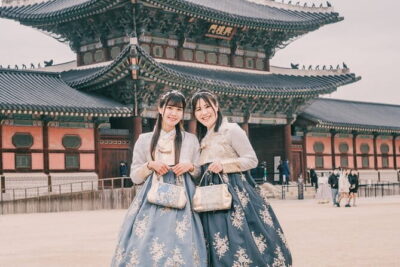
Hanbok Photoshoot and History Tour at Gyeongbokgung Palace
Read our review →
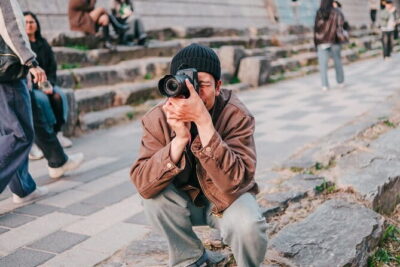
Street photoshoot and Seoul Hidden gem History Walking Tour
Read our review →
[Jeju] Hanbok Private guide tour & photo session in beautiful Yongduam rock,
Read our review →
Browse the lists this tour appears in