
Reviewed · WALKING TOURS
Seoul moonlight walking tour with local historian
Seoul’s best night view is not always found from a tower. This two-hour walk climbs from Hyehwa’s theater district through Ihwa Mural Village and Naksan Park to the old Seoul City Wall, where the city lights spread below you. Along the way, a Korean guide connects university life, poverty, theater, education, politics, and the growth of the capital.
I like the local focus. You are not simply marched to a photo stop. Jessica, Ethan, June, Smin, Sumin, Leah, and other SeoulDude guides use the walk to explain everyday Korean society as well as older events. I also like the route’s payoff: sunset and night views arrive after a walk through neighborhoods you might skip on your own.
The main catch is the hill. This is not a flat stroll. You will handle uphill pavement, steps, and a descent afterward. Wear comfortable shoes, charge your phone, and bring bug spray. At $31.98 per person, the price is fair for a small-group walk with a guide, but the value depends on your willingness to climb.
Key points to know before you book
- The route starts in Hyehwa: Begin near 120 Daehak-ro, close to Seoul’s theater and university district.
- Five distinct stops: The walk includes Seoul University Hospital Medical Museum, Marronnier Park, Naksan Park, Ihwa Mural Village, and Seoul’s old city wall.
- The uphill section matters: Expect stairs and slopes, though the walk is described as manageable for most people who are comfortable in a hill setting.
- The guides add present-day context: Talks cover university pressure, social class, Korean values, local life, and how Seoul became the capital.
- The city wall is the reward: The final section offers broad evening views of Seoul and a romantic old-stone setting.
- A meal can follow: Food afterward is optional and costs extra, so plan for dinner separately.
Starting among Hyehwa’s theaters and students
Meet at Hyehwa120 Daehak-ro in Jongno District. This places you in one of Seoul’s most active arts and university areas, rather than at a standard downtown landmark. You may notice theaters, music, students, cafés, and the steady movement of people heading into the evening.
That setting gives the tour a useful beginning. Seoul is not only palaces and royal avenues. It is also a city where education, theater, work, housing, and youth culture press closely together. The opening part of the walk helps you see that broader picture.
Your first stop is the Seoul University Hospital Medical Museum. The visit is short, about 10 minutes, and admission is included. The tour uses the site to discuss university culture and the intense status attached to education in Korea.
The wording about this being the highest place students can go in the country points to academic ambition, not simply geography. Korea’s university entrance system shapes family life, social expectations, and career choices. If your guide is Smin or Sumin, expect this subject to receive particular attention. Several guides are praised for explaining education and university entrance in a clear, lively way.
Do not expect a long museum visit. This is a brief historical and social introduction before the walking route begins in earnest. Its value comes from the conversation around the stop, especially if you want to understand modern Korean life rather than only photograph old buildings.
A few more Seoul trips to weigh up
- Seoul: Nighttime Hidden Gems Walking Tour
★ 5.0 · 775 reviews - Seoul: Evening Dark History, Folklore & Ghost Story Walking Tour
★ 5.0 · 593 reviews - Seoul: Dark Side of the City and Ghost Stories Walking Tour
★ 4.8 · 484 reviews
Marronnier Park and the cultural side of Seoul
Marronnier Park takes only about five minutes, but it changes the mood. The park is known for live theater and performances, and the surrounding Hyehwa area is closely tied to Seoul’s arts scene.
This short stop works best as a bridge between the university district and the hill route. You begin with students and performance culture, then move toward older walls and hillside neighborhoods. That contrast is one of the tour’s strengths.
The route does not treat Seoul as a museum frozen in time. A theater district sits beside historic remains. Young people gather near places shaped by earlier generations. The guide’s job is to connect those pieces without turning the walk into a list of dates.
Ethan is often described as calm, funny, and good at linking past and current Korean culture. Jessica is known for mixing humor with detailed explanations. Guide quality can vary from one departure to another, and one experience was less satisfying because the guide struggled with English and storytelling. That is worth keeping in mind if you need polished, highly structured commentary.
Naksan Park explains why Seoul grew here
Naksan Park is the heart of the route. Spend around 10 minutes learning how Seoul became the capital and how the city changed around that decision.
The park sits on a hill, so this is where you begin to feel the climb. The reward is not only the view. From above, the shape of Seoul becomes easier to read. You see how older defensive lines, slopes, roads, and dense development fit together.
The walk also gives you a chance to ask questions. Guides such as Ethan, June, and Smin are praised for discussing Korean history and society in an open, conversational way. That matters here because the view can otherwise become just another city-light photograph.
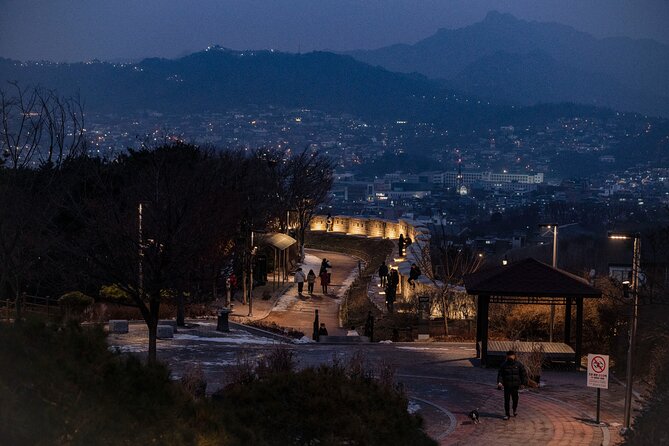
At night, Naksan Park has a different character from Seoul’s bright commercial districts. The path feels quieter and more reflective, with illuminated buildings stretching across the distance. Depending on the season and start time, you may catch sunset before darkness settles in. The exact departure time is not provided, so confirm the schedule when booking if sunset is important to you.
The tour’s pace appears designed for conversation rather than a hard hike. Still, do not confuse a relaxed pace with a level path. You need to be comfortable walking uphill and then going down stairs. June’s tours are especially often described as good for visitors who understand that this is a hill walk.
Ihwa Mural Village and the cost of hillside living
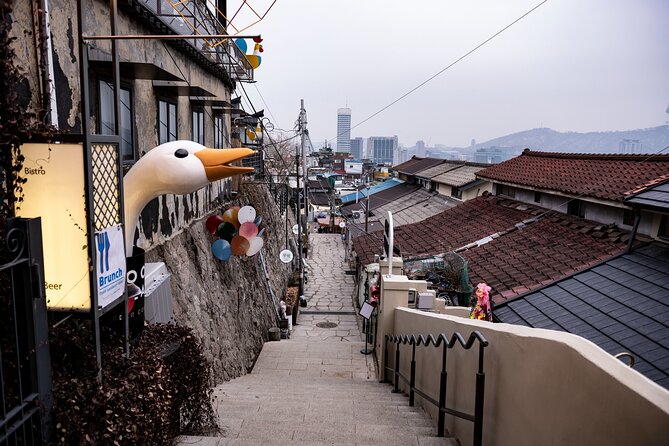
The group spends about 20 minutes in Ihwa Mural Village. The area is known for murals and hillside streets, but the tour gives it a more serious frame. You learn why many hill villages in Seoul were associated with people with fewer financial resources.
That context makes the painted walls more meaningful. The village is not simply a colorful backdrop. It reflects housing patterns, class, redevelopment, and the way Seoul expanded over difficult terrain. A good guide can help you look past the obvious artwork and notice how people actually live in the area.
This is also the part of the route where respectful behavior matters most. Ihwa is a lived-in neighborhood, not a theme park. Keep voices low near homes, do not block narrow paths, and ask before photographing people. The tour’s local perspective is most useful when it encourages you to see residents as neighbors rather than scenery.
The stop lasts around 20 minutes, so do not expect to inspect every mural or side street. The route offers selected viewpoints and stories instead of an exhaustive art walk. That is a sensible choice for a two-hour tour, especially with the city wall still ahead.
Same country, a completely different kind of day:
- Best DMZ Tour Korea from Seoul (Red Suspension Bridge Optional)
★ 5.0 · 41,422 reviews - DMZ Tour: 3rd Tunnel, Option(Suspension Bridge, Boat) from Seoul
★ 5.0 · 21,373 reviews - DMZ tour south Korea from Seoul (NK experience hall, defector)
★ 5.0 · 20,599 reviews - Seoul: DMZ Tour with Optional Suspension Bridge
★ 4.8 · 5,277 reviews
Seoul’s old wall at night
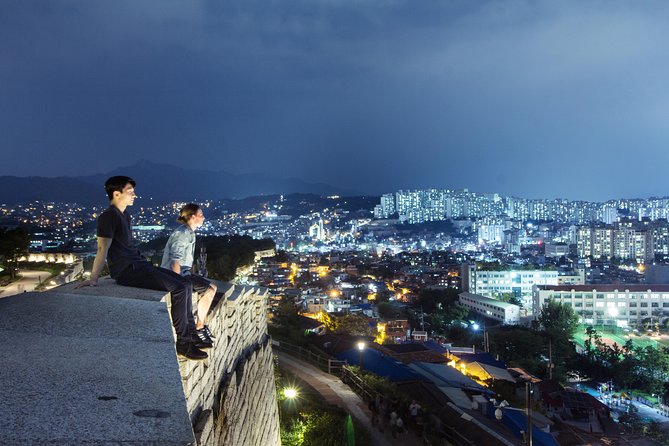
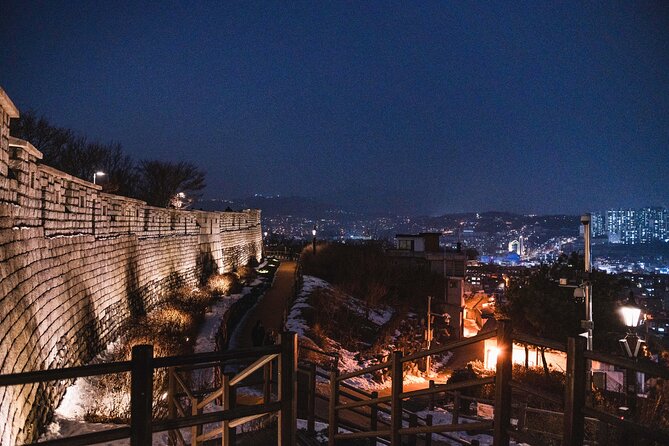
The final major stop is Seoul City Wall, a historic monument with some of the finest night views on the route. Allow roughly 20 minutes here.
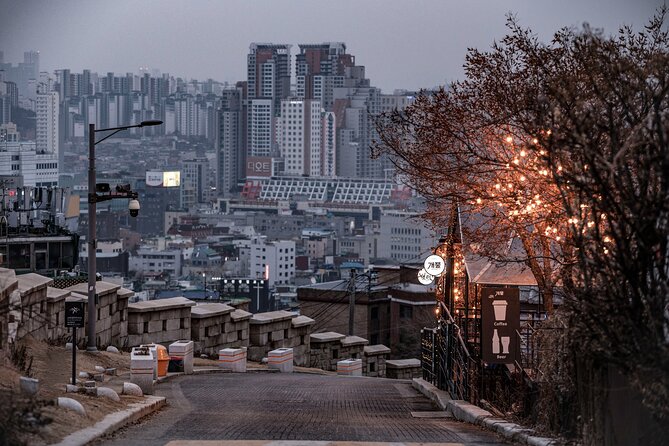
This is where the walk earns its moonlight name. From the wall, Seoul’s lights open out below the hill. The city feels enormous, yet the old stonework gives you a clear link to the capital’s earlier defenses and boundaries.
The setting is particularly good for photos, so keep your phone ready. One practical tip is to charge it before meeting the group. You will want power for the skyline, the murals, and the route itself.
The wall also carries a pop-culture connection. The area is identified as a location associated with K-Pop Demon Hunters, which may add an extra bit of fun if you know the film or show. The historical setting remains the main attraction, but the reference helps connect an old monument with Seoul’s modern cultural reach.
The best part of the stop is the combination of story and atmosphere. You are not viewing the wall in daylight with a crowd of sightseeing buses around you. You are standing above the city as the lights come on, listening to an explanation of how the capital formed and changed.
What the guides add to the walk
The guide can make or break a history walk, and this tour has a clear strength in its range of local personalities. Jessica is described as funny and detailed. Ethan is often praised for his humor, patience, and ability to explain present-day Korea. June brings energy and strong historical commentary. Smin is noted for clear English, warmth, and useful answers.
Leah is described as guiding the group in a friendly, informal way, like people exploring together. Shin and Sumin are also praised for making the walk interesting and easy to follow. You are not promised a specific guide, so treat these names as examples of the team rather than a booking guarantee.
The strongest commentary goes beyond royal history. You may hear about education, social expectations, class, Korean values, daily life, and the changes that shaped Seoul. That is a major reason to choose this walk over exploring Naksan Park with a map alone.
One caution is fair. English delivery will not be identical with every guide. Most of the supplied feedback is highly positive, but one person found the storytelling and English less effective. If you need a very formal lecture or perfect English, this small risk matters. If you prefer an easy conversation with room for questions, the format should suit you well.
Pace, stairs, weather, and what to bring
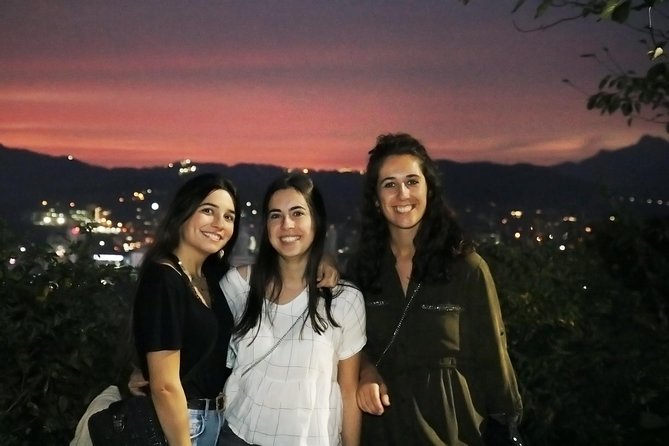
The walk lasts about two hours and has a maximum group size of 20. That is large enough to meet other people, yet smaller than a bus tour. Solo visitors may find it a useful way to meet people, especially on a first evening in Seoul.
The route includes uphill sections and stairs. Several descriptions call the walk manageable, but they also repeat the warning to prepare for climbing. I would rate it as a city walk with a real hill, not a strenuous mountain trek and not a flat neighborhood stroll.
Bring:
- Comfortable walking shoes
- A fully charged phone
- Bug spray
- Water if you normally need it on a two-hour walk
- Weather-appropriate clothing
The activity requires good weather. If poor weather cancels the walk, you are offered another date or a full refund. You can cancel for a full refund up to 24 hours before the start time. Changes or cancellations inside that window are not accepted, and the local time cutoff applies.
The optional food session after the walk is not included in the $31.98 price. Think of it as a possible add-on, not part of the meal plan. If you are hungry after the climb, keep dinner money and time available.
Is $31.98 a fair price?
At $31.98 per person, this is priced below many private Seoul experiences and above simply visiting Naksan Park on your own. The comparison is not quite apples to apples. You are paying for a route that links several places, a local guide, historical explanation, cultural context, and the convenience of knowing where to go after dark.
The value is strongest if you would otherwise miss Hyehwa, Ihwa, or the best wall viewpoints. Seoul’s public transport makes many districts accessible, but finding the right hillside paths and understanding what you are seeing takes time. The guide adds the most value when discussing social subjects that are harder to pick up from a sign or quick online search.
The price is less compelling if you only want photographs. You can visit Naksan Park independently, and the tour does not include food or special equipment. You should also be comfortable with the possibility of a guide whose English style is less polished than expected.
The 100 percent recommendation rate and 5.0 rating from 940 reviews point to very strong satisfaction, but the practical details matter more for your decision. Pay for this if you want stories and context along with the skyline. Skip it if hills, stairs, or group walking are likely to spoil your evening.
Who should book this Seoul night walk?
I would choose this for a first or second night in Seoul, when you want an overview of the city’s history and current life without spending a full day inside museums. It also works well for solo visitors, couples, and friends who enjoy walking, questions, and informal conversation.
It suits you particularly well if you want:
- A neighborhood outside the standard palace and shopping routes
- Evening views without visiting a tall observation tower
- A guide who talks about modern Korean society
- A short activity that still feels substantial
- A chance to meet other people in a group of up to 20
Families and older visitors should judge the hill carefully. The route is open to most people, but the stated path includes slopes and stairs. If one person in your group has trouble with hills, this may not be the right choice.
Photography fans should like the timing, especially if the walk overlaps with sunset. Just remember that the exact start time is not provided here, and the evening light will vary by season.
Should you book the Moonlight Walking Tour?
Book it if you want Seoul explained from street level. The route combines student culture, live theater, hillside housing, old defenses, and a wide city view in only two hours. That is a lot of ground, but the stops are linked by a clear idea: Seoul is both an old capital and a fast-changing modern city.
The best reason to go is the blend of local stories and excellent views. The main reason to hesitate is the climb and the fact that guide quality may vary. Wear proper shoes, arrive ready for steps, and keep dinner plans flexible.
For $31.98, I consider it a good-value introduction to a less obvious side of Seoul, especially if you want more than a viewpoint selfie.
FAQ
How long does the Seoul moonlight walking tour last?
The tour lasts approximately two hours.
Where does the tour start?
The meeting point is Hyehwa120 Daehak-ro in Jongno District, Seoul.
Where does the tour end?
The activity ends back at the meeting point.
Which places are visited?
The route includes Seoul University Hospital Medical Museum, Marronnier Park, Naksan Park, Ihwa Mural Village, and Seoul City Wall.
Is dinner included?
No. An optional food session takes place after the tour, but the fee is not included.
How large is the group?
The activity has a maximum of 20 participants.
Is the walk suitable for most people?
Most people can participate, but the route includes uphill walking and stairs. Comfortable shoes are recommended.
What happens if bad weather cancels the tour?
You can choose a different date or receive a full refund if poor weather causes the activity to be canceled.
Just added around Seoul
- Gyeongbokgung palace,seoul with gigibebe hanbok rental★ 4.5 · 12 reviews
- Private tour guide service in Seoul, Korea★ 5.0 · 6 reviews
- Alpaca, Nami, Petite Fr, Italian Village, Garden of Morning Calm★ 3.5 · 5 reviews
- Gyeongju UNESCO Sites Tour by KTX train; The Museum Without walls★ 4.5 · 11 reviews
- Private day trip to Korean Folk Village & Dae Jang Geum Park★ 5.0 · 7 reviews
- Private tour Lotte World,Tower,Aquarium(All Tickets are included)★ 5.0 · 12 reviews
- Full Day Private Seoul Tour for foodies★ 5.0 · 3 reviews
- Seoul Private Custom Walking Tour with A Guide (Private Tour)★ 4.5 · 28 reviews
Walking Tours, compared.
Evening Dark History, Folklore & Ghost Story Walking Tour
Read our review →
Dark Side of the City and Ghost Stories Walking Tour
Read our review →
Gangnam Walking Tour on Youth and Society in Seoul Korea
Read our review →
Gyeongbok Palace and Bukchon Hanok Walking Tour
Read our review →
Best Walking Tour to Gyeongbok Palace Bukchon Hanok Village
Read our review →
Highlights & Hidden Gems With Locals: Best of Seoul Private Walking Tour
Read our review →
Street photoshoot and Seoul Hidden gem History Walking Tour
Read our review →Browse the lists this tour appears in