
Reviewed · WALKING TOURS
Seoul: Nighttime Hidden Gems Walking Tour
Seoul’s best night views come with a little effort. This two-hour walk takes you from Hyehwa Station up through Ihwa Mural Village and Naksan Park, then along Hanyang City Wall as the city lights begin to glow. I like the way the route connects student life, old hillside neighborhoods, art, and Joseon-era defenses. I also like that guides such as Leah, Jessica, Smin, Ethan, and Jun explain present-day Korean society, not just old dates and monuments.
The trade-off is the hill. You will face slopes, stairs, and some uneven footing, although the pace includes regular stops. High heels are a poor choice, and this is not a suitable outing for people with mobility impairments or most people over 70. If you can handle a steady uphill walk, the $33 price buys much more than a few attractive photographs.
Key Points At a Glance
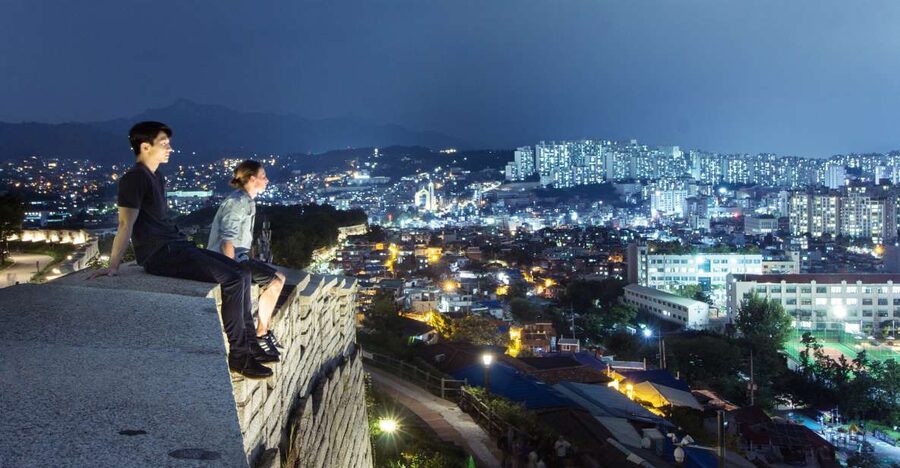
- Seoul after sunset: Watch the city brighten from Naksan’s upper paths and Hanyang City Wall.
- A social history walk: Learn about university pressure, work culture, housing problems, and changing neighborhoods.
- Ihwa Mural Village: See colorful wall art in an old hillside district that can be easy to miss on your own.
- Seoul National University: Use Korea’s top university as a window into education and student life.
- A manageable but real climb: Stops and breaks help, but you still need good shoes and reasonable fitness.
- Strong English-speaking guides: Guides including Leah, Smin, Jessica, Ethan, and Jun are praised for humor, clear explanations, and helpful local advice.
Why This Two-Hour Walk Feels Different
Many Seoul sightseeing routes focus on palaces, shopping streets, or famous food districts. This one takes you through places that help explain how ordinary Seoul works. You will hear about education, housing, work, class, neighborhood change, and the pressures faced by Korean students.
That social angle is the main reason I would consider booking it. The city wall and night views are attractive, but the stories give the walk its purpose. Instead of seeing Seoul as a collection of postcard stops, you begin to understand how a crowded capital grew around hills, old villages, universities, and military walls.
The route is also useful early in a Seoul visit. After two hours, you will have a better sense of the city’s hills, its older northern districts, and the contrast between polished modern Seoul and older residential areas. Guides are open to questions, and the mood is described as friendly and informal rather than stiff or lecture-like.
Group size can vary, but one outing had about 16 people. That is large enough to feel social without necessarily becoming unwieldy. Some guides use a microphone and personal receivers, a thoughtful touch on narrow streets and windy hilltops. Ask at the start if audio equipment is being used.
A few more Seoul trips to weigh up
- Seoul moonlight walking tour with local historian
★ 5.0 · 940 reviews - Seoul: Evening Dark History, Folklore & Ghost Story Walking Tour
★ 5.0 · 593 reviews - Seoul: Dark Side of the City and Ghost Stories Walking Tour
★ 4.8 · 484 reviews
Starting at Hyehwa Station and Seoul’s University Culture
The meeting point is outside Exit 2 of Hyehwa Station. This is a practical starting place because Hyehwa is linked with theater, student life, and the older neighborhoods around Daehangno. You should arrive ready to walk rather than expecting a long introduction at a café or indoor site.
Seoul National University is one of the early cultural reference points. The university is widely regarded as Korea’s top university, so it gives the guide a natural way to explain the country’s intense education system. You may hear about exam pressure, student expectations, and how academic achievement can shape family life and career choices.
This is more useful than simply being told that Korea values education. The guide connects the idea to daily life and social pressure. Questions about school competition, work culture, and young people’s hopes fit naturally here.
Do not expect a campus tour in the usual sense. The experience is a neighborhood walk with university culture as a subject, not a detailed visit to academic buildings. That distinction matters if you want a formal tour of Seoul National University itself. The value is in the conversation and context.
Several guides are praised for making this part easy to follow. Leah is described as funny and patient with questions. Jessica is noted for keeping the mood light while explaining serious subjects. Ethan is praised for answering questions and offering restaurant suggestions after the walk. The guide changes by departure, so you cannot request a particular personality with certainty, but the team’s style seems consistent: conversational, helpful, and focused on local life.
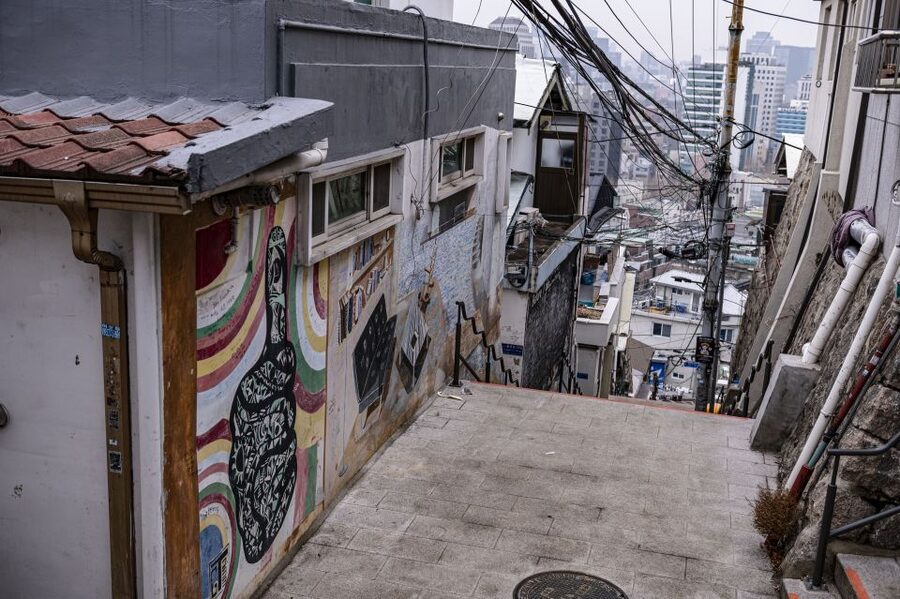
Ihwa Mural Village and the Story Behind the Hillside
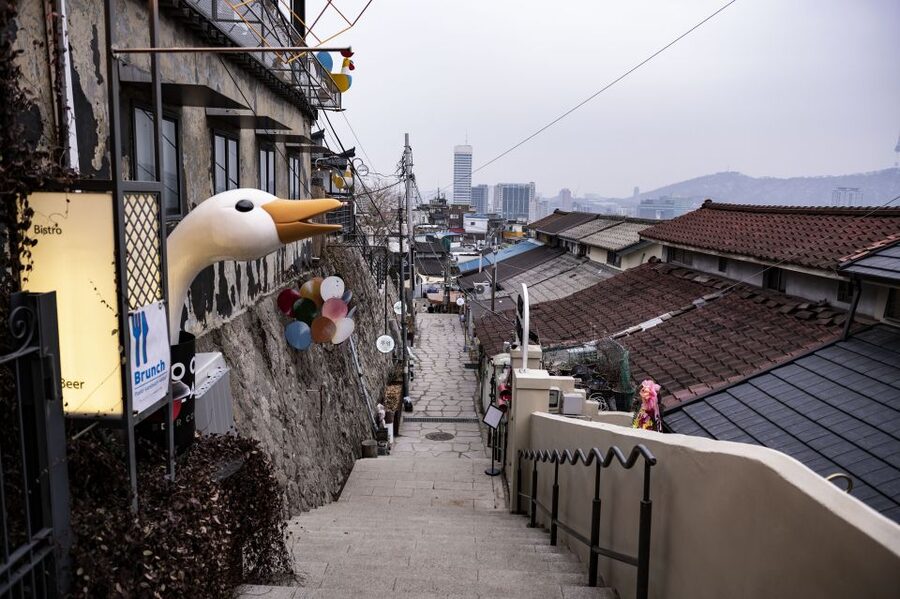
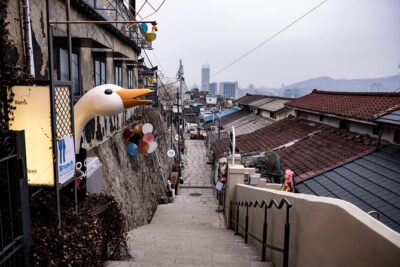
Ihwa Mural Village is one of the route’s main visual stops. It is an older settlement on a hill, known for painted walls and photo-friendly corners. The village is not a flat, open-air gallery. You move through narrow streets and sloping paths where art appears beside homes and ordinary neighborhood life.
That mix is important. You are not simply looking at public art in a purpose-built attraction. You are walking through a residential area that has been shaped by tourism, urban change, and the practical problems of living on a steep hill.
The guide uses the village to explain what is sometimes called a moon village, a term linked to older hillside communities. One guide shared a particularly touching story about the area, and another explained the housing and social issues connected with Seoul’s older neighborhoods. These stories can change the way you look at a pretty mural. The bright wall may be excellent for a photograph, but the surrounding homes represent real lives and ongoing neighborhood change.
Be respectful here. Keep your voice down near homes, do not block narrow paths, and remember that this is not just a stage set for photographs. The route’s cultural value depends on seeing both the charm and the complications.
Some people may find the murals less dramatic than expected. Paint can age, particular artworks may change, and the village does not offer one single grand viewpoint. The reward comes from the combination of art, alleyways, hillside views, and explanation. Your guide also helps with photo angles, which is useful when the best view is not obvious from the street.
Marronnier Park and the Character of Hyehwa
Marronnier Park adds another layer to the neighborhood. Located in the Hyehwa area, it helps connect the walk’s older village sections with Seoul’s student and cultural life. The stop is not presented as a major monument. Its purpose is to show how this part of the city feels and functions.
That makes it a good pause in the route. You can take a breath, ask questions, and see a more everyday side of central Seoul. The walk is strongest when it moves between subjects rather than treating every stop as a separate attraction.
Hyehwa also gives the guide room to discuss the effects of tourism. One guide spoke frankly about the problems caused by uneducated, drunken tourists in the area. That kind of direct local perspective is valuable, even if it is not as comfortable as a polished tourist story. You get a sense of how visitors affect neighborhoods and why good behavior matters.
The area can also be useful after the tour. One guide recommended Jazz Story, described as a particularly distinctive bar nearby. That recommendation is not part of the tour itself, but it shows the sort of practical local advice you might receive when the formal walk ends.
Same country, a completely different kind of day:
- Best DMZ Tour Korea from Seoul (Red Suspension Bridge Optional)
★ 5.0 · 41,422 reviews - DMZ Tour: 3rd Tunnel, Option(Suspension Bridge, Boat) from Seoul
★ 5.0 · 21,373 reviews - DMZ tour south Korea from Seoul (NK experience hall, defector)
★ 5.0 · 20,599 reviews - Seoul: DMZ Tour with Optional Suspension Bridge
★ 4.8 · 5,277 reviews
Naksan Park and Seoul’s Lights
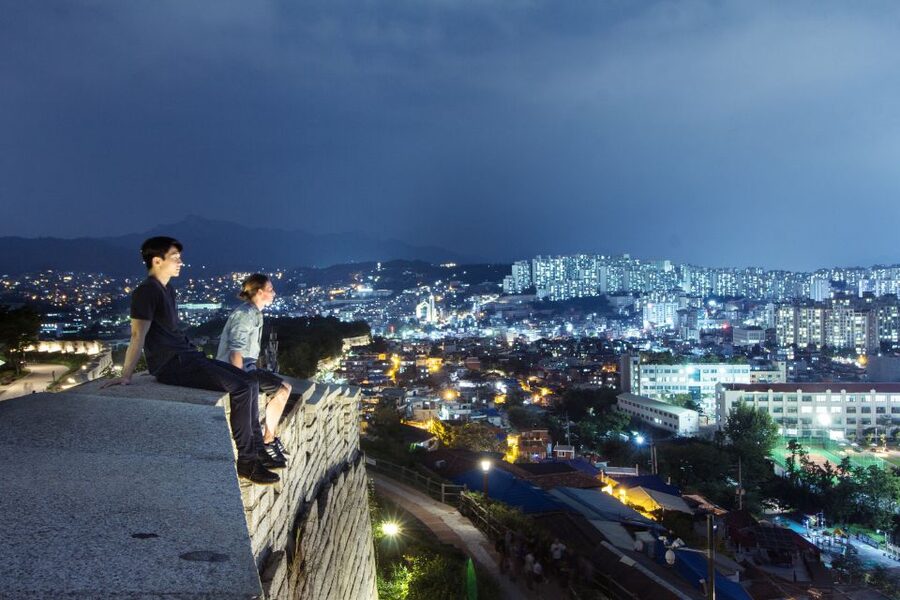
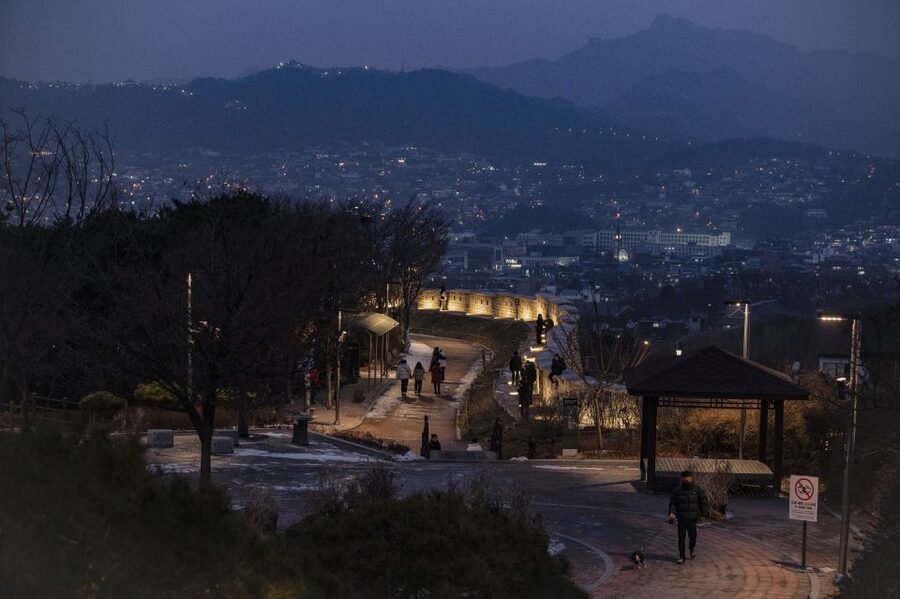
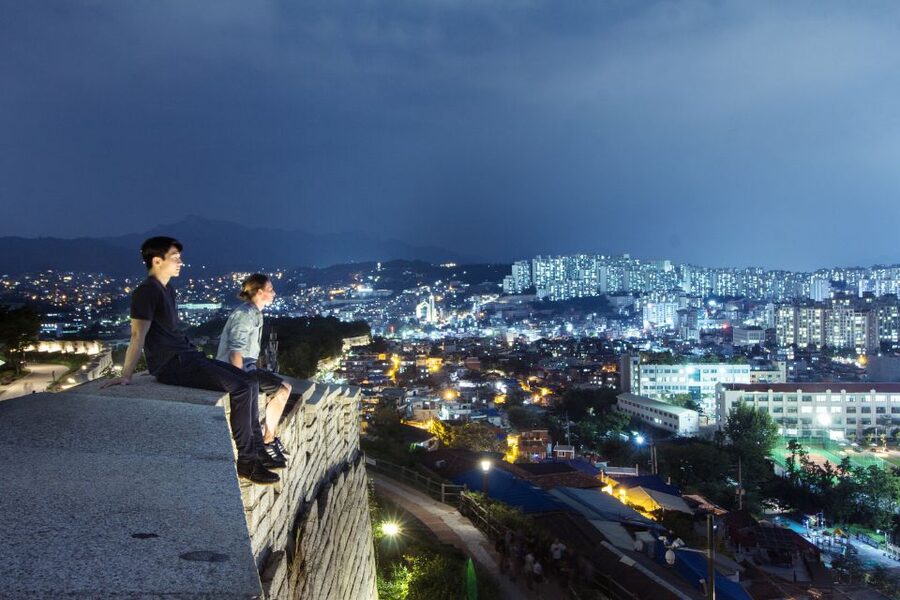
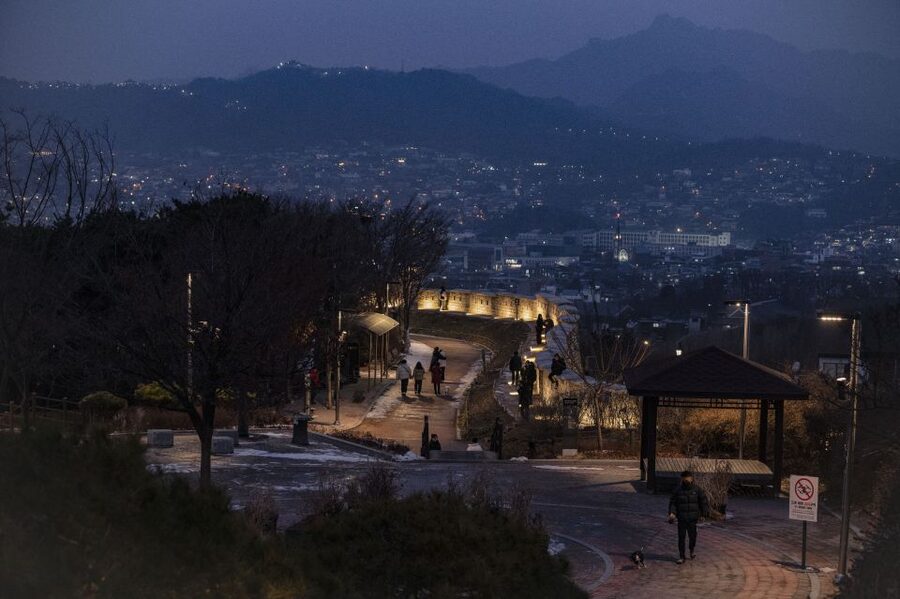
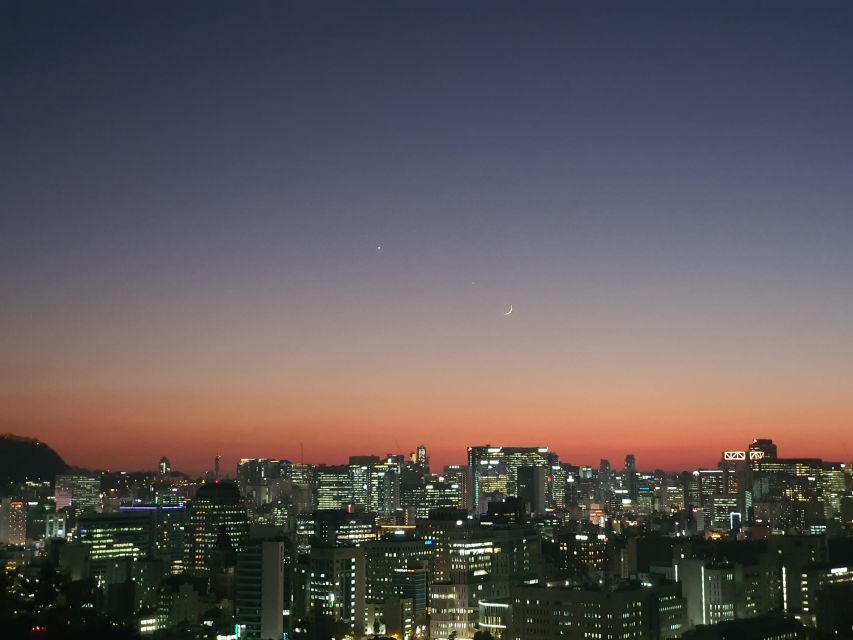
The climb becomes more rewarding as you reach Naksan Park. Naksan is the place to focus on the evening view, especially as twilight gives way to a full spread of city lights. The route is timed at night, and one start around 5:30 p.m. worked well because it allowed the group to see the transition from daylight to darkness.
The exact light show depends on the season and weather. A cloudy or rainy evening can soften the view, and the sunset is outside the guide’s control. Still, the city lights remain the main payoff. From the hill, Seoul opens out below you in layers, with the wall and paths giving the view a strong sense of place.
The higher you walk, the more the view develops. This is why the uphill sections are worth taking slowly. Your guide will stop at points for explanations, photographs, and recovery. Several people found the pace comfortable because the breaks prevented the climb from becoming a race.
You should not read easy walk as completely flat or effortless. There are steep streets and stairs, and careful footing is needed in places. A visitor with a prosthetic knee completed the climb, but that is encouragement, not a promise that the route will suit every knee or ankle. Wear trainers or another pair of supportive walking shoes.
Naksan Park is also a good place to ask about Seoul’s shape. The hill helps you understand why the old capital developed where it did and how the city’s historic core relates to its modern districts. The view is not just a photograph. It becomes a map lesson.
The Naksan Dragon and Seoul’s Capital Story
The art of the Naksan dragon provides a memorable visual link to Seoul’s past. This part of the route helps explain how the capital was located and how symbols, hills, and defensive structures shaped the old city.
The dragon is not simply a colorful object to pass and photograph. It gives the guide a way to talk about Seoul’s identity and the way the capital has been imagined over time. You may hear connections between folklore, geography, and the historic city.
This is one reason a local guide adds value. You could walk past public art and walls on your own, but you might not know why a particular image matters. The explanations turn small details into useful clues about Korean culture.
The route also brings together old and new ideas without forcing a neat story. Seoul has preserved historic structures while dealing with dense housing, redevelopment, tourism, and social pressure. The guide’s job is not only to praise the city. The strongest accounts include the difficult parts, such as student stress and housing problems.
Walking Hanyang City Wall After Dark
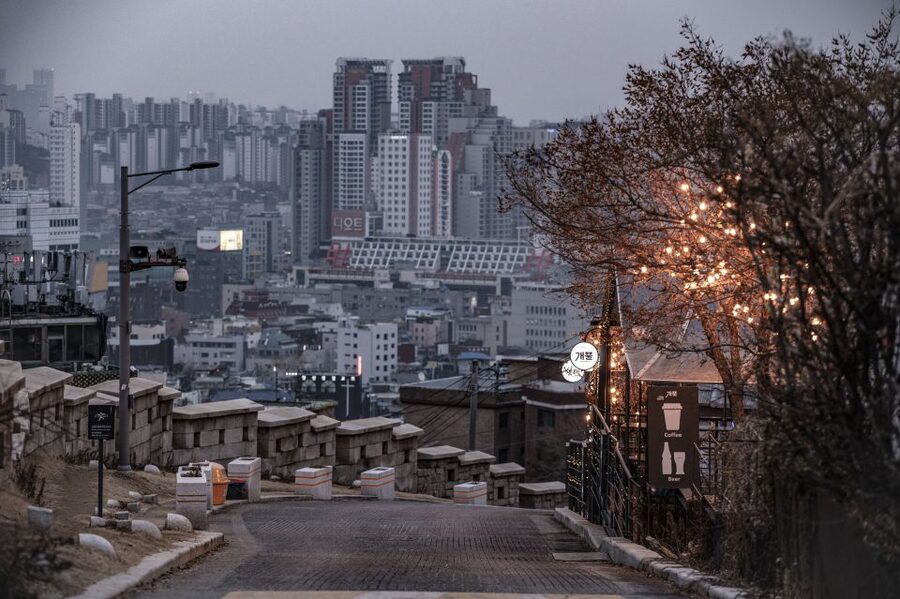
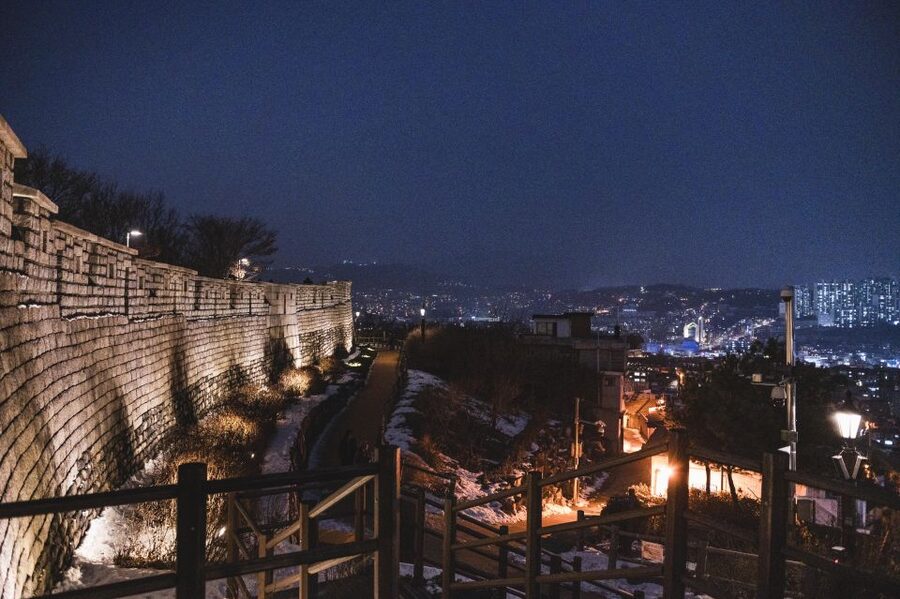
Hanyang City Wall is the historical spine of the outing. Hanyang was the old name for Seoul, and the wall once protected the capital. Today, walking along it gives you a direct physical link to the city’s earlier form while looking over one of Asia’s great modern capitals.
At night, the wall has a special appeal. The stonework and hill paths feel quieter than Seoul’s commercial streets, while the lights below keep the city present. The route has also appeared as a location connected with K-Pop Demon Hunters, which may interest fans of the film and Korean pop culture.
Do not expect a long, strenuous wall hike. The experience lasts two hours and includes several stops, so the wall is one part of a wider neighborhood walk. Still, you will be walking uphill to reach the best sections, and the descent at the end requires attention.
The wall also makes the social discussion more meaningful. From its path, you can see how tightly old Seoul and new Seoul fit together. Historic slopes, modest homes, modern towers, and bright roads share the same view. That physical contrast supports the guide’s discussions about how Korean society functions.
Guide Style, Questions, and Local Advice
The guide can make or break a walking tour, and this experience receives especially strong praise for its English-speaking team. Leah is repeatedly described as funny, patient, and clear. Jessica is praised for useful stories, photo advice, and keeping groups comfortable in bad rain. Smin is valued for thoughtful explanations of Korean society and the landmarks around Naksan Park.
Ethan is described as approachable and helpful with practical matters, including restaurant advice and transport questions. Jun is praised for his humor, strong English, and willingness to answer questions beyond the planned talk. Other guides, including Lisa, Min, Sumin, June, and Yun, are also named positively.
Because the guide roster changes, your experience will not be identical each time. The common strengths are clear English, cultural explanation, humor, and a willingness to engage with questions. Some guides provide personal receivers, which can make a major difference when a group spreads out on stairs.
Come with questions. Ask about university admissions, office culture, housing, neighborhood change, or the meaning of a local custom. The tour is designed to give you a better view of Korean society, and it works best when you take part in the conversation.
Is $33 a Fair Price?
At $33 per person, this is a fair buy if you want interpretation rather than simple directions. You are paying for two hours with an English-speaking local guide, a planned route through several difficult-to-find areas, historical context, and help making sense of Korean society.
The price is less attractive if you mainly want photographs. You can reach parts of Naksan Park and Ihwa Mural Village independently, and the walk does not include food, drinks, or admission to a major indoor attraction. Its value comes from the stories and the route linking the stops.
I also like the flexible booking terms: cancellation is allowed up to 24 hours before the activity for a full refund, and you can reserve now and pay later. In winter, hot packs are included, which is a small but practical touch on an exposed hill.
What To Wear and Who Should Book
Wear comfortable walking shoes with good grip. Do not wear high heels. Bring water and dress for the season, since much of the experience takes place outdoors and on a hill.
This tour suits you best if you:
- Want Seoul history tied to present-day life
- Enjoy views but do not mind earning them
- Prefer smaller neighborhood routes to major attractions
- Like asking questions and comparing cultures
- Have two hours free in the evening
- Can manage stairs, slopes, and a steady walk
It is not suitable for people with mobility impairments, and the activity specifically advises against participation by people over 70. If you have a walking issue, contact the provider before booking. The route includes breaks, but it does not remove the basic demands of the hill.
Should You Book the Seoul Nighttime Hidden Gems Walking Tour?
I would book this if you want more than a night view. The photographs from Naksan Park and Hanyang City Wall are a strong bonus, but the real benefit is the explanation of Korean education, work culture, housing, old villages, and neighborhood change.
Skip it if you need a flat route, dislike group walks, or want a major palace or food tour. Choose it if you have good walking shoes, a free evening, and curiosity about how Seoul works beneath its glossy surface. At $33, it offers solid value for a well-paced introduction to the city’s history and social life.
FAQ
Where does the tour meet?
The meeting point is outside Exit 2 of Hyehwa Station. An English-speaking guide will be waiting outside the exit.
How long does the tour last?
The walking tour lasts two hours. Starting times vary, so check availability for the date you want.
What language is the tour in?
The tour is conducted in English with a live English-speaking guide.
Is the route difficult?
The route is described as an easy walk with breaks at each stop, but it includes uphill streets, stairs, and some steep sections. Good walking shoes are recommended.
Can people with mobility impairments join?
No. The activity is not suitable for people with mobility impairments, and people with walking difficulties should contact the provider before booking.
What happens if I need to cancel?
You can cancel up to 24 hours in advance for a full refund. You can also reserve now and pay later, so no payment is required at the time of booking.
Just added around Seoul
- Gyeongbokgung palace,seoul with gigibebe hanbok rental★ 4.5 · 12 reviews
- Private tour guide service in Seoul, Korea★ 5.0 · 6 reviews
- Alpaca, Nami, Petite Fr, Italian Village, Garden of Morning Calm★ 3.5 · 5 reviews
- Gyeongju UNESCO Sites Tour by KTX train; The Museum Without walls★ 4.5 · 11 reviews
- Private day trip to Korean Folk Village & Dae Jang Geum Park★ 5.0 · 7 reviews
- Private tour Lotte World,Tower,Aquarium(All Tickets are included)★ 5.0 · 12 reviews
- Full Day Private Seoul Tour for foodies★ 5.0 · 3 reviews
- Seoul Private Custom Walking Tour with A Guide (Private Tour)★ 4.5 · 28 reviews
Walking Tours, compared.
Seoul moonlight walking tour with local historian
Read our review →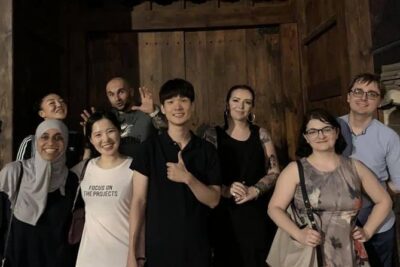
Evening Dark History, Folklore & Ghost Story Walking Tour
Read our review →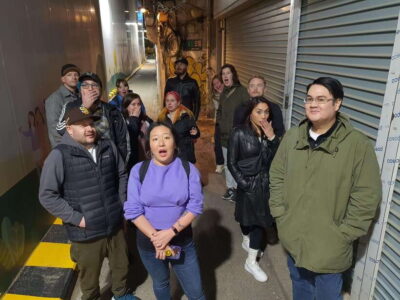
Dark Side of the City and Ghost Stories Walking Tour
Read our review →
Gangnam Walking Tour on Youth and Society in Seoul Korea
Read our review →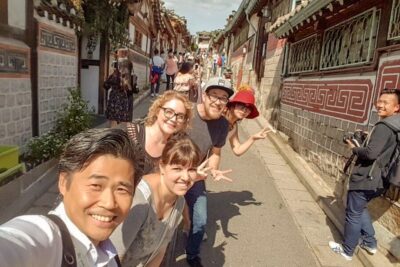
Gyeongbok Palace and Bukchon Hanok Walking Tour
Read our review →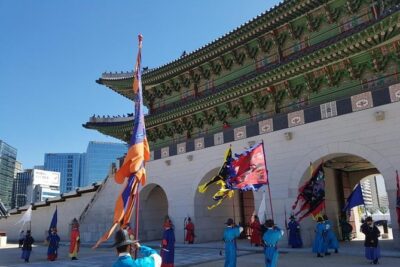
Best Walking Tour to Gyeongbok Palace Bukchon Hanok Village
Read our review →
Highlights & Hidden Gems With Locals: Best of Seoul Private Walking Tour
Read our review →
Street photoshoot and Seoul Hidden gem History Walking Tour
Read our review →Browse the lists this tour appears in