
Reviewed · KOREAN TEMPLE TOURS
Danyang Tour:Guinsa Temple & Bobaljae & Cheongpung Cable Car
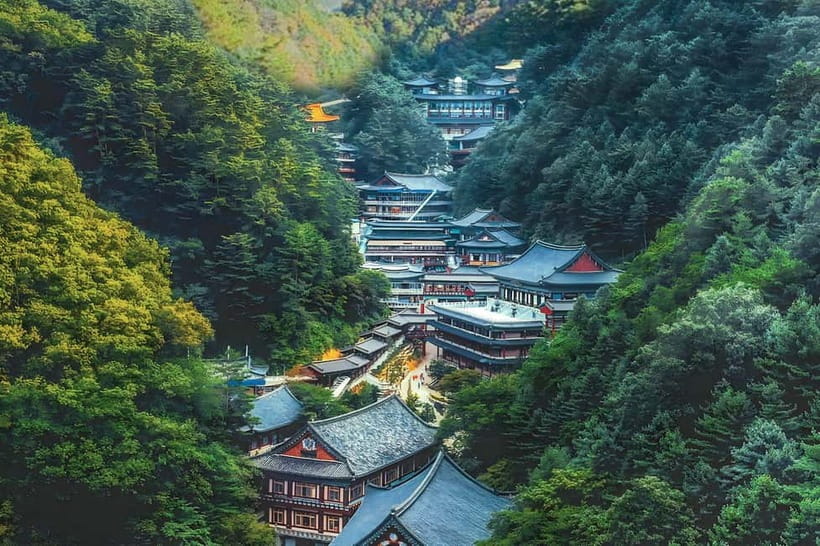
Guinsa Temple is the star here: a huge Buddhist complex hidden in a wooded valley, with steep stairways, tall buildings, and a calm that feels far removed from Seoul. I like that this trip combines Korean religious culture with open-air scenery rather than giving you another city sightseeing day. I also like the mix of a slow temple visit and the more thrilling Cheongpung Cable Car ride.
The main drawback is the amount of walking and stairs. The day also involves a long road journey from Seoul, and one useful point to know is that it can sometimes be hard to hear the guide from the bus. Wear good shoes, sit where you can hear clearly, and treat this as a full day in the countryside.
Key points at a glance
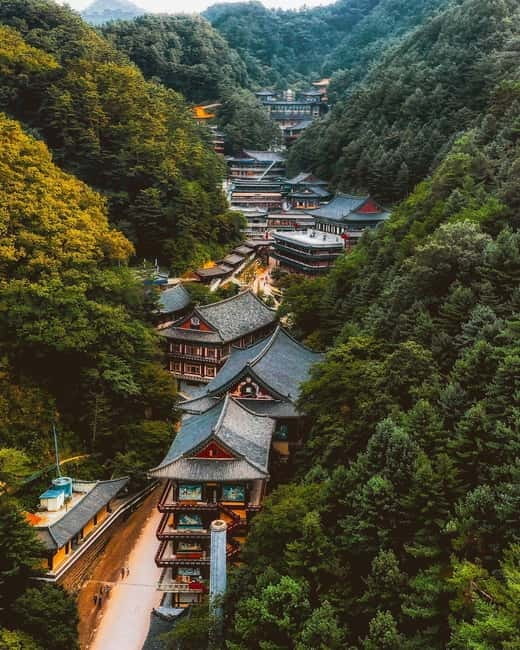
- Guinsa Temple is the main event: See one of Korea’s largest temple complexes, spread through a wooded valley.
- A rare chance to try temple food: Vegetarian food may be offered at no charge, but regular meals and drinks are not included.
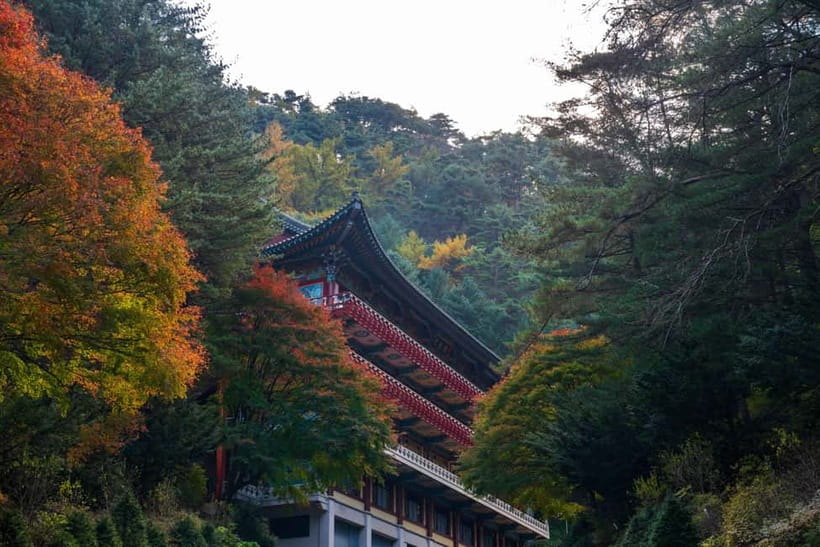
- Bobaljae is about the road as well as the view: The drive is especially attractive in autumn, when the trees change color.
- Cheongpung Cable Car adds a lift to the day: Glide above Cheongpungho Lake for wide views and a change of pace.
- A practical Seoul escape: Round-trip transport solves the awkward public transport connections to these rural sights.
- Guide quality matters: Yohan, Jun, Michael, Mario, Edward, Johann, and K are among the guides praised for clear help, local explanation, and photo assistance.
Why Guinsa Temple deserves the long ride
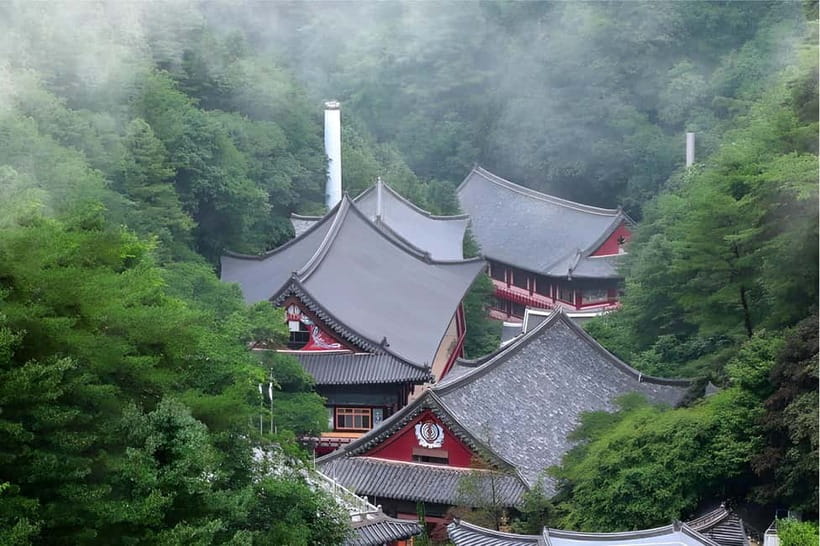
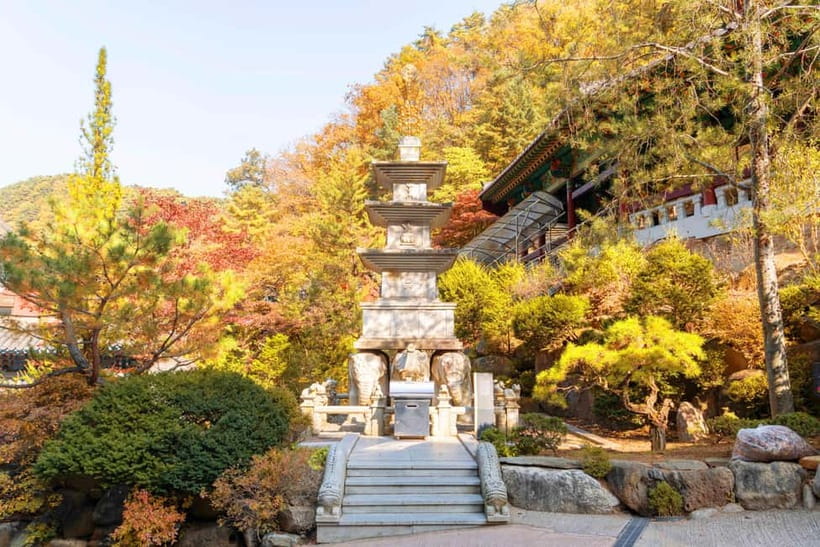
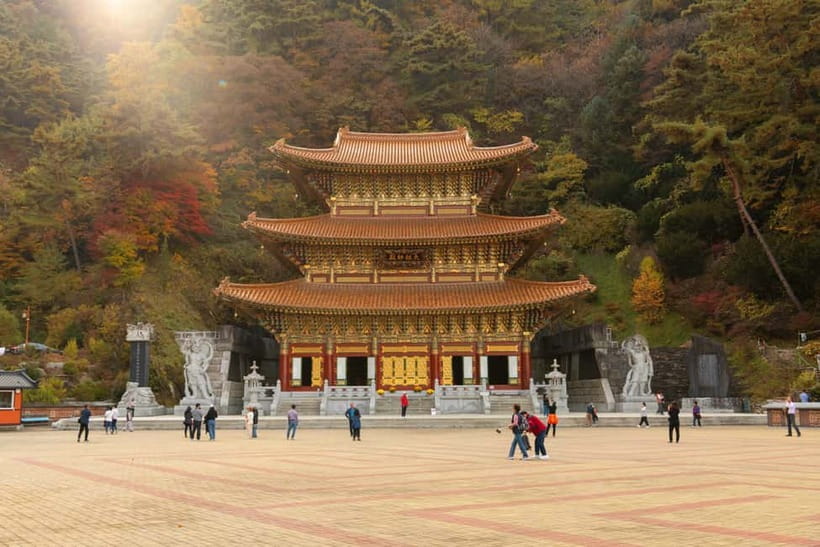
Many Korean temple visits are quiet, compact affairs. Guinsa is different. It is described as the largest temple in Korea, and its buildings climb through a narrow wooded setting rather than sitting in one tidy courtyard.
That scale gives the visit its impact. You do not simply walk to one main hall, take a photo, and leave. You move through a series of temple buildings and stairways, with the surrounding trees helping separate each part of the complex. The setting feels secluded, even though the temple itself is substantial.
You should expect to walk uphill and use stairs. The tour information specifically warns that some attractions require considerable walking, so this is not a good choice if you need a flat, easygoing sightseeing day. Comfortable shoes are essential, and you will want water for the active parts of the visit.
The temple is also the best stop for understanding a different side of Korea. Seoul gives you palaces, markets, and modern neighborhoods. Guinsa gives you a working religious site in the mountains, where the buildings, courtyards, and food traditions create a slower experience.
More Korea Cable Car Rides in Seoul
- Nami Island, Cable Car, Garden of Morning Calm Panoramic Tour
★ 5.0 · 111 reviews - Private Full Day Seoul City Tour and N Tower Cable Car
★ 5.0 · 18 reviews - Seoul: Chungju Cruise, Cable Car & Cave Kayak Adventure Tour
★ 4.5 · 8 reviews
Temple food and the practical lunch question
One unusual feature is the chance to try vegetarian temple food. The experience description says this may be available free of charge, offering a simple way to connect the visit with Buddhist practice rather than treating the temple as a photo stop.
You should keep the wording in mind: this is an opportunity, not a guaranteed full meal. Meals and beverages are listed as excluded, so plan for the possibility that you will need to buy or bring food elsewhere. It is wise to confirm the temple food arrangement when booking, especially if you have dietary needs.
I like this part because it adds meaning to the temple visit. You are not just admiring rooflines and statues. You may also get a taste of how food fits into temple life. At the same time, do not book this tour expecting a food-focused outing. The meal is a small part of a much broader day.
Bobaljae Road and the observatory stop
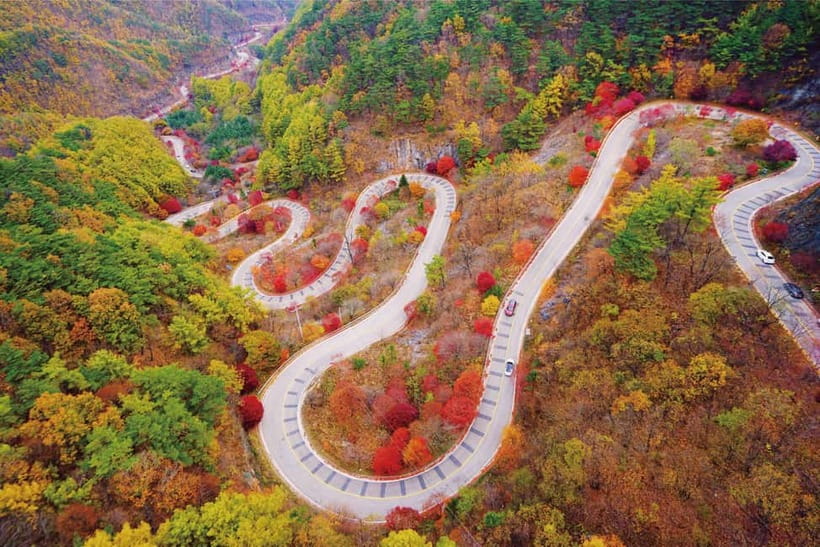
Bobaljae offers a useful change from the close, vertical feeling of Guinsa. The tour includes a driving route along Bobaljae Road and a stop at Bobaljae Observatory, where you can take photographs from a higher viewpoint.
The road itself is part of the attraction. In autumn, the trees along the route are described as especially beautiful, making this a strong seasonal choice for visitors who want fall color outside Seoul. Timing matters here. Autumn conditions can change from year to year, so you should not assume the trees will be at peak color on your exact date.
At the observatory, expect time for views and photos rather than a long structured activity. This is a good moment to slow down, stretch your legs, and enjoy the countryside after the temple visit. The scenery can also help break up the drive, which matters on a day trip with several distant stops.
Do not expect a major museum, shopping area, or dense collection of attractions at Bobaljae. Its appeal is simple: a scenic road, a viewpoint, and a chance to see a quieter part of Korea. If you enjoy photographs, changing seasons, and mountain roads, this stop should feel worthwhile. If you prefer busy streets and lots of indoor attractions, it may feel brief.
The Cheongpung Cable Car over Cheongpungho Lake
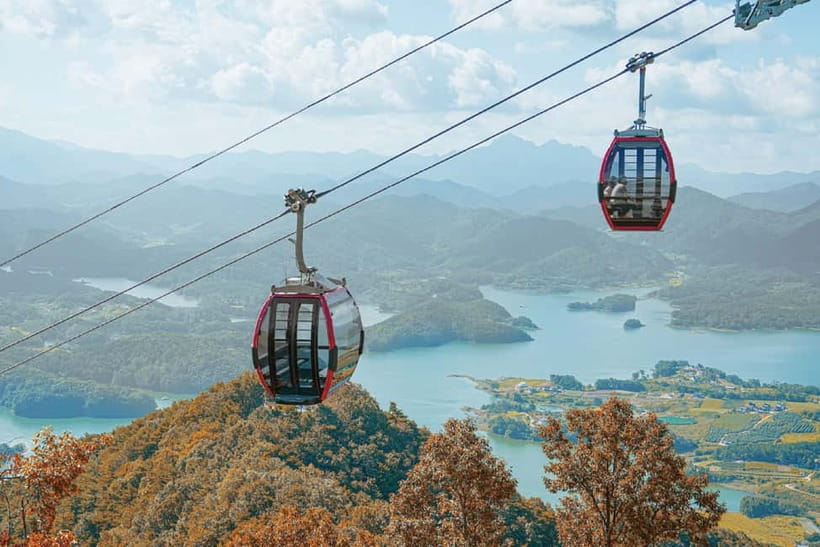
The final major highlight changes the mood again. The Cheongpung Hoban Cable Car carries you above Cheongpungho Lake, giving you a broad view of the water and surrounding countryside.
This is the tour’s most dynamic moment. After walking around Guinsa and spending time on scenic roads, the cable car gives you a smooth ride and a high viewpoint without another uphill climb. You can expect open views as the car moves over the lake, with the scenery changing as your position rises and shifts.
Autumn is again the most obvious season for dramatic color. The information describes the foliage as especially striking then, but the cable car still provides a strong viewpoint in other seasons. The appeal is not only the ride itself. It is the chance to see Cheongpungho Lake from above, a perspective you cannot get from a normal road transfer.
This part may be less appealing if you dislike heights or cable cars. The tour does not present it as a quiet scenic overlook only; it is meant to provide a more exciting experience. For most people, that contrast works well. Guinsa supplies culture and stillness, Bobaljae supplies the road and viewpoint, and the cable car supplies the final burst of motion.
More Korean Temple Tours in Seoul
- Seoul: Mt Seorak + Naksansa Temple or Nami Island Group Tour
★ 4.7 · 422 reviews - Best Things to Do – Half Day Seoul Trip (Seoul Palace & Temple)
★ 5.0 · 190 reviews - Mount Seorak and Naksansa Temple One Day Tour from Seoul
★ 4.5 · 167 reviews - Day Tour of Suwon Hwaseong Fortress Starfield Waujeongsa Temple
★ 5.0 · 61 reviews
What the guide adds to a remote day trip
The guides are important because these locations are difficult to reach from Seoul by public transport. Round-trip transfers remove the need to piece together regional buses, taxis, and connections in an area you may not know.
Guides named in the feedback include Yohan, Jun, Michael, Mario, Edward, Johann, and K. Yohan is specifically praised for explaining the different temple buildings and helping with photographs. Jun is described as friendly, and Michael and Mario are praised for providing plenty of information. That suggests the guiding style can be both practical and conversational, though the exact guide depends on the departure.
You should make the most of the guide by asking questions at Guinsa. The temple is large enough that a quick look at the buildings may leave you unsure what you are seeing. A guide can help turn the complex from a series of impressive structures into a more understandable cultural visit.
There is one small communication concern. One account found it difficult to hear the commentary clearly on the bus. This can happen on any long road tour, especially when the vehicle is moving. Sit near the front if possible, and ask the guide to repeat anything important. Do not let that issue overshadow the value of having transport and a guide, but it is worth knowing before you book.
A full day, not a quick side trip
The $105 price per person needs to be judged against the distances involved. You are paying for round-trip transfers from Seoul, admission to the attractions, and an English or Chinese-speaking guide. Since the three main sites are difficult to visit by public transportation, the transport is a major part of the value.
The price is less attractive if you only want a single temple visit. In that case, a closer attraction may offer a simpler and cheaper day. But if you want Guinsa, Bobaljae, and Cheongpung Lake in one outing, arranging each transfer yourself would be inconvenient and could cost more in time and local transport.
The group size can affect the experience. A small group can make the day easier, with quicker movement and more direct contact with the guide. It may also make the bus ride feel more relaxed. The tour requires at least four participants to depart. If that minimum is not reached 48 hours before departure, the tour is canceled and you are notified by email or message.
That rule is important if you are building a tight itinerary around this day. You can reserve and pay later, and cancellation is allowed up to 24 hours in advance for a full refund, but you should still leave some flexibility in your Seoul schedule until the departure is confirmed.
Who will enjoy this outing most
I would recommend this trip to you if you want to see a rural and religious side of Korea that is hard to reach without a vehicle. It suits visitors who enjoy scenic drives, temple architecture, seasonal views, and one memorable ride at the end.
It is also a good fit for photographers. Guinsa offers layered buildings and wooded surroundings, Bobaljae offers an observation point, and the cable car provides wide views across Cheongpungho Lake. One guide was especially helpful with taking photos, a small service that can make a real difference when you are traveling alone or as a couple.
You should think twice if you dislike long road journeys, stairs, or tightly organized sightseeing days. The tour covers several locations, so you do not have unlimited time at every stop. It is well planned to allow time at the main sites, but this is still a group outing with a fixed route.
Families and older visitors should consider fitness carefully. The walking warning is clear, and the temple’s sloping paths and stairs may be tiring. The cable car itself is less demanding physically, but getting through the full day still requires stamina.
Best seasons and what to pack
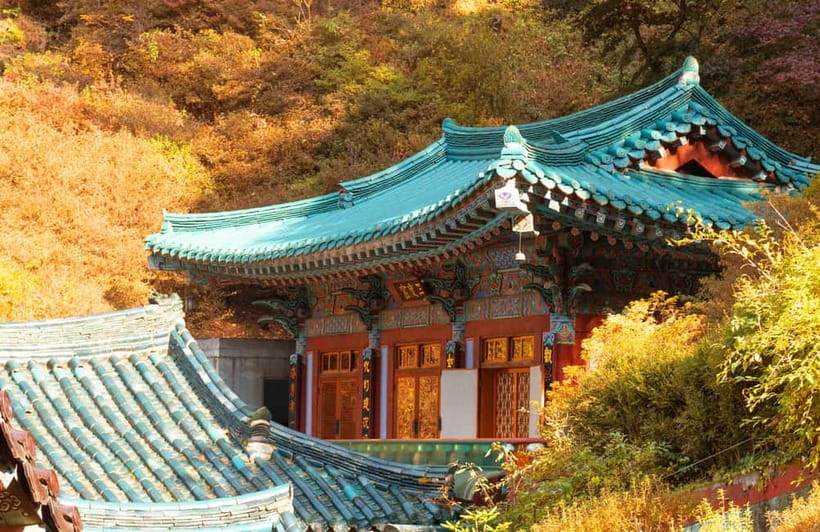
Autumn is the obvious choice if you want the strongest color along Bobaljae Road and around Cheongpung Lake. The tour specifically presents the fall foliage as a highlight, so an autumn departure should appeal to anyone choosing Korea for seasonal scenery.
No matter when you go, bring comfortable walking shoes. You should also carry water, since drinks are not included, and keep space in your day bag for personal items. A phone or camera is useful at Bobaljae Observatory and during the cable car ride.
Because the tour includes both outdoor viewpoints and a temple visit, dress for changing conditions. The available information does not give a detailed dress code, so use respectful everyday clothing at the temple and prepare for time outside.
How the experience feels as a complete day
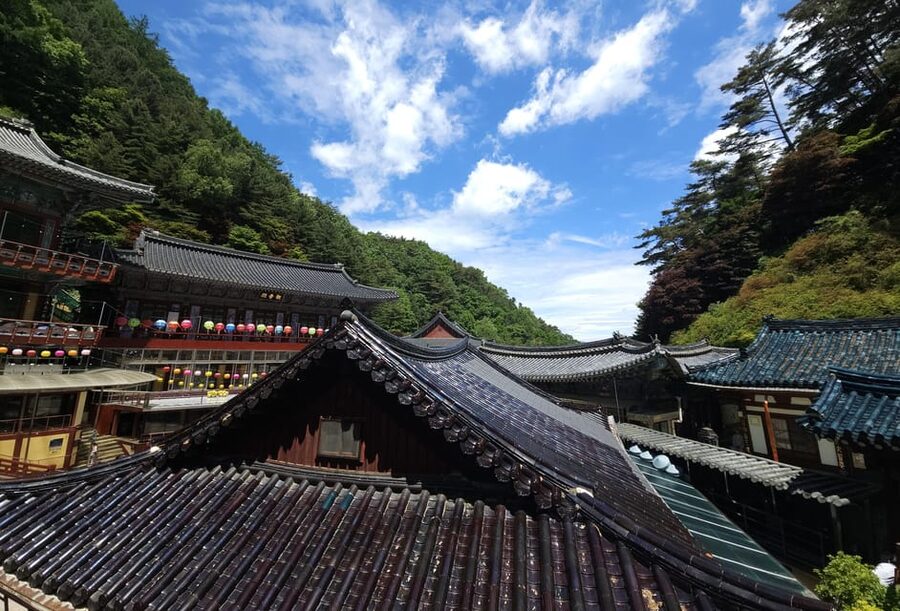
The route works because each stop offers something different. Guinsa is the cultural heart, with its size, Buddhist setting, and possible temple food. Bobaljae gives you a scenic road and a viewpoint. Cheongpung Cable Car finishes with a high, open view over the lake.
That variety keeps the day from becoming repetitive. You are not spending every hour walking through similar buildings, and you are not looking at scenery from a bus window alone. The tradeoff is that the sites are spread out, so road time is unavoidable.
The strongest praise centers on the temple, the scenery, and the guides. The temple was singled out as the favorite part, while the cable car was described as unforgettable for its views. Several guides received warm praise, with Yohan and Jun appearing especially often in the positive feedback. The day also seems to work well for small groups, where shared laughs and direct help from the guide can make the long outing feel more personal.
The overall rating is 5 out of 5 from 15 reviews, which points to consistently strong satisfaction. I would still read that alongside the practical limits: minimum departure numbers, stairs, a long transfer from Seoul, and possible difficulty hearing the bus commentary.
Should you book the Danyang day trip?
Book it if Guinsa Temple is high on your Korea wish list and you want the simplest way to combine it with Bobaljae and Cheongpungho Lake. At $105, the value is strongest for visitors who would otherwise struggle to arrange rural transport, admissions, and guiding on their own.
Skip it if you want a slow, self-directed day or if steep walking is a serious problem. For everyone else, this is a well-balanced countryside outing with a genuine cultural stop, strong seasonal scenery, and a cable car ride that gives the day a lively finish. Keep your schedule flexible until the four-person minimum is confirmed, pack proper shoes, and choose an autumn date if fall color is your main goal.
FAQ
Where does this tour begin and end?
The tour starts at a meeting point that can vary depending on the option booked. It ends back at the meeting point after the return transfer.
What is included in the $105 price?
The price includes admission to the attractions, round-trip transfers from Seoul, and an English or Chinese-speaking tour guide.
Are meals and drinks included?
Meals and beverages are not generally included. The experience description says you may have an opportunity to try vegetarian temple food for free at Guinsa Temple, but you should confirm this arrangement and plan for your own food and drinks.
How much walking is involved?
Some attractions include considerable walking and stairs. Comfortable shoes are strongly recommended, and you should be fit enough for an active sightseeing day.
What languages are available?
Guiding is available in English and Chinese.
Can the tour be canceled if too few people book?
Yes. At least four participants are required for departure. If that minimum is not met 48 hours before the departure date, the tour is canceled and you are notified by email or message. You can also cancel up to 24 hours in advance for a full refund.
Just added around Seoul
- Gyeongbokgung palace,seoul with gigibebe hanbok rental★ 4.5 · 12 reviews
- Private tour guide service in Seoul, Korea★ 5.0 · 6 reviews
- Alpaca, Nami, Petite Fr, Italian Village, Garden of Morning Calm★ 3.5 · 5 reviews
- Gyeongju UNESCO Sites Tour by KTX train; The Museum Without walls★ 4.5 · 11 reviews
- Private day trip to Korean Folk Village & Dae Jang Geum Park★ 5.0 · 7 reviews
- Private tour Lotte World,Tower,Aquarium(All Tickets are included)★ 5.0 · 12 reviews
- Full Day Private Seoul Tour for foodies★ 5.0 · 3 reviews
- Seoul Private Custom Walking Tour with A Guide (Private Tour)★ 4.5 · 28 reviews
Korean Temple Tours, compared.
Mt Seorak + Naksansa Temple or Nami Island Group Tour
Read our review →
Best Things to Do – Half Day Seoul Trip (Seoul Palace & Temple)
Read our review →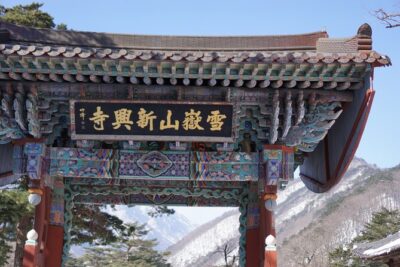
Mount Seorak and Naksansa Temple One Day Tour from Seoul
Read our review →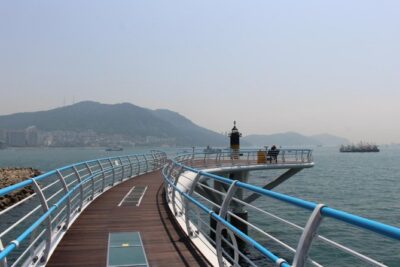
Busan Tour: Gamcheon Village & Haedong Yonggungsa Temple + Lunch
Read our review →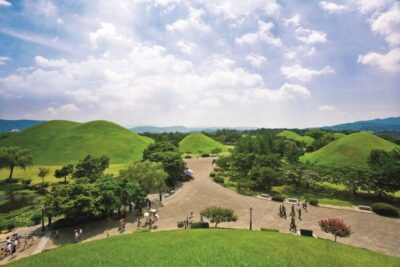
UNESCO Heritage Tour Including Bulguksa Temple
Read our review →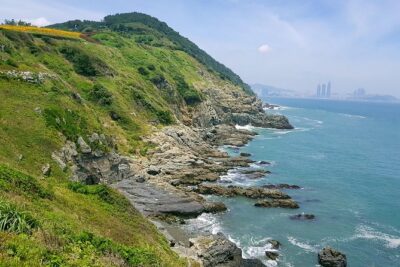
Full Day Busan Tour Including Haedong Yonggungsa Temple
Read our review →
Private Busan tour with gamcheon culture village and the temple (Customizable)
Read our review →
Day Tour of Suwon Hwaseong Fortress Starfield Waujeongsa Temple
Read our review →Browse the lists this tour appears in