
Reviewed · UNESCO WORLD HERITAGE TOURS
Gyeongju: UNESCO Heritage Tour Including Bulguksa Temple
Gyeongju is South Korea’s ancient capital, and this tour gives you a useful way to see its far-flung treasures in one long day. You move from grassy royal tombs to a stone observatory, a Buddhist temple, a mountain grotto, and a palace pond without wrestling with local buses or piecing together several separate tickets. Bulguksa Temple and Seokguram Grotto are the day’s great set pieces.
I like the comfortable van and the human scale of the tour, especially when guides such as Sue or Steve are leading the day. I also like the mix of major monuments, quiet village lanes, and a traditional Korean lunch. The main drawback is the pace: eight hours covers a lot of ground, and a late start, holiday traffic, or large crowds can shorten time at the final stops.
At a glance
- Six major sights in one day: Bulguksa, Seokguram, Daereungwon, Wolji Pond, Cheomseongdae, and Gyochon Village.
- A practical Busan day trip: Hotel pickup and return make Gyeongju much easier than arranging several connections yourself.
- Silla-era treasures: See royal burial mounds, an ancient astronomical observatory, Buddhist sculpture, and palace remains.
- Lunch and entry fees included: The price covers the main practical costs, along with bottled water.
- Small-group or private format: The experience can be arranged for a private party or a smaller shared group.
- A guide-led history lesson: Guides including Sue and Steve are praised for clear stories, humor, flexibility, and help with photographs.
Why Gyeongju works best with wheels
Gyeongju is not one compact old town. Its historic sites spread across a wide area, with Bulguksa and Seokguram in the Tohamsan Mountain area and the royal sites closer to the city center. You can visit independently, but doing all these stops in one day means planning bus routes, watching departure times, buying admissions, and allowing for traffic.
This tour removes that work. You are collected at your hotel or chosen location in Busan or Gyeongju, then travel in an air-conditioned van with an English-speaking guide. That matters most on a warm day, when you have already walked around temple courtyards and grassy tomb grounds.
The transport also gives the day some flexibility. Guides have adjusted the order or timing when traffic and crowds change. During Korean Thanksgiving, for example, traffic and popular sites can be especially busy, so a guide who knows how to adjust the plan is useful.
The arrangement is not luxurious, but it is comfortable and efficient. A driver handles the roads while your guide explains what you are seeing. Joe, one driver praised in the tour feedback, also helped with photographs and kept an eye on directions. That small service can make a difference when you are trying to see six historic places before evening.
More UNESCO World Heritage Tours in Gyeongju
- Private Gyeongju Tour – Explore Gyeongju UNESCO Sites
★ 5.0 · 272 reviews - Busan: Gyeongju UNESCO Legacy Tour with National Museum
★ 5.0 · 172 reviews - Gyeongju UNESCO World Heritage Sites and History Full-Day Tour with Lunch
★ 5.0 · 104 reviews
Gyochon Village and the old Choi family home
Gyochon Village is a gentle start. Its traditional hanok buildings and quiet lanes show a more domestic side of Gyeongju, away from the grand temple gates and royal tombs. You visit the House of the Gyeongju Choi Clan, associated with the area’s old noble families and traditional craftsmanship.
I like this stop because it gives the monuments a human setting. Before you spend the day looking at kings, queens, stone towers, and Buddhas, you get a sense of the homes and streets used by earlier generations.
The visit includes about an hour with the guide. You may also have a chance to try Gyeongju Gyodong Beopju, a local traditional liquor, when it is available. Treat that as a possibility rather than a guaranteed tasting.
Gyochon is also a useful place for questions. A good guide can explain how the architecture reflects social status and daily life, rather than simply pointing out old buildings. Sue has been praised for adding humor and practical detail to these explanations, while Steve is known for making Silla history easy to follow.
Daereungwon’s royal tombs
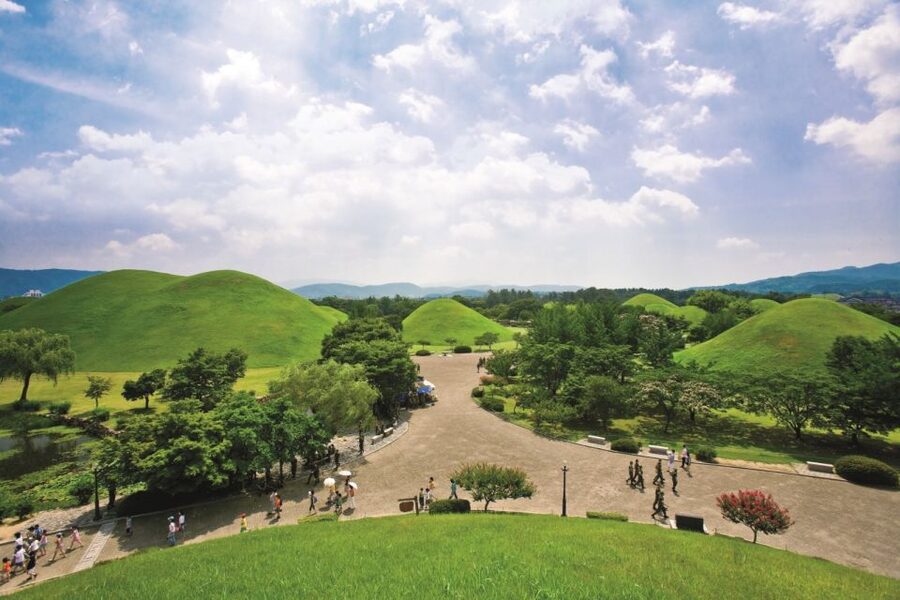
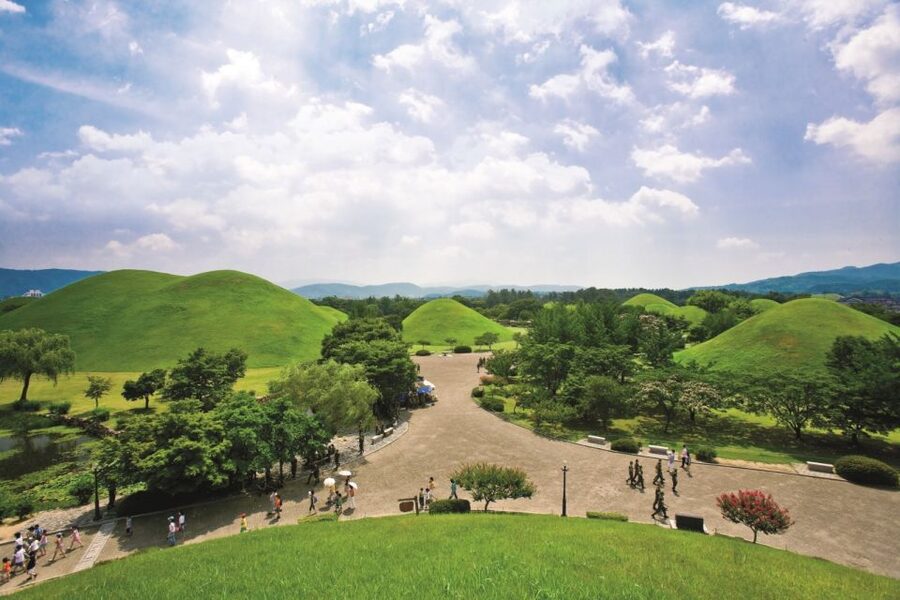
At Daereungwon Tomb Complex, the scenery changes to broad grassy mounds. These rounded burial hills once held Silla kings and aristocrats, and their size gives you a clear sense of the power and wealth of the people buried inside.
The most famous stop is Cheonmachong, the tomb where an ancient painting of a flying horse was found. Hwangnamdaechong is another major mound, known for its scale and fine burial objects. The one-hour guided visit lets you walk among the tombs rather than seeing them only from a vehicle.
This is one of the most memorable places on the tour because the setting is open and calm. The tombs do not look like European castles or stone mausoleums. They rise from the grass as smooth green hills, making the burial customs of the Silla period visible without much architectural clutter.
You should expect walking on open paths, with little shade in some areas. Bring sun protection in warm weather and sensible shoes. The tomb complex is easy to appreciate even if you are not a serious archaeology fan, but the guide’s explanation makes the painted horse, burial goods, and royal rank more meaningful.
Cheomseongdae, Silla science in stone
Cheomseongdae takes about 30 minutes, so it is a shorter stop than the temple visits. The stone tower is widely regarded as the oldest existing astronomical observatory in Asia and was built during the reign of Queen Seondeok.
Its appeal is visual first. The carefully stacked stone structure looks simple from a distance, but its unusual shape and age make it one of Gyeongju’s most recognizable monuments. Your guide can connect it to the Silla court’s interest in calendars, astronomy, agriculture, and royal authority.
Do not expect a long museum visit here. Cheomseongdae is an outdoor monument, and the value comes from understanding what you are looking at. The brief stop works well in a full-day schedule, though anyone especially interested in ancient science may want more time than the standard visit allows.
Same country, a completely different kind of day:
- Gyeongju: Private Car Tour with a Licensed Tour Guide
★ 5.0 · 85 reviews - Full day Private Gyeongju UNESCO Heritage Tour : a glimpse into Silla
★ 5.0 · 60 reviews - Guided Car Tour in Geyongju with a Local Guide
★ 5.0 · 38 reviews - Gyeongju: Private Car Charter Taxi Tour
★ 5.0 · 37 reviews
Bulguksa Temple, the day’s centerpiece
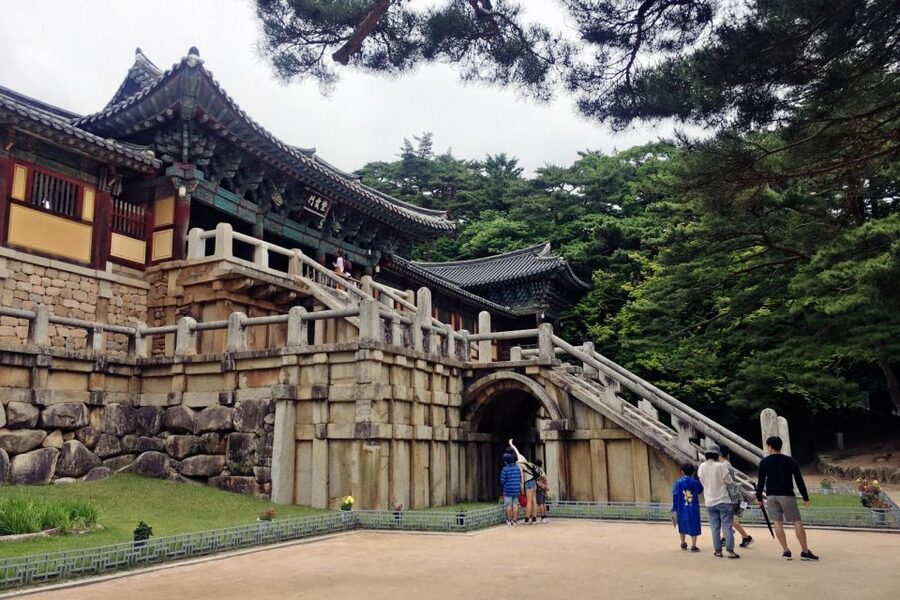
Bulguksa Temple is the strongest reason to choose this tour. A UNESCO World Heritage Site, it combines Buddhist devotion, carefully arranged courtyards, stone bridges, and celebrated pagodas in a wooded mountain setting.
The guided visit lasts about an hour. You see Dabotap and Seokgatap, two of Korea’s best-known pagodas, along with the temple’s stone steps and gateways. The design is not simply decorative. Its terraces and raised entrances create a gradual movement from the ordinary world toward a sacred space.
Bulguksa rewards a slow look. Notice the contrast between the painted wooden buildings and the older gray stonework. The stone bridges are especially important because they are both practical structures and symbolic passages.
One hour is enough for the main courtyards and explanations, but it is not enough to inspect every corner. If you are passionate about Buddhist architecture or photography, you may wish the schedule allowed longer. Still, the guide adds the context that many independent visitors miss, particularly the connection between Bulguksa and the wider Silla effort to express Buddhist ideals through art and construction.
The temple can be busy, especially on holidays. Comfortable shoes help, and you should be prepared for steps and uneven surfaces.
Seokguram Grotto on Tohamsan Mountain
From Bulguksa, the tour continues up Tohamsan Mountain to Seokguram Grotto. This is another UNESCO-listed cultural site and one of Korea’s most treasured works of Buddhist art.
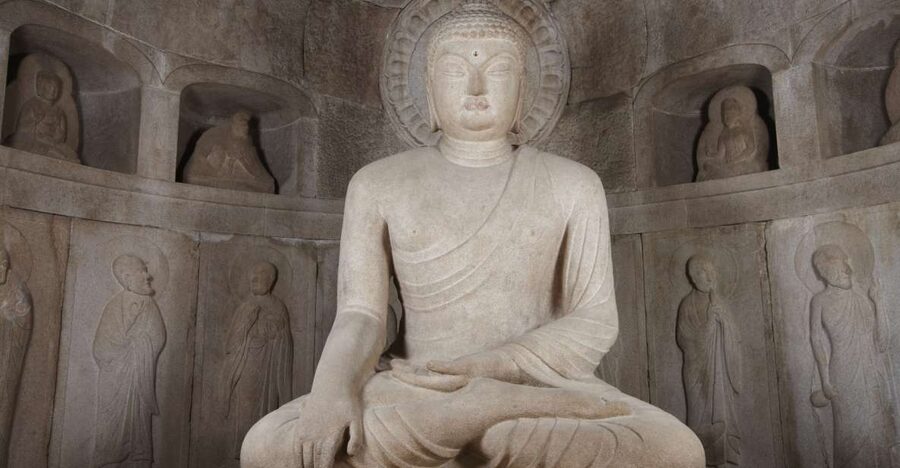
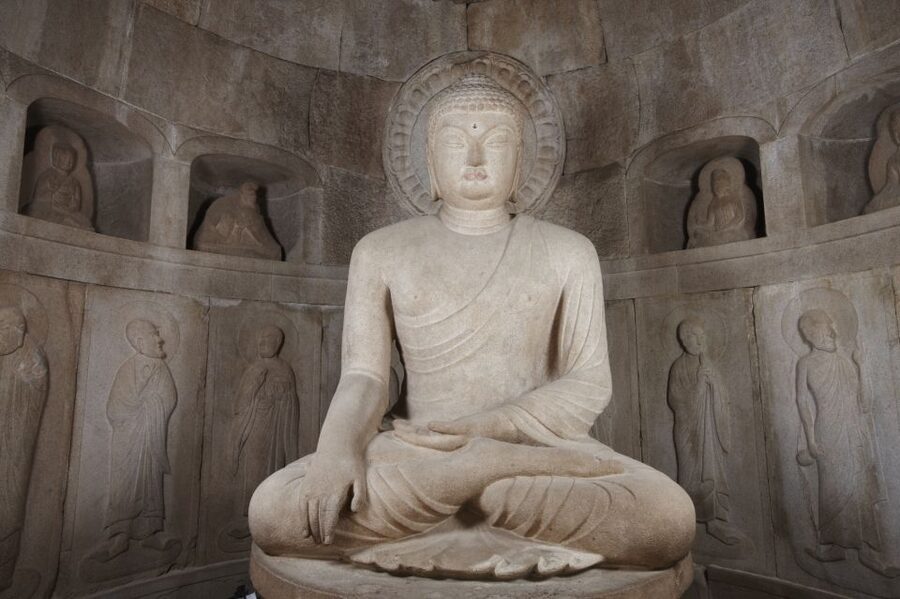
Inside the grotto is a granite Buddha surrounded by carved guardian figures. The sculpture is protected, and the viewing experience is more controlled and quieter than an open temple courtyard. You may not be able to linger as long as you wish, but the central Buddha’s calm expression and the surrounding stone carvings make this a powerful stop.
The guided portion lasts about an hour, including the mountain visit and explanation. This is where a guide’s storytelling earns its keep. The grotto is not just a beautiful statue in a cave. It is also an impressive meeting of sculpture, stone engineering, religious purpose, and mountain setting.
The trip up the mountain can be affected by traffic and weather. Stalls outside the grotto may sell local snacks, and one guide, Sue, has bought snacks for the group to try. That is a pleasant extra when it happens, but it is not listed as a formal inclusion.
Some visitors may find the grotto less expansive than expected because the Buddha is viewed from a designated area. Go for the quality and importance of the sculpture, not for a long, free-roaming cave visit.
Lunch and the Korean food break
Lunch is included, which makes the $189 price easier to assess. The meal is described as delicious and traditional, with bibimbap receiving special praise. One guide showed a family how to mix and eat bibimbap properly, turning lunch into part of the cultural lesson rather than a rushed fuel stop.
The exact restaurant and menu are not specified, so do not book this expecting a particular dish beyond the possibility of traditional Korean food. The guide may join the meal, as Sue and Joe did with one couple, which can make the break feel friendly and informal.
Lunch also protects your sightseeing time. You do not need to leave the group to search for a restaurant in an unfamiliar part of Gyeongju. If you have strict dietary needs, ask the operator before booking because the available information does not explain menu substitutions.
Wolji Pond and the Donggung Palace site
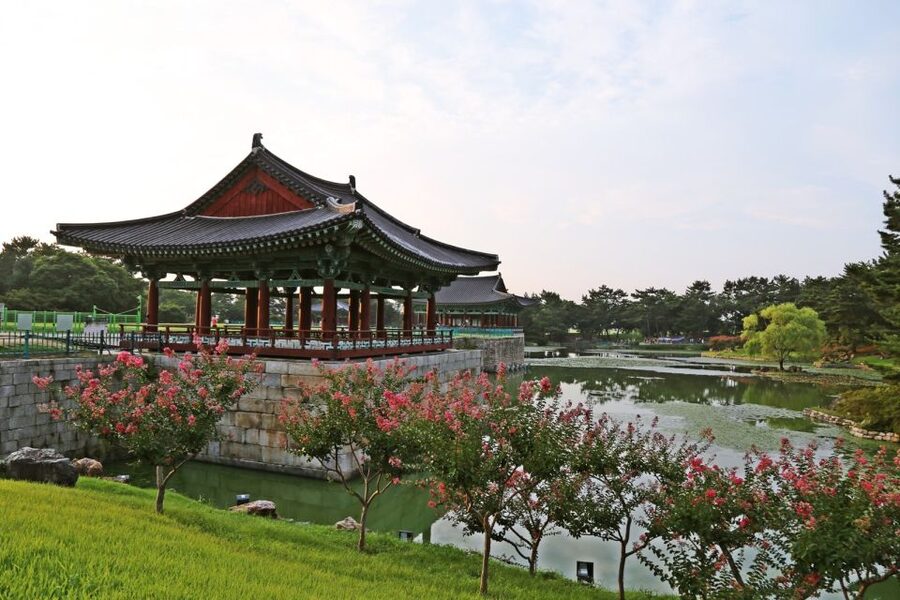
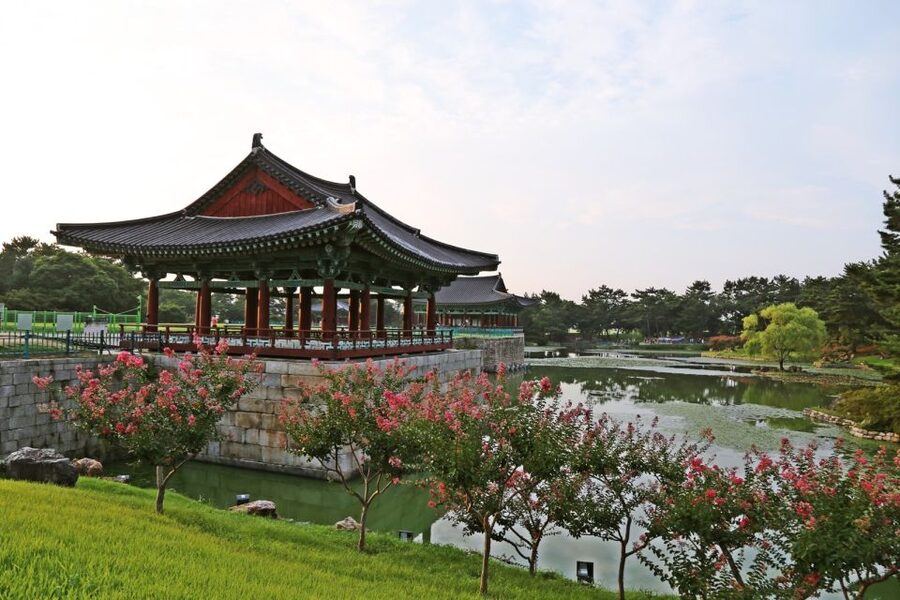
Wolji Pond is the final listed sightseeing stop, and it is a good choice for the end of the day. The pond belonged to the Donggung Palace complex, built during the reign of King Munmu. Pavilions and trees reflect in the water, giving the site a more composed, scenic mood after the busier temple and tomb visits.
The standard guided visit lasts about an hour. If you arrive near dusk, the reflections can be especially attractive, though the exact light depends on the day’s timing and traffic. This is a place where you can pause and take photographs, but it is still an archaeological site, not simply a garden.
The schedule can change. One couple started late and missed the last planned item while visiting another village instead. They were satisfied with the tradeoff, but the example points to a real issue: do not assume every stop will receive its full planned time if the day begins late or roads are crowded.
What the $189 price really buys
At $189 per person, this is not a budget sightseeing outing. The value comes from the amount of organization packed into one day: hotel pickup and drop-off, private vehicle transport, an English-speaking guide, lunch, bottled water, and entrance fees.
For a couple or small group coming from Busan, the price can make sense because Gyeongju is spread out and the key sights are not all near a single station. You are paying for time saved, a driver, historical explanation, and less risk of missing a bus or taking the wrong route.
The price is harder to justify if you are already staying in central Gyeongju and are happy to visit only a few nearby sights independently. One direct assessment called the cost high for a basic traditional tour, especially compared with a similar departure from Busan. That is fair. The tour is best value when you want the full circuit in one day, particularly from Busan.
The 4.8 rating from 104 reviews and the 96 percent perfect transport score point to strong satisfaction, but the price remains a personal calculation. Private travelers who value comfort and structure will likely see more value than backpackers building a low-cost itinerary.
Guides, group size, and the feel of the day
The guides make a large difference. Sue is repeatedly praised for kindness, clear explanations, humor, and care from pickup through drop-off. Steve is also praised for adapting to traffic and crowds and making the Silla dynasty easier to understand. Other guide names include Jina, Chris, and Jade, so your guide is not guaranteed to be Sue or Steve.
The group may be private or small. One group of five found the size comfortable, and a couple traveling alone received attentive help with photographs and directions. Small groups also make it easier to ask questions and adjust the pace.
The tone is friendly rather than formal. Guides may join lunch, offer local snacks, help take photographs, or pull up images on a phone to explain what you are seeing. Those touches are not promised for every departure, but they show the kind of practical care this operator aims to provide.
The main limitation is that the guide cannot control traffic, crowds, weather, or a late pickup. On the busiest Korean holidays, you may spend more time in the van and less time at each monument.
Who should book this Gyeongju day tour?
I would choose this tour if you are staying in Busan and want to see Gyeongju in one day without handling a complicated transport plan. It also suits first-time visitors who want the main Silla sites explained in plain English.
Families and older visitors may appreciate the air-conditioned van, hotel pickup, included lunch, and help with directions. The tour also works well for couples who want photographs taken during the day and a guide who can explain the meaning behind the monuments.
Independent history buffs should consider the time limits. You will see the essential sites, but the schedule is designed for coverage, not long study. If you want several hours at Bulguksa, detailed museum time, or a slow photographic walk around Wolji Pond, a private custom tour with fewer stops may suit you better.
The route also requires walking at temple, tomb, and village sites. The provided information does not specify accessibility arrangements, so ask before booking if steps, uneven ground, or mountain access are concerns.
Free cancellation is available up to 24 hours before departure, and you can reserve now and pay later. Starting times depend on availability, so confirm the pickup hour carefully, especially if you are hoping to see Wolji Pond near dusk.
Should you book it?
Book this tour if you want maximum coverage with minimum transport hassle. Bulguksa, Seokguram, Daereungwon, Cheomseongdae, Gyochon Village, and Wolji Pond form a strong introduction to Gyeongju, and the included meal and admissions reduce the number of decisions you need to make.
Skip it if the $189 price feels steep and you have several days in Gyeongju. You can then spread the sights out, spend longer at the temple and museum areas, and use local transport at a lower cost.
For a one-day trip from Busan, though, this is one of the more sensible ways to meet the ancient Silla capital. Just start on time, wear good shoes, and accept that a full list of major sights means a brisk day.
FAQ
How long does the Gyeongju heritage tour last?
The tour lasts eight hours.
Where can I be picked up?
Pickup is available from your hotel or chosen location in Busan or Gyeongju-si.
Where can I be dropped off?
Drop-off is available in Busan or Gyeongju-si.
Which language does the guide speak?
The live tour guide speaks English.
Is transportation included?
Yes. The tour includes hotel pickup and drop-off in an air-conditioned van with a tour guide and driver.
Is lunch included?
Yes. Lunch and a bottle of water are included.
Are entrance fees included?
Yes. All entrance fees are included in the tour price.
Can I cancel the tour for a full refund?
Yes. You can cancel up to 24 hours in advance for a full refund.
More Historical Tours in Gyeongju
- Private World Heritage Gyeongju Taxi Tour
★ 5.0 · 12 reviews - From Busan: Gyeongju UNESCO World Heritage Guided Day Tour
★ 4.8 · 1,250 reviews - Gyeongju UNESCO World Heritage Guided Day Tour from Busan
★ 5.0 · 660 reviews - Seoul: Evening Dark History, Folklore & Ghost Story Walking Tour
★ 5.0 · 593 reviews
More Korean Temple Tours in Gyeongju
- Seoul: Mt Seorak + Naksansa Temple or Nami Island Group Tour
★ 4.7 · 422 reviews - Best Things to Do – Half Day Seoul Trip (Seoul Palace & Temple)
★ 5.0 · 190 reviews - Mount Seorak and Naksansa Temple One Day Tour from Seoul
★ 4.5 · 167 reviews - Busan Tour: Gamcheon Village & Haedong Yonggungsa Temple + Lunch
★ 5.0 · 119 reviews
Just added around Gyeongju
- Private World Heritage Gyeongju Taxi Tour★ 5.0 · 12 reviews
- Guided Car Tour in Geyongju with a Local Guide★ 5.0 · 38 reviews
- Gyeongju: Private Car Charter Taxi Tour★ 5.0 · 37 reviews
- From Daegu: Gyeongju UNESCO Tour 7 Highlights with Bulguksa★ 4.6 · 5 reviews
- From Busan: Gyeongju Small Group Photo Tour & Hotel Pick-up★ 5.0 · 3 reviews
- From Busan: Busan & Gyeongju One Day Tour★ 5.0 · 5 reviews
- Busan: 7 Highlights Gyeongju City One Day Tour★ 4.9 · 10 reviews
- Full day Private Gyeongju UNESCO Heritage Tour : a glimpse into Silla★ 5.0 · 60 reviews
UNESCO World Heritage Tours, compared.
Gyeongju UNESCO World Heritage Guided Day Tour
Read our review →
East Jeju Essentials – Seongsan Ilchulbong (UNESCO) & Haenyeo
Read our review →
Gyeongju UNESCO World Heritage Guided Day Tour from Busan
Read our review →
Jeju Southern UNESCO Full Day Tour with Mt.Halla
Read our review →
Jeju island Southern UNESCO Day Tour With Hallasan MT
Read our review →Browse the lists this tour appears in