
Reviewed · UNESCO WORLD HERITAGE TOURS
Gyeongju UNESCO World Heritage Sites and History Full-Day Tour with Lunch
Gyeongju is South Korea’s ancient capital, and this tour gives you one useful day among its temples, royal tombs, observatory, village lanes, and palace ruins. The most valuable part is the combination of Bulguksa Temple and Seokguram Grotto, two major UNESCO sites that are awkward to reach together without a car. I also like the hotel pickup and included lunch, which remove much of the day’s transport and meal planning.
The drawback is the packed schedule. Some stops are brief, and Cheomseongdae, Gyochon Village, and Donggung Palace are smaller than their grand names may suggest. If you want long museum visits or quiet time at each site, this is not the right pace.
Key points at a glance
- Bulguksa and Seokguram in one day: The tour handles the two out-of-town highlights that are hardest to connect by public transport.
- Pickup from Busan: Air-conditioned minivan transport saves you from arranging trains, buses, and taxis between scattered sights.
- Guides with strong English skills: Guides named Steve, Sue, Chris, and Jina have led past departures, though your guide may be different.
- A full Silla-era sampler: You see royal tombs, palace ruins, a traditional village, an astronomical observatory, and Buddhist sites.
- Lunch and admission included: The price covers more than transport, with a local Korean meal and listed entry fees built in.
- Expect a walking day: Comfortable shoes matter, and roughly 11,000 steps is possible on a well-paced departure.
Why Gyeongju works best with a planned day
Gyeongju was the capital of the Silla Kingdom for centuries, from 57 BC to AD 935. Its historic sites are spread across the city and surrounding hills rather than gathered in one compact old town.
That layout is the reason I see value in a guided vehicle tour from Busan. You can visit Gyeongju independently, but linking the city-center monuments with Seokguram and Bulguksa in one day takes planning. A minivan also lets the driver bring you close to the gates, then collect you after each visit.
The day begins at about 8:00 am and lasts roughly eight hours. Pickup and drop-off are offered, and the vehicle is air-conditioned, a welcome detail in Gyeongju’s hot summer weather. Some departures are small, while the stated maximum is 40 people. A private upgrade is also available if you want more control over the pace.
The guide is important here. Steve, Sue, Chris, and Jina are among the guides associated with past departures. Specific strengths vary by person, but the best guides explain how the monuments fit together instead of treating each stop as an isolated photo opportunity. One useful point to confirm before booking is the exact pickup location and group size.
More UNESCO World Heritage Tours in Gyeongju
- Private Gyeongju Tour – Explore Gyeongju UNESCO Sites
★ 5.0 · 272 reviews - Busan: Gyeongju UNESCO Legacy Tour with National Museum
★ 5.0 · 172 reviews - Gyeongju: UNESCO Heritage Tour Including Bulguksa Temple
★ 4.8 · 104 reviews
Cheomseongdae, a small monument with a large role
The first stop is Cheomseongdae Observatory, usually for about 30 minutes. Built during the reign of Queen Seondeok, from 632 to 647, it is regarded as the oldest surviving astronomical observatory in Asia.
At first glance, it may look like a short stone tower rather than a place where astronomy was practiced. That is part of the lesson. Silla’s rulers used observations of the sky to help forecast weather, an essential concern for an agricultural kingdom.
The visit is quick, so you will not get a long exploration of the surrounding area. Still, Cheomseongdae gives the day an early connection to science and government, not only religion and royal power. If you want detailed explanations of Silla astronomy, ask your guide while you are there.
Crowds can affect this stop. One departure skipped it because a long holiday weekend made the area extremely crowded. The site is open and exposed, so sunscreen and a hat are sensible additions, especially in summer.
Donggung Palace and Wolji Pond after dark in the history books
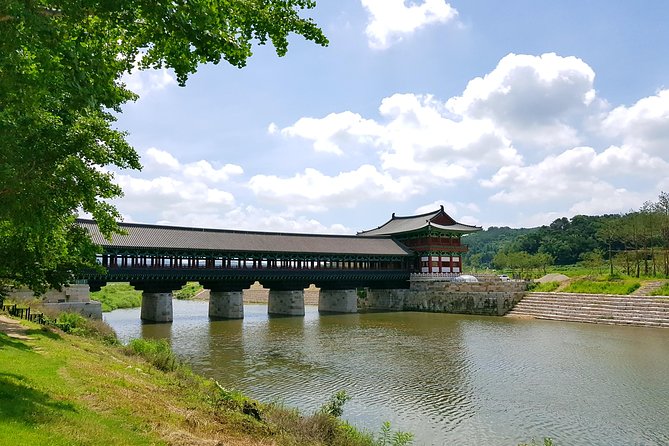
Next comes Donggung Palace and Wolji Pond, with about an hour set aside. Historical records place the construction of Wolji Pond in the 14th year of King Munmu’s reign, around AD 674.
The pond was part of a Silla palace complex. Small artificial mountains and carefully arranged water features helped create a setting for royal gatherings. Today, the water and reconstructed pavilions provide the clearest sense of how the court used the site.
You should set your expectations correctly. This is an archaeological setting, not a complete palace with rooms and halls to enter. Much of the original complex is gone, and the remaining structures require imagination. The value comes from the arrangement of the pond, gardens, and pavilions, along with the guide’s explanation of their purpose.
An hour gives you enough time to walk around without turning the stop into a rushed photograph. The site is particularly attractive when reflections are visible on the water, though this daytime tour may not match the famous evening views associated with the pond.
Gyochon Village and the Choi family story
Gyochon Traditional Village offers about 45 minutes among hanok buildings and the former home of the Gyeongju Choi Clan. The village provides a change of scale after the open royal sites. Instead of looking at monumental remains, you get a glimpse of traditional domestic architecture and local family life.
The Choi family is associated with a long-standing reputation for maintaining wealth while practicing generosity. The guide can give this stop meaning by explaining how the household fit into Gyeongju society.
This is one of the tour’s more modest stops. You should not expect a large open-air museum or a long sequence of fully furnished historic houses. Some visitors may find the village underwhelming if they want extensive displays. I see it as a short cultural pause, useful for showing how historic Gyeongju connects to later Korean traditions.
Because the visit is brief, use your time for the lanes and architecture rather than waiting for a major presentation. The stop works best when paired with the guide’s story about the Choi household.
Same country, a completely different kind of day:
- Gyeongju: Private Car Tour with a Licensed Tour Guide
★ 5.0 · 85 reviews - Full day Private Gyeongju UNESCO Heritage Tour : a glimpse into Silla
★ 5.0 · 60 reviews - Guided Car Tour in Geyongju with a Local Guide
★ 5.0 · 38 reviews - Gyeongju: Private Car Charter Taxi Tour
★ 5.0 · 37 reviews
Daereungwon Tomb Complex and the Silla burial mounds
Daereungwon receives about an hour and offers one of Gyeongju’s most recognizable sights: large grassy burial mounds rising across the city. Twenty-three major tombs are located in the complex, associated with kings and nobles of the Silla Kingdom.
The scale is striking. From the outside, the rounded mounds can look like gentle hills, but they are royal burial chambers. The site becomes more understandable when you learn how Silla rulers displayed status through elaborate burials and valuable objects.
The stop includes Cheonmachong Tomb, one of the tombs open for viewing. This is useful because the exterior mounds alone do not show how they were built or what archaeologists found inside. You get a closer look at the structure and the burial tradition, though the visit is not a substitute for a full museum collection.
A practical weakness is that Daereungwon may leave you wanting more context. Gyeongju National Museum would add original objects and clearer explanations of Silla art and archaeology, but it is not part of this tour. If the museum matters greatly to you, consider adding it on another day or choosing a private option only if the operator confirms that the schedule can change.
Seokguram Grotto on Tohamsan Mountain
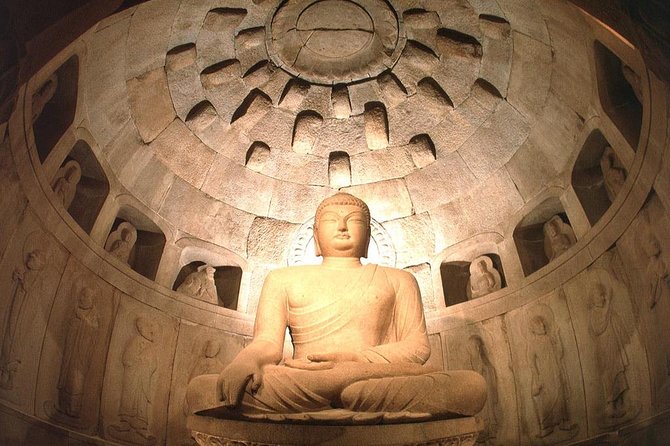
Seokguram is one of the day’s major reasons to book. Located on Tohamsan Mountain, it is a stone temple and one of Korea’s best-known national treasures. It is also part of Gyeongju’s UNESCO cultural heritage.
The central Buddha is the focus, placed inside a carefully constructed grotto with attendant figures. The setting links engineering, Buddhist belief, and mountain worship. The approach also gives you a shift from city streets to a higher, more wooded setting.
You will spend about an hour here. Photography is not allowed inside the grotto, so prepare to experience the space without relying on your camera. That rule can be frustrating for some people, but it protects the interior and keeps attention on the sculpture and the quiet of the chamber.
The mountain setting means comfortable shoes are important. You do not need special hiking equipment based on the tour information, but this is not a sit-in-the-van day. Heat, rain, and humidity can make the walk feel harder. One past departure continued in both heavy rain and extreme heat, so bring sun protection and be ready for changing conditions.
Bulguksa Temple, the artistic high point
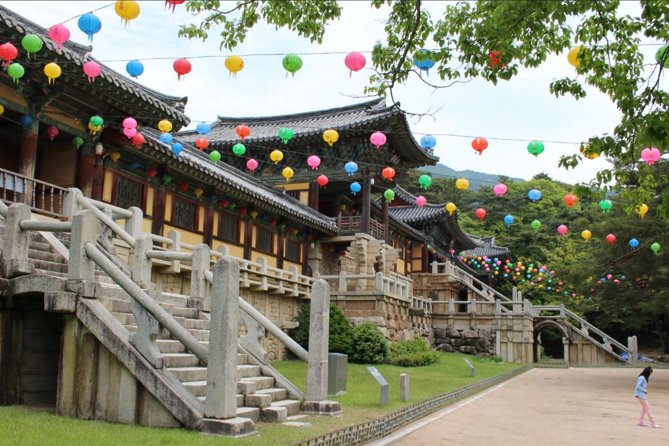
Bulguksa Temple is usually the final major stop, with about an hour to explore. Designated a UNESCO World Cultural Asset in 1995, it is often considered Gyeongju’s signature historic site.
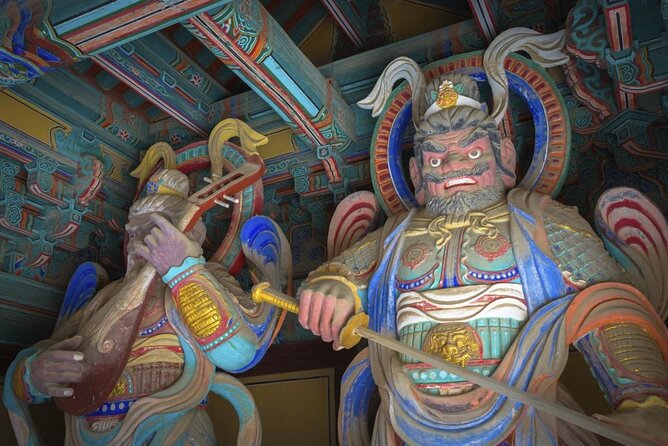
The temple complex is valued for both its buildings and stone craftsmanship. Stairways, terraces, pagodas, bridges, and carved details show how Silla builders expressed Buddhist ideas through architecture. The temple is not simply an old building. Its design turns the climb through the grounds into a symbolic movement from the everyday world toward a sacred one.
An hour gives you a useful introduction, but not unlimited time. You may need to choose between studying the stone features, listening to the guide, and taking photographs. Stay close enough to hear the explanation, then allow yourself a few minutes to look independently.
Bulguksa and Seokguram complement each other. Seokguram is intimate and sculptural; Bulguksa is broader, more architectural, and easier to appreciate through its terraces and courtyards. Seeing both in one day makes the Buddhist side of Silla much clearer.
Lunch is a practical part of the experience
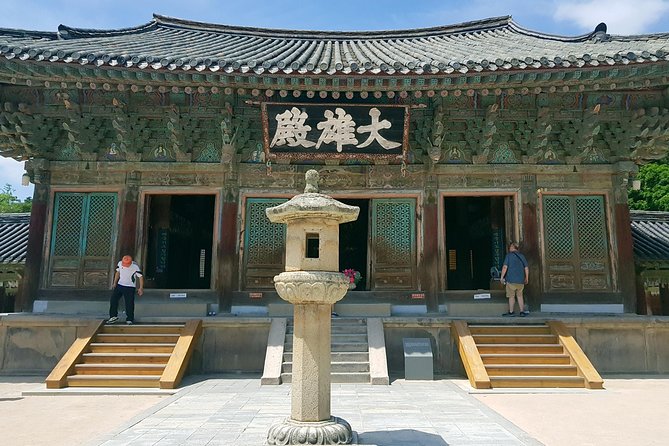
Lunch is included at a local restaurant, along with entrance fees. The meal has been described as filling Korean food rather than a quick snack, which matters on a day involving several walking stops.
Dietary needs can be handled if you advise the operator when booking. Vegetarian and gluten-free arrangements have been accommodated on past departures. Do not wait until lunchtime to raise the issue. State it in advance so the meal can be prepared properly.
The included meal adds value, but it also fixes part of your schedule. If you have a very specific food preference or want to choose your own restaurant, an independent day may suit you better. For most people, though, sitting down to a planned Korean meal is easier than spending valuable sightseeing time deciding where to eat.
What the $189.99 price really buys
At $189.99 per person, this is not a bargain sightseeing bus. The price makes the most sense for someone starting in Busan who wants transport, a guide, lunch, and admission handled in one booking.
The strongest value comes from the geography. Bulguksa and Seokguram are outside central Gyeongju, and moving between the city sites and the mountain requires more than simply walking from one attraction to the next. The minivan also saves you from figuring out connections and arranging taxis.
The value is weaker if you are already staying in Gyeongju and feel comfortable using local transport. Several central stops are close enough to combine independently, while Bulguksa and Seokguram can be visited by taxi. In that situation, the tour’s main advantage becomes the guide and the convenience, not transportation alone.
The tour also includes a maximum group size of 40, although some departures have been much smaller. Groups of three to five can feel almost private, and occasionally a scheduled group tour operates as a private trip when demand is low. You should not count on that result, but it is worth asking about the expected group size.
The pace, walking, and weather
Plan for a full day outside the vehicle. One visitor counted around 11,000 steps, while another described the walking as substantial but not strenuous. That is a fair guide: most people can participate, but you should wear walking shoes and skip high heels.
Gyeongju can be brutally hot in summer. Sunscreen is recommended, and an umbrella or rain protection may help during wet weather. The air-conditioned minivan provides useful relief between stops, but you still spend time outdoors at temple grounds, tombs, village lanes, and the observatory.
The schedule is efficient rather than leisurely. You will see a wide range of sites, but you may not have time to linger at every one. Guides have sometimes adjusted the day around crowds or weather, yet the advertised stops remain the framework for the group.
Guide quality can shape the day
The strongest departures depend on a guide who can turn stone, grass, and partial ruins into a story. Steve has been praised for clear English, strong explanations, and an engaging manner. Sue has been singled out for detailed guidance and careful handling of vegetarian needs. Chris has been described as friendly, informative, and attentive in difficult weather. Jina has been valued for explaining both the historic and spiritual setting.
Those names are useful, but guide assignment is not guaranteed. The quality can also vary in style. Some guides provide lively explanations at the sites but less commentary during the drive. If you want narration about every passing town and road, say so early in the day.
A group tour follows a shared schedule. It cannot provide special treatment for one person without affecting everyone else. If you want to linger, skip a stop, or add the National Museum, the private upgrade may be worth considering, provided the operator confirms what changes are possible.
Who should book this Gyeongju day tour?
I would choose this tour if you are based in Busan, have only one day for Gyeongju, and want the major historic sites without managing several forms of transport. It is especially useful for solo visitors, couples, and first-time visitors who want a clear introduction to Silla-era Korea.
It also suits you if you value explanation. The monuments are easier to appreciate when someone explains why a tomb is shaped like a hill, why a pond was built beside a palace, and how Bulguksa’s stonework reflects Buddhist ideas.
I would hesitate if you dislike fixed schedules, prefer museums to outdoor monuments, or want extensive time at each place. Gyeongju National Museum is not included, and some smaller stops may feel thin if you expect large exhibits. Someone staying in Gyeongju may also save money by arranging local transport independently.
Free cancellation is available up to 24 hours before the start time. A minimum number of participants applies, and if the operator cancels for that reason, you are offered another date or experience, or a full refund.
Should you book it?
Book this tour if convenience is your priority and you are making the Busan to Gyeongju trip in a single day. The combination of pickup, minivan transport, lunch, admission, and a guide gives you a practical way to cover the city’s main historic sites.
Skip it if you are already in Gyeongju, enjoy planning transport, and want to spend unhurried time at the National Museum or individual monuments. At $189.99, you are paying for access and organization as much as for the sights themselves. For a first visit from Busan, that can be fair value. For a self-directed return visit, it is harder to justify.
FAQ
How long does the tour last?
The experience lasts approximately eight hours.
What time does the tour start?
The stated start time is 8:00 am.
Is hotel pickup included?
Pickup and drop-off are included, with pickup offered for the tour.
Does the tour include transportation?
Yes. Transport is provided in an air-conditioned minivan.
Which major sites are visited?
The stops are Cheomseongdae Observatory, Donggung Palace and Wolji Pond, Gyochon Traditional Village, Daereungwon Tomb Complex, Seokguram, and Bulguksa Temple.
Are lunch and entrance fees included?
Yes. Lunch and the listed entrance fees are included in the tour price.
Can I request a vegetarian meal?
Yes. A vegetarian option is available, but you should advise the operator when booking.
Is the tour suitable for children?
Most people can participate, but children must be accompanied by an adult. Comfortable shoes are recommended because the day includes walking.
What is the cancellation policy?
You can cancel at least 24 hours before the local start time for a full refund. Cancellations and changes made less than 24 hours in advance are not accepted for a refund.
More Historical Tours in Gyeongju
- Private World Heritage Gyeongju Taxi Tour
★ 5.0 · 12 reviews - From Busan: Gyeongju UNESCO World Heritage Guided Day Tour
★ 4.8 · 1,250 reviews - Gyeongju UNESCO World Heritage Guided Day Tour from Busan
★ 5.0 · 660 reviews - Seoul: Evening Dark History, Folklore & Ghost Story Walking Tour
★ 5.0 · 593 reviews
More Lunch Experiences in Gyeongju
- Seoul City Private Full-Day Tour Including Lunch
★ 5.0 · 469 reviews - Premium Private DMZ Tour & (Suspension Bridge or N-Tower) include lunch
★ 5.0 · 348 reviews - Private DMZ Tour with North Korean Defector + N Korean Lunch
★ 5.0 · 122 reviews - Busan Tour: Gamcheon Village & Haedong Yonggungsa Temple + Lunch
★ 5.0 · 119 reviews
Just added around Gyeongju
- Private World Heritage Gyeongju Taxi Tour★ 5.0 · 12 reviews
- Guided Car Tour in Geyongju with a Local Guide★ 5.0 · 38 reviews
- Gyeongju: Private Car Charter Taxi Tour★ 5.0 · 37 reviews
- From Daegu: Gyeongju UNESCO Tour 7 Highlights with Bulguksa★ 4.6 · 5 reviews
- From Busan: Gyeongju Small Group Photo Tour & Hotel Pick-up★ 5.0 · 3 reviews
- From Busan: Busan & Gyeongju One Day Tour★ 5.0 · 5 reviews
- Busan: 7 Highlights Gyeongju City One Day Tour★ 4.9 · 10 reviews
- Full day Private Gyeongju UNESCO Heritage Tour : a glimpse into Silla★ 5.0 · 60 reviews
UNESCO World Heritage Tours, compared.
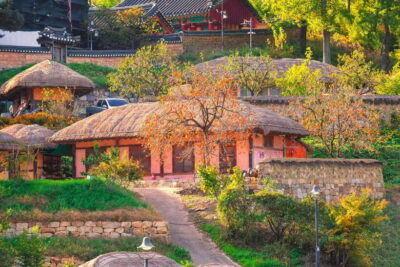
Gyeongju UNESCO World Heritage Guided Day Tour
Read our review →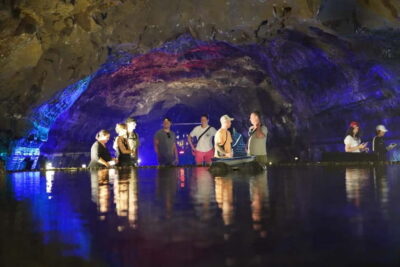
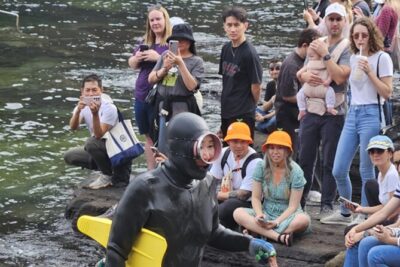
East Jeju Essentials – Seongsan Ilchulbong (UNESCO) & Haenyeo
Read our review →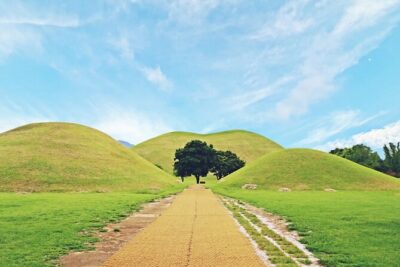
Gyeongju UNESCO World Heritage Guided Day Tour from Busan
Read our review →
Jeju Southern UNESCO Full Day Tour with Mt.Halla
Read our review →
Jeju island Southern UNESCO Day Tour With Hallasan MT
Read our review →Browse the lists this tour appears in