
Reviewed · 1-DAY TOURS
Busan: Gyeongju Guided Day Trip to Three Kingdoms Capital
Gyeongju is South Korea’s history book spread across a real town, and this long day trip gives you a fast, useful way to read several chapters. You’ll see Silla royal tombs, Buddhist art, old village streets, and a palace pond that looks especially fine after sunset.
I like the careful route planning, which links the main sights without making you solve Gyeongju’s transport puzzle. I also like the guides’ personal touch: Kayla Kim, Bada, Katrina, and others are praised for clear stories, photo help, humor, and keeping large groups together.
The tradeoff is simple: this is a packed 11 to 12-hour day with plenty of walking, stairs, hills, and set departure times. Check which package you choose, too, because Seokguram Grotto and Yangdong Folk Village are not included in every version.
Key points for choosing this Gyeongju day trip
- Four major sights form the backbone: Bulguksa Temple, Daereungwon Tomb Complex, Hwangnidan-gil, and Donggung Palace and Wolji Pond.
- The Three Kingdoms package adds local character: Gyochon Traditional Village and Woljeonggyo Bridge are its special stops.
- Seokguram and Yangdong belong to different options: Do not assume every stop listed in the overall program appears in your selected tour.
- English-speaking guides make the ruins readable: Kayla, Bada, Katrina, Hyony, and other guides are praised for stories, history, directions, and help with photographs.
- Bus pickup is central and practical: You meet at Busan Subway Station, Seomyeon, or Haeundae, then return to one of three central drop-off points.
- The value is strongest for a first Gyeongju visit: At $52 per person, transport, guide service, and some admission costs are bundled into one demanding day.
Why Gyeongju makes a worthwhile day from Busan
Gyeongju was the capital of the Silla Kingdom for centuries and later played a major role in Unified Silla. The city’s appeal is not one grand monument. It is the way royal burial mounds, Buddhist temples, scientific remains, village houses, and palace grounds sit within the same broad historic area.
From Busan, getting around these places independently takes planning. You need to compare buses, taxis, walking routes, opening hours, and the time needed to return. This tour handles the long transfers by coach or van and gives you an English-speaking guide at each main stop.
The price is $52 per person. That is good value if you want the major sights in one day and would otherwise pay separately for transport between scattered locations. Lunch, drinks, insurance, and personal spending are extra, and hotel pickup is not included.
I would view the tour as an introduction rather than a slow study visit. You get enough time to understand each place and take photographs, but not enough to examine every building or museum display at length.
A few more Busan trips to weigh up
- 1-Day Busan Shore Excursion – City Highlights for Cruise Guests
★ 4.5 · 36 reviews - 7 Highlights Gyeongju City One Day Small Group Tour from Busan
★ 5.0 · 24 reviews - Jinhae Cherry Blossom Day trip from Busan – A Spring Adventure!
★ 4.5 · 13 reviews
Meet the bus at one of three Busan subway stations
Pickup is available at Busan Subway Station Exit 2, Seomyeon Subway Station Exit 12, and Haeundae Subway Station Exit 7. The stated meeting time at Haeundae is 9:50 to 10:00 a.m., though your selected option determines the exact departure details.
Arrive 10 minutes early. This is not a flexible hop-on excursion. The bus leaves on schedule, and late arrivals or no-shows are not refundable.
Look for the guide holding a white flag with a green LECIRT logo. One useful warning is worth repeating: these are subway station exits, not KTX station exits or shopping mall entrances. Select your pickup point before the day of the tour and double-check the exit number.
The ride to Gyeongju takes about 1.5 hours. That is a fair amount of road time, but it also lets you rest before the walking begins. Several guides are praised for making the drive pleasant with stories, music, and useful explanations.
Bulguksa Temple: Silla’s great Buddhist statement
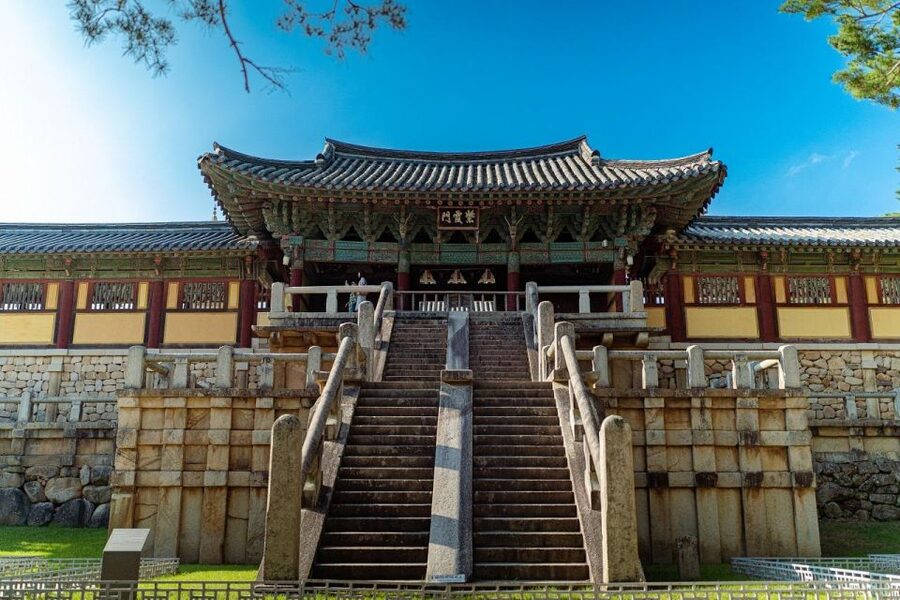
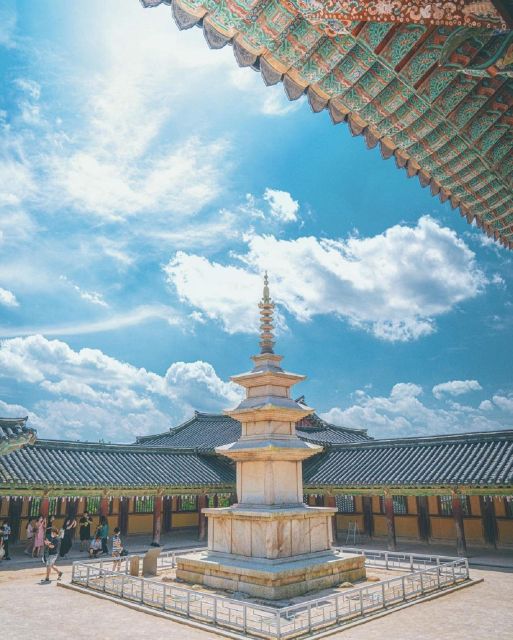
Bulguksa is one of the day’s major attractions and a UNESCO World Heritage site. The temple is valued for its relationship with the surrounding hills and for the balance of stairs, stone platforms, courtyards, and wooden halls.
You have about 80 minutes here, including guided explanation, sightseeing, and time on your own. That is enough to hear why the site matters, look closely at the architecture, and take photographs without being hurried from one corner to the next.
I would listen carefully during the introduction, especially if Buddhist art is new to you. The carvings, pagodas, gates, and hall arrangement make more sense once someone explains their religious purpose rather than treating the temple as a collection of pretty buildings.
The steps and uneven surfaces matter. This tour is not suitable for wheelchair users or people with mobility impairments, and even fit walkers should wear shoes with a secure grip. The day includes repeated walking at several historic sites.
Lunch at a local restaurant
Lunch lasts about an hour at a local restaurant. Food and drinks are not included in the $52 price, so budget separately and be ready for a group meal stop rather than a long restaurant break.
The lunch pause gives you a needed reset between temple visits and the central Gyeongju sights. Keep your expectations practical. The attraction here is convenience and local dining, not a free choice of restaurants or an extended food tour.
Same country, a completely different kind of day:
- Small Group Full Day Busan Tour (Max 6 Pax)
★ 5.0 · 1,464 reviews - From Busan: Gyeongju UNESCO World Heritage Guided Day Tour
★ 4.8 · 1,250 reviews - Busan Private Tour with licensed tour guide + private vehicle
★ 5.0 · 1,143 reviews - Busan: Coastal Treasures Beach Train, Culture Village & More
★ 4.7 · 832 reviews
Gyochon Village and Woljeonggyo Bridge
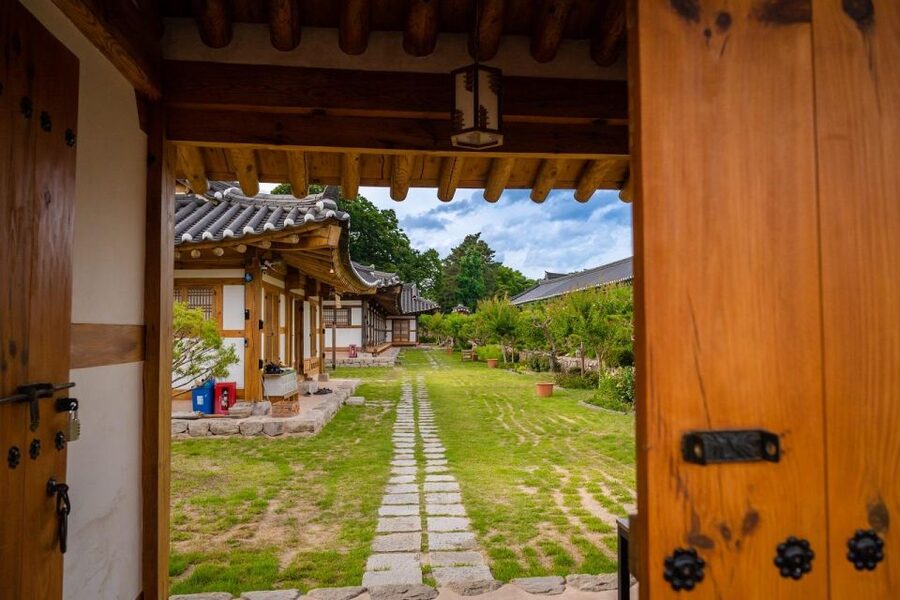
The Three Kingdoms package gives you time in Gyochon Traditional Village. This area is known for hanok houses, Gyeongju Hyanggyo, and the elegant Woljeonggyo Bridge.
The visit lasts about an hour. You can walk through the village, hear about its Confucian and local traditions, and take photographs of the traditional homes. It provides a useful change of pace after Bulguksa, since the focus shifts from temple architecture to town life and historic residences.
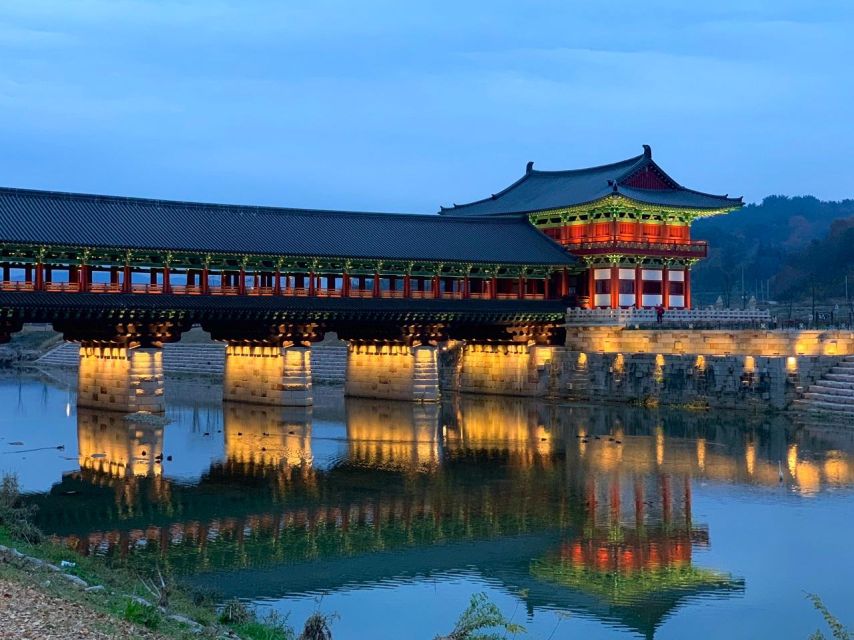
Woljeonggyo Bridge receives its own 30-minute stop later in the day. The bridge is particularly attractive when its lights reflect on the water. The timing is important: the closing part of the tour is designed to catch Gyeongju after daylight begins to fade.
This is one of my favorite features of the Three Kingdoms option because it adds atmosphere, not just another famous name. You are not simply checking off a monument. You get a short walk, a photo stop, and a sense of how Gyeongju’s old spaces work after dark.
Cheomseongdae and the science of ancient Silla
Cheomseongdae is described as Korea’s oldest astronomical observatory. It gives the day a scientific angle, balancing the royal and religious sites.
You have about an hour for the visit, guided explanation, free time, and photographs. The structure itself is compact, so the value comes from understanding what it represents and how ancient engineering supported observation of the sky.
The surrounding area can also be visually appealing, with open space and seasonal planting. Still, do not expect a large indoor museum visit here. It is an outdoor stop, and weather affects the experience. The tour runs rain or shine, so bring protection suited to the forecast.
Hwangnidan-gil: a short taste of modern Gyeongju
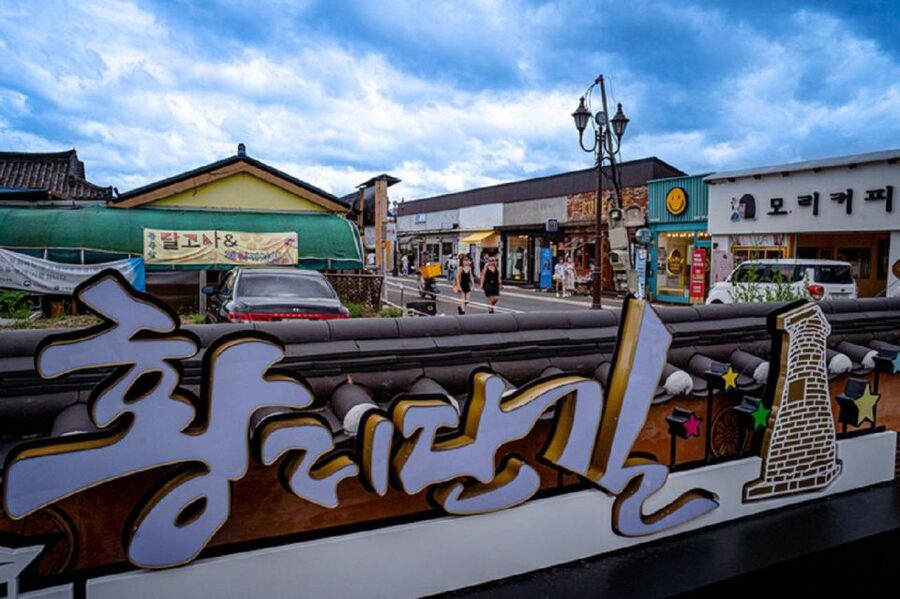
Hwangnidan-gil receives around 30 minutes of free time. The street is lined with preserved 1960s architecture and offers shops, cafés, and a more contemporary feel than the nearby monuments.
Half an hour is enough to stretch your legs, browse, and get a quick sense of the area. It is not enough for a relaxed meal, serious shopping, or a long café stop. I would use this time for a short walk and one or two photographs rather than trying to cover every side street.
This stop matters because Gyeongju is not an open-air museum frozen in the Silla era. The old city continues to function as a place where people eat, shop, work, and meet. Hwangnidan-gil supplies that everyday contrast.
Daereungwon Tomb Complex: royal burial mounds up close
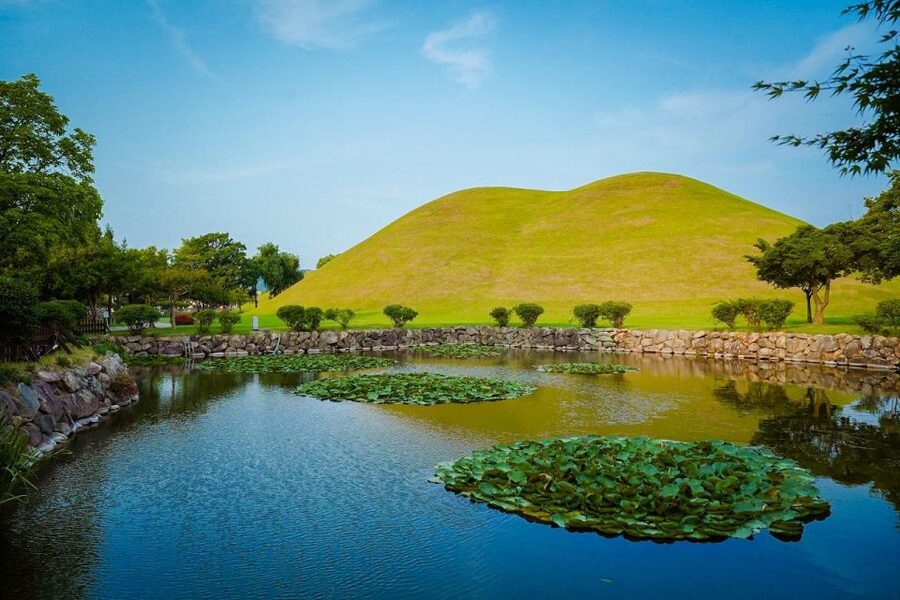
Daereungwon is one of the most memorable stops. The complex contains large grassy burial mounds associated with Silla royalty and aristocracy.
You have about an hour here, with guided information and free time. The scale of the tombs is striking, but the site becomes more interesting when you learn how the mounds were built and why they remain such a strong part of Gyeongju’s identity.
One review describes seeing the tomb interiors and learning about their construction. Access details can vary, so treat that as a possible part of the visit rather than a guarantee for every departure. The main certainty is time among the tomb complex and an explanation of its role in Silla culture.
Allow yourself a quiet moment here. Bulguksa is full of crafted detail, while Daereungwon is about shape, scale, and the presence of the past in an open setting. The contrast helps the whole day make sense.
Donggung Palace and Wolji Pond after sunset
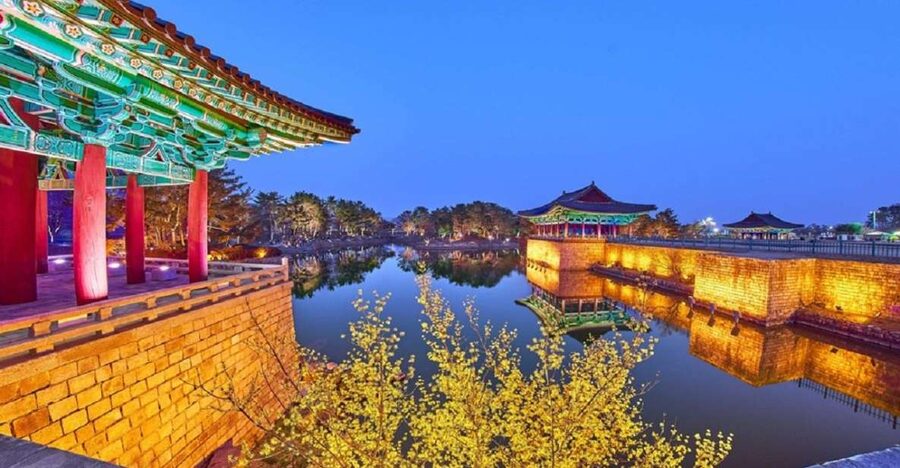
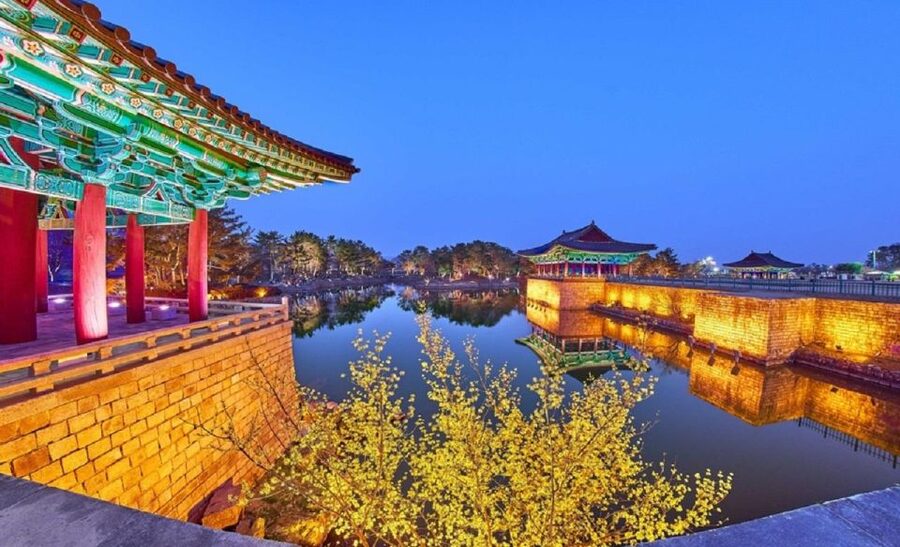
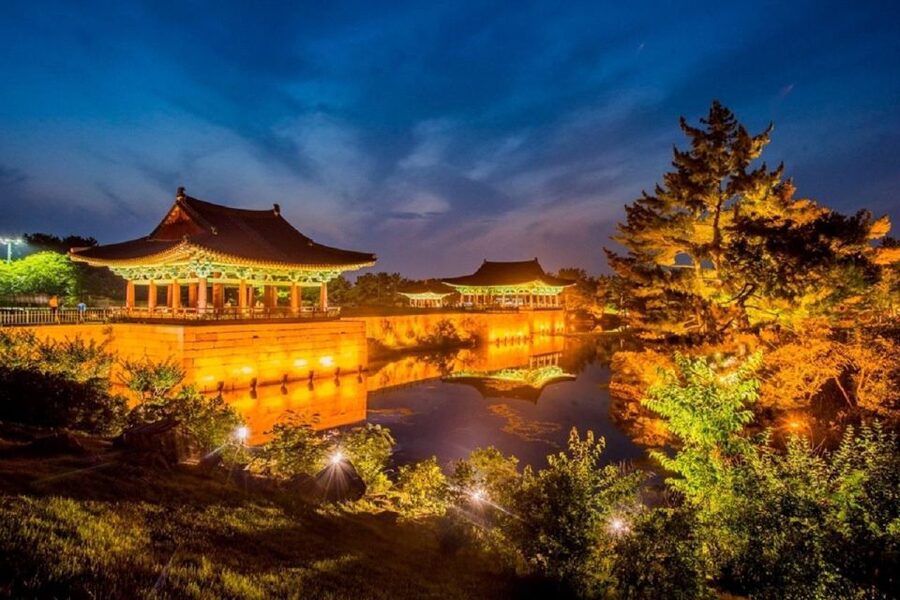
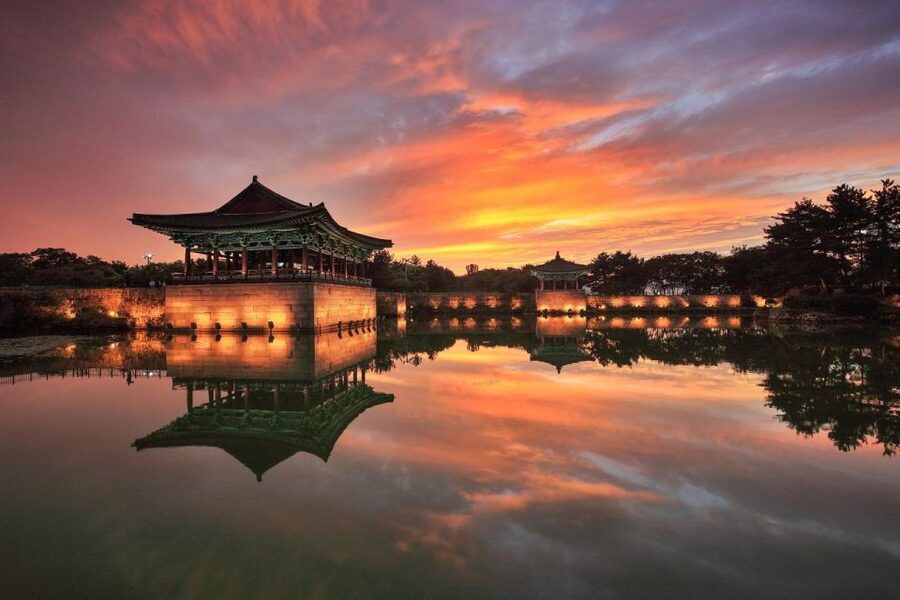
Donggung Palace and Wolji Pond, formerly known as Anapji Pond, is the visual climax for many people. The Unified Silla palace site is arranged beside water, and the buildings and reflections become especially striking when evening lights come on.
The visit lasts about an hour. Your guide provides context, then you get free time to walk and take photographs. Several accounts of the tour point to the final evening stops as especially atmospheric, with the palace and pond changing character as daylight fades.
Admission to Donggung Palace and Wolji Pond is included in all three packages. That makes this a reliable part of the experience even when the optional stops differ.
Expect other groups and a popular photo setting. The point is not solitude. It is the combination of water, illuminated structures, and the remains of a former royal complex. Bring a camera, but do not spend the full hour looking only through it.
The package differences need careful attention
The experience is sold in three versions:
- Gyeongju Three Kingdoms Trip: exclusive stops at Gyochon Traditional Village and Woljeonggyo Bridge.
- Seokguram Grotto Tour: exclusive stops at Seokguram Grotto and Cheomseongdae Observatory.
- UNESCO Tour 2025 APEC: exclusive stops at Yangdong Folk Village and Cheomseongdae Observatory.
All three share Bulguksa Temple, Daereungwon Tomb Complex, Hwangnidan-gil, and Donggung Palace and Wolji Pond. Yangdong admission is included with the UNESCO Tour 2025 APEC option, while Donggung admission is included across all three.
The supplied schedule includes Seokguram, Gyochon, Cheomseongdae, and Yangdong in one long sequence. Since the package descriptions identify some of these as exclusive, you should confirm the exact route shown for your chosen date before paying. This is the single most important booking detail.
Seokguram Grotto is the right choice if Buddhist sculpture and mountain setting interest you most. Gyochon and Woljeonggyo are better if you want village streets and an evening bridge view. Yangdong suits you if a traditional Joseon-era village and UNESCO cultural heritage are your priority.
How the pace feels over 11 to 12 hours
This is a full day, not a gentle outing. The route includes a 1.5-hour opening drive, a 30-minute transfer within Gyeongju, short rides between later stops, and an 80-minute return to Busan.
The program is busy, but the balance of guided time and free time works well. Guides explain the site, point out useful details and photo locations, then let you wander without a running lecture.
Several guides are praised for keeping large groups on time while remaining patient with questions. Kayla Kim is repeatedly described as energetic, funny, helpful, and good at taking photographs. Bada is noted for clear explanations, Buddhist context, patience, and careful group management. Katrina is praised for historical detail, humor, and keeping a large group moving.
Guide quality can vary by departure, so those names are useful examples, not a promise of who will lead your tour. The consistent pattern is an English-speaking guide who combines interpretation with practical help.
Who should book, and who should skip it
I would recommend this trip if you are staying in Busan and want to see Gyeongju without arranging several separate rides. It is especially useful for a first visit, for solo visitors who want company, and for anyone who prefers historical explanation to simply taking photographs.
It also suits you if you like variety. In one day, you may move from Buddhist temple grounds to royal tombs, a traditional village, an old observatory, a shopping street, and a lit palace pond.
I would not choose it if you want long, quiet visits at each site. The schedule is fixed, the day is long, and lunch and personal expenses are extra. People with limited mobility should also avoid it because of hills, stairs, and uneven historic grounds.
The tour operates in rain or shine. Wear comfortable shoes, bring water, and carry weather protection. You will enjoy the day more if you treat the coach as a useful base and accept that each stop has a clear time limit.
Is $52 good value for Gyeongju?
For $52, the strongest value is the transport and route management. Gyeongju’s sights cover enough ground that taxis or a complicated series of local buses could quickly consume both time and money.
You also receive an English-speaking guide and admission to Donggung Palace and Wolji Pond in every package. Some options include additional admission, such as Yangdong Folk Village on the UNESCO route.
The price does not cover lunch, drinks, travel insurance, or personal purchases. Even so, the cost is reasonable for a 11 to 12-hour day that reaches the major historic sites from Busan. I would compare it with the price of a private car before deciding, but for one or two people, the shared tour is likely the simpler deal.
Should you book this Gyeongju tour?
Book it if you want a well-organized first look at Gyeongju, enjoy lively English commentary, and do not mind a packed day. The combination of Bulguksa, Daereungwon, Hwangnidan-gil, and Donggung Palace gives you a strong overview, while the selected package adds either village life, Seokguram, or UNESCO-focused heritage.
Before booking, confirm the package and its two exclusive stops. Arrive early at the correct subway exit, expect plenty of walking, and keep the evening free only if you are comfortable returning to Busan after a long day.
FAQ
How long does the Gyeongju tour from Busan last?
The tour lasts approximately 11 to 12 hours, including transportation between Busan, Gyeongju, and the return drop-off points.
Where can I meet the tour?
You can meet at Busan Subway Station Exit 2, Seomyeon Subway Station Exit 12, or Haeundae Subway Station Exit 7. These are subway exits, not KTX station or shopping mall exits.
What time should I arrive?
You should arrive at least 10 minutes before departure. The stated Haeundae meeting window is 9:50 to 10:00 a.m., but your selected option determines the final time.
Is hotel pickup included?
No. Pickup and drop-off are provided at one of three designated subway stations in Busan, not at hotels.
Is an English-speaking guide included?
Yes. The tour includes a live English-speaking guide.
Which sights are included in every package?
All three packages include Bulguksa Temple, Daereungwon Tomb Complex, Hwangnidan-gil, and Donggung Palace and Wolji Pond. Admission to Donggung Palace and Wolji Pond is included in every package.
What is exclusive to the Three Kingdoms package?
The Gyeongju Three Kingdoms Trip package lists Gyochon Traditional Village and Woljeonggyo Bridge as its two exclusive destinations.
Are food and drinks included?
No. Lunch takes place at a local restaurant, but food and drinks are not included in the tour price.
Can I cancel for a refund?
You can cancel up to 24 hours in advance for a full refund. Latecomers and no-shows are not refundable, and the tour runs rain or shine.
Just added around Busan
- Real Busan Walking Experience★ 5.0 · 27 reviews
- 7 Highlights Gyeongju City One Day Small Group Tour from Busan★ 5.0 · 24 reviews
- Full Day Private car tour to UNESCO Gyeongju&Yangdong village★ 5.0 · 5 reviews
- Suncheon and Yeosu Daily Private Tour with Pickup Service★ 5.0 · 3 reviews
- Visit Busan night market and enjoy the night view of Busan harbor★ 5.0 · 6 reviews
- Busan Highlights Shore Tour – Cruise Return Assured★ 4.5 · 34 reviews
- Suncheon one day tour from Seoul, Busan or Suncheon★ 5.0 · 3 reviews
- Busan Beomeosa Temple & Hongbeopsa Temple with temple lunch★ 5.0 · 11 reviews
1-Day Tours, compared.
Mt. Seorak+Nami Island+Garden of Morning Calm Day Trip from Seoul
Read our review →
Gangwon-do Day Trip with Alpaca World & Nami Island
Read our review →
Day Trip to Nami Island with Rail bike and The Garden of Morning Calm
Read our review →
Day Trip to Nami Island with The Garden of Morning Calm
Read our review →
Mount Seorak and Naksansa Temple One Day Tour from Seoul
Read our review →
Nami Island and Petite France & Italian Village Day Trip from Seoul
Read our review →
Jeju WEST&SOUTH One Day Tour with MT.halla & UNESCO
Read our review →Browse the lists this tour appears in