
Reviewed · WALKING TOURS
(Closed) Korea’s White House Walking Tour Blue House
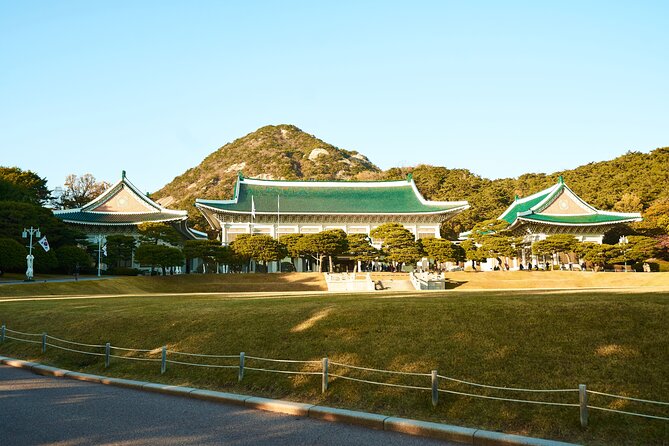
For decades, Seoul’s Blue House, or Cheong Wa Dae, was one of Korea’s most protected places. It served as the president’s office and home for more than 70 years, with entry limited to presidents’ invited visitors, foreign leaders, Olympic medalists, K-pop stars, and major business figures. This tour offers a rare look at that former seat of power.
I like the small maximum of nine people, which gives you a real chance to hear the guide and ask questions. I also like the mix of political history, architecture, and everyday presidential life. The main caution is simple: this experience is listed as closed, and public access was due to end in June, so you must confirm that it has reopened before paying or arranging your day.
Key points to know before you book
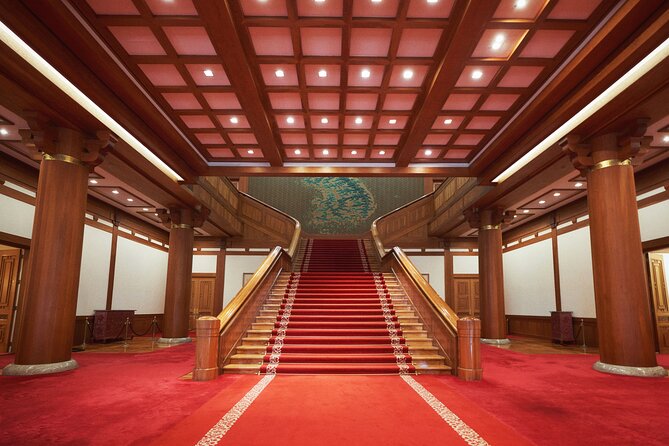
- A rare look at Korea’s former presidential compound: See the main office, reception hall, residence, press center, and traditional buildings linked to the presidency.
- Guide Jungho leads in excellent English: His storytelling, clear directions, and ability to answer questions are the strongest part of the experience.
- Only nine people per group: The small size suits anyone who wants a personal explanation rather than a quick walk past official buildings.
- The route takes about two and a half hours: The listed stops cover about 85 minutes, with the remaining time used for walking, orientation, and explanations.
- The tour begins and ends at Gyeongbokgung Station: You arrange your own transport, and hotel pickup is not included.
- The $199 price pays for access and interpretation, not admission alone: Entry itself is listed as free, so the value depends on how much you want the guide’s political and cultural context.
Why the Blue House matters in Seoul
The Blue House was more than a handsome compound with a famous roof. It was the working center of South Korea’s presidency and the private home of the president and family.
The name comes from the blue roof tiles on the main building. That roof became an instantly recognizable symbol of the Korean government, much like the White House in Washington. Yet the Korean compound has its own character. Its buildings combine modern government design with traditional Korean forms, and the grounds include quiet wooded areas and older pavilions.
For you, the appeal is the contrast. One moment you are looking at a formal place where presidents met foreign leaders. A few minutes later, you may be standing near the former family residence or a traditional pavilion used for quieter meetings.
The timing of this access matters. The compound was closed to ordinary public visits for most of its presidential history. That makes the tour more than another palace stop. It connects Seoul’s modern political story with the royal and architectural setting around Gyeongbokgung Palace.
A few more Seoul trips to weigh up
- Seoul moonlight walking tour with local historian
★ 5.0 · 940 reviews - Seoul: Nighttime Hidden Gems Walking Tour
★ 5.0 · 775 reviews - Seoul: Evening Dark History, Folklore & Ghost Story Walking Tour
★ 5.0 · 593 reviews
Meeting at Gyeongbokgung Station at 10 a.m.
The tour starts at Gyeongbokgung Station at 10 a.m. This is a practical meeting point because the station is near one of Seoul’s most important historic areas. Still, remember that you must get there on your own. There is no hotel pickup or drop-off.
The tour ends back at the same meeting point. That makes it easier to continue sightseeing afterward, especially if you want to visit Gyeongbokgung Palace, explore a hanok neighborhood, or find lunch nearby. Past participants also used the rest of the day for a hanok village visit, a meal, or a hanbok experience.
I would arrive early. The tour has a reserved entry component, and a small group is easier to assemble when everyone is ready at the stated meeting place. Clear meeting instructions are one of Jungho’s strengths, but you should still allow extra time for finding the right station exit and gathering your group.
Yeongbingwan, where Korea received important visitors
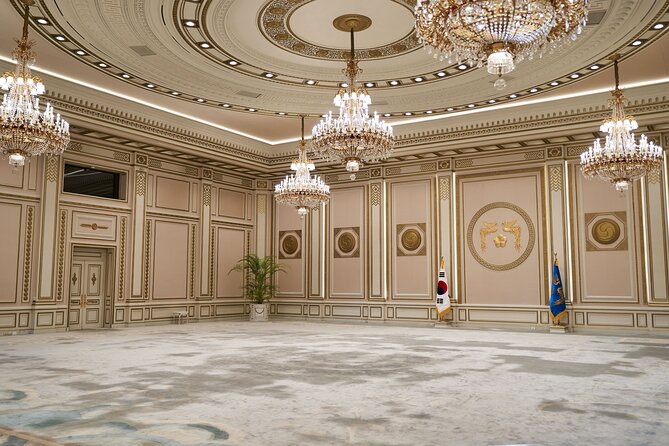
The first major stop is Cheong Wa Dae Yeongbingwan, the reception hall for important visitors from other countries. Presidents used it for dinners, meetings, and formal events.
This is a useful opening stop because it gives you the public face of the presidency. The building looks modern, but its role is highly ceremonial. Here, the guide can explain how Korea presented itself to foreign leaders and how architecture helps create an official setting.
You spend about 10 minutes here. That may sound brief, but a concise explanation works well for a formal reception building. The value comes from understanding what happened inside, rather than simply taking a photograph of the exterior.
The main Blue House and its blue-tile symbol
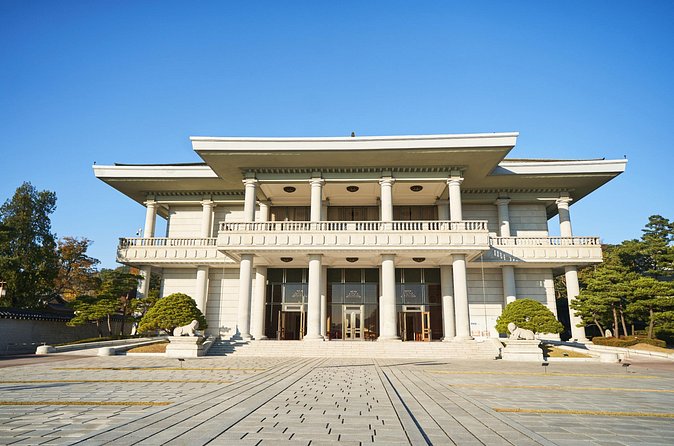
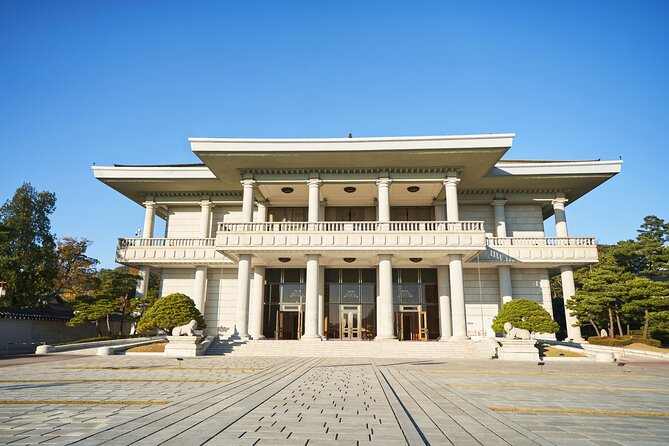
The tour then reaches the main Blue House building, where the president worked and held important meetings. Major decisions were made here, and the blue roof became a visual shorthand for the Korean government.
You can expect Jungho to connect the building with Korea’s modern political story, not just point out its roof and layout. His style, based on the experience details, includes historical explanation, questions, and conversational storytelling rather than a list of dates.
About 20 minutes are set aside here. That is enough time to appreciate the building’s design and role without letting one stop swallow the entire walk. If you are interested in architecture, pay attention to the way modern office functions are paired with Korean design elements.
The limitation is that the tour schedule cannot promise unlimited time inside every building. Official compounds often have controlled movement, and the published route gives fixed time blocks. You should book this for interpretation and access, not for a slow, museum-style visit to every room.
Same country, a completely different kind of day:
- Best DMZ Tour Korea from Seoul (Red Suspension Bridge Optional)
★ 5.0 · 41,422 reviews - DMZ Tour: 3rd Tunnel, Option(Suspension Bridge, Boat) from Seoul
★ 5.0 · 21,373 reviews - DMZ tour south Korea from Seoul (NK experience hall, defector)
★ 5.0 · 20,599 reviews - Seoul: DMZ Tour with Optional Suspension Bridge
★ 4.8 · 5,277 reviews
The former presidential office site
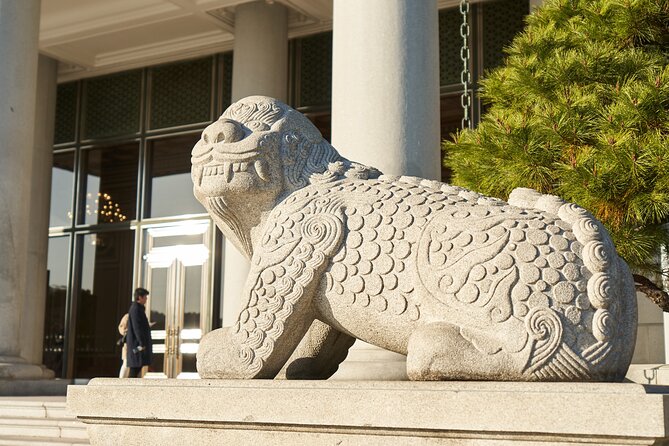
Another 20-minute stop takes you to the area where the older presidential office once stood, before the current main Blue House building was constructed.
This is one of the more meaningful parts of the route because it adds a layer that a quick self-guided visit could miss. You are not only seeing the building that became the public symbol of the presidency. You are also seeing how the office developed over time.
The site helps place Korean political events in a physical setting. Presidents worked here, held meetings here, and made decisions that shaped modern Korea. Jungho’s role is especially useful at a stop like this, where the remains or setting may not explain themselves.
I would listen for changes in how the presidential office was organized and used. The point is not simply that an older building existed. The point is how a government’s working center changed as Korea’s political and economic role grew.
The presidential residence and family side of the compound
The former presidential residence was separate from the office. That separation gave the president and family a private home away from official meetings and visiting dignitaries.
This stop lasts about 10 minutes. It offers a different view of the presidency, one that is less about public ceremony and more about daily life behind the official role. The residence was surrounded by trees and designed as a quiet part of the compound.
That contrast is worth noticing. The reception hall represents diplomacy. The main office represents decisions. The residence reminds you that the presidential family lived inside this highly protected setting.
Do not expect the residence stop to feel like a long house tour. The schedule is short, and the focus is the site’s purpose and history. For me, that is enough. You gain a sense of how the compound divided work, ceremony, and private life.
Chimnyugak House and a pause among the trees
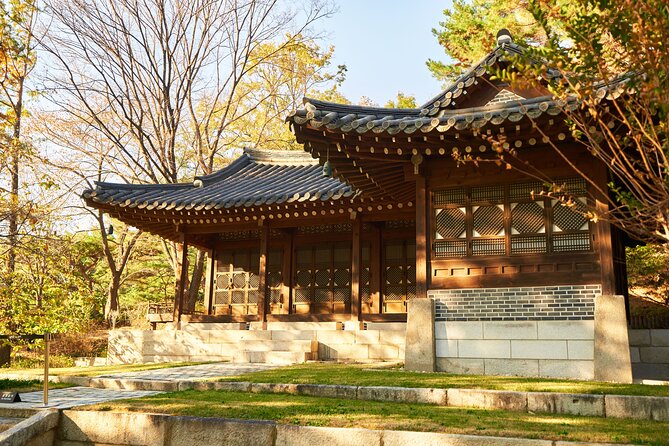
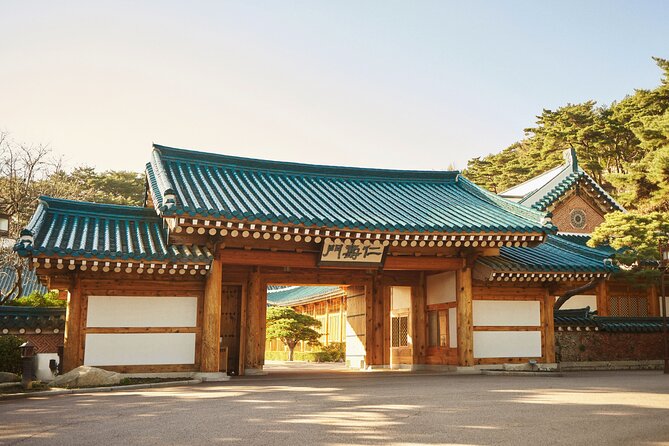
At Chimnyugak House, the route shifts toward traditional Korean architecture. This small pavilion is surrounded by trees and offers a quieter pause during the walk.
The stop lasts about 10 minutes. That break matters because the tour covers several official buildings and political subjects. A peaceful traditional structure gives you a chance to slow down and see another side of the grounds.
Your guide explains the building’s architecture and history. The pavilion is not presented as a major political office, and that is part of its appeal. It shows how traditional Korean forms remained part of the compound’s setting even as the Blue House served a modern government.
This is also a good point to ask questions. Jungho’s conversational English and willingness to engage with questions were repeatedly praised, and the small group makes that easier. If you enjoy learning through conversation rather than listening to a fixed script, this stop should suit you.
Sangchunjae, traditional design inside a modern power center
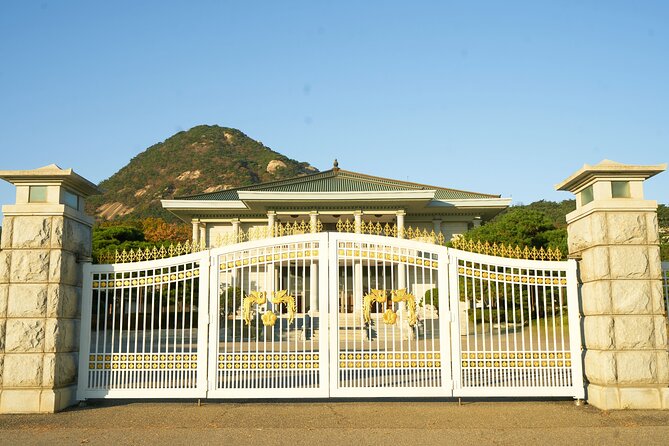
Sangchunjae is described as one of the most beautiful traditional buildings on the grounds. It was used for special visitors and quieter meetings.
The building gives the tour one of its clearest architectural contrasts. The Blue House was a modern presidential office, but Sangchunjae uses traditional wooden forms and creates a more intimate setting for official conversation.
You spend about 10 minutes here. Look at how the building’s scale changes the mood. Yeongbingwan is designed for formal reception. Sangchunjae feels more personal and traditional, even though both buildings served presidential purposes.
This stop also helps explain why the compound cannot be understood only through politics. Korea’s identity is present in the materials, rooflines, pavilions, and setting. A good guide can connect those details to wider Korean culture without turning the visit into a lecture.
Chunchugwan, the former press center
The final listed stop is Chunchugwan, the former press center. This is where reporters from Korea and abroad gathered for official announcements and presidential statements.
At only five minutes, it is the shortest stop. Still, it carries a lot of meaning. The building represents the public communication side of the presidency, where decisions and policies were presented to the press and the wider country.
I would treat this as a closing link between the private and public parts of the tour. You have seen where the president worked, lived, received foreign leaders, and met in traditional settings. Chunchugwan shows how those decisions reached the public.
Because the stop is short, do not expect a long media-history discussion. Its value is in the connection it makes between the compound and the news events that shaped modern Korea.
What the two-and-a-half-hour schedule feels like
The tour lasts about 2 hours and 30 minutes. The individual stop times add up to roughly 85 minutes, so the rest of the time is likely used for walking between sites, gathering the group, entering controlled areas, and hearing fuller explanations.
That schedule is sensible. A presidential compound is not a single-room attraction. You need time to move between buildings and absorb the setting. The small group also means the pace can feel more personal than a large scheduled walk.
You should wear comfortable shoes. The experience is described as a walking tour, and the route includes several separate buildings and outdoor areas. The information says most people can take part, and service animals are allowed, but it does not provide a detailed accessibility statement about surfaces, stairs, or interior access.
The tour begins at 10 a.m. Morning timing can help you fit other central Seoul sights into the afternoon. Since the tour returns to Gyeongbokgung Station, you do not lose time traveling back to a distant hotel.
Jungho is the main reason to choose the tour
The guide named for this experience is Jungho, a licensed English-speaking guide. The strongest praise centers on his storytelling, clear English, historical insight, and personal attention.
That matters here because the buildings do not explain every political connection on their own. Without context, you might see an attractive roof, a formal hall, or a quiet pavilion and move on. Jungho’s job is to explain who used each place, why it mattered, and how the parts fit together.
His practical help is also worth noting. He sends clear meeting instructions and, on one occasion, walked a participant back to the metro station afterward. That extra help is not listed as a guaranteed part of every tour, so do not plan on it, but it suggests a guide who pays attention to the people in his group.
The available rating is 5 out of 5 from 15 ratings, with 100 percent recommending the experience. The praise is unusually consistent around the guide rather than only the attraction. That tells you exactly where the tour’s value lies: not simply in entering the Blue House, but in having someone make sense of it.
Is $199 a fair price?
At $199 per person, this is an expensive two-and-a-half-hour walk. Admission tickets are listed as free, so you are paying mainly for reserved access, a licensed English-speaking guide, the small group, and the chance to visit during a limited access period.
I would not choose it if you only want to see the Blue House grounds or take a few photographs. The price is harder to justify for a casual sightseeing stop, especially if public access is available on your own.
I can see the value for a first-time visitor who cares about Korean politics, modern history, architecture, or the meaning behind official places. A maximum of nine people is a strong advantage, and the guide’s role is central. In a large group, questions and conversation would be harder.
The unusual access also affects the calculation. The Blue House was closed to ordinary entry for decades, and the tour was promoted as a chance to visit before public access ended. If that limited window is still active, the price may feel more reasonable to someone who sees this as a rare opportunity.
But the status is crucial. This experience is marked closed, and the supplied information says access was expected to end in June. Check the current operating status and exact price before making plans. Do not assume the old booking page means the tour is running now.
Who will enjoy this Blue House walk?
I would recommend it most strongly to you if you:
- Want political and cultural context, not just photographs.
- Prefer a small group with time for questions.
- Enjoy architecture and the contrast between modern government buildings and traditional Korean pavilions.
- Are comfortable paying a premium for a limited-access site.
- Can follow an English-language explanation for two and a half hours.
- Want to combine the Blue House with central Seoul sights near Gyeongbokgung Station.
I would hesitate if you are mainly looking for a cheap activity, a short photo stop, or a general introduction to Seoul. The tour is focused on one compound, and its price only makes sense if the presidential story interests you.
The experience may also suit families and older participants because most people can take part and service animals are allowed. Still, the available details do not promise step-free access or describe every walking surface, so ask the operator if you have specific mobility needs.
Booking and cancellation details
Confirmation is provided at booking. The tour is near public transportation, starts at 10 a.m., and ends where it begins at Gyeonggung Station. Hotel pickup and drop-off are not included.
Free cancellation is available up to 24 hours before the local start time for a full refund. Cancellations or changes made less than 24 hours before the start are not accepted for a refund.
The bigger booking issue is availability. This experience is currently marked closed, so confirm directly with Epic Korea Days or the active booking channel before arranging flights, hotels, or other timed activities around it.
Should you book Korea’s White House Walking Tour?
Book it if the Blue House is open again and you want a thoughtful explanation of Korea’s former presidential center. The combination of rare access, a nine-person limit, and Jungho’s strong English storytelling gives the tour a clear purpose.
Skip it if you only want inexpensive sightseeing or if the compound can be visited freely without a guide. At $199, the experience must earn its price through access and interpretation.
My practical advice is to check the current status first, then compare the cost with the value of a small group and a licensed guide. If the site is open only briefly, and modern Korean politics interests you, this could be one of the more distinctive stops in central Seoul. If it is closed, do not build your itinerary around it.
FAQ
Is the Blue House walking tour currently open?
The experience is listed as closed. The supplied information says public access was expected to end in June, so confirm the current status before booking.
How long does the tour last?
The tour lasts approximately 2 hours and 30 minutes.
Where does the tour begin and end?
It begins at Gyeonggung Station in Seoul and ends back at the same meeting point.
What time does the tour start?
The scheduled start time is 10 a.m.
How many people can join the tour?
The tour has a maximum of nine participants.
Is hotel transportation included?
No. Hotel pickup and drop-off are not included. The tour does meet near public transportation.
Just added around Seoul
- Gyeongbokgung palace,seoul with gigibebe hanbok rental★ 4.5 · 12 reviews
- Private tour guide service in Seoul, Korea★ 5.0 · 6 reviews
- Alpaca, Nami, Petite Fr, Italian Village, Garden of Morning Calm★ 3.5 · 5 reviews
- Gyeongju UNESCO Sites Tour by KTX train; The Museum Without walls★ 4.5 · 11 reviews
- Private day trip to Korean Folk Village & Dae Jang Geum Park★ 5.0 · 7 reviews
- Private tour Lotte World,Tower,Aquarium(All Tickets are included)★ 5.0 · 12 reviews
- Full Day Private Seoul Tour for foodies★ 5.0 · 3 reviews
- Seoul Private Custom Walking Tour with A Guide (Private Tour)★ 4.5 · 28 reviews
Walking Tours, compared.
Seoul moonlight walking tour with local historian
Read our review →
Evening Dark History, Folklore & Ghost Story Walking Tour
Read our review →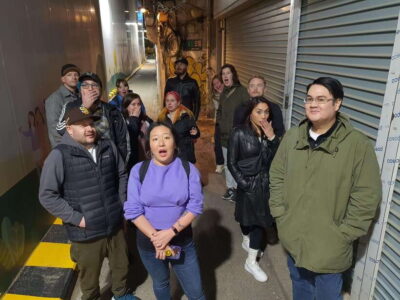
Dark Side of the City and Ghost Stories Walking Tour
Read our review →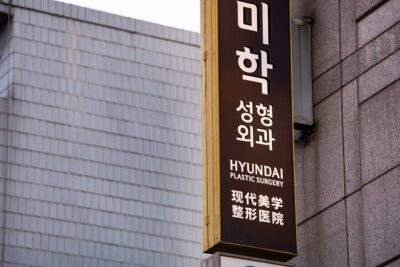
Gangnam Walking Tour on Youth and Society in Seoul Korea
Read our review →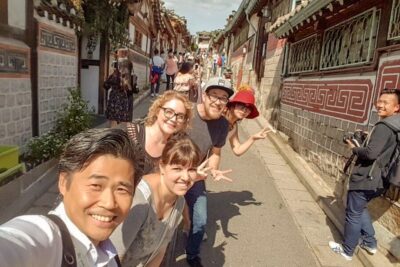
Gyeongbok Palace and Bukchon Hanok Walking Tour
Read our review →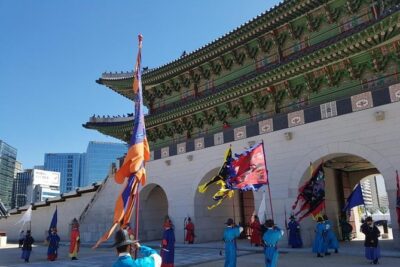
Best Walking Tour to Gyeongbok Palace Bukchon Hanok Village
Read our review →
Highlights & Hidden Gems With Locals: Best of Seoul Private Walking Tour
Read our review →Browse the lists this tour appears in