
Reviewed · UNESCO WORLD HERITAGE TOURS
Jeju Premium Small Group UNESCO Day Tour – South Course
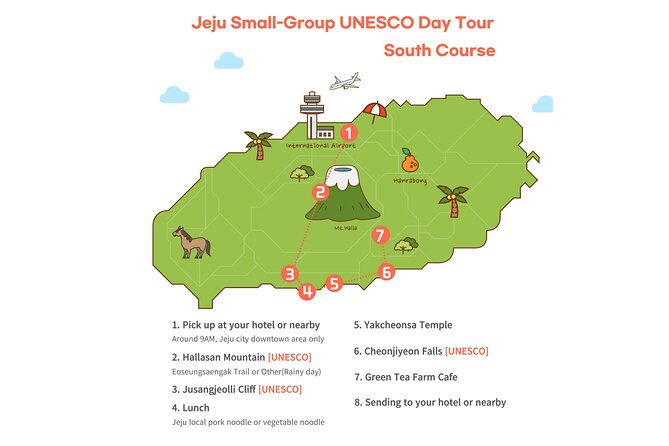
Jeju’s southern sights are spread across the island, and this small-group day tour gives you a practical way to connect them without renting a car. The best part is the mix: a forested Hallasan walk, volcanic sea cliffs, a grand Buddhist temple, a waterfall, and a tea-growing area all fit into roughly eight hours.
I like the comfortable minivan or minibus, capped at 15 people, and I like the range of guides, including Jin, Henry, June, Michelle, Andrew, Angelo, and others who add local stories and help with photos. The main drawback is pace: five stops, a mountain walk, and transport across southern Jeju leave little room for lingering or shopping.
Key points to know
- Hallasan comes first: The Eoseungsaengak Trail is a beginner-friendly one-hour walk, but it includes uphill sections, steps, and ropes.
- A strong mix of scenery: You get mountain forest, volcanic coastline, a waterfall, temple architecture, and tea country in one day.
- Small group, not private: The vehicle holds up to 15 people, so you share the day with other customers.
- Downtown pickup helps: Hotel pickup and drop-off are included for the Jeju City downtown area only.
- Lunch is extra: A local restaurant stop is part of the day in practice, but the meal is not included in the $100 price.
- Weather matters: Poor conditions can change the Hallasan walk or cancel the tour, with another date or a full refund offered.
Why the south course works without a rental car
Jeju is easy to underestimate on a map. Its major sights are scattered, and the southern coast is far enough from Jeju City that driving, parking, and finding each entrance can eat up your day.
This tour handles the road work while you look out the window. For $100 per person, you get transportation, a professional driver-guide, and admission tickets. That is fair value if you want a broad first look at southern Jeju and would rather not arrange a rental car or obtain an international driving permit.
You are not buying a private car and custom schedule. The group can be as large as 15, and the day follows a set route. Still, a small group is much easier to manage than a large coach. Guides can answer questions, take photos, and keep the group moving without making the experience feel like a formal parade.
The day begins at 9 a.m. with pickup from hotels in downtown Jeju City. If your hotel is outside that area, confirm the meeting arrangement before booking. Pickup is a useful feature, but it is not island-wide.
More UNESCO World Heritage Tours in Jeju
- Jeju: Eastern Jeju UNESCO Spots Day Tour
★ 4.9 · 1,148 reviews - East Jeju Essentials – Seongsan Ilchulbong (UNESCO) & Haenyeo
★ 5.0 · 939 reviews - Jeju: Southern Top UNESCO Spots Bus Tour
★ 4.9 · 648 reviews
Hallasan’s Eoseungsaengak Trail starts the day
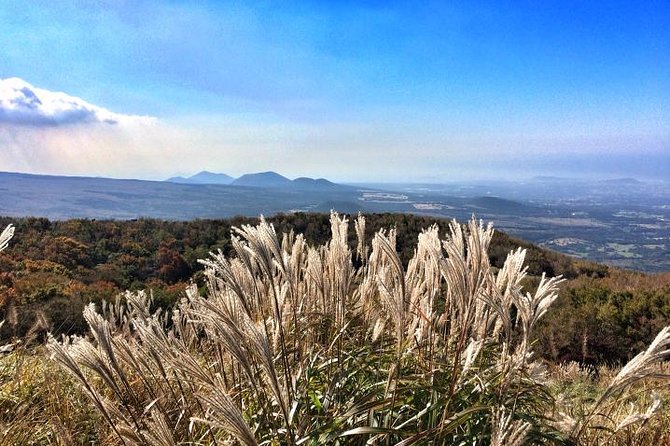
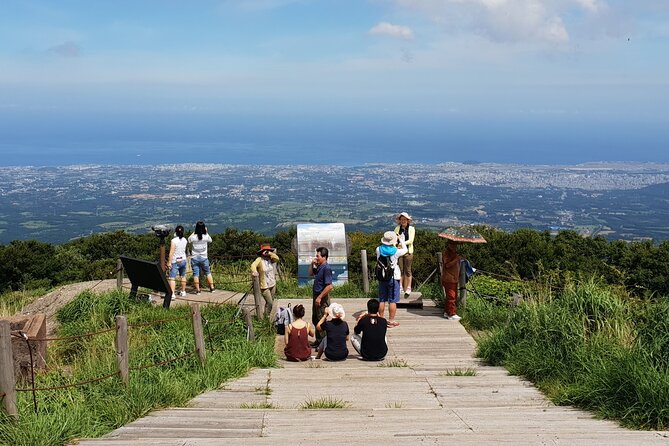
The first stop is Hallasan National Park, where you spend about 60 minutes on the Eoseungsaengak Trail. Hallasan rises from the center of Jeju and gives the island its defining shape. You do not climb to the summit on this tour. Instead, you take a shorter forest trail that offers a taste of the mountain without turning the day into a full hiking expedition.
The walk is described as suitable for beginners, but do not read that as flat or effortless. You should expect uphill stretches, steps, and sections with ropes. One practical tip is to buy coffee, water, and snacks before pickup, since this is the first stop and the hike begins early in the day.
Your shoes matter here. Wear something with a reliable grip, especially if rain is in the forecast. A moderate level of fitness is required, and the walk may be uncomfortable if you have heart concerns or trouble with uphill climbs.
Weather can change this part of the day. Rain, wet footing, or poor visibility may lead the guide to replace the hike with another attraction, such as Camellia Hills, or adjust the route for safety. Angelo, for example, has been praised for changing plans when Hallasan became unsafe. That flexibility is valuable on an island where conditions can shift quickly.
Hallasan is the emotional high point for many people on this route. It gives you fresh air, forest, and a sense of Jeju beyond its beaches and city streets. If you want a serious summit hike, this tour is not the right choice. If you want a manageable introduction to the mountain, it fits well.
Jusangjeolli Cliff reveals Jeju’s volcanic edge
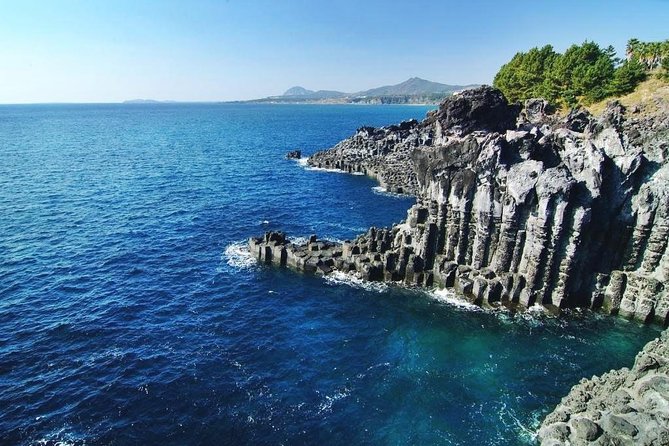
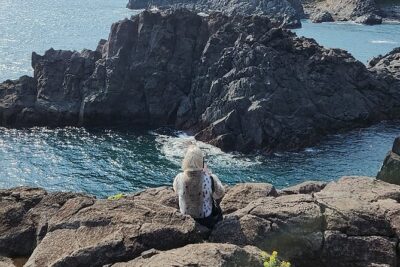
After the mountain, the tour heads to Daepo Haean Jusangjeolli Cliff for about 20 minutes. This is a short stop, but the view is dramatic. Dark volcanic columns line the coast in striking geometric formations, created by cooling lava.
The timing here is enough for photographs and a quick look from the viewing area. It is not enough for a long coastal walk or a slow session studying every rock formation. That tradeoff is typical of the day: you see many major sights, but each one has a firm time limit.
The coast also gives the day a needed change of mood. Hallasan is wooded and uphill. Jusangjeolli is open, salty, and exposed, with the sea doing most of the talking. Bring a light layer if you are sensitive to wind, though the tour information does not promise a particular temperature or weather condition.
Admission is included, so you do not need to budget a separate entrance fee for this stop.
Yakcheonsa Temple adds a quiet cultural pause
Yakcheonsa Temple receives about 30 minutes, and it is one of the more memorable stops for anyone interested in Korean Buddhist architecture. Its design recalls temples from the early Joseon period. The main structure is notably large, measuring about 30 meters high and covering roughly 3,305 square meters.
The temple changes the rhythm of the day. After the brisk mountain walk and open coast, you get a place for a slower look at roofs, courtyards, religious details, and the surrounding grounds. Guides often use this stop to explain Korean culture, local customs, and stories connected with Jeju.
If you have time, pay attention to the grounds rather than only the main building. One disappointing experience on this route involved being rushed before reaching a pond with Jeju statues. That is a useful warning: the scheduled half-hour can pass quickly, and the guide’s handling of time may affect how much of the temple you see.
Some groups have had the chance to ring the large temple bell, but this should not be treated as a guaranteed part of the tour. The listed stop includes the temple visit, not a promised bell-ringing activity.
Admission is free. Respect the setting, keep your voice low, and follow any instructions from the guide or temple staff.
Same country, a completely different kind of day:
- Jeju: Western and Southern Sightseeing Day Tour
★ 4.8 · 972 reviews - South-West Jeju Essentials: Hallasan & Signature Highlights
★ 5.0 · 620 reviews - Jeju Island English Private & Flexible Tour any number anywhere
★ 5.0 · 561 reviews - East Jeju: Day Tour with Seongsan Peak & Haenyeo Performance
★ 4.9 · 478 reviews
Cheonjiyeon Waterfall offers an easy walk

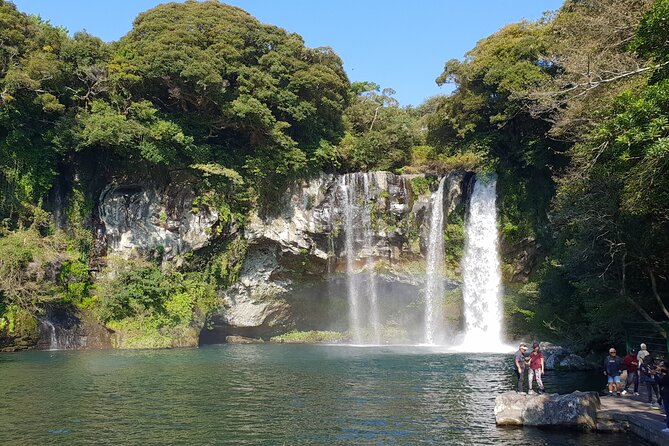
Cheonjiyeon Waterfall means sky connected with land, a fitting name for water dropping into a green gorge. The stop lasts about 30 minutes and does not require the same effort as Hallasan.
The path gives you a pleasant contrast to the coastline and mountain. The waterfall is surrounded by plant life, including wild Dampalsu trees, designated as Natural Monument No. 163. You can enjoy the sound of the water and take photographs without needing a long hike.
This is one of the most accessible-feeling portions of the day, though the tour still asks for a moderate fitness level overall. If you have limited walking ability, ask the operator about the exact conditions before booking, since the tour description does not provide detailed accessibility information.
Again, the short time is the limitation. You get a clear taste of the site, not an afternoon to explore every path. That is fine if your goal is to cover southern Jeju’s major sights in one day.
Seogwi Dawon finishes with tea and open countryside
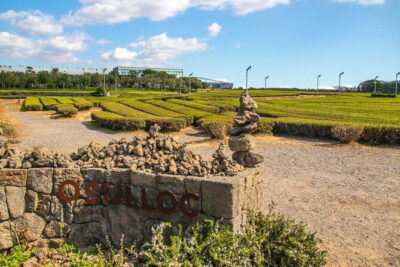
The final stop is Seogwi Dawon, where you spend about 40 minutes learning about Jeju’s green tea production and enjoying the rural setting. Jeju’s moderate climate, four seasons, volcanic soil, and varying elevations create good conditions for growing tea.
This stop is gentler than the morning. After the hike, cliff walk, temple, and waterfall, a tea farm gives you time to slow down. You may find it especially appealing if you want a glimpse of working countryside rather than another major monument.
The visit is not just a shopping detour. Tea cultivation is tied to Jeju’s soil and climate, so it helps explain how the island’s volcanic character affects daily life and local products. Admission is included.
The schedule does not promise a full tea ceremony or a long tasting session, so keep expectations reasonable. Think of it as a short agricultural and cultural stop, with time to enjoy the grounds and tea-related products.
Lunch is local, but budget for it separately
Lunch is not included in the $100 tour price, and drinks and personal expenses are also excluded. Bring money for the meal and do not assume that a snack will be available at the first stop.
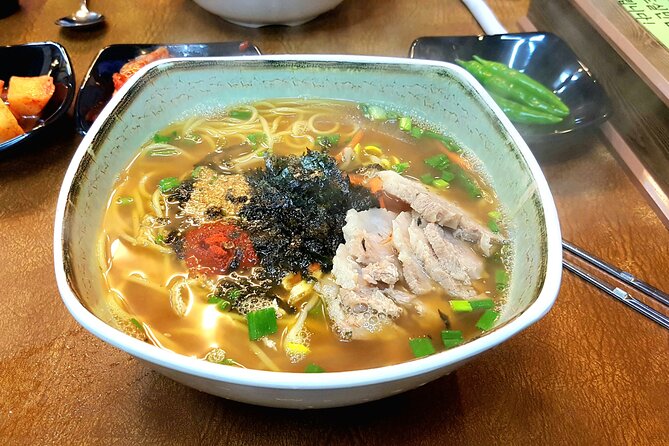
The day includes a lunch break, and the restaurant selected for the group may serve local food such as kalguksu, a Korean noodle dish. Some meals have included local specialties and have worked well for pescatarians. The exact restaurant and menu are not stated as fixed features, so treat lunch as an arranged pause rather than a guaranteed dish.
I recommend eating enough at breakfast to handle the Hallasan walk, then using lunch as a chance to try something local. If you have dietary needs, tell the operator before the tour date. The supplied information does not promise a specific dietary program.
Guides make a real difference
The route is good, but the guide shapes the day. Names associated with this experience include Jin, Henry, June, Michelle, Andrew, Angelo, Helen, Paul, Soraya, and others. Several are praised for explaining Jeju’s geography, customs, myths, history, and present-day life in clear English.
Jin is noted for a warm manner, strong island knowledge, and careful driving. Henry has been helpful with English-speaking groups and has kept the day relaxed. Andrew has taken extra care with solo passengers and elderly family members, and he has even spoken Mandarin to parents on an English-language tour.
That last point is useful if you are traveling alone. A group tour can feel awkward when everyone else arrives as a pair, but an attentive guide can make the day much more comfortable. Guides have also helped with photographs, answered many questions, and adjusted plans when weather made a trail unsafe.
The one serious weakness to keep in mind is inconsistency. One past guide rushed the group, skipped part of the temple grounds, and did not allow time for coffee or souvenir shopping. The company said that guide was newly hired and would receive more training. Most reported experiences were strongly positive, but the warning is fair: the guide’s pace can shape your impression of the tour.
Transport and group size
You may ride in a seven-seat minivan or a 15-seat minibus, depending on the group size. The vehicle is not guaranteed to be one particular model, but the tour is designed around a small vehicle rather than a large coach.
That matters on Jeju’s roads. A smaller group means less time loading and unloading, easier conversation with the guide, and a more personal feel at the stops. It also means limited room for stretching out, especially if the group reaches the maximum of 15 people.
The driver is also the guide, so careful road handling matters. One useful touch noted in the tour experience is warning passengers about Jeju’s many speed bumps. You can focus on the scenery instead of road signs and parking, which is the main practical benefit of booking this route.
Who should book the south course
I would choose this tour if you have only a few days on Jeju and want a broad introduction to the southern half of the island. It suits couples, families, solo visitors, and older relatives who can manage a moderate walk but do not want to plan every transfer.
It is also a good fit if you do not want to rent a car. The route covers a lot of ground, and the guide adds context that you would miss by simply driving from one viewpoint to the next.
I would think twice if you want long visits, flexible meal times, serious shopping, or a strenuous Hallasan climb. The day is full, and five stops require discipline. You need to be ready to rejoin the group on time.
The tour requires at least two adults per booking, accepts a maximum of 15 people, and must be booked at least 24 hours ahead. Confirmation is sent within 48 hours, subject to availability. You can cancel for a full refund up to 24 hours before the start time. If bad weather forces cancellation, you are offered another date or a full refund.
Should you book this Jeju south tour?
Book it if efficient sightseeing and easy transport matter more to you than free time. Hallasan is the highlight, Jusangjeolli Cliff gives you Jeju’s volcanic coast, and Yakcheonsa Temple adds a strong cultural stop. Cheonjiyeon Waterfall and Seogwi Dawon round out the day without repeating the same type of scenery.
At $100, the value is strongest for first-time visitors who want transport, admissions, and a guide in one package. Add lunch, drinks, and personal purchases to your budget. Bring water, snacks, walking shoes, and a little patience for the set schedule.
I would not book it for a relaxed, do-anything-you-want day. For a well-organized introduction to southern Jeju, especially when you are staying in downtown Jeju City and do not have a car, it is a sensible choice.
FAQ
How long does the Jeju south-course tour last?
The tour lasts approximately eight hours.
What time does the tour start?
The stated start time is 9 a.m.
Is hotel pickup included?
Yes. Pickup and drop-off are included for hotels in the downtown Jeju City area only.
Is this a private tour?
No. You share the tour with other customers, and the group can include up to 15 people.
What type of vehicle is used?
The operator may provide a seven-seat minivan or a 15-seat minibus, depending on group size.
What sights are included?
The day includes Hallasan National Park and the Eoseungsaengak Trail, Jusangjeolli Cliff, Yakcheonsa Temple, Cheonjiyeon Waterfall, and Seogwi Dawon.
Is the Hallasan walk difficult?
The walk lasts about 60 minutes and is described as suitable for beginners, but it includes uphill sections, steps, and ropes. A moderate fitness level is required.
Is lunch included in the price?
No. Lunch, drinks, gratuities, and personal expenses are not included.
Are entrance tickets included?
Yes. Entrance tickets for the paid attractions listed on the tour are included.
What happens if the weather is poor?
The tour may be canceled or the Hallasan portion may be changed for safety. If the operator cancels because of poor weather, you can choose another date or receive a full refund.
Just added around Jeju
- Jeju island: Van tour with a guide who the most loves JEJU★ 5.0 · 7 reviews
- Jeju Unesco Eest course Package Private Van Guided Tour★ 5.0 · 17 reviews
- Full Day Jeju Private Customizable highlight Tour★ 5.0 · 5 reviews
- Full-day Customizable Private Jeju Island Tour★ 5.0 · 8 reviews
- Full Day Essential Jeju Island Private tour for West Course★ 5.0 · 15 reviews
- Jeju Private Tour Package-South of Jeju(Mt.Hallasan & Waterfalls)★ 5.0 · 5 reviews
- Customized private tour in Jeju island★ 5.0 · 19 reviews
- jeju island Jumbo taxi Private tour with Mr.Hong East of jeju★ 5.0 · 19 reviews
UNESCO World Heritage Tours, compared.
Gyeongju UNESCO World Heritage Guided Day Tour
Read our review →
East Jeju Essentials – Seongsan Ilchulbong (UNESCO) & Haenyeo
Read our review →
Gyeongju UNESCO World Heritage Guided Day Tour from Busan
Read our review →
Jeju Southern UNESCO Full Day Tour with Mt.Halla
Read our review →
Jeju island Southern UNESCO Day Tour With Hallasan MT
Read our review →Browse the lists this tour appears in