
Reviewed · DRINKING TOURS
Learn and Craft Makgeolli in a Traditional Brewery
Makgeolli is not simply Korea’s answer to beer or wine. It is a living rice drink, made with rice, water, and nuruk, a traditional fermentation starter. At Baekusaeng Makgeolli, brewery founder Joe Kim turns that process into a hands-on class, with tastings, blind comparisons, and your own batch to ferment at home. I like that you do more than watch: you actually make the drink.
I especially like the small group limit of 10, which gives the two-hour class a personal feel, and the range of tasting material. You compare commercial and craft makgeolli, sample premium rice wines, try soju, and learn how ingredients and tools affect the result. The main consideration is pace: there is a lot packed into two hours, and you need to be ready to drink several samples.
Key points
- Make your own makgeolli: Prepare a batch during class that yields about 1.5 liters after fermentation.
- Learn from Joe Kim: The founder is a certified traditional Korean alcohol sommelier, brewery owner, and author of an English home-brewing guide.
- Compare more than one style: Taste craft, commercial, and premium makgeolli, including blind samples.
- Try Korean soju: The class includes soju tasting alongside several rice wines.
- Meet inside Ahyeon Market: The brewery is reached from Ahyeon Station on Seoul Subway Line 2.
- Leave with a useful souvenir: Take home your brewing vessel and makgeolli kit, or request a finished bottle if you cannot transport the fermenting batch.
Why makgeolli makes a good Seoul class
Makgeolli has been part of Korean drinking culture for centuries, but its character can vary widely. One bottle may be sweet and creamy, while another is dry, tart, floral, or gently sparkling. That range is hard to appreciate if you simply order one bottle at a restaurant.
This class gives you a framework for tasting. You learn what separates a mass-produced makgeolli from a craft version, then sample different examples before making your own. I like this order. Once you have tasted the differences, the discussion about rice, fermentation, and brewing tools has a clear purpose.
The experience also treats makgeolli as a traditional food craft rather than just a drink. You learn how the ingredients work together and why the process matters. That makes the class useful for curious drinkers, home cooks, and anyone who wants more context for Korean meals.
A few more Seoul trips to weigh up
- Seoul: Pub Crawl
★ 4.7 · 903 reviews - The Seoul Pub Crawl Official
★ 5.0 · 838 reviews - Drinking and Eating through the Alleys of Seoul
★ 5.0 · 364 reviews
Finding Baekusaeng Makgeolli in Ahyeon Market
The brewery is at Baekusaeng Makgeolli, inside Ahyeon Market in central Seoul. The listed address is 346-35 Ahyeon-dong, Mapo-gu. The market setting is part of the appeal. Instead of meeting in a polished visitor center, you enter a working neighborhood market and find the brewery by its logo.
From Ahyeon Station on Line 2, use Exit 4. Walk straight until you reach Mega Coffee, turn left, and continue straight. The market entrance is on your left. You will find the shop inside the market.
You can also take a bus to the Wedding Town bus stop, called 웨딩타운버스정류장. If you take a taxi, tell the driver to use that stop. There is no pickup from the subway station, so allow time to follow the directions.
The meeting point and ending point are the same. That is handy after a tasting, since you do not need to find a second location while carrying a brewing vessel.
Joe Kim’s two-hour introduction to Korean alcohol
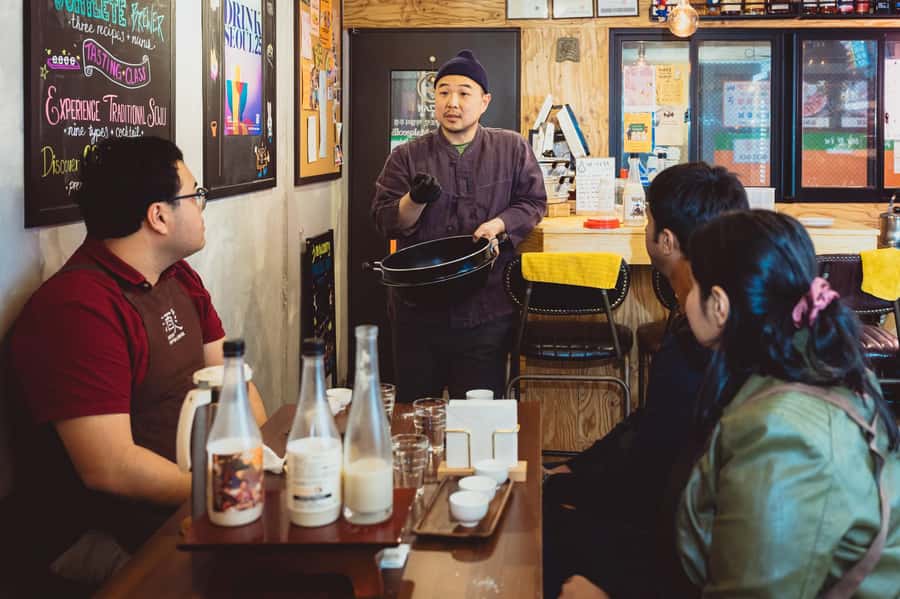
Joe Kim leads the session in Korean, English, and Spanish. His role is more than that of a presenter. He is the brewery founder and owner, a certified traditional Korean alcohol sommelier, and the author of an English guide to brewing Korean rice wine at home.
That background matters because the class covers both appreciation and technique. You are not only told that makgeolli is important in Korea. You are shown how to think about its ingredients, how to choose tools, and how to begin making it yourself.
The class has a maximum of 10 participants. That is a good size for a practical activity. You should have room to follow the process and ask questions, while still meeting other people who are interested in Korean drinks.
The format is described as a class rather than a demonstration. You take part in the brewing work, and the tasting is built into the lesson. One caution: two hours is short for the amount of ground covered. You will get a strong introduction, but this is not a full professional brewing course.
Tasting commercial, craft, and premium makgeolli
The tasting portion is one of the strongest reasons to book. You sample several Korean rice wines, including commercial and premium examples, then take part in blind tastings. This gives you a practical way to compare flavor and quality without relying only on labels.
For many people, commercial makgeolli is the first version they encounter in Korea. It is easy to find and often served cold in restaurants and convenience stores. Craft makgeolli offers a different experience, with more attention to fermentation, ingredients, and small-batch character.
The point is not that one category is always better. The point is that you learn to notice the differences. Taste, sweetness, texture, acidity, aroma, and carbonation can all change. Once you know what to look for, ordering makgeolli later in your trip becomes more interesting.
Blind tasting adds a playful test. You can judge the drink before seeing its identity, which helps separate your own preferences from assumptions about price or packaging. The class also includes light snacks, useful for balancing the alcohol and making the tasting more comfortable.
Same country, a completely different kind of day:
- Best DMZ Tour Korea from Seoul (Red Suspension Bridge Optional)
★ 5.0 · 41,422 reviews - DMZ Tour: 3rd Tunnel, Option(Suspension Bridge, Boat) from Seoul
★ 5.0 · 21,373 reviews - DMZ tour south Korea from Seoul (NK experience hall, defector)
★ 5.0 · 20,599 reviews - Seoul: DMZ Tour with Optional Suspension Bridge
★ 4.8 · 5,277 reviews
Sampling soju alongside rice wine
Soju is included too, giving you a second reference point in Korean drinking culture. Makgeolli is generally cloudy and rice-based, while soju is a different style of Korean alcohol with its own place at the table.
The class does not present only one drink in isolation. By tasting soju alongside several makgeolli examples, you get a broader picture of traditional Korean alcohol. This is especially useful if you plan to eat in Korea and want to understand the drinks you see on restaurant menus.
You should arrive prepared to sample many types of makgeolli and soju. Do not drive afterward. Public transportation is the sensible choice, and the Ahyeon Station location makes that straightforward.
The experience is not suitable for people under 21 or for pregnant women. Indoor smoking is not allowed, and alcohol or drugs are prohibited.
Choosing the ingredients and tools
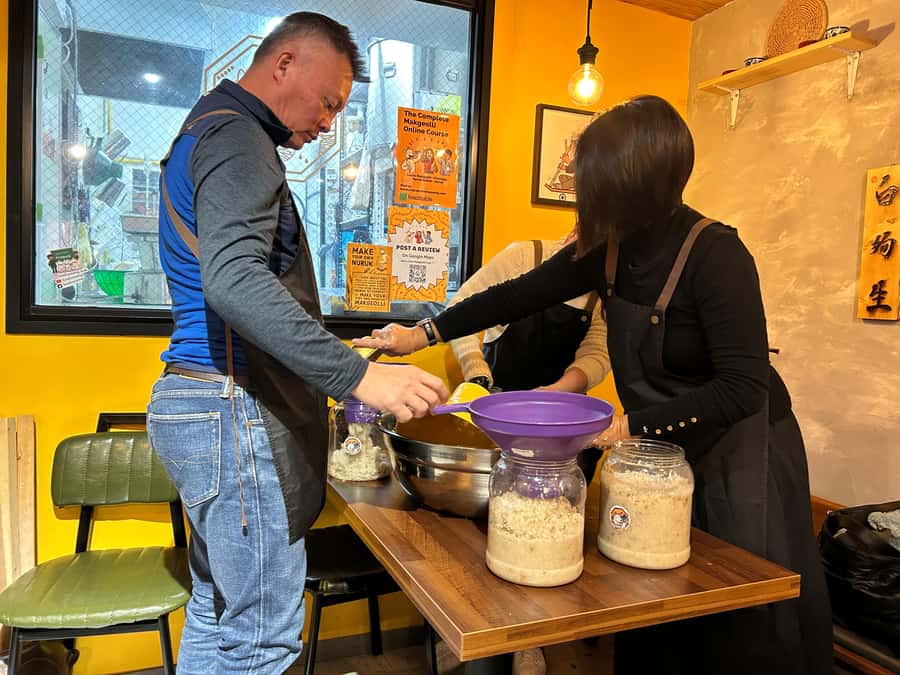
Before you begin making your own batch, Joe explains the basic ingredients. You learn what goes into makgeolli and how to select the right supplies for the job.
This part may sound simple, but it is where the class becomes useful beyond the tasting. A recipe alone does not tell you how to choose ingredients or equipment. Understanding the purpose of each item helps you repeat the process at home with fewer guesses.
You also learn about the tools needed for brewing. The goal is not to turn you into a commercial producer in one afternoon. Instead, you leave with a practical starting point and enough background to continue learning.
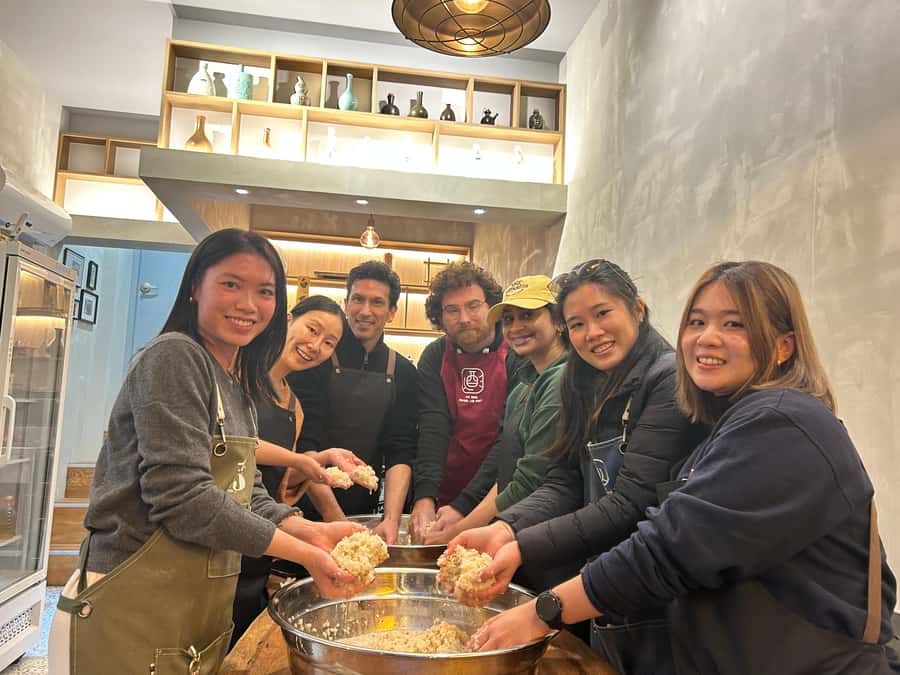
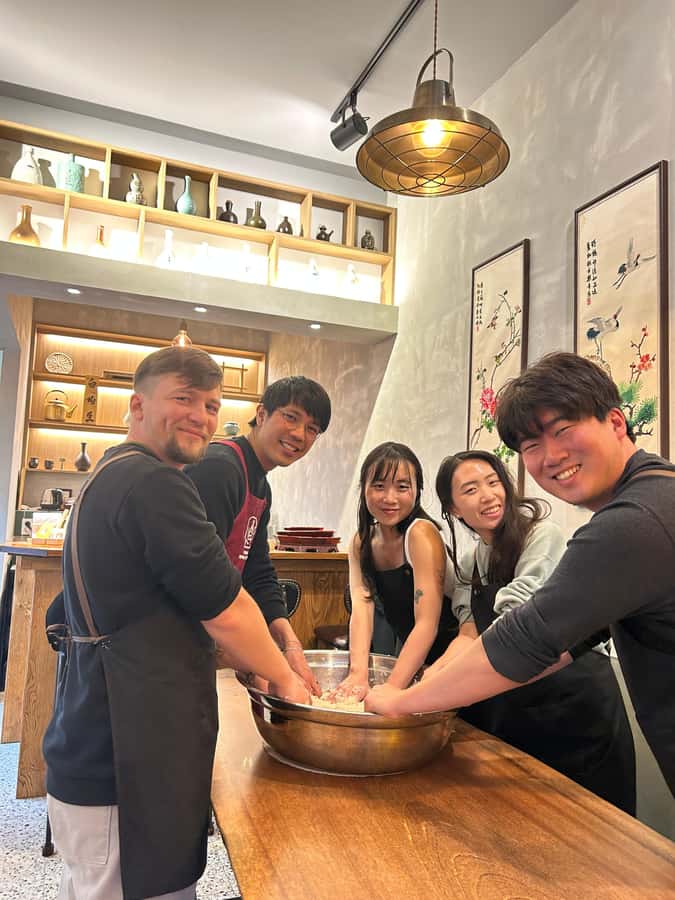
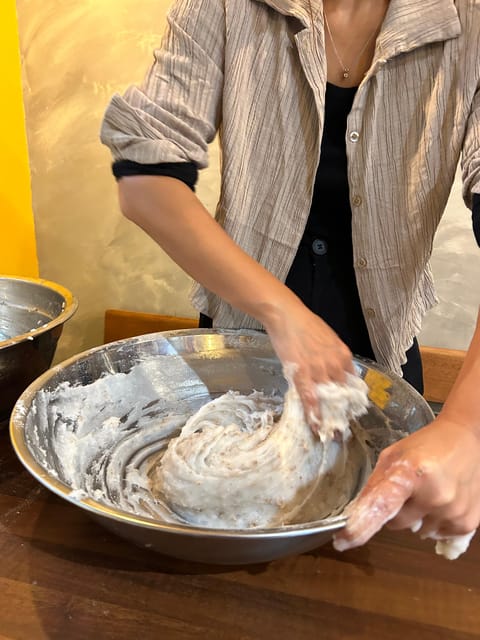
The hands-on section is the heart of the experience. You craft your own homemade makgeolli during the class, following the method explained by Joe. The exact process requires patience after the class because fermentation continues at home.
Taking home about 1.5 liters to ferment
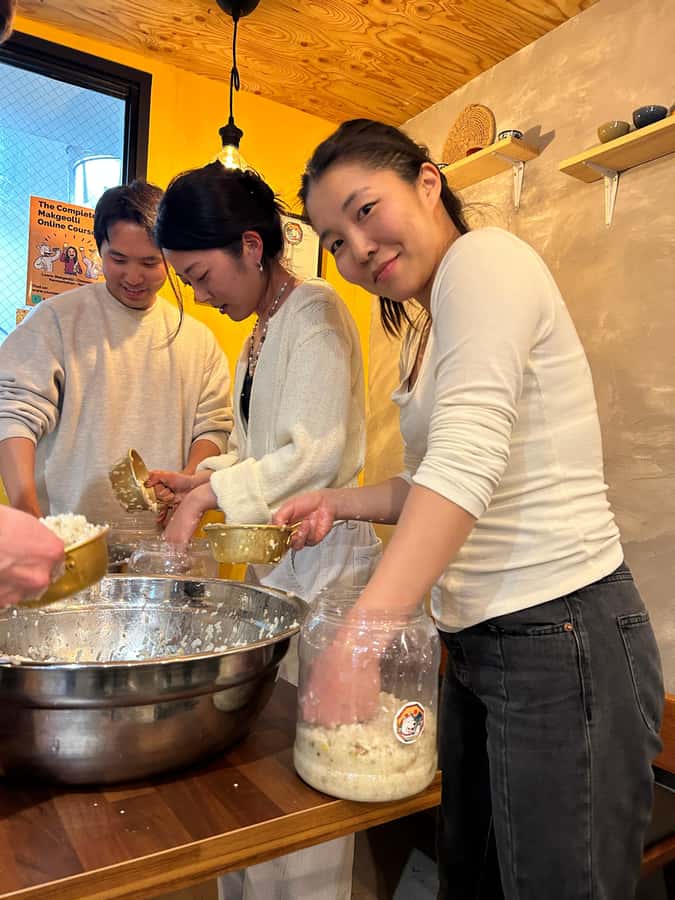
Your home-brewing kit includes your own makgeolli to ferment, with an expected yield of about 1.5 liters. This is a better souvenir than a standard bottle because it connects directly to what you learned.
Bring a reusable bag. You are responsible for carrying the makgeolli vessel with you after the class, and a bag will make the trip back to your accommodation much easier.
If you cannot take the fermenting batch with you, the brewery can provide a finished bottle instead. That option matters if you are leaving Seoul soon, flying home, or do not have a suitable place to continue the process.
The kit also gives you a chance to see how fermentation changes the drink over time. You leave with more than a tasting memory. You have a small project to follow after the class, though you should make sure your travel plans allow you to carry it safely.
What the two-hour schedule feels like
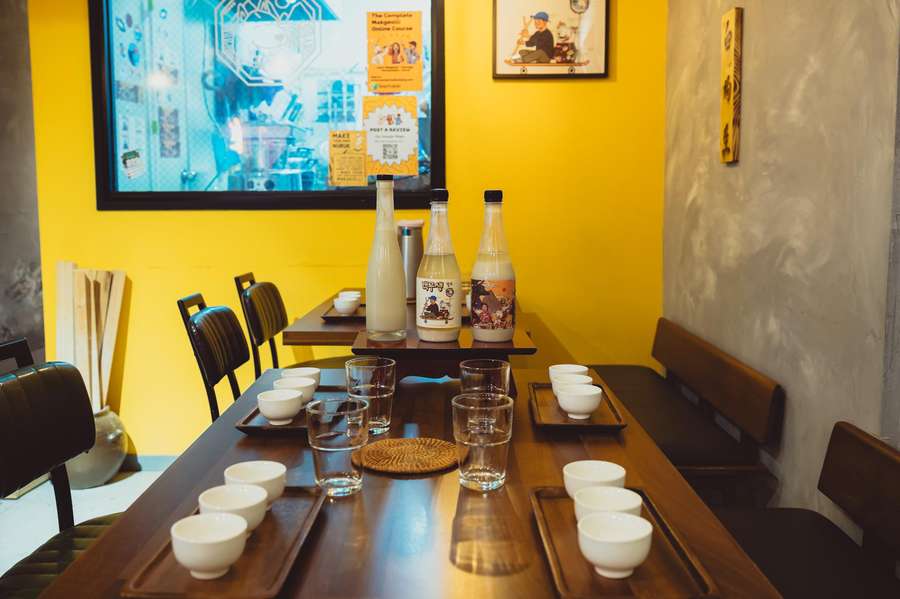
The session moves through several stages:
- An introduction to the history and theory of makgeolli
- Explanation of ingredients and brewing tools
- Tasting of commercial, craft, and premium makgeolli
- Blind tasting and soju sampling
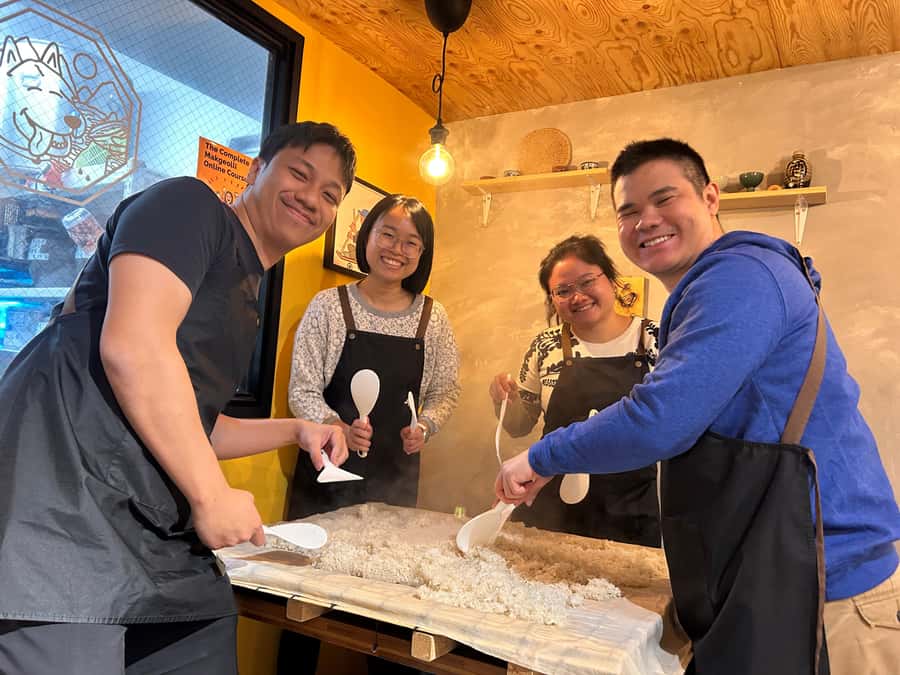
- Hands-on preparation of your own batch
- Instructions for taking the makgeolli home to ferment
That is a full program for 120 minutes. You should expect a lively, information-heavy class rather than a slow, leisurely tasting.
The strongest part for me is the combination of explanation and action. You first taste, then learn, then make. The information has a direct connection to what is in front of you, which makes it easier to remember.
The tradeoff is that there may not be much time for long pauses. One participant described the class as absorbing and very educational, but also noted that a great deal is packed into two hours. If you want a relaxed afternoon with only a few drinks and plenty of conversation, this may feel fast.
Is the $80 price good value?
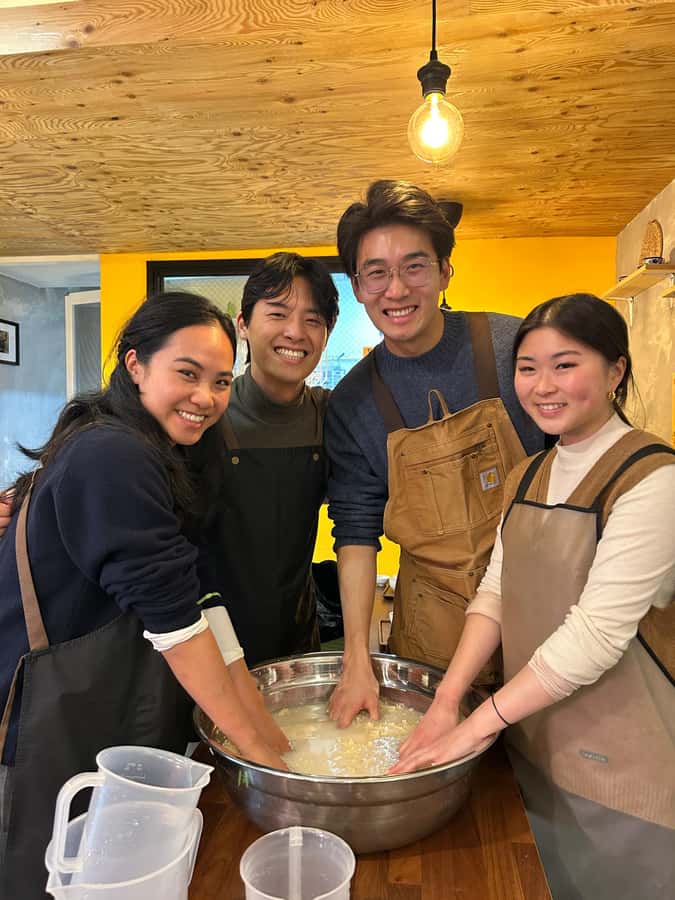
At $80 per person, the class costs more than a simple brewery tasting. You are paying for a small-group lesson, several alcohol samples, snacks, hands-on preparation, and a makgeolli kit that yields about 1.5 liters.
The value depends on what you want from the experience. If you only want to try makgeolli, you can spend far less at a restaurant or market. If you want to understand the drink, compare several styles, and make a batch yourself, the price is easier to justify.
The English-language instruction also adds value for international visitors. Joe’s brewing background and English home-brewing book suggest that the class is designed to explain the process clearly, not simply show a few steps without context.
I would consider the home kit a major part of the price. It turns the experience into something you can continue after leaving Seoul. Just remember to bring a reusable bag and plan for the alcohol tasting when arranging your transportation.
Who will enjoy this brewery experience?
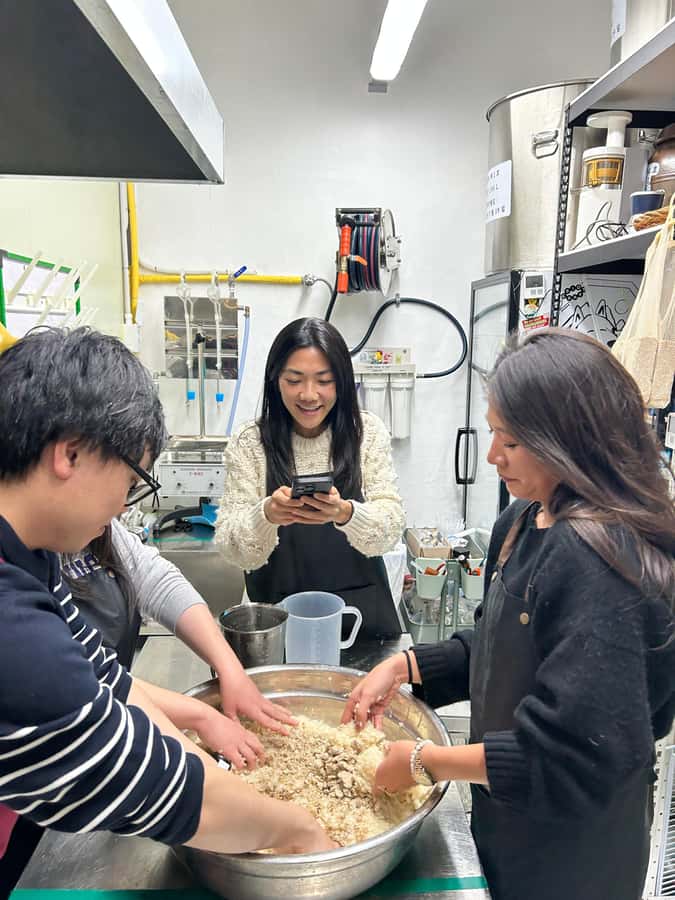
This class suits you if you enjoy food and drink experiences that teach a skill. It is also a good match if you have tried makgeolli before and want to understand why different bottles taste so different.
You will likely get the most from it if you:
- Enjoy tasting several styles side by side
- Want to make Korean rice wine at home
- Prefer a hands-on class to a simple brewery tour
- Are comfortable with a fast, information-packed schedule
- Want to learn from a brewery owner rather than only visit a sales counter
- Can take public transportation after drinking
It may not suit you if you do not drink alcohol, dislike sampling several varieties, or want a short demonstration with little participation. The class is also not available to anyone under 21 or to pregnant women.
Because instruction is offered in Korean, Spanish, and English, you can choose the language that works best for you. The small group size should make it easier to follow the practical steps.
Booking, timing, and cancellation
The activity lasts two hours, with starting times shown according to availability. Check the schedule before booking, since the available time matters when fitting the class around sightseeing in Seoul.
You can reserve now and pay later, which helps if your plans are still shifting. Cancellation is free up to 24 hours in advance for a full refund.
Plan your route before you leave. The brewery is inside Ahyeon Market, not directly at the subway exit, and there is no station pickup. Public transportation is recommended because you will be tasting alcohol throughout the class.
My verdict: book it if you want to make, not just drink
I would book this class if you want a useful and personal introduction to Korean traditional alcohol. The best features are clear: Joe Kim’s direct involvement, the hands-on brewing, the blind tasting, and the chance to compare commercial and craft makgeolli in one sitting.
The $80 price makes sense for people who value instruction and the take-home kit. It is less attractive if your main goal is simply to drink makgeolli cheaply. Also, expect a busy two hours, not a slow brewery visit.
Bring a reusable bag, take the subway, and leave room in your schedule for a class that packs in history, tasting, technique, and a home fermentation project. For curious drinkers, it offers a much better understanding of what is in that cloudy Korean glass.
FAQ
Where is the makgeolli class held?
The class is held at Baekusaeng Makgeolli inside Ahyeon Market in Seoul. The listed address is 346-35 Ahyeon-dong, Mapo-gu.
How do I reach the brewery by subway?
Take Seoul Subway Line 2 to Ahyeon Station and use Exit 4. Walk straight to Mega Coffee, turn left, continue straight, and look for the market entrance on the left. The brewery is inside the market and has its own logo.
How long does the activity last?
The class lasts two hours. Starting times depend on availability.
What languages are available?
Instruction is available in Korean, Spanish, and English.
How many people are in each class?
The group is limited to 10 participants.
What is included in the tasting?
You sample craft, commercial, and premium makgeolli, take part in blind tastings, and sample soju. Light snacks are also included.
Can I take makgeolli home?
Yes. You receive your own makgeolli to ferment, with an expected yield of about 1.5 liters. Bring a reusable bag for the vessel. If you cannot take the fermenting batch, you can receive a finished bottle instead.
Is the class suitable for everyone?
The activity is not suitable for people under 21 or pregnant women. You should also avoid driving because the class includes several alcohol samples.
Just added around Seoul
- Gyeongbokgung palace,seoul with gigibebe hanbok rental★ 4.5 · 12 reviews
- Private tour guide service in Seoul, Korea★ 5.0 · 6 reviews
- Alpaca, Nami, Petite Fr, Italian Village, Garden of Morning Calm★ 3.5 · 5 reviews
- Gyeongju UNESCO Sites Tour by KTX train; The Museum Without walls★ 4.5 · 11 reviews
- Private day trip to Korean Folk Village & Dae Jang Geum Park★ 5.0 · 7 reviews
- Private tour Lotte World,Tower,Aquarium(All Tickets are included)★ 5.0 · 12 reviews
- Seoul Private Custom Walking Tour with A Guide (Private Tour)★ 4.5 · 28 reviews
- Private day tour Korea(Seoul trip) with Professional Photographer★ 5.0 · 6 reviews
Drinking Tours, compared.



Drinking and Eating through the Alleys of Seoul
Read our review →
Anthony Bourdain-Inspired BBQ and Pub Experience
Read our review →


Korean Drinking Games Night (non-drinkers welcome)
Read our review →Browse the lists this tour appears in