
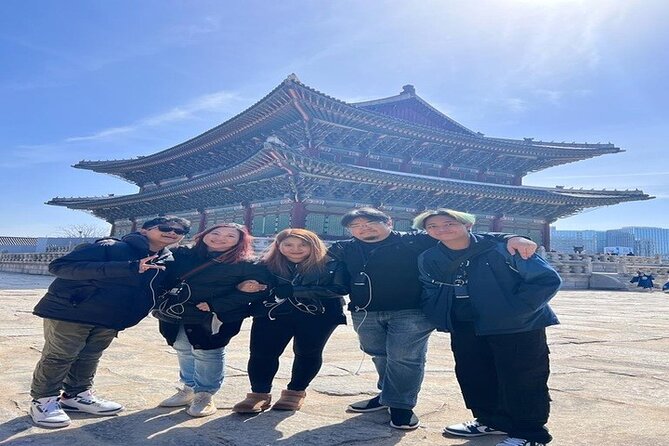
Reviewed · GYEONGBOKGUNG PALACE TOURS
Seoul: Gyeongbokgung Palace Half day Tour
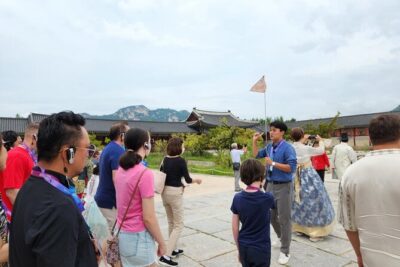
Gyeongbokgung Palace makes the most sense when someone explains what you are seeing. This two-hour visit moves from Gwanghwamun Gate through throne halls, royal offices, sleeping quarters, and Gyeonghoeru Pavilion while connecting the buildings to the Joseon dynasty.
I like the focused route and the chance to ask questions in English. I also like that admission is included, so the $35 price covers more than a simple walk around the grounds. The main drawback is timing: two hours gives you a strong introduction, but not a slow look at every corner.
Key points to know before you book
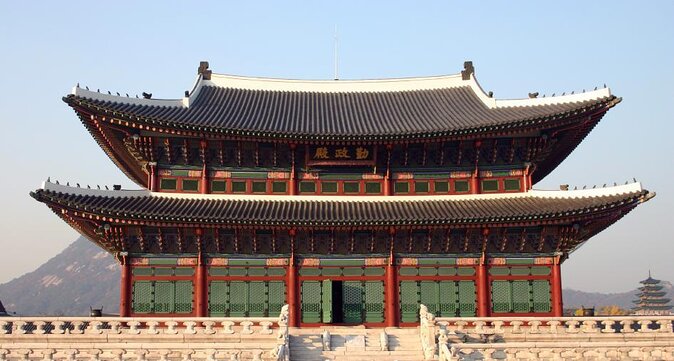
- Gwanghwamun Gate begins the story: Start at the palace’s south gate, where the guide sets up the history of Gyeongbokgung and Joseon.
- Six important stops fit into two hours: See the throne hall, king’s office, royal bed-chamber, queen’s bed-chamber, and Gyeonghoeru Pavilion.
- English explanation is the main value: The guide links architecture, royal life, famous kings, and animal statues that are easy to miss alone.
- Gabriela has been especially helpful: If Gabriela leads your visit, she may also help if you have trouble finding the meeting point.
- The group can reach 20 people: This is not a private tour unless you arrange one separately, so expect a shared experience.
- Tuesday requires a different plan: Gyeongbokgung is closed on Tuesdays, when the operator offers a Deoksugung night tour instead.
Why Gyeongbokgung works best with a guide
Gyeongbokgung Palace was built in 1394 and is the oldest and most important of Seoul’s five palaces. It was damaged extensively during the Japanese Colonial Period, and ongoing restoration has helped preserve its importance. That gives the site two layers to notice: the palace as a royal center of Joseon and the palace as a place still being repaired and understood.
I find the English explanation particularly useful here. Palace grounds can look like a series of beautiful gates, courtyards, painted beams, and tiled roofs if you do not know what each building did. A guide gives those spaces a purpose. You learn where official business happened, where the king worked, where the royal family slept, and where formal events took place.
The guide also points out animal statues placed around the palace. These details are easy to walk past when you are busy taking photographs, but they add another thread to the visit. You are not only looking at grand halls. You are also learning how smaller decorative features fit into the palace setting.
This tour is presented in English and includes time for questions. That matters if you want more than a memorized speech. You can ask about a king, a building, a restoration detail, or an animal figure while you are standing in front of it.
More Gyeongbokgung Palace Tours in Seoul:
- Seoul: Gyeongbok Palace, Bukchon Village, and Gwangjang Tour
★ 4.9 · 2,321 reviews - Best Seoul City Tour (Gyeongbokgung Palace,Insadong,Namsan Tower)
★ 5.0 · 1,647 reviews - Seoul City Sightseeing Tour Including Gyeongbokgung Palace, N Seoul Tower, and Namsangol Hanok Village
★ 5.0 · 1,423 reviews
Starting at Gwanghwamun Gate
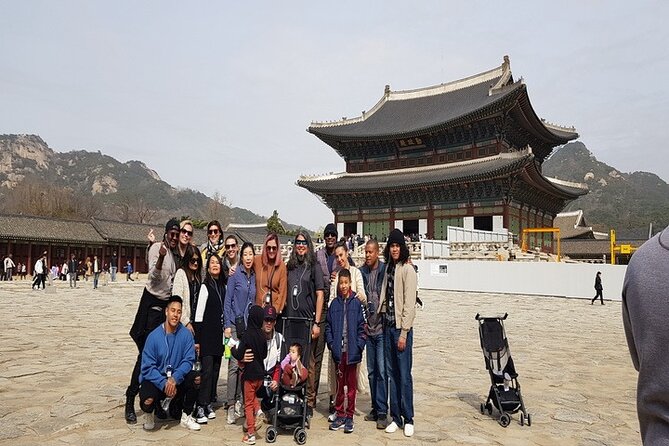
The meeting point is at the National Palace Museum of Korea, 12 Hyoja-ro, in Jongno District. From there, the tour begins with Gwanghwamun Gate, the south gate of Gyeongbokgung Palace.
This is a sensible place to start because the gate introduces the palace as an organized royal complex rather than a collection of isolated buildings. Your guide can explain the palace’s origins and the role it played during the Joseon dynasty before leading you farther inside.
Pay close attention at the start. The opening explanation gives context for the rest of the visit, and the two-hour schedule moves at a purposeful pace. If you arrive late, you cannot join after the tour has begun. The operator says this rule protects the rest of the group, so plan to be at the museum meeting point early.
The meeting details and time are sent by email or WhatsApp. Leave a Korean-accessible phone number or a messaging contact such as WeChat or Line when booking. An incorrect or unusable number can lead to a missed meeting with no refund or schedule change.
One useful detail comes from the experience with Gabriela. When a participant went to the wrong meeting point, she went out of her way to help locate them. That does not remove the need to check your directions, but it suggests that clear communication with the guide can make a real difference if you get turned around.
Geunjeongjeon, the main throne hall
The route continues to Geunjeongjeon, the main throne hall. This is where the palace’s formal side comes into focus.
A throne hall can be visually impressive on its own, but the guide’s explanation gives the space a clearer role. You hear about the kings of Joseon and the public duties tied to this part of the palace. The point is not simply to admire a large building. It is to understand how royal authority was presented and managed.
I would give this stop your full attention, especially if you are new to Korean history. The guide’s job here is to connect the hall’s design with the palace’s larger story. You can also ask questions in English instead of trying to piece together short signs or captions.
The limitation is time. A group of up to 20 people cannot linger equally long at every angle of the hall, and the tour has several more stops ahead. If photography is a priority, take a few minutes for your own pictures, but do not expect a long, unstructured session.
Sajeongjeon and the working palace
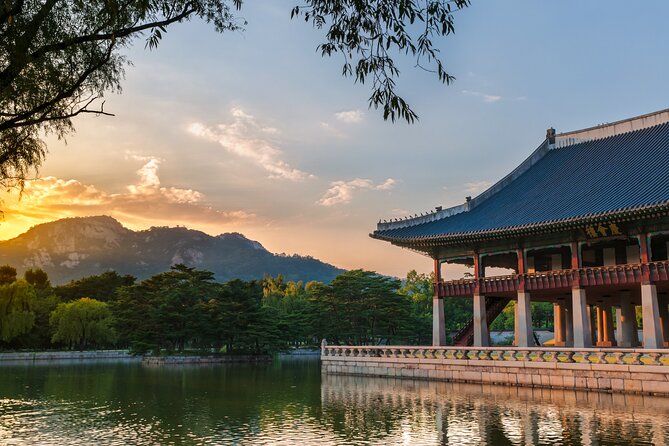
Sajeongjeon was the king’s office space, making it a useful contrast with the formal throne hall. Here, the palace becomes less about ceremony and more about the work of governing Joseon.
I like this part of the route because it gives the palace a human scale. A king did not spend all day receiving formal guests. He also needed a place for decisions, discussions, and daily duties. Moving from Geunjeongjeon to Sajeongjeon helps you see the difference between a grand public setting and a working room.
The guide explains the functions of these buildings while tying them to famous kings and the development of Joseon. Since the tour is designed around explanation, this is one of the places where asking a question can add real value. If you are curious about how the king used each building, this is the right moment to speak up.
You should also expect the group to keep moving. The tour covers six named areas in two hours, so this is a guided overview rather than an exhaustive architectural study.
Same country, a completely different kind of day:
- Best DMZ Tour Korea from Seoul (Red Suspension Bridge Optional)
★ 5.0 · 41,422 reviews - DMZ Tour: 3rd Tunnel, Option(Suspension Bridge, Boat) from Seoul
★ 5.0 · 21,373 reviews - DMZ tour south Korea from Seoul (NK experience hall, defector)
★ 5.0 · 20,599 reviews - Seoul: DMZ Tour with Optional Suspension Bridge
★ 4.8 · 5,277 reviews
Gangnyeongjeon and Gyotaejeon, the royal private quarters
Gangnyeongjeon was the king’s bed-chamber, while Gyotaejeon was the queen’s bed-chamber. These stops shift the focus from public power to private royal life.
The two rooms are worth seeing together because they show that the palace was not only a ceremonial and administrative center. It was also a home for the king and queen, with separate spaces tied to their roles.
This portion of the tour can help you picture how the royal compound functioned day to day. The guide explains the buildings rather than leaving you to guess why one hall differs from another. Stories about the Joseon rulers add a personal side to what might otherwise feel like a purely formal site.
I would not expect a long discussion of every member of the royal family. The supplied route is compact, and the guide has to balance architecture, history, and questions from the group. Still, these bed-chambers are important stops because they prevent the palace story from becoming only a story about kings in official halls.
Gyeonghoeru Pavilion and palace events
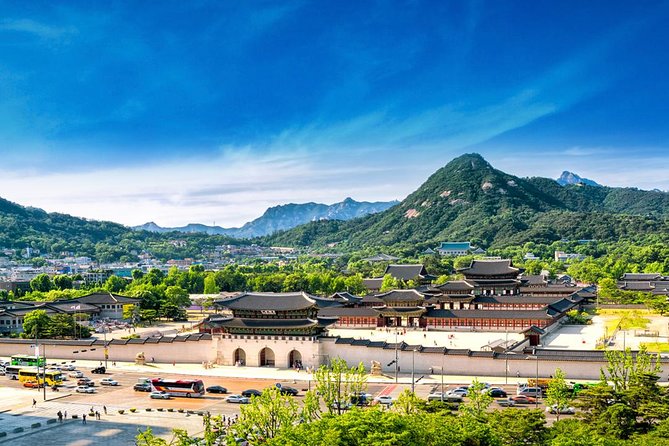
The final named stop is Gyeonghoeru Pavilion, described as an event hall. Its role gives the tour a fitting closing point because it brings together architecture, royal ceremony, and social life at the palace.
The guide explains what happened in the palace’s event spaces and points out architectural features that you might not notice by yourself. This is also another good place to look for the animal statues and other decorative details mentioned throughout the visit.
The pavilion is part of the reason the route feels varied. You move through gates, formal halls, office space, private quarters, and an event building rather than seeing one type of structure repeatedly. By the end, you have a basic map of how the palace served different needs.
The tour ends at 7-25 Tongui-dong. That is different from the starting point near the National Palace Museum, so check the final location before arranging your next activity. The walk between stops is part of the experience, but the endpoint matters if you have a timed reservation elsewhere.
What the $35 price really covers
At $35 per person, this is not the cheapest way to enter Gyeongbokgung if you only want to walk around and take photographs. The value comes from the English-speaking guide, the structured route, and admission being included.
I would consider the price fair if you care about context and want to ask questions. The tour explains the construction of Gyeongbokgung, the Joseon dynasty, famous kings, the role of individual buildings, and decorative animals. Those are several layers of information packed into two hours.
The value is less clear if you already know Korean palace history or prefer to wander alone. A self-guided visit gives you more control over your pace and photographs. This experience is designed for someone who wants a clear introduction without spending half a day planning what to see first.
The average booking time of 18 days in advance is a useful planning signal. It does not guarantee that every date sells out, but it suggests that you should not leave a preferred time until the last minute, especially because the tour requires at least four participants and can be canceled if that minimum is not reached.
Group size, timing, and the Tuesday closure
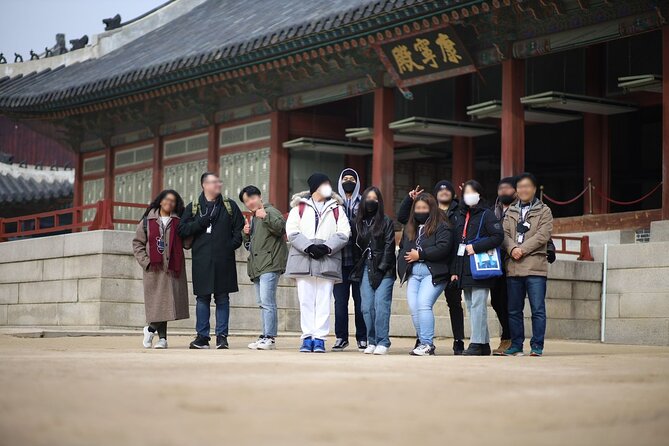
The tour lasts about two hours and allows a maximum of 20 people. That is large enough to feel like a shared group visit, but not so large that the guide is addressing a crowd of hundreds. The experience can feel more personal when the group is smaller, though the exact number is not guaranteed.
The minimum requirement is more important than the maximum. If fewer than four people book, the tour may be canceled, with notice sent by WhatsApp. Keep your messaging contact active until the day of the visit.
Gyeongbokgung is closed on Tuesdays. Do not book this palace tour for that day. The operator offers a Deoksugung night tour as an alternative, but the provided information does not give the same detailed route or duration for that experience.
The activity also requires good weather. If poor weather causes a cancellation, you are offered another date or a full refund. You can cancel for a full refund up to 24 hours before the local start time, but changes or cancellations inside that 24-hour window are not accepted.
Pets are not allowed, and there is no stated place to leave them. Recording or filming the tour is also not permitted, so plan to listen and take ordinary personal photographs only if the guide allows them.
Who will get the most from this palace visit
I would recommend this tour to a first-time visitor to Seoul who wants a clear introduction to Gyeongbokgung without studying the palace beforehand. It also suits anyone who wants an English explanation of Joseon history and the buildings along the route.
Families and mixed-interest groups may appreciate the concise format. Two hours is long enough to make the palace meaningful, but short enough to fit around other plans in Jongno. The animal statues and royal stories can also give younger visitors details to search for as they walk.
History and architecture fans should enjoy the range of stops, though you may want extra time before or after the tour for your own look around. The guided portion is focused on the main buildings and their stories, not every room and corner of the grounds.
Independent visitors who dislike fixed schedules should think twice. You must meet at a set place, late arrivals cannot join, filming is prohibited, and the guide controls the pace. Those limits are reasonable for a group tour, but they are still limits.
Should you book the Gyeongbokgung half-day tour?
Book it if you want meaningful explanations in English and a compact route through Seoul’s most important palace. The guide turns Gwanghwamun Gate, Geunjeongjeon, Sajeongjeon, Gangnyeongjeon, Gyotaejeon, and Gyeonghoeru Pavilion into parts of one story rather than unrelated photo stops.
I would especially choose it for a first visit, for anyone curious about Joseon, or for a person who wants to ask questions along the way. Gabriela’s helpful response to a lost participant is another encouraging sign for visitors who worry about finding the meeting point.
Skip it if you want complete freedom, extended photography time, or a private experience. Also check the Tuesday closure, weather conditions, minimum group requirement, and your meeting messages before you go.
For $35, the strongest reason to book is not simply entry to the palace. It is the chance to understand what you are looking at while you are standing in front of it.
FAQ
How long does the Gyeongbokgung Palace tour last?
The tour lasts approximately two hours.
Is admission to Gyeongbokgung Palace included?
Yes. The admission ticket is included in the tour price.
What language is the tour conducted in?
The tour provides detailed explanations in English.
Where does the tour begin?
The meeting point is the National Palace Museum of Korea at 12 Hyoja-ro, Jongno District, Seoul, South Korea.
Where does the tour end?
The tour ends at 7-25 Tongui-dong, Jongno District, Seoul, South Korea.
Is Gyeongbokgung Palace open for this tour on Tuesdays?
No. Gyeongbokgung Palace is closed on Tuesdays. A Deoksugung night tour may be booked instead.
What happens if fewer than four people book?
The tour may be canceled if fewer than four participants join. Cancellation notice is sent by WhatsApp, and you are offered another date, another experience, or a full refund.
How many people can join the tour?
The maximum group size is 20 people.
Can I cancel for a full refund?
Yes. You can cancel at least 24 hours before the local start time for a full refund. Cancellations or changes made less than 24 hours before the start time are not accepted.
Just added around Seoul
- Alpaca, Nami, Petite Fr, Italian Village, Garden of Morning Calm★ 3.5 · 5 reviews
- Gyeongbokgung palace,seoul with gigibebe hanbok rental★ 4.5 · 12 reviews
- Private tour guide service in Seoul, Korea★ 5.0 · 6 reviews
- Gyeongju UNESCO Sites Tour by KTX train; The Museum Without walls★ 4.5 · 11 reviews
- Private day trip to Korean Folk Village & Dae Jang Geum Park★ 5.0 · 7 reviews
- Private tour Lotte World,Tower,Aquarium(All Tickets are included)★ 5.0 · 12 reviews
- Full Day Private Seoul Tour for foodies★ 5.0 · 3 reviews
- Seoul Private Custom Walking Tour with A Guide (Private Tour)★ 4.5 · 28 reviews
Gyeongbokgung Palace Tours, compared.
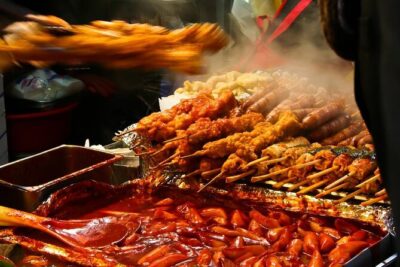
Gyeongbok Palace, Bukchon Village, and Gwangjang Tour
Read our review →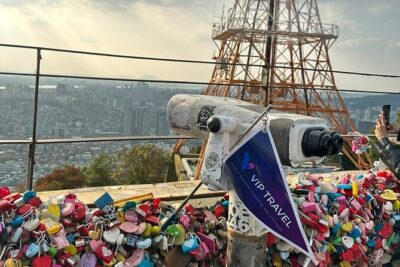
Best Seoul City Tour (Gyeongbokgung Palace,Insadong,Namsan Tower)
Read our review →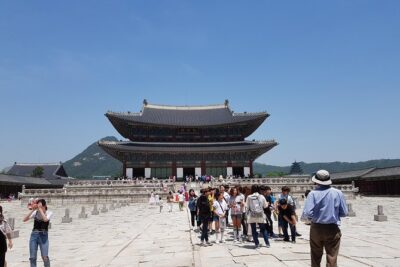
Seoul City Sightseeing Tour Including Gyeongbokgung Palace, N Seoul Tower, and Namsangol Hanok Village
Read our review →Gyeongbok Palace, Bukchon Village, and Gwangjang Tour
Read our review →
Seoul Highlights: Gyeongbok Palace, Insadong & N Seoul Tower
Read our review →
Seoul City Half Day Tour-Gyeongbok Palace Guard Changing Ceremony
Read our review →
Browse the lists this tour appears in