
Reviewed · 3-DAY EXPERIENCES
3-Day Korea Western course by K-shuttle Tour from Seoul to Busan
The most appealing part of this 3-day route is how much of western South Korea it puts within reach without asking you to decode intercity buses or manage several hotel changes alone. You move from Seoul toward Busan by coach, stopping at Baekje royal tombs, old fortresses, Jeonju’s traditional village, memorial sites, gardens, and coastal-region attractions.
I like the comfortable door-to-door transport between sightseeing stops, and I like the way the route includes places that are awkward to connect by public transport, especially Boseong and Jinju. The guides can add real value: Justin is praised for clear information, while Mr Kim, also identified as MS, has helped with hotel check-ins, evening plans, food ideas, and onward travel.
The trade-off is the pace. This is a lot of Korea in three days, with long road stretches and fixed visit times. The meeting point at 8am can also be confusing, so arrive early, confirm the bus, and keep your passport and booking details handy.
Key points to know before booking
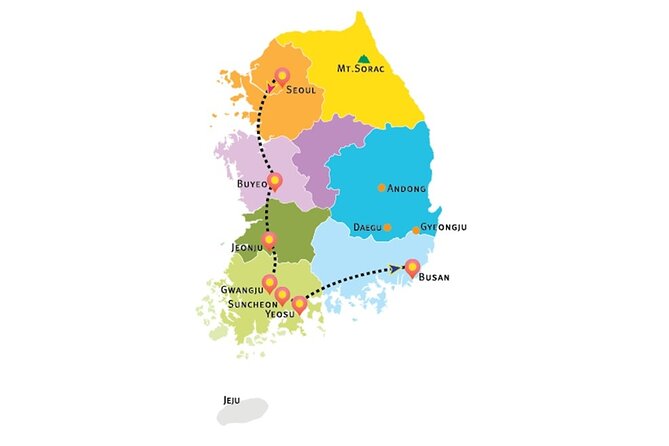
- Seoul to Busan by coach: This is a one-way touring route, not a return trip to Seoul, ending at Busan Station Plaza around 1pm on Day 3.
- Baekje sites come first: Songsan-ri Tombs, King Muryeong’s Tomb, and Gongsanseong Fortress give Day 1 a strong historical focus.
- Jeonju adds food and traditional streets: You get about two hours in Hanok Village, enough for a look around and a quick taste of local specialties.
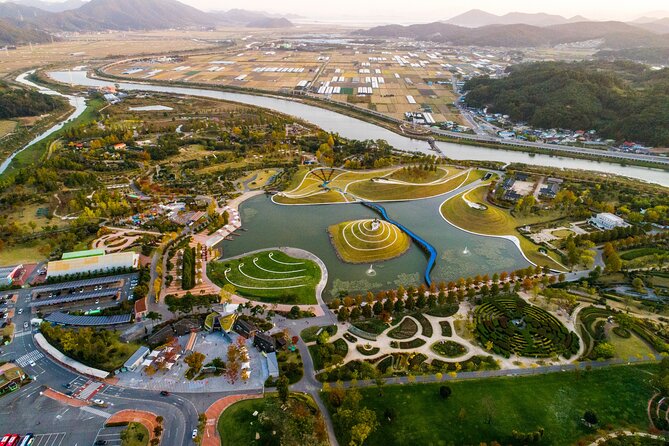
- Suncheon is the garden highlight: The large garden area includes hundreds of tree and flower species, with especially colorful displays in spring.
- Four-star hotels and breakfasts are included: Lunch, dinner, and any single-room surcharge are extra.
- Small details matter: Bring only one piece of luggage per person, note your preferred bed type when booking, and remember that at least two people are required for the tour to operate.
Why this route works for a west-to-south Korea trip
Most first visits to South Korea focus on Seoul, Gyeongju, and Busan. That is understandable, but it leaves a wide stretch of the country unexplored. This route takes you through central and southwestern areas where royal tombs, fortress walls, memorials, gardens, and traditional neighborhoods are spread far apart.
I see the tour as a practical bridge between independent travel and a fully organized group trip. You do not need to work out every regional connection, and the coach lets you carry your luggage from hotel to hotel. At the same time, the itinerary gives you free time at several stops rather than keeping you inside museums all day.
The value depends on how much effort you would otherwise spend arranging this route. At $749 per person, the price covers two nights in four-star accommodation, transport, a guide, breakfasts, and some entrance fees. You still pay for lunch and dinner, and the single-room supplement can raise the cost for solo occupants.
A group of up to 40 people is possible. That maximum is worth considering because a large group can slow down departures and make a confusing meeting point more stressful. The strongest personal touches come from the guide, not from the group size. A good guide can turn long drives into useful context and help you handle practical matters at the hotels.
A few more Seoul trips to weigh up
- Essence Korea 3days Ptivate Tour(West/East)
★ 5.0 · 5 reviews - Jeju English Private Taxi Tour(1day, 2days, 3days & 1 to 12pax)
★ 5.0 · 118 reviews - 3 days Private Taxi Tour in Jeju Island
★ 5.0 · 6 reviews
Day 1: Baekje tombs, fortress views, and Jeonju roofs
The tour starts at 8am from the parking lot beside Dongwha Duty Free near Exit 6 of Gwanghwamun subway station. The meeting address is 149 Sejong-daero in Jongno District. This is not a hotel pickup, so allow time to find the correct parking area and bus.
One traveler had trouble getting on the right bus because the tour was still new and staff were not immediately certain of the passenger list. That is a useful warning, not a reason to reject the trip. Arrive before 8am, show your booking confirmation, and ask directly for the western course to Busan. If you are using a mobile ticket, keep it open and ready.
Songsan-ri Tombs and King Muryeong’s Tomb
The first major stop is in Gongju, once an important Baekje capital. The Songsan-ri Tombs contain royal graves from the Baekje period, which lasted from 234 to 678. Ten tombs are thought to have existed, though only seven have been found.
King Muryeong’s Tomb is the best-known burial site here. It belongs to Baekje’s 25th king, who ruled from 462 to 523, and his queen. The tomb was found by accident during work to prevent flooding around nearby tombs. Its brick construction and the objects found inside gave historians valuable evidence about Baekje building methods, art, and court life.
You get about two hours here, which is generous compared with the shorter fortress visit later in the day. Take time to notice how different this site feels from the grand palaces of Seoul. The tombs are quiet, rounded earthworks, and the importance comes from what was found beneath them rather than from dramatic architecture above ground.
The tour data lists admission here as free, though the included-fee wording can vary by operating arrangements. Your guide should clarify any required entry procedure on the day.
Gongsanseong Fortress above the Geumgang River
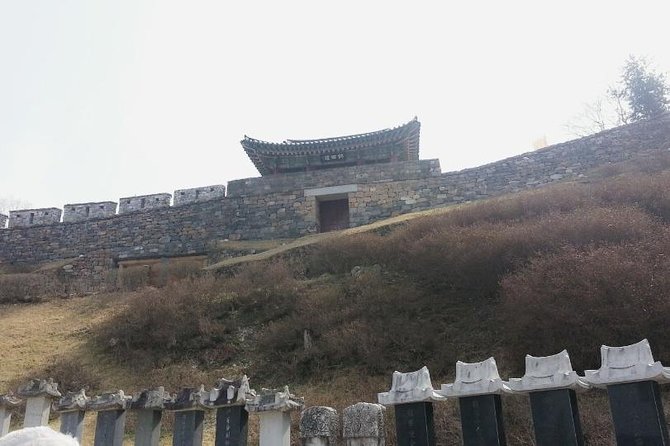
A short visit follows at Gongsanseong Fortress, another Baekje site in Gongju. This mountain castle traces the line of the old defensive settlement and gives you views toward the Geumgang riverside.
You have about an hour, so do not expect to walk every section. The trail rises, and the route toward Imnyugak Pavilion is the main reward. The pavilion is described as the largest of its type within the fortress area, and the combination of river views, slopes, and old walls makes this stop more than a quick photo break.
Wear shoes you can walk in comfortably. The itinerary does not promise a flat route, and an hour passes quickly if you want both the viewpoint and the fortress path. If you prefer detailed historical study, this may feel short. If you want a well-chosen introduction to Gongju, it is a sensible stop.
Same country, a completely different kind of day:
- Best DMZ Tour Korea from Seoul (Red Suspension Bridge Optional)
★ 5.0 · 41,422 reviews - DMZ Tour: 3rd Tunnel, Option(Suspension Bridge, Boat) from Seoul
★ 5.0 · 21,373 reviews - DMZ tour south Korea from Seoul (NK experience hall, defector)
★ 5.0 · 20,599 reviews - Seoul: DMZ Tour with Optional Suspension Bridge
★ 4.8 · 5,277 reviews
Jeonju Hanok Village
The day ends with about two hours in Jeonju Hanok Village. While much of Jeonju has modernized, this district retains traditional Korean houses with roof edges that curve upward toward the sky. The architecture is the main draw, but food gives the visit its flavor.
Jeonju is closely associated with bibimbap, and you will have a chance to seek out traditional local dishes. Food is not included, so budget separately for your meal or snack. Two hours is enough to walk the main streets and eat, but not enough for a slow, detailed exploration of every lane.
The village also includes a Hanok Life Experience Hall, where you can learn about traditional Korean living. The area is designed for visitors, so it is not an untouched old neighborhood. Still, it offers a useful look at rooflines, courtyards, food traditions, and the way historic housing has been kept within a modern city.
This is likely to be one of the most immediately enjoyable stops for first-time visitors. The setting is easy to understand, and you can make the most of the time without needing a lecture at every turn.
Day 2: Democracy, gardens, and Admiral Yi
Day 2 shifts from royal history to modern memory, plant collections, and military history. The three stops have very different moods, which keeps the day varied.
May 18th National Cemetery
The May 18th National Cemetery lies in front of Mudeungsan Mountain and commemorates people who died during the democracy movement in May 1980. Victims were carried to burial using handcarts and garbage trucks, and the cemetery was later moved and reorganized as a national memorial.
You have about two hours here, and the site deserves a quiet visit. This is not simply another historic attraction. It represents South Korea’s struggle for freedom and democracy, and May 18 became a national day of remembrance.
A guide is especially useful at a memorial like this. Without context, a visitor may see statues, graves, and buildings without understanding the events that connect them. The stop is emotionally serious, so plan for a slower pace than at Jeonju or Suncheon.
Admission is included. You should also expect the guide to set a meeting time and place clearly, since memorial grounds can feel spacious and spread out.
Suncheon Bay Garden
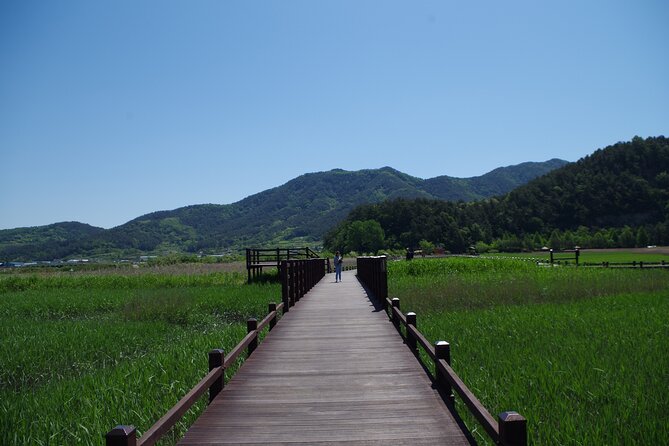
Suncheon Bay Garden covers about 1.12 square kilometers and was created as a conservation area. It contains more than 505 species of trees and 113 species of flowers, so this is a large public garden rather than a small ornamental park.
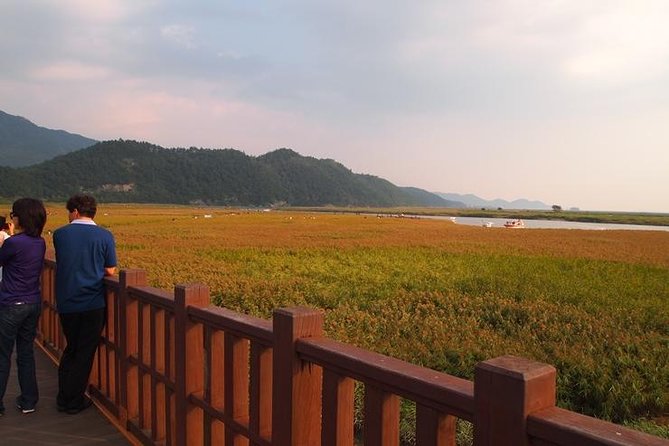
The exact experience will depend on the season. Tulips and royal azaleas are major attractions, while a nearby field of canola flowers is especially notable in May. The canola creates a broad yellow display, and tree canopies offer shade during a walk.
Two hours gives you time to see a good portion of the garden, but not every corner at a leisurely pace. Wear comfortable shoes and keep an eye on the meeting time. This is one stop where photography can easily eat into your schedule.
I like the contrast with the cemetery. After a solemn morning, the garden offers open space, flowers, and a lighter rhythm. It also shows a different side of the region, one based on conservation and public outdoor space rather than dynasties and battles.
Admiral Yi Sun-sin’s memorial site
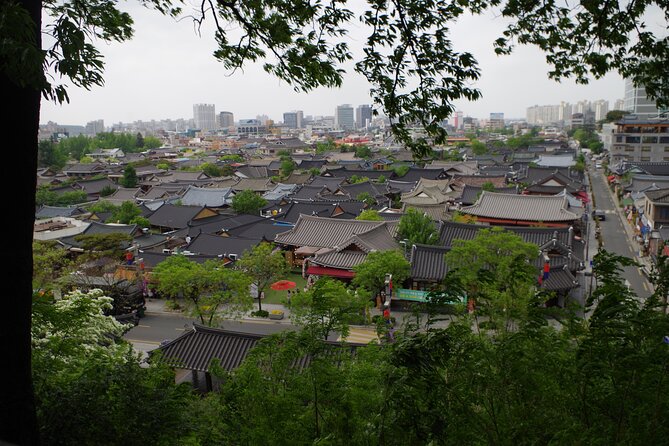
The next stop honors Admiral Yi Sun-sin, the celebrated naval commander of the Imjin War against Japan from 1592 to 1598. He chose this location as a headquarters, and the site now displays artifacts connected with his military achievements.
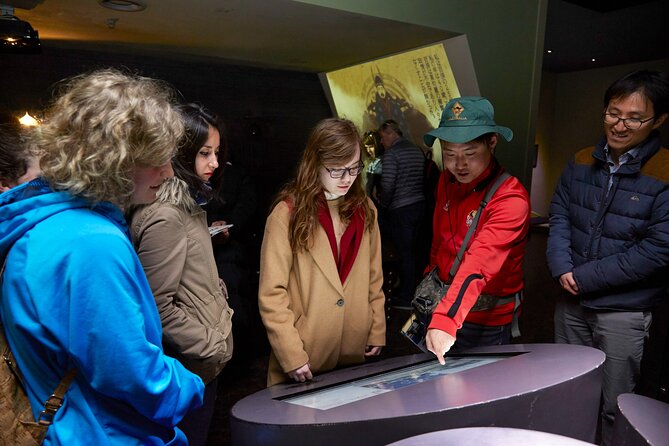
The hall itself was designated National Treasure No. 304 in 2011. You have around two hours, which should allow time to examine the indoor displays and understand why Yi Sun-sin remains such an important figure in Korean national memory.
This stop works best if you enjoy historical context. It is less about scenic wandering and more about the objects, the building, and the story of Korea’s defense during a major invasion. Ask your guide questions if the subject interests you, since the value of the visit depends heavily on how much background you want.
Day 3: Jinjuseong before the Busan finish
The final sightseeing stop is Jinjuseong Fortress, followed by the drop-off at Busan Station Plaza around 1pm. This timing is useful if you have a train, hotel check-in, or another Busan plan later in the day, but do not schedule anything too tight until you have your luggage and know the exact arrival time.
Jinjuseong Fortress
Jinjuseong has been known by several names over the centuries. It was called Geoyeolseong during the Three Kingdoms period, Chokseokseong during the Goryeo Dynasty, and eventually Jinjuseong during the Joseon Dynasty.
Its strongest historical connection is to the Japanese invasion of 1592. The fortress gives the final morning a clear military and political theme, linking it with the previous day’s visit to Admiral Yi’s memorial site.
The stop lasts about an hour. That is enough to get a feel for the walls and the site’s historical position, but it is not a long walking tour. If you enjoy fortress architecture, you may wish for more time. The short visit makes sense as part of a transfer day, since the main purpose is to introduce Jinjuseong before continuing toward Busan.
Arrival at Busan Station
The tour ends at Busan Train Station, on Jungang-daero in Choryang-dong, at about 1pm. This is a useful arrival point because it connects with rail services and places you in a central transport area.
Hotel drop-off is not included. If you are staying elsewhere in Busan, you will need to arrange the next leg yourself. The guide may be able to offer practical suggestions. Mr Kim, in particular, has helped with onward travel and hotel procedures, while Justin has been praised for sharing evening food and activity ideas.
Accommodation, meals, and luggage
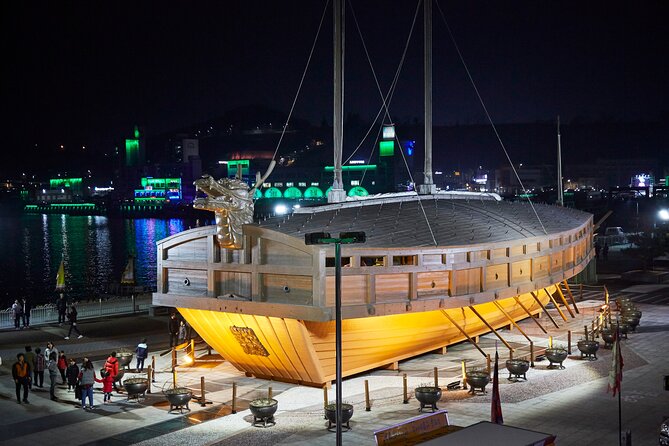
Two nights of four-star accommodation are included, along with breakfast as specified in the program. The specific hotel names are not provided, so you should not book the tour expecting a particular property or neighborhood.
The double room defaults to two separate twin beds. If you want one queen bed, note it in the special requirements field at checkout. Three people can share one double room with a pullout bed at no extra charge, but you must tell the operator in advance.
A single traveler can book, but the tour itself requires at least two people to operate. If the minimum is not reached, the operator may cancel after confirmation and offer an alternative or full refund. A single-room surcharge also applies if you want a private room.
Breakfast is covered, but lunch and dinner are not. I see this as a modest advantage for independent eaters, since you can choose local food in Jeonju and elsewhere. It also means you should keep money and time available for meals during a tightly scheduled day.
Bring only one piece of luggage per person. The vehicle compartment has limited space depending on group size, so a large suitcase may be inconvenient. Pack with the three-day route in mind and keep important items in a small day bag.
Guides, group size, and the practical side
The tour may use a multilingual guide, and the named guides associated with the experience include Justin and Mr Kim, also listed as MS. Their role matters here because the route crosses several cities and historical periods. A good explanation helps connect Baekje tombs, Joseon fortresses, the 1980 democracy movement, and the Imjin War.
Guides also handle the unglamorous parts of touring. Help with hotel check-in, evening plans, food choices, and onward transport can save you time when you are tired after a full day on the road.
The group can reach 40 people, so the atmosphere may range from personal to quite busy. Confirm the bus and meeting point carefully on Day 1. The early confusion reported by one passenger is the clearest weakness in the operation, especially for someone who does not speak Korean.
Children must be accompanied by an adult. Children aged 3 to 5 receive the child price only when sharing a bed with an adult. If they need their own bed, the full adult price applies.
Is $749 a fair price?
I would judge the price against the difficulty of arranging this route yourself. The tour covers transport from Seoul to Busan, two hotel nights, breakfasts, a professional guide, and some admissions. It also reaches places such as Boseong and Jinju that can take considerable planning by public transport.
The price is less attractive if you already plan to use Korea’s train network, prefer hostels or budget hotels, or want to spend several days in just one city. You also need to add meals and possibly a single-room charge.
For a first visit, the strongest value is time saved. You see several regions without handling every connection, while the guide supplies historical and practical context. The weaker side is flexibility. You cannot easily linger at Jeonju, Suncheon, or Jinjuseong if one place captures your interest.
The average booking lead time is about 34 days. That suggests planning ahead is sensible, particularly if you need a specific room arrangement or are traveling with an odd-numbered group.
Who should book this 3-day route?
I would choose this tour if you want a guided introduction to western Korea and need to finish in Busan. It suits first-time visitors, people traveling with limited time, and anyone who finds regional bus connections intimidating.
It is also a good match for history-minded visitors. The route covers Baekje royal burials, fortress sites, the Japanese invasions, and South Korea’s democratic movement. Jeonju’s food and Suncheon’s gardens keep the schedule from becoming a string of monuments.
I would think twice if you want slow mornings, long meals, or detailed time at every site. The route is busy, and the coach schedule controls your day. Independent visitors who are comfortable with Korean rail and bus travel may prefer choosing fewer destinations and staying longer.
FAQ
Where does the tour begin?
It begins at 8am at the parking lot next to Dongwha Duty Free near Exit 6 of Gwanghwamun subway station in Seoul. The listed address is 149 Sejong-daero, Jongno District.
Where does the tour end?
The tour ends at Busan Train Station Plaza at about 1pm on Day 3. Hotel drop-off in Busan is not included.
How long is the tour?
The experience lasts approximately three days and includes two nights of accommodation.
What accommodation is included?
Two nights in four-star accommodation are included. The specific hotel names are not provided. Double rooms default to two separate twin beds, while a queen bed can be requested during checkout.
Are meals included?
Breakfast is included according to the program. Lunch and dinner are not included.
Is transport included?
Yes. Coach transfer between the destinations is included, along with a professional guide.
Can one person book the tour?
One person may make a booking, but at least two people are required for the tour to operate. If that minimum is not met, an alternative or full refund may be offered.
How much luggage can I bring?
You should bring only one piece of luggage per person because vehicle storage depends on the group size. A small day bag for valuables and daily needs is also practical.
Should you book it?
Book this tour if your priority is seeing the western side of South Korea without spending hours arranging regional transport. The route gives you a useful mix of royal sites, traditional homes, gardens, memorials, and fortresses, then delivers you to Busan in time for an afternoon plan.
Go in with realistic expectations: this is a fast moving introduction, not a slow cultural retreat. Confirm the bus at the Seoul meeting point, request your preferred bed arrangement, pack lightly, and keep meals flexible. With those details handled, the $749 price can make good sense for a short, well-supported trip from Seoul to Busan.
Just added around Seoul
- Gyeongbokgung palace,seoul with gigibebe hanbok rental★ 4.5 · 12 reviews
- Private tour guide service in Seoul, Korea★ 5.0 · 6 reviews
- Alpaca, Nami, Petite Fr, Italian Village, Garden of Morning Calm★ 3.5 · 5 reviews
- Gyeongju UNESCO Sites Tour by KTX train; The Museum Without walls★ 4.5 · 11 reviews
- Private day trip to Korean Folk Village & Dae Jang Geum Park★ 5.0 · 7 reviews
- Private tour Lotte World,Tower,Aquarium(All Tickets are included)★ 5.0 · 12 reviews
- Full Day Private Seoul Tour for foodies★ 5.0 · 3 reviews
- Seoul Private Custom Walking Tour with A Guide (Private Tour)★ 4.5 · 28 reviews
3-Day Experiences, compared.
Jeju English Private Taxi Tour(1day, 2days, 3days & 1 to 12pax)
Read our review →
3days Private Free Schedule Tour a lot of Experience Driver
Read our review →
All inclusive Jeju island English private taxi tour(1 to 3days)
Read our review →
Browse the lists this tour appears in