
Reviewed · COOKING CLASSES
K-food cooking Japchae Mandu Tteokbokki & Fishcake
Seoul has plenty of food to eat, but this class lets you make four of its most familiar dishes in one sitting: japchae, mandu, tteokbokki, and fishcake. I like the ready-to-use ingredients and calm, small-group setup. I also like the market visit, which turns a cooking lesson into a practical guide to Korean snacks and seasonings.
The main thing to consider is the price: $81 per person is not cheap for a two-hour activity. You are paying for instruction, ingredients, tools, dessert, packaging, and a market tour, so the value is strongest if you want hands-on cooking rather than just a meal. The class begins at 5:30 pm, and the market portion is not offered on the second and fourth Sunday of each month.
Four Korean dishes in one compact class
- Four familiar dishes: Make japchae, tteokbokki, fishcake, and mandu in one session.
- A meal you help create: Arrange the finished food, photograph it, and eat it together.
- Seasonal Korean sweets: Try treats such as yakgwa, wind rice cake, and sesame rice cake, depending on the season.
- Small group size: The class accepts a maximum of six people, which allows for more direct help.
- Market shopping practice: Visit four floors of an indoor supermarket across the street for about 30 minutes.
- Useful tax-refund tip: Bring your passport if you plan to seek an immediate refund on qualifying purchases over 30,000 won including VAT.
Why this Seoul food class works well
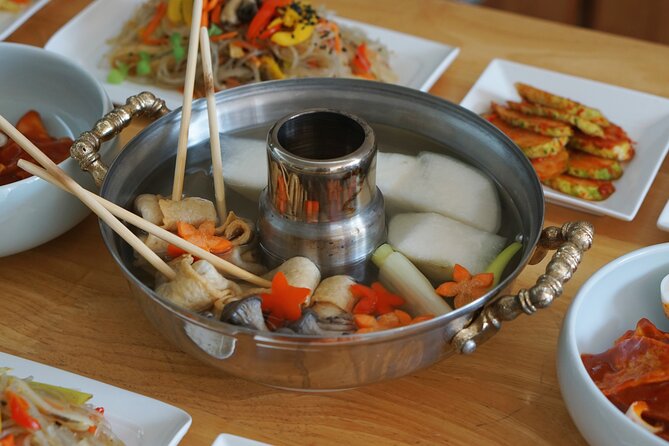
The best feature is its range. Japchae gives you a savory noodle dish, tteokbokki brings the familiar chewy rice cakes, fishcake adds a common street-food element, and mandu offers the pleasure of shaping or preparing dumplings. You are not spending two hours on one recipe and then leaving hungry.
That variety also gives you a better feel for everyday Korean food. These are not rare restaurant specialties reserved for formal occasions. They are dishes you will see in markets, casual restaurants, snack shops, and home kitchens across Korea. Learning how they fit together on one Korean table helps you recognize them later during your trip.
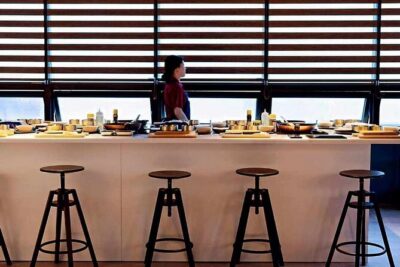
I particularly like that everything is prepared before the class begins. That saves time and keeps the session focused on the enjoyable parts of cooking. It also helps if you are new to Korean ingredients and do not want to spend the first half-hour wondering which bowl, tool, or sauce comes next.
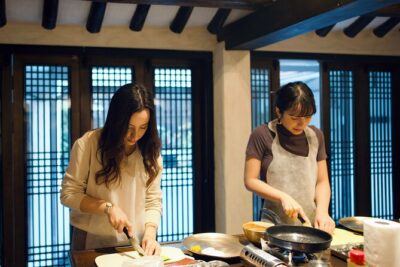
The group cap of six matters. A large cooking class can turn into a demonstration where you watch someone else do the work. Here, the small format should make it easier to ask questions, get help with a recipe, and keep your own station moving. If the group happens to be very small, you may receive especially close instruction. Jenny is one instructor associated with the experience, and she has been described as calm and pleasant.
A few more Seoul trips to weigh up
- Local Home Korean Cooking Class & Market Adventure in Seoul
★ 5.0 · 1,024 reviews - Master Korean traditional cooking with a Kimchi chef
★ 5.0 · 385 reviews - Seoul: Korean Cooking Class at a Local Home and Market Tour
★ 5.0 · 348 reviews
Meeting at 5:30 pm in Mapo-gu
The meeting point is 199 Baekbeom-ro in Mapo-gu, Seoul. The area is near public transportation, but the information provided does not specify a particular subway exit or bus stop, so check the exact meeting instructions after booking and allow time to find the studio.
A 5:30 pm start is useful for a few reasons. You can spend the day sightseeing, then cook dinner rather than fitting the activity into the middle of your schedule. The timing also leads naturally into an evening market visit and shopping stop.
The total activity lasts about two hours. That is long enough for four dishes and dessert, but it is still a compact commitment. You will not lose an entire afternoon to the class. On the other hand, you should expect a fairly active session, especially if you want to take careful photographs of the finished table.
The mobile ticket is convenient. Keep it accessible on your phone, and make sure you have the correct address before setting out. The activity ends back at the meeting point after the cooking and market visit.
Cooking japchae, mandu, tteokbokki, and fishcake
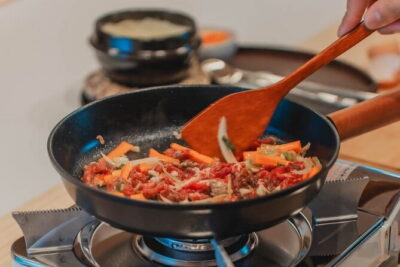
The cooking portion centers on four popular K-foods. You will work with the provided ingredients and tools, then package the food as part of the experience. Since the class description does not give a minute-by-minute recipe sequence, the exact order and amount of hands-on work may vary.
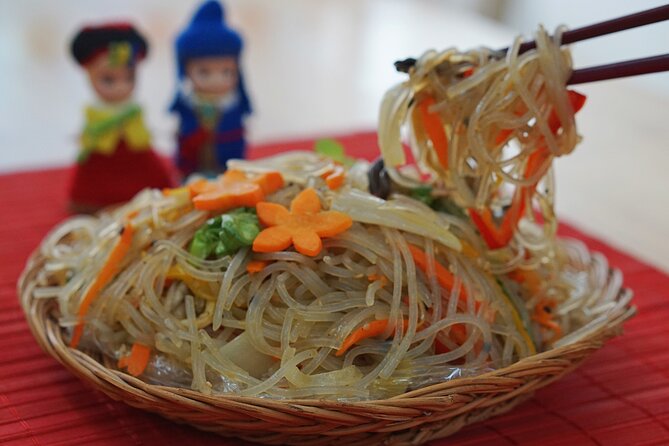
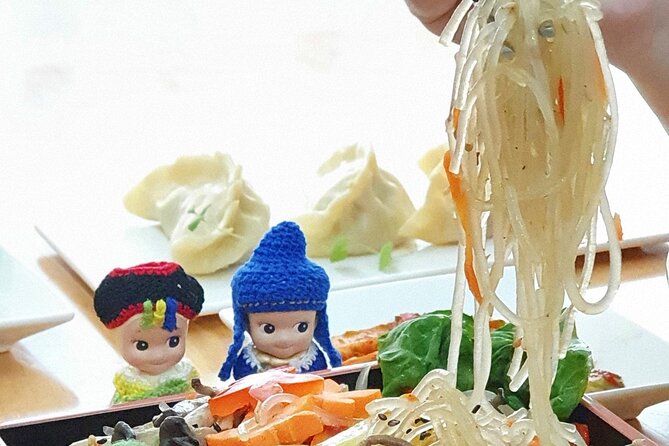
Japchae is the dish that gives the table its noodle foundation. Korean glass noodles are typically paired with vegetables and seasoning, and the finished dish is both filling and easy to recognize later in Korea. For a first cooking class, it is a good choice because it shows how a simple noodle dish can become a complete side or main dish.
Tteokbokki brings the most obvious street-food connection. Its chewy rice cakes and sauce make it instantly familiar to anyone who has seen Korean food videos or visited a snack stall. Preparing it in class gives you a better sense of the texture and seasoning than simply ordering a plate.
Fishcake is another everyday Korean favorite. It often appears alongside tteokbokki, so preparing both together makes practical sense. The pairing also gives you a small taste of the casual food culture found in Korean markets and street stalls.
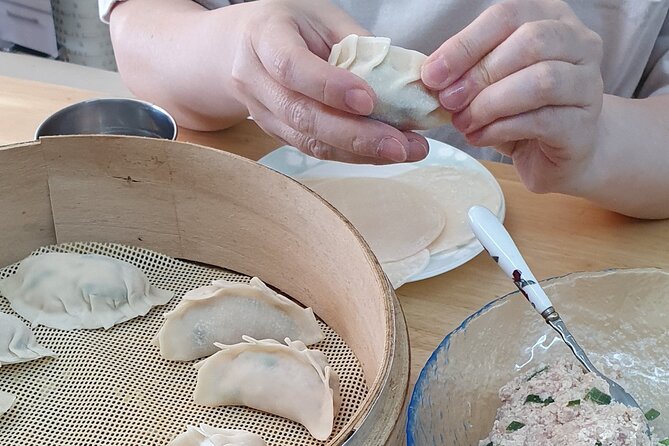
Mandu adds a different kind of cooking task. Dumplings require attention to shape and filling, and they are useful dishes to learn because you can make them again at home. One person who had a private session with Jenny said the four dishes felt manageable enough to prepare independently afterward. That is an important point for anyone choosing between a cooking class and a standard food tour.
The class includes all ingredients, tools, and packaging. Alcoholic drinks are not included, so plan on a nonalcoholic meal unless you make separate arrangements. The supplied information does not promise a specific beverage.
Building a Korean table, then taking photographs
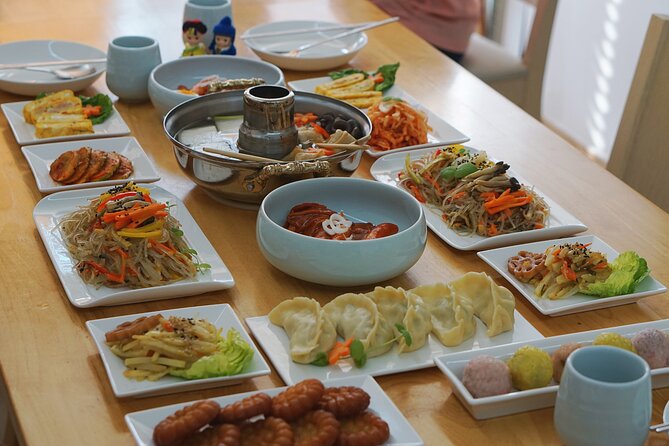
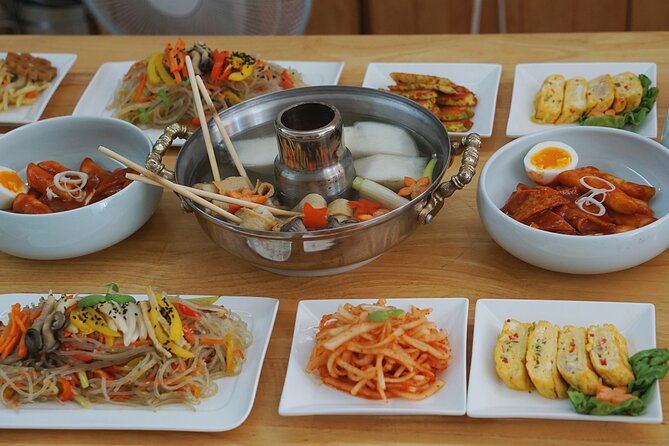
After cooking, you arrange the dishes as a Korean table. This is more than a quick plate of food. Presentation matters here, and you have time to set things out neatly and photograph the result for your social media.
That photo break is a practical touch. Many cooking classes rush the eating portion, leaving you with a hot plate and no time to record what you made. Here, the presentation is part of the experience. You can photograph the full spread before everyone starts eating, then enjoy the meal together.
The meal should feel substantial because it includes four prepared foods rather than a small tasting. Still, the exact serving sizes are not specified, so I would not book it solely on the promise of a large dinner. The real value is the combination of cooking, eating, instruction, and take-home packaging.
The shared meal also makes the activity social without requiring a large group. With no more than six people, you should have a chance to compare results and ask about the dishes. Solo participants may find the atmosphere especially personal when the group is small.
Same country, a completely different kind of day:
- Best DMZ Tour Korea from Seoul (Red Suspension Bridge Optional)
★ 5.0 · 41,422 reviews - DMZ Tour: 3rd Tunnel, Option(Suspension Bridge, Boat) from Seoul
★ 5.0 · 21,373 reviews - DMZ tour south Korea from Seoul (NK experience hall, defector)
★ 5.0 · 20,599 reviews - Seoul: DMZ Tour with Optional Suspension Bridge
★ 4.8 · 5,277 reviews
Seasonal desserts with a Korean story
The meal includes seasonal Korean desserts such as yakgwa, wind rice cake, and sesame rice cake. The selection changes with the season, so you should not expect all three on every date.
This dessert course adds cultural context that a simple recipe lesson might miss. You taste the sweets while hearing explanations about them and their history. That makes the end of the meal feel like part of the class rather than an afterthought.
Yakgwa is a traditional honey cookie, while rice cakes offer a different texture and style of sweetness. The names alone give you useful vocabulary for future bakery, market, and café visits. If you are not used to Korean desserts, the changing selection is a reason to ask questions rather than assume every sweet will be familiar.
The dessert portion is also a good balance to the savory food. After four dishes, a small seasonal sweet gives the class a proper finish without turning the activity into another full meal.
Across the street to a four-floor indoor market
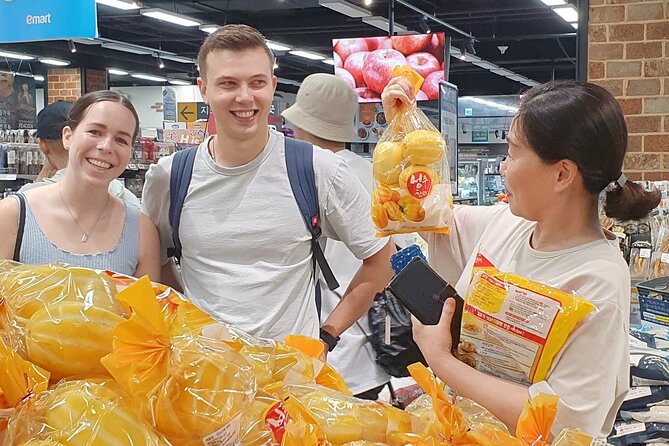
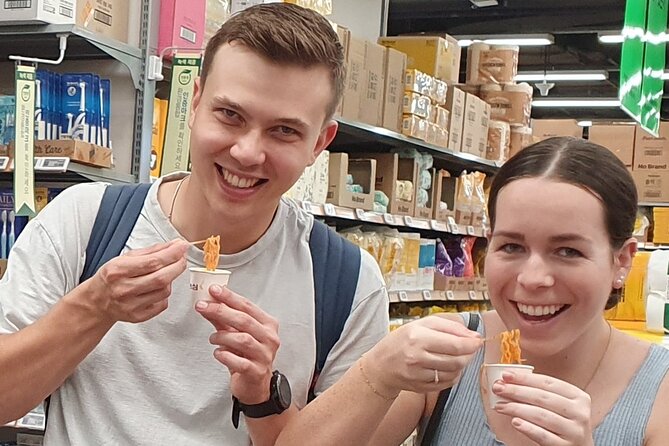
After cooking and eating, you visit a large indoor supermarket directly across the street from the studio. The market tour lasts about 30 minutes and covers four floors.
This is where the experience becomes especially useful for the rest of your Seoul stay. You can see groceries, packaged snacks, seasonings, and the large kimchi refrigerators used in Korean homes. A market can be confusing when you are alone, particularly when labels are unfamiliar and shelves carry several similar products.
The instructor helps you make buying decisions, especially if you want Korean snacks or a wide range of seasonings. This is not just a quick walk past shelves. You get to see the ingredients used during the class and understand how they appear in a real Korean shopping setting.
You may also have the chance to buy items to take home. If your purchase exceeds 30,000 won including VAT, you can receive an immediate tax refund when you bring your passport and follow the purchase process. The refund condition is specific, so do not leave your passport at the hotel if you expect to shop.
The market visit is not held on the second and fourth Sunday of each month because the supermarket is closed. The cooking portion may still be the main reason to book, but check your date carefully if the market is important to you.
Is $81 a fair price?
At $81, this class costs more than buying tteokbokki or japchae at a casual Seoul restaurant. The comparison is not quite fair, though, because you are paying for several parts at once:
- A two-hour cooking activity
- Four dishes
- Ingredients and equipment
- A sit-down meal
- Seasonal desserts
- Packaging
- Instruction in a group of no more than six
- A 30-minute supermarket tour
I see the price as reasonable for someone who wants to learn and shop, not simply eat. The market portion helps justify the cost because it gives you a chance to understand Korean products and purchase ingredients or snacks with guidance.
The value is weaker if you are short on money, uninterested in cooking, or mainly looking for a fast dinner. Seoul offers cheaper ways to sample the same general foods. You should book this when the hands-on element and the market advice matter to you.
A private or nearly private session may also improve the value. The class accepts six people, but a smaller group means more direct attention. One session had only one participant, which allowed close instruction and made it easier to feel confident about cooking the dishes at home.
Who should book this experience?
I would recommend it to first-time visitors who want an easy introduction to Korean food without spending several days figuring out unfamiliar markets on their own. It also suits home cooks who want recipes they can try after returning home.
Families should read the age rule carefully. The activity is intended for children aged 10 and older. Children under 10 are allowed only when accompanied by a guardian, so confirm the arrangement before booking if you are traveling with younger children.
The experience is also a good fit for solo participants. The small maximum group prevents the class from feeling like a crowd, and a one-person booking may result in more individual attention, subject to availability.
I would be more cautious about booking it for someone who dislikes structured activities. This is a scheduled class with a set start time, a set menu, and a market visit. You do not choose the dishes or wander freely through the supermarket.
Booking, age rules, and cancellations
Confirmation is normally received at booking. If you book within two days of the activity, confirmation may take up to 48 hours and depends on availability.
Free cancellation is available if you cancel at least 24 hours before the 5:30 pm start time. Inside that 24-hour window, you receive no refund and changes are not accepted. The cut-off uses Seoul local time, so check the date and time carefully if you are booking from another country.
The experience also requires a minimum number of participants. If the provider cancels because that minimum is not reached, you can choose another date or activity, or receive a full refund.
Should you book the cooking class?
Book it if you want to cook four recognizable Korean dishes, eat what you make, and learn how to shop for Korean ingredients afterward. The small group, prepared materials, seasonal dessert, and four-floor market visit give it more substance than a basic recipe demonstration.
Skip it if you want the cheapest possible meal or if the second and fourth Sunday market closure removes an important part of the appeal. At $81, this is best treated as a practical food lesson with dinner included, not as a bargain restaurant replacement. For a curious first-time visitor, though, it offers a useful evening in Seoul and skills you can carry into your own kitchen.
FAQ
Where does the cooking class meet?
The meeting point is 199 Baekbeom-ro, Mapo-gu, Seoul, South Korea. The area is near public transportation.
What time does the activity start?
The class starts at 5:30 pm.
How long does the experience last?
The activity lasts approximately two hours.
Which Korean dishes do you make?
You make japchae, tteokbokki, fishcake, and mandu.
Are ingredients and cooking tools included?
Yes. All materials, tools, and packaging are included.
Are drinks included?
Alcoholic beverages are not included.
Is the supermarket tour held every time?
No. The market tour is not held on the second and fourth Sunday of each month because the supermarket is closed.
Can children join the activity?
The activity is for children aged 10 and older. Children under 10 are allowed when accompanied by a guardian.
How many people can join?
The maximum group size is six people.
How does cancellation work?
You can cancel at least 24 hours before the local start time for a full refund. Cancellations or changes made within 24 hours are not accepted and are not refunded.
More Food in Seoul
- Seoul Street Food Market Tour
★ 5.0 · 1,226 reviews - Seoul: Night Market Food Tour with Local Guide
★ 4.9 · 943 reviews - Downtown Seoul Guided Food & Market Tour with 8+ Local Tastings
★ 5.0 · 580 reviews - Seoul Night Palace & Market Food Tour with Vehicle
★ 5.0 · 275 reviews
Just added around Seoul
- Gyeongbokgung palace,seoul with gigibebe hanbok rental★ 4.5 · 12 reviews
- Private tour guide service in Seoul, Korea★ 5.0 · 6 reviews
- Alpaca, Nami, Petite Fr, Italian Village, Garden of Morning Calm★ 3.5 · 5 reviews
- Private tour Lotte World,Tower,Aquarium(All Tickets are included)★ 5.0 · 12 reviews
- Gyeongju UNESCO Sites Tour by KTX train; The Museum Without walls★ 4.5 · 11 reviews
- Private day trip to Korean Folk Village & Dae Jang Geum Park★ 5.0 · 7 reviews
- Full Day Private Seoul Tour for foodies★ 5.0 · 3 reviews
- Seoul Private Custom Walking Tour with A Guide (Private Tour)★ 4.5 · 28 reviews
Cooking Classes, compared.
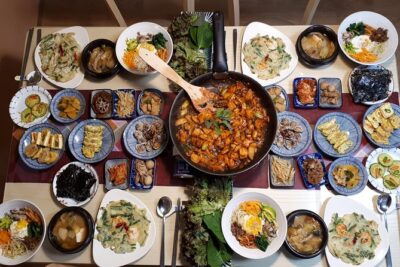
Local Home Korean Cooking Class & Market Adventure in Seoul
Read our review →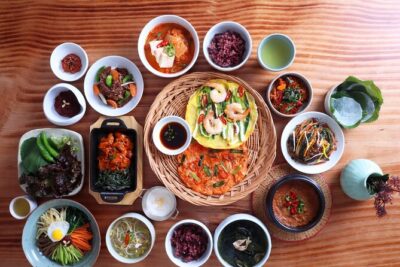
Master Korean traditional cooking with a Kimchi chef
Read our review →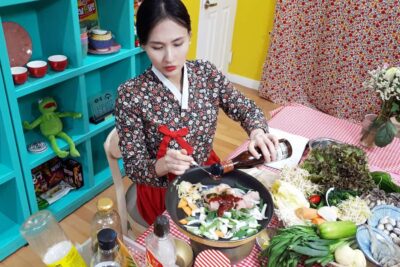
Korean Cooking Class at a Local Home and Market Tour
Read our review →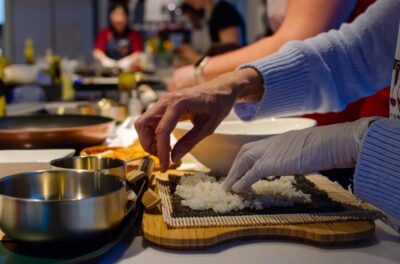
Korean Cooking Class with Grocery Shopping at Seoul Local Market
Read our review →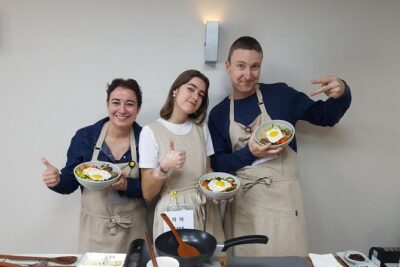
Royal Seoul Cooking Class in a 100-Year-Old Hanok
Read our review →Browse the lists this tour appears in