
Reviewed · COOKING CLASSES
Korean Grandma Cooking Class l Gimbap & Kimchi Pancake l Seoul
The most memorable part of this Seoul food class is not just the meal. It is entering Grandma Sharon’s home, drinking tea at her table, and learning how everyday Korean cooking fits into family life. I like the personal setting, and I like that you make your own gimbap and kimchi pancakes instead of watching a chef work from a distance.
The main consideration is the meeting point in Ui-dong, Gangbuk-gu, rather than a central Seoul sightseeing area. You should allow time to reach 92 Ui-dong for the 11:00 a.m. start. The $52 price feels fair for a private class, but it is best for people who value conversation and local contact as much as food.
Key Points at a Glance
- Cook two Korean staples yourself: Roll your own gimbap and make a kimchi pancake using Grandma’s kimchi.
- Visit a real Seoul home: See an everyday Korean living space, kitchen arrangements, and family items.
- Meet Grandma Sharon: Her patient teaching style and good English make the class workable for families.
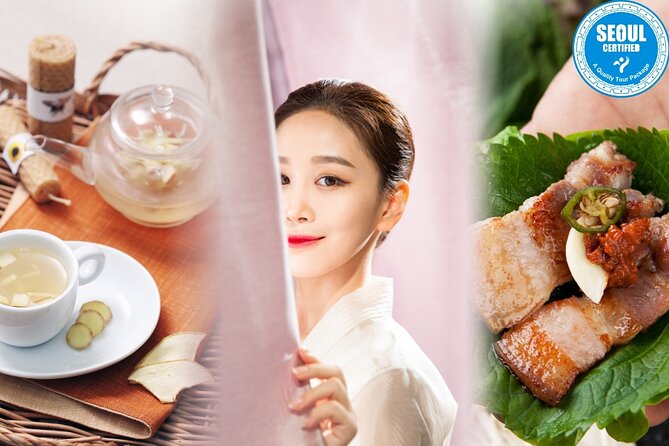
- Share tea before cooking: The welcome drink gives you time to settle in and meet the people in your private group.
- Private activity for your group: Only your party participates, which makes the pace more personal.
- Plan for two and a half hours: The class begins at 11:00 a.m. and finishes back at the meeting point.
Why This Seoul Cooking Class Feels Personal
Many cooking classes place you at a long counter with a dozen other people. This one begins differently. You go to a Korean home, meet Grandma Sharon, and get a look at the way people live rather than entering a purpose-built cooking school.
That change of setting matters. A home tells you things a restaurant kitchen cannot. You may notice how the living spaces connect, how the kitchen is arranged, or which family objects have been kept over time. The home tour is brief, but it gives the food a daily context. You are not simply preparing Korean dishes as a set of recipes. You are seeing where those dishes belong.
I also like the scale of the activity. It is private, so only your group takes part. You can ask questions without competing with a large class, and Grandma can give more attention to your rolling, cutting, or pancake-making. That makes this a good choice for families and small groups who want a relaxed visit.
The class has received a top rating, and the strongest practical point is Grandma Sharon’s teaching. Her English is good, and her patience was especially useful for children aged 9 and 11. That does not mean every child will enjoy every cooking task, but it does suggest that younger cooks can take part rather than simply watch.
A few more Seoul trips to weigh up
- Local Home Korean Cooking Class & Market Adventure in Seoul
★ 5.0 · 1,024 reviews - Master Korean traditional cooking with a Kimchi chef
★ 5.0 · 385 reviews - Seoul: Korean Cooking Class at a Local Home and Market Tour
★ 5.0 · 348 reviews
Arriving at Grandma’s House in Ui-dong
The meeting point is listed as 메리츠화재연수원92 Ui-dong, Gangbuk-gu, Seoul, South Korea. The activity starts at 11:00 a.m. and ends back at this same meeting point.
The location is near public transportation, but the information provided does not name a specific subway station, bus route, or walking time. I would check the route carefully before the morning of the class. Gangbuk-gu is not the same as meeting in the middle of the major central sightseeing districts, so this is one part of the plan you should not leave until the last minute.
Arriving on time is important for a home visit. A commercial attraction can often absorb a late arrival. A small private class has a set welcome, tour, and cooking schedule. Give yourself a margin for finding the entrance and meeting point.
Once you arrive, the first task is simply getting comfortable. This is not a rushed food stop. The class is designed to introduce you to a home and a person before putting ingredients on the table.
Welcome Tea and a Look Inside Korean Daily Life
Grandma begins with welcome tea. It is a small touch, but it sets the right pace. You can meet your group, settle in, and start talking before the cooking begins. If you are traveling with children, this also gives them time to adjust to a new place before handling food.
The home tour follows. Grandma shares parts of her living space, traditional kitchen arrangements, and possibly family heirlooms. The exact items can vary, so I would treat this as a personal introduction rather than a formal museum-style tour.
This section may be the most useful part for visitors who want more than a recipe. Korean food is tied to the way people eat at home, prepare ingredients, and share meals. A home setting helps you understand that food does not exist separately from family routines.
You should also keep expectations sensible. This is a short visit within a two-and-a-half-hour class, not a full architectural tour or a detailed history lesson. Its value comes from the direct contact and the ordinary details Grandma chooses to show you.
Making Gimbap One Roll at a Time
The first cooking project is gimbap. Grandma teaches you how to make it in a Korean home-style way, and you prepare your own roll.
Gimbap rewards careful hands more than fancy equipment. You need to manage the filling, keep the roll together, and cut it neatly enough to eat. A teacher can show you the pressure and movement that are hard to learn from a recipe alone. The point is not to produce a perfect restaurant roll. It is to understand the method well enough to repeat it later.
Making your own gimbap also gives children a clear job. They can take part in arranging ingredients and rolling the seaweed and rice. The patient teaching style described for Grandma Sharon is a real advantage here, since first attempts can be untidy.
The class does not list every filling or ingredient, so you should not arrive expecting a particular combination. What is clear is that gimbap is taught as a hands-on dish. You are not merely tasting a finished plate.
I like this part because it connects cooking with memory. After returning home, you may remember the shape of the roll, the feel of the rice, and Grandma’s instructions more clearly than you would remember a dish served to you at a restaurant.
Same country, a completely different kind of day:
- Best DMZ Tour Korea from Seoul (Red Suspension Bridge Optional)
★ 5.0 · 41,422 reviews - DMZ Tour: 3rd Tunnel, Option(Suspension Bridge, Boat) from Seoul
★ 5.0 · 21,373 reviews - DMZ tour south Korea from Seoul (NK experience hall, defector)
★ 5.0 · 20,599 reviews - Seoul: DMZ Tour with Optional Suspension Bridge
★ 4.8 · 5,277 reviews
Turning Grandma’s Kimchi Into a Pancake
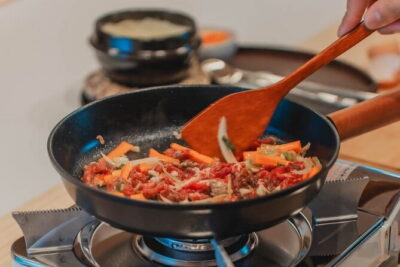
The second dish is kimchi pancake. You taste Grandma’s kimchi, then use it to make the pancake yourself.
Kimchi pancake is a practical class dish because the flavor is familiar to anyone who has tried kimchi, but the cooking process is simple enough to follow in a short session. You get to see how a fermented Korean staple becomes a crisp, savory meal at the pan.
This is also where Grandma’s own cooking matters most. The class uses her kimchi, not just a generic ingredient taken from a supermarket shelf. You can taste it before cooking and see how its flavor works in the batter.
The information does not specify the exact recipe, cooking surface, or portion size. That is worth keeping in mind if you want a technical master class. This experience is better understood as a personal introduction to two local dishes, with Grandma guiding you through the basic process.
For many people, the pancake will be the easier dish to repeat at home. Gimbap takes practice to roll neatly. Kimchi pancake gives you a more forgiving way to use kimchi in your own kitchen.
Sitting Down to Eat What You Made
When the cooking is finished, you sit together and share the dishes. That meal is the natural payoff, but it is not the only point of the class. Eating at the same table gives you time to talk with Grandma and the rest of your private group.
You can share stories, ask about the food, and take a picture with Grandma. The photo is a simple keepsake, yet it fits the character of the visit. You are leaving with a memory of a person and a place, not only an image of a plate.
The shared meal may also help you judge the class honestly. You get to taste what you prepared, so you can see which parts worked and which parts need more practice. If your gimbap is a little loose or your pancake is not shaped like a restaurant version, that becomes part of the fun rather than a problem.
The family focus is especially useful for parents. A child who finds a standard food tour too passive can take part here. One family with children aged 9 and 11 found the experience memorable, and the combination of patient instruction, a home visit, and a finished meal explains why.
What $52 Means in Practical Value
At $52 per person, this is not the cheapest way to eat gimbap and kimchi pancake in Seoul. You could buy both dishes for less at a casual restaurant. The price makes more sense when you count the full experience: a private home visit, welcome tea, a tour of the living space, instruction in two dishes, the meal you prepare, and time with Grandma Sharon.
The private format is the key value. Only your group participates, so the class can feel more like a visit than a public demonstration. You are paying for access, attention, and conversation as much as for ingredients.
For a couple or small group interested in Korean food culture, $52 can be reasonable. For a large family watching every expense, the price may be harder to justify if your main goal is simply lunch. I would book it for the human connection and practical cooking lesson, not as a bargain meal.
The class lasts about two hours and 30 minutes. That is long enough to include several stages without taking up the entire day. With an 11:00 a.m. start, it can fit neatly into a day of Seoul sightseeing, though you should account for travel to and from Ui-dong.
Who Will Enjoy This Class Most
I would recommend this experience to:
- Families with children who want an activity with a clear hands-on role
- Couples and small groups interested in Korean home life
- First-time visitors looking for personal contact rather than a standard restaurant meal
- People who enjoy learning simple recipes they can try again at home
- Anyone who prefers a private class to a large group demonstration
It may be less suitable if you want advanced culinary training, a long list of dishes, or a class in a central tourist district. The focus is narrow and personal: two dishes, one home, and one host.
You should also be comfortable with a home visit. That is the central feature, not a minor detail. If you prefer a polished studio kitchen with commercial equipment, this may feel informal. If you want to see a more ordinary side of Seoul, the informality is the reason to go.
Timing, Confirmation, and Cancellation
Your booking confirmation is sent within 48 hours, subject to availability. The activity requires a minimum number of participants, so if that minimum is not met, you are offered another date or experience, or a full refund.
You can cancel up to 24 hours before the start time for a full refund. Changes or cancellations made less than 24 hours before the 11:00 a.m. start are not accepted for a refund. Since the cut-off uses Seoul local time, check the clock carefully if you are arranging the class from another time zone.
The ticket is mobile, which keeps the arrival process simple. Still, I would keep the meeting point details easy to open on your phone and allow extra time for the journey.
Should You Book Grandma Sharon’s Cooking Class?
Book this class if you want a personal Seoul experience built around food, conversation, and a real home. The strongest reasons are Grandma Sharon’s patient instruction, good English, the private setting, and the chance to prepare both gimbap and kimchi pancake yourself.
Skip it if you only want a quick lunch, a central location, or advanced cooking techniques. At $52, the value comes from the visit and the relationship, not from the amount of food alone.
For families, small groups, and curious eaters, I think the balance is very good. You leave with a meal, a few practical cooking skills, and a clearer sense of how Korean food fits into daily life.
FAQ
How much does the Korean Grandma cooking class cost?
The price is $52 per person.
How long does the experience last?
The class lasts approximately two hours and 30 minutes.
What time does the class begin?
The start time is 11:00 a.m.
Where does the activity meet?
The meeting point is 메리츠화재연수원92 Ui-dong, Gangbuk-gu, Seoul, South Korea.
Where does the activity finish?
The activity ends back at the meeting point.
Which Korean dishes will I prepare?
You will make gimbap and kimchi pancake. Grandma also serves her kimchi for the pancake.
Is this a private class?
Yes. Only your group participates in this private activity.
Can I cancel for a full refund?
Yes. You can cancel at least 24 hours before the start time for a full refund. Cancellations or changes made less than 24 hours before the start time are not accepted for a refund.
Just added around Seoul
- Gyeongbokgung palace,seoul with gigibebe hanbok rental★ 4.5 · 12 reviews
- Private tour guide service in Seoul, Korea★ 5.0 · 6 reviews
- Alpaca, Nami, Petite Fr, Italian Village, Garden of Morning Calm★ 3.5 · 5 reviews
- Private day trip to Korean Folk Village & Dae Jang Geum Park★ 5.0 · 7 reviews
- Private tour Lotte World,Tower,Aquarium(All Tickets are included)★ 5.0 · 12 reviews
- Gyeongju UNESCO Sites Tour by KTX train; The Museum Without walls★ 4.5 · 11 reviews
- Full Day Private Seoul Tour for foodies★ 5.0 · 3 reviews
- Seoul Private Custom Walking Tour with A Guide (Private Tour)★ 4.5 · 28 reviews
Cooking Classes, compared.
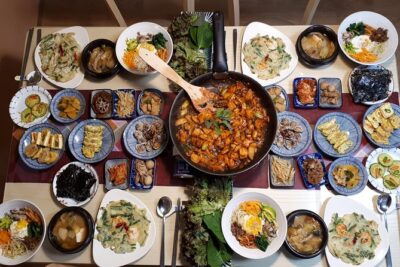
Local Home Korean Cooking Class & Market Adventure in Seoul
Read our review →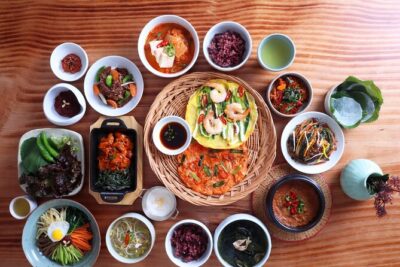
Master Korean traditional cooking with a Kimchi chef
Read our review →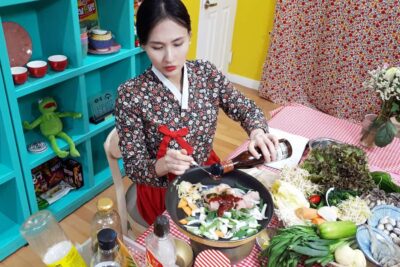
Korean Cooking Class at a Local Home and Market Tour
Read our review →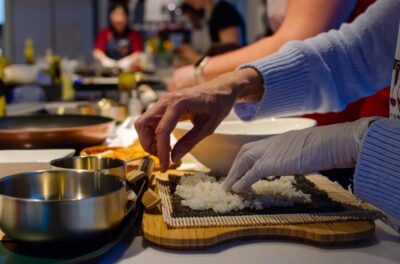
Korean Cooking Class with Grocery Shopping at Seoul Local Market
Read our review →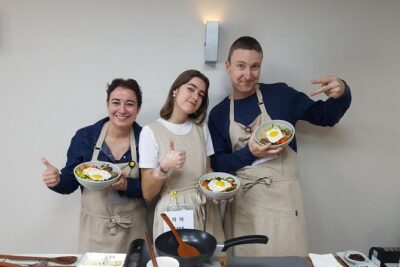
Royal Seoul Cooking Class in a 100-Year-Old Hanok
Read our review →Browse the lists this tour appears in