
Reviewed · COOKING CLASSES
Royal Seoul Cooking Class in a 100-Year-Old Hanok
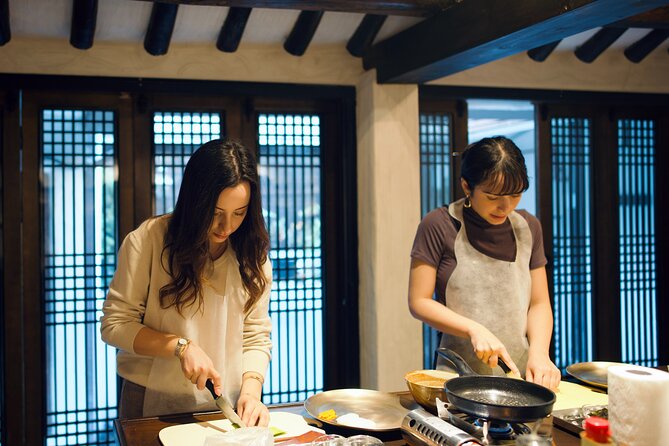
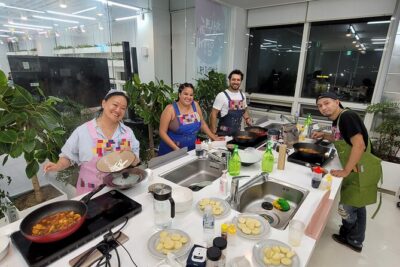
A cooking class in a 100-year-old hanok is a fine way to meet Seoul on a human scale. Instead of only looking at palaces and markets, you step into a traditional home, cook several Korean dishes with Park, also known as Ricky, and eat them in the same warm setting.
I like the small maximum of six people, which gives the chef time to help each person. I also like the cultural side: you learn why the dishes matter, not just how to chop and stir. The main consideration is the $98.98 price for about two hours and 15 minutes. That is not cheap for a cooking class, so its value depends on how much you care about the hanok setting, personal instruction, and the full meal.
Key points at a glance
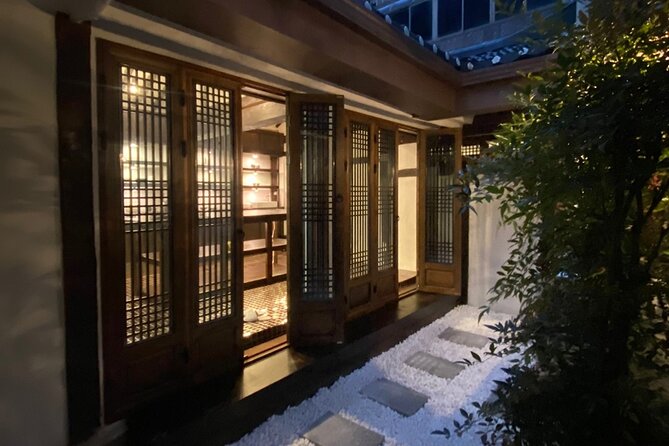
- A restored 100-year-old hanok: The class takes place in a traditional residential home in central Seoul, near Ikseon-dong.
- Four Korean dishes: Prepare LA galbi, fresh kimchi, haemul pajeon, and tangpyeongchae with guidance from a certified culinary instructor.
- Small-group teaching: The class is limited to six people, making it suitable for beginners, families, couples, and solo visitors.
- Traditional table setting: Eat your finished dishes on handmade bangjja bronzeware in a classic Korean dining room.
- Food plus cultural context: Park and Ricky explain the background of the dishes, Korean home life, and parts of the country’s past.
- A complete evening: Makgeolli and traditional desserts round out the meal, and the class finishes where it begins.
Why the hanok makes this class different
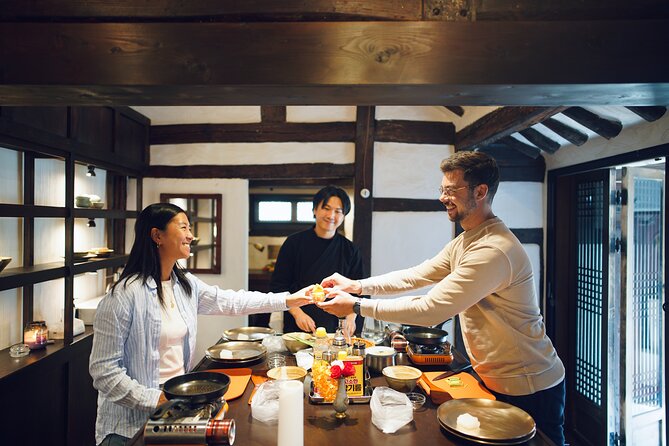
Many Seoul food activities take place in a modern studio or restaurant kitchen. This one begins at 25 Samil-daero 32ga-gil in Jongno District, inside a traditional home that has been restored for the class.
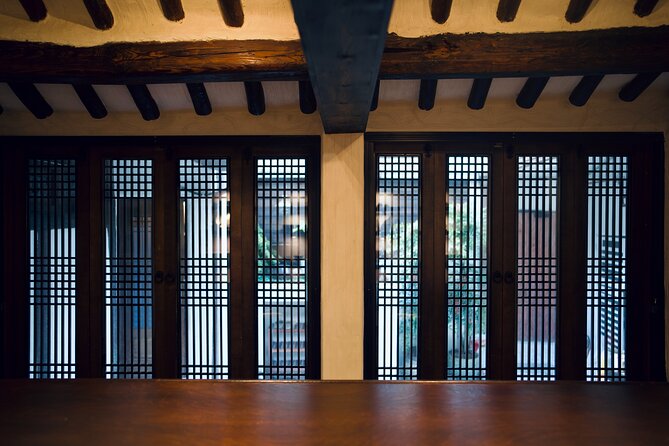
That setting changes the mood before the first ingredient is prepared. A hanok is built around a more intimate sense of space, with wood, tiled forms, and rooms arranged for daily life rather than for a large commercial operation. Here, you are not simply attending a lesson. You are entering a place designed to feel like a Korean home.
The house has been described as a former geisha residence, lovingly restored by the host. That detail adds complexity to the setting, since the building reflects Seoul’s layered past, including the difficult colonial period. Park has used the house as a place to discuss Korean food and history, which gives the class more substance than a list of recipes.
I especially like that the dining space matters as much as the kitchen. After cooking, you sit down with the food on traditional bangjja, handmade Korean bronzeware. The dishes are familiar, but the table setting helps you understand how presentation and shared meals fit into Korean food culture.
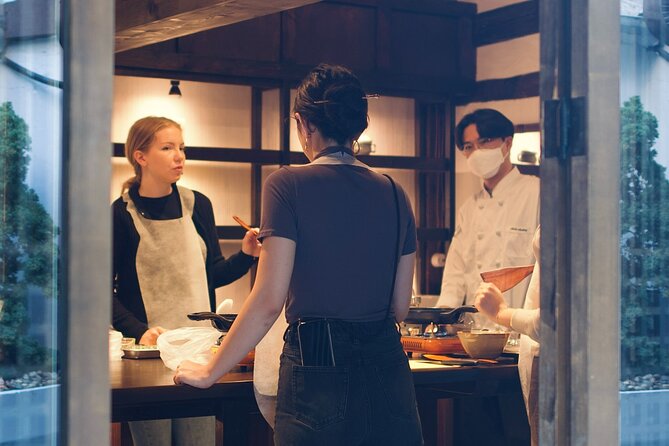
The home setting does come with a practical tradeoff. A traditional house is part of the appeal, but it may not feel as spacious or streamlined as a purpose-built cooking school. The class is intentionally cozy, not slick or expansive.
A few more Seoul trips to weigh up
- Local Home Korean Cooking Class & Market Adventure in Seoul
★ 5.0 · 1,024 reviews - Master Korean traditional cooking with a Kimchi chef
★ 5.0 · 385 reviews - Seoul: Korean Cooking Class at a Local Home and Market Tour
★ 5.0 · 348 reviews
The menu: four dishes with different personalities
The menu brings together several well-known Korean foods, and the mix is a smart one. You prepare meat, fermented vegetables, a savory pancake, and a delicate vegetable dish. That gives you a look at different Korean cooking methods in one sitting.
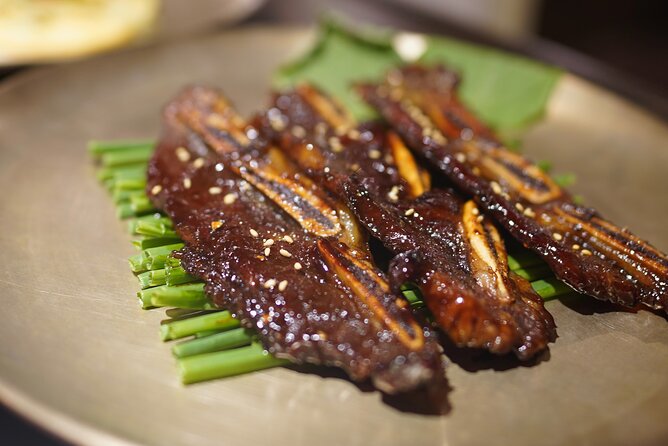
LA galbi
LA galbi is marinated beef short rib, usually cut across the bone into thin strips. It is one of the more recognizable Korean barbecue-style dishes, with a sweet and savory marinade that makes it approachable for first-time cooks.
In this class, you get to see how the meat is seasoned and prepared rather than only ordering it at a restaurant. That is useful at home because the dish feels special but is not presented as an impossible chef project.
Fresh kimchi
Fresh kimchi gives you a different view of kimchi from the mature, sour version many people know. The seasoning is lively and immediate, and the preparation shows how Korean food uses vegetables, salt, spice, and time in different ways.
This is one of the most useful recipes to take home. You can make it without needing to wait for a long fermentation process, and it helps explain why kimchi is not one single flavor or method.
Same country, a completely different kind of day:
- Best DMZ Tour Korea from Seoul (Red Suspension Bridge Optional)
★ 5.0 · 41,422 reviews - DMZ Tour: 3rd Tunnel, Option(Suspension Bridge, Boat) from Seoul
★ 5.0 · 21,373 reviews - DMZ tour south Korea from Seoul (NK experience hall, defector)
★ 5.0 · 20,599 reviews - Seoul: DMZ Tour with Optional Suspension Bridge
★ 4.8 · 5,277 reviews
Haemul pajeon
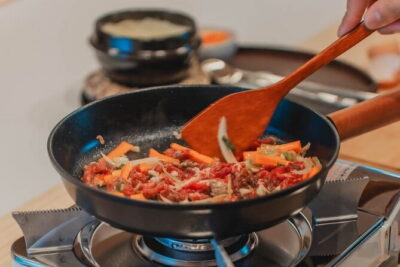
Haemul pajeon is a seafood and green onion pancake. It is a practical, sociable dish that works well in a group because you can prepare the batter, arrange the ingredients, and watch the pancake cook together.
It also gives beginners a manageable task. You are not expected to master a complicated set of restaurant techniques. Park prepares the ingredients carefully and guides the cooking so that the process stays relaxed.
Tangpyeongchae
Tangpyeongchae is a traditional Korean dish made with mung bean jelly and vegetables. It is less familiar to many international visitors than galbi or pajeon, which makes it one of the more interesting parts of the menu.
Its inclusion supports the class’s royal-cuisine theme. You are not only making the Korean foods most often found on tourist menus. You are also introduced to a refined dish with an older culinary connection.
The exact menu may vary, so check the current details when booking. The supplied description names LA galbi, fresh kimchi, haemul pajeon, and tangpyeongchae, with royal dishes and foods from different parts of Korea as the broader focus.
Park and Ricky bring the class to life
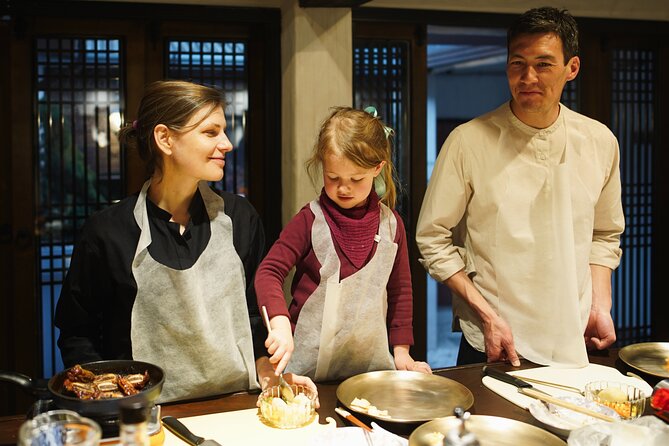
The host is referred to as Park in many descriptions and as Ricky in several comments, so you may see either name connected with the instructor. He is described as a certified chef and culinary teacher who also talks about Korean history and food traditions.
His approach appears to be a major part of the experience. Instructions are clear, the ingredients are prepared ahead of time, and the pace is described as easy to follow. That matters if you rarely cook or feel unsure about Korean ingredients.
The small format allows the instructor to spend time with individuals who need extra help. One family with children and older relatives found the teaching workable across three generations, while another participant received a stool because standing for long periods was difficult. You should still contact the provider in advance about any needs, but the class has shown some willingness to make reasonable adjustments.
Park’s role goes beyond kitchen instruction. He has discussed Korean cuisine, the history of individual dishes, colonial history, and modern Seoul. He has also offered restaurant suggestions and sent directions with photos to help people find the hanok.
That personal element is hard to price, but it is part of what separates this from a recipe video. You can ask questions, talk about food outside the formal lesson, and get a local point of view on what to eat next.
Dining on bangjja bronzeware
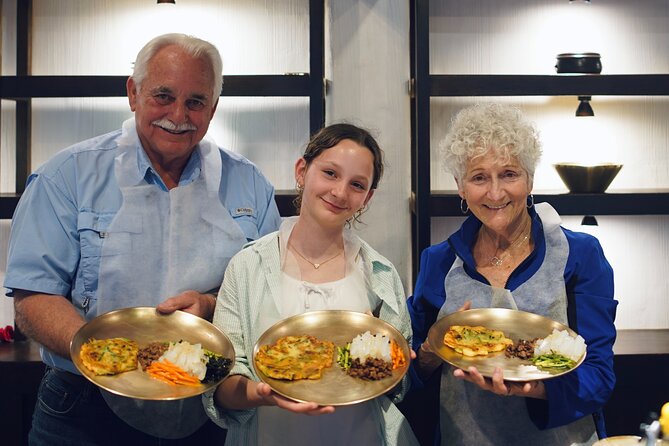
Once the cooking ends, the class becomes a shared meal. You eat the food you prepared in the traditional dining area, using handmade bangjja plates and tableware.
Bangjja is Korean hammered bronze ware. Its warm metallic color suits the hanok and makes the meal feel ceremonial without becoming stiff. The point is not luxury in the hotel sense. It is the pleasure of using objects tied to Korean table culture instead of eating from ordinary classroom dishes.
The meal includes a glass of freshly brewed makgeolli, a lightly sparkling Korean rice drink, along with traditional desserts. These final touches make the two-hour format feel like a complete food experience rather than a short demonstration followed by a rushed tasting.
Portion details are not provided, but the food is intended to become your meal. If you are comparing this with classes that teach one recipe and offer a small sample, this experience gives you a broader dinner.
How the listed Seoul stops fit in
The experience information connects the activity with several major Seoul sights: Gyeongbokgung Palace, Changdeokgung Palace, Kwangjang Market, Ikseon-dong Hanok Street, and Gwanghwamun Square. The meeting point is in Jongno, and the activity ends back there.
The cooking class itself is centered on the hanok. The listed places are useful landmarks for planning the surrounding part of your day, but do not assume that the cooking session includes a guided palace or market tour. The available duration is only about two hours and 15 minutes, so the practical reading is that this is a food activity in a district filled with major sights, not a full sightseeing circuit.
Gyeongbokgung Palace
Gyeongbokgung is Seoul’s grand Joseon-era palace and one of the city’s essential cultural stops. Pairing it with the cooking class makes sense if you want a day focused on traditional Korea.
Allow separate time for the palace. Trying to squeeze in a full visit immediately before the class could make the day rushed, especially if you need to find the residential meeting point.
Changdeokgung Palace
Changdeokgung offers another view of royal Seoul. Its inclusion is especially fitting here because the class presents dishes connected with royal cuisine.
Like Gyeongbokgung, it is best treated as its own visit. The cooking class gives you food culture, while the palace gives you architecture and court life.
Kwangjang Market
Kwangjang Market is a natural companion to a Korean cooking class. It gives you a chance to see prepared food, snacks, ingredients, and everyday eating in a market setting.
I would schedule the market before or after the class, but not count on doing both properly in the short class window. If you eat heavily at the market first, you may have less appetite for the meal you prepare.
Ikseon-dong Hanok Street
Ikseon-dong is one of the most convenient places to continue your evening. The cooking house is described as being in or close to the Ikseon-dong hanok area, known for traditional buildings now used for cafes, restaurants, and small shops.
This gives the class a useful location advantage. You can build a simple plan around it, perhaps visiting a palace earlier, taking the class, then walking through Ikseon-dong afterward. The area can be lively, so it may feel less quiet once you step outside the residential house.
Gwanghwamun Square
Gwanghwamun Square is another central Jongno landmark. It is easy to connect with a palace visit and gives you a broad urban setting after time in the compact hanok.
The important point is planning. The class begins and ends at the same meeting point, so you can use public transportation to reach the area and then continue sightseeing without arranging a separate return transfer.
Is $98.98 good value?
At $98.98 per person, this is a premium-priced cooking class. The price is easier to justify if you value four things: a historic home, a maximum group of six, a full meal, and an instructor who explains cultural context.
You are not paying only for ingredients. You are paying for access to a private-style setting, preparation by a certified chef, personal guidance, handmade tableware, makgeolli, desserts, and roughly two hours and 15 minutes of hosted time.
Still, this is not the best choice for someone who only wants cheap food or a fast recipe lesson. Seoul has many lower-cost meals, markets, and food walks. Choose this class because you want the setting and interaction, not because it is the least expensive way to taste Korean cuisine.
The value improves for solo visitors and couples who want a ready-made social activity. It also works well for families, since the teaching has been adapted for children and older relatives. A private group of six can also make the cost feel more reasonable because you receive close attention without booking a completely private class.
Who should book it?
I would choose this experience if you want to:
- Learn several Korean dishes in one sitting
- Meet a local host in a home rather than a commercial studio
- Understand the background of Korean foods
- Eat a proper meal after cooking
- Join a small activity as a solo visitor
- Include children or older family members in a cultural experience
- Leave with recipes you can try again at home
It is less suitable if you dislike shared activities, want a large professional kitchen, or need a very low-cost introduction to Korean food. The menu also includes seafood in the haemul pajeon, so ask the provider about ingredient concerns before booking.
The class is near public transportation, and a mobile ticket is provided. Confirmation arrives at booking. Take the meeting address seriously, since this is a residential hanok rather than an obvious tourist attraction. The host has sent photo directions to help with finding the house, which is useful in the narrow streets around Jongno.
Free cancellation is available up to 24 hours before the start time. Cancellations or changes made within 24 hours are not accepted for a refund, and cut-off times use Seoul local time.
The final call
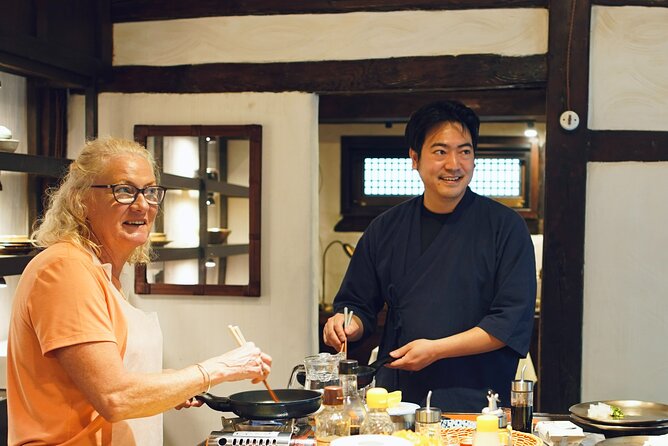
Book Royal Seoul Cooking Class if you want an intimate Korean food lesson wrapped in the atmosphere of an old home. The strongest reasons are the six-person limit, Park or Ricky’s personal teaching, the unusual tangpyeongchae, and the chance to sit down afterward with your own food on bangjja bronzeware.
At $98.98, it asks more than a basic cooking lesson. For a first or early evening in Seoul, though, it can serve as dinner, cultural orientation, and a personal introduction to Korean cooking all at once. If you want an easy class with a strong sense of place, this is a sound choice.
FAQ
Where does the Royal Seoul Cooking Class begin?
The class begins at 25 Samil-daero 32ga-gil in Seoul’s Jongno District. It ends back at the same meeting point.
How long does the cooking class last?
The experience lasts approximately two hours and 15 minutes.
How many people can join the class?
The class has a maximum of six participants.
What dishes will I prepare?
The listed dishes are LA galbi, fresh kimchi, haemul pajeon, and tangpyeongchae. The class focuses on royal cuisine and famous dishes from different regions of Korea.
Is the class suitable for beginners?
Yes. The class is designed to be accessible even if you have no cooking skills, with guidance from a certified culinary instructor.
What is included after cooking?
You eat the dishes you prepare on traditional bangjja bronzeware, with a glass of freshly brewed makgeolli and traditional Korean desserts.
Just added around Seoul
- Gyeongbokgung palace,seoul with gigibebe hanbok rental★ 4.5 · 12 reviews
- Private tour guide service in Seoul, Korea★ 5.0 · 6 reviews
- Alpaca, Nami, Petite Fr, Italian Village, Garden of Morning Calm★ 3.5 · 5 reviews
- Gyeongju UNESCO Sites Tour by KTX train; The Museum Without walls★ 4.5 · 11 reviews
- Private day trip to Korean Folk Village & Dae Jang Geum Park★ 5.0 · 7 reviews
- Private tour Lotte World,Tower,Aquarium(All Tickets are included)★ 5.0 · 12 reviews
- Full Day Private Seoul Tour for foodies★ 5.0 · 3 reviews
- Seoul Private Custom Walking Tour with A Guide (Private Tour)★ 4.5 · 28 reviews
Cooking Classes, compared.
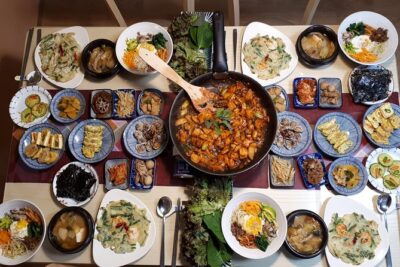
Local Home Korean Cooking Class & Market Adventure in Seoul
Read our review →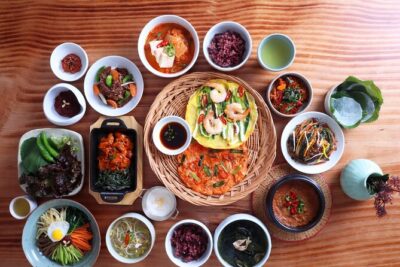
Master Korean traditional cooking with a Kimchi chef
Read our review →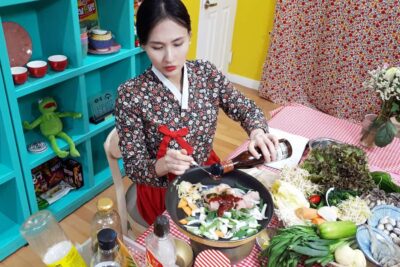
Korean Cooking Class at a Local Home and Market Tour
Read our review →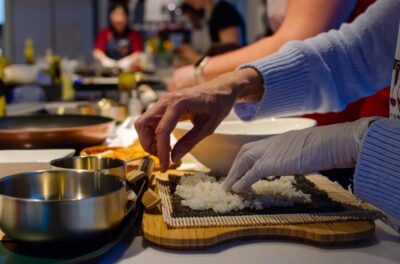
Korean Cooking Class with Grocery Shopping at Seoul Local Market
Read our review →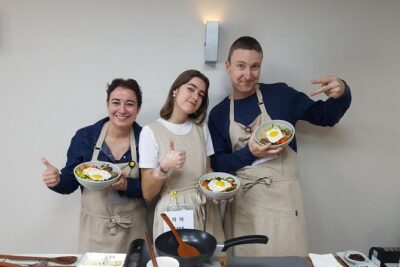
Busan Tailored Korean cooking class (Vegan OK)with market tour
Read our review →Browse the lists this tour appears in