
Reviewed · COOKING CLASSES
Seoul : Taste of Korea, Authentic Home-Style Cooking Class
The best part of this Seoul experience is that you do not simply watch a chef prepare Korean food. You make four home-style dishes yourself, from rolling gimbap to seasoning budae jjigae, with Jennifer guiding you step by step. I like the generous meal and the small maximum of 10 people, which give the class a friendly, hands-on feel.
I also like that the class connects food with Korean culture, history, and even a little language. The main consideration is the sheer amount of food. Come very hungry, because the class includes a full meal, snacks, drinks, dessert, and often leftovers to carry away.
Key Points to Know Before You Book
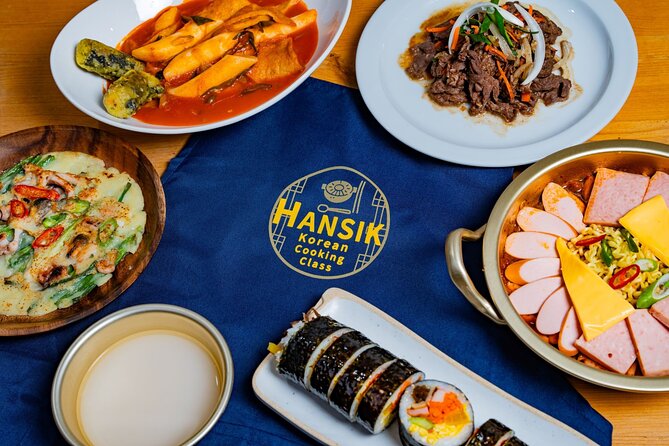
- Four classic Korean dishes: Prepare gimbap, tteokbokki, haemulpajeon, and budae jjigae from scratch.
- Jennifer leads the class: She teaches cooking techniques while adding stories about Korean food, history, and language.
- A meal, not just a lesson: Tea, snacks, side dishes, Sikhye, makgeolli for those aged 21 and over, and dessert are included.
- Small group setting: The class accepts a maximum of 10 people and provides dedicated cooking stations.
- Useful for families: Children aged 10 and 12 have taken part successfully, with tasks adjusted to their skill levels.
- Good value for a food experience: The $89 price covers roughly three hours of instruction and a substantial home-style meal.
Cooking Four Korean Staples in Jongno
This three-hour class takes place at 31-5 Jahamun-ro in Seoul’s Jongno District. That address puts you in a central part of the city, and the activity is near public transportation, so it can fit neatly into a day of sightseeing.
You meet at the cooking studio and return to the same place at the end. The class is offered in morning and evening sessions, giving you a useful choice: schedule it before a day out, or make it your evening meal and cultural activity.
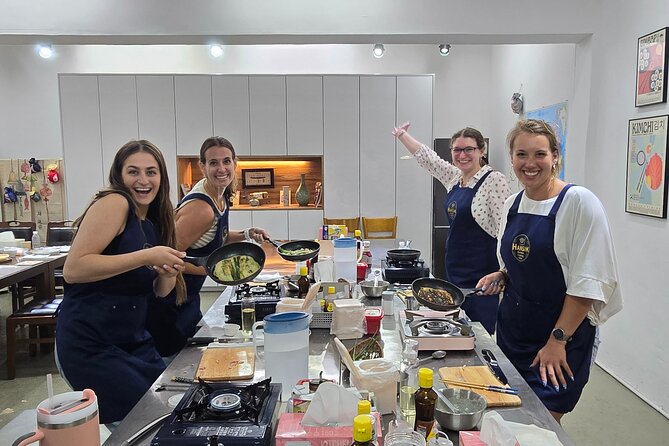
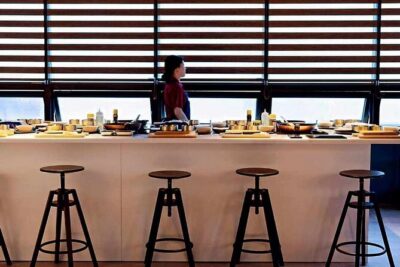
The room is set up with dedicated cooking stations. That matters. You are not standing at the back of a demonstration kitchen trying to see over someone’s shoulder. You get a practical role in preparing the food, while Jennifer and her team help when a technique needs another explanation.
The maximum group size is 10 people. That is large enough for a social class but small enough for personal assistance. Jennifer’s teaching style is patient and friendly, and the class allows you to do some of the work yourself rather than turning every step into a demonstration.
A few more Seoul trips to weigh up
- Local Home Korean Cooking Class & Market Adventure in Seoul
★ 5.0 · 1,024 reviews - Master Korean traditional cooking with a Kimchi chef
★ 5.0 · 385 reviews - Seoul: Korean Cooking Class at a Local Home and Market Tour
★ 5.0 · 348 reviews
Gimbap: Rolling Korea’s Classic Rice Snack
Gimbap is one of the most recognizable Korean dishes on the menu. It is made by arranging rice and fillings on seaweed, then rolling everything into a neat cylinder and slicing it into pieces.
This is a good opening dish because it gives you a practical lesson in Korean ingredients and kitchen technique. The rolling takes a little coordination, and the finished pieces offer an immediate reward. You can see how a few simple components become a portable meal.
The class treats gimbap as home-style food rather than a restaurant spectacle. That makes it useful for anyone who wants to recreate Korean dishes after returning home. You receive the recipes digitally afterward, so you are not relying on memory alone.
Tteokbokki and the Korean Chili Profile
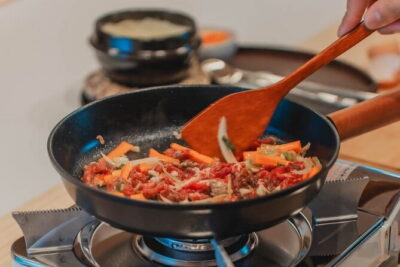
Tteokbokki uses chewy Korean rice cakes in a gochujang-based sauce. The dish is famous for its sweet, savory, and spicy balance, and it gives you a clear introduction to the role of fermented chili paste in Korean cooking.
Jennifer explains the recipes as you work, and the pace is designed to be manageable. You can ask for help with seasoning and adjust the food to suit your preferences. Several parts of the class can be adapted for dietary restrictions or food preferences, although you should raise those needs when booking or before the session begins.
Tteokbokki is also a useful dish for understanding texture. The rice cakes are soft and springy, quite different from noodles or ordinary rice. If you have only eaten it in a Seoul snack bar, making it yourself shows how the sauce and texture come together.
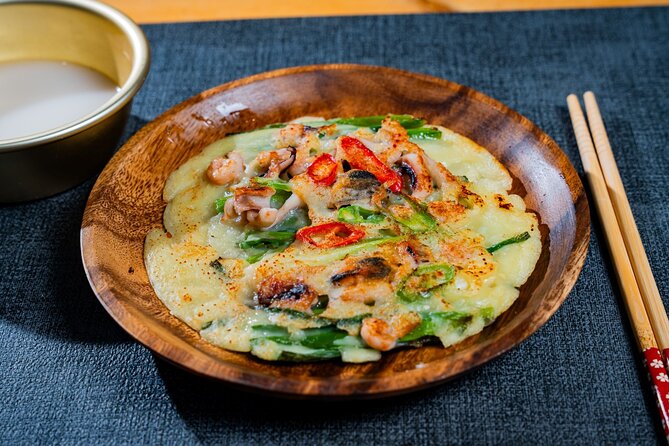
Haemulpajeon, a Savory Seafood Pancake
Haemulpajeon is a Korean seafood and green onion pancake. It is made in a pan, so you get a chance to practice the timing and handling needed to produce a crisp outside without losing the soft center.
This dish adds contrast to the menu. Gimbap focuses on careful rolling, while tteokbokki is about sauce and texture. Haemulpajeon gives you a straightforward pan-cooking task and a chance to work with green onions and seafood.
The finished food is served as part of the larger meal rather than treated as a small sample. That is an important difference between this class and a short cooking demonstration. You spend time preparing the food, then have time to eat it properly.
Same country, a completely different kind of day:
- Best DMZ Tour Korea from Seoul (Red Suspension Bridge Optional)
★ 5.0 · 41,422 reviews - DMZ Tour: 3rd Tunnel, Option(Suspension Bridge, Boat) from Seoul
★ 5.0 · 21,373 reviews - DMZ tour south Korea from Seoul (NK experience hall, defector)
★ 5.0 · 20,599 reviews - Seoul: DMZ Tour with Optional Suspension Bridge
★ 4.8 · 5,277 reviews
Budae Jjigae and the Story Behind the Dish
Budae jjigae, often called Korean army stew, is the heartier dish in the class. It is a communal-style stew with a distinctive place in modern Korean food culture.
Jennifer uses the dishes as a way to explain Korean history and food traditions. Budae jjigae is especially suited to that kind of conversation because its story connects everyday cooking with the difficult years after the Korean War. You are not only memorizing a recipe. You are learning why this dish became part of Korean home cooking.
The stew also helps balance the rest of the menu. After rolling rice and preparing pancakes, you have a warming main dish to bring everything together. Expect a filling meal, not a few decorative bites.
A Full Korean Meal After the Cooking
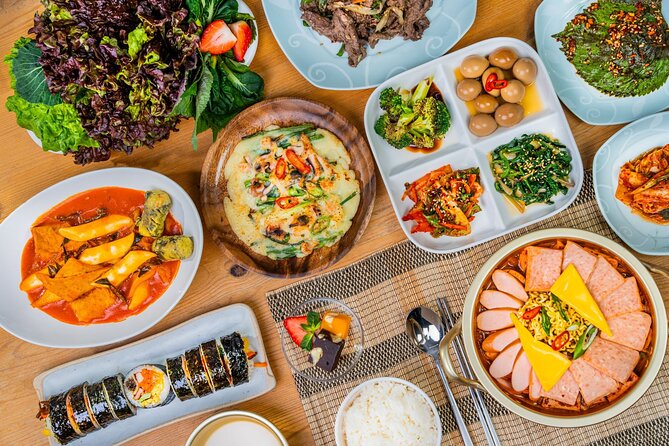
The cooking is only part of the experience. Once the dishes are prepared, you sit down to eat them with a full home-style meal.
The food includes Korean tea and snacks, side dishes, Sikhye, Korean rice punch, makgeolli, and dessert. Alcoholic drinks are served only to those aged 21 and over. Younger participants receive non-alcoholic drinks instead.
The portions are generous. If you have dinner plans soon afterward, consider moving them to another night. The class is designed to leave you well fed, and leftover food may be available to take with you. That adds real value to the price, especially compared with a typical restaurant meal in central Seoul.
The extra snacks and drinks also make the class feel more like an invitation into a Korean home than a narrow lesson in recipe technique. You get to sample more than the four dishes you prepare.
Jennifer’s Teaching Style and Class Atmosphere
Jennifer is the central figure in the experience. Her role goes beyond reading instructions from a card. She explains each dish, gives help when needed, and allows you to handle the work yourself.
That balance is important. A cooking class can go wrong in two ways: the instructor can take over every task, or you can be left struggling without enough direction. Here, the class is structured so you can succeed while still making your own food.
Jennifer also brings in food history and Korean language lessons. These touches are brief but useful. You leave with more context for the dishes and a few extra cultural details that you would not get from ordering the same meal at a restaurant.
The atmosphere is casual and social. Participants describe Jennifer and Ms. Lee as attentive and easy to be around, and families have found the class welcoming. Children aged 10 and 12 have taken part, with help adjusted to their abilities.
Dietary Needs and Family Suitability
The class can offer an alternative recipe for dietary restrictions, and the food can be adjusted to personal preferences. Still, I would not wait until the cooking begins to bring this up. Tell the provider in advance so the right alternative can be prepared.
This is a strong choice for families with older children. The cooking tasks are active, the dishes are familiar enough to be appealing, and the meal gives children a clear reward at the end. The class is not described as a specialized children’s program, so very young children may not get the same benefit.
Couples, solo visitors, and small groups can also fit comfortably into the format. With no more than 10 people, you should have a reasonable chance to ask questions and get direct assistance.
What the $89 Price Includes
At $89 per person, this is not the cheapest way to eat Korean food in Seoul. You can find inexpensive tteokbokki, gimbap, and stew throughout the city. You are paying for something different here: instruction, ingredients, kitchen space, cultural explanation, drinks, dessert, and a substantial meal.
The value is strongest if you want to learn dishes you can make again. The digital recipes give the class a life beyond your Seoul visit. You also get practical familiarity with ingredients and methods that can be hard to understand from a cookbook alone.
The generous portions improve the calculation. You may leave with enough food to eat later, which is unusual for a cooking class and useful after a busy day in Seoul. If your main goal is simply to sample Korean food cheaply, a restaurant or market will cost less. If you want a cultural activity with dinner included, the price is reasonable.
Timing, Location, and Practical Details
The class lasts about three hours, so allow enough time to travel to Jahamun-ro and complete the meal without rushing. Since the activity ends back at the meeting point, you do not need to arrange a separate pickup or figure out where the meal finishes.
Morning and evening times are available. An evening session can replace dinner, while a morning class may work well before visiting other sights in Seoul. Check the selected start time carefully because cancellation cutoffs use local Seoul time.
Confirmation is provided when you book, and the ticket is mobile. The location is near public transportation, but the supplied information does not specify a subway exit or detailed walking directions. Use the full street address and allow a little extra time for finding the studio.
The experience requires good weather and a minimum number of participants. If poor weather or low enrollment causes cancellation, you are offered another date or experience, or a full refund.
Free cancellation is available until 24 hours before the start time. A cancellation or change made within 24 hours is not refunded, so avoid making this a last-minute placeholder in a tightly packed itinerary.
Who Will Get the Most From This Class
I would choose this class if you want to connect food with daily Korean life. It suits anyone who prefers doing rather than watching, especially if you enjoy taking recipes home and trying them again.
It is also a smart pick for families, couples, and small groups who want one shared activity. The food is plentiful, the class is social without being huge, and the instructor’s patient approach works well for mixed cooking abilities.
You may want to skip it if you dislike spicy food, have serious dietary restrictions that cannot be accommodated, or prefer a short tasting stop. Three hours is a real commitment, and the meal is large. This is a cooking lesson followed by dinner, not a quick tourist demonstration.
Should You Book the Hansik Korean Cooking Class?
I would book this experience if your Seoul plans include time for a relaxed, hands-on food activity. The combination of four dishes, cultural context, a full meal, and recipes to use later gives you more than a single restaurant visit.
The strongest reasons to go are Jennifer’s patient teaching, the small group size, and the generous portions. Families with children around 10 and older should find plenty to do, and adults who want to understand Korean food beyond the menu will get useful context.
Book it for a morning or evening when you can eat slowly and avoid another major meal afterward. Tell the provider about dietary needs in advance, check the age rule for alcoholic drinks, and keep the 24-hour cancellation deadline in mind. If that plan suits you, this is a tasty and practical way to bring a little Hansik home with you.
FAQ
How long does the Korean cooking class last?
The class lasts approximately three hours, including preparation and the meal afterward.
Where does the experience begin and end?
You meet at 31-5 Jahamun-ro in Seoul’s Jongno District. The activity ends back at the same meeting point.
Which Korean dishes will I prepare?
The class includes gimbap, tteokbokki, haemulpajeon, and budae jjigae.
Is food and drink included?
Yes. You are served a full-course home-style meal along with Korean tea, snacks, Sikhye, makgeolli for those aged 21 and over, and desserts.
Are alcoholic drinks available for anyone under 21?
No. Alcoholic drinks are served only to participants aged 21 and over. Minor participants receive non-alcoholic drinks.
Can the class accommodate dietary restrictions?
Alternative recipes can be offered for dietary restrictions, and dishes can be adjusted to preferences. Raise your needs when arranging the class.
How many people can join the class?
The experience has a maximum of 10 participants.
What is the cancellation policy?
You can cancel up to 24 hours before the start time for a full refund. Cancellations or changes made less than 24 hours in advance are not refunded. If the class is canceled because of poor weather or insufficient enrollment, you are offered another date or experience, or a full refund.
Just added around Seoul
- Gyeongbokgung palace,seoul with gigibebe hanbok rental★ 4.5 · 12 reviews
- Private tour guide service in Seoul, Korea★ 5.0 · 6 reviews
- Alpaca, Nami, Petite Fr, Italian Village, Garden of Morning Calm★ 3.5 · 5 reviews
- Private day trip to Korean Folk Village & Dae Jang Geum Park★ 5.0 · 7 reviews
- Private tour Lotte World,Tower,Aquarium(All Tickets are included)★ 5.0 · 12 reviews
- Gyeongju UNESCO Sites Tour by KTX train; The Museum Without walls★ 4.5 · 11 reviews
- Full Day Private Seoul Tour for foodies★ 5.0 · 3 reviews
- Seoul Private Custom Walking Tour with A Guide (Private Tour)★ 4.5 · 28 reviews
Cooking Classes, compared.
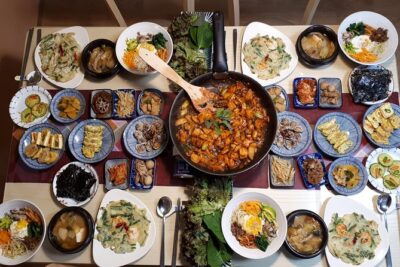
Local Home Korean Cooking Class & Market Adventure in Seoul
Read our review →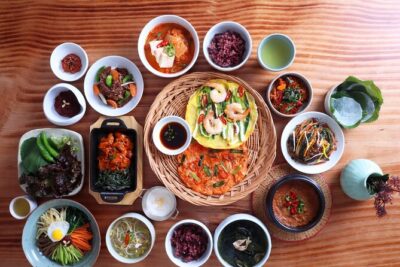
Master Korean traditional cooking with a Kimchi chef
Read our review →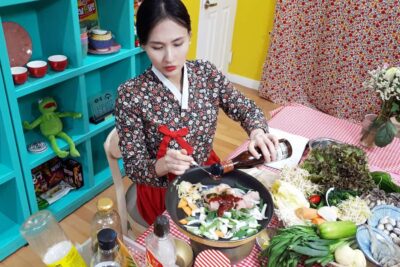
Korean Cooking Class at a Local Home and Market Tour
Read our review →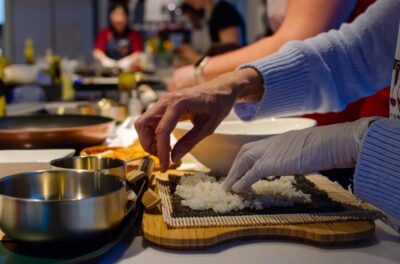
Korean Cooking Class with Grocery Shopping at Seoul Local Market
Read our review →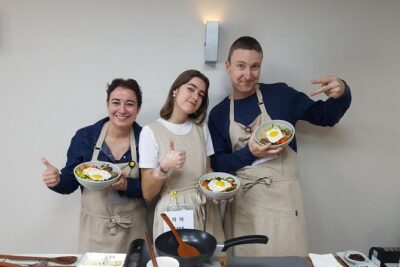
Royal Seoul Cooking Class in a 100-Year-Old Hanok
Read our review →Browse the lists this tour appears in