
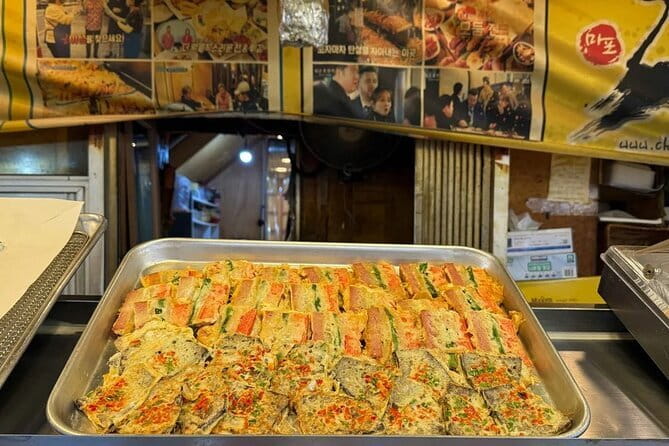
Reviewed · FOOD & DRINK
Seoul Food: Banchan, Bibimbap, and Beyond
Seoul’s food culture makes the most sense when you see the city around it. This five-hour walk links Dongdaemun and Jongno with Korean meals, market stops, and stories about how outside influences became distinctly Korean. I like the mix of famous landmarks and backstreet eating, rather than treating dinner as a separate event.
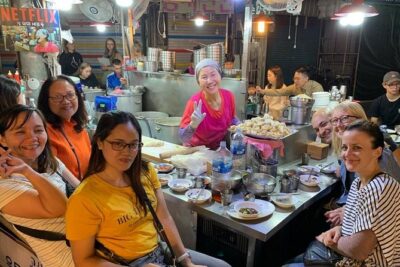
I also like that Eunice brings food and culture together. You may taste hearty chicken noodle soup, Korean beef, steak tartare with a memorable sauce, and an assortment of small dishes, while hearing about the people and traditions behind them. The main consideration is the $195 price, which is a serious spend for a walking tour, even with dinner, snacks, drinks, and a private guide included.
- Eunice leads a personal, story-filled walk through Seoul’s food and culture.
- Dongdaemun Gate, DDP, Cheonggyecheon Stream, Gyeongbokgung, and Bukchon shape the route.
- Dinner, snacks, bottled water, and alcoholic drinks are included.
- Food can range from traditional noodle soup and Korean beef to steak tartare and market fare.
- The tour lasts about five hours and begins at 1:00 pm at JW Marriott Dongdaemun Square Seoul.
- This is a private activity, so only your own group takes part.
Why this Seoul food tour feels different
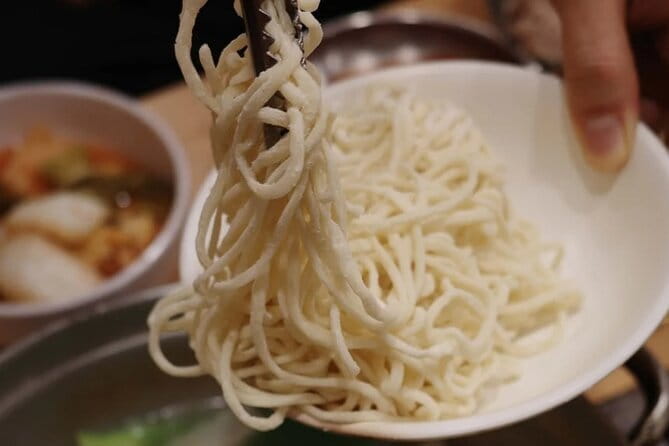
Many food tours focus on eating first and explain the city afterward. This one uses Seoul itself as part of the meal. You walk through places that show how the capital has changed, then connect those changes to what appears on the table.
The central idea is simple: Korea has often taken outside influences and reshaped them in its own way. Chinese, Japanese, and Western ideas have all entered Korean life, but the result is not a copy. It is Korean in flavor, custom, setting, and social meaning.
That approach gives the tour more range than a list of dishes. You are not just learning that banchan means small side dishes or that bibimbap combines rice with toppings. You are looking at how Korean food reflects resilience, creativity, family traditions, and national pride.
The route also helps you get your bearings. Dongdaemun and Jongno sit at the meeting point of old Seoul and new Seoul. In one afternoon, you can move from a Joseon-era palace to futuristic architecture, then follow a stream and turn into narrow lanes lined with traditional homes.
Meeting Eunice at Dongdaemun Gate
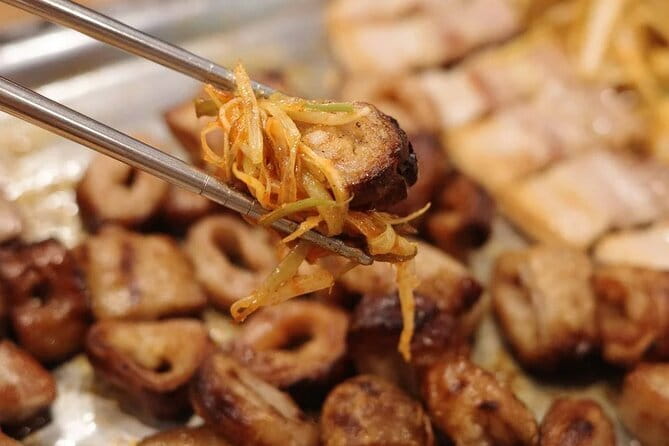
The tour begins at 1:00 pm outside JW Marriott Dongdaemun Square Seoul, at 279 Cheonggyecheon-ro. Dongdaemun Gate, also called Heunginjimun, is nearby and forms the first major sight.
The gate was built in the late fourteenth century as one of Seoul’s Eight Gates. It served as a principal entrance through the city’s old defensive system. This is a useful first stop because it gives the walk a sense of place before food takes over.
With Eunice, expect the cultural background to matter as much as the meal. Her style, based on the available descriptions of the experience, is warm and conversational rather than stiff. She has a knack for explaining Korean culture through food, and that helps solo visitors or first-time visitors settle into the city quickly.
The gate stop is listed at about one hour, though the exact time spent at each place may shift with the group and food schedule. Wear comfortable shoes. Five hours on foot, with several eating stops, is a better fit for people who enjoy walking at an easy city pace than for anyone seeking a seated tasting menu.
A few more Seoul trips to weigh up
- Seoul Street Food Market Tour
★ 5.0 · 1,226 reviews - Seoul: Night Market Food Tour with Local Guide
★ 4.9 · 943 reviews - Downtown Seoul Guided Food & Market Tour with 8+ Local Tastings
★ 5.0 · 580 reviews
Dongdaemun Design Plaza and Seoul’s new face
From the old gate, the route moves toward Dongdaemun Design Plaza, usually called DDP. Designed by Zaha Hadid, the building is all sweeping curves, broad open spaces, and futuristic surfaces.
DDP hosts exhibitions, fashion events, and cultural programs. Even if there is no event during your visit, the structure gives you a sharp contrast with the gate you have just seen. Seoul is not a city that preserves one era at a time. Old and new sit close together, often within the same view.
The planned stop is about 30 minutes. That is enough for photos and a look around, but not enough for a full museum visit. If you want to explore a special exhibition inside DDP, treat that as a separate plan rather than something this tour promises.
I like this part because it supports the tour’s main theme. Korean culture is not presented as frozen in the past. You see a city that borrows, adapts, and keeps moving.
Walking beside Cheonggyecheon Stream
Cheonggyecheon Stream provides the route’s calmest stretch. The waterway runs through both Dongdaemun and Jongno, offering a lower, quieter walking path beneath the surrounding streets.
The scheduled time here is about one hour. That matters because the stream is not just a quick photo stop. It gives you a chance to slow down between dishes and let a large meal settle before the next stop.
The stream is particularly appealing later in the day, when lights reflect on the water. Since the tour begins in the afternoon, some of this section may occur as daylight fades, depending on the season and the day’s pace. Still, you should not book this as a night photography tour. The main purpose is the walk, the setting, and the transition between neighborhoods.
This break also solves a practical problem with food tours: too many tastings packed too close together. The experience is designed with enough movement between stops to keep the meal from feeling like one long sitting.
What you may eat along the way
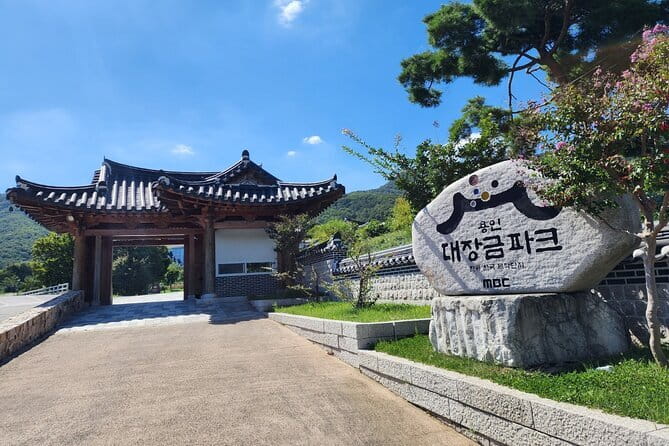
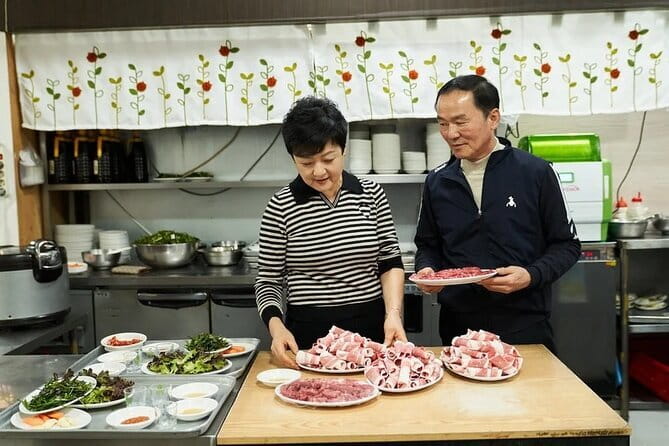
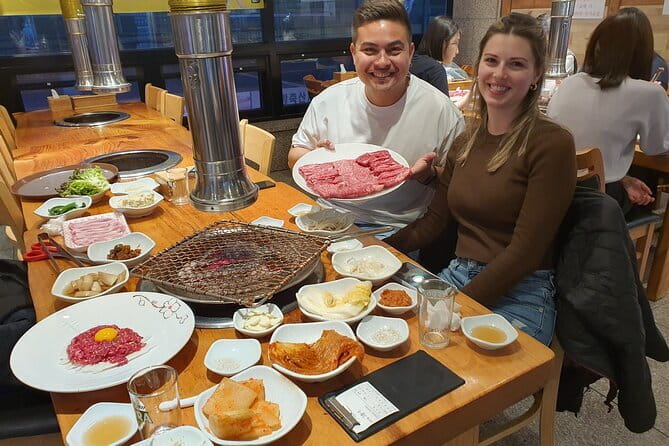
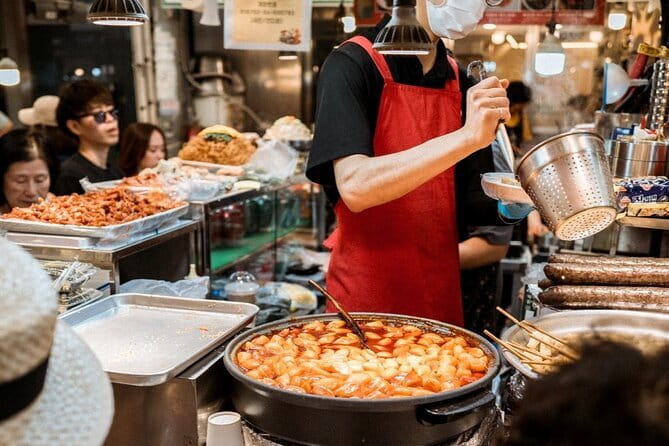
The food is the heart of the experience, but the exact lineup can vary. The included package covers dinner, snacks, bottled water, and alcoholic beverages. Past descriptions of the food portion include traditional chicken noodle soup, Korean beef served in several preparations, market dishes, and steak tartare paired with a special sauce.
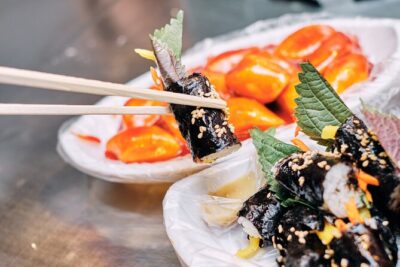
You may also encounter a broad spread of banchan. These small side dishes are not simply decoration. They bring contrasting flavors and textures to the table, and they show how a Korean meal is built around sharing.
Bibimbap is part of the experience’s name, but the available details do not promise one fixed preparation or a specific restaurant. You should think of the title as a guide to the kind of Korean food and context involved, not as a guaranteed checklist of every named dish.
One appealing feature is the contact with the people preparing the food. The tour can introduce you to cooks and small, family-run places, giving you a sense of how meals are made and passed down. The settings may be plain rather than polished. That is part of the point, but diners who want stylish interiors and carefully arranged plates may find the presentation modest.
Steak tartare and the so-called magic sauce have been singled out as memorable parts of the food selection. Korean beef dishes can also be a highlight, especially when you want something beyond the familiar barbecue image of Korean cooking.
The food is described as plentiful. If you have a small appetite, pace yourself early and tell Eunice about dietary concerns before the meal begins. The supplied information does not specify vegetarian, vegan, allergy, or religious-diet arrangements, so you should confirm those needs directly before booking.
Same country, a completely different kind of day:
- Best DMZ Tour Korea from Seoul (Red Suspension Bridge Optional)
★ 5.0 · 41,422 reviews - DMZ Tour: 3rd Tunnel, Option(Suspension Bridge, Boat) from Seoul
★ 5.0 · 21,373 reviews - DMZ tour south Korea from Seoul (NK experience hall, defector)
★ 5.0 · 20,599 reviews - Seoul: DMZ Tour with Optional Suspension Bridge
★ 4.8 · 5,277 reviews
Gyeongbokgung connects the meal to royal Seoul
Gyeongbokgung Palace is the route’s major royal site. It was the main palace of the Joseon Dynasty and remains one of Seoul’s best-known historic places.
The planned stop lasts about one hour. You can expect grand gates, palace buildings, gardens, and broad ceremonial spaces. After learning how ordinary family-run restaurants carry food traditions forward, the palace adds another layer: cuisine and culture were also shaped by courts, dynasties, class, and formal custom.
This is not a palace admission tour. The listed admission charge for the stop is free, and the focus is a general visit as part of the walking route. If you want a detailed study of individual halls or a long palace photo session, you will likely need a separate visit.
The timing is useful for first-time visitors. You get a solid look at one of Seoul’s essential sights without giving up the food-centered purpose of the afternoon. I would not choose this tour if your top goal is a full palace tour, but it works well if you want the palace placed inside a wider story about the city.
Bukchon Hanok Village and the final walk
Bukchon Hanok Village is a group of traditional Korean homes in the center of Seoul. Its narrow lanes and tiled-roof hanok give you a strong sense of how the city looked before modern construction reshaped much of the capital.
The planned visit is about 30 minutes. That is enough to walk through a small section and take in the views, but not enough to inspect every alley or visit every cultural site in Bukchon.
Be considerate here. Bukchon is a lived-in neighborhood, not only a scenic backdrop. Keep voices low and follow any posted restrictions around homes and photo areas.
The village makes a fitting final sightseeing stop. You have seen the old city gate, the futuristic DDP, the stream, and the palace. Bukchon then brings the route back to domestic architecture and everyday Seoul.
The tour ends back at the starting meeting point. Along the way, the food experience may extend into local markets, a record store, or a tent bar. Those extras are not listed as fixed itinerary stops, so do not book expecting each one on every departure. They show, however, that the walk can reach beyond the standard postcard sights.
Is $195 a fair price?
At $195 per person, this is not a budget food walk. The value depends on what you want from the afternoon.
You are paying for a private experience, a licensed guide, dinner, snacks, drinks, bottled water, and about five hours of guided time. You also receive a food lesson, neighborhood orientation, cultural context, and access to places that can be hard to connect on your own.
The private format matters. Only your group participates, so Eunice can keep the pace personal and adjust the conversation to your interests. That is a strong advantage for a couple, family, or small group that wants to ask questions freely.
The price is harder to justify if you mainly want inexpensive samples or a quick introduction to Korean street food. Private transportation is not included, and the route is on foot. You are paying for the guide and the meal package, not for a vehicle or a luxury dining room.
I see the best value for people who want a first full day of context in Seoul, especially those who like food connected to politics, architecture, family customs, and local neighborhoods.
Who should book this experience?
I would recommend it for:
- First-time visitors who want a guided introduction to Seoul
- Solo visitors who want an easy social start to a Korea trip
- Couples and families who prefer a private outing
- Curious eaters who already know Korean barbecue but want more variety
- People who enjoy walking between meals and major sights
- Visitors interested in the stories behind family-run food businesses
It may not suit you if you want a fixed menu, a restaurant-only tasting, private transport, or a detailed palace lecture. It is also not the best match if you dislike unfamiliar textures or prefer to choose every dish yourself.
Families can take part, and the available information says most people can participate. The five-hour length and amount of food are the main points to consider with younger children.
Practical details before you go
The meeting point is JW Marriott Dongdaemun Square Seoul, 279 Cheonggyecheon-ro, Jongno District. The tour starts at 1:00 pm and returns there at the end.
A mobile ticket is provided, and the meeting point is near public transportation. Private transportation is not included, so plan your route to the hotel and allow a little extra time to find the exact meeting area.
You will be walking for much of the afternoon. Comfortable shoes are a must, and you should leave room for a substantial dinner rather than eating a large lunch beforehand.
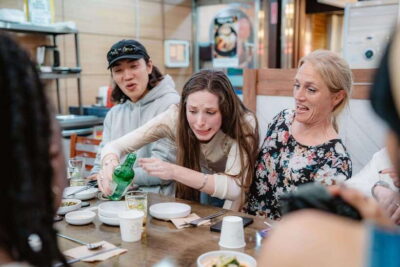
Alcoholic beverages are included. If you do not drink, the supplied details do not explain whether substitutions are available, so ask before booking.
Free cancellation is available up to 24 hours before the local start time for a full refund. Cancellations or changes made less than 24 hours ahead are not accepted for a refund. The experience also requires a minimum number of participants, and if that minimum is not reached, you will be offered another date or experience, or a full refund.
My call on Seoul Food: Banchan, Bibimbap, and Beyond
Book this tour if you want Seoul explained through both its streets and its cooking. Eunice appears to be the key strength: she connects history, culture, and food in a friendly way, while the private format gives your group room to ask questions and set a comfortable pace.
The strongest reasons to go are the backstreet food, the range of dishes, and the route through several very different parts of the city. The main drawbacks are the high price, walking requirement, and lack of a guaranteed dish-by-dish menu.
For a first or second day in Seoul, this can give you useful bearings and plenty of ideas for the rest of your trip. For experienced Korea visitors who already know the neighborhoods and want only cheap street snacks, the cost may be too steep.
FAQ
How long does the Seoul food tour last?
The experience lasts approximately five hours.
What time does the tour begin?
It begins at 1:00 pm local time.
Where does the tour start?
The meeting point is JW Marriott Dongdaemun Square Seoul, 279 Cheonggyecheon-ro, Jongno District, Seoul, South Korea.
Where does the tour end?
The activity ends back at the meeting point.
Is this a private tour?
Yes. Only your group participates in the activity.
Is transportation included?
Private transportation is not included. The meeting point is near public transportation.
What food and drinks are included?
Dinner, snacks, bottled water, and alcoholic beverages are included.
Is a guide included?
Yes. A licensed guide is included. Eunice is the guide named in the available tour information.
Which Seoul sights are visited?
The route includes Dongdaemun Gate, Dongdaemun Design Plaza, Cheonggyecheon Stream, Gyeongbokgung Palace, and Bukchon Hanok Village.
Can I cancel for a full refund?
Yes, if you cancel at least 24 hours before the experience’s start time. Cancellations made less than 24 hours before the start are not refunded.
Just added around Seoul
- Seoul: Korean & English Language Exchange Global Party★ 5.0 · 28 reviews
- From Seoul: Yongpyong Ski Day Tour with Transportation★ 4.9 · 40 reviews
- You’re Invited to Our Home in Seoul: The Only Cooking Class!★ 5.0 · 8 reviews
- Your Personal Seoul Photographer!★ 4.1 · 15 reviews
- Unique Native Experience : Han River Picnic, Board game, BBQ★ 5.0 · 3 reviews
- From Seoul: Hwacheon Ice Fishing and Lighting Festival Tour★ 4.5 · 4 reviews
- Seoul: Gangneung BTS K-Pop & K-Drama Filming Locations Tour★ 4.6 · 14 reviews
- Seoul Private RV tour, explore real Korea from Past to Future★ 5.0 · 5 reviews
Food & Drink, compared.
Downtown Seoul Guided Food & Market Tour with 8+ Local Tastings
Read our review →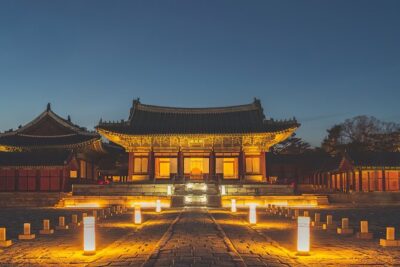
Seoul Night Palace & Market Food Tour with Vehicle
Read our review →
Seoul Fun Food Tour: 12 different food tastings
Read our review →
The Award-Winning PRIVATE Food Tour of Seoul: The 10 Tastings
Read our review →
Baseball Game Ticket with Dinner/Beer with the host
Read our review →Browse the lists this tour appears in