
Reviewed · MARKETS
Seoul History Tour: Dark Past & Market Street Flavors
Seoul’s past comes into sharp focus on this four-hour walk from Seodaemun Prison to Namdaemun Market. You move from the cells and execution grounds of the Japanese colonial period to a royal palace shaped by modernization, then finish with ordinary food in one of the city’s oldest markets.
I like the way the tour links history to daily life, rather than treating each sight as an isolated stop. I also like the practical value: the $65 price includes transport, admissions, an English-speaking guide, and food tastings. The main drawback is pace. With five stops packed into four hours, and plenty of walking, you may find parts of the afternoon rushed.
- Seodaemun Prison History Hall: A serious, powerful look at Korea’s independence movement and the suffering of those who resisted Japanese rule.
- Dilkusha: The former home of American journalist Albert W. Taylor, whose story adds an international angle to Korea’s struggle.
- Deoksugung Palace: A royal compound where traditional Korean buildings meet Western architectural influence.
- Sungnyemun Gate: A short stop connecting Seoul’s old defenses with its modern civic center.
- Namdaemun Market food: Finish at Kalguksu Alley and nearby stalls, where the tour turns from national history to everyday Seoul.
- Useful timing: The tour begins at 2:30 pm, runs in rain or snow unless conditions make it impossible, and ends at Namdaemun Market.
Why this Seoul history tour works
Many Seoul tours concentrate on palaces, shopping streets, or food. This one takes a more thoughtful route. It begins with political trauma, moves through a period of royal change, and ends among market stalls where ordinary traditions still have a place.
That progression gives the afternoon a clear purpose. At Seodaemun, you learn about people who risked their lives for Korean independence. At Dilkusha, you see how an outsider helped report and support that cause. At Deoksugung, you consider how Korea faced modern pressures. At Namdaemun, you see culture in use rather than behind glass.
I would choose this tour if you want more than pretty palace roofs. It is especially useful early in a Seoul visit, since it gives you background for many of the political and cultural themes you will encounter elsewhere in the city.
The tone is serious at first. This is not a light sightseeing loop with a few historical facts added for decoration. Seodaemun Prison can be upsetting, and the subject matter deserves attention. The market meal at the end provides a change of mood, but it does not erase what came before.
Seodaemun Prison, the afternoon’s emotional center
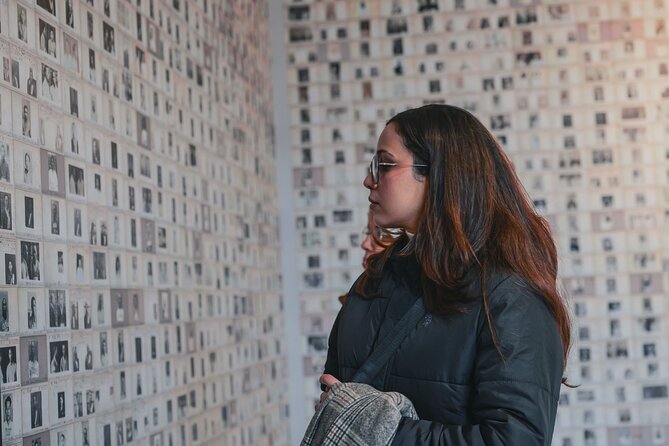
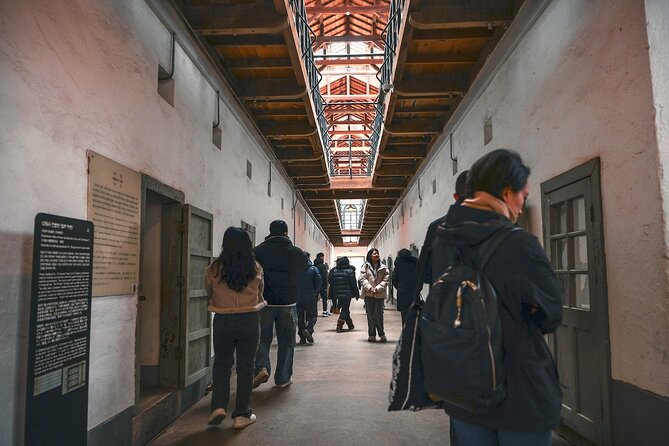
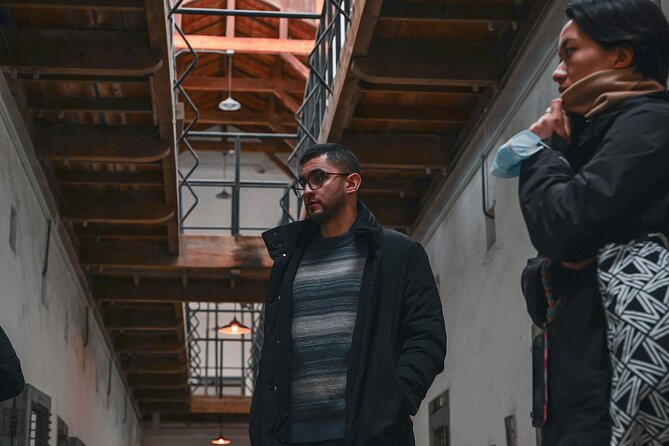
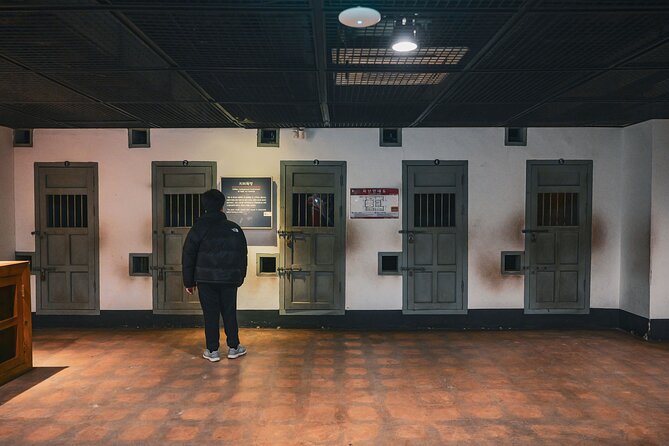
The first major stop is Seodaemun Prison History Hall, scheduled for about 50 minutes with admission included. The attraction occupies a former Japanese colonial prison, and its rooms, corridors, and displays tell the story of Korean independence fighters who were imprisoned and mistreated there.
This is the part of the tour most likely to stay with you. A palace can impress you with scale and decoration. A prison makes history feel more direct. You are not simply hearing that Korea resisted colonial rule. You are confronted with the human cost of that resistance.
Your guide’s role matters here. The tour promises an English-speaking guide with a strong grounding in Korean history, and the strongest feedback centers on clear explanations and thoughtful answers. One guide named Kim was singled out for being especially helpful and accommodating, though you should not assume Kim will lead your particular departure.
The 50-minute visit is long enough to give the place weight, but not long enough for a slow, independent study of every display. If you already have a strong interest in the Japanese colonial period, you might want to return on your own for more time. For a first introduction, the guided visit gives you a useful framework.
The first stop is listed with Seodaemun Museum of Natural History in the supplied meeting information, while the actual scheduled attraction is Seodaemun Prison History Hall. Check the exact meeting instructions sent before departure so you arrive at the right entrance.
A few more Seoul trips to weigh up
- Seoul Street Food Market Tour
★ 5.0 · 1,226 reviews - Local Home Korean Cooking Class & Market Adventure in Seoul
★ 5.0 · 1,024 reviews - Seoul: Night Market Food Tour with Local Guide
★ 4.9 · 943 reviews
Dilkusha and the role of an American journalist
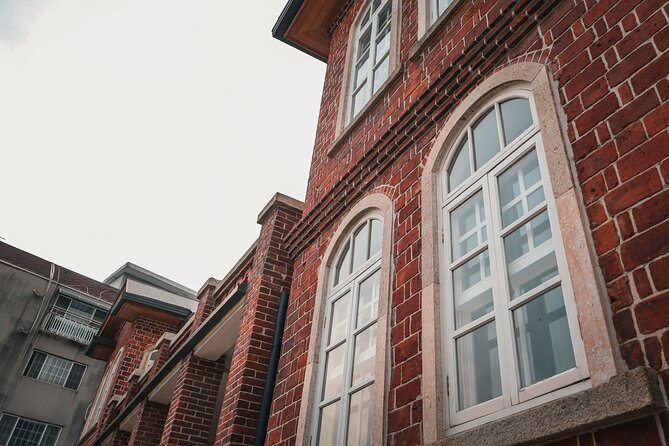
Next comes Dilkusha, also known as the Albert W. Taylor House, for about 30 minutes. Admission is free, and the visit gives the tour a perspective that goes beyond a simple Korea versus Japan story.
Albert W. Taylor was an American journalist who supported Korea’s independence. The house carries the name Dilkusha, meaning Heart’s Delight, and the guide explains how this place connects personal conviction, journalism, and international support for Korea’s cause.
I find this stop valuable because it adds a human story to the political setting. Independence movements depend on local courage, but news and outside attention can also matter. Dilkusha helps you consider how events in Korea reached an international audience.
Thirty minutes is a short visit, so expect an introduction rather than a full architectural study. Its position between Seodaemun and Deoksugung also helps the tour change direction. You leave the prison’s enclosed world and begin looking at Korea’s place in a wider network.
The stop may be less visually dramatic than the prison or palace. Its value comes from context. If you pay attention to the guide’s explanation, Dilkusha becomes an important bridge between Korean resistance and international solidarity.
Deoksugung Palace beside Seoul’s modern skyline
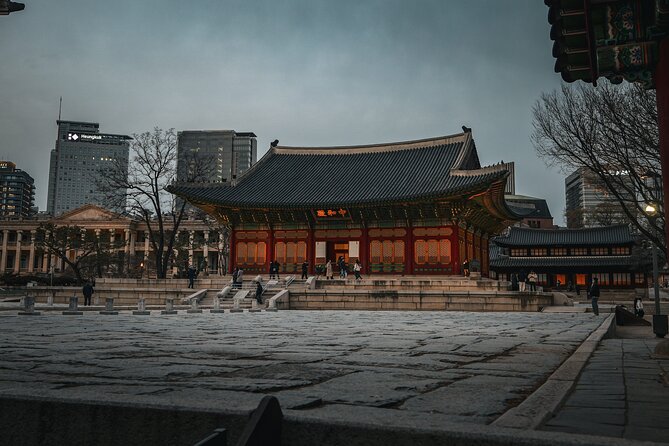
Deoksugung Palace receives about 40 minutes, with admission included. It is a royal compound, but its character differs from the grander palace experiences many people expect in Seoul.
The key feature here is the mix of traditional Korean and Western architectural styles. Deoksugung shows a royal court trying to adapt to a changing world, with modernization arriving during a period of political pressure and uncertainty.
That combination makes the palace a strong follow-up to Seodaemun Prison. At the prison, you see the violence and control of the colonial era. At Deoksugung, you consider the choices and pressures that came before and around it. The palace is not just a backdrop for photographs. It represents a country adjusting to new political and architectural forces.
The tour also passes modern Seoul, making the contrast easy to see. The old royal setting sits close to the city’s contemporary streets and buildings. That physical contrast helps explain why Deoksugung feels different from a palace visit focused only on dynastic ceremony.
The timing is again tight. Forty minutes can cover the main story and key buildings, but you will not have unlimited time to wander. If you prefer quiet palace visits with long pauses, this tour may feel brisk. If you want a well-paced introduction within a larger afternoon, the time is reasonable.
One review praised the guide’s historical explanations and described Deoksugung as the most beautiful of the palaces that person had visited in Seoul. Beauty is subjective, but the palace’s unusual architectural mix gives it a clear identity.
Sungnyemun Gate and Seoul City Hall
The route then passes Seoul City Hall and Sungnyemun Gate, also called Namdaemun. This section lasts about 20 minutes and does not include an admission fee.
Sungnyemun is one of Seoul’s historic gates and a reminder of the city’s older defensive system. The tour uses it to discuss how the capital changed from a fortified royal center into a modern city and democratic state.
Do not expect a long gate visit or an elaborate museum stop. Twenty minutes is enough to look, listen, and understand why the site matters, but the experience is mainly about connection. Sungnyemun links the historic city to the commercial district you are about to enter.
The nearby City Hall adds another layer. Its presence helps frame Seoul’s transformation from a colonial past into a modern democracy. You are seeing the old gate and contemporary civic life in one urban setting.
This is also one of the tour’s walking transitions. Comfortable shoes are a sensible choice. The group must keep moving to reach Namdaemun Market in time, and the overall route requires moderate physical fitness.
Same country, a completely different kind of day:
- Best DMZ Tour Korea from Seoul (Red Suspension Bridge Optional)
★ 5.0 · 41,422 reviews - DMZ Tour: 3rd Tunnel, Option(Suspension Bridge, Boat) from Seoul
★ 5.0 · 21,373 reviews - DMZ tour south Korea from Seoul (NK experience hall, defector)
★ 5.0 · 20,599 reviews - Seoul: DMZ Tour with Optional Suspension Bridge
★ 4.8 · 5,277 reviews
Namdaemun Market and Kalguksu Alley
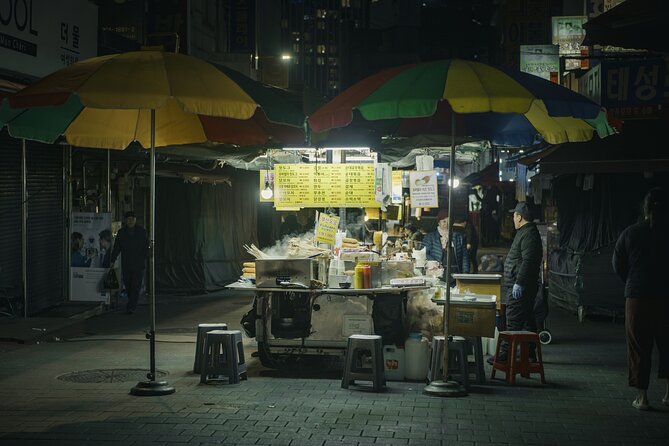
The final stop is Namdaemun Market, with about one hour set aside for food and exploration. The market is described as Korea’s largest and oldest traditional market, with vendors selling goods there for more than 600 years.
The tour ends here for good reason. After the difficult history of the first stops, the market brings you into the everyday rhythm of Seoul. You see commerce, food, and local routine rather than monuments and official stories.
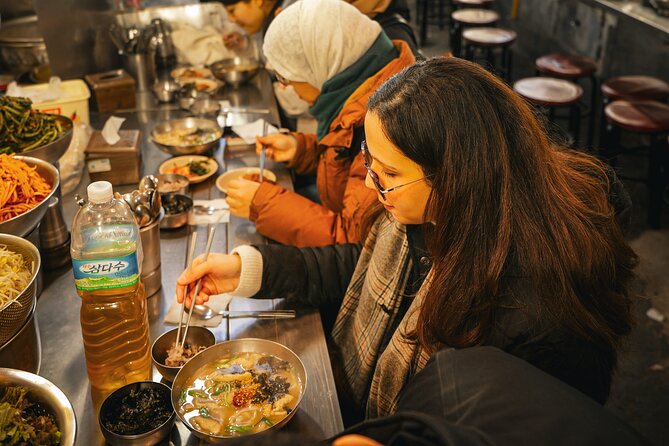
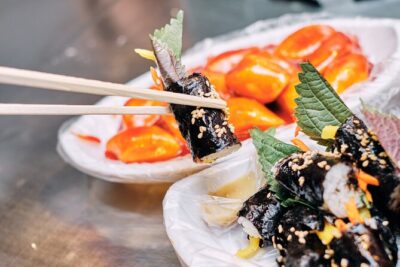
Food tastings are included, and the route features the well-known Kalguksu Alley. Kalguksu is hand-cut noodle soup, and the alley is presented as a place for a simple, familiar meal rather than formal dining. The tour also includes humble street foods that reflect the comfort and practicality of Seoul’s food culture.
Because the exact tasting selection is not specified, I would not book this expecting a fixed multi-course menu. Think of the food as a guided introduction to market eating. The guide can help explain what you are having and how it fits into local life.
One hour is enough to eat and get a feel for the market, but Namdaemun is large. You will not see every section or shop. The advantage is that you finish in a place where you can return later, perhaps with a better sense of what to look for.
The end point is Namdaemun Market at 21 Namdaemunsijang 4-gil in Jung District. That makes the tour convenient if you want to continue shopping or eating after the official program ends. The tour does not return you to the starting point, so plan your evening from the market rather than expecting a hotel drop-off.
What the $65 price really covers
At $65 per person, this tour is not the cheapest way to visit the sights independently. You are paying for structure, explanation, and the chance to connect several places without working out each transfer yourself.
The price includes:
- An English-speaking professional guide
- Transportation costs during the tour
- All entrance fees
- Food tastings at Namdaemun Market
That package makes the price easier to justify. Seodaemun Prison and Deoksugung Palace both include admission, and the transport removes some of the small costs and decisions that can slow down a half-day in Seoul.
The greatest value comes from the guide. You can walk through Seodaemun Prison alone, but the historical meaning may not come through as clearly. The tour is designed to explain links among colonial rule, independence efforts, royal modernization, foreign support, and present-day Seoul.
There are limits. Tips are not included, and the group can have as many as 99 people. The maximum is quite high for a history-focused walking tour, even though the actual departure may be smaller. If you want long personal conversations with the guide or a quiet, intimate group, ask about the expected size before booking.
The tour is often booked around 13 days ahead. That suggests planning is wise, especially if your Seoul dates are fixed. Free cancellation is available until 24 hours before the start time, subject to the stated local-time cutoff. Changes made inside that window are not accepted, and late cancellations are not refunded.
Timing, weather, and practical preparation
The 2:30 pm start shapes the whole experience. You finish at roughly 6:30 pm, depending on the pace of the group and the time spent at each stop. This schedule lets you see Seoul in the afternoon and reach Namdaemun around the start of the evening, but it leaves little room for delays.
You receive detailed information and the guide’s contact through WhatsApp one day before the tour. Provide a phone number that works with WhatsApp if possible. If you do not use WhatsApp, the details are sent by email, but communication with the guide may be harder.
The tour runs as scheduled in rain or snow unless the conditions make the activity impossible. The cancellation terms also state that poor weather can lead to a different date or a full refund. Bring suitable clothing and shoes, since the route includes outdoor walking and the pace may not slow much for weather.
The meeting point is 95-10 Hyeonjeo-dong in Seodaemun-gu, near public transport. Since the tour ends elsewhere, allow time to find the starting point and do not plan a tight appointment immediately after the finish.
I would also avoid arriving hungry enough to need a full meal before the tour. The market section includes food tastings, and the final hour is intended to be part of the experience.
Who should book this experience
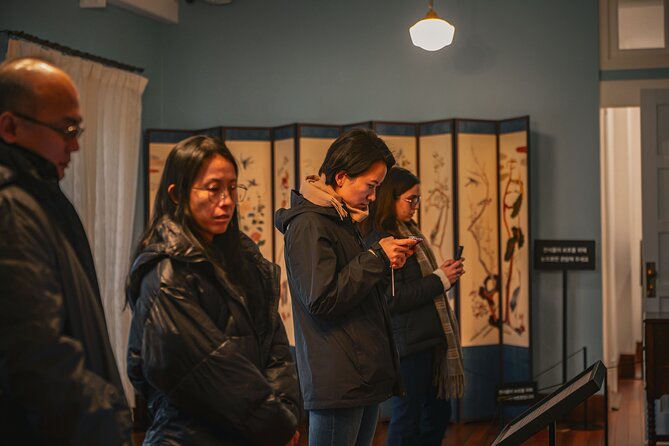
I would recommend this tour to you if you want historical context and local food in one afternoon. It suits first-time visitors who want a clear introduction to Seoul’s modern political story, as well as people who have already seen the famous palace district and want a different route.
It is a good match for:
- Adults and older children who can engage with difficult historical subjects
- Visitors interested in Korea’s independence movement and Japanese colonial rule
- People who prefer guided explanation to reading displays alone
- Food-focused visitors who want a market meal with cultural context
- Anyone comfortable walking between several central Seoul sights
I would be more cautious if you dislike emotionally heavy museums, need a slow pace, or have limited stamina. The four hours are full, and one Spanish-speaking participant found the tour rushed enough to suggest starting an hour earlier. That is useful advice, even though the published start remains 2:30 pm.
The tour is conducted in English, and the guide’s ability to answer questions is one of its important strengths. If your main goal is palace photography, choose a palace-centered visit instead. If your goal is to understand how Seoul’s past still shapes its streets, this route offers more.
Should you book the Seoul History Tour?
Book it if you want a compact, serious introduction to Seoul that ends with food rather than a gift shop. Seodaemun Prison and the explanations around it are the main reason to go. Dilkusha adds a less familiar international angle, while Deoksugung and Sungnyemun connect the story to royal change and the modern city.
The $65 price is fair when you use the included admissions, transport, guide, and tastings. Just set the right expectations: this is a brisk group tour, not a private deep-reading of every site. Wear comfortable shoes, keep your afternoon open, and arrive ready for both difficult history and a practical, satisfying market finish.
FAQ
How long is the Seoul History Tour?
The tour lasts approximately four hours. It starts at 2:30 pm and finishes at Namdaemun Market.
What sights are included?
The route includes Seodaemun Prison History Hall, Dilkusha, Deoksugung Palace, Sungnyemun Gate, Seoul City Hall, and Namdaemun Market.
Is admission included?
Yes. Entrance fees for the included attractions are covered in the tour price.
Is food included?
Yes. Food tastings at Namdaemun Market are included, with time at Kalguksu Alley. Tips are not included.
Where does the tour start and end?
The tour starts at 95-10 Hyeonjeo-dong, Seodaemun-gu, Seoul. It ends at Namdaemun Market, 21 Namdaemunsijang 4-gil, Jung District, Seoul.
What should I know about the walking requirements?
You should have a moderate level of physical fitness. The tour includes several stops, outdoor walking, and movement between sites.
What happens if the weather is bad?
The tour operates in rain or snow unless the weather makes it impossible to proceed. If poor weather causes cancellation, you will be offered another date or a full refund.
More Historical Tours in Seoul
- Seoul: Evening Dark History, Folklore & Ghost Story Walking Tour
★ 5.0 · 593 reviews - Hanbok Photoshoot and History Tour at Gyeongbokgung Palace
★ 5.0 · 276 reviews - From Seoul: Dae Jang Geum Park Historic K-Drama Set Tour
★ 4.9 · 143 reviews - Seoul: City Highlights and Historical Experience No Shopping
★ 5.0 · 74 reviews
Just added around Seoul
- Seoul: Korean & English Language Exchange Global Party★ 5.0 · 28 reviews
- From Seoul: Yongpyong Ski Day Tour with Transportation★ 4.9 · 40 reviews
- You’re Invited to Our Home in Seoul: The Only Cooking Class!★ 5.0 · 8 reviews
- Your Personal Seoul Photographer!★ 4.1 · 15 reviews
- Unique Native Experience : Han River Picnic, Board game, BBQ★ 5.0 · 3 reviews
- From Seoul: Hwacheon Ice Fishing and Lighting Festival Tour★ 4.5 · 4 reviews
- Seoul: Gangneung BTS K-Pop & K-Drama Filming Locations Tour★ 4.6 · 14 reviews
- Seoul Private RV tour, explore real Korea from Past to Future★ 5.0 · 5 reviews
Markets, compared.
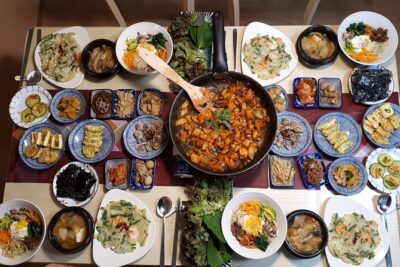
Local Home Korean Cooking Class & Market Adventure in Seoul
Read our review →
Downtown Seoul Guided Food & Market Tour with 8+ Local Tastings
Read our review →
Korean Cooking Class at a Local Home and Market Tour
Read our review →
Seoul Night Palace & Market Food Tour with Vehicle
Read our review →
Cook 3 Authentic Korean Dishes with Local Market Tour
Read our review →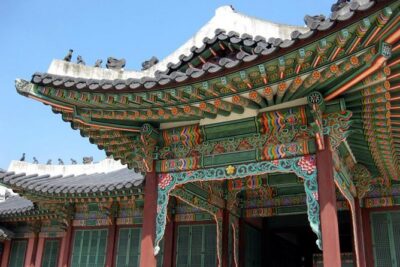
Korean Palace and Market Tour in Seoul Including Insadong and Gyeongbokgung Palace
Read our review →Browse the lists this tour appears in