
Reviewed · COOKING CLASSES
Traditional Korean 6-Dish Cooking Class + Hidden Alley Tour Seoul
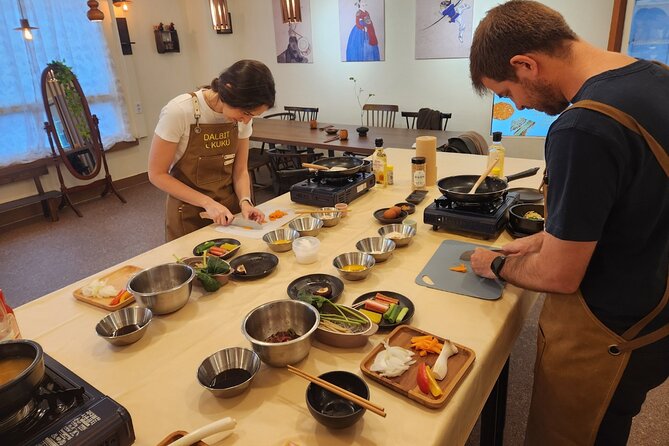
Seoul’s best food lessons often happen away from the polished tourist streets. This private three-and-a-half-hour experience begins in a small traditional-meets-modern kitchen near Chungmu-ro, where chef Jiny teaches you six Korean dishes before leading you through Euljiro’s tucked-away lanes.
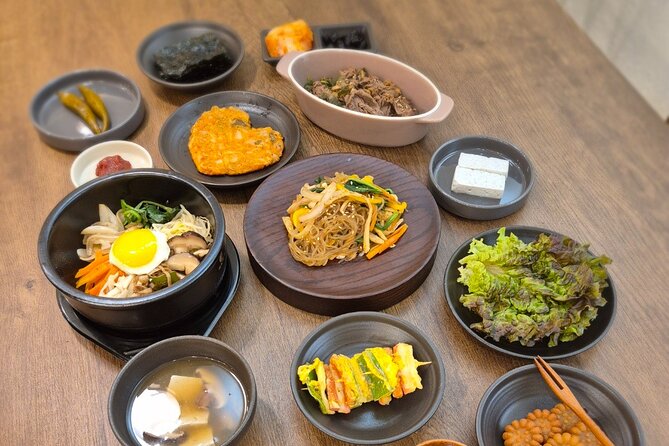
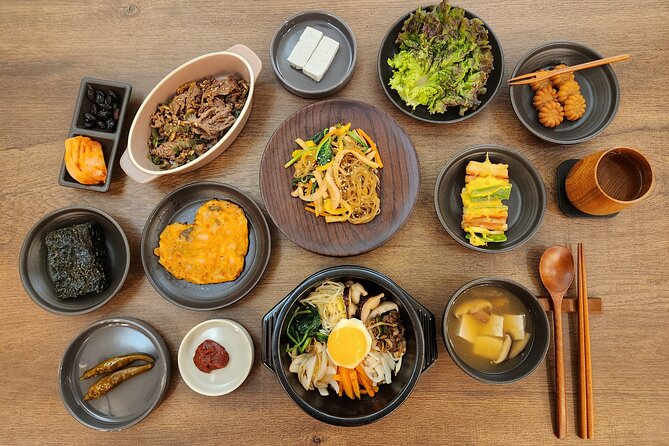
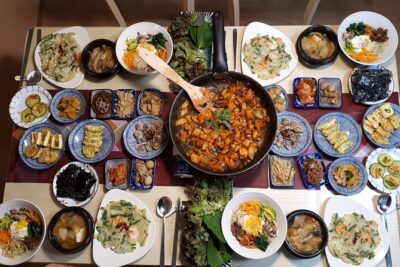
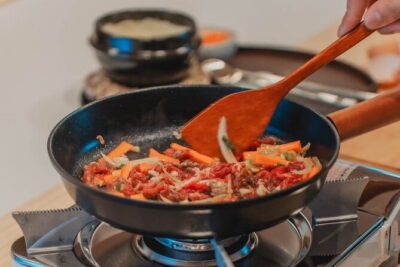
I like the practical menu: you prepare hot stone bibimbap, bulgogi, japchae, doenjang-jjigae, kimchi pancake, and vegetable skewers, then sit down and eat what you made. I also like the personal extras, including printed recipes, photos, a quiz, and a small souvenir. The main consideration is time: this is a full meal followed by a walk, so it may feel long if you want a quick cooking demonstration rather than active participation.
Key points at a glance
- Six dishes in one class: You prepare a substantial Korean meal rather than making just one famous dish.
- Chef Jiny leads the session: Her teaching is clear, friendly, and adjusted to different cooking abilities.
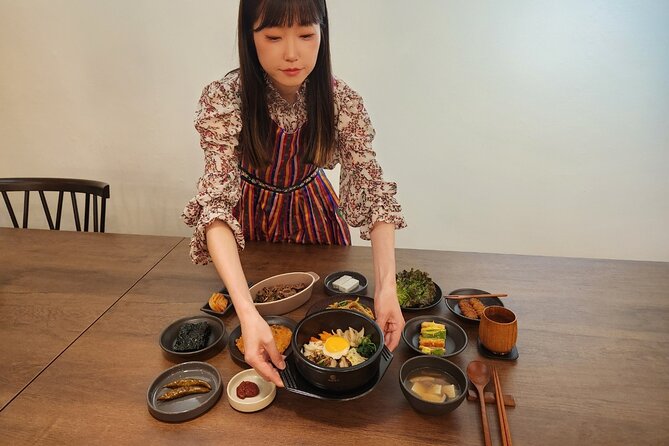
- Color has a purpose: The introduction explains Korean food culture and the balance of colors in dishes such as bibimbap.
- Euljiro after lunch: The alley walk adds local history and neighborhood character to the kitchen lesson.
- Useful take-home material: You receive recipes, photos, and a small Korean souvenir.
- Good value for a private group: At $85 per person, the price includes instruction, food, drinks, snacks, photos, and the walking tour.
Starting in a traditional kitchen near Chungmu-ro
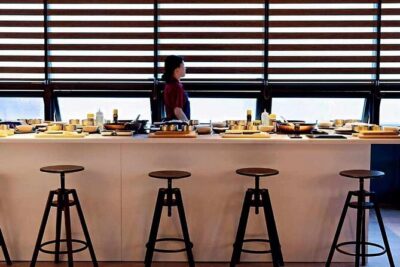
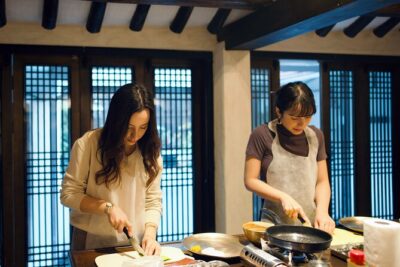
Your meeting point is at 2F, 50-4 Chungmu-ro, in Seoul’s Jung District. The studio is described as cozy, with old Korean touches mixed with a cleaner modern design. It is not a large restaurant or a stage-like demonstration kitchen. That gives the class a more personal feel, especially since only your own group takes part.
The session begins with a welcome, a warm cup of traditional Korean tea, and an introduction to the food you will make. Jiny does more than hand you ingredients and read out instructions. She explains the meaning behind dishes and ingredients, including the Korean idea of color harmony. This is especially useful with bibimbap, where the arrangement of different colors is part of the dish’s appeal, not just decoration.
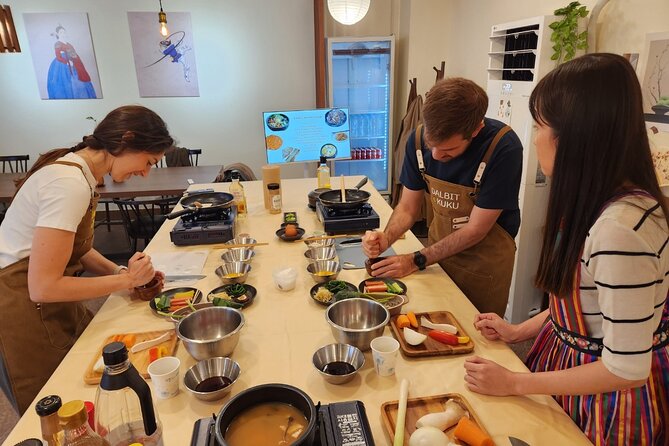
You can expect the ingredients to be prepared and organized before the cooking begins. That matters. You spend your time learning techniques and assembling food instead of waiting for basic preparation to finish. Several participants have also found the setup clean and tidy, with individual cooking stations and enough room for about ten people in the studio.
The class suits beginners well. Jiny’s instructions are intended to be simple, and the pace can be adjusted so you can follow each stage. You do not need to arrive as a skilled home cook. At the same time, more experienced cooks should still find useful details in the way Korean flavors, noodles, marinades, and stews come together.
A few more Seoul trips to weigh up
- Local Home Korean Cooking Class & Market Adventure in Seoul
★ 5.0 · 1,024 reviews - Master Korean traditional cooking with a Kimchi chef
★ 5.0 · 385 reviews - Seoul: Korean Cooking Class at a Local Home and Market Tour
★ 5.0 · 348 reviews
Six Korean dishes, six different lessons
The menu gives you a broad introduction to Korean home cooking. You are not simply making six versions of the same spicy dish. Each item shows a different cooking method and a different part of the Korean table.
Hot stone bibimbap
Bibimbap is the visual centerpiece of the class. The dish brings rice, vegetables, and seasoned ingredients together, with careful attention to color and balance. The hot stone style also adds texture and warmth, especially where rice meets the heated bowl.
This is a good dish to learn because it can be adapted at home. You can use the recipe as a guide, then adjust vegetables or toppings based on what you can find. The lesson also gives you a better sense of why Korean meals often combine several small tastes in one bowl.
Bulgogi
Bulgogi introduces one of Korea’s most familiar dishes: thinly prepared beef with a sweet and savory marinade. The appeal here is not only eating it. You learn how the seasoning creates a rounded flavor and how the meat fits into a wider Korean meal.
For first-time cooks, this is likely one of the easiest recipes to repeat at home. You receive a printed Korean recipe, and the class gives you a chance to see the process rather than trying to reconstruct it from a restaurant meal.
Same country, a completely different kind of day:
- Best DMZ Tour Korea from Seoul (Red Suspension Bridge Optional)
★ 5.0 · 41,422 reviews - DMZ Tour: 3rd Tunnel, Option(Suspension Bridge, Boat) from Seoul
★ 5.0 · 21,373 reviews - DMZ tour south Korea from Seoul (NK experience hall, defector)
★ 5.0 · 20,599 reviews - Seoul: DMZ Tour with Optional Suspension Bridge
★ 4.8 · 5,277 reviews
Japchae
Japchae brings noodles into the menu, along with vegetables and seasoning. It is a useful lesson in handling several ingredients while keeping the final dish balanced. The noodles also give the meal a different texture from the rice, stew, pancake, and meat.
One participant who particularly liked japchae planned to make it again at home. That is a good sign for anyone choosing the class partly for its take-home value. You leave with recipes for the dishes, not just a memory of lunch.
Doenjang-jjigae
Doenjang-jjigae is a Korean soybean paste stew with a savory, earthy character. It gives the class a chance to explain the role of fermented flavors in Korean cooking. Compared with the more immediately familiar bulgogi, this stew may be the dish that teaches you the most about everyday Korean food.
The recipe is also useful context for the meal as a whole. Korean cooking is not only about barbecue or chili. A home-style table can include a warm stew alongside rice, vegetables, noodles, and meat.
Kimchi pancake
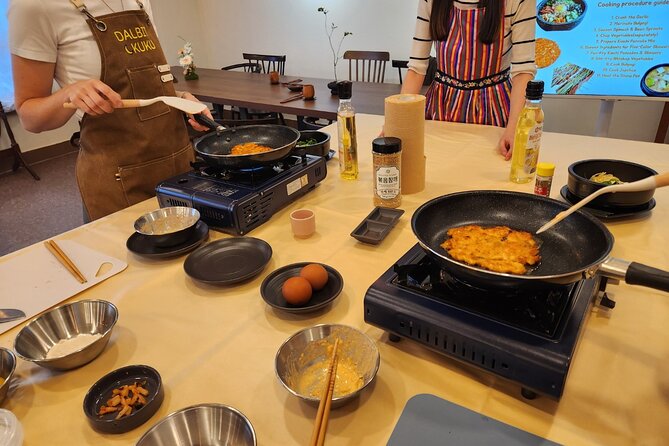
The kimchi pancake adds a crisp, casual element. It is hands-on and approachable, making it a fun part of the session for cooks at different skill levels. You get to see how a small amount of batter can bind strong ingredients into a dish that works as a snack or side.
If you like Korean street food, this is one of the recipes you may be especially eager to repeat. The lesson gives you more control than ordering a pancake in a restaurant because you can watch how the mixture is handled and cooked.
Vegetable skewers
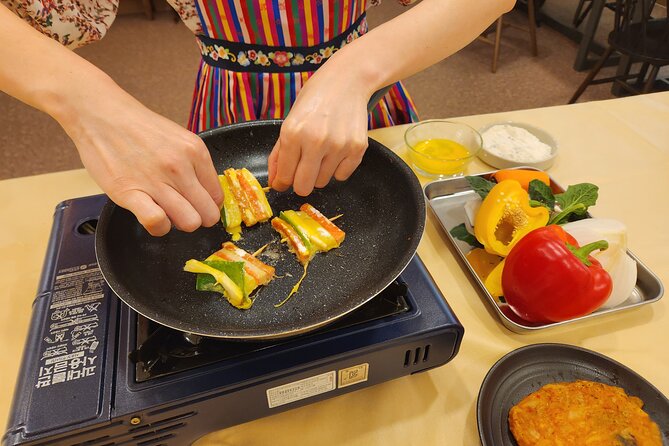
The vegetable skewers complete the six-dish menu with another colorful side. They reinforce the class’s focus on presentation and balance while adding a simple format that can be useful for entertaining at home.
Some descriptions refer to these as sanjeok, a traditional Korean skewer-style dish. The exact ingredients may vary with the class, but the important point is that you take part in preparing the full menu rather than watching Jiny cook everything for you.
Eating together like a Korean family
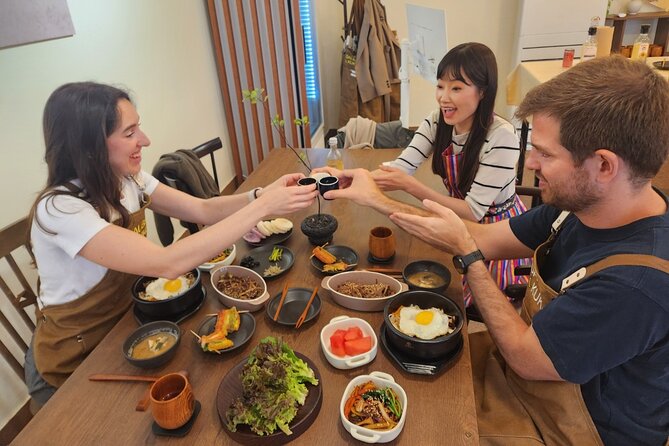
Once the cooking is finished, you gather around the table and eat the meal together. This is more than a convenient lunch break. It shows how the dishes work as a group, with contrasting textures, temperatures, colors, and flavors sharing the table.
You should arrive hungry. The meal is substantial, and the included food, drinks, beverages, and snacks add to the value of the experience. It is not a small tasting where you leave looking for lunch afterward. You may also receive traditional desserts, although the supplied details do not name them, so do not book this expecting a specific sweet.
This shared table is one of the strongest parts of the format. You make the food, see how it is presented, and then eat it while the lesson is still fresh. It also gives Jiny time to answer questions about Korean cooking, culture, and language in a relaxed setting.
The class has earned strong praise for its welcoming tone. Jiny takes time to learn names, encourages everyone to participate, and makes people with different abilities feel capable. Her husband may also help with hosting and practical details. The tone is warm without being formal, which is helpful if you are nervous about cooking in front of other people.
Euljiro’s alleys after the meal
After lunch, the experience leaves the studio and turns into a walking tour through Euljiro. This neighborhood is known for its old workshops, small businesses, back lanes, and changing urban character. The appeal is not a list of major sights. It is the chance to see the less polished side of central Seoul and hear stories about how the district has changed.
Jiny leads you to places that are easy to miss if you walk through Euljiro on your own. The walk may include small local businesses and unusual corners that have little signage for an outside visitor. You also hear stories about the area’s past and transformation, which gives the streets more meaning than a simple stroll would provide.
This portion is a smart addition to the cooking class. You begin by learning about Korean food inside a local-style studio, then see a working Seoul neighborhood outside. The two parts fit together better than a cooking lesson followed by a random sightseeing stop.
The walk is also useful if you have already visited the grand palaces, shopping districts, and major markets. Euljiro gives you a different view of Seoul. It is less about checking off landmarks and more about noticing narrow alleys, old storefronts, and the small details that are easy to miss.
Wear comfortable shoes. The total experience lasts about three hours and thirty minutes, and the walking comes after a full meal. The tour returns to the original meeting point, so you can plan your next stop from there.
Photos, recipes, quiz, and a personal finish
The practical extras make this feel more complete than a standard cooking class. Complimentary photos document the preparation and meal, so you do not need to spend the whole session taking pictures yourself. The photos are sent as a file, according to the experience details and participant feedback.
The printed Korean recipe is the most useful souvenir. It gives you a real chance to repeat the dishes at home, especially if you buy the ingredients while Korean flavors are still fresh in your mind. The recipes may also help you remember which steps mattered most, something that is easy to forget after a busy holiday.
At the end, there is a quiz and a small surprise gift. The quiz adds a playful close to the day and checks what you picked up about Korean food and culture. The souvenir is modest, but it gives the experience a personal finish rather than ending abruptly after the alley walk.
Is $85 a fair price?
At $85 per person, this is not the cheapest way to eat Korean food in Seoul. You could have a fine meal for far less. The value comes from the combination of a private class, six dishes, a filling meal, drinks, snacks, instruction, photos, recipes, a souvenir, and a neighborhood tour.
For a couple or small group, the price is easier to justify because you receive several hours of direct attention. The format also saves you from booking a separate cooking class and walking tour. If you value practical skills and local context, the package is fairly priced.
The value is weaker for someone who only wants to sample Korean food. You do much more than eat. You work through each recipe, listen to cultural explanations, and walk afterward. That makes the class active and rewarding, but it also means you should be ready to spend the full time participating.
The private format is another advantage. Only your group takes part, so you can ask questions and work at a comfortable pace. It may be especially useful for families, couples, birthday groups, and friends who want a shared activity rather than a standard restaurant meal.
Who should book this experience?
I would choose this for you if you want to understand Korean food by making it yourself. It is a strong fit for beginners, food-focused visitors, couples, families, and small groups. The instruction is supportive, and the menu gives you several recipes to take home.
It also suits repeat visitors to Seoul who want a neighborhood experience outside the main sightseeing route. Euljiro’s alleys add local flavor without requiring a separate day trip.
You may want something else if you dislike group-style cooking, prefer a short demonstration, or have limited time between other plans. Even though the activity is private to your group, it still requires active participation and ends with a walk. It is also worth checking dietary needs before booking, since the menu includes beef, kimchi, soybean paste stew, and other prepared ingredients, and no specific dietary substitutions are provided in the details.
Booking confirmation is provided immediately. Service animals are allowed, and the meeting point is near public transportation. Free cancellation is available up to 24 hours before the start time. Changes or cancellations made inside that window are not accepted for a refund.
Should you book the Korean cooking class and alley tour?
Book it if you want a full, friendly introduction to Korean cooking with something tangible to take home. The strongest reasons are the six-dish menu, Jiny’s patient teaching, the complete meal, and the unusual Euljiro walk afterward.
I especially like that the experience connects food with place. You do not just learn how to make bibimbap and bulgogi in an anonymous room. You hear why presentation matters, eat together, and then walk through a real Seoul neighborhood with someone who can point out details you might otherwise miss.
Skip it if you are looking for a quick food stop or a formal chef demonstration. For everyone else, $85 buys a substantial half-day activity with useful recipes, photos, cultural context, and a memorable taste of everyday Seoul.
FAQ
Where does the cooking class begin?
The experience begins at 2F, 50-4 Chungmu-ro, Jung District, Seoul, South Korea.
Where does the experience end?
The activity ends back at the original meeting point.
How long does the experience last?
The experience lasts approximately three hours and thirty minutes.
Is the tour private?
Yes. Only your group participates in the private tour or activity.
Which Korean dishes will I prepare?
The menu includes hot stone bibimbap, bulgogi, japchae, doenjang-jjigae, kimchi pancake, and vegetable skewers.
Are recipes and photos included?
Yes. Complimentary photos and a printed Korean recipe are included. A special souvenir is also provided.
What is the cancellation policy?
You can cancel at least 24 hours before the start time for a full refund. Cancellations or changes made less than 24 hours before the start time are not accepted for a refund.
Just added around Seoul
- Seoul: Korean & English Language Exchange Global Party★ 5.0 · 28 reviews
- From Seoul: Yongpyong Ski Day Tour with Transportation★ 4.9 · 40 reviews
- You’re Invited to Our Home in Seoul: The Only Cooking Class!★ 5.0 · 8 reviews
- Your Personal Seoul Photographer!★ 4.1 · 15 reviews
- Unique Native Experience : Han River Picnic, Board game, BBQ★ 5.0 · 3 reviews
- From Seoul: Hwacheon Ice Fishing and Lighting Festival Tour★ 4.5 · 4 reviews
- Seoul: Gangneung BTS K-Pop & K-Drama Filming Locations Tour★ 4.6 · 14 reviews
- Seoul Private RV tour, explore real Korea from Past to Future★ 5.0 · 5 reviews
Cooking Classes, compared.
Local Home Korean Cooking Class & Market Adventure in Seoul
Read our review →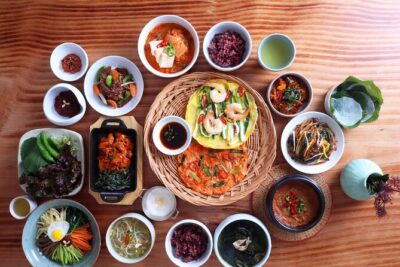
Master Korean traditional cooking with a Kimchi chef
Read our review →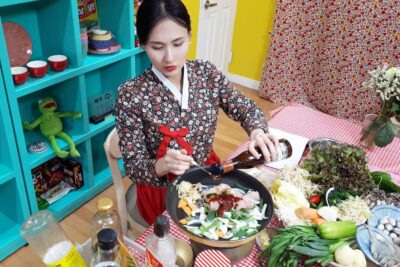
Korean Cooking Class at a Local Home and Market Tour
Read our review →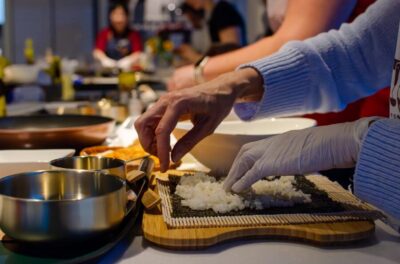
Korean Cooking Class with Grocery Shopping at Seoul Local Market
Read our review →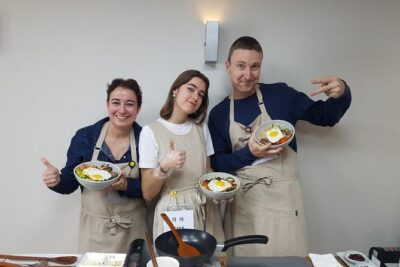
Royal Seoul Cooking Class in a 100-Year-Old Hanok
Read our review →Browse the lists this tour appears in