
Reviewed · COOKING CLASSES
Seoul: Korean Cooking Class at a Local Home and Market Tour
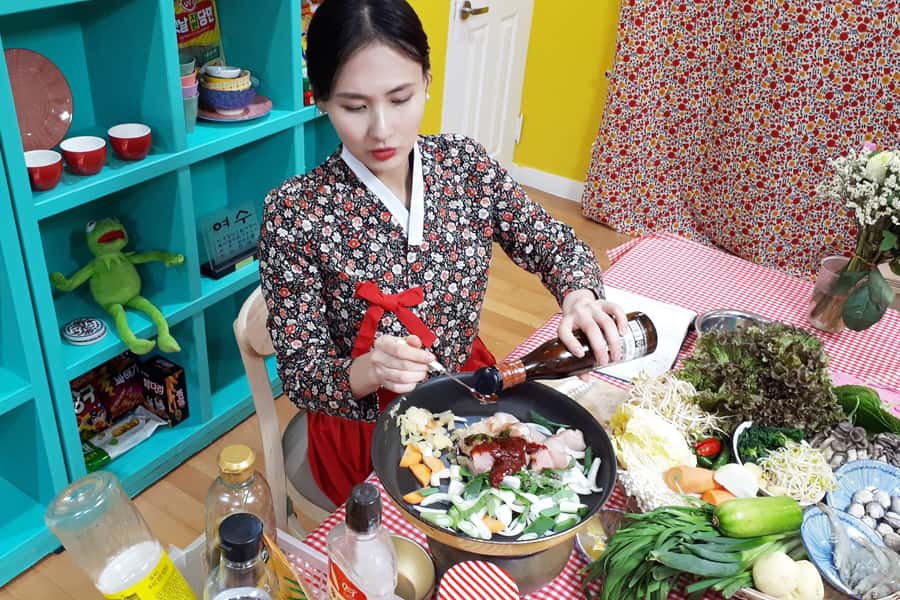
The best part of this Seoul experience is that it begins where everyday Korean cooking begins: at a neighborhood market. You will shop for ingredients, sample street food, learn a few Korean phrases, and then cook four dishes in a local home. I especially like the market-to-table format and the generous final meal, which includes the many small side dishes of a traditional Hanjeongsik table.
I also like that the class works for beginners. The host gives clear instructions, and each person has a place to cook. The main caution is practical: you must reach Mangwon Station on your own, and the local home has no elevator, so be ready for stairs.
Key Points at a Glance
- Mangwon Market comes first: Shop for class ingredients and taste local street food before cooking.
- Four Korean dishes are prepared: Make bibimbap, dakgalbi, haemul-pajeon, and doenjang-jjigae.
- A home setting adds character: Cook in a local residence rather than a formal restaurant kitchen.
- The meal is larger than the class menu: Your finished dishes are served with more than 10 Korean side dishes, rice, seasonal fruit, and rice wine.
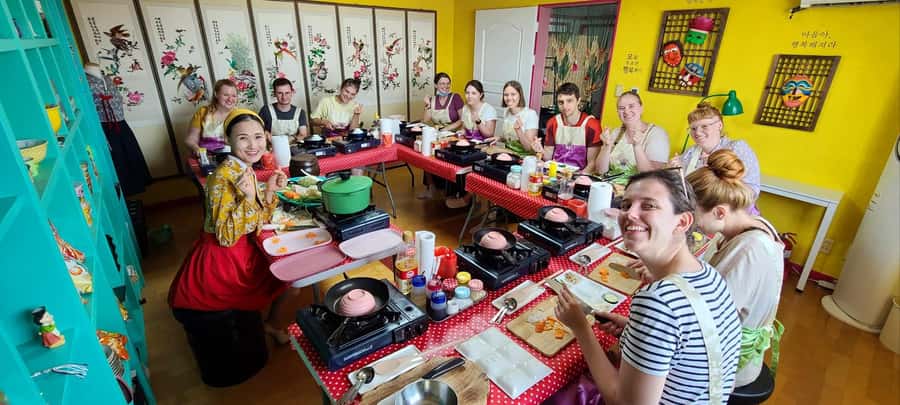
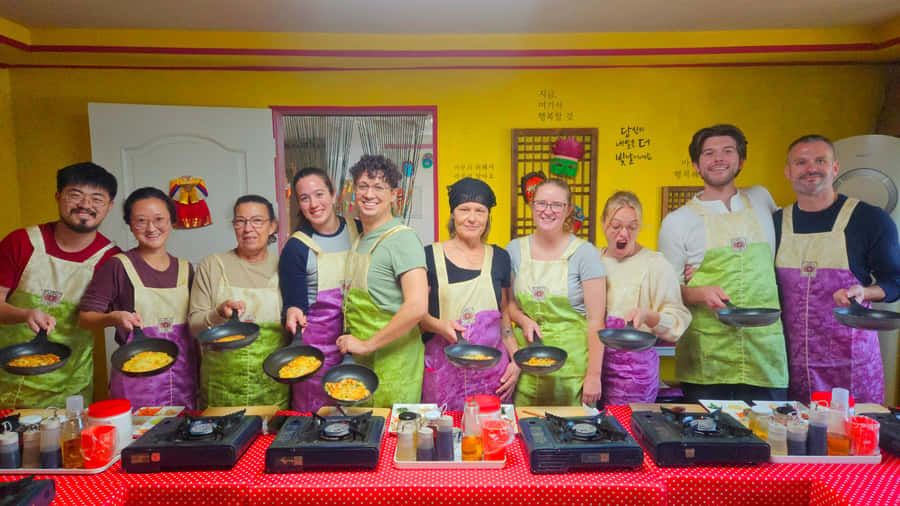
- The group stays small: The class is limited to 10 people, which gives you more room to ask questions and cook.
- Bring home practical recipes: Recipes are provided after the class, with some participants receiving them through WhatsApp.
Why This Cooking Class Feels Different
Many cooking classes begin with a prepared basket of ingredients. This one starts with a walk through a local market in Gyeonggi Province, giving you a better sense of how Korean households shop and eat. You do not just hear the names of ingredients in a classroom. You see them in their everyday setting, then use them a short time later.
That order matters. When you encounter fermented soybean paste, green onions, seafood, vegetables, and meat at the market, you already have some context by the time the cooking begins. Your chef-guide can explain what you are looking at and point out items you might otherwise pass without noticing.
The market is described as popular but less touristy than Seoul’s best-known food markets. That makes it useful for anyone who wants a glimpse of normal neighborhood shopping rather than a stop built mainly for sightseeing. You will also taste local street food during the walk, so the market portion is not only instructional.
The class has earned a 5 out of 5 rating from 348 reviews, and the praise is unusually consistent. The strongest themes are the hosts’ warmth, clear teaching, humor, and ability to make a mixed international group feel comfortable. Sarah, Sara, and Junghee are named in the feedback, so the host may vary by session.
A few more Seoul trips to weigh up
- Local Home Korean Cooking Class & Market Adventure in Seoul
★ 5.0 · 1,024 reviews - Master Korean traditional cooking with a Kimchi chef
★ 5.0 · 385 reviews - Seoul: Korean Cooking at Seoul Cooking Club!
★ 5.0 · 311 reviews
Meeting the Host at Mangwon Station
The meeting point is outside exit 2 at Mangwon Station. You are responsible for getting there and returning to the station afterward, since hotel pickup and drop-off are not offered.
Allow enough time to find the exit without rushing. The activity lasts about 3.5 hours, but the experience is built around several stages: meeting the host, visiting the market, tasting food, walking to the home, cooking, eating, and sharing conversation. A late arrival could affect more than just your own cooking time.
The small-group limit of 10 people is a real advantage here. A cooking class can become frustrating when one instructor must move between a crowded line of participants. With a smaller group, you should have a better chance to follow the demonstration, ask about ingredients, and receive help with tasks such as flipping the seafood and green onion pancake.
The instruction is available in English and Korean. The English-speaking hosts are repeatedly praised for explaining steps clearly and keeping the mood relaxed. That matters if you are new to Korean food or have little experience in a kitchen.
Shopping Through a Neighborhood Market
The market walk is more than a quick trip to collect supplies. Your host leads you through the stalls, identifies the ingredients needed for the class, and explains pieces of Korean food culture along the way.
You will also sample street food. The exact samples can vary, but the included tastings give you an early introduction to Korean flavors before you sit down to cook. This is one of the better features for anyone who wants to understand how Korean food works across different settings, from a market snack to a full home meal.
I like this part because it gives the cooking class a sense of place. You are not simply making dishes from a printed recipe. You are seeing the raw materials in a Korean shopping environment, then learning how they become familiar dishes.
The market walk does require walking and standing, and the tour does not offer hotel transportation. If you have limited mobility, contact the host before booking so you can clarify the route and access details.
Four Dishes, Four Korean Flavors
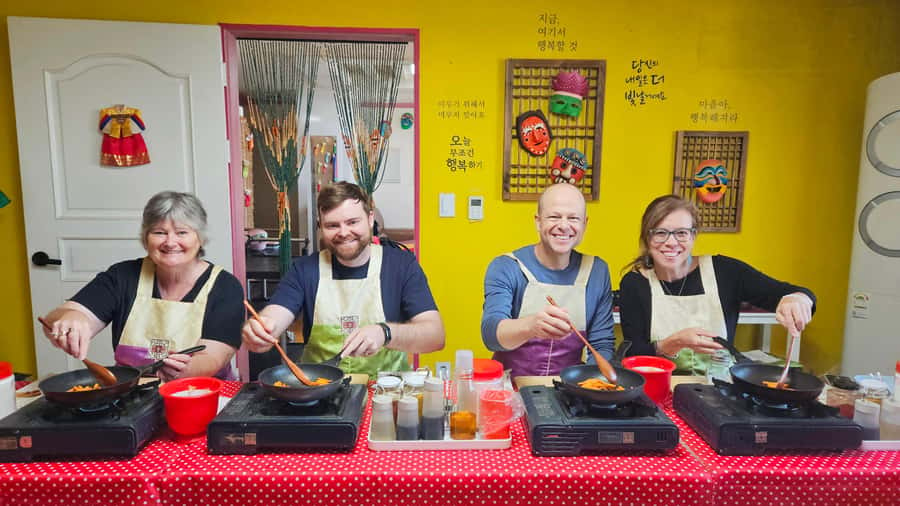
After the market, you go to the cooking venue in a local home. The host offers a welcome tea or drink, teaches a few Korean phrases, and then starts the hands-on cooking session.
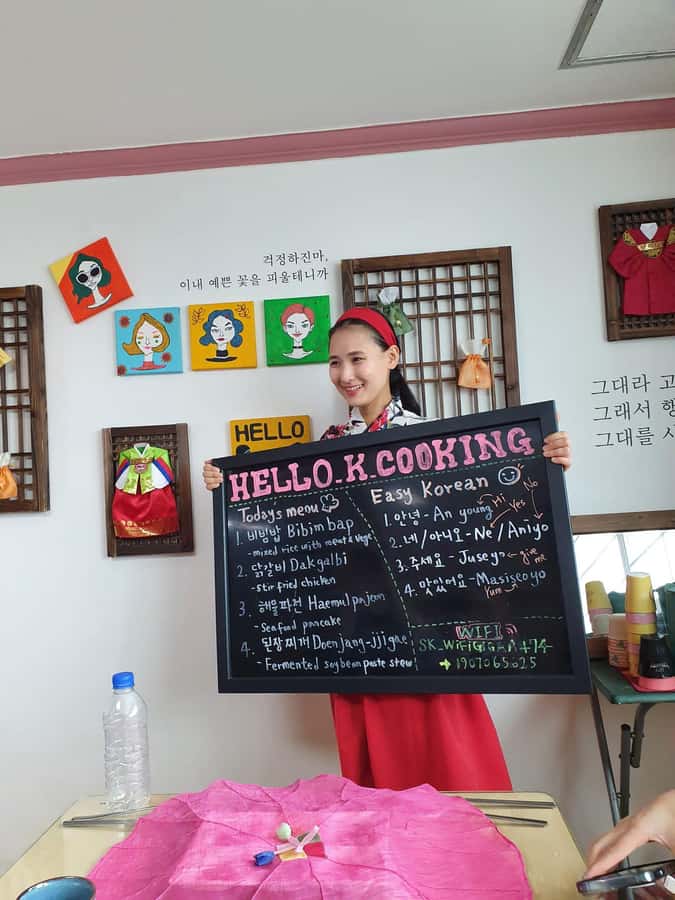
The menu covers a useful range of Korean staples:
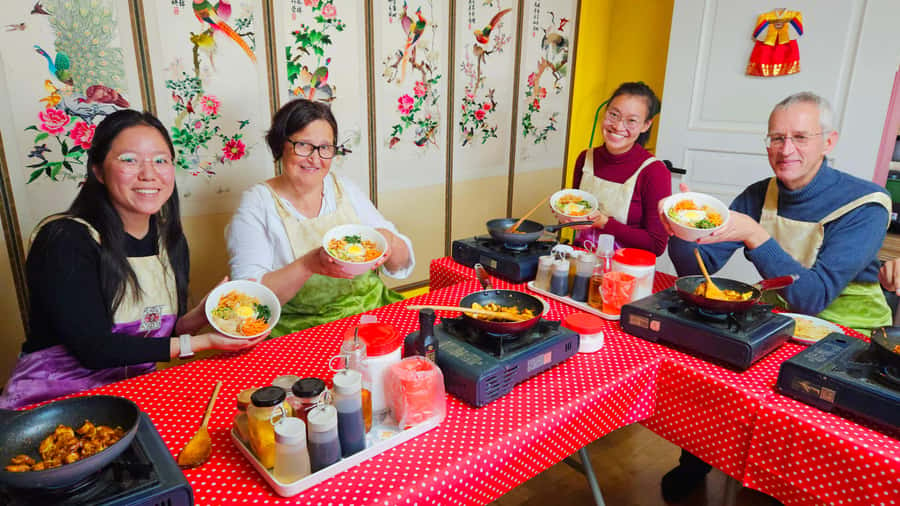
- Bibimbap: Mixed rice topped with meat and vegetables. This teaches you how several prepared ingredients come together in one bowl.
- Dakgalbi: Stir-fried chicken with a hearty, savory profile. It gives you practice with a cooked main dish rather than only assembled ingredients.
- Haemul-pajeon: A seafood and green onion pancake. Flipping the pancake is one of the class’s playful moments, and it gives the session a hands-on task that feels distinctly Korean.
- Doenjang-jjigae: Fermented soybean paste stew. This introduces one of the key savory flavors in Korean home cooking.
The menu is well chosen for a short class. You get rice, meat, seafood, vegetables, a pancake, and stew, rather than four dishes that all use the same technique. The class also gives you recipes, so you can try to recreate the meal after returning home.
The instruction is designed for beginners. You do not need to arrive with advanced knife skills or prior Korean cooking experience. The host demonstrates the process, then helps you work through it. Still, this is a hands-on class, not a show where you simply watch someone else cook.
Same country, a completely different kind of day:
- Best DMZ Tour Korea from Seoul (Red Suspension Bridge Optional)
★ 5.0 · 41,422 reviews - DMZ Tour: 3rd Tunnel, Option(Suspension Bridge, Boat) from Seoul
★ 5.0 · 21,373 reviews - DMZ tour south Korea from Seoul (NK experience hall, defector)
★ 5.0 · 20,599 reviews - Seoul: DMZ Tour with Optional Suspension Bridge
★ 4.8 · 5,277 reviews
The Hanjeongsik Meal at the Local Home
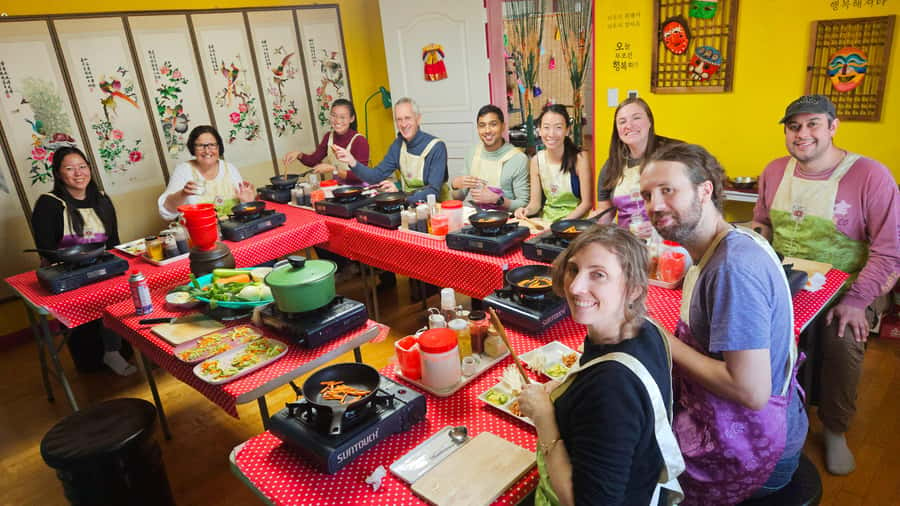
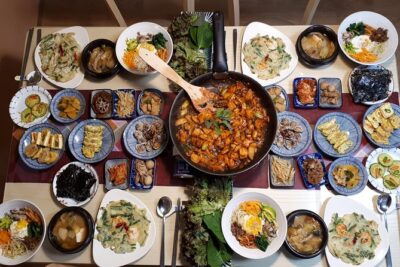
The cooking portion ends with the reward: sitting down to eat what you prepared. Your host also provides a Hanjeongsik-style meal with more than 10 side dishes, rice, seasonal fruit, and rice wine.
Hanjeongsik is a traditional Korean course meal built around variety. Instead of one large plate carrying the whole meal, the table includes many small dishes with different colors, textures, and flavors. That arrangement helps explain why Korean meals often feel generous even when each side dish is modest.
This is where the experience becomes more than a recipe lesson. You get to see how Korean food is served and shared at the table. The side dishes supplied by the host also make the final meal much more substantial than the four dishes you cook yourself.
Water and rice wine are included. If you do not drink alcohol, you can simply skip the rice wine, but you should contact the host in advance about dietary restrictions or allergies. The supplied information specifically asks you to discuss those concerns with the local host before the activity.
The local home setting is a major part of the experience. It gives the meal a personal feel and creates space for conversation about Korean food and daily life. Several participants especially valued being welcomed into someone’s home and seeing the host’s Korean-style decoration.
A Friendly Teaching Style for Beginners
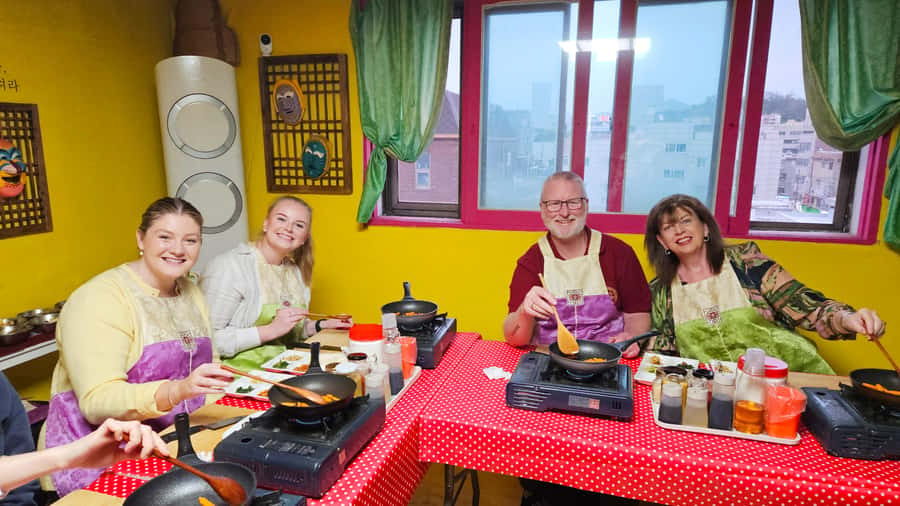
The host’s personality is central to the experience. Sarah is described as organized, energetic, and very comfortable speaking English. Sara is praised for being fun, helpful, and informative, while Junghee is described as welcoming, funny, and easy to spend an afternoon with.
The names differ, but the teaching qualities are consistent. You can expect an instructor who explains the food, includes each person in the group, and uses humor to keep the class moving. This is important in a small kitchen, where unfamiliar ingredients and new techniques could otherwise feel intimidating.
You will also learn a few Korean phrases. This is a small addition, but it helps connect the food with the language and culture around it. The class includes a Tal mask activity as well, allowing you to try on an artful Korean mask associated with heritage festivals.
The mask is not the main reason to book the class, but it adds a memorable cultural detail. It gives you something visual and playful to do between the market walk and the meal.
What the Price Includes
At $98 per person, this is not the cheapest way to eat in Seoul. It is also not simply a restaurant meal. The price covers the market walk, street-food samples, a professional cooking class, ingredients, equipment, welcome tea, the cooked meal, many side dishes, rice wine, water, photo and video service, and recipes.
I would judge the value by how much of the afternoon you want to fill with guided activity. If you only want to taste Korean food, you can eat well for less in Seoul. If you want a local market visit, personal instruction, a home meal, cultural explanations, and recipes to use later, the cost becomes easier to justify.
The included Hanjeongsik meal improves the value. You are not paying for a small tasting plate after class. You prepare four dishes and then eat them alongside a broad selection of side dishes and fruit.
The photo and video service is another useful extra, especially if you are busy cooking and do not want to manage your phone. Do not book this solely for professional food photography, since the exact service details are not specified, but it is a thoughtful inclusion.
Practical Details Before You Book
The activity lasts 3.5 hours, with starting times dependent on availability. It ends back at the meeting point, so you can plan your next Seoul activity from Mangwon Station.
There is no hotel pickup or drop-off. You need to make your own way to Mangwon Station exit 2 and return there afterward. Check your route before the day of the class, particularly if you are carrying shopping bags or traveling with children.
The local home has no elevator. That is the most important access detail, and anyone who has trouble with stairs should ask the host for more information before reserving.
The group is limited to 10 participants, and the instructors speak English and Korean. Free cancellation is available up to 24 hours before the activity for a full refund. You can also reserve now and pay later, which may help if your Seoul schedule is still changing.
For allergies and dietary restrictions, contact the host before booking. Do not assume that a dish can be altered on the day, since the ingredients are purchased as part of the market visit and the menu includes seafood, meat, fermented soybean paste, and rice wine.
Who Will Enjoy This Experience Most
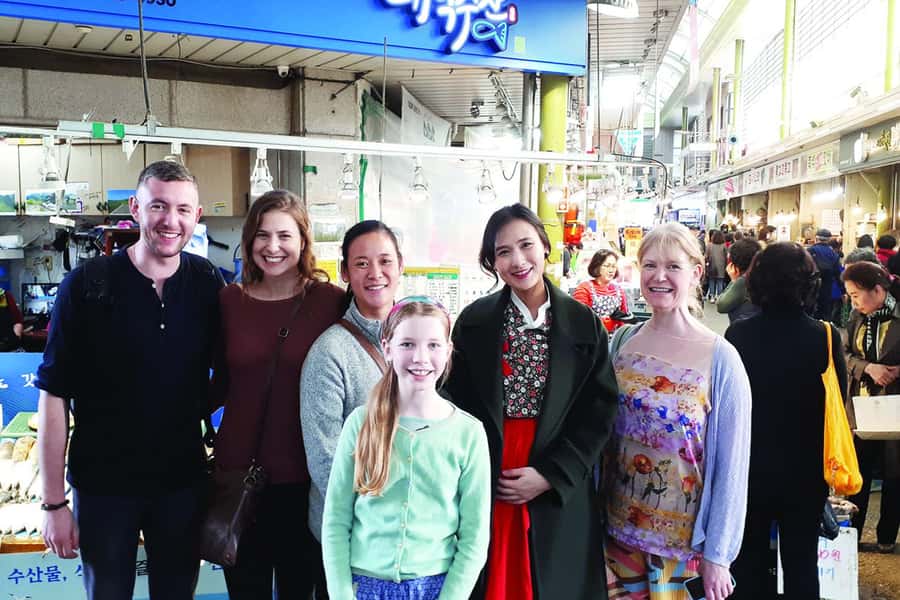
I would recommend this class to first-time visitors who want food and culture in the same half-day. It is also a strong choice for people who enjoy meeting local hosts, asking questions, and learning a few techniques they can use at home.
It suits solo participants because the small group and guided format make it easy to join in. Couples and families can also share the cooking tasks, though the home setting and stairs are worth considering with young children or anyone needing step-free access.
You do not need to be a serious cook. In fact, the class seems best suited to curious beginners. You will receive clear instructions and have your own cooking space, but you should be prepared to participate rather than simply observe.
This may be less suitable if you have a tight schedule, dislike group activities, or want a class focused on one highly technical dish. The experience is broad and social. Its strength is the combination of market, cooking, conversation, and a full meal.
Should You Book It?
Book this experience if you want to understand Korean food through the places, ingredients, and people connected to it. The market visit gives the class a local setting, the four-dish menu gives you useful skills, and the Hanjeongsik meal shows how Korean food is presented at the table.
I would especially choose it early in a Seoul trip. You can use the market knowledge and recipes later, and the class gives you a clearer idea of what you are ordering in restaurants. Skip it only if stairs, independent transport, dietary limits, or a preference for quiet sightseeing make the format inconvenient.
For most food-curious visitors, $98 buys a substantial 3.5-hour experience rather than just a meal. The warm teaching style, small group, home setting, and generous spread make this one of the stronger ways to spend an afternoon around Mangwon.
FAQ
Where does the cooking class begin?
Meet your guide outside exit 2 at Mangwon Station in Seoul.
How long does the activity last?
The experience lasts 3.5 hours. Starting times depend on availability.
Where does the activity end?
The activity ends back at the meeting point at Mangwon Station.
Is hotel pickup and drop-off included?
No. You are responsible for making your own way to and from the meeting point.
Which languages are available?
The activity is offered in English and Korean.
How many people can join the class?
The group is limited to 10 participants.
What dishes will I cook?
You will prepare bibimbap, dakgalbi, haemul-pajeon, and doenjang-jjigae. A Hanjeongsik-style meal with more than 10 side dishes, rice, seasonal fruit, and rice wine is also provided.
More Workshops in Seoul
- Yongpyong Ski Resort from Seoul with Optional Lesson and Packages
★ 5.0 · 217 reviews - Korean Cooking Class with Grocery Shopping at Seoul Local Market
★ 5.0 · 107 reviews - Royal Seoul Cooking Class in a 100-Year-Old Hanok
★ 5.0 · 81 reviews - Seoul : Taste of Korea, Authentic Home-Style Cooking Class
★ 5.0 · 64 reviews
More Shopping Tours in Seoul
- Seoul Street Food Market Tour
★ 5.0 · 1,226 reviews - Seoul: Night Market Food Tour with Local Guide
★ 4.9 · 943 reviews - Private DMZ Tour (No Shopping): 3rd Tunnel & Suspension Bridge
★ 5.0 · 607 reviews - Downtown Seoul Guided Food & Market Tour with 8+ Local Tastings
★ 5.0 · 580 reviews
Just added around Seoul
- Private tour guide service in Seoul, Korea★ 5.0 · 6 reviews
- Alpaca, Nami, Petite Fr, Italian Village, Garden of Morning Calm★ 3.5 · 5 reviews
- Gyeongbokgung palace,seoul with gigibebe hanbok rental★ 4.5 · 12 reviews
- Gyeongju UNESCO Sites Tour by KTX train; The Museum Without walls★ 4.5 · 11 reviews
- Private day trip to Korean Folk Village & Dae Jang Geum Park★ 5.0 · 7 reviews
- Private tour Lotte World,Tower,Aquarium(All Tickets are included)★ 5.0 · 12 reviews
- Full Day Private Seoul Tour for foodies★ 5.0 · 3 reviews
- Seoul Private Custom Walking Tour with A Guide (Private Tour)★ 4.5 · 28 reviews
Cooking Classes, compared.
Local Home Korean Cooking Class & Market Adventure in Seoul
Read our review →
Master Korean traditional cooking with a Kimchi chef
Read our review →
Korean Cooking Class with Grocery Shopping at Seoul Local Market
Read our review →
Royal Seoul Cooking Class in a 100-Year-Old Hanok
Read our review →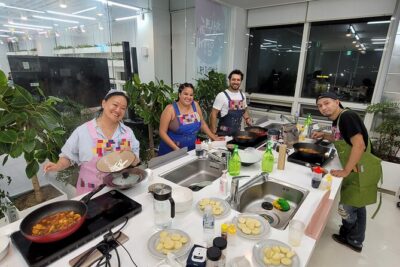
Busan Tailored Korean cooking class (Vegan OK)with market tour
Read our review →Browse the lists this tour appears in