
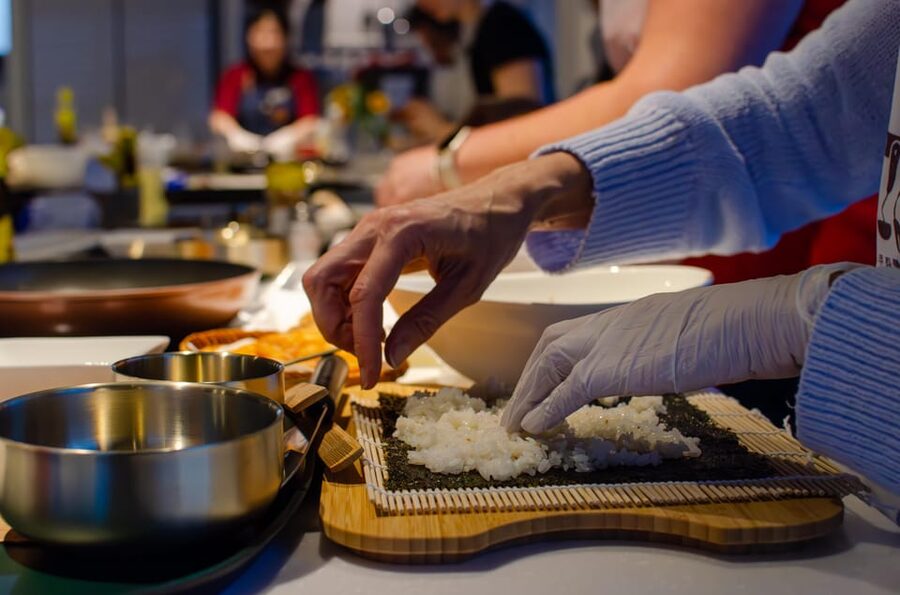
Reviewed · COOKING CLASSES
Seoul: Korean Cooking at Seoul Cooking Club!
The best part of this Seoul class is the sheer range of food you prepare in one sitting. In 150 minutes, you work through Korean pancakes, japchae, bulgogi, and Jeonju bibimbap, then sit down to eat a generous three-course meal with side dishes, drinks, and dessert. It is less a single recipe lesson than a guided tour through the Korean table.
I like the clear English instruction and the tidy setup, where ingredients and tools are ready at each station. I also like the practical finish: you receive a recipe book, and takeaway containers are often available for leftovers. The main drawback is the price, $109 per person, which is a serious spend for a cooking class, and the meal can be so large that you may need to plan around it.
Key points to know before booking
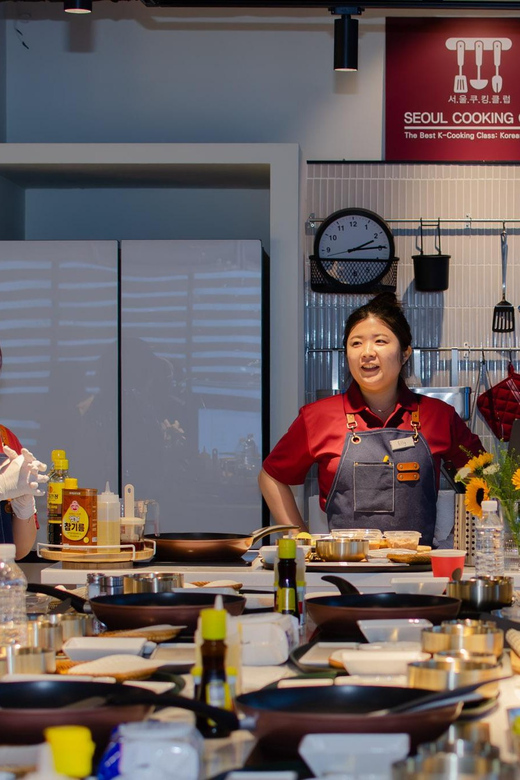
- Seven or more Korean dishes in one class: Recipes commonly include japchae, bulgogi, bibimbap, gimbap, kimchi pancakes, and several banchan.
- English-speaking chefs with different teaching styles: Sally, Olivia, Elly, and Grace are among the instructors praised for patience, clear explanations, and warm instruction.
- A full meal, not just a cooking demonstration: You prepare the food, taste along the way, and eat the finished dishes together.
- Central Jongno location: Jonggak Station, Line 1, Exit 12, is about 15 metres from the venue.
- Recipe book and food to take away: Participants have received a small cookbook, a tote bag, and containers for leftovers.
- Three daily sessions: You can choose a brunch, lunch, or early dinner time from Monday through Sunday.
What your 150 minutes at Seoul Cooking Club look like
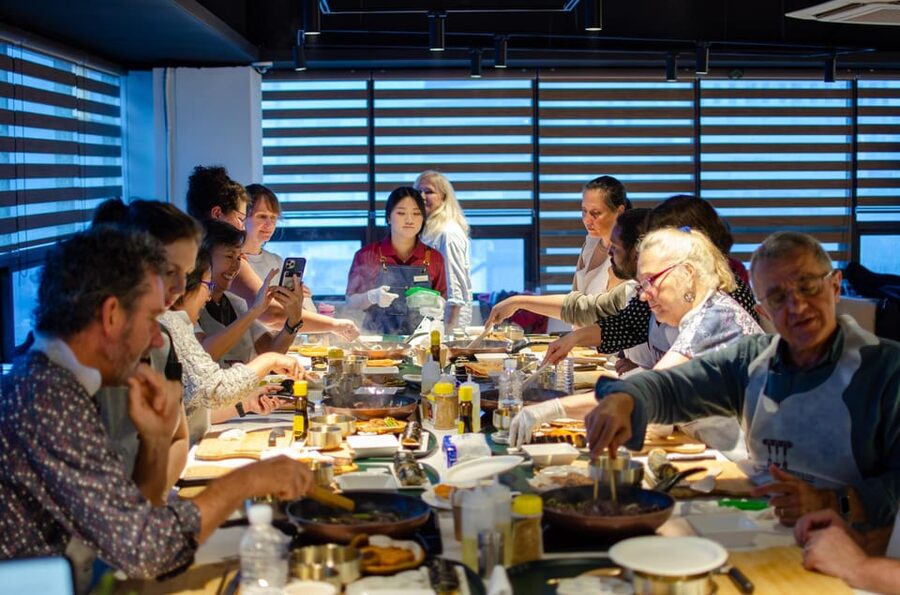
This is a hands-on class built around a large menu. The exact selection can change, especially the pancake flavors and dessert, but the structure stays broad: starters, main dishes, banchan, dessert, and Korean drinks.
You do not simply watch a chef cook from the front of the room. You take part at your own station, with ingredients and utensils prepared in advance. That preparation matters. It lets the class cover many dishes without turning into a frantic session of chopping, washing, and waiting.
The pace is designed for people with little or no Korean cooking experience. Chefs explain each step in English, demonstrate the technique, then help as you work. Several instructors, including Olivia, Sally, Elly, and Grace, have been singled out for patient answers and simple explanations. That is useful when you are handling unfamiliar ingredients or trying to understand the difference between a sauce, marinade, seasoning, and side dish.
The class also includes stories about the origins of the food, Korean customs, and the place each dish has at the table. You get more than a list of instructions. You begin to see how a Korean meal is assembled from several small tastes rather than one large plate.
A few more Seoul trips to weigh up
- Local Home Korean Cooking Class & Market Adventure in Seoul
★ 5.0 · 1,024 reviews - Master Korean traditional cooking with a Kimchi chef
★ 5.0 · 385 reviews - Seoul: Korean Cooking Class at a Local Home and Market Tour
★ 5.0 · 348 reviews
Starting with jeon, Korea’s small savory pancakes
The opening cooking section focuses on jeon, Korean small pancakes made in several styles. Depending on the day, you may prepare three or four varieties from a list that can include donggrangttaeng, pollack pancake, pajeon, beef pancake, tofu pancake, and sesame leaf pancake.
This is a smart introduction because jeon gives you several ways to understand Korean cooking. Seafood, meat, tofu, and vegetables can all receive a light coating and be pan-fried into something crisp at the edges and soft inside. Pajeon, the seafood version, is especially familiar to many people who have tried Korean food before, while sesame leaf pancakes offer a more distinctive flavor.
Donggrangttaeng are small pan-fried battered meatballs. They are the kind of dish that shows how Korean home cooking can turn modest ingredients into something carefully shaped and shared. Pollack and tofu versions also help you compare texture, seasoning, and the way the batter changes the final result.
You will likely appreciate that the work is manageable. The recipes are not presented as restaurant tricks that require years of training. The emphasis is on repeatable methods you can use at home. Still, several recipes in a short period means you will not receive a long, specialist lesson on any one pancake. If your goal is to master a single dish in great depth, a smaller class may suit you better.
Japchae, bulgogi, and bibimbap make up the main meal
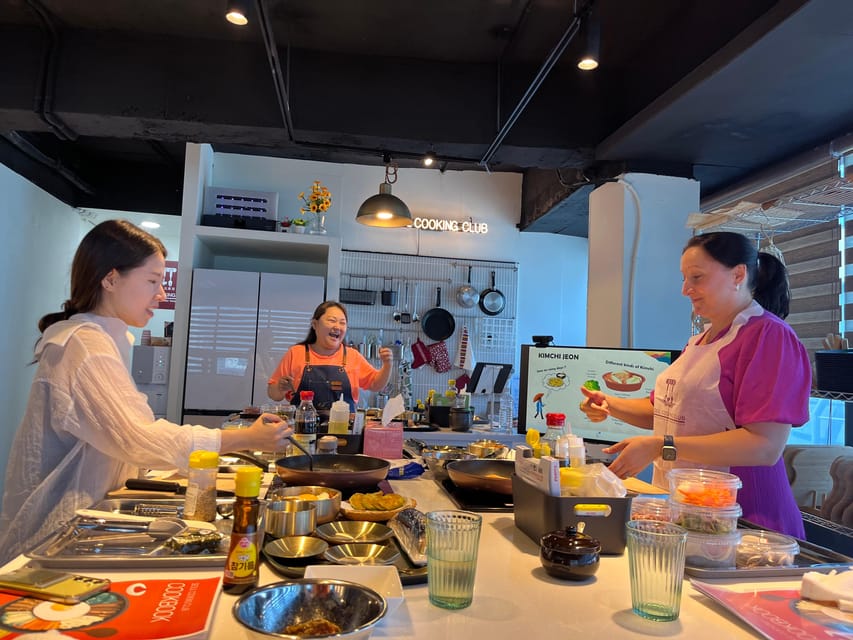
The central cooking section brings together three famous Korean dishes: japchae, bulgogi, and Jeonju bibimbap.
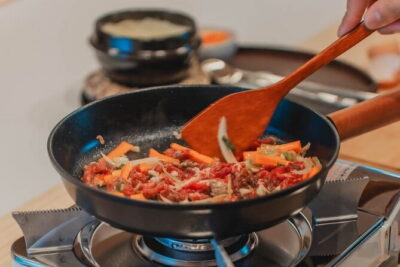
Japchae combines stir-fried vegetables with glass noodles. The noodles are springy and absorb the seasoning well, while the vegetables add color and contrast. It is a good home-cooking recipe because you can adjust the vegetable mix and portion size without losing the character of the dish. Several participants singled out japchae as a favorite, and it is easy to understand why: it feels festive, yet the method is approachable once the chef breaks it down.
Bulgogi uses sliced beef seasoned with soy sauce. You learn how the marinade gives the meat its sweet and savory flavor before it is cooked. This is one of the class’s most useful recipes for home cooks because the seasoning can be prepared ahead of time and used for a quick meal.
Jeonju bibimbap adds a regional touch. Bibimbap is often described simply as rice mixed with vegetables and other toppings, but the lesson lets you see how the separate components create the final bowl. It is not just about piling ingredients onto rice. The balance of vegetables, seasoning, and sauce is what makes the dish work.
Some sessions have also included gimbap and kimchi pancakes among the recipes. Since the menu can vary, check the details for your chosen time if one particular dish is the reason you are booking. The supplied description names japchae, bulgogi, and Jeonju bibimbap as core main dishes, while the individual sessions have included additional recipes.
Ten banchan tastings show how Korean meals are built
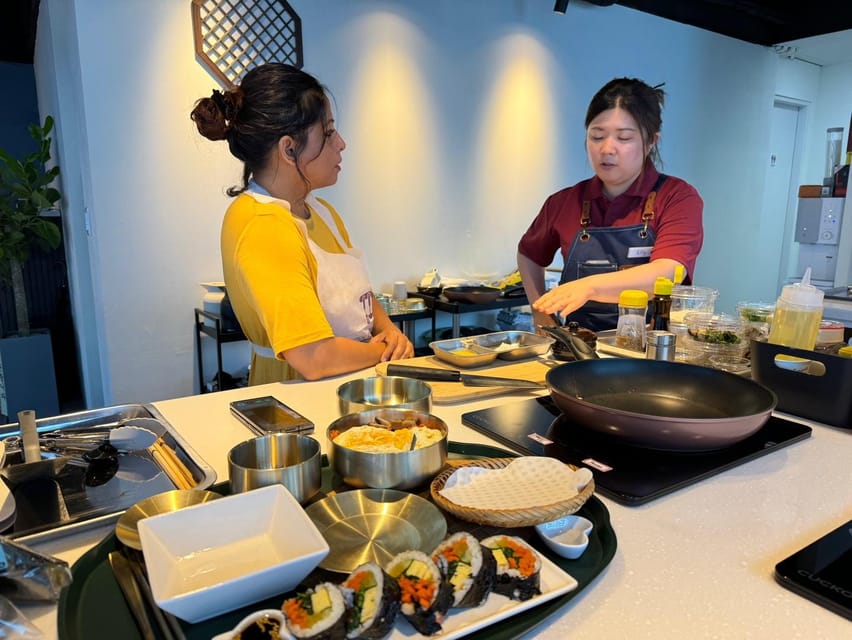
The banchan portion may be the most educational part for anyone who usually orders Korean food without knowing what arrives around the main dish. You taste about ten side dishes, with examples including kimchi, radish kimchi, Korean egg roll, stir-fried anchovies, seasoned soybean sprouts, seasoned spinach, and spicy cucumber.
These small portions are not filler. They show the Korean habit of placing several flavors on the table at once: fermented, spicy, sweet, salty, fresh, and lightly seasoned. A meal of japchae or bulgogi feels different when you add crunchy cucumber, seasoned greens, or a sharp bite of kimchi.
The range also gives you a practical lesson in balance. Strong side dishes are not meant to overpower every mouthful. You can alternate them with rice, meat, noodles, or pancakes, building a meal with changing flavors and textures.
The drawback is simply volume. Ten tastings, several starters, three main dishes, dessert, and drinks add up to a lot of food. Come hungry, but do not assume you must finish every portion at the table. The class has provided containers and bags for leftovers, which makes the generous serving sizes more useful and reduces waste.
Same country, a completely different kind of day:
- Best DMZ Tour Korea from Seoul (Red Suspension Bridge Optional)
★ 5.0 · 41,422 reviews - DMZ Tour: 3rd Tunnel, Option(Suspension Bridge, Boat) from Seoul
★ 5.0 · 21,373 reviews - DMZ tour south Korea from Seoul (NK experience hall, defector)
★ 5.0 · 20,599 reviews - Seoul: DMZ Tour with Optional Suspension Bridge
★ 4.8 · 5,277 reviews
Dessert and traditional drinks round out the table
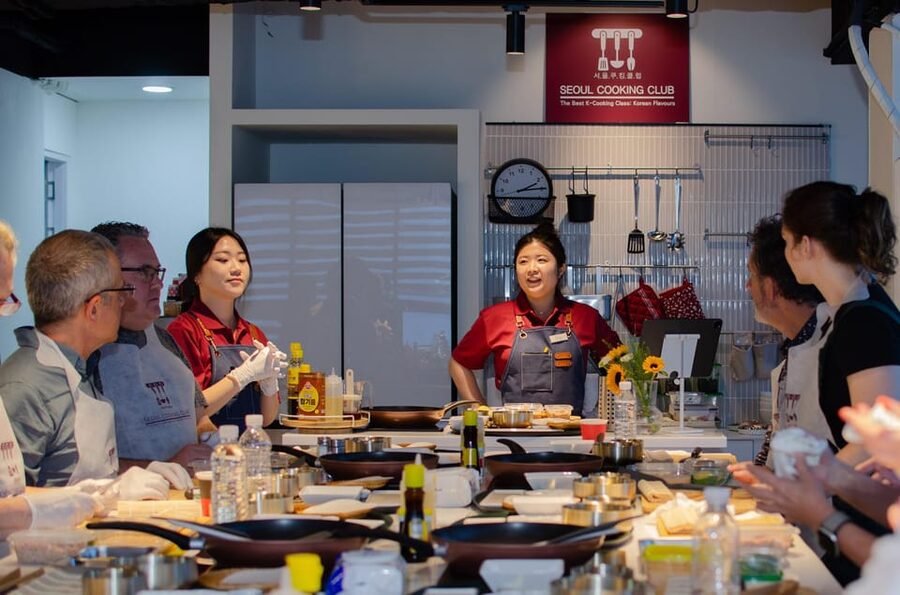
The drinks are simple but well chosen: water, sikhye, and Korean tea. Sikhye is a sweet rice drink often served after a meal, and it gives you a taste of a Korean refreshment that you might not order on your own.
Dessert changes from day to day. Bing-su, a popular Korean shaved ice dessert, may be served, though it is not guaranteed at every session. That changing dessert keeps the class from feeling too fixed, but it also means you should not book solely for one sweet dish.
The class ends with a proper sit-down meal. You taste as you cook, then enjoy the completed dishes together. That final meal is important because it lets you understand how the recipes fit together rather than sampling each item in isolation.
The chefs make the class easy to follow
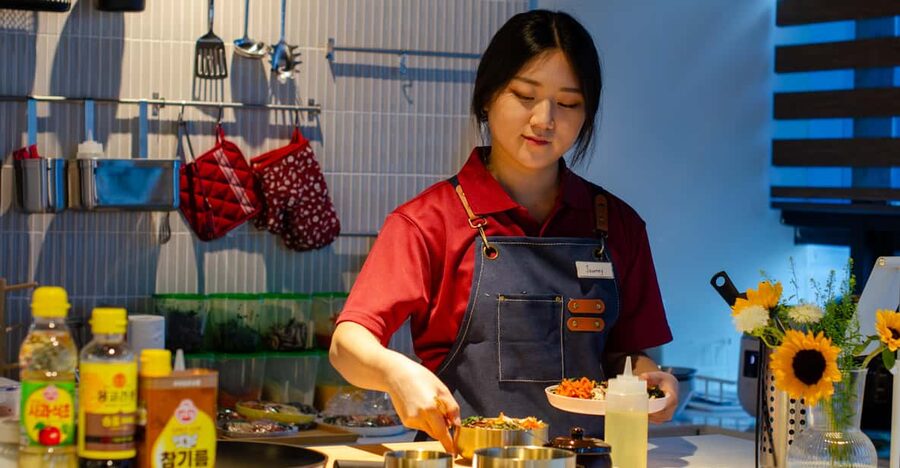
The instructor is one of the biggest factors in the quality of a cooking class, and the teaching team here has earned especially strong praise. Sally is described as friendly and clear, Olivia as warm and patient, Elly as engaging, and Grace as attentive and generous with explanations.
You may not have the same chef at every session, but the common strength is clear English instruction. Questions are welcomed, and the class is structured so beginners can keep up. One participant who arrived late was still helped with a missed dish after the main class, though you should not count on extra time if you miss a substantial part of the session.
The teaching is not only technical. Chefs explain food origins and Korean customs, giving the recipes a cultural setting. That can be more valuable than memorizing measurements. You learn why dishes are served together and how sauces and seasonings do much of the work in Korean cooking.
An assistant may also help keep the stations organized by collecting used tools and clearing equipment. That means you can focus on cooking instead of spending the session washing dishes. The tradeoff is that advance preparation removes some of the everyday cooking process. If you want to learn knife work, ingredient cleaning, or full kitchen organization, ask how much of that is included on your day.
A clean, central space near Jonggak Station
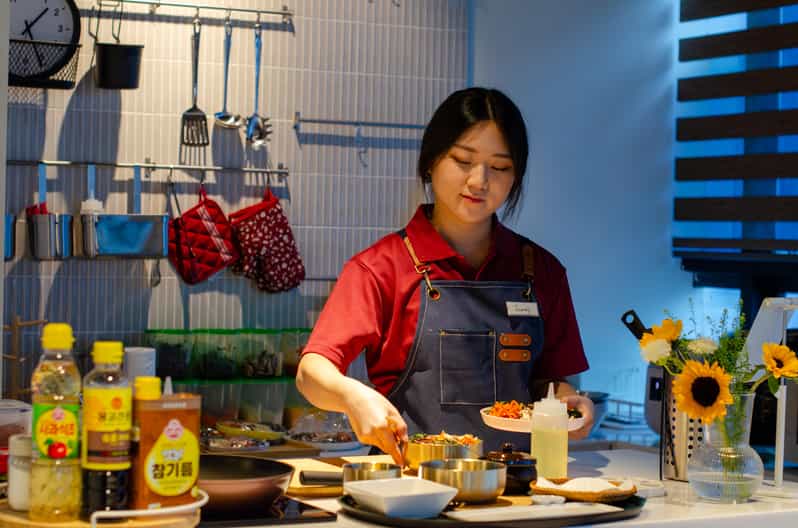
The location is one of the class’s strongest practical advantages. Seoul Cooking Club is in central Jongno, only about 15 metres from Jonggak Station on Line 1.
Use Exit 12. Walk straight ahead, then take the immediate first right around the corner of Pascucci. The entrance is in the same building as the Good Game Zone, identified by its orange facade, on the seventh floor.
This is an easy class to fit into a sightseeing day. Insadong, Ikseondong, Gwangjang Market, and Myeongdong are nearby, and Gyeongbokgung Palace is within about a ten-minute walk according to the supplied directions. You can cook before exploring, or schedule the class as a welcome break after a morning of palaces and markets.
The location is central rather than home-based. If you want an intimate lesson in a local family kitchen, this will feel more like a polished cooking school. On the other hand, the purpose-built setting brings clear advantages: clean stations, prepared ingredients, English support, and an orderly flow.
Is $109 good value for a Seoul cooking class?
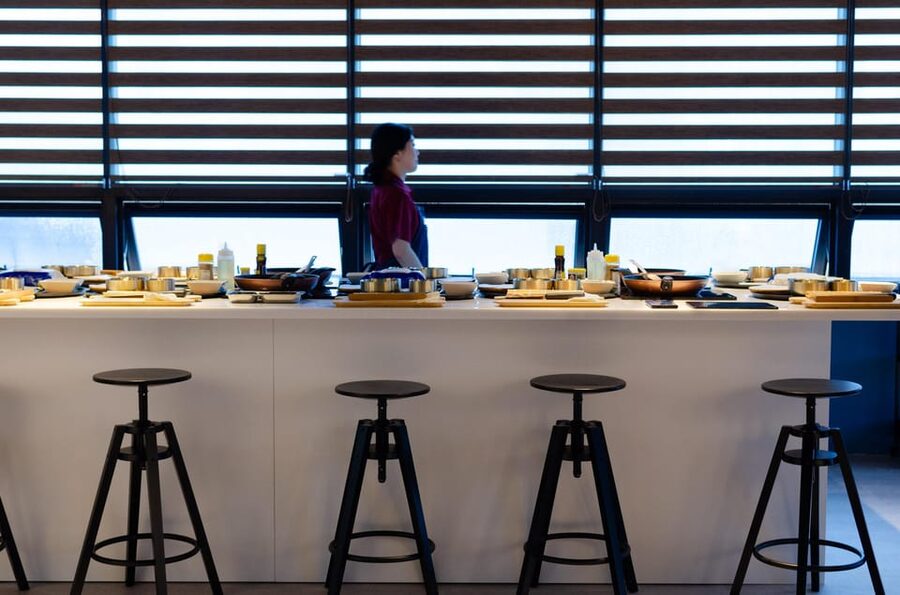
At $109 per person, this is not a budget activity. You are paying more than the cost of an ordinary Korean meal, so the value depends on what you want from the two and a half hours.
I think the price is easier to justify if you care about learning recipes you can repeat at home. You receive instruction across a wide menu, a full meal, tastings, drinks, dessert, and often a recipe book. The food portions can be generous enough to take some away, adding practical value if you have a way to store leftovers.
The price also covers a guided cultural lesson in English. You are not only buying lunch or dinner. You are paying for a chef who explains the dishes, organizes the ingredients, answers questions, and helps you produce food that would be difficult to understand from a menu alone.
Still, this is not the best choice if you are mainly looking for a cheap meal or a short demonstration. You also need to value participation. If cooking is not part of the appeal, the cost will feel high.
Who should book this class?
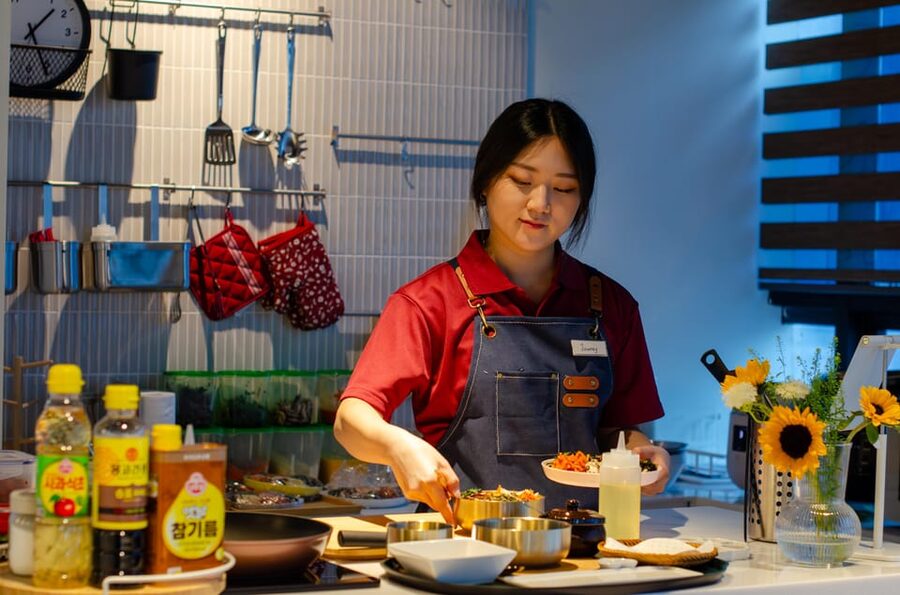
This suits food-focused visitors who want to do something active and leave with useful recipes. It works well for couples, families with older teenagers, groups of friends, and solo visitors who enjoy meeting people around a shared table.
Children under 16 are not permitted, so families with younger children need another plan. The class is also a good fit for people with limited kitchen confidence because the instructions are broken into manageable stages.
Dietary needs should be raised before booking. The class has accommodated gluten-free and coeliac participants, with one participant specifically noting that the food was safe and enjoyable. Do not assume every request can be handled automatically, but the teaching team has shown flexibility when notified.
The activity is listed as wheelchair accessible. Closed-toe shoes are required, so pack suitable footwear rather than arriving in sandals.
How to fit the class into your Seoul day
There are three sessions each day from Monday through Sunday, arranged around brunch, lunch, or an early dinner. That gives you useful control over your schedule.
The lunch option can work well before an afternoon around Jongno, Insadong, or the palace area. The early dinner session lets you visit a market or museum first, then finish with food you helped prepare. Because the meal is substantial, avoid booking the class immediately before a special restaurant reservation.
I would also leave a little breathing room after the class. You may have leftovers, a recipe book, and a tote bag to carry, and you will probably want to continue exploring rather than rush straight to another appointment.
Free cancellation is available up to 24 hours before the activity for a full refund, and you can reserve now and pay later. Hotel pickup and drop-off are not included, but the metro access makes private transport unnecessary for most people staying in central Seoul.
Should you book Seoul Cooking Club?
Book it if you want a large, practical Korean food lesson rather than a single-recipe workshop. The wide menu, English-speaking chefs, tidy stations, cultural explanations, and recipe book make this a useful choice for first-time visitors who want Korean food to remain part of their lives after Seoul.
Think twice if $109 feels too high for a meal and class combined, or if you prefer a small home kitchen and a slower focus on one dish. Also check the menu if you have your heart set on gimbap or a particular dessert, since some items change by session.
For most food lovers, I would choose the lunch or early dinner class, arrive hungry, wear closed-toe shoes, and keep space in your bag for leftovers and recipes. It is a substantial activity, but it gives you more than a taste of Korea: you leave knowing how several familiar dishes are actually made.
FAQ
Where is Seoul Cooking Club located?
It is in central Jongno, about 15 metres from Jonggak Station on Seoul Subway Line 1. Use Exit 12, walk straight, take the first right around Pascucci, and find the entrance beside the Good Game Zone on the seventh floor.
How long does the cooking class last?
The class lasts 150 minutes, or two and a half hours. Starting times vary, so check availability for the brunch, lunch, or early dinner session you want.
What dishes will I prepare?
The core menu includes three to four types of jeon, japchae, bulgogi, and Jeonju bibimbap. You also taste about ten banchan, and some sessions have included dishes such as gimbap and kimchi pancakes.
Is the class taught in English?
Yes. The chefs teach in English and explain cooking steps, food origins, and Korean customs related to the dishes.
Are children allowed to join?
No. The activity is not suitable for children under 16.
What is included in the price?
The $109 price includes a welcome drink, three to four starters, three main dishes, Jeonju bibimbap, Korean side-dish tastings, dessert, and traditional Korean drinks. Hotel pickup and drop-off are not included.
Just added around Seoul
- Gyeongbokgung palace,seoul with gigibebe hanbok rental★ 4.5 · 12 reviews
- Private tour guide service in Seoul, Korea★ 5.0 · 6 reviews
- Alpaca, Nami, Petite Fr, Italian Village, Garden of Morning Calm★ 3.5 · 5 reviews
- Gyeongju UNESCO Sites Tour by KTX train; The Museum Without walls★ 4.5 · 11 reviews
- Private day trip to Korean Folk Village & Dae Jang Geum Park★ 5.0 · 7 reviews
- Private tour Lotte World,Tower,Aquarium(All Tickets are included)★ 5.0 · 12 reviews
- Full Day Private Seoul Tour for foodies★ 5.0 · 3 reviews
- Seoul Private Custom Walking Tour with A Guide (Private Tour)★ 4.5 · 28 reviews
Cooking Classes, compared.
Local Home Korean Cooking Class & Market Adventure in Seoul
Read our review →
Master Korean traditional cooking with a Kimchi chef
Read our review →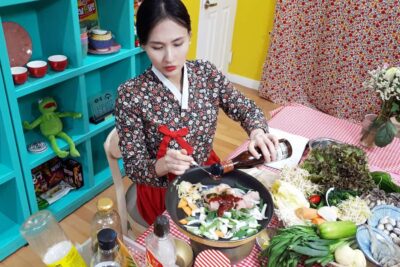
Korean Cooking Class at a Local Home and Market Tour
Read our review →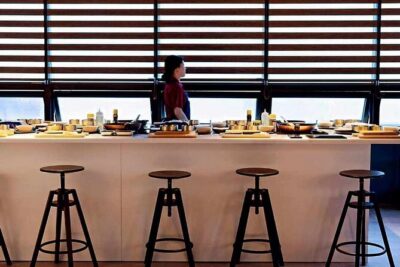
Korean Cooking Class with Grocery Shopping at Seoul Local Market
Read our review →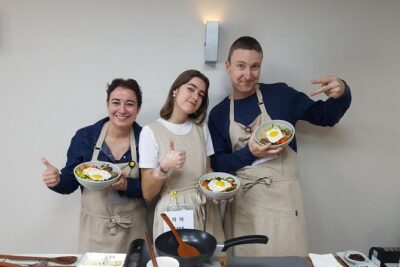
Royal Seoul Cooking Class in a 100-Year-Old Hanok
Read our review →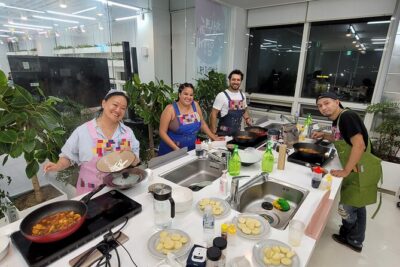
Busan Tailored Korean cooking class (Vegan OK)with market tour
Read our review →Browse the lists this tour appears in