
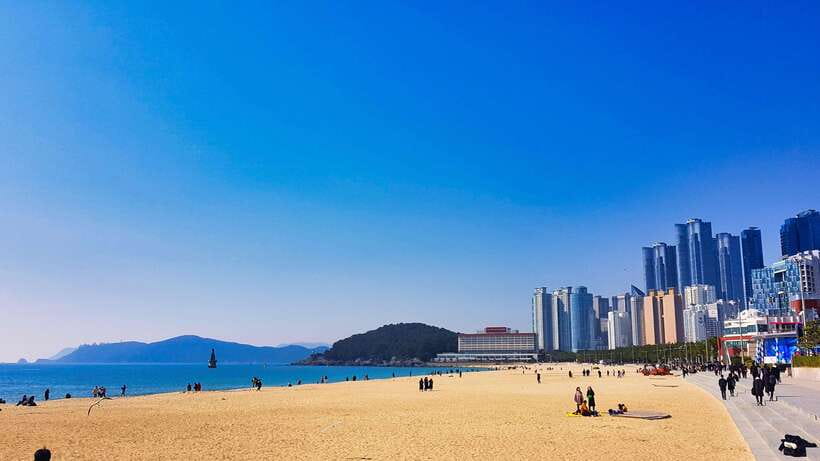
Reviewed · WALKING TOURS
Busan: Haeundae 100-Minute Walking Tour
Haeundae is easy to mistake for just a broad beach backed by hotels and towers. This walking tour shows you the older story beneath the modern view, linking a former railway station, Korea’s only seaside hot spring, the Korean War, and the scholar Choi Chi-Won. Guide Ingyu Kim leads the walk in clear English and ties Haeundae’s past to the growth of Busan.
I like the way the tour uses ordinary streets and familiar sights to explain big changes. I also like its relaxed pace and the chance to ask questions, especially when the group is small. The main drawback is that the tour covers about 2 kilometers and includes a hill roughly 50 meters high, so it is not quite as effortless as a flat beach stroll.
Key points
- Haeundae beyond the beach: Learn why this famous shore became important during the Korean War and in the growth of modern Busan.
- Old railway, new attraction: See how the former Haeundae Station and Donghae-Nambu Line shaped the area, with the old railway later repurposed for Blue Line Park.
- Gunam-ro’s hot spring past: Hear how Gunam Oncheon, a seaside hot spring once enjoyed by Korean royalty, helped shape local life.
- A guide with a local focus: Ingyu Kim brings together Busan history, Korean history, and practical ideas for exploring after the walk.
- A thoughtful finish: End at Dongbaek Island with coastal views and the story of Choi Chi-Won, the scholar who named Haeundae.
- Simple, flexible logistics: Meet outside Exit 4 of Haeundae Station, use the complimentary audio equipment, and cancel free up to 24 hours ahead.
Why Haeundae Needs More Than a Beach Visit
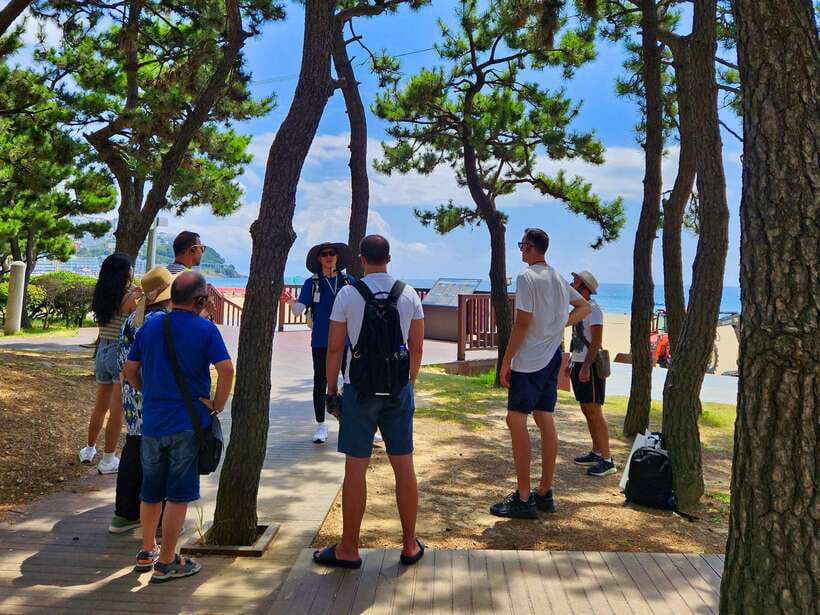
Haeundae receives around 10 million visitors each year. Most come for the sand, sea, hotels, restaurants, and major events. That popularity can make the area feel modern and polished, but it also hides how much changed here in a relatively short time.
I find the tour useful because it gives you a timeline. Haeundae began as a quiet fishing settlement, became known as a seaside hot spring retreat, gained new importance through the railway, and later grew into one of South Korea’s best-known urban districts. The skyscrapers make more sense once you understand that sequence.
The walk also places Haeundae within the story of Busan and Korea. You will hear about Japanese colonial rule, the Korean War, the relationship between North and South Korea, and Busan’s rise as South Korea’s second-largest city. This is not a tour built around isolated facts. The guide uses each stop to show how politics, transport, tourism, and ordinary local life affected one another.
A few more Busan trips to weigh up
- Real Busan Walking Experience
★ 5.0 · 27 reviews - Busan Private Walking Tour with a Local
★ 4.5 · 11 reviews - Busan: Jagalchi Market & Gamcheon village Walking Tour
★ 5.0 · 7 reviews
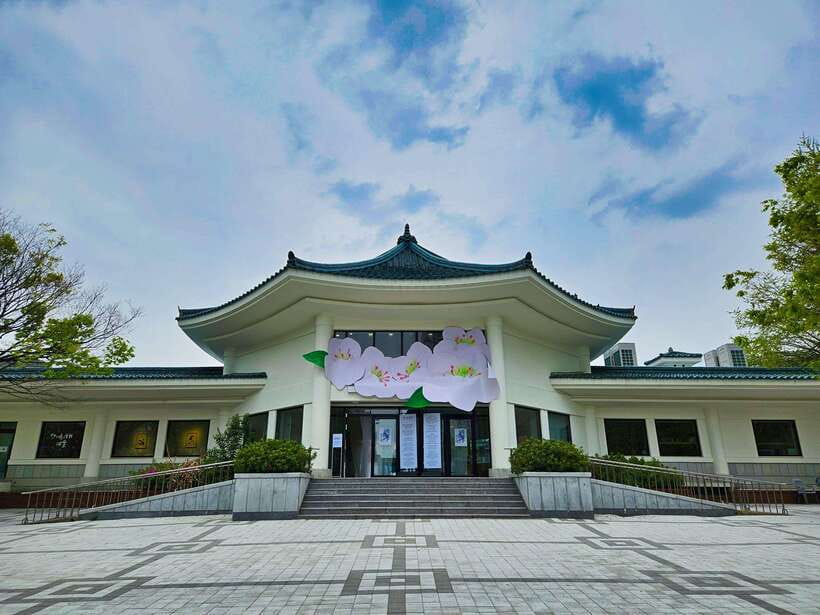
Meeting at the Former Haeundae Station

The walk begins at Haeundae Atelier Chik Chik Pok Pok, the former Haeundae Station, at 621 Haeundae-daero. You reach it by taking Busan Metro Line 2 to Haeundae Station and leaving through Exit 4. At the exit, look for the public plaza on your right and find the guide holding a flag.
This is a smart starting point. A railway station may not sound as appealing as the beach, but transport often explains why a district became a destination. Here, you learn about the Donghae-Nambu Line and the part it played during the Japanese colonial period. The railway helped connect Haeundae with the wider region and supported its change from a small coastal settlement into a place people could reach for leisure and business.
The old station also gives the tour a useful present-day link. The former railway route has been put to new use through attractions such as Blue Line Park. You can see how a piece of transport infrastructure from an earlier era continues to shape the way people experience Haeundae now.
The station segment lasts about 20 minutes. With wireless transmitters and receivers, you should be able to hear the guide without standing shoulder to shoulder. Complimentary earphones are provided, though bringing your own wired 3.5mm earphones is recommended for hygiene.
Haeundae Beach and the Korean War
From the station, the route heads to Haeundae Beach for about 20 minutes of guided explanation. The beach is the most familiar stop, but the point is to look at it differently. Instead of treating it as a scenic pause, you learn why this shoreline matters in Korean history.
The tour discusses the beach after the Korean War, when it became a U.S. military base. That detail changes the way you read the waterfront. Today’s hotels, recreation areas, and holiday crowds sit on ground that was also shaped by military presence and the wider division between North and South Korea.
I appreciate this part because it connects local scenery with national events without asking you to leave Haeundae. The relationship between North and South Korea can seem distant when presented only through headlines or border stories. Here, the guide explains how the peninsula’s political history affected Busan and the development of this particular district.
You get about five minutes to walk between the beach and the next section. The beach itself can be busy, sunny, and exposed, so take water and consider a sun umbrella during bright weather. Comfortable shoes matter more than stylish ones. The walking is easy in general, but the route is still a two-kilometer outing rather than a quick photo stop.
Gunam-ro and the Seaside Hot Spring

The next guided section takes about eight minutes along Gunam-ro, the central street of the Haeundae route. Its significance comes from Gunam Oncheon, described as Korea’s only seaside hot spring.
The hot spring helped shape Haeundae before the district became known for its beach skyline. It was once enjoyed by Korean royalty, and its reputation encouraged Haeundae’s growth as a place for rest, social life, and visitors. Gunam-ro therefore represents an earlier form of tourism, one based on warm mineral water rather than towers, shopping, and beach recreation.
This is the kind of stop you might miss if you explore alone. You can walk down Gunam-ro and see plenty of activity without knowing why the street matters. The guide gives the area a longer memory and shows how a natural feature influenced the district’s social and cultural development.
The Gunam-ro portion is short, but it works as a bridge between the beach and the station. You see that Haeundae did not suddenly become famous because of one building project. Its appeal grew through several stages: the hot spring, the railway, the beach, and later urban expansion.
Same country, a completely different kind of day:
- Busan: Gyeongju Guided Day Trip to Three Kingdoms Capital
★ 4.8 · 1,925 reviews - Small Group Full Day Busan Tour (Max 6 Pax)
★ 5.0 · 1,464 reviews - From Busan: Gyeongju UNESCO World Heritage Guided Day Tour
★ 4.8 · 1,250 reviews - Busan Private Tour with licensed tour guide + private vehicle
★ 5.0 · 1,143 reviews
The Old Station as a Story of Busan’s Growth
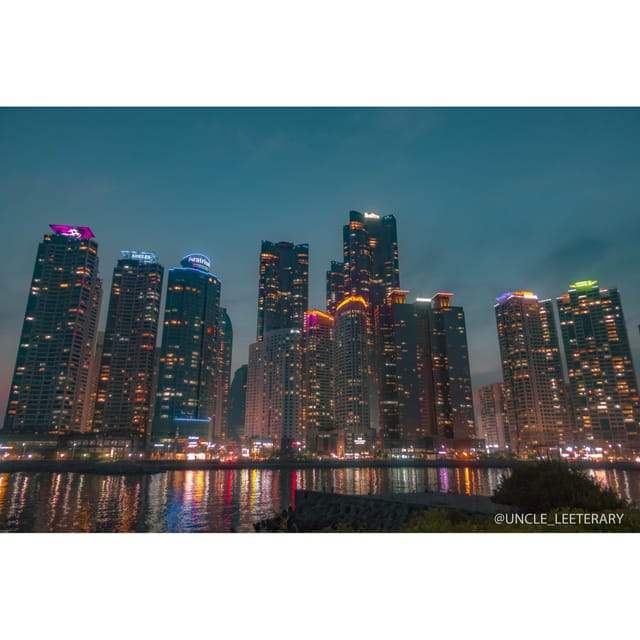
The route returns to the old station area for another guided segment of about 20 minutes. This second look is useful because the station now carries more meaning. You have already heard about the beach, the hot spring, and the district’s changing role. The old railway can now serve as the thread tying those developments together.
You will learn how Haeundae shifted from a fishing village into a modern city district filled with tall buildings. That change reflects Busan’s wider economic and cultural growth. The walk does not present progress as a simple before-and-after picture. Instead, it points out what remains behind the newer streets and why older infrastructure still matters.
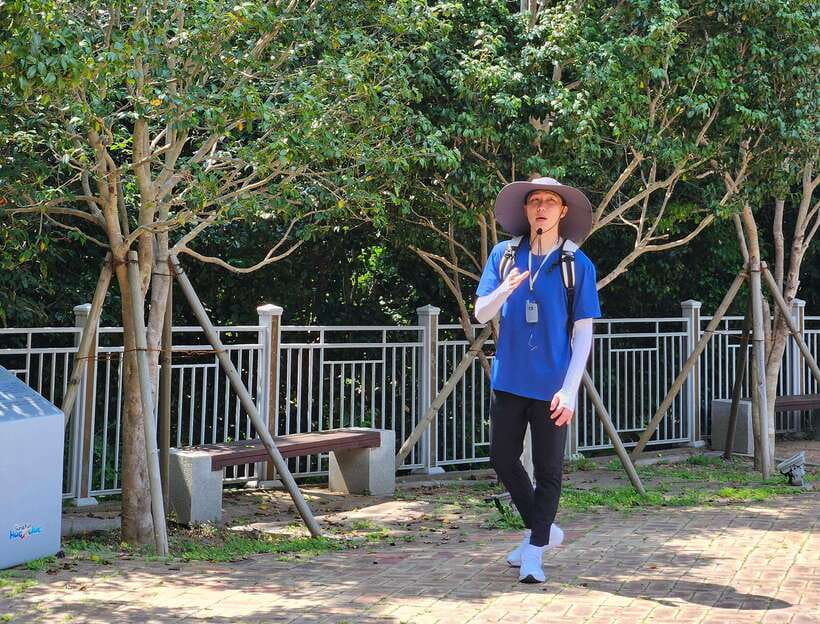
Guide Ingyu Kim is the strongest reason to choose this tour. The supplied feedback repeatedly describes him as friendly, clear in English, funny, and able to explain Korean history without making the walk feel like a classroom lecture. He has also written a book about Busan, which helps explain the local detail and the broad city context he brings to the route.
His style seems especially helpful if you have questions. Several people describe having long conversations with him, and small groups or private-feeling outings allowed them to ask about food, Busan, and places to visit afterward. You should not count on being alone with the guide, but the structure allows room for questions rather than forcing every minute into a fixed speech.
The Walk to Dongbaek Island
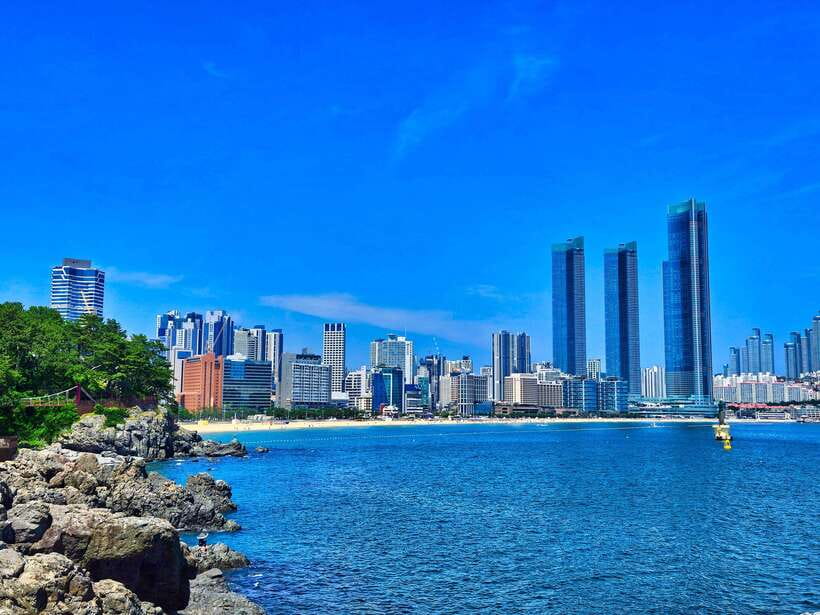
From the old station, you walk about 18 minutes toward Dongbaek Island. This is the longest unbroken walking stretch in the schedule, so it is where good footwear and water become most useful. The overall route is rated easy, but the tour notes a hill about 50 meters high. That climb may be minor for many people, yet it is worth considering if you have limited mobility or dislike inclines.
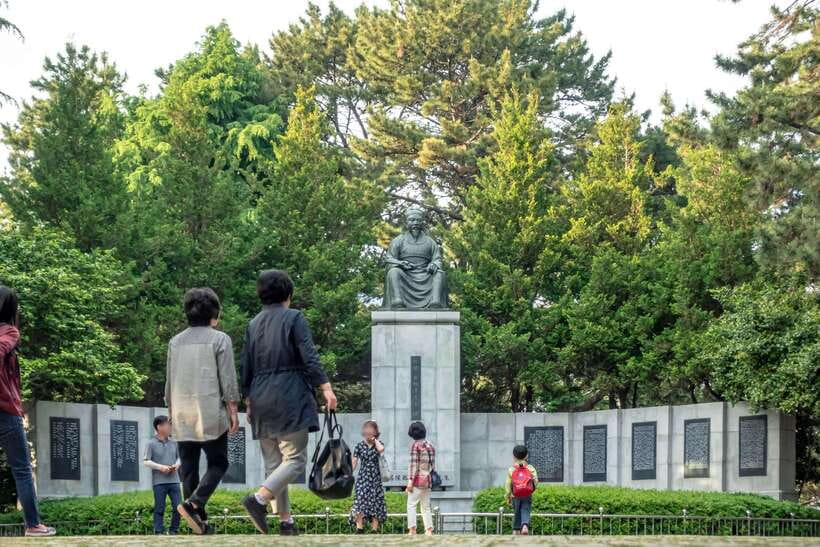
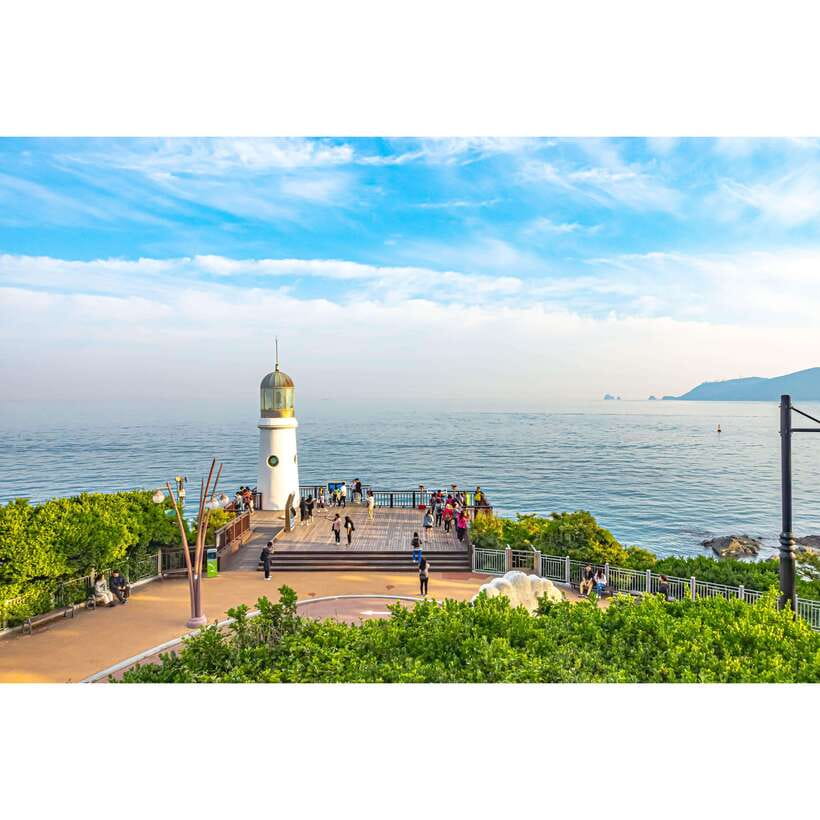
Dongbaek Island provides a calmer ending after the more urban parts of Haeundae. The final guided portion lasts about 15 minutes and focuses on Choi Chi-Won, the scholar associated with the naming of Haeundae. You will also have coastal views and a quieter setting for photos and reflection.
I like this ending because it shifts the focus from large public events to an individual historical figure. The tour begins with railways and colonial-era change, moves through tourism and war, and finishes with a scholar whose name remains tied to the place. That gives the walk a human finish instead of ending beside another modern building.
The island section may also help you decide where to spend more time later. If you are staying in Haeundae, you can return for a slower walk. If this is your first Busan visit, the guide’s suggestions may help you choose what to see next, although the tour’s stated focus remains Haeundae rather than the whole city.
What the 90 to 100 Minutes Feels Like
The experience is described both as 90 minutes and as 1 hour 40 minutes, or 100 minutes. The title also calls it a 100-minute walk. I would plan for roughly 100 minutes, since the stop-by-stop schedule adds up to about that amount when the walking time is included.
That length works well for a first orientation. You get enough time to understand the area without giving up half a day. It also fits neatly before lunch or another Busan activity. One useful approach is to schedule it near the start of your Haeundae stay, then use the guide’s explanations and local suggestions to decide where to return.
The pace is relaxed rather than athletic. Still, you should expect frequent walking between stops, some time outdoors, and the hill near Dongbaek Island. The tour is listed as wheelchair accessible, but the stated hill and two-kilometer route are practical details you should check against your own needs before booking.
Children under 10 and people over 70 are listed as unsuitable for this activity. That restriction may feel broad, since fitness varies widely, but it is part of the published guidance. If you are booking for a mixed-age group, pay attention to the route length and incline rather than assuming that easy means completely flat.
Is $29 a Fair Price?
At $29 per person, this is not the cheapest way to see Haeundae. You can walk along the beach and Gunam-ro for free. The value comes from what you would not easily get on your own: a connected explanation of the railway, hot spring, beach, Korean War, North-South relationship, Busan’s growth, and Choi Chi-Won.
I consider the price reasonable if you care about context and want a local guide rather than a quick sightseeing circuit. It is especially good value for a first visit, when you are still learning how Haeundae fits into Busan. The guide’s English, local focus, and willingness to answer questions add more value than a simple list of landmarks.
The price is less convincing if you only want beach views or a fast photo walk. You will spend much of the time listening to historical explanations, and the route does not include food, admission tickets, or travel insurance. Bring your own water, and remember that personal 3.5mm wired earphones are recommended even though complimentary earphones are supplied.
Free cancellation up to 24 hours ahead and the reserve-now, pay-later option reduce the financial risk. Starting times vary, so check availability when you choose a date.
Who Will Get the Most From This Walk
I would choose this tour if you want to understand Haeundae rather than simply photograph it. It suits history-minded visitors, first-time Busan visitors, and anyone who likes a guide who can move from local details to the larger story of Korea.
It also suits solo visitors and couples who enjoy conversation. Ingyu Kim’s reported approach leaves room for questions, and a small group can feel personal. You may find the tour more rewarding if you arrive with a few things you want to ask about, such as the Korean War, Busan’s growth, or the old railway.
I would be more cautious if you have trouble walking for 100 minutes, need a completely flat route, or want a tour aimed at young children. It is also not the right pick if you prefer to explore silently at your own pace. The wireless audio system helps with listening, but this remains a guided history walk, not a hop-on, hop-off sightseeing trip.
Rain can affect the outdoor route. The experience has continued with a backup plan in wet weather, but you should still expect the weather to shape the day. Comfortable shoes, water, and sun protection are sensible basics.
Should You Book the Haeundae Walking Tour?
Book it if you want the beach to make sense. The tour turns familiar places into part of a larger story about railways, hot springs, war, political division, scholarship, and Busan’s growth. Ingyu Kim’s clear English and easy conversation are central to the experience, and the 90 to 100-minute length is manageable for most active adults.
Skip it if your priority is simply relaxing beside the water or if the hill and walking distance are a concern. At $29, you are paying for interpretation, not entry tickets or entertainment. For someone interested in Korean history and local detail, that is a fair trade. For a beach-only visit, it is unnecessary.
FAQ
Where does the Haeundae walking tour meet?
Meet at Haeundae Atelier Chik Chik Pok Pok, the former Haeundae Station, at 621 Haeundae-daero. From Haeundae Station on Busan Metro Line 2, use Exit 4 and walk to the public plaza on the right, where the guide will hold a flag.
How long does the tour take?
The experience is described as 90 minutes and also as 1 hour 40 minutes, or 100 minutes. The scheduled stops and walking sections indicate that you should allow about 100 minutes.
What language is the tour conducted in?
The live tour guide speaks English. Wireless transmitters and receivers are provided, with complimentary earphones available.
How much walking is involved?
The route covers approximately 2 kilometers on foot. You will also need to climb a hill about 50 meters high.
Is the tour wheelchair accessible?
The activity is listed as wheelchair accessible. Because the route includes about 2 kilometers of walking and a hill, you should consider these details when deciding if it suits your needs.
Can I cancel the booking?
You can cancel up to 24 hours in advance for a full refund. The reserve-now, pay-later option also lets you book without paying immediately.
Just added around Busan
- Real Busan Walking Experience★ 5.0 · 27 reviews
- 7 Highlights Gyeongju City One Day Small Group Tour from Busan★ 5.0 · 24 reviews
- Full Day Private car tour to UNESCO Gyeongju&Yangdong village★ 5.0 · 5 reviews
- Visit Busan night market and enjoy the night view of Busan harbor★ 5.0 · 6 reviews
- Suncheon and Yeosu Daily Private Tour with Pickup Service★ 5.0 · 3 reviews
- Busan Highlights Shore Tour – Cruise Return Assured★ 4.5 · 34 reviews
- Suncheon one day tour from Seoul, Busan or Suncheon★ 5.0 · 3 reviews
- Busan Beomeosa Temple & Hongbeopsa Temple with temple lunch★ 5.0 · 11 reviews
Walking Tours, compared.
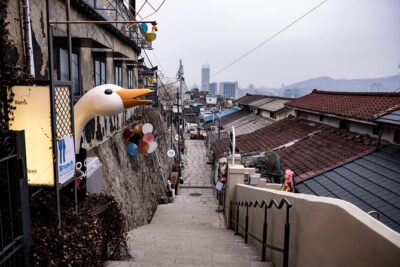
Seoul moonlight walking tour with local historian
Read our review →

Evening Dark History, Folklore & Ghost Story Walking Tour
Read our review →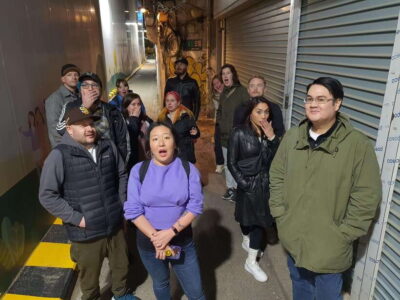
Dark Side of the City and Ghost Stories Walking Tour
Read our review →
Gangnam Walking Tour on Youth and Society in Seoul Korea
Read our review →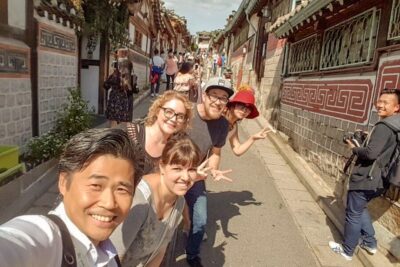
Gyeongbok Palace and Bukchon Hanok Walking Tour
Read our review →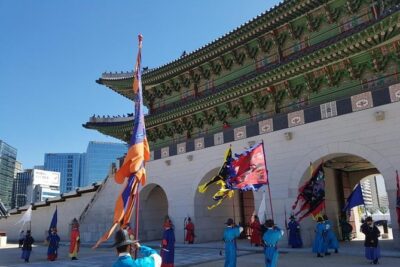
Best Walking Tour to Gyeongbok Palace Bukchon Hanok Village
Read our review →
Highlights & Hidden Gems With Locals: Best of Seoul Private Walking Tour
Read our review →Browse the lists this tour appears in