Reviewed · SEOUL TOURS
Discover Eastern Korea in 4days: All-Inclusive Experience
Busan’s seafood market, Gyeongju’s royal tombs, Andong’s old village lanes, and Seoraksan’s mountain trails give this tour a broad look at eastern Korea in just four days. I especially like the no-shopping policy and the mix of food, history, and outdoor stops. I also like that the price covers hotels, meals, admission fees, and a guide rather than leaving you to build the trip piece by piece.
The main thing to check before booking is the first-day transport. The published meeting point is Seoul Station, yet the sightseeing begins at Busan Station, and one guest was given KTX tickets and asked to make the journey independently. Confirm exactly how your group reaches Busan before you pay, since that detail can shape the whole first morning.
Key things to know before you book

- Four regions in four days: Busan, Gyeongju, Andong, and Seoraksan are all included, giving you history, food, village life, and mountain scenery.
- No shopping stops: Your time is used for sightseeing, meals, and cultural activities rather than required retail visits.
- A real food component: Four lunches, three breakfasts, two dinners, and several traditional Korean food experiences are included.
- An unusually broad history day: Bulguksa Temple, royal tombs, the National Museum, and Cheomseongdae all appear on Day 2.
- Small groups are possible, but not guaranteed: The maximum is 35 people, and the vehicle changes with group size.
- The guides can make a difference: Mr. Jay is praised for keeping people informed and managing the group well, while Mark is described as professional and attentive.
Four days across Korea’s eastern side
This is not a slow stay in one town. It is a moving tour that links several of Korea’s most useful stops for a first visit outside Seoul. You begin with Busan’s coast and seafood, move into the Silla capital of Gyeongju, spend time in traditional Andong, and finish among the peaks and streams of Seoraksan National Park.
That range is the tour’s biggest strength. You are not seeing only palaces and museums, or only nature. You get a taste of everyday food, royal history, traditional craft, old village life, and a mountain walk.
The tradeoff is distance. Four days is enough to sample these places, but not enough to linger in each one. If you want long café stops, independent wandering, or several nights in each city, this pace may feel brisk. If you want the main sights arranged for you, it is a practical way to cover a lot of ground.
The cost is $1,200 per person. That is a serious price, but it includes three nights in twin or double rooms, all listed entrance fees, an English-speaking guide or driver-guide, an air-conditioned vehicle, four lunches, three breakfasts, and two dinners. The value is strongest if you would otherwise need to arrange intercity transport, hotels, meals, and admission tickets yourself.
A few more Seoul trips to weigh up
- Discover Western Korea in 4days: All-Inclusive Experience
★ 5.0 · 6 reviews - Jeonju & Yeosu: 4-Day Foodie & Artist Journey
★ 5.0 · 3 reviews
Day 1: Jagalchi Market and the Songdo sea crossing
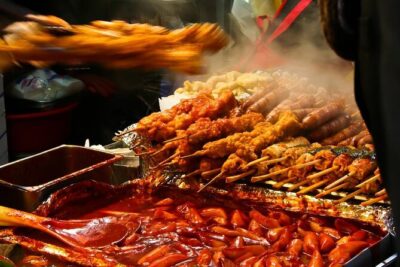
Your first sightseeing stop is Jagalchi Market, Busan’s famous seafood center. The visit lasts about an hour, with lunch included after the group meets at Busan Station.
Jagalchi is useful because it puts you straight into a working part of Busan rather than a polished monument. Rows of seafood stalls show the city’s close link with the water, and the stop gives your guide a natural chance to explain local food and market customs. Since different traditional Korean dishes are part of the wider program, lunch is more than a break between attractions.
The practical issue is the meeting arrangement. The tour begins at Seoul Station at 8:00 a.m., but Day 1 begins in Busan. One person was provided free train tickets and asked to travel to Busan on the KTX without the group. That may be a perfectly workable solution, but it should be explained clearly before departure. Ask if you will ride with the guide, receive a separate train ticket, or make your own way to the Busan meeting point.
After lunch, you ride the Songdo Sea Cable Car. The line stretches about 1.6 kilometers from Songdo Beach Station to Songdo Sky Park, and the activity is scheduled for about two hours. The car gives you broad coastal views and a change of pace after the market.
I like this pairing. Jagalchi is grounded and local, while the cable car is scenic and easy on the legs. It is also a good first day for a mixed-age group. The cable car admission is included, so you do not face a surprise ticket cost at the main attraction.
Day 2: Busan’s coast, then a full day in Gyeongju
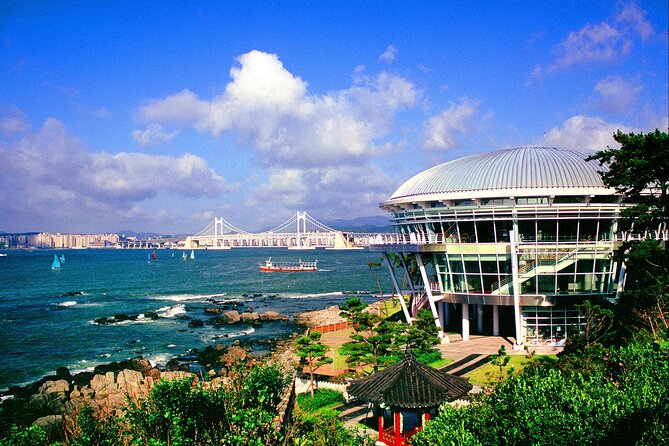
The second morning starts at Dongbaekseom Island and Nurimaru APEC House. This modern, glass-walled building hosted the 2005 APEC Summit. The visit lasts about an hour and offers a sharp contrast to the older sites later in the day.
Nurimaru gives you a look at modern Korea’s international role, while Dongbaekseom adds a coastal setting. It is a compact stop, not a full morning of sightseeing, but it helps show that Korea’s story is not limited to ancient temples and royal dynasties.
The group then heads to Gyeongju, Korea’s ancient capital for roughly a thousand years. The day is packed, but the sequence makes sense.
Bulguksa Temple
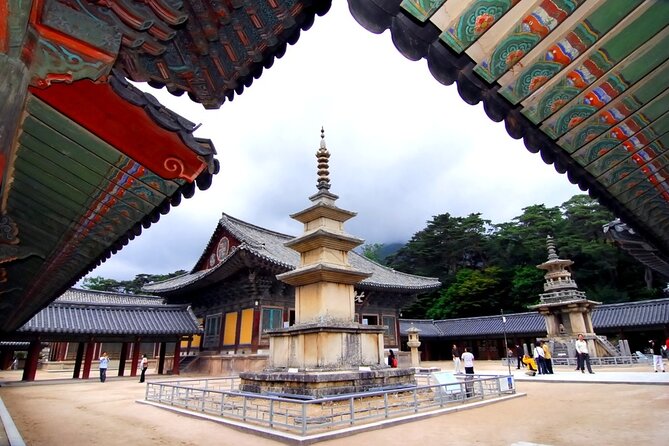
Bulguksa is scheduled for about 90 minutes and admission is included. This UNESCO World Heritage Site is one of Korea’s major Buddhist monuments, known for its formal stonework, temple buildings, and mountain setting.
You will have enough time to see the main areas with a guide, though not enough for a slow, solitary study of every detail. Wear shoes that are easy to remove if needed and expect some walking around temple grounds. The tour describes a moderate physical fitness level, so this is not designed as a demanding hike, but it is not a chair-bound outing either.
Same country, a completely different kind of day:
- Best DMZ Tour Korea from Seoul (Red Suspension Bridge Optional)
★ 5.0 · 41,422 reviews - DMZ Tour: 3rd Tunnel, Option(Suspension Bridge, Boat) from Seoul
★ 5.0 · 21,373 reviews - DMZ tour south Korea from Seoul (NK experience hall, defector)
★ 5.0 · 20,599 reviews - Seoul: DMZ Tour with Optional Suspension Bridge
★ 4.8 · 5,277 reviews
Daereungwon Tomb Complex
The next stop lasts about an hour. Large grass-covered burial mounds mark the resting places of Silla royalty, and the complex helps make Gyeongju’s ancient power visible at street level.
The royal tombs are valuable because they are not just museum objects. Their size changes your sense of the Silla court. You can see how much labor and authority went into these burial sites before moving on to the artifacts that were found inside them.
Gyeongju National Museum
The museum receives about 90 minutes, with admission included. Its collection includes golden crowns and other objects dating back about a millennium. This is the stop that gives context to the tombs and temples.
I would pay close attention here, even if museums are not usually your favorite part of a trip. The gold crowns and Silla pieces make the earlier outdoor sites easier to understand. The museum also has a gift shop, but the program itself is described as having no shopping stops, so you are not being taken there for a required purchase.
Cheomseongdae Observatory
The day ends at Cheomseongdae, one of Gyeongju’s best-known symbols. The visit is brief, about 20 minutes, but the ancient astronomical structure is a useful final image after a day focused on Silla culture and royal life.
Day 2 is the historical core of the tour. The drawback is the amount of ground covered. Four major Gyeongju stops, plus the morning in Busan, create a long day. Still, if your goal is to understand why Gyeongju matters, this is an efficient and well-built route.
Day 3: Traditional sweets and life in Andong
Day 3 begins with a Korean traditional dessert-making class at Momyeongjae, held at a Korean Traditional Culture Center. The session lasts about 90 minutes and admission is included.
This is one of the tour’s most distinctive features. Instead of only looking at Korean culture, you make something yourself under the direction of instructors. The exact dessert is not specified, so ask if you have a food allergy or need to know the ingredients in advance. The class also gives you a welcome break from long stretches of vehicle travel.
Next comes Andong Hahoe Folk Village, a UNESCO World Heritage Site with more than 600 years of history. You have about two hours there. The village remains a living traditional community, which makes it different from a museum built only to display old houses.
This stop is a strong match for anyone interested in Korean folk customs, architecture, and village life. You can expect a quieter, more human-scale experience than the grand temple and tomb sites of Gyeongju. The word living matters here: the village is presented as a place with continuing cultural meaning, not simply a row of preserved buildings.
Two hours is enough to get a feel for Hahoe, but the schedule will not let you examine every lane at leisure. The tour’s value comes from having transport and interpretation arranged, particularly since the village is outside the main city routes. You give up some freedom, but you avoid the work of connecting the day’s stops yourself.
Day 4: A mountain finish in Seoraksan
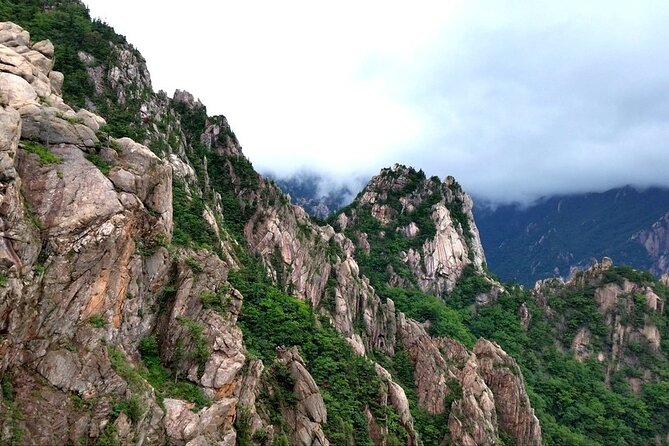
The final day begins in Pyeongchang and heads to Jujeongol Valley in Seoraksan National Park. The scheduled visit lasts about two hours, and admission is listed as free.
Seoraksan supplies the outdoor side of the trip. Jujeongol is known for dramatic rock formations, high peaks, and clear streams. After three days of markets, buildings, museums, and village streets, the mountain setting gives the tour a needed change in rhythm.
Do not treat this as a full mountain expedition. Two hours allows for a taste of the valley and a moderate walk, not a long route across the park. The stated fitness requirement is moderate, but you should still bring comfortable walking shoes and be ready for uneven ground. Weather matters here, and the operator says poor conditions can lead to a new date or a full refund.
The mountain finish is one of the better choices in the program. It leaves you with scenery rather than another indoor attraction. The limitation is timing: if Seoraksan is your main reason for visiting Korea, you may want a separate, longer stay in the park.
Meals, hotels, and what all-inclusive really means
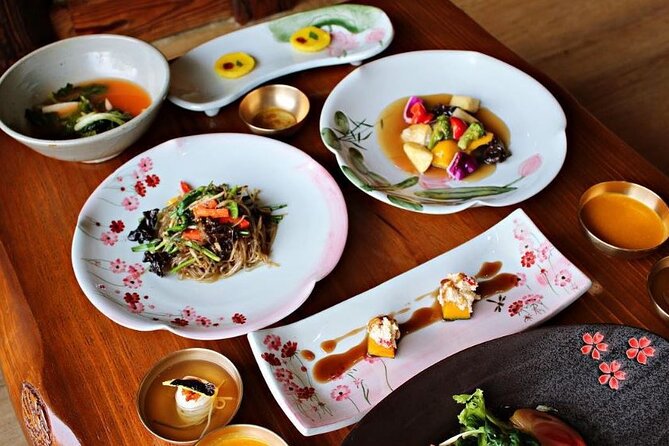
The meal coverage is generous for a four-day escorted trip. You receive four lunches, three breakfasts, and two dinners, with Korean traditional food included as part of the experience. This reduces the daily decision-making that can wear you down on a fast-moving route.
The food is also part of the cultural purpose. You are not simply being transported between monuments. Market food, traditional dishes, and dessert-making help connect the places to ordinary life. The exact restaurant list and menus are not provided, so anyone with dietary restrictions should ask before booking.
Three nights of accommodation in twin or double rooms are included. The hotels have been praised for quality, and one guest specifically enjoyed the accommodations as well as the food. Rooming is not described as single occupancy, so solo participants should confirm any supplement or sharing arrangement before booking.
The phrase all-inclusive has limits. Personal costs such as laundry, telephone, fax, pay TV, drinks, tips, and other extra expenses are excluded. Travel insurance is also not included. Hotel pickup on the first day and drop-off on the last day are not included, which is especially important because the published start and end points are different.
Guides, vehicles, and group size
The tour uses an English-speaking guide or driver-guide, an air-conditioned vehicle, and a vehicle suited to the group size. The maximum group size is 35 people. That is not a small private tour, though the actual group may be smaller.
The guide can have a large effect on a schedule this busy. Mr. Jay is specifically praised for attending to people’s needs, explaining what was coming next, and managing expectations. Mark is described as professional, and the driver team has also received strong praise. Those details matter because clear communication becomes especially important when the group is moving between cities and changing transport arrangements.
The tour may not always operate as one identical group from Seoul to the final hotel. The KTX issue on the first day suggests that some participants can be handled separately from a larger group. Confirm this point in writing. A free train ticket is useful, but independent rail travel is different from being escorted door to door.
The stated meeting point is Seoul Station, 43-203 Dongja-dong, Yongsan District. The tour ends at AMID Hotel Seoul, 38 Insadong 5-gil, Jongno District. There is no first-day hotel pickup or last-day hotel drop-off, so you must reach and leave those points on your own.
Who will get the most from this tour
I would choose this trip if you want a broad introduction to eastern Korea without planning four separate regional visits. It suits you especially well if you value:
- Historic sites with a guide to explain their place in Korean history
- Included Korean meals instead of daily restaurant research
- A traditional hands-on activity
- A no-shopping schedule
- A mix of cities, villages, coast, and mountains
- Comfortable hotels and organized transport
It is also suitable for a wide age range, from young children to people over 80, according to the supplied tour details. That does not remove the need for basic mobility. You will spend time walking at temples, tombs, village paths, markets, and a national park.
I would hesitate if you want a relaxed pace. Day 2 is particularly full, and the route covers a lot of Korea in a short time. I would also hesitate if you dislike fixed meals, group travel, or early starts. The tour begins at 8:00 a.m., and the maximum group size is 35.
The average booking point is 64 days before departure, so advance planning is sensible. Confirmation is sent within 48 hours, subject to availability. The cancellation terms are fairly clear: cancel at least six full days before the start for a full refund, two to six days before for a 50 percent refund, and less than two days before for no refund. Poor weather can result in a different date or full refund.
FAQ
Where does the tour start?
The published start point is Seoul Station at 43-203 Dongja-dong, Yongsan District, Seoul, at 8:00 a.m.
Where does the tour end?
The tour ends at AMID Hotel Seoul, 38 Insadong 5-gil, Jongno District, Seoul.
Is hotel pickup included?
No. Hotel pickup on the first day and drop-off on the last day are not included.
What meals are included?
The tour includes four lunches, three breakfasts, and two dinners. Traditional Korean food is part of the program.
Are entrance fees included?
Yes. All entrance fees during the tour are included, including the Songdo Cable Car, Bulguksa Temple, Daereungwon Tomb Complex, Gyeongju National Museum, and the Andong traditional culture activity.
How large is the group?
The maximum group size is 35 people. The vehicle type varies according to the group size.
Should you book it?
Book this tour if you want Korea’s eastern highlights handled in one package, with food, hotels, admission fees, and a guide already arranged. The strongest parts are the no-shopping format, the unusual dessert-making class, the excellent range of Gyeongju sites, and the final mountain stop at Seoraksan.
Before booking, get a clear answer about the Seoul to Busan transfer. If you are comfortable with a quick pace and possible independent KTX travel on the first morning, the $1,200 price can offer solid value. If you prefer to linger, choose your own restaurants, or travel at a slower pace, use this tour as a model for planning your own longer journey instead.
Just added around Seoul
- Gyeongbokgung palace,seoul with gigibebe hanbok rental★ 4.5 · 12 reviews
- Private tour guide service in Seoul, Korea★ 5.0 · 6 reviews
- Alpaca, Nami, Petite Fr, Italian Village, Garden of Morning Calm★ 3.5 · 5 reviews
- Gyeongju UNESCO Sites Tour by KTX train; The Museum Without walls★ 4.5 · 11 reviews
- Private day trip to Korean Folk Village & Dae Jang Geum Park★ 5.0 · 7 reviews
- Private tour Lotte World,Tower,Aquarium(All Tickets are included)★ 5.0 · 12 reviews
- Private day tour Korea(Seoul trip) with Professional Photographer★ 5.0 · 6 reviews
- Full Day Private Seoul Tour for foodies★ 5.0 · 3 reviews
Seoul Tours, compared.
Best DMZ Tour Korea from Seoul (Red Suspension Bridge Optional)
Read our review →
DMZ Tour: 3rd Tunnel, Option(Suspension Bridge, Boat) from Seoul
Read our review →
DMZ tour south Korea from Seoul (NK experience hall, defector)
Read our review →
Thrilling Korean DMZ 3rd Tunnel Tour from Seoul + Red Bridge Rush
Read our review →
DMZ Past and Present: Korean Demilitarized Zone Tour from Seoul
Read our review →
Ultimate Korea DMZ Tour from Seoul (Gondola & Suspension Bridge)
Read our review →