Reviewed · SEOUL TOURS
Discover Round Korea in 7days: All-Inclusive Experience
Korea’s best sights are spread far beyond Seoul, and this seven-day circuit connects them without making you solve a new hotel, train, or meal puzzle every night. You’ll move from Baekje tombs and Silla gold to tea fields, coastal wetlands, Busan seafood, a living folk village, and Seoraksan’s mountain trails.
I like the no-shopping format, which keeps the days focused on places rather than sales stops. I also like the range of included meals and regional foods, plus hands-on moments such as hanbok rental, tea with a Buddhist monk, and Korean dessert making.
The trade-off is a full schedule with long road journeys. You’ll need moderate fitness, early starts, and the ability to keep pace with a group of up to 35 people. If you prefer slow mornings and independent meals, this may feel too tightly packed.
Key points to know before booking
- A true round-Korea route: Gongju, Jeonju, Boseong, Suncheon, Busan, Gyeongju, Andong, Pyeongchang, and Seoraksan all appear within one week.
- No shopping stops: Your time is aimed at monuments, markets, food, nature, and local culture.
- Meals are built in: The package includes seven lunches, six breakfasts, and six dinners.
- Several UNESCO-listed places: Gongsanseong Fortress, Bulguksa Temple, and Andong Hahoe Folk Village are major cultural highlights.
- A useful mix of activities: You’ll see museums and royal tombs, but also ride a sea cable car, wear hanbok, make sweets, and walk in a national park.
- Guide quality matters: One named guide, Jay, is praised for being friendly, kind, and attentive to a group of 16. Your guide may differ, but the English-speaking guide is central to the experience.
Why this tour works for seeing Korea beyond Seoul
At $1,970 per person, this is not a cheap hop-on, hop-off outing. It is a seven-day escorted program with six hotel nights, transportation in an air-conditioned vehicle, entrance fees, a guide, and 19 included meals. The value improves if you would otherwise pay separately for intercity transport, hotels, museum tickets, cable-car tickets, and organized day trips.
I especially like the geographical spread. Many first visits to Korea stay in Seoul, perhaps with a quick trip to Busan. This route gives you a much broader picture: ancient capitals, royal burial grounds, mountain scenery, working food markets, coastal wetlands, and traditional villages.
The schedule also avoids shopping detours. That matters because a seven-day circuit has limited time. Instead of being steered toward retail stops, you spend the hours at places such as Gongju National Museum, Suncheon Bay, and Gyeongju National Museum.
There is a catch. You are not simply staying in one base and taking short outings. The vehicle carries you across much of the country, so some days will involve substantial time on the road. The payoff is variety, but you should expect a busy holiday rather than a restful resort stay.
A few more Seoul trips to weigh up
Day 1: Baekje history in Gongju
The tour opens in Gongju, an important center of the Baekje kingdom. At Gongsanseong Fortress, you’ll spend about an hour among the remains of a hillside defensive site designated a UNESCO World Heritage Site in 2015.
This is a good first stop because it puts Korea’s early kingdoms on the map before the tour moves into later Joseon and Silla history. The setting also gives you a feel for how terrain shaped defense and settlement. Comfortable shoes are sensible, since a hillside fortress is not the same as a flat museum visit.
Next comes the Songsan-ri Tombs and the Royal Tomb of King Muryeong. The brick-built burial style is unusual and the site helps explain the importance of royal burial customs in Baekje society. You’ll have about an hour here, enough for an introduction without turning the first day into a long archaeological seminar.
The final Gongju stop is the Gongju National Museum. Its collection contains around 10,000 cultural artifacts, including objects found in King Muryeong’s tomb and gilt-bronze ornaments. I like this sequence: see the historic site first, then view the objects in a museum where their craftsmanship and purpose are easier to understand.
Day 2: Hanbok, Joseon memory, and temple tea
Jeonju Hanok Village gives you a very different mood. More than 800 traditional hanok houses fill the area, with tiled roofs, narrow lanes, and a slower architectural rhythm than modern Seoul. You’ll have about two hours to explore, which is enough for a first walk but not enough to inspect every lane at leisure.
At Hanboknam Jeonju Hanok Village, you’ll take part in a hanbok experience. Wearing traditional clothing changes the way you look at the village, and it gives you a memorable activity rather than another sequence of photographs taken from a coach. The scheduled time is one hour.
Gyeonggijeon Shrine was erected in 1410 and holds a portrait of King Tae-jo, founder of the Joseon Dynasty. The shrine adds political and religious context to Jeonju’s old streets. It is worth paying attention to the guide here, since the value is not only the buildings but also the story of why this portrait mattered.
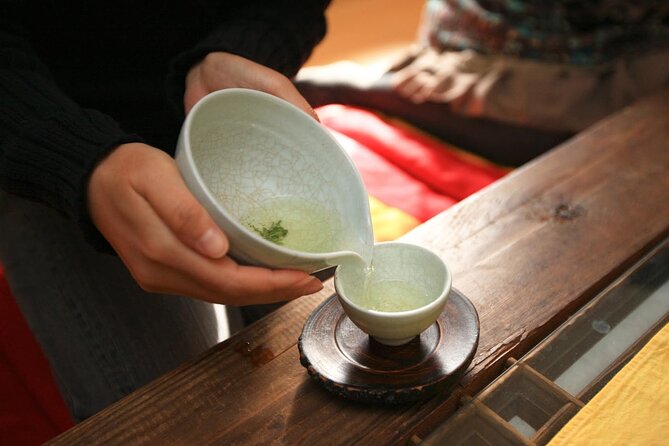
The day ends at Baekyangsa Temple, where you’ll join a tea conversation with a Buddhist monk. This is one of the more distinctive parts of the program. The experience offers quiet time and a chance to ask questions, a useful change after the activity and walking in Jeonju.
The day is full, with several scheduled stops and a move between regions. If you want hours for independent cafés or shopping in Jeonju, you will not have much spare time. If you want a guided introduction to old Korea, the combination works very well.
Day 3: Boseong tea and Suncheon’s coastal wetlands
Boseong’s Daehan Dawon is described as Korea’s largest green tea field. You’ll spend about two hours walking between terraced rows of tea bushes and taking in views that shift with the season.
This is a welcome outdoor break after the historic sites of the first two days. The visit is not just a photo stop. Tea farming is part of Korea’s food culture, and the setting lets you see how a regional product is grown before you encounter more traditional dishes at meals.
After lunch, the route continues to Suncheon Bay Wetland Reserve. The reserve lies where river and sea meet and is identified as one of the world’s five major wetlands. More than 250 species use the area, so the appeal is natural as well as scenic.
You’ll have around two hours at Suncheon Bay. Bring your interest in open views and walking, not just your camera. Weather can affect how much you enjoy this day, and the tour itself notes that poor weather can lead to a changed date or a full refund if the experience is canceled.
Same country, a completely different kind of day:
- Best DMZ Tour Korea from Seoul (Red Suspension Bridge Optional)
★ 5.0 · 41,422 reviews - DMZ Tour: 3rd Tunnel, Option(Suspension Bridge, Boat) from Seoul
★ 5.0 · 21,373 reviews - DMZ tour south Korea from Seoul (NK experience hall, defector)
★ 5.0 · 20,599 reviews - Seoul: DMZ Tour with Optional Suspension Bridge
★ 4.8 · 5,277 reviews
Day 4: Busan’s war memorial, seafood market, and cable car
Busan begins at the UN Memorial Cemetery, a quiet and serious site for soldiers who died in the Korean War. About 2,300 graves are arranged by nation. I value this stop because it gives the city a historical depth beyond beaches and seafood.
You’ll then visit Jagalchi Market, Busan’s famous fish market. The market is a practical look at the city’s relationship with the sea, with stalls selling fresh seafood and local specialties. You’ll have about an hour, so use it to observe the trade and ask your guide about foods you do not recognize.
The final stop is the Songdo Sea Cable Car. The ride covers about 1.6 kilometers between Songdo Beach Station and Songdo Sky Park, with broad coastal views along the way. Two hours are allotted, which allows time for the ride and the surrounding area rather than forcing you straight back onto the vehicle.
This is one of the tour’s strongest city days because it combines remembrance, everyday food culture, and a scenic attraction. The cable car is also a lighter finish after the solemn cemetery and busy market.
Day 5: Busan to Gyeongju, Korea’s ancient capital
The morning starts on Dongbaekseom Island at Nurimaru APEC House, the glass-walled venue for the 2005 APEC Summit. The building offers a modern contrast to the temples and burial mounds that follow. You’ll spend about an hour here.
The route then moves to Gyeongju, an ancient capital for a thousand years. Bulguksa Temple is a UNESCO World Heritage Site and receives about 90 minutes of your time. Look for the way the temple’s design uses steps, gates, and elevated platforms to create a formal approach.
Daereungwon Tomb Complex introduces the royal burial mounds of the Silla period. The large grassy mounds are easy to see, but the important point is what they represent: the scale and authority of the Silla court. The visit lasts about an hour.
At Gyeongju National Museum, you’ll see famous Silla objects, including golden crowns and other works dating back roughly a millennium. Two hours here gives the artifacts room to make sense after seeing the tombs themselves. I like that the tour pairs the outdoor burial complex with the museum collection.
The day closes at Cheomseongdae Observatory, an ancient astronomical structure and a much-loved symbol of Gyeongju. The visit is brief, around 20 minutes, so treat it as a final look and photo stop rather than a long guided session.
This is the most concentrated history day. It is excellent for anyone who wants Korea’s early kingdoms explained through actual places and objects. It can also be tiring, since the itinerary moves through five stops after the morning in Busan.
Day 6: Korean sweets and a living traditional village
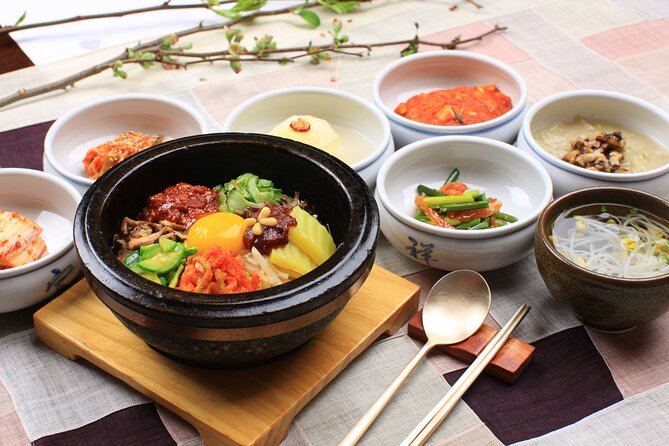
Momyeongjae begins the morning with a Korean traditional dessert-making class at a Korean Traditional Culture Center. Expert instructors guide you as you make sweets, with about 90 minutes set aside.
Hands-on food activities help break up a long sightseeing circuit. You are not only looking at a display or hearing a lecture. You are working with a food tradition and then carrying the memory of it into the rest of the day. The exact dessert is not specified, so do not book this expecting one particular recipe.
Andong Hahoe Folk Village is one of Korea’s best-preserved traditional villages and a UNESCO World Heritage Site. It has more than 600 years of history and remains a living cultural setting, rather than simply a collection of restored buildings.
You’ll have two hours to walk through the village. The main value is seeing how traditional homes, village form, and daily life fit together. Keep your expectations realistic: two hours offers an introduction, not a complete study of Andong culture.
Day 7: Seoraksan’s Jujeongol Valley
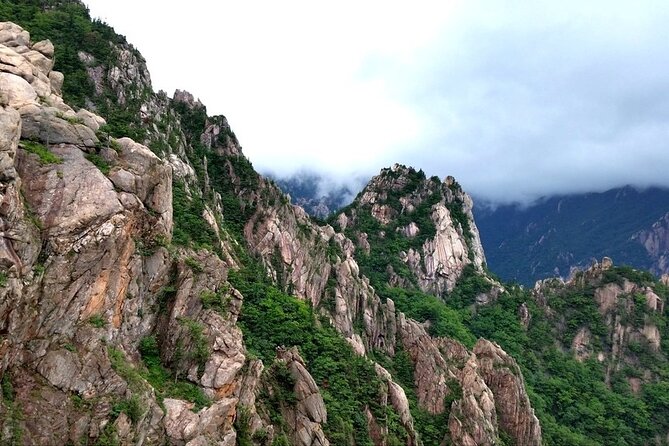
The final day begins in Pyeongchang before the route continues to Jujeongol Valley in Seoraksan National Park. You’ll spend about two hours among rock formations, high peaks, and clear streams.
This is a fitting ending because it shifts the focus from Korea’s human past to its mountains. The walk requires a moderate level of fitness, and the tour specifically advises that you should be prepared for physical activity. Wear shoes suited to an outdoor trail and allow for changing conditions.
The itinerary ends back at the starting meeting point in Seoul. The listed meeting point is Amid Hotel Seoul at 38 Insadong 5-gil, with an 8:00 am start. Hotel pickup on the first day and drop-off on the last day are not included, so you should arrange your own way to and from the meeting point.
Meals, hotels, transport, and group size
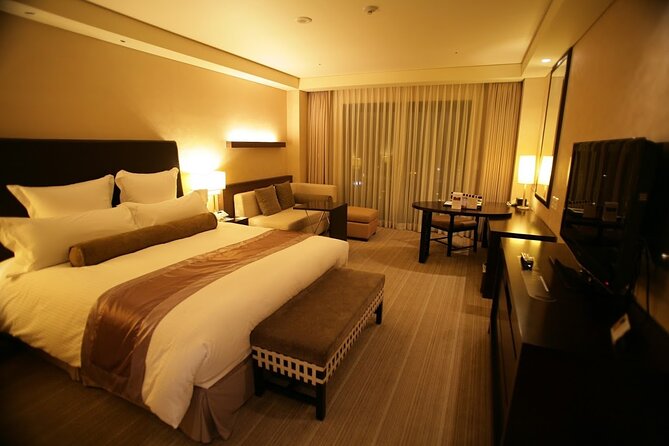
The package includes six nights in twin or double rooms. Specific hotels are not named, so you should confirm the accommodation details before paying if room standards or location are especially important to you.
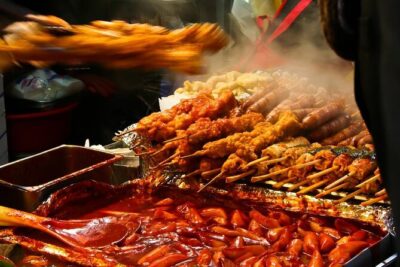
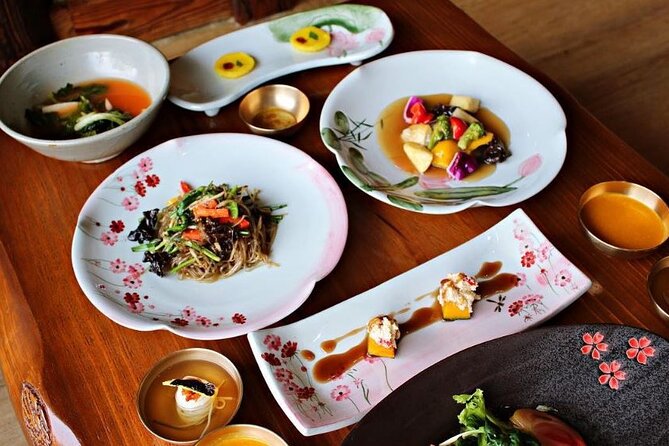
Food is a major part of the value. You receive seven lunches, six breakfasts, and six dinners, with different kinds of Korean traditional food included along the route. That removes much of the daily guesswork and lets you sample regional cooking without repeatedly searching for restaurants during a tight schedule.
Transport is by air-conditioned vehicle, with the vehicle type changing according to group size. The maximum group is 35 people. That is large enough for a coach-style experience, though some departures may be smaller. One highly praised example involved 16 people and a guide named Jay, who was described as friendly, kind, fun, and attentive from start to finish.
An English-speaking guide or driver-guide is included. The guide is important here because the tour covers several kingdoms, religious traditions, war history, food customs, and Korean architecture in quick succession.
Price, pace, and who should book
The $1,970 price makes the most sense for you if you want one payment to cover the main structure of a Korea trip. Six nights of lodging, nearly all meals, transport, tickets, and guiding add up quickly when arranged independently. The included welcome kit is a small extra, while the bigger saving is the time and planning.
The value is less convincing if you already enjoy arranging Korean trains, hotels, and meals yourself. You will give up some independence, and the route does not leave much room to linger in one town.
I would choose this tour if I had seven days and wanted to see Korea’s regional variety without spending hours comparing connections. I would skip it if my ideal holiday meant sleeping late, choosing restaurants spontaneously, or spending several days in one place.
You also need to budget for personal expenses, drinks, tips, laundry, telephone charges, pay TV, insurance, and anything else outside the listed inclusions. The cancellation terms are fairly strict close to departure: a full refund requires cancellation at least six full days before the start, a 50 percent refund applies two to six full days before departure, and cancellations less than two full days before the start are not refunded.
Should you book this round-Korea tour?
Book it if you want maximum regional coverage in one week, value included meals and tickets, and are comfortable with early starts and long drives. The itinerary gives you a satisfying spread of palaces, tombs, temples, markets, food, wetlands, villages, and mountains.
The strongest parts are the authentic-feeling activities: tea with a monk, hanbok in Jeonju, dessert making, Jagalchi Market, and the contrast between ancient Gyeongju and modern Busan. The main weakness is pace. You will see a great deal, but you will rarely have a whole afternoon to wander without a schedule.
For a first visit focused on Korea beyond Seoul, I consider the package good value, especially if your alternative is arranging six hotel nights and a chain of regional transfers on your own. Just arrive ready to walk, sit on the road, eat on a timetable, and let the guide handle the complicated parts.
FAQ
Where does the tour start?
The tour starts at Amid Hotel Seoul, 38 Insadong 5-gil in Seoul’s Jongno District. The listed start time is 8:00 am.
Where does the tour end?
The activity ends back at the meeting point at Amid Hotel Seoul.
Are hotel pickup and drop-off included?
No. Pickup on the first day and drop-off on the last day are not included. The recommended hotel is Amid Hotel Seoul, the meeting point.
What meals are included?
The package includes seven lunches, six breakfasts, and six dinners. It also includes different types of traditional Korean food during the route.
How large can the group be?
The maximum group size is 35 people. Transport changes according to the size of the group.
What happens if bad weather cancels the tour?
The experience requires good weather. If it is canceled because of poor weather, you will be offered another date or a full refund.
Just added around Seoul
- Gyeongbokgung palace,seoul with gigibebe hanbok rental★ 4.5 · 12 reviews
- Private tour guide service in Seoul, Korea★ 5.0 · 6 reviews
- Alpaca, Nami, Petite Fr, Italian Village, Garden of Morning Calm★ 3.5 · 5 reviews
- Gyeongju UNESCO Sites Tour by KTX train; The Museum Without walls★ 4.5 · 11 reviews
- Private day trip to Korean Folk Village & Dae Jang Geum Park★ 5.0 · 7 reviews
- Private tour Lotte World,Tower,Aquarium(All Tickets are included)★ 5.0 · 12 reviews
- Full Day Private Seoul Tour for foodies★ 5.0 · 3 reviews
- Seoul Private Custom Walking Tour with A Guide (Private Tour)★ 4.5 · 28 reviews
Seoul Tours, compared.
Best DMZ Tour Korea from Seoul (Red Suspension Bridge Optional)
Read our review →
DMZ Tour: 3rd Tunnel, Option(Suspension Bridge, Boat) from Seoul
Read our review →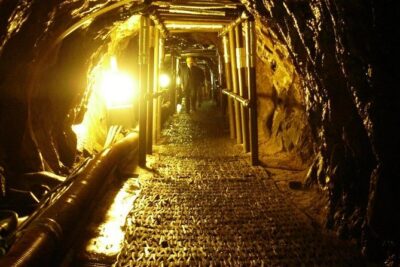
DMZ tour south Korea from Seoul (NK experience hall, defector)
Read our review →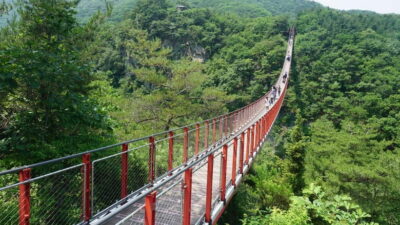
Thrilling Korean DMZ 3rd Tunnel Tour from Seoul + Red Bridge Rush
Read our review →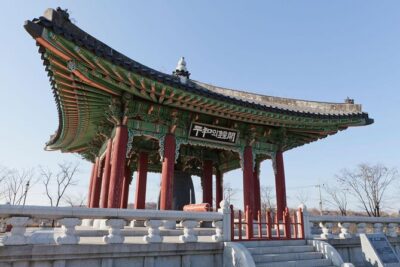
DMZ Past and Present: Korean Demilitarized Zone Tour from Seoul
Read our review →
Ultimate Korea DMZ Tour from Seoul (Gondola & Suspension Bridge)
Read our review →