Reviewed · SEOUL TOURS
Learn and Make Your Very Own Craft Makgeolli
Makgeolli is not simply sweet Korean rice wine poured into a bowl. In Joe’s small Baekusaeng Makgeolli workshop, you taste how aroma, acidity, sweetness, and texture change from one brew to the next, then make your own batch by hand. I like the serious brewing instruction and the chance to continue the process at home.
I also like the small class size, capped at 15, and the way the session combines tasting with actual work. Joe is patient, explains Korean brewing terms clearly in English, and has even used translation tools when needed. The main consideration is that this is an alcohol-focused class, and the take-home makgeolli still needs fermentation and conditioning after the session.
Key points
- Taste before you make: Compare several makgeolli styles and learn how sweetness, acidity, aroma, and texture work together.
- Take home about 1.2 liters: Your batch is prepared during class, then you continue the fermentation process yourself.
- Learn traditional methods: The class uses real ingredients, including rice and nuruk, rather than a simplified shortcut.
- Meet at a small Seoul workshop: The class begins and ends at 346-35 Ahyeon-dong, Mapo-gu.
- Joe teaches in clear English: The instructor writes Korean terms down and can use translation support when needed.
- Plan ahead: The two-hour experience costs $70.70 per person and is often booked about 23 days in advance.
What makes makgeolli worth learning in Seoul
Makgeolli is a useful drink for understanding Korea because it connects food, fermentation, farming, and everyday drinking culture. It is usually cloudy, lightly sweet, and gently acidic, but those broad labels tell you very little about the actual drink in your cup.
One bottle can taste creamy and soft. Another can be bright, tart, dry, fruity, or almost sparkling. The differences come from ingredients, fermentation, filtering, conditioning, and the brewer’s choices. This class gives you a way to taste those differences side by side instead of treating makgeolli as one fixed style.
That matters if your only experience has been a sweet commercial bottle from a supermarket or a restaurant. The class helps you understand what you are drinking and why small-batch makgeolli can taste so different from mass-produced versions.
I especially like that the session does not stop at a tasting. You work with the ingredients and leave with a batch of your own. The result is not a finished souvenir in the usual sense. It is an active project that continues after your Seoul visit.
Other Seoul days worth booking alongside this:
- Best DMZ Tour Korea from Seoul (Red Suspension Bridge Optional)
★ 5.0 · 41,422 reviews - DMZ Tour: 3rd Tunnel, Option(Suspension Bridge, Boat) from Seoul
★ 5.0 · 21,373 reviews - DMZ tour south Korea from Seoul (NK experience hall, defector)
★ 5.0 · 20,599 reviews
Arriving at Baekusaeng Makgeolli in Ahyeon-dong
The meeting point is 346-35 Ahyeon-dong, in Seoul’s Mapo-gu. The activity starts and ends there, so you do not need to arrange a second pickup or find your way across town after the class.
The workshop is described as a small, cozy makgeolli bar or brewery space in a traditional Korean market setting. That gives the class a more personal feel than a large cooking school or polished tourism venue. You are working in the place where the drink is made and served, not just watching a demonstration in a generic classroom.
Allow extra time to find the address. One participant became lost despite receiving clear directions, and Joe helped sort out the route. That is a useful reminder to check the meeting point carefully before leaving and keep your phone available for messages.
The location is near public transportation, and mobile tickets make the booking simple. Confirmation is provided at booking. The maximum group size is 15, though smaller sessions can feel much more personal. In one case, a solo participant ended up with one-on-one instruction, but you should not assume every class will be that small.
The opening tasting sets the stage
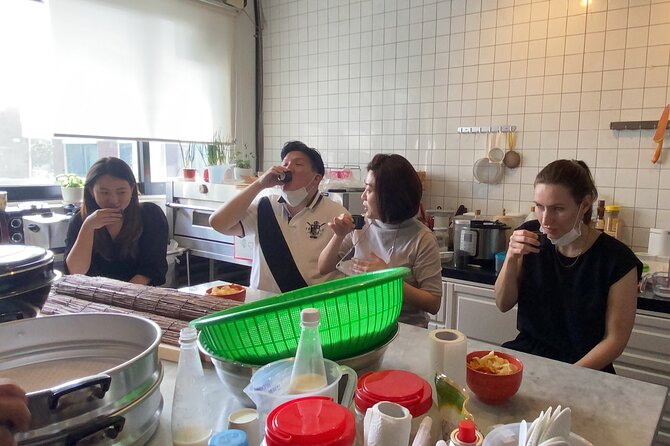
The class begins with an explanation of makgeolli and a tasting flight. This is more than a warm-up drink. It gives you a practical reference for the technical points that follow.
As you taste, Joe explains how aroma, sweetness, acidity, and texture fit together. You can compare the differences directly rather than trying to remember them from a lecture. This is one of the strongest parts of the experience because makgeolli’s range is easier to understand with a glass in front of you.
The tasting also covers the difference between traditional and commercial makgeolli. That comparison can change the way you order drinks during the rest of your time in Korea. You may begin noticing whether a bottle tastes highly sweetened, gently sour, creamy, dry, fresh, or heavily filtered.
The alcohol keeps the mood social, and the class has been described as offering plenty of samples. Still, pace yourself. Two hours of tasting and brewing can pass quickly, and the useful part of the class is the instruction, not simply the amount you drink.
If you do not usually drink alcohol, this experience may not be a good fit. The focus is firmly on makgeolli, and tasting is built into the lesson from the start.
Rice, nuruk, and the work behind the drink
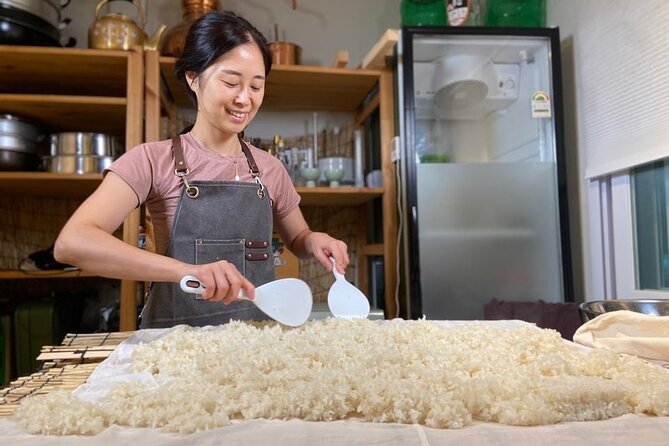
After tasting, you move into the brewing process. The class introduces the main ingredients and tools used in traditional and modern makgeolli making, then explains how they affect fermentation.
Rice is central, but it is not the only important ingredient. Nuruk, a traditional Korean fermentation starter, helps create the enzymes and microbial activity needed to turn starch into a drinkable brew. Yeast activity also shapes the final result.
You do not need to arrive with brewing experience. Joe breaks the process into manageable steps and explains the reason behind each one. That is important because makgeolli making is not just a recipe. Temperature, fermentation time, ingredient balance, filtering, and conditioning all affect the final drink.
The lesson aims to teach methods you can repeat at home. You learn the principles behind the process rather than receiving a fixed set of instructions that only works in the workshop. The class also encourages experimentation, so you can eventually develop your own style instead of copying one batch forever.
Some participants have worked with a pumpkin mash, which adds a creative angle to the practical brewing lesson. The supplied details do not promise a particular flavor or recipe for every session, so think of this as an example of the class’s experimental approach rather than a guaranteed menu item.
Same country, a completely different kind of day:
- Seoul: DMZ Tour with Optional Suspension Bridge
★ 4.8 · 5,277 reviews - Signature DMZ Tour: Exclusive Defector Talk & Suspension Bridge
★ 5.0 · 4,459 reviews - Thrilling Korean DMZ 3rd Tunnel Tour from Seoul + Red Bridge Rush
★ 5.0 · 3,097 reviews - DMZ Past and Present: Korean Demilitarized Zone Tour from Seoul
★ 5.0 · 2,481 reviews
Making your own batch by hand
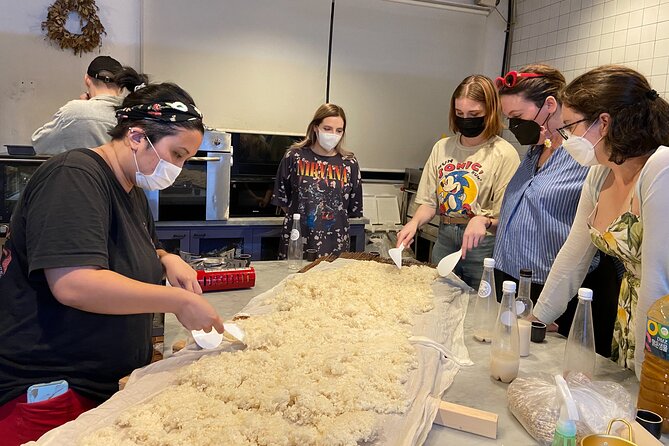
The central part of the experience is hands-on. You are not standing at the edge of the room while Joe handles everything. You take part in preparing your own makgeolli, using the ingredients and techniques introduced earlier.
This is where the class earns much of its price. A tasting alone might help you discover styles you like, but handling the ingredients gives you a clearer sense of the work behind the drink. You see how traditional brewing depends on touch, timing, and careful preparation.
The class is also social without requiring constant conversation. You may work alongside people from several countries, and the shared task gives the group an easy way to connect. One Japanese-speaking participant found that the practical nature of the class made the language barrier manageable, with Joe using translation support when needed.
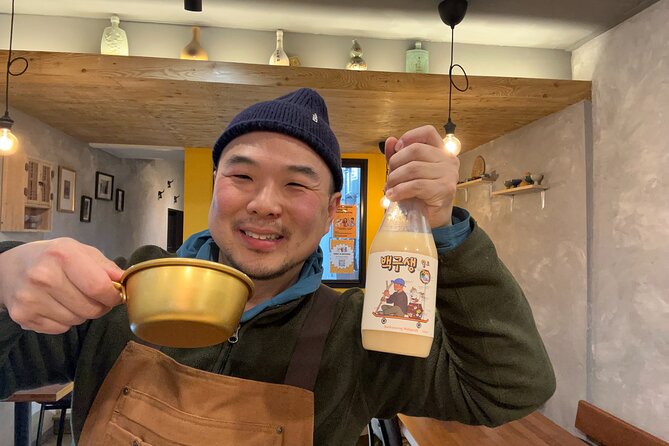
English speakers should find Joe easy to follow. He has been described as a native English speaker, and he writes Korean terms on a whiteboard when that helps with pronunciation or understanding. If you are not comfortable in English, you will still need to follow an English-led class, but the work itself is visual and practical.
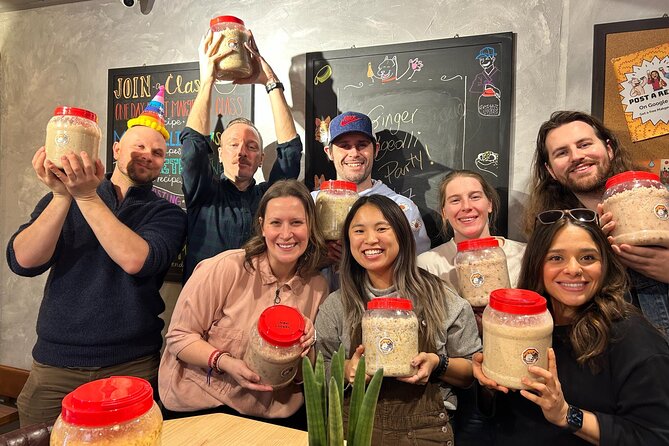
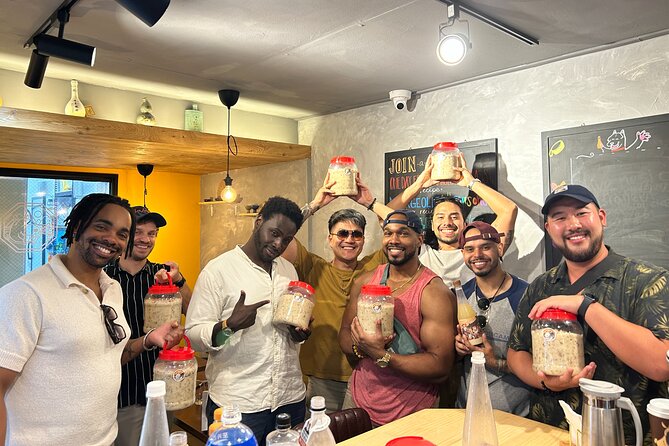
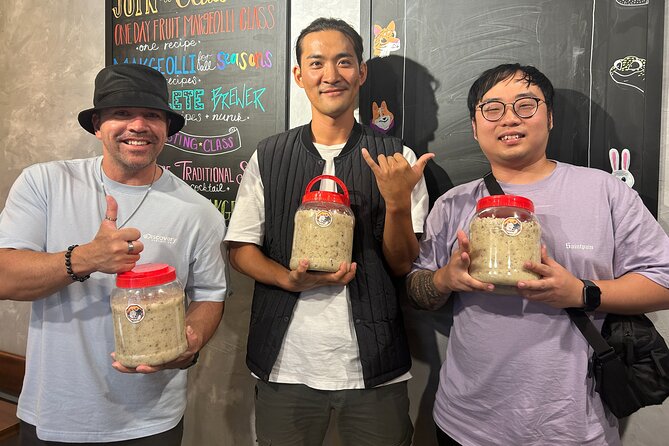
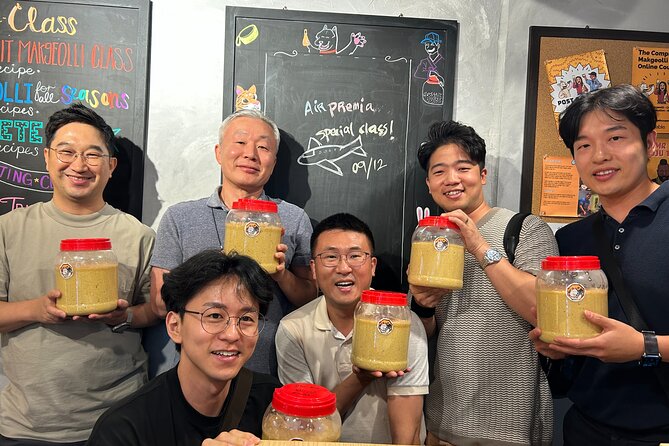
At the end, your prepared makgeolli is placed in a large plastic bottle, similar in shape to a container used for plum wine. You take home approximately 1.2 liters. It is an appealing souvenir, but it is not ready to drink immediately in the same way as a sealed shop bottle.
Finishing the fermentation at home
The take-home batch is part of the lesson, not an afterthought. You continue the brewing process after leaving Seoul, following the instructions you receive in class.
This is a real advantage for anyone who wants to keep brewing. The class gives you a starting batch, basic vocabulary, and enough understanding to make future decisions with greater confidence. You are not simply carrying home a bottle that proves you once attended a workshop.
It also creates the main practical drawback. You need to pay attention after the tour. Fermentation and conditioning require care, and your makgeolli will not be a finished drink at the moment the class ends. The experience is best for someone who enjoys following a process and wants to experiment at home.
The amount is generous enough to make the follow-up worthwhile. At about 1.2 liters, you have a proper batch rather than a tiny sample. You can taste the finished result later and think back to the choices made during class.
The precise home instructions, fermentation schedule, and storage details are not specified in the available information. Ask Joe to repeat any step you are unsure about before leaving, and make sure you understand what to do with the batch once you return home.
How Joe shapes the experience
Joe is the key reason this feels like a workshop rather than a standard tasting. He leads the class, answers questions, demonstrates the methods, and adjusts his explanations to the group.
His approach appears friendly and patient. He has helped people who lost their way to the venue, responded quickly to date-change requests, and taken time to explain individual steps during smaller sessions. Those details matter because brewing can feel intimidating if the instructor rushes through unfamiliar terms.
I also like the balance between science and handwork. The class covers yeast and nuruk activity, but it does not turn into a dry technical lecture. You learn what is happening during fermentation, then use that information while making the batch yourself.
The experience is led in English, with translation support available when needed. That makes it a practical option for international visitors, though anyone seeking a Korean-language class should confirm the language before booking.
Is $70.70 a fair price?
At $70.70 per person, this costs more than a simple Korean drink tasting. The value depends on what you want from the afternoon.
If you only want to sample makgeolli, the price may feel high. You are paying for a two-hour lesson, instruction, ingredients, equipment, a tasting flight, and approximately 1.2 liters of makgeolli to continue fermenting at home.
For someone interested in Korean food culture, fermentation, or home brewing, the price is easier to justify. You receive both an activity and a take-home project. The instruction also has value because it is designed to help you brew again after returning home, rather than ending when the class does.
The small maximum group of 15 helps protect the hands-on nature of the session. You should have a chance to work rather than merely watch, although the amount of individual attention will depend on the group size that day.
The experience is often booked about 23 days in advance, so last-minute planning may be difficult. If you know you want to attend, reserve early, especially if your Seoul dates are fixed.
Who will enjoy this class most?
I would recommend the class to adults who enjoy food workshops, fermentation, Korean culture, and activities with a practical result. It is also a good choice if you want something more personal than another sightseeing stop.
Solo visitors can fit in well. The class creates an easy setting for meeting other people, and a small group may give you extra time with Joe. Couples can work on a batch together, while curious home brewers will appreciate the focus on repeatable methods.
You do not need previous brewing experience. The class is built around explanation and practice, so beginners can follow along. At the same time, the tasting and discussion should give experienced brewers useful comparisons and ideas.
I would skip it if you dislike alcohol, want a finished souvenir that requires no follow-up, or prefer a fast cultural demonstration with little participation. This is a workshop, and the point is to learn by doing.
Practical details before you book
The class lasts about two hours and returns to the same Ahyeon-dong meeting point. Since the activity is in one location, it is easy to pair with other plans in Seoul, but allow enough time to locate the workshop without rushing.
Wear something comfortable for hands-on work. The supplied information does not list a formal dress code, so there is no need to overprepare, but you should be ready to handle brewing ingredients and work at the class space.
Service animals are allowed, and the venue is near public transportation. Confirmation arrives at booking, and the mobile ticket is convenient for a day of sightseeing.
Free cancellation is available if you cancel at least 24 hours before the local start time. Cancellations or changes made less than 24 hours ahead are not accepted for a refund, so check your Seoul schedule before making a last-minute adjustment.
Should you book the Baekusaeng Makgeolli class?
Book it if you want to understand makgeolli from the inside, not just drink a bowl at dinner. The tasting flight shows you the drink’s range, Joe provides clear instruction, and the hands-on batch gives the experience a useful afterlife at home.
The strongest reasons to go are the practical brewing focus, the personal teaching style, and the chance to compare several types before making your own. The main caution is simple: you need to continue the fermentation after the class, and the activity centers on alcohol from beginning to end.
At $70.70, it is a specialty experience rather than a cheap tasting. For an afternoon of Korean culture with real participation and a 1.2-liter project to take home, I consider it a good choice for curious food lovers and home brewers. Reserve ahead, arrive with time to find the address, and treat the take-home bottle as the start of the lesson, not its final product.
FAQ
Where does the makgeolli class take place?
The class starts at 346-35 Ahyeon-dong, Mapo-gu, Seoul, South Korea. The activity ends back at the same meeting point.
How long does the experience last?
The class lasts approximately two hours.
How much does the class cost?
The listed price is $70.70 per person.
How much makgeolli can I take home?
You take home approximately 1.2 liters of your own makgeolli to continue fermenting yourself.
Is the class suitable for beginners?
Yes. The class teaches the essential ingredients, tools, fermentation activity, filtering, and conditioning techniques, then gives you hands-on brewing practice.
How many people can join the class?
The maximum group size is 15 travelers.
Is the class taught in English?
The class is led by Joe in English. He has used written Korean terms and translation support to help participants understand.
Can I cancel for a full refund?
You can cancel for a full refund at least 24 hours before the experience’s local start time. Cancellations or changes made less than 24 hours in advance are not accepted for a refund.
Just added around Seoul
- Gyeongbokgung palace,seoul with gigibebe hanbok rental★ 4.5 · 12 reviews
- Private tour guide service in Seoul, Korea★ 5.0 · 6 reviews
- Alpaca, Nami, Petite Fr, Italian Village, Garden of Morning Calm★ 3.5 · 5 reviews
- Gyeongju UNESCO Sites Tour by KTX train; The Museum Without walls★ 4.5 · 11 reviews
- Private day trip to Korean Folk Village & Dae Jang Geum Park★ 5.0 · 7 reviews
- Private tour Lotte World,Tower,Aquarium(All Tickets are included)★ 5.0 · 12 reviews
- Full Day Private Seoul Tour for foodies★ 5.0 · 3 reviews
- Seoul Private Custom Walking Tour with A Guide (Private Tour)★ 4.5 · 28 reviews
Seoul Tours, compared.
Best DMZ Tour Korea from Seoul (Red Suspension Bridge Optional)
Read our review →
DMZ Tour: 3rd Tunnel, Option(Suspension Bridge, Boat) from Seoul
Read our review →
DMZ tour south Korea from Seoul (NK experience hall, defector)
Read our review →

Thrilling Korean DMZ 3rd Tunnel Tour from Seoul + Red Bridge Rush
Read our review →
DMZ Past and Present: Korean Demilitarized Zone Tour from Seoul
Read our review →
Ultimate Korea DMZ Tour from Seoul (Gondola & Suspension Bridge)
Read our review →