
Reviewed · UNESCO WORLD HERITAGE TOURS
Seoul: Ganghwa Island UNESCO World Heritage Private Tour
Ganghwa Island gives you a very different view of Korea. In one long day, you can look across the border at North Korea, walk among Bronze Age dolmens, enter old fortifications, visit a forested temple, and finish by the sea. The island’s layered past is the real attraction, not one single monument.
I like the freedom of this private tour, since you can adjust the pace and choose which stops matter most to you. I also like having a guide such as Peter or Charlie, who can connect the sites to Korean politics, royal history, local customs, and family life. The main drawback is the 10-hour day, with traffic from Seoul and several short visits that can feel brisk.
Key points at a glance
- Border views with historical weight: The Ganghwa Peace Observatory looks toward North Korea and helps explain why this island still matters.
- A UNESCO-listed dolmen site: You see one of Korea’s striking prehistoric stone monuments without leaving the Seoul region.
- A private route you can shape: Your group can choose from fortresses, palaces, temples, textile culture, beaches, and cafes.
- Strong guides make the difference: Peter and Charlie have led the route with clear explanations, practical suggestions, and good photo stops.
- A full day outside Seoul: The tour includes hotel pickup, transport, tolls, a guide, and return to the same Seoul location.
Why Ganghwa Island makes a smart day trip
Ganghwa sits in Gyeonggi Province, roughly an hour from Seoul in normal conditions. That distance is short on paper, but the island feels far removed from the capital’s towers, traffic, and shopping districts. Here, roads lead through farmland, villages, shoreline, old defensive sites, and temple grounds.
Ganghwa has served as a defensive gateway for centuries. Its position near the Han River estuary and the northern border made it useful to rulers, armies, traders, and religious communities. The day’s stops show different parts of that story rather than presenting one polished historical period.
I would choose this tour if you have already seen Seoul’s main palaces and neighborhoods and want a day with more context. It is also a good choice for anyone interested in Korean history but less keen on spending another day inside museums.
The private format matters. You are not tied to a large group’s interests, so you can ask for more time at a fortress, move faster through a smaller stop, or focus on photography and scenery. The exact balance depends on your guide and the number of attractions you select, so tell the operator what matters most before pickup.
More UNESCO World Heritage Tours in Seoul
- Day Trip to UNESCO: Suwon Fortress Adventure from Seoul
★ 5.0 · 56 reviews - DMZ Tour, 2nd Tunnel & UNESCO Suspension Bridge Tour from Seoul
★ 5.0 · 48 reviews - Namhansanseong UNESCO Historical Sites and Korean Folk Village-Private Tour
★ 5.0 · 29 reviews
Starting at the Ganghwa Peace Observatory
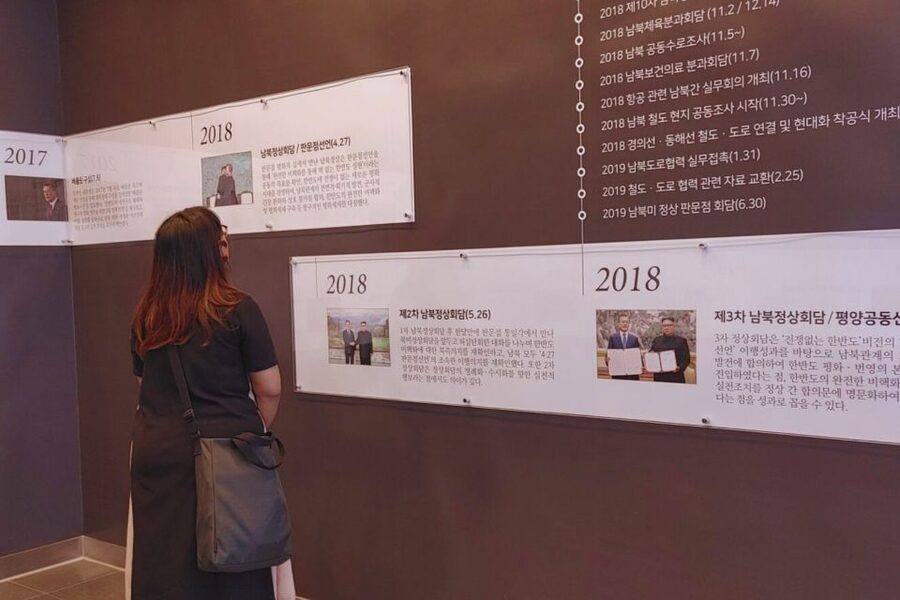
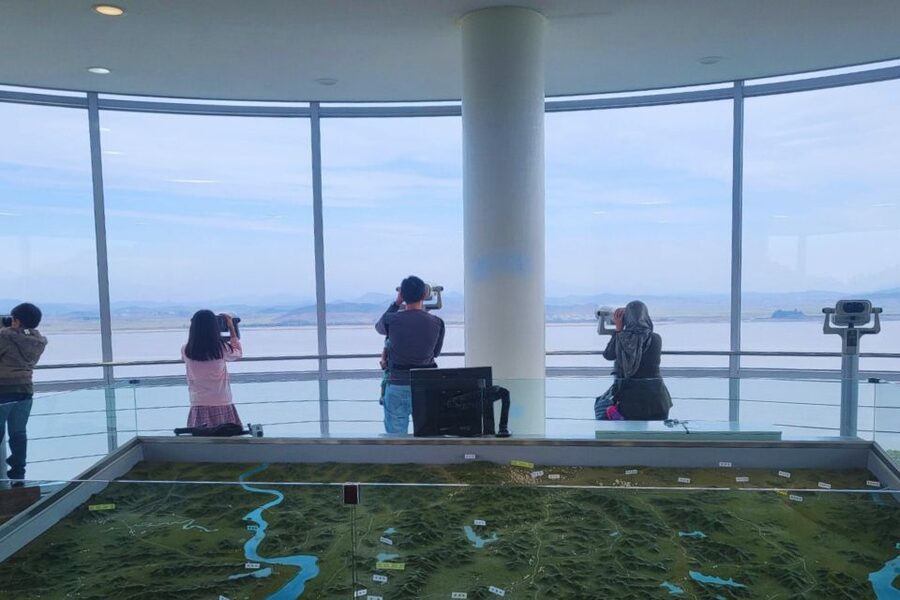
The Peace Observatory is one of the day’s most meaningful stops. From its position near the northern edge of Ganghwa, you look toward North Korea across the water. The view is not just scenic. It gives physical scale to the division of the Korean Peninsula.
Plan on about 45 minutes here with your guide. That is enough time for sightseeing and explanation, but not for a long, slow visit. Your guide can help explain why families with roots in the North may be unable to visit ancestral graves or hometowns.
That human detail gives the observatory more weight than a simple border lookout. You are not only looking at a distant shore. You are considering the everyday consequences of a political boundary that remains in place.
Visibility and weather will affect the experience. On a clear day, the view should be more rewarding, while haze or poor weather can reduce what you see. The operator makes the final decision about weather cancellations on the day, and a weather-related cancellation receives a full refund.
Meeting Korea’s ancient builders at the dolmen site
Ganghwa’s dolmen site is a UNESCO World Heritage Site and one of the clearest reasons to make the trip. Dolmens are large stone burial structures from prehistoric Korea. Their simple shape can look almost too plain at first, but the size of the stones raises an obvious question: how did people move and place them thousands of years ago?
The visit takes about 30 minutes. That is a sensible length for the site, especially when combined with the guide’s explanation. Ask about the purpose of the monuments, the communities that built them, and why Ganghwa’s examples are important within Korea’s wider prehistoric record.
This is not a palace with rooms to enter or a fortress with dramatic walls to climb. The appeal comes from scale, age, and setting. I would give the dolmen more attention if you enjoy archaeology, but the stop also works as a quick and memorable break from the island’s later royal and military sites.
Making the lunch stop work for you
Lunch is not included in the $180 price. Your guide will recommend a local restaurant, but the available choices may be limited. A traditional meal can be one of the day’s most pleasant moments, especially if you want to try local food rather than eat near Seoul.
You should raise dietary restrictions before the tour begins. If your needs are strict, bring food with you. This is a practical point, not a small footnote, because the day is long and lunch occupies about an hour.
One stop has included a traditional restaurant serving fish, but no fixed menu is promised. Bring some cash or another accepted payment method for the meal and drinks, since both are extra. Seaweed snacks sampled during the day may also be offered for purchase later, but buying them is entirely optional.
Same country, a completely different kind of day:
- Best DMZ Tour Korea from Seoul (Red Suspension Bridge Optional)
★ 5.0 · 41,422 reviews - DMZ Tour: 3rd Tunnel, Option(Suspension Bridge, Boat) from Seoul
★ 5.0 · 21,373 reviews - DMZ tour south Korea from Seoul (NK experience hall, defector)
★ 5.0 · 20,599 reviews - Seoul: DMZ Tour with Optional Suspension Bridge
★ 4.8 · 5,277 reviews
Walking through Ganghwa’s royal and military past
The main Ganghwa visit lasts about four and a half hours and combines guided sightseeing with walking. This is where the private format earns its keep. You have several possible stops, and the guide can help decide how to spend the available time.
The Goryeo-gung Palace Site connects the island to the Goryeo dynasty. Ganghwa served as a refuge for the royal court during a period of outside threat, and the palace site helps explain why the island’s location mattered to Korean rulers.
Yongheung-gung Palace offers another link to the royal past. It was the home in exile of a future king, giving the stop a more personal scale than a broad palace complex. I like including a place such as this because it shows how political history can be tied to one household and one period of uncertainty.
Ganghwa Anglican Church adds a different layer. The building represents the arrival and development of Anglican Christianity in Korea. It also makes the route more varied, moving you beyond military sites and royal remains.
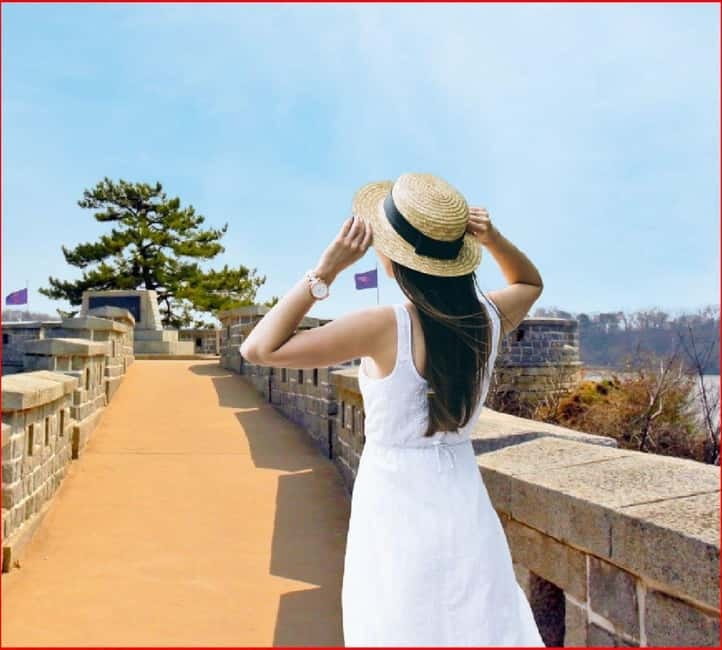
At Gwangseongbo Fortress, expect open views over the water and a stronger sense of Ganghwa as a defensive position. The visit includes sightseeing and walking, so wear shoes that can handle uneven ground. The fortification is especially effective when your guide explains what the shoreline meant to armies and rulers, rather than treating the walls as a photo backdrop.
The route may also include other historic defensive points, depending on the day’s plan and your chosen priorities. You should ask at the start which sites are realistic within the available hours. Ganghwa offers enough attractions to fill several days, while this tour has to fit them into one.
Jeondeungsa Temple and the quieter side of the island
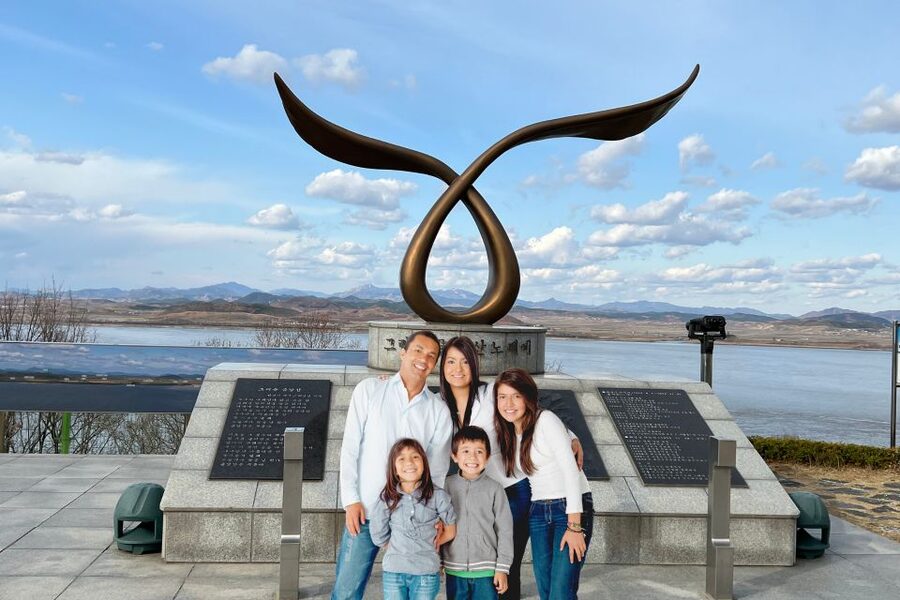
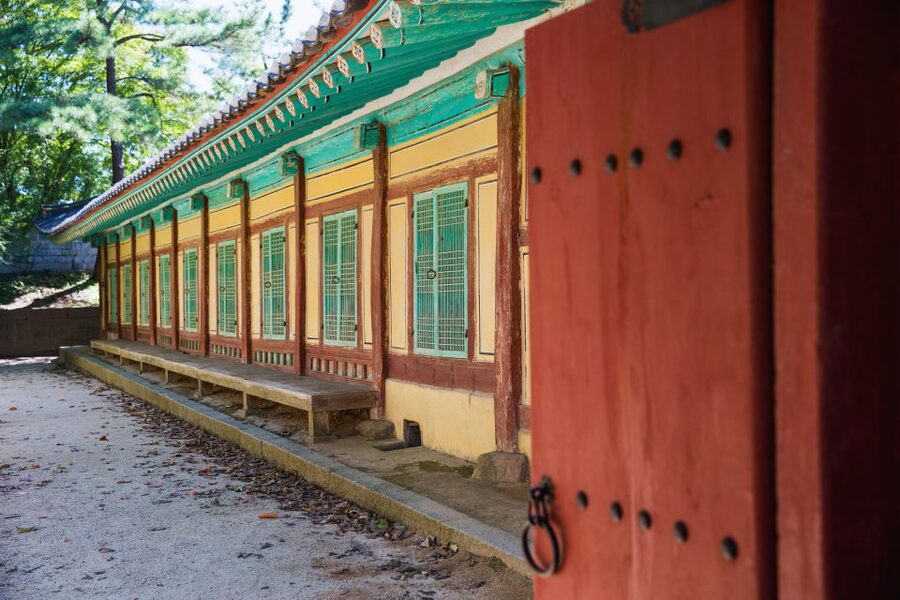
Jeondeungsa Temple gives the day a change of pace. Instead of walls, water, and political borders, you get a religious site in a wooded setting. One recent day included a temple ceremony near sunset, which shows why timing can add something special here.
I would ask your guide about the best time to visit Jeondeungsa if the temple is high on your list. The schedule has several moving parts, and the final light of day may not always line up with the temple stop.
The temple also helps prevent the tour from becoming a string of historical explanations. You can slow down, look at the grounds, and notice how Korean religious sites fit into their natural surroundings. Keep in mind that a temple visit may involve walking, steps, or uneven paths, even though the overall activity is listed as wheelchair accessible.
Textile culture at Hwamunseok and Joyang Bangjik
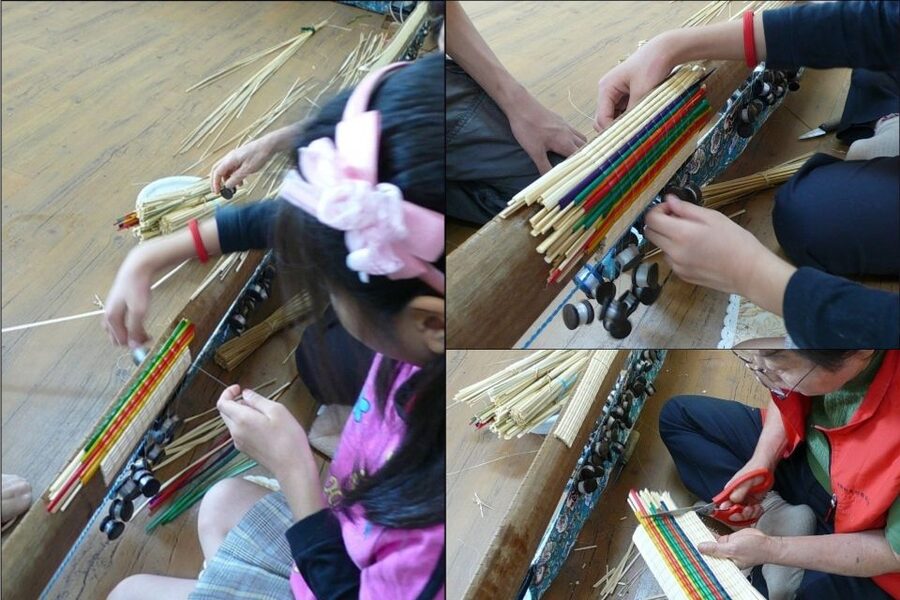
Ganghwa is known for local textile traditions, and the Ganghwa Hwamunseok Culture Center introduces that part of island life. Hwamunseok refers to woven mat-making, a craft associated with Ganghwa. The stop is useful because it shows how local culture is built not only around kings and battles, but also around skilled work passed through communities.
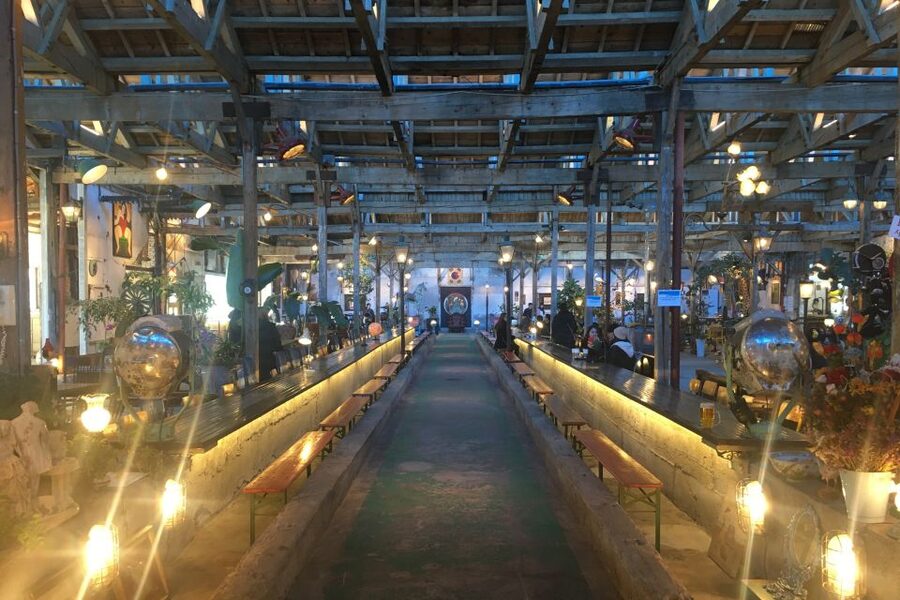
The itinerary also includes Joyang Bangjik, a former textile setting now known as a cafe and cultural stop. Its appeal is different from the ancient monuments. You get a look at Ganghwa’s industrial and everyday past, along with a place to pause.
The exact amount of time at these stops may vary. If you care about crafts, design, or old industrial spaces, say so when arranging the tour. If your priority is the border view or the temple, you may prefer to keep these visits shorter.
Dongmak Beach and the island’s open shoreline
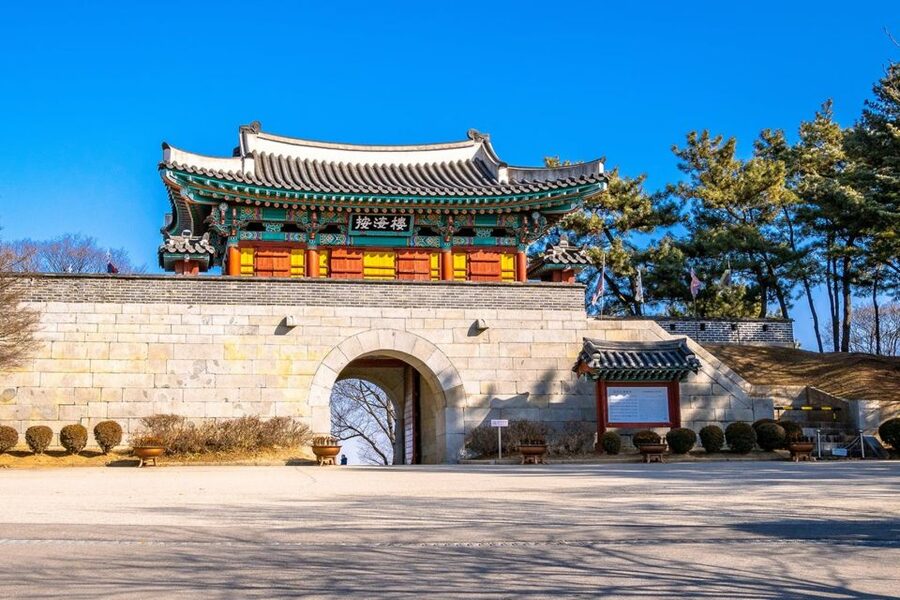
Dongmak Beach closes the sightseeing portion with sea air and a broad shoreline. After a day of monuments and explanations, this is a welcome reset. You can look out over the coast, take photographs, and enjoy a simpler view of Ganghwa.
Do not book this tour expecting a long beach day. Dongmak is one stop in a packed route, not a resort break. Its value comes from contrast. The island is not only a defensive outpost or an archaeological site. It is also a place of water, fishing, local food, and ordinary leisure.
Weather will shape this stop more than any other. On a clear day, it can be one of the most relaxing parts of the trip. In poor weather, the visit may be brief, and you should not count on beach activities.
What the private vehicle and guide add

Round-trip air-conditioned transportation, tolls, hotel pickup, and drop-off are included. You wait in your hotel lobby 10 minutes before the scheduled pickup, then return to the same Seoul location at the end of the day.
That setup removes the hardest practical part of a Ganghwa visit: coordinating transport between scattered sites. Public transport may work for individual attractions, but it is less convenient when you want a peace observatory, dolmen, fortress, temple, beach, and cultural stops in one day.
The guide is central to the experience. Peter has led the route with strong explanations of each site, useful restaurant suggestions, and advice on photo locations. Charlie has also led the tour with energy and clear historical context. These names give you a useful point of reference, but the assigned guide may vary.
An English-speaking guide is included, and the tour is for a private group. That means you can ask about topics that interest you, from Korean royal history to the division of the peninsula. It also means the quality of the day depends partly on communication with your guide, so make your priorities clear early.
Is $180 per person a fair price?
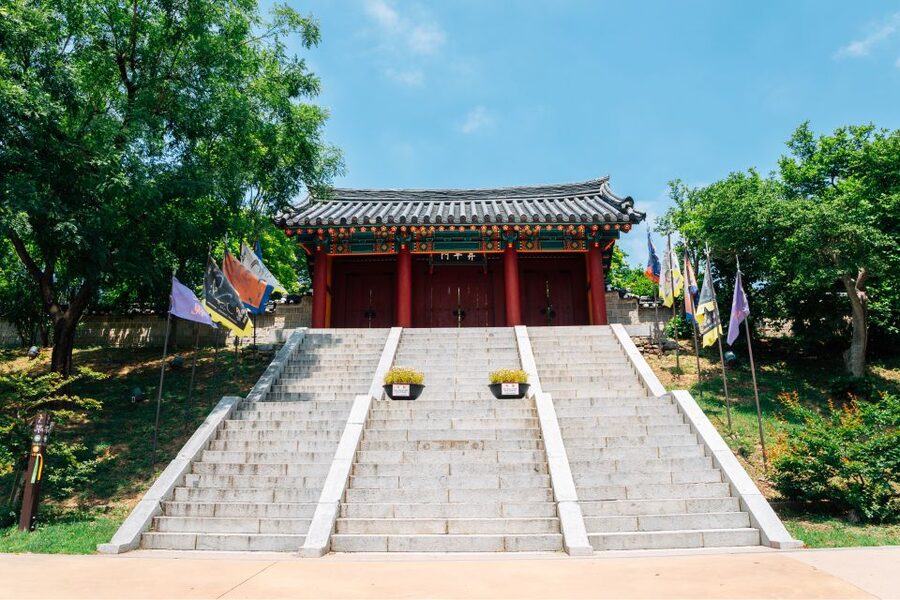
At $180 per person, this is not the cheapest way to see Ganghwa. The value depends heavily on your group size. A couple pays more per person than a larger private party, but you receive a dedicated vehicle, driver-guide, Seoul hotel transfers, tolls, and a full 10-hour outing.
I see the price as reasonable for visitors who want many scattered sites in one day without handling transport. It is less compelling if you only want the beach, dolmen, or one fortress and are happy to arrange a simpler visit yourself.
Lunch, drinks, insurance, and personal purchases are extra. Budget for the restaurant meal and do not assume every recommended attraction will fit into the schedule. The biggest value comes from the route design and explanation, not from included food or admission benefits.
Timing, comfort, and practical limits
Ten hours is a serious day. You leave Seoul, visit several sites, walk at historic locations, eat lunch, and return through possible weekend traffic. Weekend and holiday congestion can reduce time at individual stops, so I would choose a weekday when possible.
The tour is listed as wheelchair accessible, but the varied sites deserve a quick accessibility discussion before booking. A fortress, temple grounds, beach, and historic ruins may not offer the same surfaces or ease of movement. Tell the operator about mobility needs when you reserve.
Children under 2 years old are free if they do not occupy a seat. You must give the exact number of participants when booking so the vehicle is suitable. Pickup and drop-off are limited to the same location within Seoul city.
You can cancel up to 24 hours before departure for a full refund, and you can reserve now while paying later. Those terms help if your Seoul schedule is still changing.
Who should choose this Ganghwa day trip?
I would recommend it for first-time visitors who want to see more of Korea than central Seoul. It suits people who enjoy history, border stories, archaeology, temples, traditional crafts, and changing scenery in one day.
It is also a strong choice for families or small groups who want control over the pace. A private vehicle makes it easier to manage different interests, although the long schedule may be tiring for very young children.
I would think twice if you dislike long road days or prefer one site explored in depth. Ganghwa has enough material for a slower visit, while this experience aims to show you a broad selection. The day works best when you accept that some stops are introductions rather than full museum-style visits.
Should you book it?
Book this tour if you want one efficient day beyond Seoul and care about the story connecting prehistoric monuments, royal refuge, coastal defense, religious life, textile culture, and the modern border. The Peace Observatory and UNESCO dolmen are the anchors, while Gwangseongbo Fortress, Jeondeungsa Temple, Joyang Bangjik, and Dongmak Beach add variety.
Skip it if you want a leisurely beach outing, guaranteed restaurant choices, or long visits at every attraction. Before you reserve, confirm your preferred stops, mention dietary or mobility needs, and try for a weekday. For a small private group that values an expert English-speaking guide and door-to-door transport, $180 can be a fair trade for a very full Korean day.
FAQ
How long does the Ganghwa Island tour last?
The tour lasts 10 hours, including pickup from Seoul, sightseeing on Ganghwa Island, and return to Seoul.
Is transportation included?
Yes. The tour includes round-trip air-conditioned transportation, toll fees, a professional driver-guide, and hotel pickup and drop-off within Seoul city.
Is lunch included in the price?
No. Lunch and drinks cost extra. The guide recommends a local restaurant, but choices may be limited. If you have dietary restrictions, bringing your own lunch is recommended.
Is the tour private?
Yes. This is a private group tour, so your party travels together with a live English-speaking guide.
Can I cancel for a full refund?
You can cancel up to 24 hours in advance for a full refund. Trips canceled because of weather-related issues also receive a full refund.
Is the tour wheelchair accessible?
The activity is listed as wheelchair accessible. Because the route includes fortresses, a temple, a beach, historic sites, and walking, discuss specific mobility needs when booking.
More Historical Tours in Seoul
- Seoul: Evening Dark History, Folklore & Ghost Story Walking Tour
★ 5.0 · 593 reviews - Hanbok Photoshoot and History Tour at Gyeongbokgung Palace
★ 5.0 · 276 reviews - From Seoul: Dae Jang Geum Park Historic K-Drama Set Tour
★ 4.9 · 143 reviews - Seoul: City Highlights and Historical Experience No Shopping
★ 5.0 · 74 reviews
Just added around Seoul
- Gyeongbokgung palace,seoul with gigibebe hanbok rental★ 4.5 · 12 reviews
- Private tour guide service in Seoul, Korea★ 5.0 · 6 reviews
- Alpaca, Nami, Petite Fr, Italian Village, Garden of Morning Calm★ 3.5 · 5 reviews
- Gyeongju UNESCO Sites Tour by KTX train; The Museum Without walls★ 4.5 · 11 reviews
- Private day trip to Korean Folk Village & Dae Jang Geum Park★ 5.0 · 7 reviews
- Private tour Lotte World,Tower,Aquarium(All Tickets are included)★ 5.0 · 12 reviews
- Full Day Private Seoul Tour for foodies★ 5.0 · 3 reviews
- Seoul Private Custom Walking Tour with A Guide (Private Tour)★ 4.5 · 28 reviews
UNESCO World Heritage Tours, compared.
Gyeongju UNESCO World Heritage Guided Day Tour
Read our review →
East Jeju Essentials – Seongsan Ilchulbong (UNESCO) & Haenyeo
Read our review →
Gyeongju UNESCO World Heritage Guided Day Tour from Busan
Read our review →
Jeju Southern UNESCO Full Day Tour with Mt.Halla
Read our review →
Jeju island Southern UNESCO Day Tour With Hallasan MT
Read our review →Browse the lists this tour appears in