
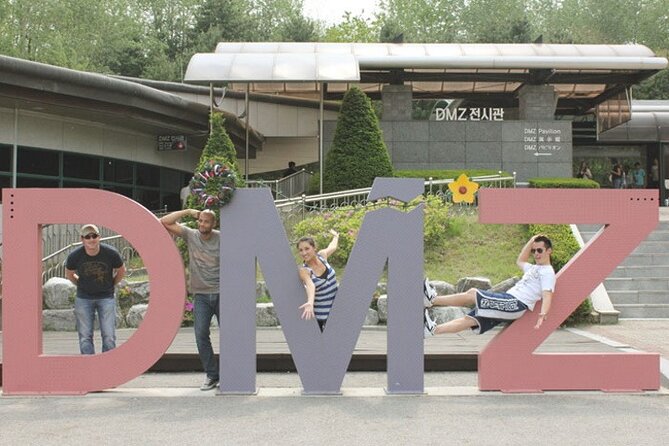
Reviewed · DMZ TOURS
365-day DMZ Special Tour including Monday & Public Holiday
The most striking part of this tour is how quickly Seoul’s modern city life gives way to Korea’s divided border. Within about an hour, you are looking at the Freedom Bridge, wartime memorials, military zones, and, from Dora Observatory, the hills of North Korea. I like that the day treats the DMZ as a place of memory, not just a photo stop. The historical explanations matter here, because the sights alone can be hard to understand.
I also like the practical pickup system from designated Seoul subway stations and the fact that the tour runs on Mondays and national holidays, when many DMZ attractions close. Guides such as Sookhee, Young, Roy, Chloe, and Veronica bring warmth and humor to a serious subject. The main drawback is pace: with a full schedule and groups of up to 40, you need to walk briskly and accept limited time at some stops.
Key points to know before you book
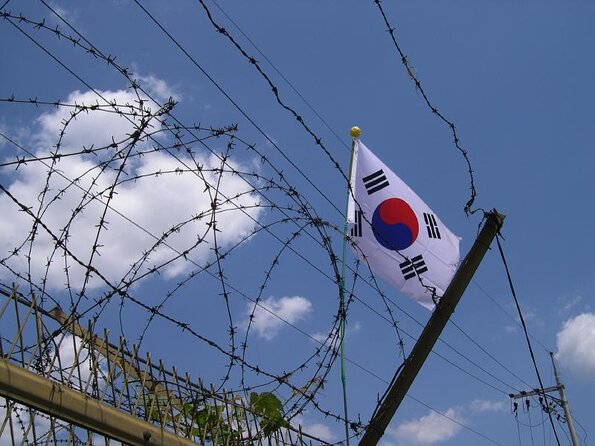
- Monday access is the main selling point: When the 3rd Tunnel and other DMZ sites close, you visit the Peace Gondola, Gloster Hill Memorial Park, and Heroes Suspension Bridge instead.
- Tuesday to Sunday brings the classic DMZ sights: The 3rd Infiltration Tunnel, Dora Observatory, Dorasan Peace Park, Tongilchon Village, and Imjingak are the core stops.
- The day runs about nine hours: Pickup begins between 6:00 and 7:50 in Seoul, depending on the season, and return is planned for about 3:30 p.m.
- Expect real walking: The 3rd Tunnel and Heroes Suspension Bridge route can be tiring and are not advised for people with heart conditions, serious medical issues, or pregnancy.
- Lunch is not included: Bring food or plan carefully, especially on the Monday route, when eating choices may be limited.
- The $59 price is reasonable for a full-day outing: You get transport from Seoul, an English-speaking guide, and access to a complicated border area that is difficult to visit independently.
Why the DMZ makes such a powerful day trip from Seoul
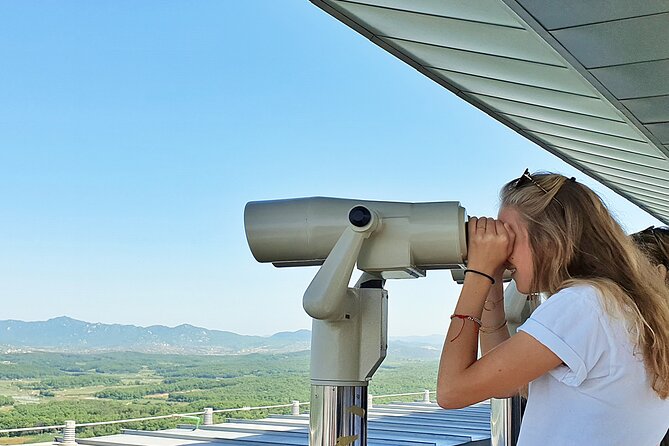
The Korean Demilitarized Zone is only about an hour from Seoul by road, but it is not a casual self-guided destination. It is a military area with changing access rules, security checks, restricted roads, and sudden closures.
That is where this tour earns its keep. You can leave the city without renting a car or trying to piece together public transport, then hear the political and military context as you go. The subject is heavy, but the day is not grim from start to finish. Forested hills, open farmland, river views, and distant mountains give the experience a strangely peaceful setting.
You should also understand what this is not. It is not a guaranteed chance to see North Korean soldiers or buildings up close. Visibility depends on weather, and access can change without notice. The value comes from seeing several sites tied to the Korean War and the division that followed, then considering how close that unresolved border remains to Seoul.
More DMZ Tours in Seoul:
- Best DMZ Tour Korea from Seoul (Red Suspension Bridge Optional)
★ 5.0 · 41,422 reviews - DMZ Tour: 3rd Tunnel, Option(Suspension Bridge, Boat) from Seoul
★ 5.0 · 21,373 reviews - DMZ tour south Korea from Seoul (NK experience hall, defector)
★ 5.0 · 20,599 reviews
The early Seoul pickup and the long ride north
Pickup takes place at selected Seoul subway stations, with City Hall Station listed as the main start and end point. The exact pickup point depends on the option you choose, so check your confirmation carefully and arrive at least 10 minutes early. The bus leaves on time at each meeting point.
Seasonal pickup windows are early. From the beginning of March through the end of June, and from the beginning of September through the beginning of January, pickup is listed between 6:00 and 6:50 a.m. During the lower season, it is between 7:00 and 7:50 a.m.
That early start is useful. It allows the group to reach the border area before the day becomes more crowded, though it also means you should not plan a late night before the tour. The return is expected around 3:30 p.m., leaving you time for dinner or another Seoul activity.
The vehicle provides a comfortable base between stops, but this is not a slow sightseeing day. A full day of sites, road travel, stairs, tunnels, and outdoor viewpoints requires moderate fitness.
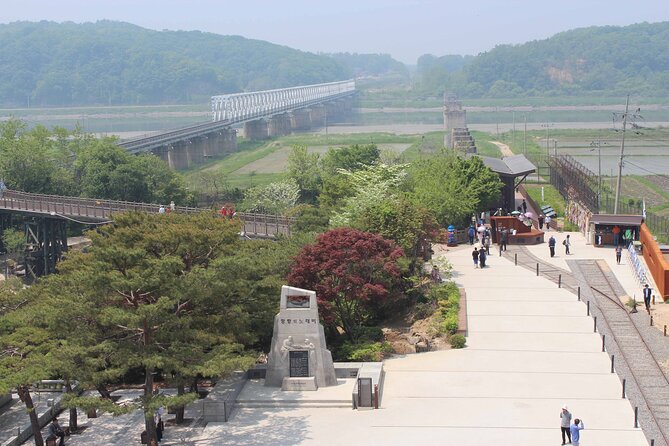
Imjingak Peace Nuri Park and the Freedom Bridge
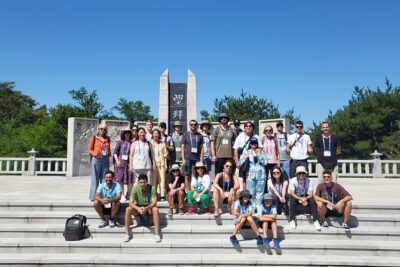
Imjingak Peace Nuri Park introduces the emotional side of the border. It was created as a place of comfort for people who fled North Korea during the Korean War, and its monuments connect the conflict to families separated by the division.
The Freedom Bridge is the best-known sight here. It carried prisoners of war and returning soldiers after the conflict, and its name reflects the hope that the border will not remain permanent. The Soldiers’ Memorial and other memorial features add more weight to the visit.
You usually have about an hour at Imjingak. That gives you time to listen to the guide, take photographs, and look around without being rushed from one marker to the next. It is also a useful first stop because it gives the rest of the day a human focus. The DMZ is not only about military lines and tunnels. It is also about families, lost homes, and the continuing wish for reunification.
The North Korea Experience Hall and nearby exhibits
The North Korea Experience Hall offers a more educational stop before the main border sights. It is intended to explain daily life and conditions in North Korea, rather than simply letting you look across the boundary.
The visit lasts about 30 minutes. That is enough for an introduction, but not enough for a long museum visit. Listen closely to the guide, since the value of a short stop depends heavily on explanation and context.
The political subject requires care. You will hear the South Korean perspective on the conflict and division, presented through exhibits, video, and commentary. Use the stop as an introduction to the history and present situation, while remembering that a single short presentation cannot explain every part of the peninsula’s complicated story.
Same country, a completely different kind of day:
- Seoul: DMZ Tour with Optional Suspension Bridge
★ 4.8 · 5,277 reviews - Signature DMZ Tour: Exclusive Defector Talk & Suspension Bridge
★ 5.0 · 4,459 reviews - Thrilling Korean DMZ 3rd Tunnel Tour from Seoul + Red Bridge Rush
★ 5.0 · 3,097 reviews - DMZ Past and Present: Korean Demilitarized Zone Tour from Seoul
★ 5.0 · 2,481 reviews
The 3rd Infiltration Tunnel, Tuesday to Sunday
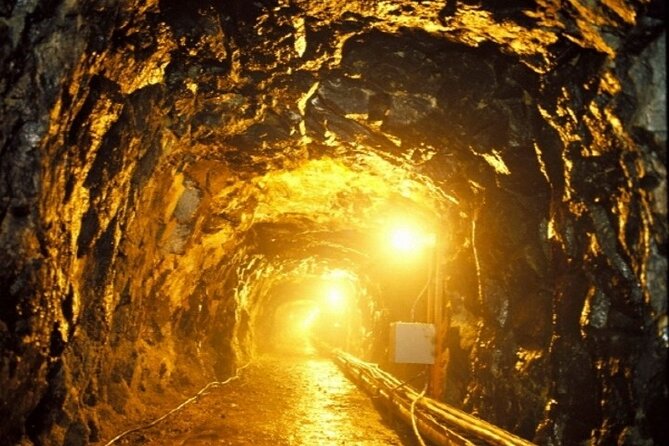
The 3rd Tunnel is one of the most memorable physical experiences on the regular route. North Korea constructed it for a possible invasion of South Korea, and it was discovered in 1978. The tunnel is about 1,635 meters long and lies roughly 52 kilometers from Seoul in a straight line.
You spend about 30 minutes here, but the physical demand can make it feel longer. The route involves walking and slopes, and the tour information specifically warns that this section is strenuous. Wear practical shoes and do not treat the stop as a quick photo opportunity.
The tunnel gives you a direct sense of how close the military threat came to Seoul. It is also a place where the facts are stark and concrete: rock, narrow passageways, and the engineering effort behind the excavation. If you dislike confined spaces or have difficulty with steep walking, this may be the least comfortable part of the day.
The tunnel is normally visited Tuesday through Sunday. It is closed on Mondays and national holidays, along with certain safety inspection days. Those dates do not cancel the experience automatically, but they change the route.
Dorasan Peace Park and the DMZ theater
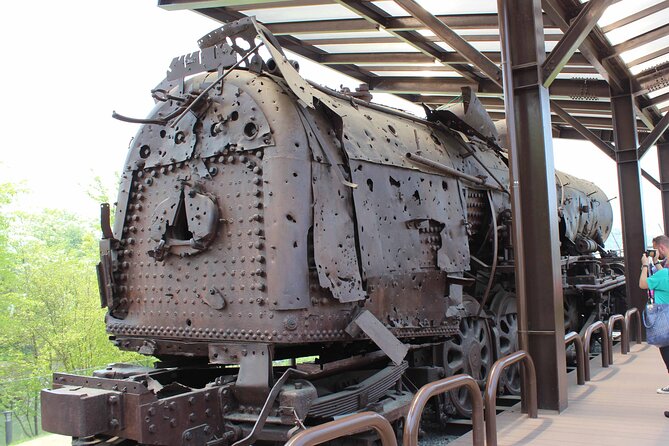
Dorasan Peace Park continues the historical presentation with a theater and exhibition hall. A short film of about eight minutes explains the Korean conflict and its aftermath from South Korea’s point of view.
The formal presentation is brief, which works well on a packed day. You can absorb the main dates and themes without losing too much time before the outdoor stops. The exhibition also helps connect the tunnel to the wider conflict instead of leaving it as an isolated military curiosity.
This is one of the more structured parts of the tour. If you prefer long museum visits, you may find it short. If you want a clear explanation before seeing the border, it is useful.
Dora Observatory and the view toward North Korea
Dora Observatory is the main viewpoint on the Tuesday to Sunday route. From Dorasan Mountain, you look across the border toward North Korea and the surrounding military zone.
The view depends heavily on weather. On a foggy or hazy day, you may see little beyond the nearby terrain. The site still has value because videos and visual displays can help explain what lies beyond the viewing area, but you should keep your expectations sensible. This is a border viewpoint, not a guarantee of a dramatic panorama.
The stop lasts about 30 minutes. That is enough to look through the viewing equipment, take photographs when conditions allow, and hear the guide explain the area. Keep your camera ready, but give yourself time to consider what you are seeing. The quiet distance between the two countries is part of the experience.
Tongilchon Village and life inside the civilian control zone
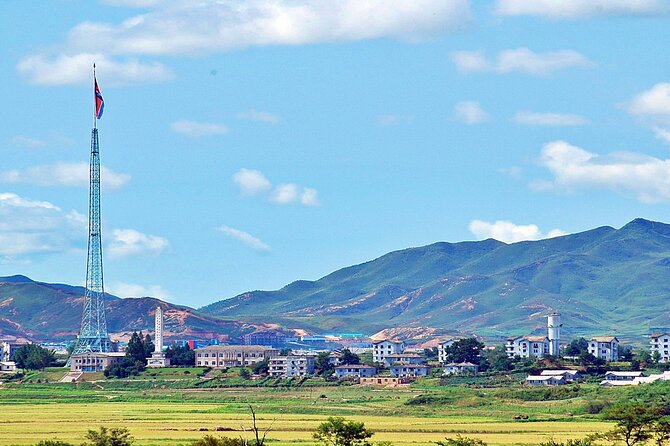
Tongilchon Village is located inside the Civilian Control Zone. It is not shown on most maps, which makes the visit feel different from a normal rural village stop.
The village is associated with Jangdan soybeans and gives you a glimpse of civilian life in a restricted border area. The stop lasts about 20 minutes, so it is short, but it adds an important point: people still work and live near this heavily guarded boundary.
This stop is less dramatic than the tunnel or observatory. I like it for that reason. It shifts your attention from war remains to the practical reality of agriculture, settlement, and daily life under unusual security rules.
The special Monday and holiday route
The Monday and national holiday version is not a lesser tour. It is a different experience designed around closures at the 3rd Tunnel and other restricted sites.
The route includes Imjingak Peace Nuri Park, the DMZ Peace Gondola, Jangsan Natural Observatory or Odusan Unification Observatory, Gloster Hill Memorial Park, and Heroes Suspension Bridge. The exact substitute can depend on security, weather, and operating conditions.
The Peace Gondola crosses the Imjin River area and offers a different view of the border region. The river carries strong associations with separation and reunification, while the gondola provides an easier way to take in the surrounding countryside than a long uphill walk.
Gloster Hill Memorial Park is especially meaningful for visitors interested in the British military role during the Korean War. It commemorates the Seolmari battle and the soldiers of the British Army’s Gloucestershire Regiment. The stop connects the Korean conflict to an international war involving forces from many countries.
Heroes Suspension Bridge adds another physical and scenic element. At the time it was built, it was Korea’s longest suspension bridge, and the surrounding area was also a fierce battlefield during the Korean War. The crossing can be demanding, so take care on the approach and do not assume the Monday route is physically easy.
The Monday route may suit you better if you value scenery, memorials, and varied outdoor stops. If the 3rd Tunnel is your main reason for booking, choose Tuesday through Sunday instead.
Guides, group size, and the pace of the day
The tour uses an English-speaking guide and can include up to 40 people. That is a fairly large group, so do not expect the intimacy of a private car and personal guide. The description refers to a private group guide, which means your own tour group rather than a fully private booking.
The strongest part of the guiding is the human explanation. Sookhee, also called Suki or Veronica in some bookings, is noted for being organized, warm, attentive, and good at keeping the group moving. Young is described as funny and well informed, while Roy brings humor to the explanations. Chloe is praised for her energy.
Guide quality matters at the DMZ. Without context, a bridge is only a bridge, a tunnel is only a tunnel, and a distant hillside may not mean much. A good guide explains why the site matters, keeps the group on schedule, and helps you understand changes when the military authorities alter access.
The tradeoff is speed. You may have limited free time at each stop and need to walk quickly between the bus, exhibits, viewpoints, and memorials. Stay close to the guide and listen for meeting times.
What the $59 price really covers
At $59 per person, this is a solid value for a nine-hour day trip from Seoul. The price includes an English-speaking guide, transportation from a designated pickup point, and admission to the 3rd Tunnel. It also removes the stress of reaching a controlled military area on your own.
It does not include lunch, drinks, or individual hotel pickup and drop-off. Bring snacks and water. This advice is especially important for the Monday route, when food options can be limited. One account of the Monday schedule found only Dunkin’ Donuts open, so do not count on a full restaurant meal at the right time.
The price is less attractive if you want a small, slow-paced group or a private vehicle. It is more attractive if you want the major border sights explained in English and need a reliable way to get there from central Seoul.
Physical demands, weather, and sudden changes
You need moderate physical fitness for this tour. The 3rd Tunnel and Heroes Suspension Bridge are the key trouble spots, and the operator advises against the experience for people with heart conditions, other serious medical issues, or pregnancy.
Wear shoes suitable for walking and bring layers. Some stops are outdoors, and visibility at the observatories changes with weather. Fog does not make the day pointless, since indoor displays and films remain available, but it can reduce the value of the border viewpoints.
The DMZ can close suddenly for security reasons. Military schedules, traffic, heavy rain, snow, and safety inspections may also alter the route. If Gloster Hill or Heroes Suspension Bridge closes because of bad weather or security restrictions, the replacement may be Odusan Unification Observatory or the War Memorial of Korea.
These changes are part of visiting a live military zone. The operator does not promise a refund for a sudden DMZ closure when a comparable stop is substituted. Free cancellation is available if you cancel at least 24 hours before the start time, and a full refund or different date may be offered if the tour itself is canceled because of weather or too few bookings.
Who should book the 365-day DMZ Special Tour?
I would choose this tour if you have one full day in Seoul and want the DMZ explained rather than simply photographed. It is particularly useful for first-time visitors, history-minded visitors, and anyone visiting on a Monday or national holiday when many classic DMZ tours do not operate.
Choose the Tuesday to Sunday version if the 3rd Tunnel and Dora Observatory are your priorities. Choose the Monday route if you want the Peace Gondola, Gloster Hill, and Heroes Suspension Bridge, and you are comfortable trading the tunnel for outdoor memorials and scenery.
I would skip it if you need a relaxed schedule, dislike early starts, have difficulty walking, or expect guaranteed views into North Korea. I would also avoid booking on one of the listed safety inspection Mondays in March, June, September, or December.
FAQ
How long does the DMZ tour last?
The experience lasts about nine hours. Pickup begins in the early morning, depending on the season, and the return to Seoul is planned for around 3:30 p.m.
Where does the tour start and finish?
The main meeting point is City Hall Station in Seoul. Pickup can also be arranged at selected Seoul subway stations, depending on the option you book. The tour is scheduled to end at City Hall Station, although it may finish at Hongik University Station if access around City Hall is difficult because of major events or traffic.
Does the tour operate on Mondays and national holidays?
Yes. The Monday and national holiday route replaces attractions that are normally closed, including the 3rd Tunnel and Dora Observatory.
Can I visit the 3rd Tunnel on this tour?
You can visit the 3rd Tunnel Tuesday through Sunday, subject to military and security restrictions. It is replaced on Mondays and national holidays.
Is lunch included?
No. Lunch, food, and drinks are not included. You should bring snacks and plan ahead, particularly for the Monday route.
Is hotel pickup included?
No. Individual hotel pickup and drop-off are not included. You must reach one of the designated subway station meeting points.
Is the tour physically difficult?
The tour requires moderate physical fitness. The 3rd Tunnel and Heroes Suspension Bridge can be demanding, and the operator does not recommend them for people with heart conditions, serious medical issues, or pregnancy.
What happens if the DMZ closes or the weather is poor?
The route may change to a similar site, such as Odusan Unification Observatory or the War Memorial of Korea. If the entire experience is canceled because of poor weather or the minimum number of bookings is not met, you may be offered another date or a full refund.
Should you book it?
Book this tour if you want a practical, well-priced introduction to Korea’s divided border, especially if Monday is your only available day. The combination of transport, a full-day schedule, and guides such as Sookhee or Young makes $59 a fair price.
Just choose the route carefully. Tuesday through Sunday offers the classic tunnel, observatory, and civilian control zone sights. Monday and holiday departures replace those with a gondola, British war memorial, and suspension bridge. Either route can be worthwhile, but neither is leisurely, and the DMZ remains subject to weather and military decisions.
Just added around Seoul
- Private tour guide service in Seoul, Korea★ 5.0 · 6 reviews
- Alpaca, Nami, Petite Fr, Italian Village, Garden of Morning Calm★ 3.5 · 5 reviews
- Gyeongbokgung palace,seoul with gigibebe hanbok rental★ 4.5 · 12 reviews
- Gyeongju UNESCO Sites Tour by KTX train; The Museum Without walls★ 4.5 · 11 reviews
- Private day trip to Korean Folk Village & Dae Jang Geum Park★ 5.0 · 7 reviews
- Private tour Lotte World,Tower,Aquarium(All Tickets are included)★ 5.0 · 12 reviews
- Full Day Private Seoul Tour for foodies★ 5.0 · 3 reviews
- Seoul Private Custom Walking Tour with A Guide (Private Tour)★ 4.5 · 28 reviews
DMZ Tours, compared.
Best DMZ Tour Korea from Seoul (Red Suspension Bridge Optional)
Read our review →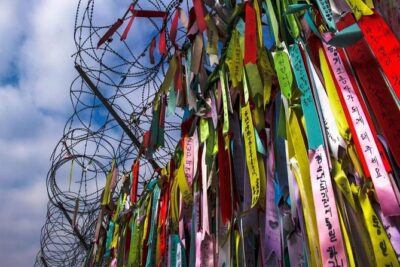
DMZ Tour: 3rd Tunnel, Option(Suspension Bridge, Boat) from Seoul
Read our review →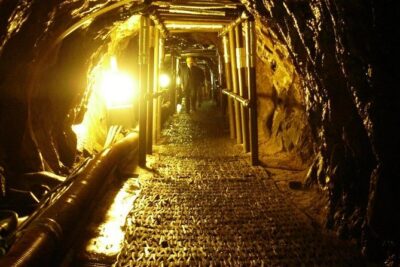
DMZ tour south Korea from Seoul (NK experience hall, defector)
Read our review →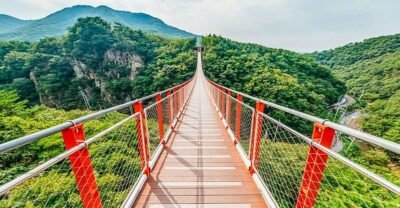
DMZ Insider Tour: 3rd Tunnel, NK Defector Meet & Red Bridge
Read our review →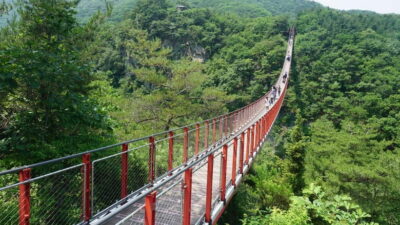
Thrilling Korean DMZ 3rd Tunnel Tour from Seoul + Red Bridge Rush
Read our review →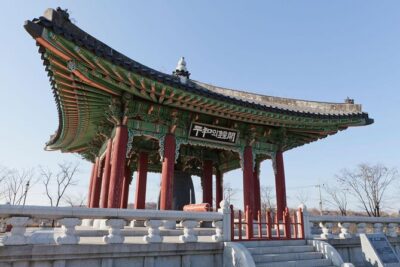
DMZ Past and Present: Korean Demilitarized Zone Tour from Seoul
Read our review →
Ultimate Korea DMZ Tour from Seoul (Gondola & Suspension Bridge)
Read our review →Browse the lists this tour appears in