
Reviewed · DMZ TOURS
From Seoul: Aegibong Starbucks Observatory & DMZ View
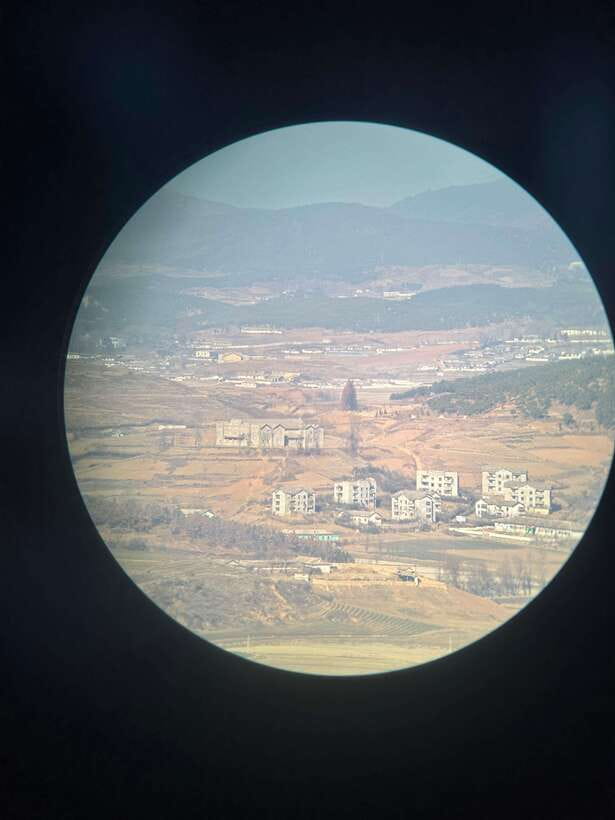
Aegibong Peace Park gives you something unusual: a coffee shop with a direct view toward North Korea. From the top floor, you look across the Jogang River to Gaepung-gun, only about 1.4 kilometers away. The view is striking because it feels close, yet the border remains firmly out of reach.
I like the tour’s compact five-hour format and the way it mixes a scenic stop with serious history. I also like the comfortable round-trip transport, clear pickup arrangements, and guides such as Eva, Hana, Crystal, Gogo, and Alex, who explain the Korean War and modern Korea in accessible English.
The main consideration is weather. Fog or cloud can soften the view, and this is an observatory visit rather than a full DMZ military tour. You will not spend the day visiting every famous border site, but you can be back in Seoul with time left for dinner or another outing.
Key points to know before you book

- North Korea is about 1.4 kilometers away: The Jogang Observatory is one of the closest public viewpoints across the border.
- The Starbucks stop has a purpose: Its upper-floor windows look over the Jogang River and toward North Korea, making your coffee break part of the sightseeing.
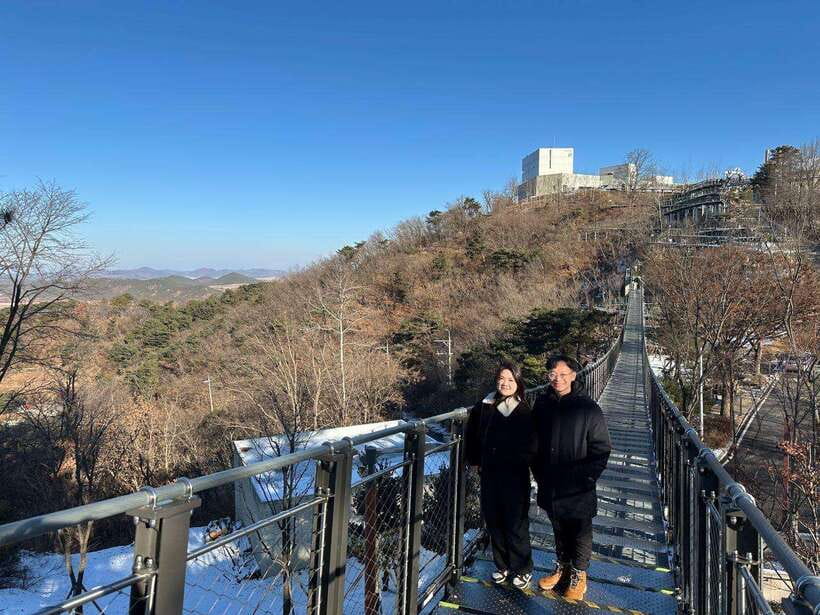
- The 112-meter suspension bridge adds movement: It links the Themed Gardens with the Sky Forest Garden and gives you a pleasant walk above the park.
- You get two useful viewing areas: The exhibition hall provides a broad indoor window and videos, while the outdoor observatory gives a more direct look.
- Five hours is the sweet spot: You see the main attractions without giving up the whole day in Seoul.
- Bring your passport: This is essential for the border-area visit, even though food and drinks are not included.
Why Aegibong feels different from a standard DMZ trip
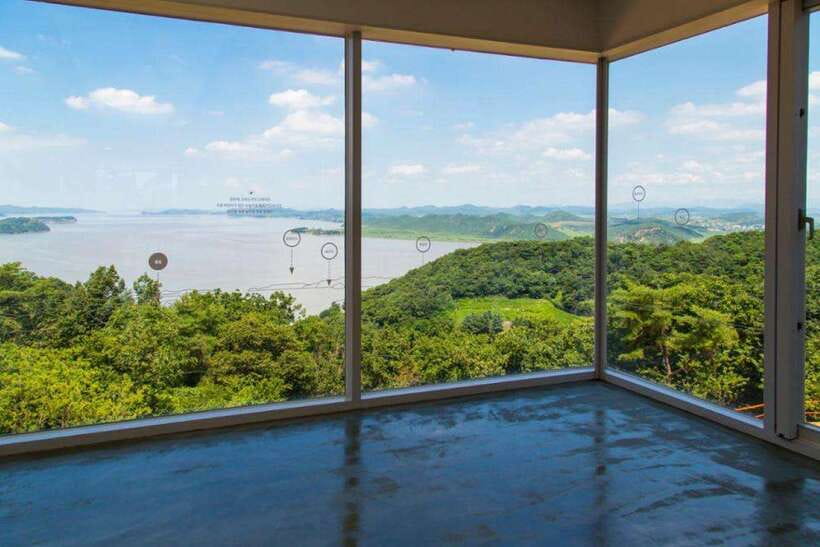
Many Seoul border excursions focus on military installations, tunnels, observation posts, and tightly controlled access points. Aegibong Peace Park offers a quieter and more reflective visit. You still look directly toward North Korea, but the setting includes gardens, an exhibition hall, a bridge, and a Starbucks cafe.
That contrast is the heart of the experience. You can buy a familiar drink, stand by a large window, and look across a river that has separated families and communities for decades. The ordinary and the painful sit side by side.
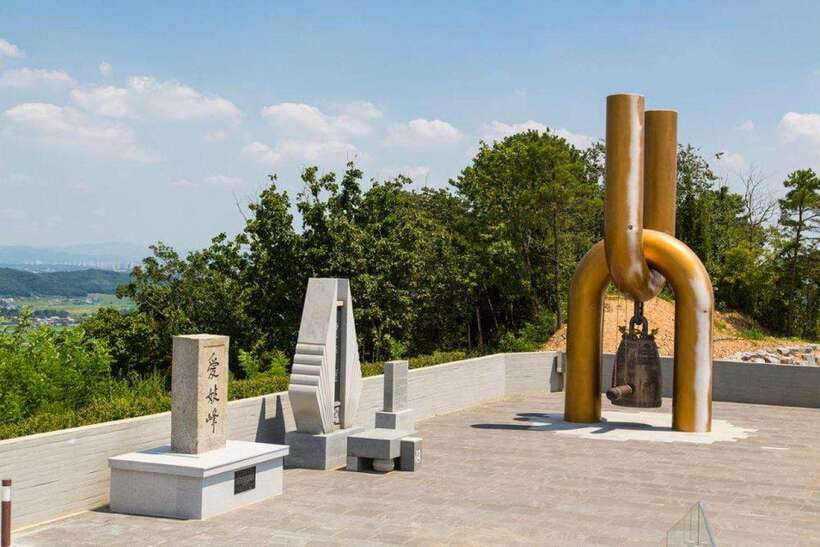
Aegibong is on Hill 154 in Gimpo, in Gyeonggi Province. Its older name was Ssukgatmeori Mountain, linked to its shape, and the area carries a traditional story about a governor of Pyeongan Province and a girl named Aegi during the Qing invasion of Joseon. It was also a military position during the Korean War.
You do not need to know every detail before arriving. A good guide gives the place meaning as you walk. Guides such as Eva, Hana, Alice, Yuna, Diana, Lina, and Gogo have been praised for explaining the Korean War, the current border situation, and everyday life on both sides in clear English.
More DMZ Tours in Seoul:
- Best DMZ Tour Korea from Seoul (Red Suspension Bridge Optional)
★ 5.0 · 41,422 reviews - DMZ Tour: 3rd Tunnel, Option(Suspension Bridge, Boat) from Seoul
★ 5.0 · 21,373 reviews - DMZ tour south Korea from Seoul (NK experience hall, defector)
★ 5.0 · 20,599 reviews
The ride from Seoul keeps the day manageable
You can choose from three starting points: Myeong-dong, Hongik University Station Exit 3, or The Plaza Seoul, Autograph Collection. The precise meeting point depends on the option you select, so check that detail carefully when booking.
The tour finishes at Hongik University Station Exit 4. That is useful if you plan to continue exploring Seoul afterward. Several schedules return around early afternoon, leaving time for lunch, shopping, or another attraction.
Round-trip transport and an English-speaking guide are included. The vehicles described by people on the tour have included comfortable minibuses and Mercedes vans, with air conditioning and a smooth ride. Vehicle size can vary, but the transport is designed for a small-group outing rather than a large coach excursion.
That matters on a five-hour trip. You spend enough time on the road to reach the border area, but not so much that the day becomes tiring. Clear messages before departure and simple meeting instructions also help, especially if this is your first guided outing from Seoul.
Your passport is required. Keep it with you and easy to reach. Food and drinks are not included, so the Starbucks cafe is your chance to buy something during the visit rather than part of the tour price.
Aegibong Peace Park brings art, gardens, and memory together
The park is more than a viewpoint. Its design combines art, traditional stories, gardens, and information about the river and border region. You get a sense of place before you even reach the main lookout.
The park occupies a strategic hill overlooking the Jogang River. From here, the view stretches across water and low ground toward North Korea. The area’s importance comes from both geography and memory. It was once connected to ordinary village life, then became part of a heavily watched border zone after the Korean War.
You may notice that the visit does not feel like a museum-only experience. There is room to walk, pause, take photographs, and consider what you are seeing. That slower pace suits Aegibong. The subject is serious, and the park gives you time to absorb it without rushing from one checkpoint to the next.
The 112-meter suspension bridge connects the Themed Gardens to the Sky Forest Garden. Crossing it adds a small dose of excitement, but it is not the reason to book the tour. Think of it as a scenic walk that breaks up the indoor exhibits and lookout stops.
If you dislike heights, the bridge may be the one part that feels less relaxing. For most people, it adds a welcome physical element to a visit otherwise centered on windows, telescopes, and explanations.
The exhibition hall explains the river before you see the border
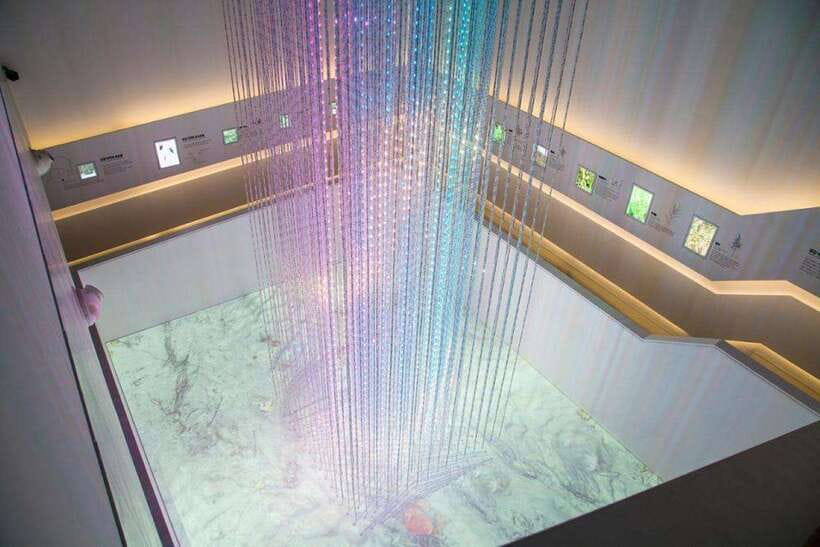
The exhibition hall is on the second floor and has a large front window facing the Jogang River area. This is a good first stop because it lets you get your bearings indoors before heading outside.
Videos about the Jogang River play in the exhibition space. They help explain why this waterway matters beyond its attractive view. The river lies downstream from the Hangang, where the Imjingang, Hangang, and Yeseonggang Rivers meet before flowing into the West Sea.
The name Jogang means a large river or grandfather river. The water seems broad enough to resemble the sea, which helps explain the name. Before the Korean War, around 100 households lived in the area as part of a large village.
The 1953 ceasefire agreement designated this area as Neutral Waters at the Hangang River Estuary. Residents lost their homes and scattered in different directions. For decades, people largely stopped visiting the river basin. That isolation allowed a varied ecosystem to develop, including endangered and protected species.
This is where a guide adds real value. Without context, you might see water, fields, and distant buildings. With a good explanation, you understand that the quiet scene reflects displacement, military restrictions, and nature recovering in an unusual pocket of land.
Same country, a completely different kind of day:
- Seoul: DMZ Tour with Optional Suspension Bridge
★ 4.8 · 5,277 reviews - Signature DMZ Tour: Exclusive Defector Talk & Suspension Bridge
★ 5.0 · 4,459 reviews - Thrilling Korean DMZ 3rd Tunnel Tour from Seoul + Red Bridge Rush
★ 5.0 · 3,097 reviews - DMZ Past and Present: Korean Demilitarized Zone Tour from Seoul
★ 5.0 · 2,481 reviews
Starbucks turns the view into an everyday moment
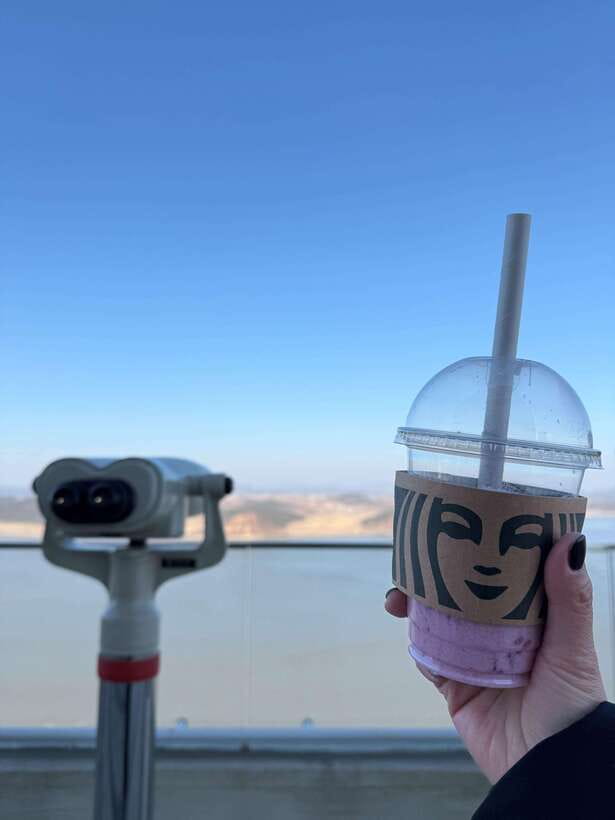
The Starbucks cafe sits on the upper floor of the park facilities, giving you a panoramic view of the Jogang River and North Korea. It is the tour’s most memorable novelty, but the cafe works best as one part of the visit rather than the whole attraction.
You can order a drink or a bite to eat while looking through the broad windows. There is something memorable about using a familiar international cafe in such an unusual location. The scene outside is not a city street or shopping district. It is a politically sensitive border region.
Do not expect the coffee itself to be the main event. You are paying for the location, the access, and the chance to pause in a comfortable indoor space. If the weather is clear, the windows frame a wide view toward North Korea. If the day is cloudy, you may get a softer, less detailed scene.
The cafe also gives you a practical break. The visit includes a fair amount of walking between the park areas and observatory, and you have roughly 1.5 hours at the Aegibong portion of the outing. That usually provides time for a quick tour, photographs, the bridge, the indoor displays, and a coffee stop without a frantic schedule.
Food and drinks cost extra. If you have dietary needs or want a full meal, plan around the tour because this is not a food-focused excursion.
Jogang Observatory brings North Korea unusually close
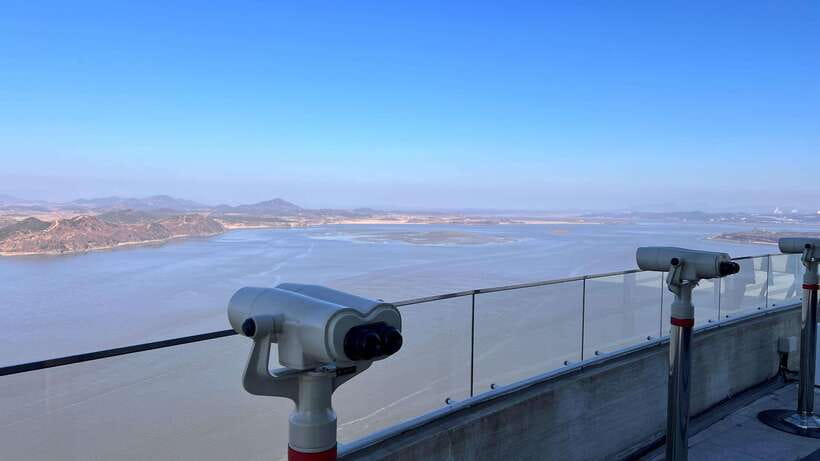
The outdoor Jogang Observatory is the emotional center of the trip. From here, North Korea is about 1.4 kilometers away, making this the closest observatory described in the experience.
Telescopes let you examine the opposite side more closely. On a clear day, you may see North Korean villages and people moving around. That detail can make the border feel startlingly real. You are not simply looking at an abstract line on a map. You are looking at a nearby place where people live under a very different political system.
The view is never guaranteed. Cloud, fog, rain, or haze can hide distant details. Even in poor weather, the setting still has value because the guide can explain the river, the border, and the area’s past. Several people have found the visit worthwhile even on cloudy days, but you should book with realistic expectations.
The outdoor viewing area can also feel more exposed than the exhibition hall or cafe. Bring a layer suited to the season and allow time for photographs. You will want to look through more than one telescope and compare the natural river setting with the distant signs of settlement.
The tour generally allows about 1.5 hours for the Jogang Observatory portion. That is enough for a guided explanation followed by free time. You are not pushed through in a few minutes, yet the schedule keeps the half-day moving.
The Jogang River explains the border better than a map
The river is not just a scenic foreground. It is the physical feature that makes Aegibong so effective as a viewpoint. Water, distance, and security restrictions create a natural separation, while the short distance across it makes the division feel especially sharp.
The river basin has also become a place where nature has had room to return. Endangered and protected species live in an area people once used more heavily and later avoided. That mixture of ecological recovery and political tension gives the visit more depth than a simple photograph from a lookout.
I find this is the part of the tour where you should slow down. Listen to the guide’s explanation, look at the river, and then look toward the opposite bank. The scene is quiet, but it carries the story of villages emptied, families separated, and a ceasefire that never became a peace treaty.
Guides vary, but the strongest ones connect facts to daily life. Alice, for example, has explained the Korean War and the differences in education and society between North and South Korea. Yuna has helped families understand the site while taking photographs. Crystal, Hana, Gogo, and Eva have also been singled out for clear explanations and a warm, engaging style.
What the five-hour schedule really includes
The stated duration is five hours from Seoul and back. Within the destination, expect about 1.5 hours at Aegibong Peace Eco Park and about 1.5 hours around Jogang Observatory, with the remaining time used for transport, pickup, drop-off, and movement between sites.
A typical flow looks like this:
- Meet at your selected Seoul pickup point.
- Ride to Aegibong Peace Park with the guide.
- Walk through the park and visit the exhibition hall.
- Cross the suspension bridge between the garden areas.
- Stop at the Starbucks cafe for a drink or snack at your own cost.
- Continue to the outdoor Jogang Observatory.
- Use the telescopes, take photographs, and hear the border-area explanation.
- Return to Seoul and finish at Hongik University Station Exit 4.
The exact order can vary, so treat this as a practical picture rather than a guaranteed minute-by-minute plan. The useful point is that the outing gives you a guided introduction and free time. You are not left to work out the meaning of the site alone, but you also have room to look around at your own pace.
Is $45 good value for this Seoul day trip?
At $45 per person, the tour is fairly priced if you want an easy half-day visit to a border viewpoint. The cost includes round-trip transportation, an English-speaking guide, and all entrance fees. You only need to budget separately for coffee, food, and personal purchases.
The value is strongest for first-time visitors who do not want to manage transport to Gimpo and Aegibong themselves. You get a guide to provide the political and historical setting, plus a comfortable ride and a fixed plan. The 95 percent perfect score for transport also suggests that the ride is one of the reliable parts of the outing.
This is not the best value if you want a full military DMZ program with many checkpoints and attractions. It is also less appealing if your only goal is to visit a Starbucks. The price makes sense because you are buying access to a distant area, transportation, interpretation, and a view that is not simple to reach from central Seoul.
There is also no forced shopping stop described here. That keeps the day focused and helps explain why the short schedule works well. You see the main site, learn what you are looking at, and return with time for other plans.
Who will enjoy this tour most?
I would choose this experience if you want to see North Korea without giving up an entire day in Seoul. It suits first-time visitors who want a clear introduction to the border, families who prefer a calmer schedule, and repeat visitors who have already seen the better-known Paju DMZ attractions.
It also works well for photographers, provided you accept that visibility depends on weather. The river, bridge, gardens, distant villages, and telescopes give you several kinds of images rather than one lookout photo.
Families can manage the format, although the bridge and walking sections may not suit everyone. One family found the guide helpful with children, a baby car seat, and a stroller, but the supplied information does not establish a general accessibility policy. If mobility is a concern, ask the operator before booking.
You should think twice if you want a highly controlled military experience or a full day of border infrastructure. Aegibong is more about viewing, interpretation, and atmosphere than entering restricted facilities.
Small details that will make the day easier
Wear shoes you can walk in. The route includes the park, exhibition hall, bridge, gardens, and outdoor observatory, so this is not a sit-on-the-bus outing.
Bring your passport and keep it accessible. Check your pickup point the night before, since the available Seoul meeting location depends on the option you book.
Try to leave room in your schedule after the return. The tour ends at Hongik University Station Exit 4, and the half-day format is one of its practical strengths.
If the forecast shows fog or heavy cloud, do not expect sharp views of North Korean villages. You can still learn a great deal from the exhibition and guide, but the telescopes and distant details are weather dependent.
Cancellation is flexible up to 24 hours before departure for a full refund, and you can reserve now and pay later. Those terms are useful when your Seoul plans are still shifting.
Should you book Aegibong and the DMZ view?
Book it if you want a close view of North Korea in a short, organized trip with history, gardens, a suspension bridge, and an unusual Starbucks stop. The strongest reason to go is not the brand name. It is the chance to sit above the Jogang River, hear how the border shaped this region, and then look across at a country only 1.4 kilometers away.
Skip it if you need a full-day military DMZ itinerary or if you would be disappointed by a cloudy view. For everyone else, $45 buys a well-planned half-day, helpful English guidance, and a border experience that feels more thoughtful than a quick photo stop.
FAQ
How long does the Aegibong Starbucks and DMZ view tour last?
The tour lasts five hours, including transportation from Seoul to Aegibong Peace Park, the visits to the park and observatory, and the return to Seoul.
Where can I meet the tour?
The available starting points are Myeong-dong, Hongik University Station Exit 3, and The Plaza Seoul, Autograph Collection. Your meeting point depends on the option you book.
Where does the tour finish?
The tour finishes at Hongik University Station Exit 4.
Is transportation included?
Yes. Round-trip transportation from the selected Seoul meeting point is included.
Is a tour guide included?
Yes. The tour includes a live English-speaking guide. Guides named in the supplied tour information include Eva, Hana, Crystal, Gogo, Alex, Alice, Yuna, Diana, Lina, and others.
How close is North Korea from the observatory?
The Jogang Observatory is about 1.4 kilometers from Gaepung-gun in North Korea.
Can I see North Korean villages from Aegibong?
On a clear day, you may see North Korean villages and people moving around from the observatory. Visibility depends on the weather.
Is the Starbucks drink included in the tour price?
No. Food and drinks are not included, so you pay separately for anything you order at the cafe.
Do I need to bring my passport?
Yes. A passport is listed as an essential item to bring.
What is included in the $45 price?
The price includes round-trip transportation, an English-speaking guide, and all entrance fees. Food and drinks are not included.
Just added around Seoul
- Gyeongbokgung palace,seoul with gigibebe hanbok rental★ 4.5 · 12 reviews
- Private tour guide service in Seoul, Korea★ 5.0 · 6 reviews
- Alpaca, Nami, Petite Fr, Italian Village, Garden of Morning Calm★ 3.5 · 5 reviews
- Gyeongju UNESCO Sites Tour by KTX train; The Museum Without walls★ 4.5 · 11 reviews
- Private day trip to Korean Folk Village & Dae Jang Geum Park★ 5.0 · 7 reviews
- Private tour Lotte World,Tower,Aquarium(All Tickets are included)★ 5.0 · 12 reviews
- Full Day Private Seoul Tour for foodies★ 5.0 · 3 reviews
- Seoul Private Custom Walking Tour with A Guide (Private Tour)★ 4.5 · 28 reviews
DMZ Tours, compared.
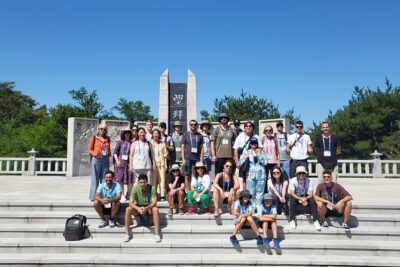
Best DMZ Tour Korea from Seoul (Red Suspension Bridge Optional)
Read our review →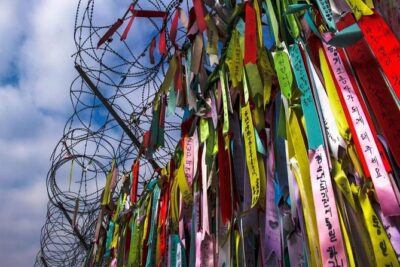
DMZ Tour: 3rd Tunnel, Option(Suspension Bridge, Boat) from Seoul
Read our review →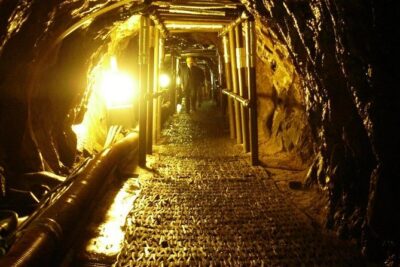
DMZ tour south Korea from Seoul (NK experience hall, defector)
Read our review →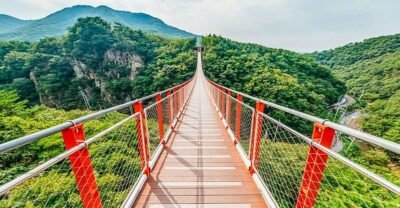
DMZ Insider Tour: 3rd Tunnel, NK Defector Meet & Red Bridge
Read our review →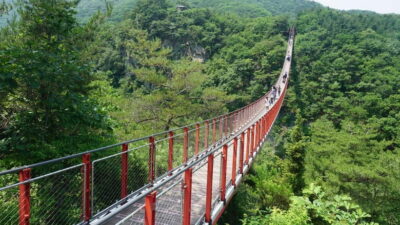
Thrilling Korean DMZ 3rd Tunnel Tour from Seoul + Red Bridge Rush
Read our review →
DMZ Past and Present: Korean Demilitarized Zone Tour from Seoul
Read our review →
Ultimate Korea DMZ Tour from Seoul (Gondola & Suspension Bridge)
Read our review →Browse the lists this tour appears in