
Reviewed · DMZ TOURS
[Small Group] Aegibong and DMZ Closest Views of North Korea
North Korea comes into clearest view at Aegibong Peace Ecopark, where villages and farmland sit across the river with very little in the way. Earlier, the tour takes you through the DMZ, down the 3rd Infiltration Tunnel, and up to Dora Observatory. It is a full day, but each stop shows a different part of Korea’s divided border.
I like the careful mix of history and direct observation, especially the monuments at Imjingak and the chance to see the 3rd Infiltration Tunnel rather than only hear about it. I also like the small-group format and guides such as Eunice, Sophia, Jung, and Mimi, who are praised for clear explanations and warm, personal storytelling.
The main drawback is the schedule. You spend about eight to nine hours on the road and at formal border sites, with lunch and drinks not included. The tunnel also requires a moderate level of fitness, and views of North Korea depend on the weather.
Key points to know before booking
![[Small Group] Aegibong and DMZ Closest Views of North Korea - Key points to know before booking](https://kr.bestkoreatours.com/wp-content/uploads/small-group-aegibong-and-dmz-closest-views-of-north-korea-1.jpg)
- Aegibong gives the closest views: Jogang Observatory offers clear views toward North Korean villages, fields, and everyday rural life.
- The 3rd Infiltration Tunnel is physical: Expect a 1.5-hour stop and a walk underground, so comfortable shoes and steady footing matter.
- Imjingak sets the context: Monuments, war relics, and Pyeonghwa Nuri Park explain why the border remains such a powerful place.
- Passport required: You pass an ID check at the Unification Bridge, so bring your passport.
- The day ends in Seoul: The tour finishes at Aegibong Peace Ecopark around 3:00 p.m., with an estimated Myeong-dong arrival around 4:00 p.m.
- English guidance matters: Eunice, Sophia, Jung, and Mimi are among the guides praised for making complicated events easier to understand.
Why this DMZ tour feels different
Many DMZ outings focus on one familiar viewpoint and a few standard photo stops. This one adds Aegibong Peace Ecopark after the better-known Paju sites, giving you two very different ways to look toward North Korea.
At Dora Observatory, you see the broad border zone, mountains, farmland, Panmunjeom, and the village of Daeseong-dong inside the DMZ. At Aegibong, the view is more intimate. North Korean settlements and agricultural ground appear much closer, making the separation between the two countries easier to grasp.
That contrast gives the day a useful rhythm. You begin with public memorials and war history, move into a Cold War military site, look across the DMZ from a classic observation point, and finish with a quieter view of ordinary rural life. The experience is not only about taking a photograph of North Korea. It helps you consider how an armed border cuts through communities that once belonged to the same country.
The tour is priced at $120 per person. That is not the cheapest way to visit the DMZ, but the price includes admission, an air-conditioned vehicle, private transportation, and an English-speaking guide. Since the day lasts eight to nine hours and combines four major sites, the value is strongest if you want transportation and interpretation handled for you.
You should also know what the price does not cover. Lunch, coffee, tea, and personal spending are extra. The schedule does not list a dedicated meal stop, so plan to ask your guide about the day’s food arrangements or carry what you need if permitted. Do not count on buying a drink at every stop.
More DMZ Tours in Seoul:
- Best DMZ Tour Korea from Seoul (Red Suspension Bridge Optional)
★ 5.0 · 41,422 reviews - DMZ Tour: 3rd Tunnel, Option(Suspension Bridge, Boat) from Seoul
★ 5.0 · 21,373 reviews - DMZ tour south Korea from Seoul (NK experience hall, defector)
★ 5.0 · 20,599 reviews
Imjingak and Pyeonghwa Nuri Park begin the story
![[Small Group] Aegibong and DMZ Closest Views of North Korea - Imjingak and Pyeonghwa Nuri Park begin the story](https://kr.bestkoreatours.com/wp-content/uploads/small-group-aegibong-and-dmz-closest-views-of-north-korea-2.jpg)
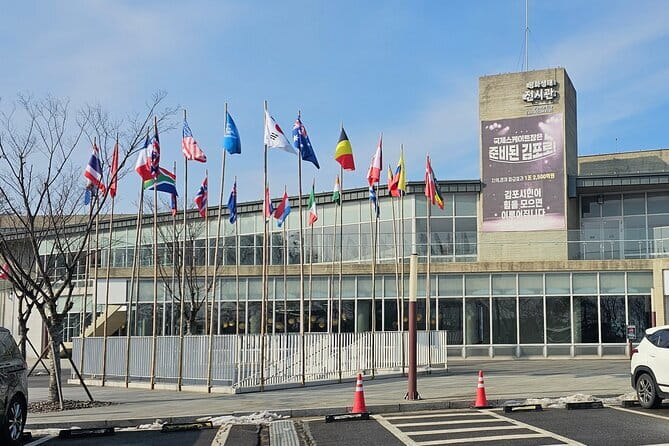
The first major stop is Imjingak Pyeonghwa Nuri Park, a broad unification and security complex near the DMZ. Allow about two hours here. The area includes Imjingak Pavilion, the North Korea Center, Unification Park, monuments, memorial spaces, and war relics.
This is an important opening because the DMZ can otherwise feel like a collection of military checkpoints and viewing platforms. Imjingak gives the division a human and political setting. You see how South Korea remembers the Korean War, honors separated families, and expresses hope for eventual reunification.
Pyeonghwa Nuri Park also gives you room to walk and take in the surroundings before the more controlled sections of the day. The tone is reflective rather than thrilling. If you prefer nonstop action, this may feel slow at first. I think the pause is useful, since it gives your guide time to explain the armistice, the border, and the events that shaped the modern Korean Peninsula.
The tour then reaches the Unification Bridge, where an ID check is required before entering the restricted area. Bring your passport. This is not a place to rely on a photograph of your passport unless the operator specifically confirms that it is accepted. The supplied tour information clearly asks you to bring the original document.
The DMZ Theater and the road into the restricted zone
The DMZ Theater and Exhibition Hall provide a formal introduction to the Korean War, the armistice agreements, and efforts to build peace. The material helps explain why the border is still active and why access is controlled.
Your guide is especially useful here. Several guides associated with this experience, including Jung, Sophia, Eunice, and Mimi, are praised for explaining the subject clearly and adding stories that make the facts easier to follow. Eunice is described as warm and personable, while Sophia is noted for organizing the timing well and explaining each part in a straightforward way.
That human touch matters. The DMZ involves military terms, dates, place names, and political changes that can blur together. A good guide can connect the formal displays to what you will see later from the observatories.
The pace is also important. The operator makes an effort to time the small group ahead of large tour buses when possible. That does not guarantee an empty site, but it can make the experience less crowded and give you more time to listen and look around. The maximum group size is listed as 40, so confirm the expected group size if a very small party is essential to you. The experience is marketed as small group, but 40 people is still a sizeable gathering at busy stops.
Walking the 3rd Infiltration Tunnel
![[Small Group] Aegibong and DMZ Closest Views of North Korea - Walking the 3rd Infiltration Tunnel](https://kr.bestkoreatours.com/wp-content/uploads/small-group-aegibong-and-dmz-closest-views-of-north-korea-4.jpg)
The 3rd Infiltration Tunnel is the day’s most physical and perhaps most memorable stop. North Korea built the tunnel as a route for an invasion of South Korea. It was discovered in 1978 and is the closest to Seoul among the four tunnels found so far, at about 52 kilometers from the capital.
The visit lasts about 1 hour and 30 minutes. You descend underground and walk through part of the passage. The tunnel is not simply a museum display. Its narrow, enclosed route gives you a physical sense of the work involved in secretly cutting through rock beneath the border.
This is where practical preparation pays off. The tour requires a moderate level of physical fitness. Wear comfortable shoes and expect an uphill return after the underground section. If steep walking, confined spaces, or extended standing are difficult for you, ask the operator about the exact conditions before booking.
The tunnel is also the stop most likely to divide opinions. Some people find the tight passage and military purpose gripping. Others may find it uncomfortable or strenuous. You do not need to be a military-history enthusiast to appreciate it, but you should be ready for a more demanding visit than a standard museum or viewpoint.
The tunnel also helps you understand why the DMZ is more than a line on a map. Underground construction, watch posts, fences, and restricted roads all point to the continuing tension beneath the hope for peace.
Same country, a completely different kind of day:
- Seoul: DMZ Tour with Optional Suspension Bridge
★ 4.8 · 5,277 reviews - Signature DMZ Tour: Exclusive Defector Talk & Suspension Bridge
★ 5.0 · 4,459 reviews - Thrilling Korean DMZ 3rd Tunnel Tour from Seoul + Red Bridge Rush
★ 5.0 · 3,097 reviews - DMZ Past and Present: Korean Demilitarized Zone Tour from Seoul
★ 5.0 · 2,481 reviews
Dora Observatory and the wide view north
![[Small Group] Aegibong and DMZ Closest Views of North Korea - Dora Observatory and the wide view north](https://kr.bestkoreatours.com/wp-content/uploads/small-group-aegibong-and-dmz-closest-views-of-north-korea-5.jpg)
Dora Observatory is the classic DMZ viewpoint on this route. The stop lasts about an hour and looks toward Panmunjeom, the village of Daeseong-dong inside the DMZ, surrounding mountains, and farmland.
Bring patience and keep your expectations realistic. You are not guaranteed a perfectly clear view of every feature. Weather affects visibility, and the tour specifically notes that poor weather can lead to cancellation, a new date, or a full refund. On a clear day, though, the observatory gives you a broad sense of the border zone and the unusual mixture of rural scenery and military separation.
The view is valuable because it shows the DMZ as a real inhabited area, not only a line between two colors on a map. Farmland and villages sit within sight of one another, while the political division remains firmly in place.
Your guide can help identify what you are seeing. Without context, distant buildings and fields can look much like any rural area. With an explanation of Daeseong-dong, Panmunjeom, and the surrounding zone, the view becomes easier to read.
Dora Observatory can be crowded at certain times, especially when large buses arrive. The effort to arrive before those buses is a real advantage, but schedules in the DMZ are never entirely under your control. Keep your camera ready, but listen first. The strongest part of this stop is understanding the view, not simply collecting a distant image.
Aegibong Peace Ecopark brings North Korea closer
![[Small Group] Aegibong and DMZ Closest Views of North Korea - Aegibong Peace Ecopark brings North Korea closer](https://kr.bestkoreatours.com/wp-content/uploads/small-group-aegibong-and-dmz-closest-views-of-north-korea-6.jpg)
The final destination is Aegibong Peace Ecopark in Gimpo, where the tour spends about two hours across the park and its Starbucks stop at the site. The park combines walking areas, nature, exhibits, and border views. Its message is focused on peace and reunification, but the setting also gives you a quiet place to think about what you have seen earlier.
The main draw is Jogang Observatory. From here, you can look toward North Korean villages, fields, and signs of daily rural life. The view is described as clear and unobstructed, and the proximity is the reason this tour adds Aegibong to the more standard DMZ route.
This is the point where the trip changes character. Dora Observatory gives you the scale of the DMZ. Aegibong gives you a closer look at the people and land on the other side. You may see rooftops, agricultural plots, and village patterns rather than only distant mountains.
The park also has a Starbucks, listed as a separate stop. Coffee is not included, so any purchase there is your own expense. The stop may be useful for a break, but do not confuse it with the main reason to visit Aegibong. The observatory and the park’s peace exhibits are the meaningful parts of this final section.
The tour is scheduled to finish at Aegibong around 3:00 p.m. You then return to Myeong-dong, with an estimated arrival around 4:00 p.m. Since the timing is approximate, avoid booking a tightly timed evening activity immediately afterward.
What the guide adds to a serious subject
![[Small Group] Aegibong and DMZ Closest Views of North Korea - What the guide adds to a serious subject](https://kr.bestkoreatours.com/wp-content/uploads/small-group-aegibong-and-dmz-closest-views-of-north-korea-7.jpg)
The guide can make or break a DMZ visit. This subject needs more than directions from one checkpoint to the next. You want someone who can explain the Korean War, the armistice, the tunnel, the villages, and the continuing hope for reunification without turning the day into a lecture.
The strongest guide comments center on Eunice, Sophia, Jung, and Mimi. Eunice is praised for kindness, clear explanations, personal stories, and making the group feel well cared for. Sophia receives credit for smooth timing and for getting ahead of larger tour buses. Jung is singled out for giving a much better historical understanding of the area, while Mimi is described as combining learning with a sense of fun.
Guide assignments can change, so you should not book solely to secure one named person. Still, these repeated strengths tell you what to expect from the operator: an English-speaking host who explains the sites, adds human context, and keeps the group moving through a controlled itinerary.
That is particularly useful for first-time visitors to Korea. The DMZ is easy to misunderstand if you see only the spectacle. A guide helps you recognize the difference between the armistice line, the DMZ, nearby restricted areas, and the various observation points.
Timing, transport, and the practical tradeoffs
![[Small Group] Aegibong and DMZ Closest Views of North Korea - Timing, transport, and the practical tradeoffs](https://kr.bestkoreatours.com/wp-content/uploads/small-group-aegibong-and-dmz-closest-views-of-north-korea-8.jpg)
This is an eight to nine hour commitment. Pickup service is offered, but the stated starting point is Imjingak Pyeonghwa Nuri Park at 148-40 Imjingak-ro in Munsan-eup, Paju. The stated end point is Myeong-dong in Seoul. Confirm your exact pickup instructions before the morning of the tour, since the published meeting information and pickup wording leave some room for interpretation.
An air-conditioned vehicle and private transportation are included. That matters because the stops are spread across Paju and Gimpo, followed by the return to Seoul. Public transport may reach parts of the area, but border access, ID checks, and the number of stops make an organized vehicle far simpler.
The day includes admission fees listed for the itinerary, so you are not constantly reaching for your wallet at each site. Lunch, drinks, and personal expenses are not included. The tour has mobile ticketing and confirmation is provided at booking.
The experience is available to a maximum of 40 people and requires moderate physical fitness. It is best for you if you want a structured day with historical explanation, rather than a quick photo outing. It is less suitable if you want a relaxed pace, a guaranteed tiny group, or a flexible lunch break.
The tour generally needs good weather. If weather cancels the outing, you are offered another date or a full refund. If the minimum number of participants is not reached, the operator offers another date or experience, or a full refund. You can cancel for a full refund up to 24 hours before the start time, but late cancellations and late changes are not accepted.
Who should book this experience
I would choose this tour if you want the standard DMZ sights plus a closer look from Aegibong. The combination of Imjingak, the tunnel, Dora Observatory, and Jogang Observatory makes the day more varied than a single-viewpoint outing.
It suits history-minded visitors, first-time Seoul visitors, and anyone curious about how division affects ordinary communities. It also works well for you if you prefer having an English-speaking guide explain the sites rather than piecing the story together alone.
Think twice if you dislike enclosed spaces or moderate walking. The tunnel is not a minor add-on, and the full day can feel long if your main goal is only to see North Korea from a distance.
Should you book the Aegibong and DMZ tour?
Book it if you want a serious, well-filled day that connects Korean War history with present-day views across the border. The strongest reasons are the close Aegibong view, the physical visit to the 3rd Infiltration Tunnel, and guides who make the political history easier to understand.
Skip it if you need a leisurely schedule, a guaranteed very small party, or a tour built around food and free time. For most people with moderate fitness, a passport, and an interest in Korea’s division, the $120 price is reasonable for the transportation, admissions, guide, and unusual access covered in one long day.
FAQ
How long does the Aegibong and DMZ tour take?
The experience lasts approximately eight to nine hours. It is scheduled to finish at Aegibong Peace Ecopark around 3:00 p.m., with an estimated arrival in Myeong-dong around 4:00 p.m.
Where does the tour start and end?
The stated starting point is Imjingak Pyeonghwa Nuri Park, 148-40 Imjingak-ro, Munsan-eup, Paju-si, Gyeonggi-do. Drop-off is in Myeong-dong, Seoul.
Do I need to bring my passport?
Yes. An ID check takes place when crossing the Unification Bridge, and the tour information specifically asks you to bring your passport.
Is lunch included?
No. Lunch, coffee, tea, and personal expenses are not included in the tour price.
Is the 3rd Infiltration Tunnel physically demanding?
The tour requires a moderate level of physical fitness, and the tunnel visit lasts about 1 hour and 30 minutes. Comfortable footwear is a sensible choice.
What is included in the $120 price?
The price includes an air-conditioned vehicle, private transportation, admission fees listed for the itinerary, and an English-speaking guide.
What happens if bad weather cancels the tour?
If poor weather causes cancellation, you are offered a different date or a full refund. The same options apply if the minimum number of participants is not reached.
Just added around Seoul
- Private tour guide service in Seoul, Korea★ 5.0 · 6 reviews
- Alpaca, Nami, Petite Fr, Italian Village, Garden of Morning Calm★ 3.5 · 5 reviews
- Gyeongbokgung palace,seoul with gigibebe hanbok rental★ 4.5 · 12 reviews
- Gyeongju UNESCO Sites Tour by KTX train; The Museum Without walls★ 4.5 · 11 reviews
- Private day trip to Korean Folk Village & Dae Jang Geum Park★ 5.0 · 7 reviews
- Private tour Lotte World,Tower,Aquarium(All Tickets are included)★ 5.0 · 12 reviews
- Full Day Private Seoul Tour for foodies★ 5.0 · 3 reviews
- Seoul Private Custom Walking Tour with A Guide (Private Tour)★ 4.5 · 28 reviews
DMZ Tours, compared.
Best DMZ Tour Korea from Seoul (Red Suspension Bridge Optional)
Read our review →
DMZ Tour: 3rd Tunnel, Option(Suspension Bridge, Boat) from Seoul
Read our review →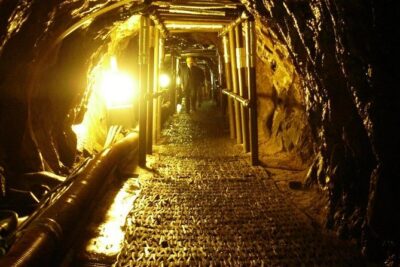
DMZ tour south Korea from Seoul (NK experience hall, defector)
Read our review →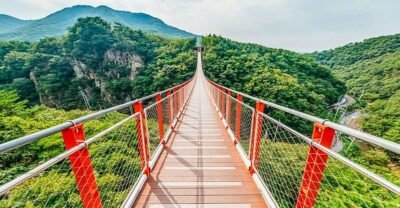
DMZ Insider Tour: 3rd Tunnel, NK Defector Meet & Red Bridge
Read our review →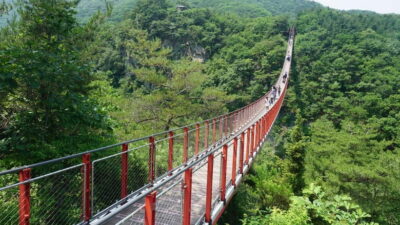
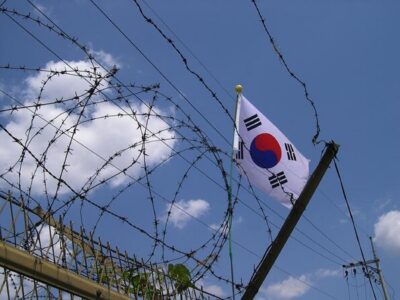
Thrilling Korean DMZ 3rd Tunnel Tour from Seoul + Red Bridge Rush
Read our review →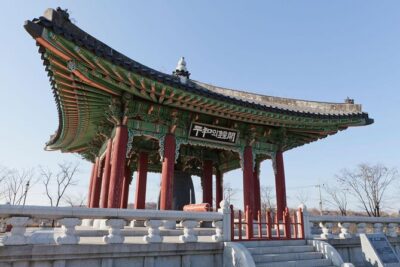
DMZ Past and Present: Korean Demilitarized Zone Tour from Seoul
Read our review →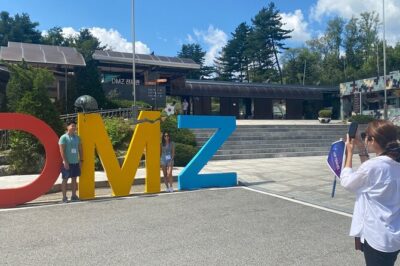
Ultimate Korea DMZ Tour from Seoul (Gondola & Suspension Bridge)
Read our review →Browse the lists this tour appears in