Reviewed · SEOUL TOURS
7 days Flexible Tour for Major Cities(Seoul,Busan,Gyeongju etc)
South Korea is a big country to cover in seven days, but this private tour gives you a practical way to connect Seoul, Gyeongju, and Busan without piecing together trains, taxis, and day trips. Hun and Sean handle the driving, explain the places you visit, and can reshape the schedule around your interests.
I especially like the airport-to-airport planning, which can begin with your arrival and end in Busan or return to Seoul. I also like the human touch: the guides have built such warm relationships with families that children have called Hun uncle. The main drawback is the price, $2,000 per person, and the long driving days between regions.
Key points at a glance
- Private minivan travel: Your group has the vehicle and guides to itself, with fuel, tolls, parking, and bottled water included.
- Three major Korean regions: See royal Seoul, ancient Gyeongju, coastal Busan, and the fortress city of Suwon.
- The DMZ is built in: Visit Imjingak, the Third Tunnel, and Dora Observatory with a guide, while using a public bus inside the restricted zone.
- Flexible seven-day format: The days do not need to run consecutively, and extra tours or rest days can be added.
- Airport transfer included: You can return to Seoul with the team or finish in Busan, depending on your plans.
- Strong personal service: Hun and Sean tailor stops, food interests, and pacing to your group.
A private route across Korea, not a fixed bus tour

This is best understood as a private touring service rather than a rigid package. The stated start time is 10 a.m., and the seven days do not have to be consecutive. You can take a day off, add another tour, or request different places.
That flexibility matters in Korea. Seoul alone can fill several days, while Gyeongju and Busan deserve time of their own. If you want palaces and markets, the guides can lean into that. If your group cares more about food, Korean dramas, temples, or modern culture, the plan can be adjusted.
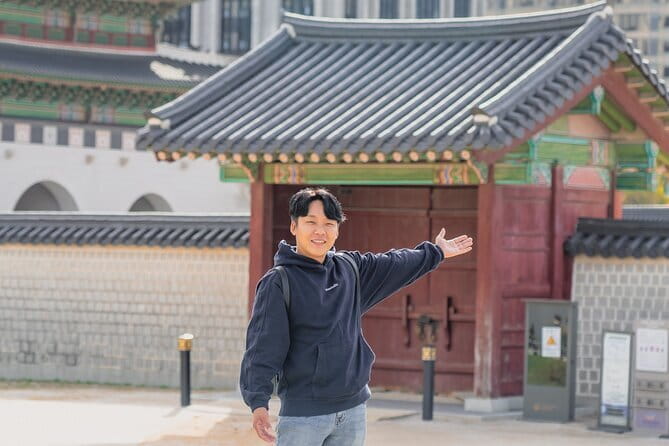
Hun and Sean are the named guides associated with the trip. Both drive and guide, with one or two guides covering the full tour. The tone is personal and family-friendly rather than formal. That can be a major advantage if you want help with restaurant choices, photo stops, hotel arrangements, or small changes during the week.
You should also understand the tradeoff. A private tour gives you control, but seven days covering Seoul, Suwon, Gyeongju, and Busan means some full days in the vehicle. This is not a slow, single-city holiday. It is a broad first look at Korea.
A few more Seoul trips to weigh up
- Discover Round Korea in 7days: All-Inclusive Experience
★ 5.0 · 157 reviews - 7 Day Essential Korea Tour(Seoul, Nami, DMZ, Andong, Gyeongju, Busan_Meal Incl.)
★ 5.0 · 3 reviews
Day 1: Joseon palaces, old Seoul, and Gwangjang Market
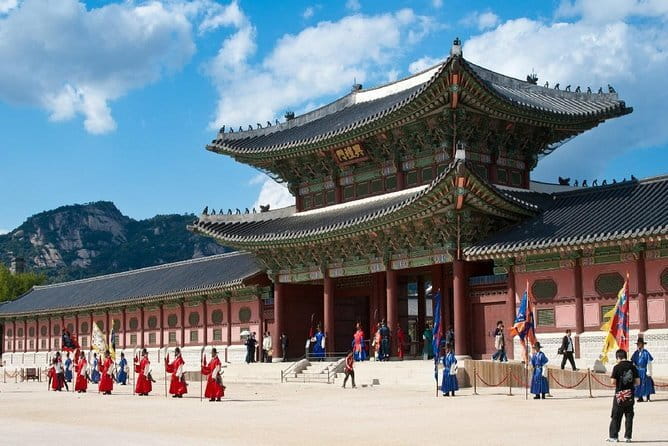
The opening day moves through some of Seoul’s most useful introductions to Korean culture. At Gyeongbokgung Palace, you get two hours with a guide among the courtyards and grand buildings of the Joseon royal complex. The value here is not only seeing ornate gates and halls. A guide can explain how the palace functioned and point out the best places for photos, which helps a large site feel less confusing.
From the palace, you continue to Bukchon Hanok Village, traditionally associated with the noble class. Seeing the homes of the upper class after visiting the royal residence gives you a fuller picture of old Seoul. The narrow lanes and traditional houses are photogenic, but the hour goes quickly, so this is more of a guided walk than a slow neighborhood exploration.
Insadong provides a change of pace. You can browse pottery, artwork, antiques, and Korean-style cafés before sitting down for traditional tea. This stop is useful for gifts and a calmer break, though shoppers may want more than the scheduled hour.
The War Memorial of Korea adds serious context. Two hours here can help you understand the causes and course of the Korean War through weapons, tanks, memorials, and exhibits. It is a strong counterweight to the palace visits, showing that modern Korea was shaped by conflict as much as by royal tradition.
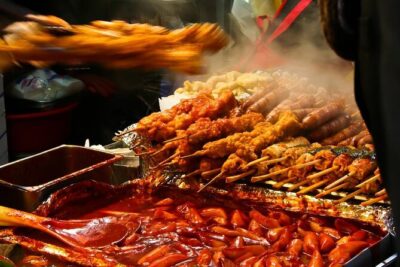
The day ends at Gwangjang Market, where the guide introduces local specialties and helps you try snacks. This is one of the most practical parts of the trip. You are not simply pointed toward a food hall and left alone. You have help choosing what to eat and some background on the market itself.
Day 2: Seoul views, Gangnam, and the Han River at night
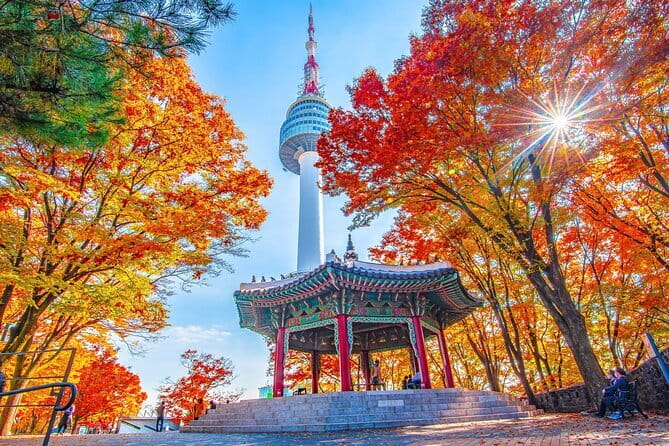
Day two shifts toward present-day Seoul. At N Seoul Tower, you ride up the mountain with your guide and spend about two hours around one of the city’s best-known viewpoints. The cable car fare is not included, so budget for it separately. If you prefer, the guide can explain another way up.
Bongeunsa Temple then gives you a quiet historic site in the middle of the Gangnam area. Colorful lanterns and lotus flowers add visual appeal, but the main benefit is contrast. After the tower and city views, the temple gives you a slower hour.
Starfield Library is a modern photo stop, with more than 50,000 books arranged in dramatic open shelves. It is popular online for good reason, though it is a short visit rather than a conventional library tour. You can request a traditional Korean village instead if the modern shopping-center setting does not appeal to you.
The Gangnam Style statue takes only 10 minutes. It is a quick, playful stop tied to the song that first brought broad global attention to Korean pop culture. Do not expect a major attraction, but it breaks up the day and makes an easy photo.
The evening finishes with an E-Land Han River cruise. You can have chicken or noodles before boarding, then see bridges and the river under city lights. The cruise is especially suited to people who enjoy Korean drama settings and nighttime views. It also makes the day feel less like a sequence of roadside stops.
Day 3: The DMZ and Korea’s divided present
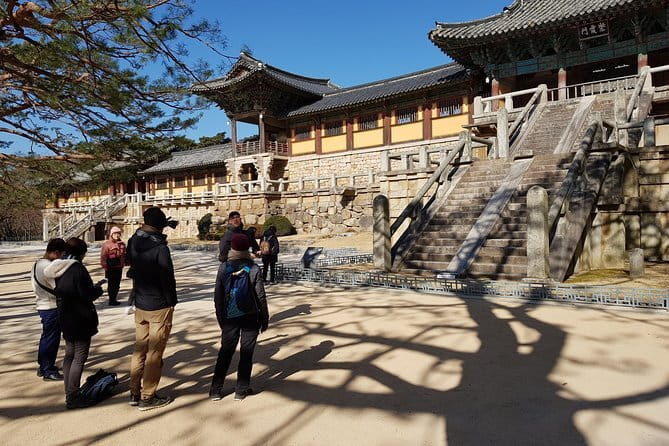
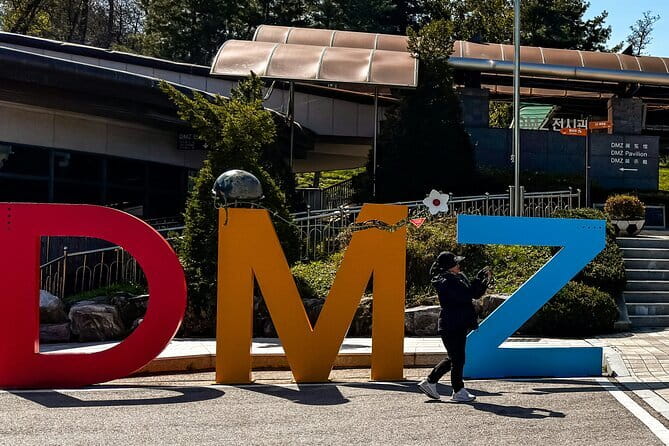
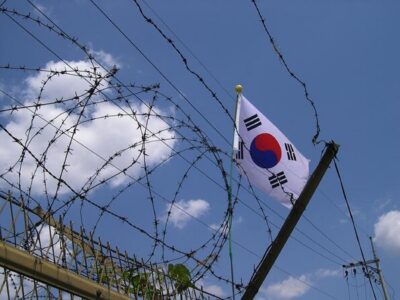
The DMZ day is the most politically serious part of the route. At Imjingak Pyeonghoa-Nuri Park, you see the Bridge of Freedom, an abandoned steam train, and memorial sites connected to the division of Korea. Starting here gives you a moment to think before entering the restricted area.
Private cars cannot enter the DMZ itself. You transfer to a public bus for the internal section, so the tour is private except for that bus ride. Your guide continues providing explanations, but you should expect a less flexible portion of the day because access is controlled.
The Third Tunnel involves a descent to about 73 meters, or 240 feet, and a round trip of roughly 20 minutes inside the tunnel. The stated estimate is that the tunnel could have moved 30,000 soldiers per hour. The walk is short but physically more demanding than a museum visit, especially on the return climb.
At Dora Observatory, you look toward North Korea. The tour presentation focuses on life across the border, economic hardship, and the lack of freedom under the North Korean system. Conditions at the DMZ can affect what you see, so treat the observatory as a place for context rather than a guaranteed close-up view.
The Museum of Modern History of Korea closes the day with recreated scenes of South Korean life from the 1950s onward. After seeing military sites, you get a clearer sense of how ordinary people rebuilt their lives and how the country changed. This is a full day with emotional weight, not just another sightseeing circuit.
Same country, a completely different kind of day:
- Best DMZ Tour Korea from Seoul (Red Suspension Bridge Optional)
★ 5.0 · 41,422 reviews - DMZ Tour: 3rd Tunnel, Option(Suspension Bridge, Boat) from Seoul
★ 5.0 · 21,373 reviews - DMZ tour south Korea from Seoul (NK experience hall, defector)
★ 5.0 · 20,599 reviews - Seoul: DMZ Tour with Optional Suspension Bridge
★ 4.8 · 5,277 reviews
Day 4: Suwon Fortress and Korea’s historical dramas
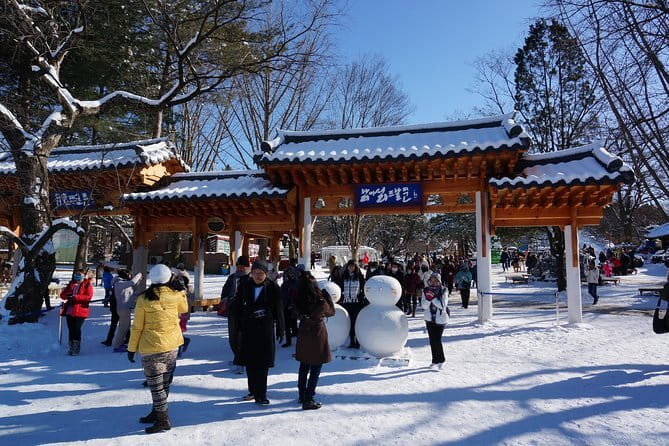
Day four takes you to Suwon’s Hwaseong Fortress area. The small stops at Banghwasuryujeong Pavilion, Janganmun Gate, Yeonmudae, and Changryongmun Gate create a compact walk through the fortress system.
Banghwasuryujeong Pavilion is both scenic and tied to the 22nd king of Joseon, who used it as a place for gatherings. At Janganmun Gate, the guide explains the tragic story connected to that king and points out bullet holes from the Korean War. These details give the stonework more meaning than a simple photo stop.
At Yeonmudae, once a command post and military training area, you may be able to try archery. The site also offers strong views of the fortress. Changryongmun, the east gate, has an unusual design that makes more sense once you understand how the defensive layout worked.
The Korean Folk Village takes three hours and is the day’s main attraction. It covers traditional houses, farming, performances, and areas used as filming locations for Korean historical dramas. The guide walks with you, which is helpful because the village is large and can otherwise feel scattered.
This day is a good fit if you enjoy architecture, royal-era stories, and screen locations. It is also a moderate walking day, so comfortable shoes matter. The short fortress visits may feel rushed to anyone who wants a long independent walk.
Day 5: The long road toward Gyeongju
Day five is mainly a transfer day, though it includes sightseeing. On the way to Gyeongju, you visit one or two attractions and stop for lunch in Pohang. The listed time for this section is six hours, so you should expect a substantial amount of driving.
The Space Walk in Pohang gives you a chance to stretch after the road journey. The attraction is described as safe and enjoyable, with views from an elevated structure. Your guide joins you, making it a shared activity rather than simply a drop-off.
This day is where the private minivan becomes particularly useful. You avoid managing a regional transfer with luggage and separate transport. The downside is clear: if you prefer a relaxed holiday with little time in transit, the schedule may feel tiring.
Ask about your overnight arrangements when planning. Hotels are not included, although the guide can help with bookings. The ability to finish in Busan rather than return to Seoul can also save backtracking after the final day.
Day 6: Gyeongju’s tombs, treasures, and night lights
Gyeongju is the historical center of the trip, and day six gives it the attention it deserves. At Daereungwon Tomb Complex, you see burial mounds dating mainly from the fourth to sixth centuries. One open tomb can be entered to view archaeological objects and construction methods.
Hwanglidangil brings the ancient city into the present. The street has local foods and the popular coin bread, giving you an easy place to sample something specific rather than simply stopping for a generic snack.
Woljeonggyo Bridge is a reconstruction of a bridge first built in 760. It was rebuilt using historical documents and study of the site, and the planned night visit makes sense: the lighting gives the structure a very different appearance from a daytime ruin.
Donggung Palace and Wolji Pond is another evening highlight. The palace was abandoned after a new dynasty took power and later reconstructed from historical records. Reflections on the pond and the night setting make this one of the more atmospheric stops of the week.
Cheomseongdae Observatory, built in 633, is linked to the importance of constellations in ancient farming society. The 30-minute visit is brief but worthwhile, especially when paired with the Gyeongju National Museum.
The museum displays original objects, including crowns and other ancient artifacts. I would not skip it. Outdoor ruins can look abstract without context, while the museum shows the skill and status of the people who created them.
Day 7: Busan markets, temples, and the coast
The Busan day begins at Gukje Market, a large traditional market shaped by the city’s wartime past and early commercial growth. You can browse blankets, local goods, and affordable items. It is a useful place to see everyday commerce, though the hour is not enough for a thorough market search.
At Songdo Cable Car, you cross above the ocean. The provided details also mention a lower alternative called the Sky Capsule, with a transparent floor, if heights are a concern. Cable car admission is listed separately from the included tickets, so clarify the exact fare arrangement before riding.
Haedong Yonggungsa is one of Korea’s most scenic temples, set beside the sea. The temple is relatively new compared with Korea’s oldest religious sites, but its ocean setting gives it strong visual appeal. Allow time for steps and uneven walking.
Busan Gamcheon Culture Village is more than a colorful photo stop. The guide explains how refugees settled on the hillside, built homes, and formed a community. That background helps you look past the painted walls and understand why the village exists.
Ahopsan Forest closes the trip with bamboo paths and a quiet walk. Bamboo has long carried associations with upright character and nobility in Korean culture. After seven days of palaces, markets, museums, and roads, a peaceful final hour is a sensible choice.
What $2,000 per person really covers
At $2,000 per person, this is expensive compared with joining separate group day tours. Yet the price includes a private minivan, one or two English-speaking driving guides, airport transport, entrance tickets listed in the plan, fuel, tolls, parking, and bottled water.
You still pay for hotels and meals. You should also set aside money for the N Seoul Tower cable car, and confirm the arrangements for the Songdo ride because those costs are not presented in the same way as the included admissions.
The value improves for families or small groups that would otherwise need several taxis, rail tickets, private transfers, and local guides. The ability to leave from Busan, take rest days, and add tours also reduces wasted time. For a solo visitor, the price is harder to justify unless convenience and personal service matter more than budget.
Who will get the most from this tour
I would recommend this for first-time visitors who want broad coverage without handling Korea’s intercity logistics themselves. It suits families, older relatives who benefit from door-to-door transport, and groups with mixed interests.
It is also a good match if you want a guide who can help with food, photos, hotel arrangements, and schedule changes. Hun and Sean are described as cheerful, warm, and attentive, including toward parents and children. That personal manner may be as important as the sights.
You should think twice if you prefer independent wandering, public transportation, or long unplanned afternoons. The itinerary has many stops, and some visits last only 30 minutes or an hour. The seven-day route is ambitious, and the trip requires moderate physical fitness, especially at the Third Tunnel, temples, fortifications, and cable car areas.
The experience has a five-star rating from five submitted ratings, and the strongest praise centers on flexibility, comfortable driving, personal care, and the guides’ friendly approach. That is useful evidence, but it is still a small sample. I would ask for a detailed day-by-day confirmation before paying, especially if you want to change the route.
Should you book it?
Book this tour if your priority is seeing a lot of Korea with one trusted team rather than building every day yourself. The combination of Seoul, the DMZ, Suwon, Gyeongju, and Busan is hard to arrange smoothly in one week, and the airport transfer plus private vehicle add real convenience.
I would not choose it for a low-cost holiday or a slow city break. The long drives, extra cable car charges, excluded hotels and meals, and full sightseeing days all need to fit your travel style. If they do, the flexible format and warm service from Hun and Sean make this a strong choice for a first Korean visit.
FAQ
How long is the tour?
The tour lasts approximately seven days.
Does the tour have to run on seven consecutive days?
No. The seven days do not have to be consecutive, and you can add a day off.
What time does the tour start?
The stated start time is 10 a.m.
Is this a private tour?
Yes. Only your group participates in the private tour and activity.
Is airport transportation included?
Yes. Airport transport is included. You can return to Seoul with the team or finish in Busan.
Are hotels included?
No. Hotels are not included, but the guide can help with hotel bookings.
Are meals included?
No. Meals are not included.
Is transportation provided during the tour?
Yes. The experience includes a private minivan, fuel, tolls, and parking.
Are entrance tickets included?
Entrance tickets listed on the itinerary are included. The N Seoul Tower cable car ticket is specifically not included.
Is the DMZ visited by private vehicle?
No. Private cars cannot enter the DMZ area, so you use a public bus inside. The tour remains private apart from that bus ride.
How physically active is the tour?
A moderate level of physical fitness is recommended. The itinerary includes walking at palaces, markets, temples, fortresses, villages, and the Third Tunnel.
What is the cancellation policy?
You can receive a full refund if you cancel at least six full days before the start time. A 50 percent refund applies for cancellations made two to six full days ahead, while cancellations less than two full days before the start time are not refunded.
Just added around Seoul
- Private tour guide service in Seoul, Korea★ 5.0 · 6 reviews
- Alpaca, Nami, Petite Fr, Italian Village, Garden of Morning Calm★ 3.5 · 5 reviews
- Gyeongbokgung palace,seoul with gigibebe hanbok rental★ 4.5 · 12 reviews
- Gyeongju UNESCO Sites Tour by KTX train; The Museum Without walls★ 4.5 · 11 reviews
- Private day trip to Korean Folk Village & Dae Jang Geum Park★ 5.0 · 7 reviews
- Private tour Lotte World,Tower,Aquarium(All Tickets are included)★ 5.0 · 12 reviews
- Full Day Private Seoul Tour for foodies★ 5.0 · 3 reviews
- Seoul Private Custom Walking Tour with A Guide (Private Tour)★ 4.5 · 28 reviews
Seoul Tours, compared.
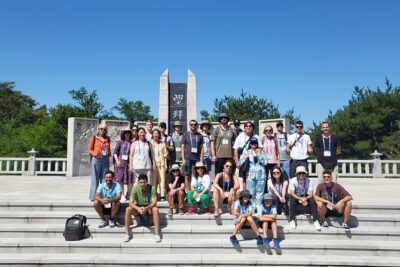
Best DMZ Tour Korea from Seoul (Red Suspension Bridge Optional)
Read our review →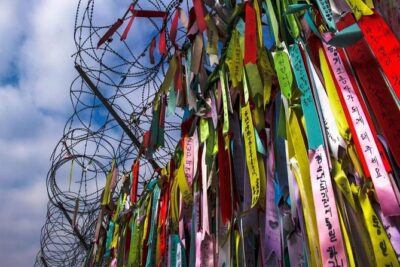
DMZ Tour: 3rd Tunnel, Option(Suspension Bridge, Boat) from Seoul
Read our review →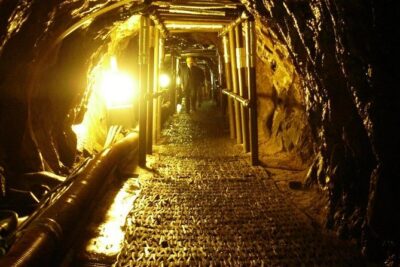
DMZ tour south Korea from Seoul (NK experience hall, defector)
Read our review →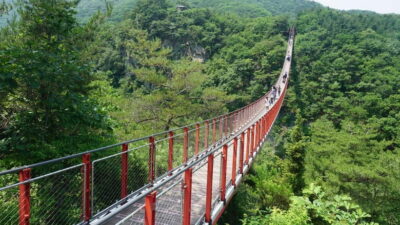
Thrilling Korean DMZ 3rd Tunnel Tour from Seoul + Red Bridge Rush
Read our review →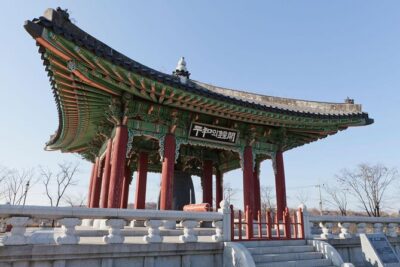
DMZ Past and Present: Korean Demilitarized Zone Tour from Seoul
Read our review →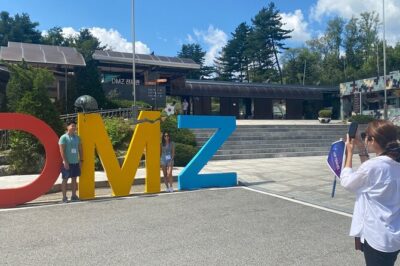
Ultimate Korea DMZ Tour from Seoul (Gondola & Suspension Bridge)
Read our review →