Reviewed · PRIVATE
Korean Green Tea Tour – from Boseong to Gangjin (Private)
The best part of this day is its range. You do not simply photograph Boseong’s famous green hills, then head home. You visit three different tea fields, learn how Korean tea is made and served, and follow the story south to Gangjin, where tea culture reaches back more than 1,000 years.
I especially like the Korean tea ceremony in Boseong and the quieter Gangjin stops. The ceremony gives the scenery some meaning, while Baegundong Hermitage Garden and the old-style rice cake tea offer experiences you would be unlikely to arrange easily on your own. The drawback is the long day, with about three and a half hours of driving between Gwangju and the tea country.
Key points at a glance
- Three kinds of Korean tea: Taste leaf tea, powdered tea, and rice cake tea during one full-day outing.
- Private transport from Gwangju: Your group travels alone, with roughly 70 minutes to Boseong, 50 minutes to Gangjin, and 70 minutes back.
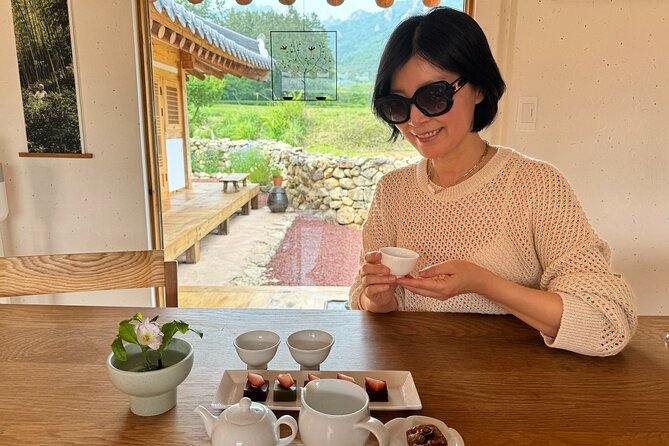
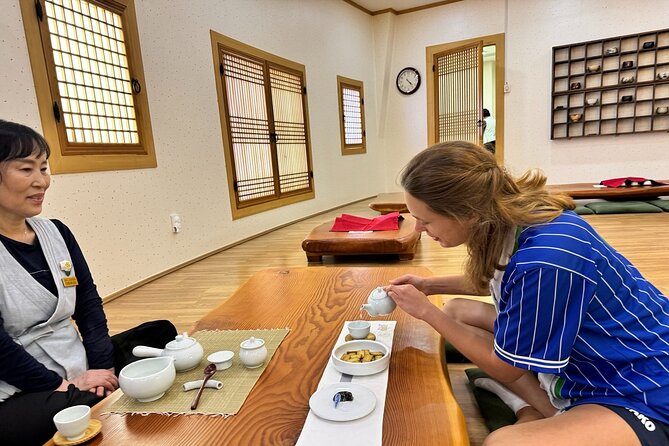
- A hands-on tea ceremony: Learn how Korean green tea is prepared and served rather than only seeing tea fields from a viewpoint.
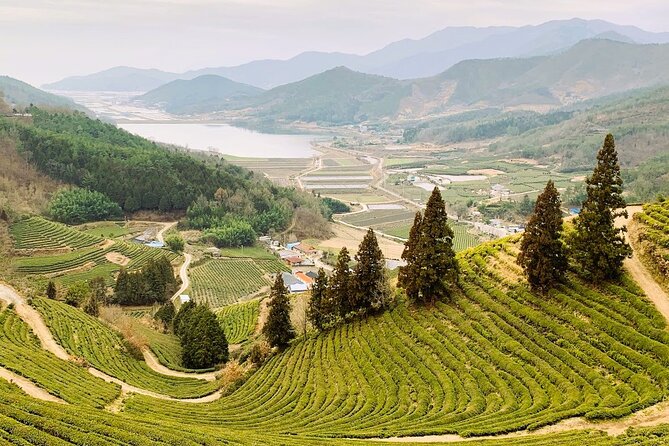
- Boseong’s famous rolling fields: Daehan Dawon and Nokcha-ro provide the classic green tea views this region is known for.
- Gangjin’s older tea traditions: Visit Baegundong Hermitage Garden and Baegun Tea House, linked to Korea’s first tea brand.
- A guide who can shape the day: Veronica and Vicky are named guides associated with the experience, and the private format allows room for questions and small adjustments.
Why this tea tour is different from a Boseong photo stop
Boseong is one of South Korea’s best-known tea-growing areas. Its hills are planted in neat rows, and the slopes create the broad green views that appear in many Korean travel photographs. That alone is worth the trip, but a quick visit can leave you knowing little about the drink itself.
This outing adds the missing story. You begin with the farms and move through production, ceremony, tasting, gardens, and local history. The result is a fuller picture of Korean tea culture, with enough variety to keep the day from feeling like repeated visits to the same field.
The contrast between Boseong and Gangjin is especially useful. Boseong has the polished, famous tea-country experience, including a museum and established viewpoints. Gangjin feels less familiar to foreign visitors and connects tea with Joseon-era gardens, local scholarship, and the early commercial tea trade.
The private setup matters here. You are not moving with a large group or waiting for strangers at every stop. Guides Veronica and Vicky are specifically associated with the experience, and the private format gives you a better chance to ask about malcha, tea production, Korean customs, or the places you are seeing.
A few more South Korea trips to weigh up
- Busan Private Tour with licensed tour guide + private vehicle
★ 5.0 · 1,143 reviews - Private DMZ Tour (No Shopping): 3rd Tunnel & Suspension Bridge
★ 5.0 · 607 reviews - Jeju Island English Private & Flexible Tour any number anywhere
★ 5.0 · 561 reviews
Leaving Gwangju at 9:30 am
The tour begins in Gwangju Metropolitan City at 9:30 am. From Gwangju to Boseong, allow about 70 minutes by private vehicle. That drive is not a minor detail. The tea areas are outside the city, and reaching them without a car can take much more planning.
The full outing lasts around nine to ten hours. You should treat it as a full day rather than a quick morning excursion. The schedule includes several short visits, lunch, two longer Boseong stops, and the return drive from Gangjin to Gwangju, which takes about 70 minutes.
I see the private vehicle as the main practical value of the tour. At $195 per person, the price is not low, especially if you are traveling alone. But it covers private transportation, admission fees where listed, the tea ceremony, the included tastings, and a guide for a complicated rural route. For two or more people, the cost makes more sense because you are paying for a day built around your own group rather than joining a standard coach outing.
Daehan Dawon, Boseong’s classic tea hills
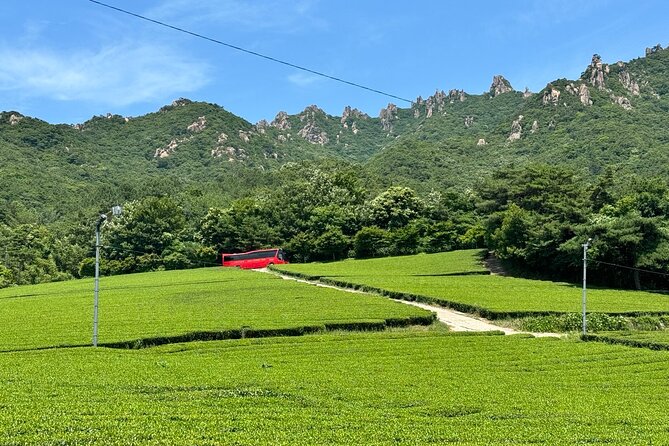
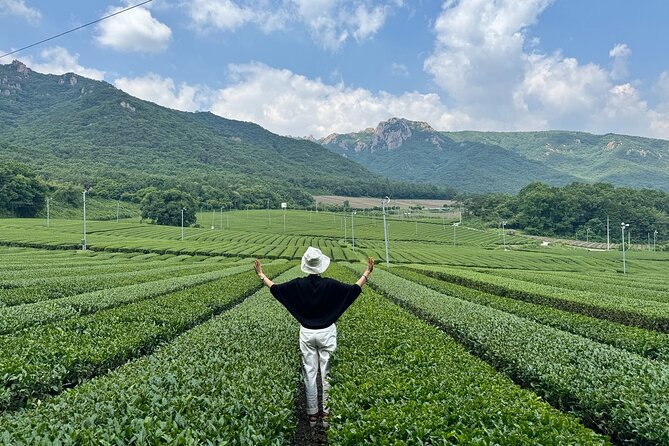
Your first major stop is Boseong Green Tea Field Daehan Dawon, with about 90 minutes to walk and take in the area. Boseong’s soil and climate are well suited to green tea, and the farms in the county are described as organic.
This is the stop for the broad, familiar Boseong view. Tea rows climb over rounded hills, giving you a strong sense of how much land is devoted to the crop. You will have time to look closely at the plants, take photographs, and hear how the growing area fits into Korea’s tea industry.
The admission ticket is included, so you do not need to handle a separate entry payment. Wear shoes that are comfortable for walking on sloped ground. The information provided does not specify the exact walking route or its difficulty, but tea fields on hills are not the place for flimsy footwear.
Daehan Dawon is also where the scenery can tempt you to rush. Try not to spend the entire visit taking pictures. The real benefit of a guide is having someone explain what you are looking at, from the plant itself to the way Korean tea is prepared and valued.
Lunch in Boseong-eup, with payment at the restaurant
After the first tea field, you stop in Boseong-eup for about an hour. Lunch is not included, but the guide has selected popular local dishes, and you choose what you want before paying the restaurant directly.
The choices include stir-fried nakji, or Korean octopus, along with other local dishes. The exact menu can vary, so you should think of this as a chance to eat in town rather than a fixed meal included in the tour price.
This arrangement gives you control over what you eat and spend, but it also means the $195 price does not cover lunch. Alcoholic drinks are not included either. If you have dietary concerns, tell the guide early so the meal choice can be discussed before you sit down.
An hour is enough for a relaxed local meal, though not for a long restaurant stop. That is appropriate on a day with seven scheduled locations and a drive into Gangjin still ahead.
Same country, a completely different kind of day:
- Best DMZ Tour Korea from Seoul (Red Suspension Bridge Optional)
★ 5.0 · 41,422 reviews - DMZ Tour: 3rd Tunnel, Option(Suspension Bridge, Boat) from Seoul
★ 5.0 · 21,373 reviews - DMZ tour south Korea from Seoul (NK experience hall, defector)
★ 5.0 · 20,599 reviews - DMZ Insider Tour: 3rd Tunnel, NK Defector Meet & Red Bridge
★ 4.9 · 15,214 reviews
Korean tea explained at the Korea Tea Museum
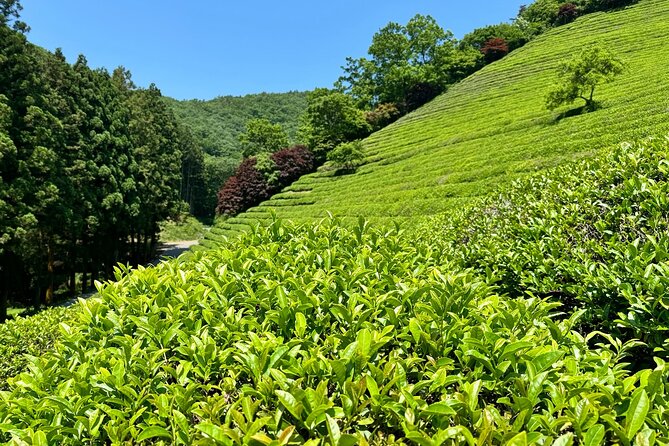
The Korea Tea Museum gives the day some useful structure. You spend about an hour learning about the tea plant, Korean tea culture, and the six types of tea that can be produced from the same plant.
This is a good point in the schedule because you have already seen tea growing. The museum can help connect the green rows outside with the finished drink in your cup. You can better understand why powdered tea and leaf tea are not simply two names for the same thing.
The museum also covers the history of Korean tea and the development of green tea production. That background makes the later tasting more rewarding. Instead of treating every cup as just a pleasant drink, you have a framework for noticing differences in form, preparation, and use.
Admission is included. I would give this stop your full attention, particularly if you are new to Korean tea. It is less about dramatic scenery and more about making sense of the rest of the day.
Nokcha-ro and the tea house view
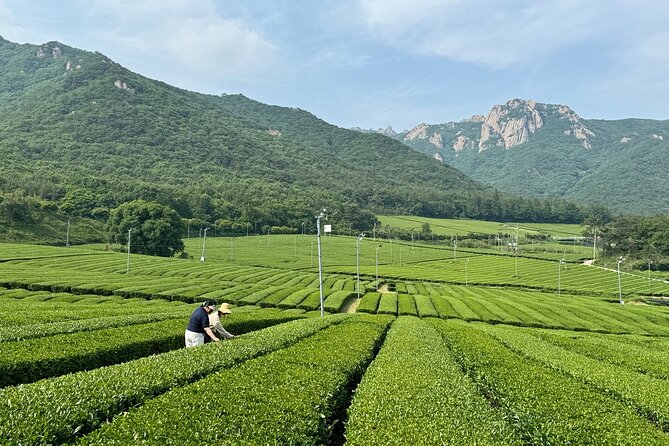
Nokcha-ro takes about 40 minutes and offers another look at Boseong’s tea country. Choroknip tea farm, operated by Boseong Jeda, is known for its viewpoint over the rolling fields. From the tea house terrace, you can look down across the planted hills.
This is a shorter stop, but it serves a different purpose from Daehan Dawon. Daehan Dawon puts you among the tea rows. Nokcha-ro gives you a higher, wider view from a terrace, making it easier to appreciate the shape of the farms.
The stop is free according to the tour details, and the matcha affogato is included in the experience. The dessert combines powdered green tea with green tea ice cream. It is a simple but smart tasting choice: you get a familiar sweet texture alongside the stronger, more concentrated character of powdered tea.
You should not expect a long café break here. Forty minutes passes quickly, particularly if you want photographs, the view, and the affogato. Still, this is one of the day’s most enjoyable small stops because it combines the classic Boseong view with an easy introduction to matcha-style tea.
Gangjin Dawon, where the story changes
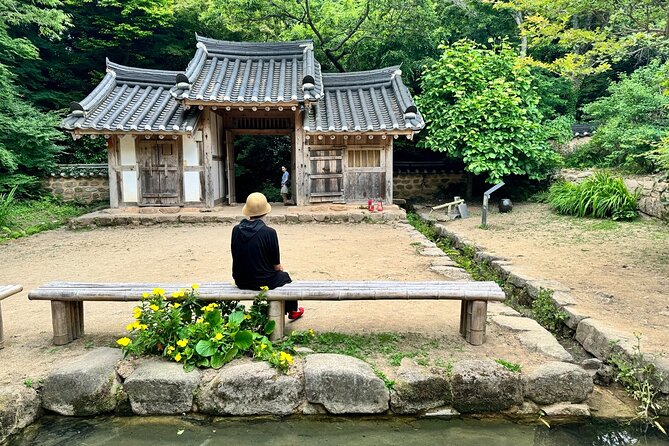
The drive from Boseong to Gangjin takes about 50 minutes. That transfer is one reason the private vehicle earns its keep. You are moving between two tea regions rather than spending the entire day in one compact area.
Gangjin Dawon sits at the foot of Mount Wolchulsan and has been cultivated for green tea production since 1980 by Osulloc, one of Korea’s major tea producers. The modern farm is only part of the story, though. Gangjin’s tea culture reaches back more than 1,000 years.
You spend about 30 minutes here, so expect a brief visit rather than a long walk through the area. The stop gives you a second setting for tea cultivation and helps explain why Gangjin matters beyond its newer production.
The contrast with Boseong is useful. Boseong is the place for sweeping views and well-known tea tourism. Gangjin adds age, local identity, and a less familiar side of Korean tea culture. If you want only the most famous photo locations, a Boseong-only trip may be enough. If you want context, Gangjin is what makes this tour more than a scenic outing.
Baegundong Hermitage Garden and Joseon-era design
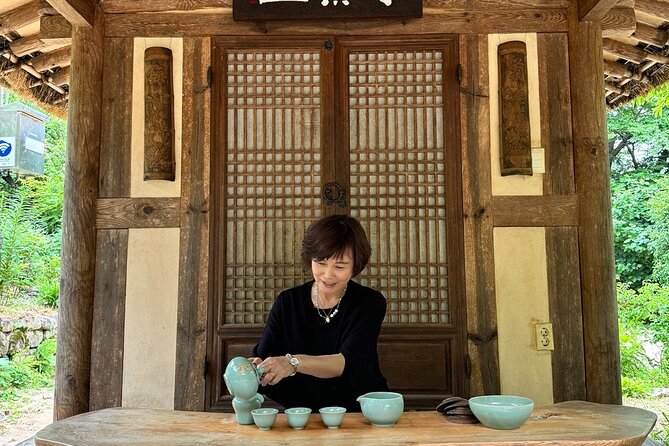
Baegundong Hermitage Garden is one of the day’s most distinctive stops. Built in the late 17th century during the Joseon Dynasty, it was carefully planned to work with its natural setting. You have about 40 minutes to see the private garden.
The word hermitage can suggest a grand religious site, but the appeal here is the garden’s relationship with the surrounding setting. The design was not placed at random. Its location and layout were chosen to create harmony between built features and nature.
This stop also gives the tea story a cultural setting. Tea in Korea is not only an agricultural product or a café trend. It has connections to study, contemplation, hospitality, and careful daily rituals. Baegundong helps you see that wider role.
Allow yourself to slow down here. The visit is short, and the schedule is active, but the garden rewards close attention more than a hurried checklist approach. The tour does not promise a long garden walk, so you should regard it as a focused visit rather than a full afternoon in a large park.
Baegun Tea House and the rice cake tea tradition
The final listed stop is Seongjeon-myeon, where Baegun Tea House preserves the story of Baegun Okpan Tea. This was Korea’s first tea brand, created in the 1920s by Lee Han-young, a descendant of one of Jeong Yak-yong’s disciples.
You spend about 40 minutes here and taste historical rice cake tea, one of the three tea forms featured during the day. Leaf tea is familiar to many people. Powdered tea is easier to recognize if you have encountered matcha. Rice cake tea is the unusual one, and it gives this experience its strongest sense of place.
The tea’s name refers to its traditional form, not a modern dessert pairing. The point is to encounter a local method with a long cultural thread, rather than sample only products designed for tourists.
This is also where the tour’s connection to people and ideas becomes clearest. Lee Han-young’s link to Jeong Yak-yong’s circle places tea within Gangjin’s intellectual and cultural past. You do not need to know Korean history in detail to appreciate the story, but the guide’s explanation will help you see why a small tea house can matter.
What the guide adds to the day
You can visit Boseong’s major tea field independently, but the full route is harder to reproduce. You need transport between Gwangju, Boseong, Gangjin, and the rural sites. You also need to know which stops offer more than another version of the same view.
The strongest guide value comes from interpretation. Veronica is described as someone who can explain malcha, tea production, tasting, and the tea industry, while also drawing on her connection to Gwangju. Vicky is also associated with the tour and is described as providing clear explanations and extra help with transportation problems beyond the planned sightseeing.
Because the activity is private, you can ask questions without holding up a busload of people. You may also be able to discuss small preferences with the guide, though the published details do not promise a custom itinerary or guaranteed changes.
The private format is best for couples, families, and small groups who want a calm pace and direct explanations. Solo visitors should weigh the price more carefully, since $195 per person is a substantial outlay for one person. Group discounts are offered, so larger private groups may find the cost easier to justify.
Who should book this experience?
I would choose this tour if you love food, gardens, rural scenery, and cultural stories that go beyond the main sights. It is also a strong choice if you are staying in Gwangju and want to reach Boseong and Gangjin without arranging several separate transport links.
You should be comfortable with a long day. The tour includes about 190 minutes of driving, depending on traffic, plus walks and seven stops. The schedule is full, and the day may feel tiring if you prefer a slow trip with long café visits.
This is not primarily a tea-picking activity. The information provided does not promise harvesting or a farm workshop. You will see working tea fields, learn about production, attend a Korean tea ceremony, and taste several tea forms.
Most people can participate, service animals are allowed, and the meeting area is near public transportation. The operator confirms the booking at the time of reservation. Free cancellation is available up to 24 hours before the 9:30 am start, and poor weather can lead to a different date or a full refund.
Should you book the Boseong and Gangjin tea tour?
Book it if you want the full tea story: famous Boseong views, a hands-on ceremony, and old Gangjin traditions. The private car and guide make the far-flung route practical, while the included affogato and rice cake tea add real tasting value.
Skip it if you only want a short visit to Boseong’s main tea field, or if you dislike spending most of a day on the road. For everyone else, this is a well-shaped cultural day from Gwangju, especially when you want to see a less familiar side of South Korea and understand what is in the cup, not just what is in the photograph.
FAQ
Where does the Korean Green Tea Tour begin?
The tour begins in Gwangju Metropolitan City at 9:30 am.
How long does the experience last?
The tour lasts approximately nine to ten hours.
How much driving is involved?
The drive from Gwangju to Boseong takes about 70 minutes, Boseong to Gangjin takes about 50 minutes, and Gangjin to Gwangju takes about 70 minutes.
Is lunch included?
No. Lunch is not included. You choose a local dish in Boseong-eup and pay the restaurant directly.
What tastings and activities are included?
The price includes a Korean tea ceremony in Boseong, a matcha affogato made with powdered green tea and green tea ice cream, and historical rice cake tea in Gangjin.
Is this a private tour?
Yes. Only your group participates, and private transportation is included.
Just added around South Korea
- Seoul: Korean & English Language Exchange Global Party★ 5.0 · 28 reviews
- From Seoul: Yongpyong Ski Day Tour with Transportation★ 4.9 · 40 reviews
- You’re Invited to Our Home in Seoul: The Only Cooking Class!★ 5.0 · 8 reviews
- Yeosu: Private Taxi Car Private Charter Tour★ 4.7 · 3 reviews
- Your Personal Seoul Photographer!★ 4.1 · 15 reviews
- Unique Native Experience : Han River Picnic, Board game, BBQ★ 5.0 · 3 reviews
- From Seoul: Hwacheon Ice Fishing and Lighting Festival Tour★ 4.5 · 4 reviews
- Everland Theme Park: Admission Ticket | Korea★ 4.5 · 3 reviews
Private, compared.
Busan Private Tour with licensed tour guide + private vehicle
Read our review →
Private DMZ Tour (No Shopping): 3rd Tunnel & Suspension Bridge
Read our review →
Jeju Island English Private & Flexible Tour any number anywhere
Read our review →
Private Busan Tour -Explore Cultural Landmarks with a Local Guide
Read our review →
Seoul City Private Full-Day Tour Including Lunch
Read our review →
Private DMZ the 3rd Tunnel Tour from Seoul (optional Red Bridge)
Read our review →
Jeju Island Popular Sightseeing Private Car Charter Tour 5/9hours
Read our review →