
Reviewed · WORKSHOPS
Busan Dialect Class with local snack
Busan’s local voice is the star of this experience. You begin with the Korean alphabet and simple Busan dialect phrases, then test your new skills while buying a snack at Bujeon Market. It is a smart way to turn a language lesson into a real moment of local life.
I like the small maximum group of 15, which keeps the class personal, and I like that the lesson is built for complete beginners. The chance to visit Samgwangsa Temple and eat rice cakes or other simple market foods adds more substance than a classroom-only activity.
The main consideration is the price: at $100 per person, this is not a cheap market walk. You are paying for a private classroom setting, printed materials, a guide, snacks, and a structured cultural experience, so it suits you best if you want more than sightseeing photos.
Key points to know before booking
- Busan dialect comes first: You learn useful local expressions, not only standard Korean greetings.
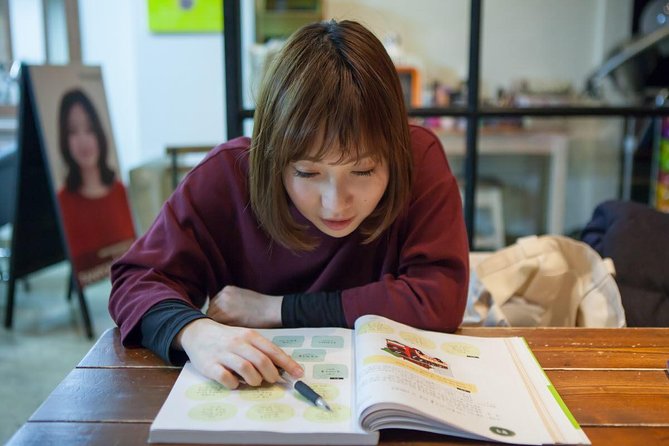
- Hangul is taught from the ground up: The 1.5-hour class covers Korean consonants and vowels, even if you know no Korean.
- Bujeon Market puts the lesson to work: You can practice phrases while buying simple Korean food.
- Samgwangsa adds a cultural stop: The Cheontae Buddhist temple is known for its striking buildings and calm park.
- Suyang brings a playful tone: The guide uses jokes and friendly conversation to make a difficult language feel manageable.
- The group stays small: A maximum of 15 people makes questions and speaking practice easier.
A Korean lesson designed for complete beginners
Many language activities lose their charm after a few minutes of memorizing phrases. This one has a clear purpose: give you enough Korean to try something in Busan that same day.
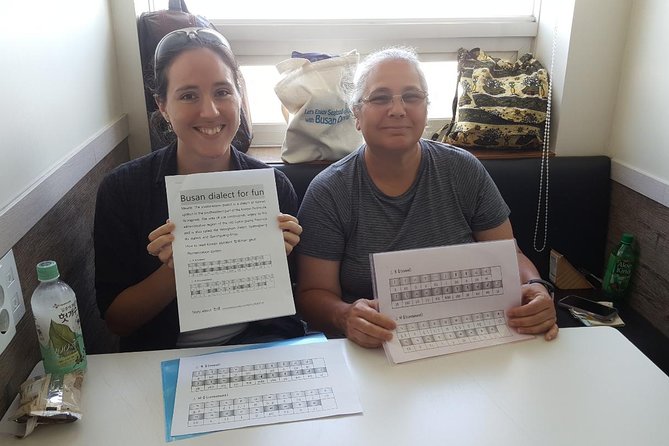
The class lasts about 1.5 hours. You learn how Hangul works by looking at consonants and vowels, then combine that basic knowledge with useful expressions from the Busan dialect. You do not need prior Korean skills. The class is meant to let you participate from the start, even if reading Korean currently looks like a code.
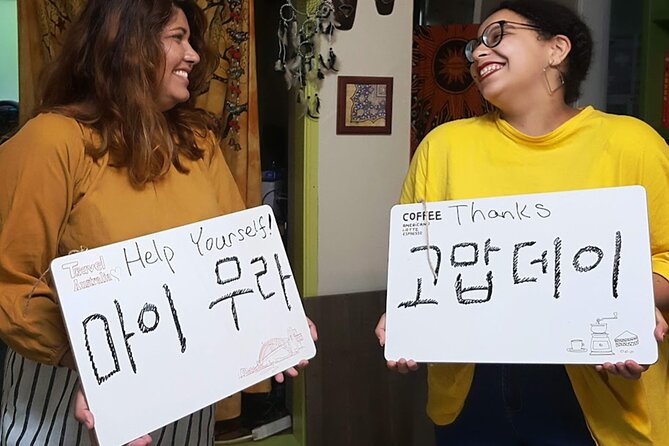
That beginner focus matters. Korean can feel difficult because the writing system looks unfamiliar, and Busan speech has its own sound and character. Rather than expect you to hold a long conversation, the lesson gives you simple phrases that can work in a market setting.
Your guide may be Suyang, who has a warm, humorous teaching style. In the class, that light approach helps. You are more likely to try a new phrase when the atmosphere feels relaxed, and the teaching is easier to follow when you are not worried about making a mistake.
The printed class materials are included, along with the rental of the classroom. That makes the first section feel like a proper lesson rather than a guide casually listing a few phrases on a street corner.
A few more Busan trips to weigh up
- Korean cooking class in Haeundae, Busan
★ 5.0 · 92 reviews - Busan Tailored Korean cooking class (Vegan OK)with market tour
★ 5.0 · 66 reviews - Busan: Small-Group Traditional Korean Food Cooking Class
★ 4.9 · 58 reviews
Taking your first Korean phrases to Bujeon Market
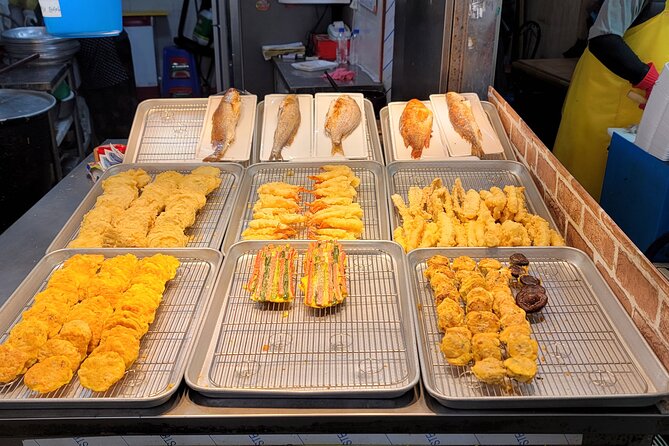
Bujeon Market is the practical heart of the experience. After class, you head to the market and use what you have just learned while buying simple food.
This is where the tour earns its keep. A phrase learned in a classroom can disappear quickly, but a phrase used to buy a rice cake has a job. You get a reason to speak, listen, point, and respond. Even a small purchase can make the language feel less abstract.
The market is also useful because it gives you a look at everyday Busan beyond the city’s best-known sightseeing stops. You are not simply walking through stalls while a guide names ingredients. You have a small task and a local setting in which to carry it out.
The included snacks are part of the activity, and coffee or tea is also provided. The food is described as simple rather than as a full meal, so you should not book this expecting a long tasting tour. Think of it as a chance to sample traditional Korean food while practicing the lesson.
The exact order can vary. One route has the dialect class before Bujeon Market. Another begins at the market and then continues to Samgwangsa Temple. The experience description also places the market before the temple, with food purchased for a snack in the temple park. Confirm the day’s sequence with the guide when you meet.
Samgwangsa Temple and the Cheontae tradition
Samgwangsa Temple gives the tour a second focus: Busan’s religious and architectural culture. It belongs to the Cheontae Order, one of the main Buddhist sects in Korea alongside the Jogye Order.
The stop is not presented as a long lecture on Buddhism. Instead, you see the temple buildings, learn a little about their place in Korean religious life, and enjoy your market snack in the park inside the temple grounds. That combination is appealing because it leaves room to look around without turning the visit into a formal religious lesson.
The temple is known for its beautiful buildings. The setting gives you a change of pace after the market and the language practice. Bujeon is about interaction and movement. Samgwangsa is about pausing, looking, and taking in the design of the temple grounds.
The temple portion may be especially worthwhile if this is your first visit to a Korean Buddhist site. You get cultural context without committing a full morning or afternoon to a temple tour. At the same time, the stop is not a substitute for a detailed architectural tour, so visitors seeking extensive historical interpretation may find it brief.
The snack in the temple park is a nice touch. Food bought in the market becomes part of the next stop, linking the two places instead of treating them as unrelated attractions.
Why a small group changes the experience
The maximum group size is 15 people. That is not a private tour, but it is small enough to make a major difference during a language class.
You need a chance to hear the expressions clearly and repeat them without shouting across a large room. You also need room to ask how a word sounds or when a phrase is appropriate. A group of 15 keeps that possible, though the amount of individual speaking time will depend on the final number in your session.
The small size also helps at the market. Buying food with new phrases is more enjoyable when the group is not so large that every stall becomes crowded. You still have the social feel of a group activity, but the format is more focused than a large sightseeing walk.
If you prefer a completely private lesson, this is not that. The group discount option may help if you are booking with family or friends, but no specific discount amount is provided. For a couple, family, or small group that wants a shared activity, the format should work well.
Same country, a completely different kind of day:
- Busan: Gyeongju Guided Day Trip to Three Kingdoms Capital
★ 4.8 · 1,925 reviews - Small Group Full Day Busan Tour (Max 6 Pax)
★ 5.0 · 1,464 reviews - From Busan: Gyeongju UNESCO World Heritage Guided Day Tour
★ 4.8 · 1,250 reviews - Busan Private Tour with licensed tour guide + private vehicle
★ 5.0 · 1,143 reviews
What the three hours feel like
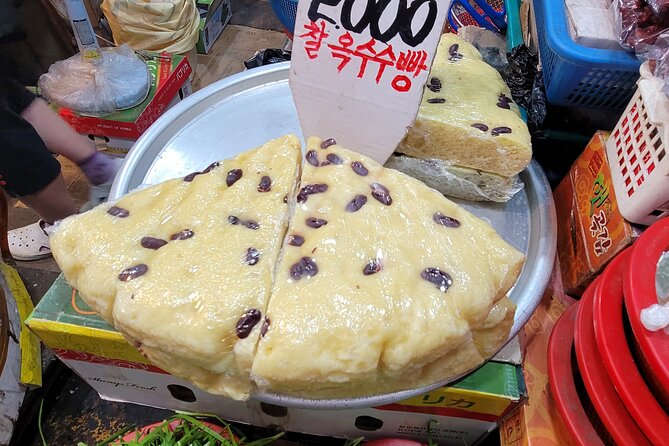
Plan for roughly three hours from the meeting point back to the meeting point. The starting location is Welcome Savings Bank Seomyeon Branch at 721 Jungang-daero in Busanjin District.
The first portion is the classroom lesson, unless your chosen route begins at Bujeon Market. You learn Hangul basics, then move into useful Busan dialect expressions. Since the lesson is designed for people with no Korean ability, you do not need to prepare in advance.
The market section lets you apply those expressions. You purchase simple food, with rice cakes given as an example, and practice the language in a real setting. Coffee or tea and snacks are included, while alcoholic drinks are not.
The final portion includes Samgwangsa Temple on the route that uses both locations. The experience ends back at the meeting point, so you do not need to arrange a separate pickup at the temple or market.
The timing is fairly compact. The class alone takes half the stated tour length, and the remaining time covers transport or walking between stops, market practice, food, and the temple visit. If you want long, unhurried time at Bujeon Market or a detailed temple study, you may want to visit those places again on your own.
The guide’s relaxed approach
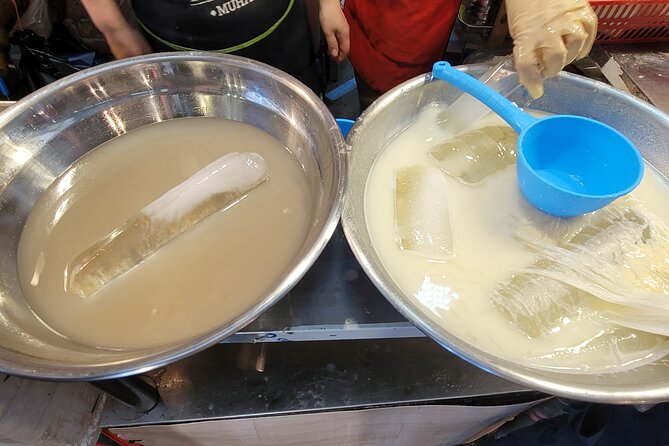
Suyang’s personality is an important part of the activity. He uses humor and keeps the mood easy, which is useful when you are attempting unfamiliar sounds.
A light approach does not mean the class lacks structure. The lesson covers Hangul’s consonants and vowels and gives you practical expressions. The value comes from combining that foundation with a friendly guide who encourages you to try.
The experience can also adapt when circumstances allow. One booking was arranged at an unusual time, and the route changed to include Beomeosa Temple, seafood pancake, and makgeolli near the temple. That was an altered outing rather than the standard program, so you should not assume those stops or drinks are included. It does show that Suyang may be flexible when timing and arrangements permit.
Another session included a parent and child, with the guide encouraging them to use Busan dialect with Korean friends. That is a good clue about the tone: this is not an academic Korean course. It is a short, social introduction meant to give you confidence and a few phrases you can actually use.
Is $100 a fair price?
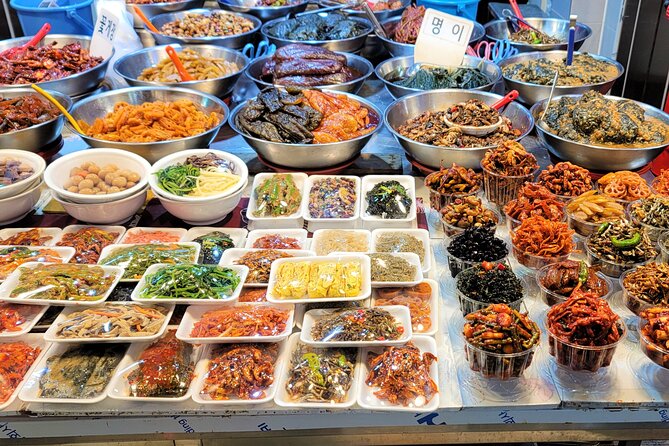
At $100 per person, the cost is high for a three-hour activity if you measure it against a basic walking tour or a self-guided market visit. Bujeon Market is accessible without paying for a tour, and you could visit a temple separately.
The value becomes clearer when you count what is bundled together. You receive a 1.5-hour classroom lesson, printed materials, classroom rental, a guide, snacks, coffee or tea, market practice, and the temple visit. You are also paying for the planning that links these parts into one experience.
The strongest value is for someone who wants a guided introduction to Korean language and culture rather than a checklist of sights. If your goal is simply to see Samgwangsa or shop at Bujeon Market, the price may feel steep. If you want to learn enough Korean to interact at the market, the cost is easier to justify.
Group discounts may improve the value for friends or family booking together. The tour is also mobile-ticket friendly, which keeps the practical side simple. Confirmation is sent within 48 hours, subject to availability.
Who will enjoy this most
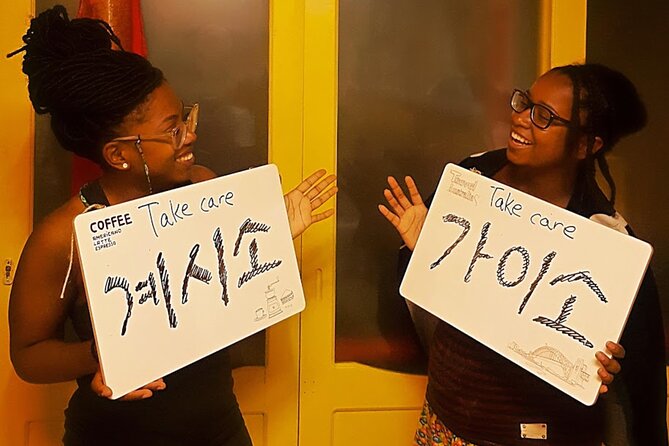
I would recommend this for a first visit to Busan, especially if you want an activity that mixes learning, food, and local places.
It is a good fit for:
- Complete beginners who want an easy first step into Korean
- Couples and families looking for a shared cultural activity
- People who enjoy markets but want help understanding and using them
- Visitors who prefer small groups over large coach tours
- Anyone interested in Busan’s local speech and customs
- Parents and children who can enjoy practicing phrases together
It may be less suitable if you want a full meal, a long shopping session, or a serious language course. The class is short and practical. You will not leave fluent, but you should leave with a better sense of how Hangul is built and a few expressions ready for use.
The temple visit may also feel brief if Buddhist architecture is your main interest. In that case, treat Samgwangsa as one part of a cultural sampler, not the sole reason to book.
Small practical details that matter
Wear comfortable shoes. The experience combines a classroom, market, and temple grounds, and you will be moving between locations during the three-hour session.
The meeting point is near public transportation, which makes the start easier to reach. Since the activity returns to the same meeting point, you can plan the rest of your day from Seomyeon without arranging a separate return transfer.
The experience is stated to be suitable for most participants. If you have specific mobility needs, contact the provider before booking because the available information does not describe step-free access, seating, or the exact movement between stops.
Alcohol is not included. The food is centered on simple snacks such as rice cakes, and coffee or tea is provided. Eat beforehand if you need a full meal.
Free cancellation is available up to 24 hours before the start time. Cancellations or changes made inside that 24-hour window are not refunded or accepted, with cut-off times based on Busan local time.
Should you book the Busan dialect class?
Book it if you want to do more than look at Busan. The best part is the handoff from classroom to market: you learn a phrase, then use it to buy food. That small act gives the lesson a real purpose.
I also like the mix of Bujeon Market and Samgwangsa Temple. One stop puts you in contact with everyday food culture, while the other offers a quieter look at Korean Buddhism and temple design. Suyang’s humor makes the Korean lesson less intimidating, and the 15-person limit keeps the activity personal enough for beginners.
Skip it if $100 feels too high for three hours, or if you mainly want independent market shopping and temple sightseeing. For everyone else, especially families, couples, and first-time visitors who want a friendly introduction to Busan’s language and customs, this is a worthwhile way to spend part of a day.
FAQ
How long does the Busan dialect class experience last?
The activity lasts approximately three hours, including the class, market visit, snack time, and temple visit when that route is selected.
Where does the activity start and end?
It starts at Welcome Savings Bank Seomyeon Branch, 721 Jungang-daero, Busanjin District, Busan. The activity ends back at the meeting point.
Do I need to know Korean before joining?
No. The class is designed for complete beginners and teaches the basics of Korean consonants, vowels, Hangul reading, and useful Busan dialect expressions.
How large is the group?
The maximum group size is 15 people.
What food and drinks are included?
Snacks, including the chance to try simple local foods such as rice cakes, are included. Coffee or tea is also included. Alcoholic beverages are not included.
Does the experience include Samgwangsa Temple?
Yes, the route that includes the temple visits Samgwangsa after the market. The experience description also offers route options, so confirm the order and selected option when booking.
Can I cancel for a full refund?
Yes. You can cancel at least 24 hours before the start time for a full refund. Cancellations or changes made less than 24 hours before the start time are not refunded or accepted.
Just added around Busan
- Real Busan Walking Experience★ 5.0 · 27 reviews
- 7 Highlights Gyeongju City One Day Small Group Tour from Busan★ 5.0 · 24 reviews
- Full Day Private car tour to UNESCO Gyeongju&Yangdong village★ 5.0 · 5 reviews
- Suncheon and Yeosu Daily Private Tour with Pickup Service★ 5.0 · 3 reviews
- Visit Busan night market and enjoy the night view of Busan harbor★ 5.0 · 6 reviews
- Busan Highlights Shore Tour – Cruise Return Assured★ 4.5 · 34 reviews
- Suncheon one day tour from Seoul, Busan or Suncheon★ 5.0 · 3 reviews
- Busan Beomeosa Temple & Hongbeopsa Temple with temple lunch★ 5.0 · 11 reviews
Workshops, compared.
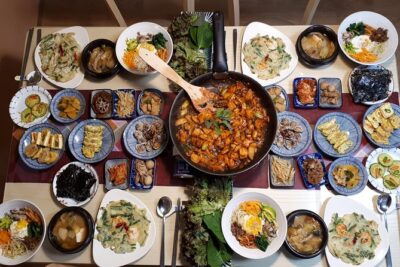
Local Home Korean Cooking Class & Market Adventure in Seoul
Read our review →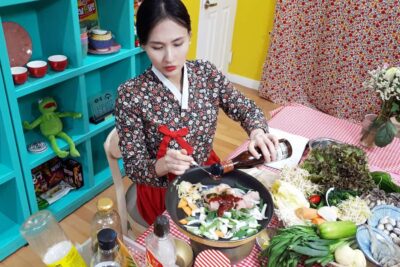
Korean Cooking Class at a Local Home and Market Tour
Read our review →
Yongpyong Ski Resort from Seoul with Optional Lesson and Packages
Read our review →
Korean Cooking Class with Grocery Shopping at Seoul Local Market
Read our review →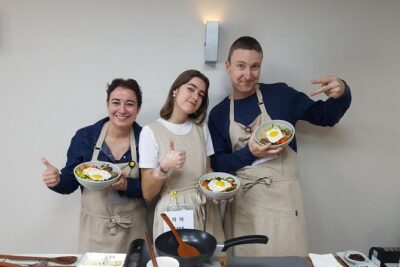
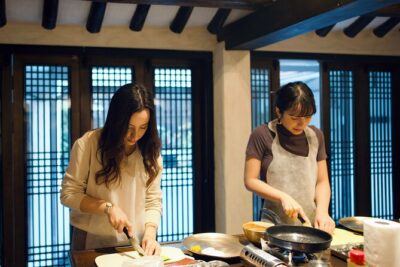
Royal Seoul Cooking Class in a 100-Year-Old Hanok
Read our review →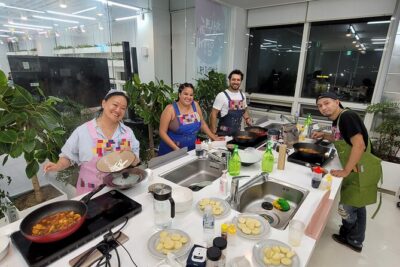
Busan Tailored Korean cooking class (Vegan OK)with market tour
Read our review →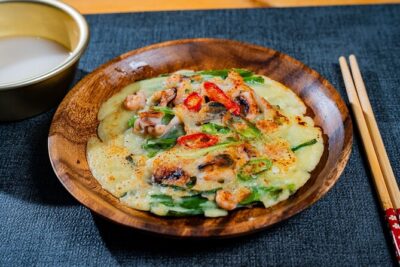
Taste of Korea, Authentic Home-Style Cooking Class
Read our review →Browse the lists this tour appears in