
Reviewed · KOREAN TEMPLE TOURS
Busan Beomeosa Temple & Hongbeopsa Temple with temple lunch
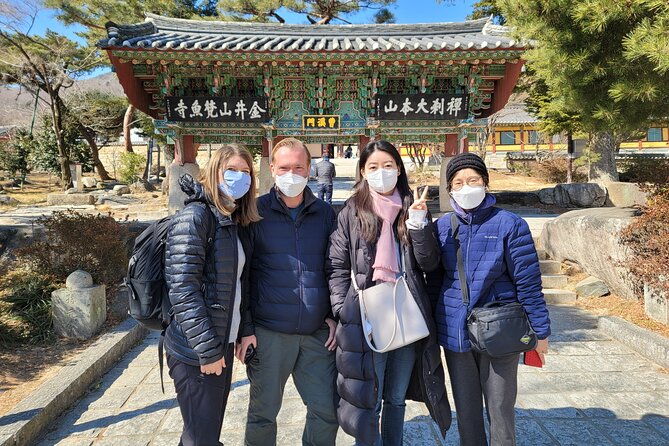
The best part of this Busan outing is the contrast: Beomeosa Temple gives you centuries-old Buddhist buildings and a short uphill walk, while Hongbeopsa offers a very different temple built on privately donated land. Add a simple temple bibimbap lunch, and you get more than a photo stop.
I like the small maximum of 15 people and the use of public transportation, which keeps the day local and practical. I also like the guide’s personal care: Suyang contacted participants early and helped with meeting arrangements, while Chang led a relaxed route with local snacks and a cold barley drink. The main drawback is the fixed, non-refundable booking, plus the need for decent weather and moderate fitness.
Key points to know before booking
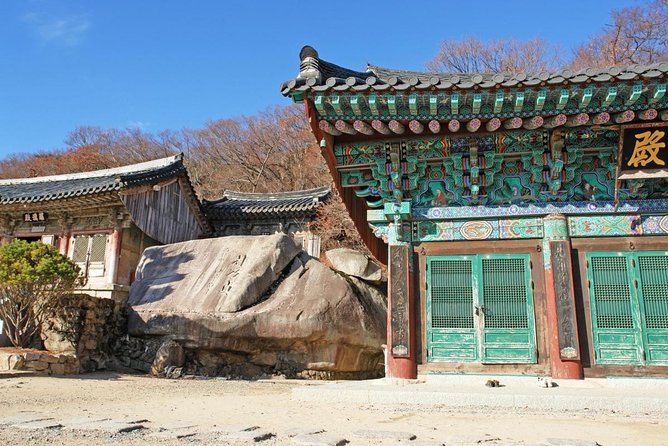
- Two very different temples: Compare historic Beomeosa with privately funded Hongbeopsa.
- Temple lunch included: Eat bibimbap provided by the temple around noon.
- Less-visited sites: The route can include hermitages such as Naewonam behind Beomeosa.
- Public transport included: Start near Beomeosa Station and finish at Nopo Station on Busan Metro Line 1.
- Small-group format: The maximum group size is 15 people.
- Local food and flowers: You may see a large flower market and sample items such as cold barley drink.
Why this three-and-a-half-hour temple tour works
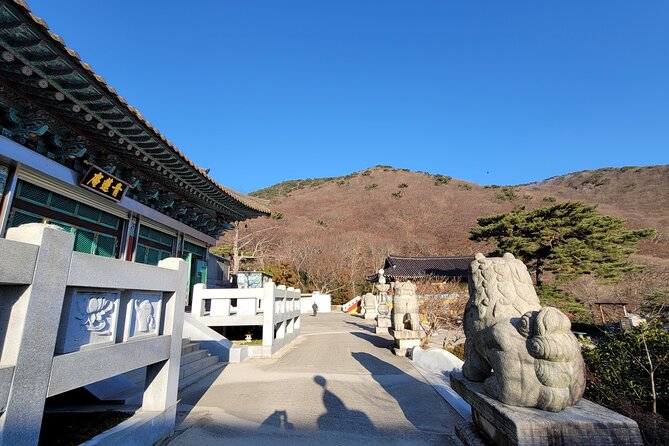
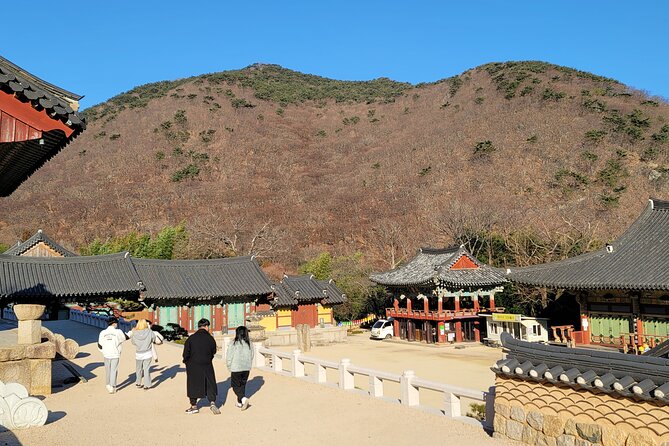
Busan has plenty of coastal viewpoints, shopping streets, and seafood markets. This experience takes you inland, toward the foothills and quieter religious sites that many first-time visitors skip.
You spend about two hours around Beomeosa, then another hour and a half at Hongbeopsa. That is enough time to see the main features without turning the day into a long religious tour. I find the timing useful for anyone who wants cultural context but still has evening plans in Busan.
The experience costs $63 per person. That is not the cheapest way to visit Beomeosa, since admission is listed as free, but the price includes public transportation, bottled water, a temple lunch, and a guide. The value depends on how comfortable you are navigating Busan’s subway system and finding the less obvious buildings on your own.
If you already know Beomeosa well, the price may feel high for a short visit. If you want someone to explain Korean Buddhism, handle the route, introduce the hermitages, and connect two very different temples, the cost is more reasonable.
More Korean Temple Tours in Busan
- Busan Tour: Gamcheon Village & Haedong Yonggungsa Temple + Lunch
★ 5.0 · 119 reviews - Full Day Busan Tour Including Haedong Yonggungsa Temple
★ 4.5 · 71 reviews - Private Busan tour with gamcheon culture village and the temple (Customizable)
★ 5.0 · 62 reviews
Starting at Beomeosa Station
The meeting point is Beomeosa Station in Namsan-dong. You do not begin at a central hotel or cruise terminal, so you need to get yourself to the station unless you have arranged something else with the guide.
That setup has one clear benefit: you meet near the temple area and avoid wasting time on a long private-vehicle pickup route. It also matches the tour’s local character. Guides have helped cruise passengers meet in Nampo-dong and travel by subway to Beomeosa, but that arrangement was handled directly and should not be assumed for every booking.
Public transportation is included, which is useful in Busan. The guide can focus on the sights while you see how residents move around the city. For some people, that is part of the experience. For others, subway travel and meeting at a station add a little work.
The tour finishes at Nopo subway station on Line 1. This is convenient if you plan to continue toward other parts of Busan, but it is not the same place where you started. Keep the end point in mind when planning dinner, a hotel return, or a train connection.
Beomeosa’s main buildings and quieter hermitages
Beomeosa is the historical anchor of the tour. The temple has more than a thousand years of history, and the visit covers its major buildings as well as subsidiary hermitages.
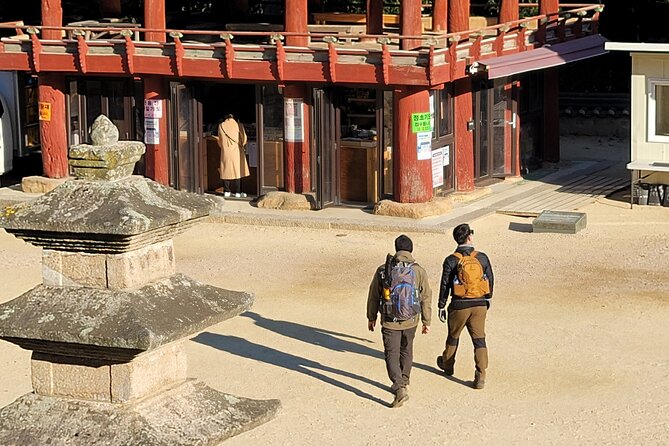
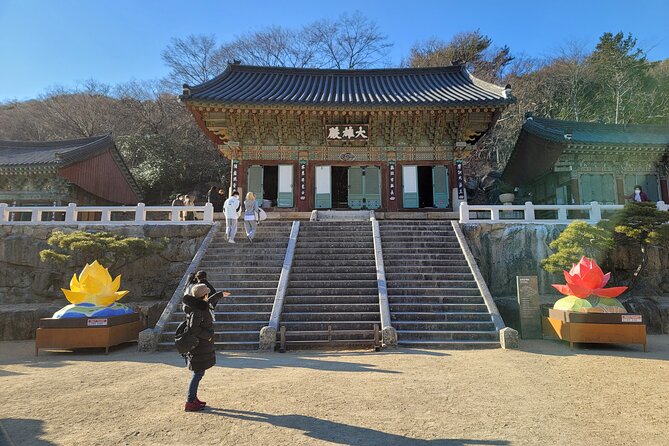
The main complex gives you the familiar visual language of Korean Buddhism: timber buildings, tiled roofs, courtyards, gates, and religious artwork. The value of a guide here is not simply pointing out buildings. It is helping you understand how the site is arranged and why the smaller structures matter.
The less-known hermitages make this visit more rewarding than a quick walk through the central temple grounds. One route has included Naewonam Hermitage behind Beomeosa. I like that detail because it gives you a sense of how a large temple works as a wider religious area, not just a single courtyard made for photographs.
You should expect some uphill walking. One participant described the route as a short hike up to Beomeosa, and the activity asks for moderate physical fitness. That does not suggest a strenuous mountain trek, but comfortable shoes are a sensible choice. If stairs, slopes, or uneven paths are difficult for you, ask about the route before booking.
The two-hour stop includes lunch at around noon. That timing matters. You are not rushing through Beomeosa, eating a snack on the subway, and then moving on. The meal becomes part of the temple visit.
What temple bibimbap adds to the visit
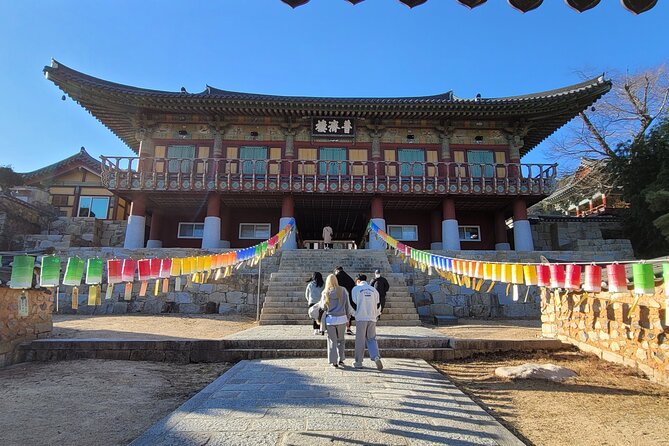
Lunch is bibimbap provided by the temple. This is a practical inclusion, but it also gives the tour a stronger connection to daily temple life than a standard sightseeing stop.
You should approach the meal as simple temple food rather than a restaurant lunch. The supplied details do not promise a broad menu, meat dishes, or a choice of courses. If you have allergies, dietary restrictions, or strong food preferences, ask before booking.
Bibimbap is a familiar Korean dish, which makes it an easy introduction for many people. Eating it at the temple also breaks up the walking and gives the group time to rest. The tour’s short length means this pause is useful, especially if you have started the day early.
The food experience may include local snacks as the route continues. Cold barley drink was a particular favorite for one participant, and it sounds like the kind of small, everyday taste that makes a tour feel connected to Busan rather than packaged for tourists.
Alcoholic drinks are not included. That is hardly surprising on a temple visit, but it is worth knowing if you are comparing this with a food-focused city tour.
Same country, a completely different kind of day:
- Busan: Gyeongju Guided Day Trip to Three Kingdoms Capital
★ 4.8 · 1,925 reviews - Small Group Full Day Busan Tour (Max 6 Pax)
★ 5.0 · 1,464 reviews - From Busan: Gyeongju UNESCO World Heritage Guided Day Tour
★ 4.8 · 1,250 reviews - Busan Private Tour with licensed tour guide + private vehicle
★ 5.0 · 1,143 reviews
Hongbeopsa and its unusual modern character
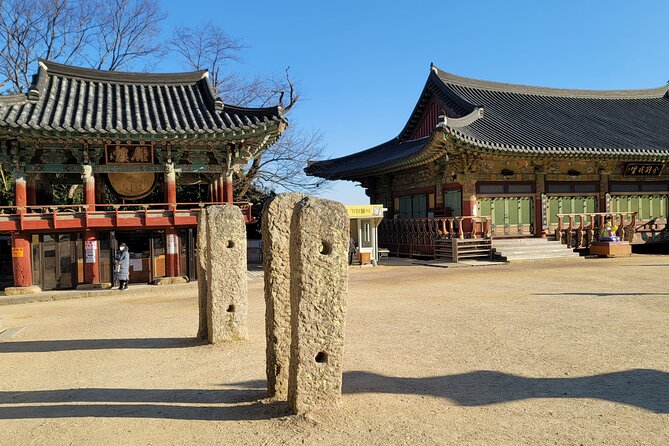
Hongbeopsa changes the mood completely. It was built by a devout Buddhist woman who donated her land and money, and its buildings differ from the usual Korean temple style.
That difference is the reason to visit. You are not simply seeing a second version of Beomeosa. Hongbeopsa gives you a chance to compare how Buddhist architecture and temple spaces can vary when a site has a different origin and design approach.
The temple’s observatory provides wide views from above. The supplied details do not specify exactly how far the view reaches or which parts of Busan are visible, so I would treat it as a pleasant viewpoint rather than book the tour solely for a panoramic photograph.
The large Amitabha Buddha is the main visual landmark here. It is specifically singled out as a must-see, and the scale gives the second half of the tour a strong focal point. You have about 90 minutes at Hongbeopsa, enough to look around without lingering for an entire afternoon.
Hongbeopsa is near Nopo Station, which explains the finish at Nopo on Line 1. The route is efficient: you see Beomeosa first, then move toward the station where the tour ends.
The flower market and local tastes
The experience also includes a chance to see flowers at one of Busan’s largest flower markets. The supplied schedule does not give a separate stop time, so treat the market as part of the wider route and confirm the exact timing with the operator if flowers are a major reason for booking.
This is a welcome change from temple grounds. A flower market brings you into a more ordinary commercial setting, with local products and seasonal color. It also gives you something different to photograph and makes the outing feel less repetitive.
The market element may be especially appealing if you like small local stops rather than a strict monument-to-monument schedule. Just remember that the core schedule is still built around Beomeosa, lunch, and Hongbeopsa. This is not a full market tour.
The snack tasting adds another informal note. A relaxed route, local treats, and cold barley drink were all part of one especially easygoing version of the experience. You should not expect a long food crawl, but these small tastes can be a pleasant bonus.
The guide makes the practical difference
The guide is important here because the tour combines religious sites, public transport, a meal, and a station-to-station route.
Suyang has been associated with careful meeting arrangements and early contact, including helping cruise passengers coordinate from Nampo-dong. That sort of communication matters when your day depends on finding the right subway meeting point.
Chang has led a route described as easy and relaxed, with explanations about Beomeosa, Naewonam Hermitage, temple food, and Hongbeopsa near Nopo Station. The guide has also explained Korean Buddhism and differences among Buddhist traditions in Northeast Asia.
You should not assume that Suyang or Chang will personally lead every departure, but their names give you a useful idea of the kind of guiding offered: practical help, cultural explanation, and attention to comfort rather than a rushed checklist.
The group cap of 15 people is another plus. It is not a private tour, but it should be easier to hear the guide and move through the temple grounds than in a large coach group. A smaller group also suits the meal better.
Fitness, weather, and timing
The tour lasts about three hours and 30 minutes. That makes it a good half-day activity, especially if you want to reserve a morning or afternoon for Busan’s other sights.
The schedule is tied to lunch at noon, so the timing may be less flexible than a private outing. Check the start time carefully when booking. The experience begins at Beomeosa Station and ends at Nopo Station, not back at the starting point.
Moderate physical fitness is required. Expect walking between buildings, a short uphill approach, and temple grounds that may not be perfectly flat. The information does not provide accessibility details, so anyone with mobility concerns should ask the provider specific questions before paying.
Good weather is also required. If poor weather causes cancellation, you are offered another date or a full refund. The same applies if the minimum number of participants is not reached. Those protections are helpful, but your own cancellation policy is strict: the booking is non-refundable and cannot be changed for any reason.
The activity is often booked about 40 days ahead. That suggests you should plan early if your Busan dates are fixed, particularly if you want a small group and a particular day.
Who will get the most from this experience
I would recommend this tour if you want more than a quick temple photograph but do not want to spend a full day on a difficult mountain route.
It suits you best if you:
- Want an introduction to Korean Buddhism with a guide
- Enjoy historic buildings and less familiar religious sites
- Like using public transportation in a foreign city
- Are happy with a simple temple lunch
- Can manage moderate walking and a short uphill route
- Prefer a small group to a large sightseeing bus
Families with older children may also find the three-and-a-half-hour length manageable, though the walking and food format may not suit every child. Visitors on a cruise can use the tour if they can reach Beomeosa Station and allow enough time to return after the tour ends at Nopo Station.
I would hesitate if you need hotel pickup, a fully accessible route, a flexible lunch, or a guaranteed private experience. I would also skip it if your main goal is a long flower-market visit, since the temple sites are the main event.
Should you book Beomeosa and Hongbeopsa?
Book this experience if you want a compact, guided look at two contrasting Busan temples, with lunch and transport taken care of. The combination of Beomeosa’s long Buddhist history, Naewonam Hermitage, Hongbeopsa’s unusual origin, the giant Amitabha Buddha, and a possible flower-market visit gives the outing more variety than a single-temple tour.
The strongest reasons to go are the careful guide support, the small group size, and the temple bibimbap lunch. The main cautions are the meeting point, the uphill walking, the fixed non-refundable booking, and the fact that the tour ends at a different subway station.
At $63, I see it as a fair choice for visitors who value explanation and local navigation. If you are confident using Busan’s metro and prefer to explore slowly alone, you can visit Beomeosa for less. If you want the less obvious hermitage, cultural background, temple meal, and Hongbeopsa connection without piecing the route together yourself, this half-day outing earns its place in your schedule.
FAQ
How long does the Beomeosa and Hongbeopsa tour last?
The tour lasts approximately 3 hours and 30 minutes. About two hours are scheduled for Beomeosa Temple, followed by about one hour and 30 minutes at Hongbeopsa.
Where does the tour start?
The meeting point is Beomeosa Station in Namsan-dong, Busan, South Korea.
Where does the tour finish?
The tour finishes at Nopo subway station on Busan Metro Line 1.
Is lunch included?
Yes. Temple-provided bibimbap is included, along with bottled water. Alcoholic beverages are not included.
How many people can join the tour?
The maximum group size is 15 people. Group discounts are available.
What happens if the weather is poor?
The activity requires good weather. If it is canceled because of poor weather, you will be offered another date or a full refund. If the minimum number of participants is not reached, you will also be offered another date or experience, or a full refund.
More Lunch Experiences in Busan
- UNESCO Tongdosa Temple + Gourmet Eonyang Style Bulgogi Lunch
★ 5.0 · 7 reviews - Seoul City Private Full-Day Tour Including Lunch
★ 5.0 · 469 reviews - Premium Private DMZ Tour & (Suspension Bridge or N-Tower) include lunch
★ 5.0 · 348 reviews - Private DMZ Tour with North Korean Defector + N Korean Lunch
★ 5.0 · 122 reviews
Just added around Busan
- Real Busan Walking Experience★ 5.0 · 27 reviews
- 7 Highlights Gyeongju City One Day Small Group Tour from Busan★ 5.0 · 24 reviews
- Full Day Private car tour to UNESCO Gyeongju&Yangdong village★ 5.0 · 5 reviews
- Suncheon and Yeosu Daily Private Tour with Pickup Service★ 5.0 · 3 reviews
- Visit Busan night market and enjoy the night view of Busan harbor★ 5.0 · 6 reviews
- Suncheon one day tour from Seoul, Busan or Suncheon★ 5.0 · 3 reviews
- Busan Highlights Shore Tour – Cruise Return Assured★ 4.5 · 34 reviews
- Busan Seafood Tour : Oyster village Tour with Oyster cuisines★ 5.0 · 3 reviews
Korean Temple Tours, compared.
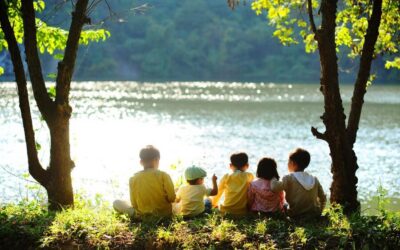
Mt Seorak + Naksansa Temple or Nami Island Group Tour
Read our review →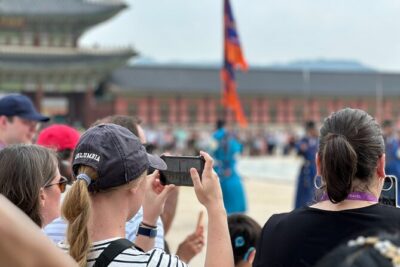
Best Things to Do – Half Day Seoul Trip (Seoul Palace & Temple)
Read our review →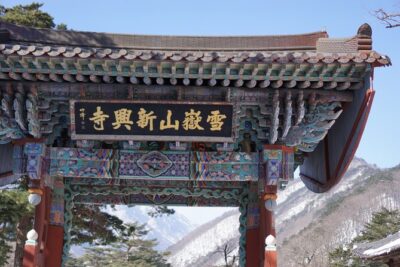
Mount Seorak and Naksansa Temple One Day Tour from Seoul
Read our review →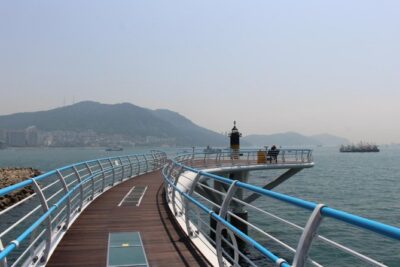
Busan Tour: Gamcheon Village & Haedong Yonggungsa Temple + Lunch
Read our review →
UNESCO Heritage Tour Including Bulguksa Temple
Read our review →
Full Day Busan Tour Including Haedong Yonggungsa Temple
Read our review →
Private Busan tour with gamcheon culture village and the temple (Customizable)
Read our review →
Day Tour of Suwon Hwaseong Fortress Starfield Waujeongsa Temple
Read our review →Browse the lists this tour appears in