
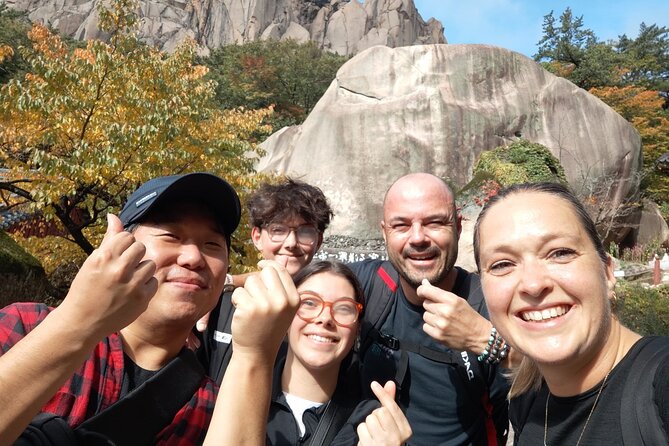
Reviewed · DMZ TOURS
Missionary Memorial Hall and Goseong DMZ Observatory from sokcho
Korea’s modern story comes into sharp focus on this private trip north from Sokcho. You’ll connect the work of Christian missionaries, who built hospitals and schools in poor Joseon-era communities, with the Korean War and the divided peninsula you see from Goseong Unification Observatory.
I like the useful mix of quiet scenery and serious history. A walk beside Yeongnangho Lake gives you a gentle start, while Tony’s clear English commentary and comfortable vehicle make the longer drive and museum visits easier to follow. The main consideration is the schedule: four to five hours is a substantial half-day, and the subject matter can feel heavy.
- Sherwood Hall family memorial: Learn about two generations who fought tuberculosis and taught ordinary Koreans.
- DMZ Museum visit: Spend about two hours with exhibits on the Korean War and its effect on modern Korea.
- Goseong border views: Look toward North Korea from one of the coast’s key observation points.
- Private Sokcho pickup: Your group travels alone, with the possibility of schedule adjustments for cruise passengers.
- Yeongnangho walking stop: Enjoy a short, easy lakeside break before the more demanding history stops.
- Food on your own schedule: Meals are not included, but free time is provided for eating.
Why this Sokcho tour links missionaries and the Korean War
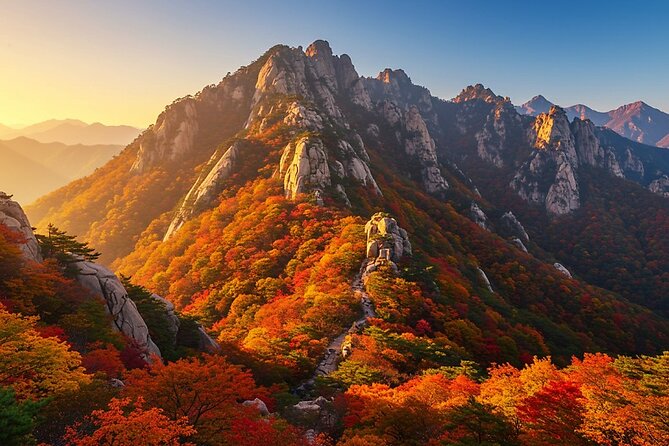
This experience takes two subjects that can seem separate and puts them in one clear story. The first is the arrival of Christian missionaries in the late 19th century, when Korea had little modern medical care and very limited access to formal education. The second is the Korean War, which shaped the country’s borders, politics, and daily life after 1953.
The connection is simple and useful. Missionaries helped establish hospitals and schools for people who had few other options. Some of those institutions later grew into major universities and hospitals, including Yonsei University and Catholic University hospitals. At the DMZ, you then see the later crisis that divided the country and still affects Korean life today.
I find this approach more meaningful than a border lookout alone. You do not just point north, take a photo, and leave. You first gain some sense of the social and medical conditions that shaped modern Korea, then examine the war that transformed the peninsula.
The tour is private, so Tony can shape the explanation around your interests. The experience is not a large bus outing with a fixed script. You travel with only your own group, which makes it easier to ask questions or adjust the pace within the available time.
Yeongnangho Lake gives the morning a quiet start
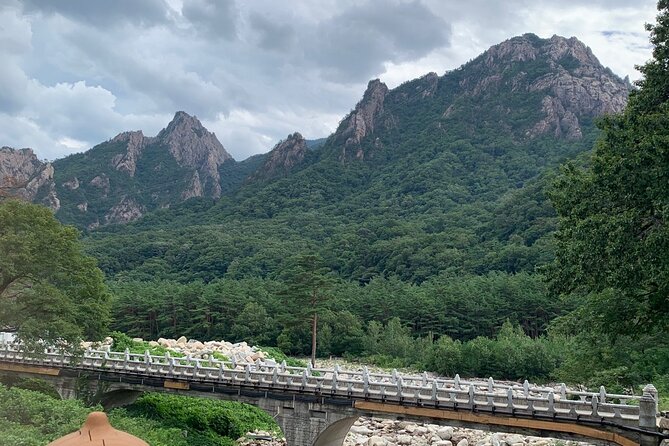
The first stop is Yeongnangho Lake, a natural lagoon in Sokcho. You get about 30 minutes here, enough for a short walk and photographs rather than a full lakeside outing.
That short pause matters. The museum and DMZ sections require attention, and the lake lets you begin at an easy pace. You can stretch your legs, enjoy the water, and get your bearings before the tour moves into more serious territory.
The walking course is described as a popular 20 to 30 minute wellness route, so you should expect gentle activity rather than a strenuous hike. Still, wear shoes you can walk in comfortably. The tour asks for moderate physical fitness, though no difficult walking is specified for this stop.
Do not expect the lake to be the main event. Its value is as a calm opening and a chance to see a different side of Sokcho. If your priority is a long nature walk, 30 minutes will feel brief. If you want to reach the historical sites without beginning with a crowded schedule, the timing works well.
More DMZ Tours in South Korea:
- Best DMZ Tour Korea from Seoul (Red Suspension Bridge Optional)
★ 5.0 · 41,422 reviews - DMZ Tour: 3rd Tunnel, Option(Suspension Bridge, Boat) from Seoul
★ 5.0 · 21,373 reviews - DMZ tour south Korea from Seoul (NK experience hall, defector)
★ 5.0 · 20,599 reviews
The Sherwood Hall family memorial tells a personal story
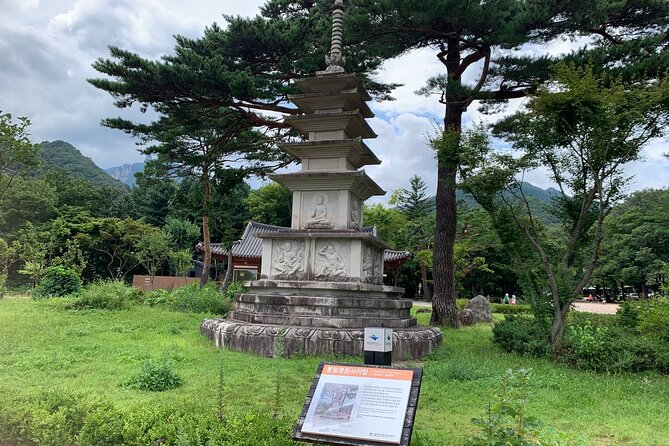
At Hwajinpo Pine Forest Road, you visit a memorial connected with the Sherwood Hall family. The family spent two generations treating tuberculosis and educating ordinary people during the impoverished Joseon era.
This stop gives the missionary portion of the tour a human scale. Instead of hearing only about large institutions, you learn about people working directly against disease and limited schooling. The focus on tuberculosis also shows how basic medical care could change lives in a period when such treatment was hard to find.
You have about one hour here, with admission included. That is enough time for a proper visit rather than a quick photo stop. The pine forest setting also gives the memorial a quieter feel than the war museum and observatory later in the day.
I would pay close attention to Tony’s explanation at this point. The memorial makes the most sense when you understand its place in the wider story of Korea’s early modern development. The work of missionary families was not limited to religious activity. It also included medical treatment and education for people who had little access to either.
The stop may be less compelling if you only want military history. For anyone interested in medicine, education, social change, or the roots of Korea’s modern institutions, it adds important balance.
Two hours at the DMZ Museum put the war in context
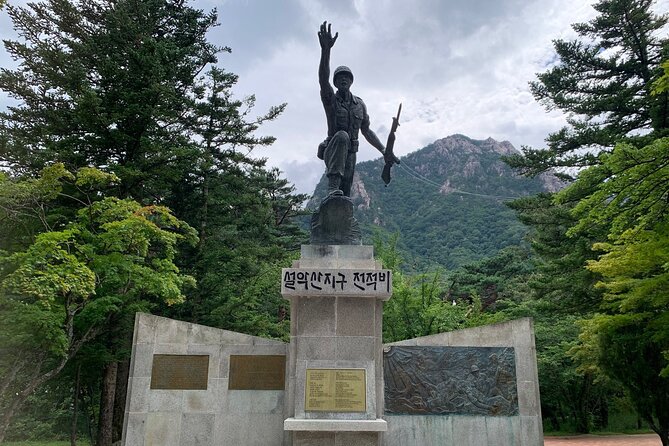
The DMZ Museum is the longest stop, at around two hours. It focuses on the Korean War, its course, and the forces that made the divided peninsula one of the clearest examples of the Cold War era.
You need this time. A border observatory can show you the result of division, but a museum can explain how Korea reached that point. The museum visit gives you a place to build a basic timeline and consider the war as more than a distant event.
The subject is serious, and the amount of information may feel demanding if you have already spent several days visiting war sites. Tony’s good English and friendly manner are useful here, particularly if you want to ask about terms, dates, or the meaning of what you are seeing.
The museum is also where the tour’s two themes meet most clearly. The missionary memorial shows efforts to improve life in a poor country. The war section shows how quickly that progress could be threatened by conflict and division. Together, they help explain why modern Korea developed with such speed and such tension.
Plan your attention, not just your camera. The museum is a place for reading and listening, not simply walking through a display hall. If you prefer a short, highly visual excursion, two hours may be longer than you want. If you want a stronger understanding of the Korean War, the generous stop is a plus.
Goseong Observatory brings the division into view
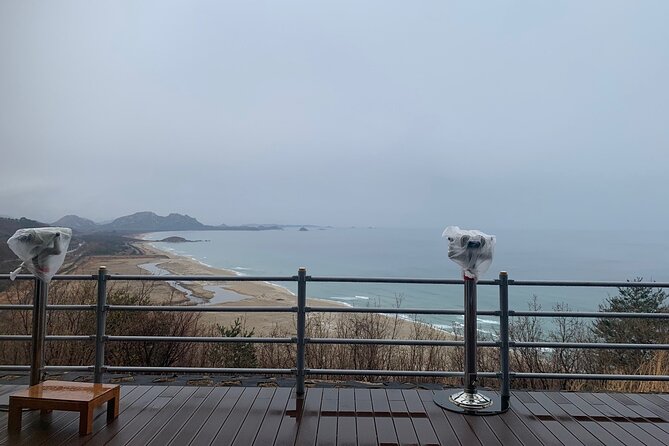
The final major stop is Goseong Unification Observatory, where you look toward the northern part of the peninsula. The observatory is described as the largest of its kind in the area, and it gives the war’s consequences a physical presence.
This is the moment when maps and museum displays become real. You are not merely studying a line on paper. You are looking across a controlled border toward a country that shares Korea’s language and older history but followed a very different political path after the war.
The observatory visit lasts about one hour. That provides time to take in the view and listen to the historical explanation without rushing through the stop. Weather will matter, of course. On a clear day, the view should be more rewarding than on a rainy or hazy one, so keep your expectations flexible.
The tour’s private setup helps here. You can ask Tony to explain what you are seeing and how the observatory fits into the wider DMZ area. The point is not just to collect a distant view of North Korea. It is to understand why this coast remains politically sensitive and why unification continues to matter in South Korea.
The northern route also gives the excursion a sense of place. You are not visiting an abstract museum in central Seoul. You are moving through the eastern DMZ area from Sokcho, where the coast and border are part of the same day’s geography.
Same country, a completely different kind of day:
- DMZ Insider Tour: 3rd Tunnel, NK Defector Meet & Red Bridge
★ 4.9 · 15,214 reviews - Seoul: DMZ Tour with Optional Suspension Bridge
★ 4.8 · 5,277 reviews - Signature DMZ Tour: Exclusive Defector Talk & Suspension Bridge
★ 5.0 · 4,459 reviews - Thrilling Korean DMZ 3rd Tunnel Tour from Seoul + Red Bridge Rush
★ 5.0 · 3,097 reviews
Tony’s guiding style and private transport
Tony is the named guide for this experience, and the tour is operated by Tony’s Eastern DMZ Tour. He speaks good English and provides commentary during the drive and at the stops.
That matters more than it might seem. The distance from Sokcho to the Goseong area gives you useful time for explanation, but only if communication is easy. A private vehicle also means you avoid the stop-and-start rhythm of a large group.
Pickup is offered, with an 8:30 a.m. start listed for the standard schedule. Cruise passengers can request an adjusted plan, which is important if your ship’s arrival and departure times do not match a normal morning outing. Confirm the timing before booking rather than assuming the regular departure will work.
The experience is private, meaning only your own group participates. This suits couples, families, and small groups that want to ask questions or spend more time at one stop. It also gives you more control if weather changes. On one rainy day, Tony offered cancellation and a refund before the group chose to continue, and the outing still went ahead with a positive result.
That detail suggests a sensible way to approach the trip: check the forecast, but do not assume poor weather automatically ruins it. The museum remains useful in rain, while the observatory view is the part most affected by conditions.
What the $90 price includes
The price is $90 per person. Admission fees are included, but meals are not. You receive free time to eat at your own convenience, so you should budget for lunch separately.
The value depends on how you normally tour. For a private half-day with pickup, transport, a named English-speaking guide, and admissions at several paid sites, the price is reasonable if you want a focused historical outing without arranging each segment yourself.
It is less attractive if you only want a quick look at the DMZ. In that case, the four to five hour duration and the missionary memorial may feel like more than you need. The price makes more sense when you value context, personal commentary, and the ability to travel with only your own group.
The meal arrangement gives you some freedom, but it also means the day is not all-inclusive. Ask Tony how the eating break fits into your chosen schedule, especially if you are working around a cruise departure or a later start.
Who will get the most from this experience
I would choose this tour if you want to understand Korea rather than simply photograph it. It suits anyone interested in the Korean War, modern education, medical history, Christian missionary work, or the continuing division between North and South.
It is also a strong option if you are based in Sokcho and do not want to arrange the northern coast independently. The private pickup and direct transport save effort, while the guide supplies the background that can be hard to assemble on your own.
The tour may suit you especially well if:
- You have only one day in Sokcho and want a broad historical outing.
- You prefer a private group to a large coach.
- You want English commentary during a museum and border visit.
- You can manage several hours of sightseeing with moderate physical activity.
- You are visiting by cruise and need a schedule that can be adjusted.
- You want the DMZ explained through both military and social history.
It is not the best match if your main goal is a long hike, a food tour, or a relaxed scenic drive with little museum time. The subject matter is weighty, and the DMZ portions require concentration.
Timing, Monday closures, and cancellation terms
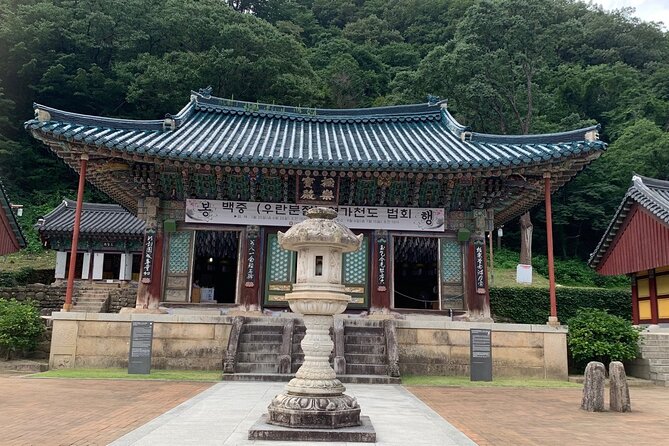
Do not book this tour for a Monday. The museum is closed then, so tours are not available on that day.
The standard start time is 8:30 a.m., and the full experience takes roughly four to five hours. Cruise schedules can be adjusted, and a later start may be possible, but confirm that arrangement before paying.
You can cancel for a full refund up to 24 hours before the local start time. Cancellations or changes made inside that 24-hour window are not refunded or accepted. The tour also requires a minimum number of participants, and if that minimum is not reached, you will be offered another date or experience, or a full refund.
Should you book the Goseong DMZ tour from Sokcho?
Book it if you want a thoughtful, private look at two forces that shaped modern Korea: missionary medical and educational work, followed by the Korean War and national division. Tony’s English commentary, private vehicle, included admissions, and adjustable planning for cruise passengers add real practical value.
Skip it if you want only scenery or a short border photo stop. The museum takes two hours, the subject is serious, meals are separate, and Monday is unavailable.
For most history-minded visitors staying in Sokcho, I think the combination is the point. Yeongnangho gives you a calm opening, the Sherwood Hall memorial adds a human story, and the museum and observatory explain why the Korean peninsula looks as it does today.
FAQ
Is the tour available on Mondays?
No. Tours are not available on Mondays because the museum is closed.
What time does the tour start?
The listed start time is 8:30 a.m.
How long does the experience take?
The tour lasts approximately four to five hours.
Is pickup available from Sokcho?
Yes. Pickup is offered, and the experience is arranged as a private tour for your group.
Can cruise passengers take this tour?
Yes. The schedule can be adjusted for cruise passengers.
Are admission fees included?
Yes. Admission fees for the included sites are covered.
Are meals included?
No. Meals are not included, but free time is provided so you can eat at your own convenience.
Is this a private tour?
Yes. Only your group participates in the activity.
What is the cancellation policy?
You can cancel at least 24 hours before the start time for a full refund. Cancellations or changes made less than 24 hours before the start time are not accepted and are not refunded.
Just added around South Korea
- Seoul: Korean & English Language Exchange Global Party★ 5.0 · 28 reviews
- From Seoul: Yongpyong Ski Day Tour with Transportation★ 4.9 · 40 reviews
- You’re Invited to Our Home in Seoul: The Only Cooking Class!★ 5.0 · 8 reviews
- Yeosu: Private Taxi Car Private Charter Tour★ 4.7 · 3 reviews
- Your Personal Seoul Photographer!★ 4.1 · 15 reviews
- Unique Native Experience : Han River Picnic, Board game, BBQ★ 5.0 · 3 reviews
- From Seoul: Hwacheon Ice Fishing and Lighting Festival Tour★ 4.5 · 4 reviews
- Everland Theme Park: Admission Ticket | Korea★ 4.5 · 3 reviews
DMZ Tours, compared.
Best DMZ Tour Korea from Seoul (Red Suspension Bridge Optional)
Read our review →
DMZ Tour: 3rd Tunnel, Option(Suspension Bridge, Boat) from Seoul
Read our review →
DMZ tour south Korea from Seoul (NK experience hall, defector)
Read our review →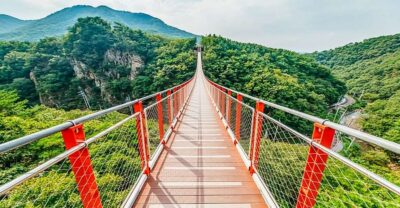
DMZ Insider Tour: 3rd Tunnel, NK Defector Meet & Red Bridge
Read our review →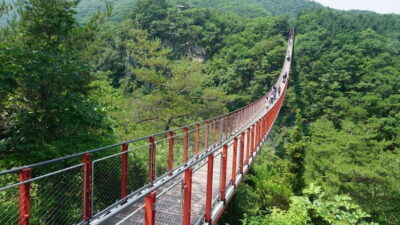
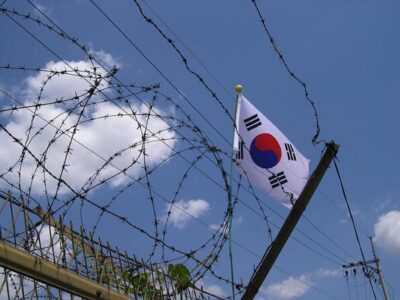
Thrilling Korean DMZ 3rd Tunnel Tour from Seoul + Red Bridge Rush
Read our review →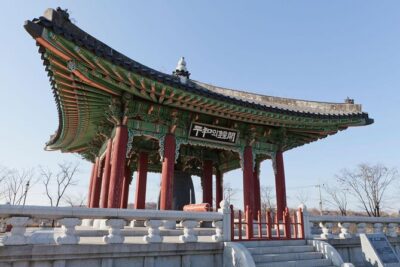
DMZ Past and Present: Korean Demilitarized Zone Tour from Seoul
Read our review →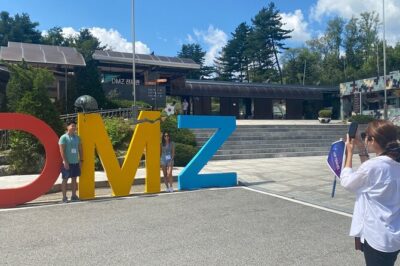
Ultimate Korea DMZ Tour from Seoul (Gondola & Suspension Bridge)
Read our review →Browse the lists this tour appears in