
Reviewed · FOOD & DRINK
Private Downtown Seoul Food & Market Tour with 8+ Tastings
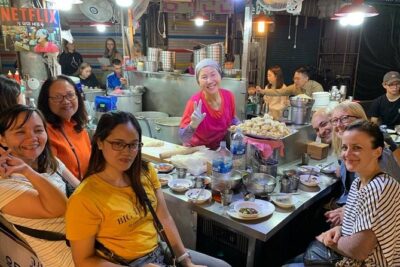
Seoul’s best introduction may come one bite at a time. This private three-hour tour links Korean street food with major sights around Jongno, including Gyeongbokgung Palace, Gwanghwamun Gate, Bukchon Hanok Village, and a traditional market. You get eight or more tastings without having to decode a menu or wonder what to order.
I like the private format, which gives your guide room to adjust the food stops to your tastes and explain each dish at a useful pace. I also like the mix of eating and sightseeing. You are not simply moving from one restaurant to another, you are getting a first look at Seoul’s old center.
The main drawback is the price: $335 per person is a serious splurge for three hours, especially since hotel transport and gratuity are not included. The value improves for a small private group that wants personal guidance, but budget-minded eaters can spend far less by exploring markets on their own.
Key points to know before booking
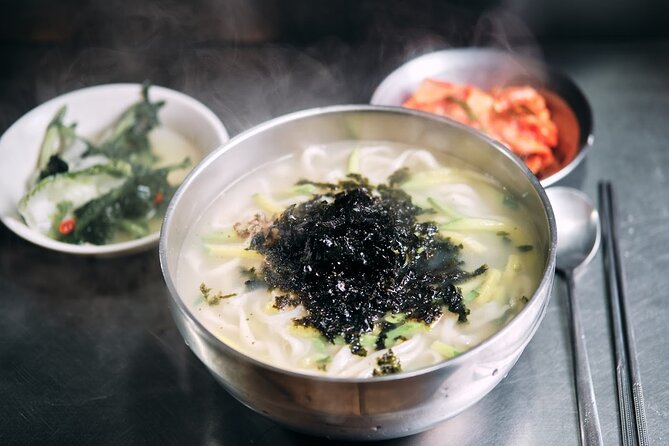
- Eight-plus Korean tastings: Expect mung bean pancakes, mandu, tteokbokki, fish fillets with soup, kimbap, cream bread, honey snacks, grilled rice cake, tea, and a secret dish.
- Private attention: Only your group takes part, so the guide can discuss preferences, explain unfamiliar foods, and shape the experience around you.
- Jongno’s major sights: Food stops are paired with Gyeongbokgung Palace, Gwanghwamun Gate, Bukchon Hanok Village, and other central Seoul landmarks.
- A useful first-day orientation: The route covers several important areas in Seoul’s historic core and ends near Anguk Station in Insadong.
- A little over three hours on foot: Comfortable shoes matter, and the start is at 10 a.m. near Jongno.
- Plan carefully for dietary needs: Contact the operator before booking. Some restrictions may not be possible to accommodate.
Why this Seoul food tour works as an introduction
Food tours are most useful when they remove small travel hassles. In Seoul, that means helping you understand unfamiliar dishes, guiding you through ordering, and showing you where local eating fits into the city’s older neighborhoods.
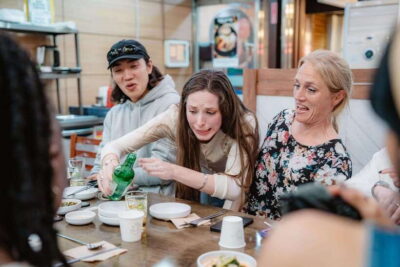
This experience does that with a private guide rather than a large group. You can ask why one dish is spicy, how a dumpling differs from another, or which foods are worth seeking out later. The guide can also offer restaurant suggestions for the rest of your stay. That kind of conversation is often more useful than a long lecture about Korean cuisine.
The food selection gives you a broad first taste. You move from savory pancakes and dumplings to spicy rice cakes, fish, seaweed rice rolls, bread, honey sweets, and tea. It is not built around one formal meal. Instead, you sample small portions across several stops, which lets you try more types of food without committing to a full plate of anything you dislike.
The route also makes good geographic sense. Jongno is one of the best parts of Seoul for combining food, royal history, traditional neighborhoods, and market life. In three hours, you get a compact introduction to the city center rather than spending the whole morning in one dining room.
A few more Seoul trips to weigh up
- Seoul Street Food Market Tour
★ 5.0 · 1,226 reviews - Seoul: Night Market Food Tour with Local Guide
★ 4.9 · 943 reviews - Downtown Seoul Guided Food & Market Tour with 8+ Local Tastings
★ 5.0 · 580 reviews
Starting near Jongno at 10 a.m.
The tour begins at 214 Jong-ro in Seoul’s Jongno District at 10 a.m. This is a central location near public transportation, so you should have a practical way to reach the meeting point without arranging a hotel pickup.
Starting in the morning has two benefits. You can eat before the usual lunch rush, and you still have most of the day left for more sightseeing. The timing also makes this a smart first or second-day activity, when you are still figuring out Seoul’s neighborhoods and food customs.
You should wear comfortable walking shoes. The experience runs a little over three hours, and the route combines food stops with outdoor sights. Exact walking distances and the order of stops can change because of weather, availability, or other conditions, so do not treat the route as a fixed timetable.
Mung bean pancakes and sweet onions
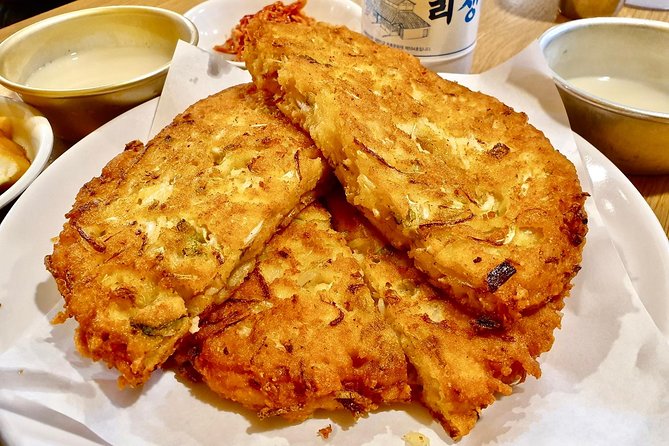
One of the first named tastings is nokdujeon, a mung bean pancake, paired with sweet onions. Mung bean pancakes are a familiar Korean market food: savory, filling, and often cooked on a hot surface until the outside develops a firm texture.
The onion pairing gives you a simple way to notice contrast. The pancake is hearty, while the sweet onion adds freshness and a little bite. Your guide can help explain how this sort of food fits into Korean market eating, where a quick snack can be as much a part of daily life as a sit-down meal.
This is also a useful point to remember about the tour’s portion style. You are sampling several foods, not ordering a full serving of each. If you arrive hungry, that is sensible. If you have a light appetite, tell the guide early so the pace and portions can work better for you.
Mandu and slightly spicy tteokbokki
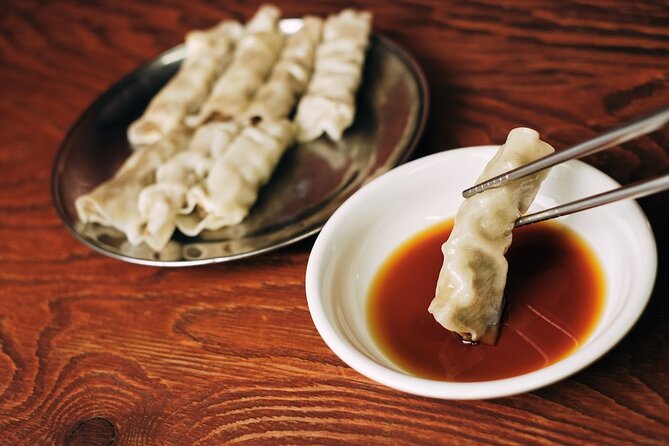
The next pair brings two familiar Korean favorites: mandu, or Korean dumplings, and tteokbokki, chewy rice cakes in a slightly spicy sauce. Together, they show two different textures and two common forms of Korean comfort food.
Mandu is an easy entry point if you are cautious about unfamiliar food. Tteokbokki is more distinctive, thanks to its springy rice cakes and chili-based sauce. The description calls it slightly spicy, but sensitivity varies from person to person. If you avoid heat, say so before the food arrives.
This is where a private guide can be more useful than a printed food list. You can ask how to eat each item, what flavors to notice, and what to order later if you enjoy it. The tour promises customization, so your preferences should be part of the conversation rather than an afterthought.
Same country, a completely different kind of day:
- Best DMZ Tour Korea from Seoul (Red Suspension Bridge Optional)
★ 5.0 · 41,422 reviews - DMZ Tour: 3rd Tunnel, Option(Suspension Bridge, Boat) from Seoul
★ 5.0 · 21,373 reviews - DMZ tour south Korea from Seoul (NK experience hall, defector)
★ 5.0 · 20,599 reviews - Seoul: DMZ Tour with Optional Suspension Bridge
★ 4.8 · 5,277 reviews
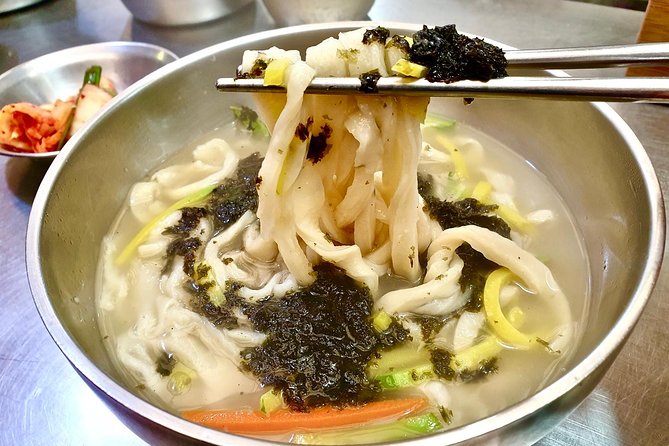
Fish fillets with a little soup
Another tasting features minced fish fillets paired with a bit of fish soup. This gives the food selection a lighter, more savory turn after the pancake and dumplings.
The pairing matters because it lets you compare a solid snack with a warm broth in the same part of the meal. Soup is an important part of Korean dining, and even a small serving can help you understand how meals are balanced with liquid, vegetables, rice, and shared side dishes.
The exact preparation may change with location availability. The operator notes that both the menu and route can shift, so you should see the listed dishes as a strong guide rather than a guaranteed menu. That flexibility is normal for a food tour built around local shops and market stalls, but it is worth knowing if you are booking for one particular dish.
Fresh kimbap and sweet-salty cream bread
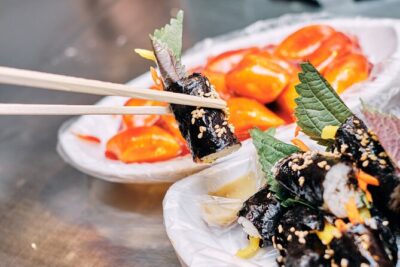
Freshly prepared kimbap brings rice, fillings, and seaweed into the tasting sequence. Kimbap is portable, practical food, and it gives you a chance to try a Korean staple in a small portion rather than ordering an entire roll.
The sweet and salty cream bread changes direction again. It may sound less traditional than some of the market foods, but that contrast is part of the appeal. Seoul’s food culture is not limited to royal dishes or old recipes. Bakery snacks and modern twists also belong to the way people eat in the city now.
I like this part of the food lineup because it avoids making Korean cuisine seem like one narrow category. You get market food, soup, rice rolls, sweets, and bakery fare in a short stretch. If you are hoping for an entirely formal or historical food experience, this may feel more casual. If you want variety, it is a strength.
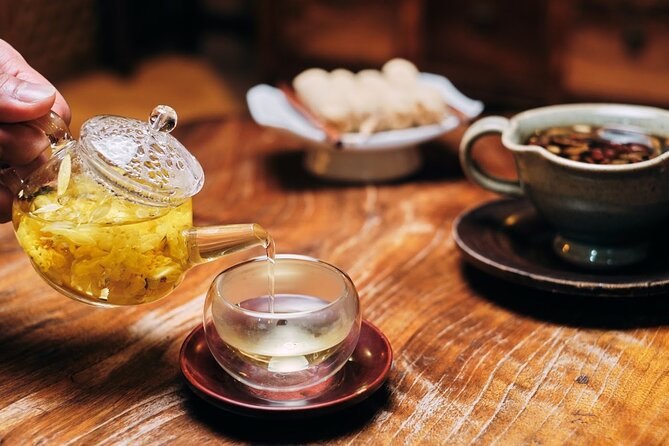
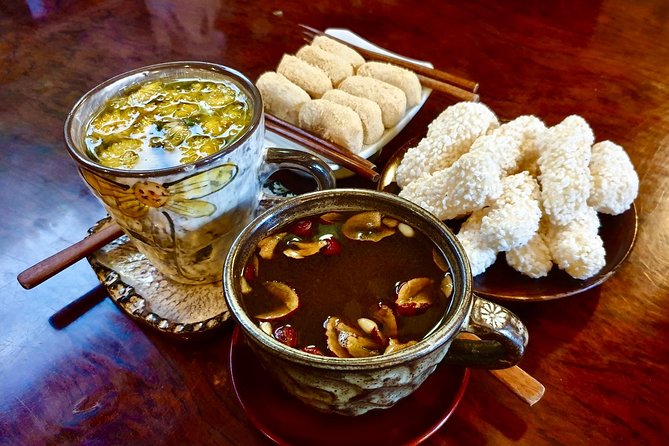
Honey snacks, grilled rice cake, and traditional tea
The sweet course includes a Korean honey snack, grilled rice cake, and traditional tea. This is a gentler finish than ending on chili or soup, and it gives the tour a clear closing rhythm.
Grilled rice cake is worth approaching with an open mind. Its texture is central to the experience, just as much as its flavor. The tea gives you time to slow down and talk with the guide instead of rushing directly back onto the street.
The final stop is a teahouse in Insadong, about 100 meters from Anguk Station on Seoul’s orange Line 3. That is a useful ending point. You can continue exploring Insadong, take the subway to another part of the city, or use the station as a simple route back to your accommodation.
The tour also includes a secret dish. Since no details are provided, do not book this expecting a particular surprise. Think of it as one extra tasting that may vary with the day and the available food stops.
Gyeongbokgung, Gwanghwamun, and Seoul’s royal center
The sightseeing portion includes Gyeongbokgung Palace, the main royal palace of the Joseon dynasty. Built in 1395, it is one of Seoul’s major historic sites and a useful anchor for understanding the city’s old political center.
Gwanghwamun Gate is the main and largest gate of the palace. Seeing the gate along with the palace grounds helps put Seoul’s scale into perspective. The food stops are not isolated from the city’s past, they sit among the spaces where royal power, trade, and ordinary daily life once met.
The tour also includes another of the Five Grand Palaces, located in a park in Jongno District. The supplied details do not identify which palace this stop will be, so you should ask your guide for the exact plan if that distinction matters to you.
Do not expect a full palace tour with extensive time inside every building. The experience is food-led, and the landmarks serve as part of the route. If your priority is detailed architecture or museum time, book a dedicated palace visit separately.
Namdaemun Market and the old market experience
Namdaemun Market is described as Korea’s oldest and largest market. It sits beside Namdaemun, the Great South Gate, once the main southern gate of the old city.
A market stop adds a practical side to the tour. You see where food is sold in a working setting, rather than only in places designed for sightseeing. The market also gives your guide a chance to point out foods you might otherwise walk past because of the language barrier.
Market conditions can be crowded and noisy, and some stalls may not be open or available on a particular day. That is part of the trade-off. You gain a more direct look at Seoul’s food culture, but you give up the controlled setting of a restaurant.
The information also mentions traditional market food elsewhere in the Jongno route, so the exact role of Namdaemun may shift. Keep your expectations focused on market-style tastings and local context, not a guaranteed stop at one specific vendor.
Bukchon Hanok Village and Insadong
Bukchon Hanok Village sits on a hill between Gyeongbok Palace, Changdeok Palace, and Jongmyo Royal Shrine. Its traditional Korean houses and sloping streets make it one of the city’s best-known old neighborhoods.
The hill is an important practical detail. You will want steady shoes, especially if the route includes more than a quick viewpoint or street pass. Because Bukchon is also a residential area, follow your guide’s directions about where to pause and keep your voice low.
The tour finishes in Insadong at a traditional teahouse. Insadong is a natural place to end a food-and-culture walk, with easy onward access from Anguk Station. You can use the remaining day to browse the neighborhood or continue toward another Jongno sight.
Is $335 per person a fair price?
At $335 per person, this is not a cheap way to eat in Seoul. You are paying for a private guide, route planning, translation help, cultural explanation, multiple tastings, and the convenience of having someone connect food stops with major sights.
The price makes more sense for couples, families, or a small group that values private attention. Group discounts are available, which may improve the per-person cost when several people book together. A solo visitor who is comfortable ordering alone and using public transportation will likely find better value elsewhere.
The tour has a published rating of 4.9 from 27 reviews, with 96 percent recommending it. One detailed account singled out guide Youla for clear speaking and useful advice for first-time visitors to Seoul. Another praised the authentic Korean food, cultural context, and additional restaurant recommendations. Those details point to the tour’s strongest practical benefit: you are not only eating during the three hours, you are building a list of places and dishes to try afterward.
Who should book this experience?
I would choose this tour for a first visit to Seoul, especially if you want a gentle start with Korean food and do not want to manage menus on your own. It also suits families or friends who prefer a private pace and want to ask plenty of questions.
It is a good match for anyone who wants both food and landmarks in one morning. The route covers enough of Jongno to help you plan later visits, while the tastings give you a sense of Korean flavors beyond barbecue and bibimbap.
I would hesitate if you have a strict dietary restriction. Contact the operator before booking, since the menu is built as a balanced food experience and some restrictions may not be possible to handle. I would also hesitate if you want a long, seated meal, a detailed palace tour, or the lowest possible food cost.
The experience requires good weather and a minimum number of participants. If poor weather or low enrollment causes a cancellation, you are offered another date or a full refund. You can cancel for a full refund up to 24 hours before the start time, but changes or cancellations inside that window are not refunded.
Should you book the Seoul food and market tour?
Book it if you want a private, guided introduction to Seoul that combines eight-plus tastings with the city’s royal center, markets, traditional neighborhoods, and a tea finish. The personal guidance, Youla’s practical recommendations, and the mix of food styles are the strongest reasons to consider it.
Skip it if $335 feels out of proportion to three hours, if you prefer independent market grazing, or if your diet makes the set of tastings difficult. For the right small group, though, this is a convenient way to get oriented, try foods you might miss, and leave Insadong with ideas for the rest of your Seoul stay.
FAQ
How long does the private Seoul food tour last?
The tour lasts approximately three hours, and it may run a little over three hours.
What time does the tour begin?
The stated start time is 10 a.m.
Where does the tour start?
The meeting point is 214 Jong-ro in Jongno District, Seoul, South Korea.
Where does the tour finish?
The tour ends in Insadong at a traditional teahouse about 100 meters from Anguk Station on subway Line 3, the orange line.
What foods are included?
The tastings include mung bean pancake with sweet onions, mandu, slightly spicy tteokbokki, minced fish fillets with a little fish soup, fresh kimbap, sweet and salty cream bread, a Korean honey snack, grilled rice cake with traditional tea, and a secret dish.
Is this a private activity?
Yes. Only your group participates in the activity.
Is hotel pickup and drop-off included?
No. Hotel pickup and drop-off are not included.
Can the tour accommodate dietary restrictions?
You should contact the operator before booking with your dietary requirements. Some restrictions may not be possible to accommodate because of the way the food experience is arranged.
What happens if I need to cancel?
You can receive a full refund if you cancel at least 24 hours before the local start time. Cancellations or changes made less than 24 hours before the experience are not refunded. If poor weather or failure to meet the minimum number of participants causes cancellation, you are offered another date or a full refund.
More Shopping Tours in Seoul
- Private DMZ Tour (No Shopping): 3rd Tunnel & Suspension Bridge
★ 5.0 · 607 reviews - Korean Palace and Market Tour in Seoul Including Insadong and Gyeongbokgung Palace
★ 4.0 · 174 reviews - Seoul: Nighttime Tour of Palace, Market, Naksan Park & More
★ 4.9 · 143 reviews - Fortress Night Hike & Snack at a Local Market
★ 5.0 · 112 reviews
More Markets in Seoul
- Local Home Korean Cooking Class & Market Adventure in Seoul
★ 5.0 · 1,024 reviews - Seoul: Korean Cooking Class at a Local Home and Market Tour
★ 5.0 · 348 reviews - Seoul Night Palace & Market Food Tour with Vehicle
★ 5.0 · 275 reviews - Cook 3 Authentic Korean Dishes with Local Market Tour
★ 5.0 · 231 reviews
Just added around Seoul
- Gyeongbokgung palace,seoul with gigibebe hanbok rental★ 4.5 · 12 reviews
- Private tour guide service in Seoul, Korea★ 5.0 · 6 reviews
- Alpaca, Nami, Petite Fr, Italian Village, Garden of Morning Calm★ 3.5 · 5 reviews
- Private tour Lotte World,Tower,Aquarium(All Tickets are included)★ 5.0 · 12 reviews
- Gyeongju UNESCO Sites Tour by KTX train; The Museum Without walls★ 4.5 · 11 reviews
- Private day trip to Korean Folk Village & Dae Jang Geum Park★ 5.0 · 7 reviews
- Full Day Private Seoul Tour for foodies★ 5.0 · 3 reviews
- Seoul Private Custom Walking Tour with A Guide (Private Tour)★ 4.5 · 28 reviews
Food & Drink, compared.
Downtown Seoul Guided Food & Market Tour with 8+ Local Tastings
Read our review →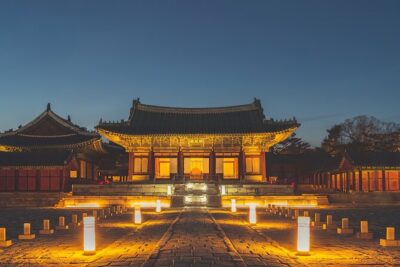
Seoul Night Palace & Market Food Tour with Vehicle
Read our review →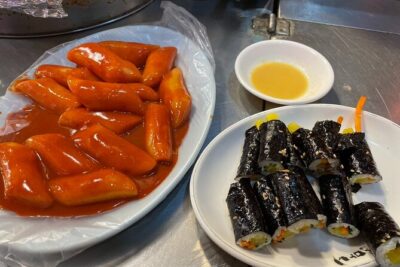
Seoul Fun Food Tour: 12 different food tastings
Read our review →
The Award-Winning PRIVATE Food Tour of Seoul: The 10 Tastings
Read our review →
Baseball Game Ticket with Dinner/Beer with the host
Read our review →Browse the lists this tour appears in