
Reviewed · DMZ TOURS
Seoul: Half-Day DMZ Tour Led by a Retired Military Officer
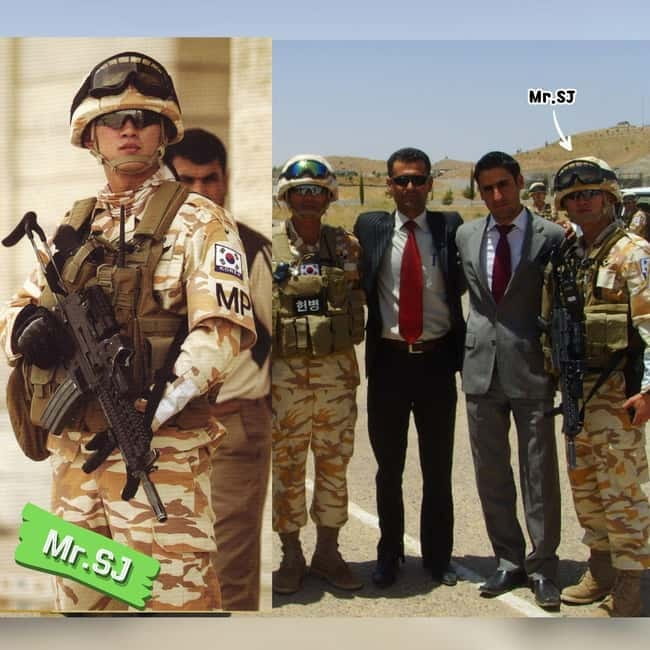
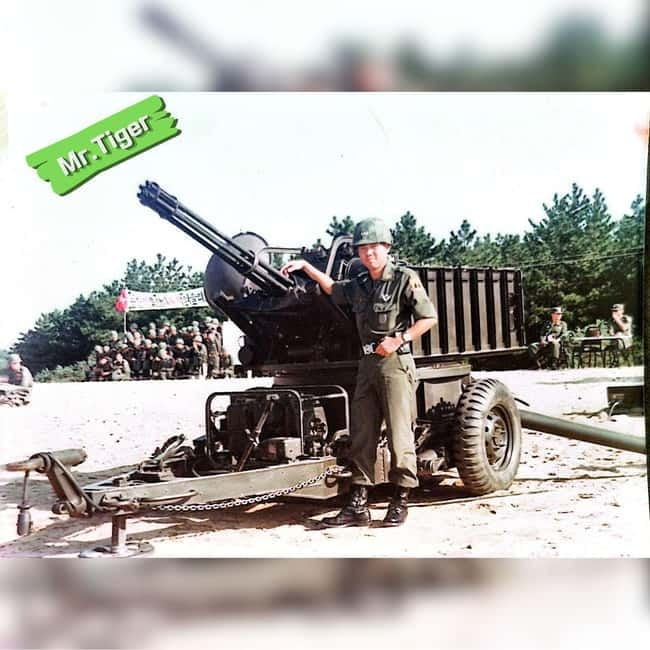
The most unusual part of this DMZ tour is the guide. You may be led by SJ, a former Special Forces major and Iraq veteran, Tiger, a retired artillery commander, Eddie, a tunnel and DMZ specialist, or Jason, a retired intelligence officer. You hear the border explained by people who served there, not only from a guidebook.
I like the personal stories and the efficient six-hour schedule. I also like that the observatory choice can be adjusted after checking conditions, giving you a better chance of seeing North Korea. The main drawback is the Third Tunnel walk, which includes steep sections and a long crouch, so this tour is not a good fit if walking is difficult.
Key points to know before booking

- A former military officer leads the tour: Guide assignments vary, but the team includes SJ, Tiger, Eddie, and Jason, all with South Korean military or intelligence backgrounds.
- The observatory can change: Odusan or Dora Observatory is selected after checking visibility with security cameras and local staff.
- The Third Tunnel is a workout: You walk down and back up a steep route, then crouch through much of the tunnel.
- You need your passport: The DMZ is an active military area, and every person must carry valid identification for entry.
- The half-day format is packed: Pickup is generally early, with drop-off around 2:00 to 3:00 p.m., depending on traffic and military access.
- The private option adds the War Memorial of Korea: This afternoon visit is not part of the standard group tour.
Why a retired officer changes the DMZ visit
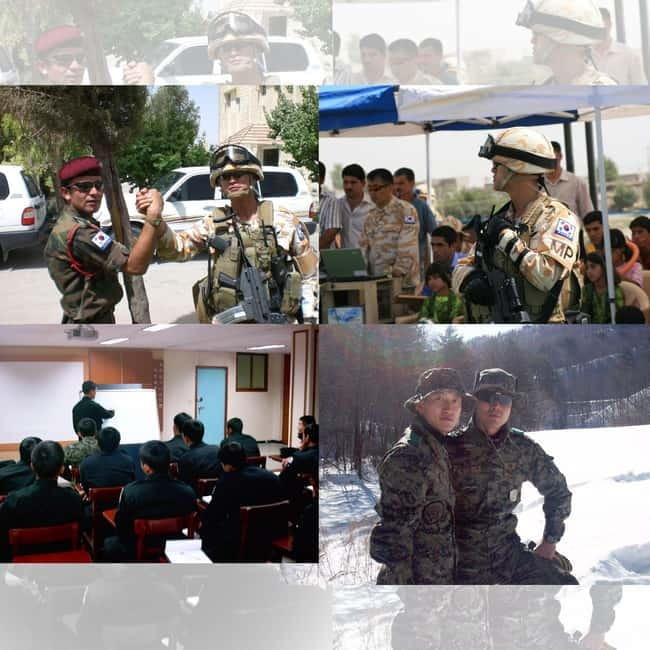
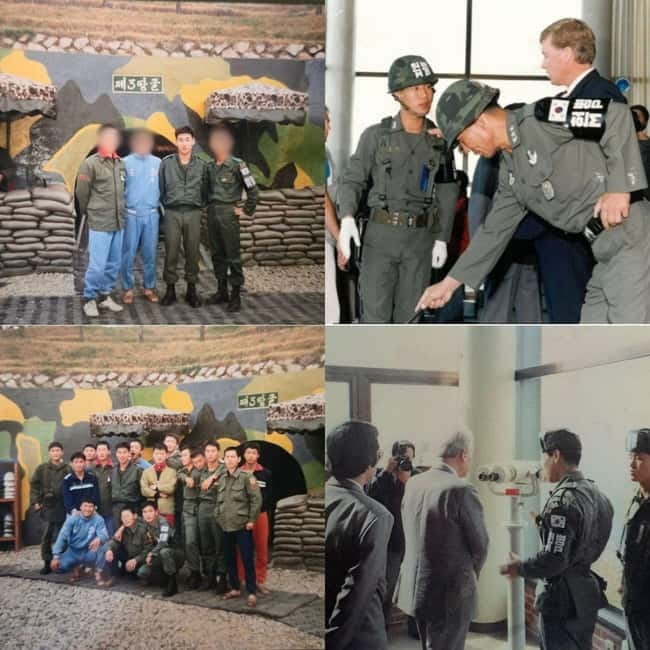
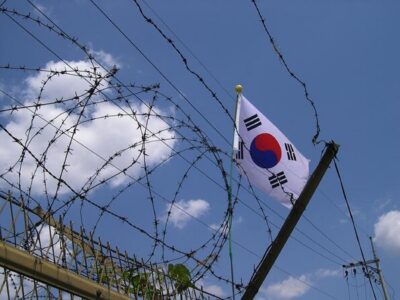
The Korean Demilitarized Zone is easy to reduce to a few viewing platforms, barbed wire fences, and a difficult chapter in a history lesson. The former officers give it more weight. They can explain what it meant to serve near the border, how soldiers read the terrain, and why small details around the DMZ still matter.
Eddie is especially associated with the Third Tunnel and once led security operations there. Tiger brings two decades of front-line artillery experience. SJ combines Special Forces service with time as an Iraq veteran, while Jason spent 31 years in South Korean intelligence before retiring as a lieutenant colonel.
Guide assignments are not guaranteed, and several other guides may lead the outing. The important point is the kind of background the company promises: people with direct military experience rather than a standard city guide giving a memorized speech.
I like the tone described by the strongest guide experiences. Eddie keeps people involved with questions, jokes, and clear instructions. SJ is praised for giving detailed explanations without losing the group. Tiger is especially good for visitors who want the military and political background laid out in a firm, easy-to-follow way.
That personal angle does not make the day casual. The DMZ has strict rules, military checkpoints, and changing access times. You need to stay with the group and pay attention to instructions because one forgotten passport or late return can affect the entire coach.
More DMZ Tours in Seoul:
- Best DMZ Tour Korea from Seoul (Red Suspension Bridge Optional)
★ 5.0 · 41,422 reviews - DMZ Tour: 3rd Tunnel, Option(Suspension Bridge, Boat) from Seoul
★ 5.0 · 21,373 reviews - DMZ tour south Korea from Seoul (NK experience hall, defector)
★ 5.0 · 20,599 reviews
The ride from Seoul and the early start
The tour includes round-trip transport from Seoul, with meeting and drop-off points depending on the option you choose. Hongik University Station drop-off is expected around 2:00 to 2:30 p.m., while Myeongdong drop-off is expected around 2:30 to 3:00 p.m. Traffic, weather, and military permission can change those times.
The bus ride takes roughly an hour each way. That is not wasted time if you use it to get context from your guide. Several guides use the journey to explain the Korean War, the division of the peninsula, and the present border before you arrive at the first stop.
The transport is one reason the $57 price feels fair. You get a guide, admission fees, a group bus through the military-controlled area, and return transportation without having to work out the border-area connections yourself. The tradeoff is that this is a group schedule, not a slow private outing.
For groups of 10 or more, free hotel pickup is included, but pickup is limited to the Seoul area. Smaller groups should check the exact meeting point when booking. Keep your bag small, since luggage and large bags are not allowed.
Choosing between Odusan and Dora Observatory

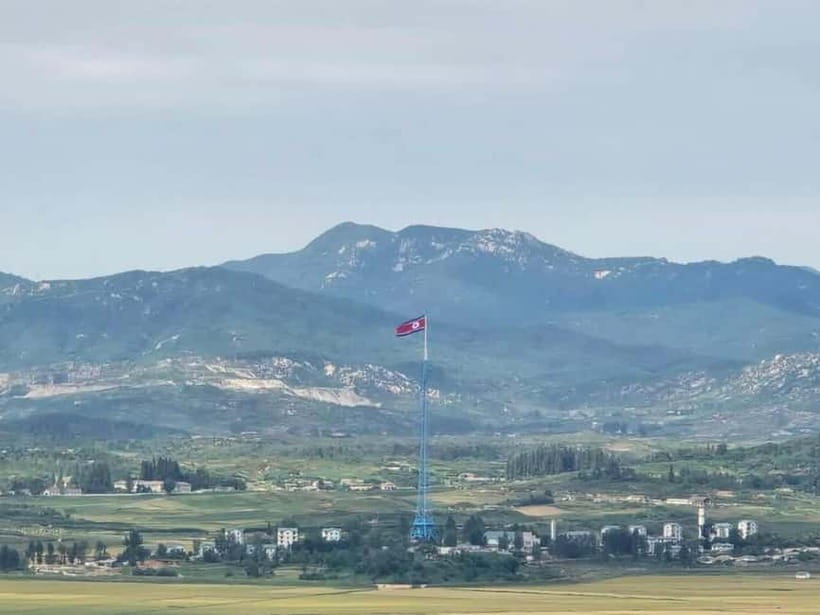
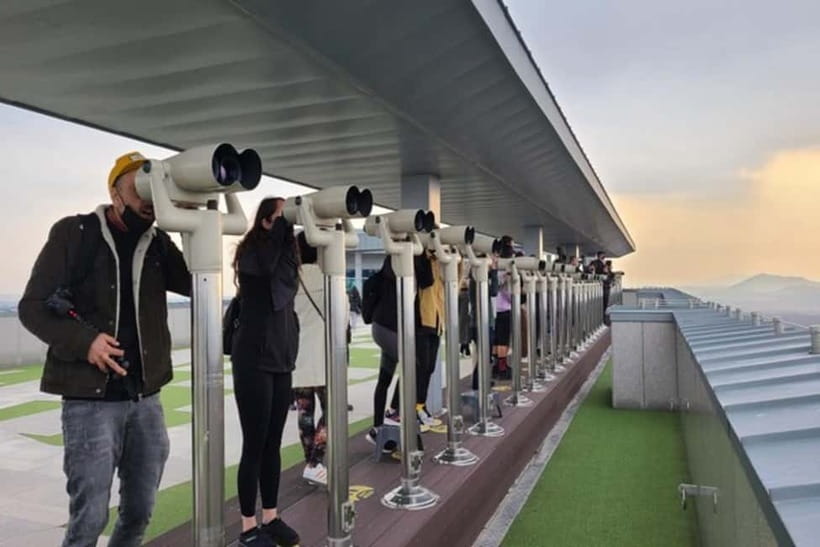
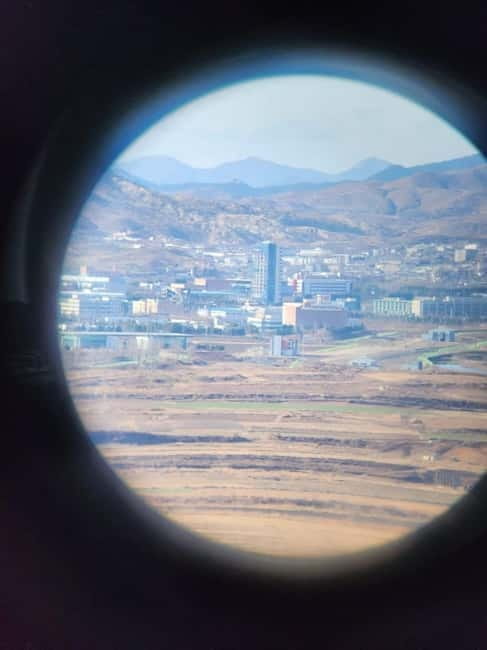
The observatory is often the emotional high point of the day. From the viewing area, you look across the border toward North Korea, usually through binoculars or telescopes. On a clear day, you may see buildings, fields, roads, and people on the other side. On a hazy day, the view can be faint or disappointing.
This tour has a useful practical feature: the operator checks current conditions through security-camera information and by speaking with local observatory staff, then chooses Odusan or Dora Observatory for the clearest view. That does not guarantee perfect visibility, but it is more sensible than treating the same observatory as ideal every day.
Odusan and Dora offer different settings and viewpoints, but the supplied schedule does not promise both on one standard departure. The selected observatory may change on the day. Pay attention to the confirmation details so you know where to meet the group.
I would plan this outing for a day when the weather forecast gives you a reasonable chance of clear skies, but I would not book it only for the view. The weather is beyond anyone’s control, and the tunnel, memorial sites, and officer’s explanations remain the core of the visit.
The observatory also helps you grasp the unusual geography of the DMZ. You are not simply looking at a distant country on a map. You are seeing a nearby place separated by fences, patrols, history, and politics.
Walking through the Third Infiltration Tunnel
The Third Infiltration Tunnel is the most physical stop. It was built by North Korea as part of an attempt to move forces into the South, not as an escape tunnel for civilians. That distinction matters because the site is often misunderstood before the visit.
You walk down into the tunnel and then back up, with a low section that requires you to crouch for much of the route. The return climb can be tiring. Comfortable shoes are essential, and you should wear clothing that allows you to bend and move easily.
Several practical details make a difference:
- Bring sturdy, comfortable footwear.
- Expect steep walking up and down.
- Do not plan to carry large bags.
- Skip the tunnel if you struggle with long uphill walks or crouching.
- Listen carefully to the guide, since the route and military rules must be followed.
I like this stop because it turns an abstract security story into something you can physically understand. The narrow passage and difficult walking conditions show why the tunnel was a serious military concern. It is also the part of the tour most likely to test your knees.
The tunnel is not suitable for people with mobility impairments. That is not a minor warning. The physical effort is real, and the rest of the tour cannot remove that limitation.
A few more Seoul trips to weigh up
- Half-Day South Korea DMZ Small-Group Tour from Seoul
★ 5.0 · 43 reviews - Busan Half-Day Customizable Private Tour in English
★ 5.0 · 34 reviews - Jeju Private Half-Day Tour for Cruise Customers
★ 5.0 · 9 reviews - Jeju Private Half-Day Tour – UNESCO SITE Seongsan illchulbong
★ 5.0 · 3 reviews
Imjingak, Mangbaedan, and the Bridge of Freedom
After the border-area visits, the tour brings you through several sites tied to separation and family memory. Imjingak Park is more than a scenic stop. It is a place connected to hopes for reunification and to the families who were separated when Korea was divided.
Mangbaedan Altar is linked to displaced families who cannot visit ancestral homes in North Korea. The site gives the political division a human scale. Instead of focusing only on soldiers and weapons, your guide can explain what the division meant for ordinary families whose homes and relatives ended up on the other side.
The Bridge of Freedom carries a similarly heavy meaning. It is associated with prisoners of war and people returning from the North after the Korean War. Today, it is one of the clearest symbols of the long, unfinished separation.
You also pass the old steam locomotive at Imjingak. The damaged train is a physical reminder of the war and the broken rail links across the peninsula. It is an easy stop to photograph, but the guide’s explanation gives it purpose.
These sites are also less physically demanding than the tunnel, so they provide a useful change of pace. You have time to walk, listen, and take in the setting without the same pressure of military access at a restricted checkpoint.
What the six-hour schedule feels like
This is a half-day tour in name, but it is a full morning with an early start. The usual rhythm is pickup or meeting point, about an hour on the bus, an observatory, the DMZ area, the Third Tunnel, Imjingak, and the return ride to Seoul.
The stops can feel tightly timed. That is part of the value and part of the limitation. You cover the major highlights in one morning, but you will not have unlimited time at every site. One visitor wished for more time, while others liked returning to Seoul by mid-afternoon.
A well-organized guide matters here. Eddie, SJ, Tiger, Jason, Julie, and other members of the team are praised for giving clear instructions and keeping the schedule moving. That is important because the group bus operates around military permissions, not only tourist convenience.
Expect the day to run close to six hours, though some departures have taken around seven hours. Weather, traffic, and access permission can alter the timing. The listed drop-off estimates are useful planning guides, not fixed guarantees.
There are restrooms and opportunities for snacks along the route, but lunch is not included. Eat before departure or carry a small snack if permitted. You should not expect a relaxed restaurant break in the middle of the outing.
The value of $57 per person
At $57, this is a reasonably priced way to reach an area that is awkward to visit independently. The fee includes round-trip Seoul transport, a live English-speaking guide, DMZ admission, the military bus, and the guided Third Tunnel walk.
You are also paying for access to people with unusual experience. A former officer can explain military terms, border routines, and the practical meaning of the sites in ways a general city tour may not. That is the strongest reason to choose this outing over a cheaper basic bus trip.
The price does not include lunch or travel insurance. It also does not guarantee entry if the DMZ closes suddenly. If the military area is closed, an alternative tour is provided, but no refund is offered under the stated conditions.
That policy is worth considering before you book. The DMZ is a working military zone, not a museum with guaranteed opening hours. You should accept some uncertainty in exchange for seeing a place that is still politically sensitive and operationally controlled.
The private option costs more than the standard $57 group experience, though no private price is given here. It adds an afternoon visit to the War Memorial of Korea in Yongsan. Choose it if you want more control over the day and a second major history stop. Choose the group option if you mainly want the DMZ highlights at a lower price.
Who will get the most from this tour
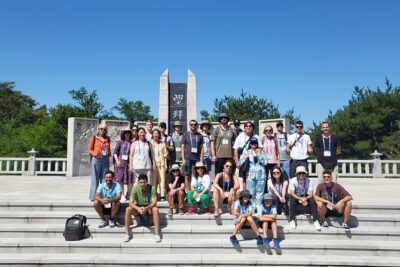
I would recommend it to first-time visitors to Seoul who want a clear introduction to the Korean War and the continuing division of Korea. It also suits families with older children and teenagers. The personal stories can make a difficult subject easier to follow, and the tunnel gives the morning a strong physical focus.
It is particularly good for anyone interested in military history, modern geopolitics, separated families, or the continuing effort toward peace. You do not need a specialist background. The guides explain the setting in accessible terms and invite questions.
It is less suitable if you want a leisurely day, a guaranteed North Korea view, or lots of independent time. It is also a poor choice for anyone with mobility problems because of the Third Tunnel.
The activity is in English, and private groups are available. The overall score is 4.9 out of 5 from 1,399 ratings, with 96 percent of participants giving the transport a perfect score. That matches the practical picture: the day depends heavily on the assigned guide, but the transport and schedule are generally handled with care.
What to bring and what not to forget
Your passport is mandatory. You cannot simply show up with another form of identification and expect access to the DMZ, so check it before leaving your hotel.
Wear comfortable shoes, especially for the Third Tunnel. You may also want warm clothing in cold weather, since some stops are outdoors and the tunnel walk can be uncomfortable. One winter visit was described as very cold, so do not dress only for Seoul’s indoor attractions.
Large bags and luggage are not allowed. Keep your belongings compact and easy to manage. The group must stay on schedule, so arrive at the correct meeting point on time.
Free cancellation is available up to 24 hours before departure, and you can reserve now and pay later. Those terms help if your Seoul plans are still shifting, but they do not remove the risk of a same-day military closure.
Should you book the Seoul DMZ half-day tour?
Book it if you want the DMZ explained by someone with direct military experience, and if you are willing to accept a brisk schedule and a demanding tunnel walk. The combination of an observatory, the Third Tunnel, Imjingak, Mangbaedan, and the Bridge of Freedom gives you a strong introduction in one morning.
I especially like the flexible observatory choice and the chance to question guides such as Eddie, SJ, Tiger, or Jason about what they personally saw and did. Go with realistic expectations: the view may be obscured, access may change, and the tunnel is not easy.
For most first-time visitors who can walk comfortably, $57 is a good use of a Seoul morning. Bring your passport, wear proper shoes, and treat the DMZ as a living military zone rather than a guaranteed sightseeing package.
FAQ
How long is the DMZ tour from Seoul?
The tour lasts about six hours. Some departures can take closer to seven hours because of traffic, weather, or military permission times.
What time will I return to Seoul?
Expected drop-off is around 2:00 to 2:30 p.m. at Hongik University Station and around 2:30 to 3:00 p.m. at Myeongdong. These times can change.
Which observatory will I visit?
The tour uses either Odusan Observatory or Dora Observatory. The choice is made according to visibility and current information from security cameras and local observatory staff.
Do I need my passport?
Yes. Every person must bring a valid passport to enter the DMZ military area.
Is the Third Tunnel difficult to walk through?
Yes. The route includes a steep walk down and back up, and much of the tunnel requires crouching.
Is the tour suitable for people with mobility impairments?
No. The experience is not suitable for people with mobility impairments because of the Third Tunnel route.
Is lunch included?
No. Lunch is not included in the tour price.
Is transportation from Seoul included?
Yes. Round-trip transportation from Seoul is included. For groups of 10 or more, free hotel pickup is available in the Seoul area.
What languages are available?
The tour is conducted in English with a live English-speaking guide.
What happens if the DMZ closes on the day of the tour?
The DMZ may close suddenly because it is a military area. If that happens, an alternative tour is provided, but no refund is offered under the stated conditions.
Just added around Seoul
- Gyeongbokgung palace,seoul with gigibebe hanbok rental★ 4.5 · 12 reviews
- Private tour guide service in Seoul, Korea★ 5.0 · 6 reviews
- Alpaca, Nami, Petite Fr, Italian Village, Garden of Morning Calm★ 3.5 · 5 reviews
- Gyeongju UNESCO Sites Tour by KTX train; The Museum Without walls★ 4.5 · 11 reviews
- Private day trip to Korean Folk Village & Dae Jang Geum Park★ 5.0 · 7 reviews
- Private tour Lotte World,Tower,Aquarium(All Tickets are included)★ 5.0 · 12 reviews
- Full Day Private Seoul Tour for foodies★ 5.0 · 3 reviews
- Seoul Private Custom Walking Tour with A Guide (Private Tour)★ 4.5 · 28 reviews
DMZ Tours, compared.
Best DMZ Tour Korea from Seoul (Red Suspension Bridge Optional)
Read our review →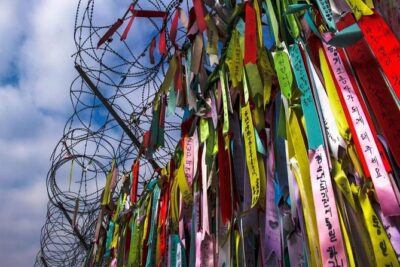
DMZ Tour: 3rd Tunnel, Option(Suspension Bridge, Boat) from Seoul
Read our review →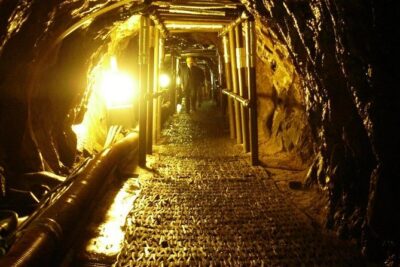
DMZ tour south Korea from Seoul (NK experience hall, defector)
Read our review →
DMZ Insider Tour: 3rd Tunnel, NK Defector Meet & Red Bridge
Read our review →
Thrilling Korean DMZ 3rd Tunnel Tour from Seoul + Red Bridge Rush
Read our review →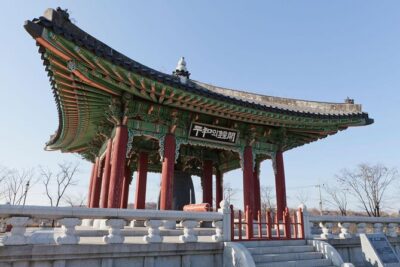
DMZ Past and Present: Korean Demilitarized Zone Tour from Seoul
Read our review →
Ultimate Korea DMZ Tour from Seoul (Gondola & Suspension Bridge)
Read our review →Browse the lists this tour appears in