
Reviewed · UNESCO WORLD HERITAGE TOURS
From Busan to Gyeongju UNESCO Legacy Tour with National Museum
Gyeongju was the capital of the Silla Kingdom for nearly a thousand years, and this full-day outing gives you a strong look at that past without asking you to sort out distant temples and scattered monuments by yourself. You move from Busan’s Ahopsan Bamboo Forest to Bulguksa Temple, old village lanes, royal tombs, museum galleries, and a beautifully lit bridge.
I like two things right away: the route mixes quiet nature with major historic sights, and the guides do more than point from the van. DK, Yaho, Kang, Chris, and Yaya are repeatedly praised for clear English, humor, careful driving, and practical help. The main drawback is the pace. Twelve hours sounds generous, but Gyeongju is spread out, and some stops may feel brief.
Key points to know
- A bamboo forest begins the day: Ahopsan is privately owned, preserved for more than 400 years, and admission costs extra.
- Bulguksa Temple gets proper time: Plan on about two hours at this UNESCO-listed Buddhist site.
- Silla and Joseon history meet: Gyochon Village and Choe Jun’s House add a useful look at later Korean life.
- The route changes in spring: From March 24 to April 12, Dalmaji Hill may replace Ahopsan, and Daereungwon may replace the National Museum if cherry blossoms are in bloom.
- Guides are a major strength: DK, Yaho, Kang, Chris, and Yaya are noted for history, humor, time management, and safe driving.
- The price is practical: At $48.08 per person, round-trip transport and guiding make this a good value if you want many far-flung sights in one day.
Why Gyeongju makes a worthwhile day from Busan
Gyeongju is not a single compact old town. Its temples, burial mounds, museums, villages, and palace remains are spread across a broad area. You can visit by public transportation, but linking all these places in one day takes planning and patience.
That is the real value here. For $48.08, you get an air-conditioned vehicle, round-trip transport from Busan, a professional guide, fuel, tolls, and parking. Lunch, personal expenses, and optional entry fees are not covered, but the core sightseeing costs are limited.
The day lasts about 12 hours. That is a long stretch, though it makes sense for the distance between Busan and Gyeongju. You should expect a full sightseeing day rather than a relaxed village outing. Wear shoes suitable for walking, and leave room in your schedule for traffic.
The tour can take up to 99 people, although some departures may be much smaller. Small groups have received praise for feeling almost private, while a larger departure will naturally feel less personal. Your guide makes a difference here. The strongest part of the experience is the human layer: explanations, route choices, photo advice, and help when weather or traffic gets in the way.
More UNESCO World Heritage Tours in Busan
- From Busan: Gyeongju UNESCO World Heritage Guided Day Tour
★ 4.8 · 1,250 reviews - Gyeongju UNESCO World Heritage Guided Day Tour from Busan
★ 5.0 · 660 reviews - Gyeongju The UNESCO World heritage sites tour(Private tour)
★ 5.0 · 17 reviews
Ahopsan Bamboo Forest, a calm start with a muddy path
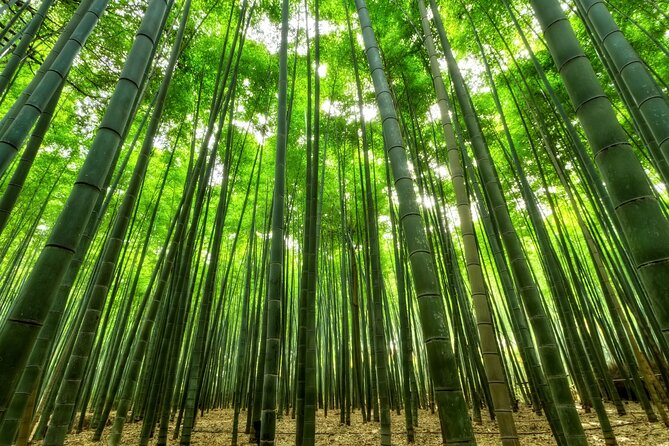
Ahopsan Forest is a privately owned bamboo forest in Busan that has been preserved for more than 400 years. Dense bamboo groves give the opening stop a quiet, enclosed feel that contrasts nicely with the stone temples and open burial grounds later in the day.
You get about 90 minutes here. That is enough to walk through the groves and take photographs without rushing through in a few minutes. Admission is not included, so budget for that separately.
There is also a practical point to remember. The walk includes some uphill sections, and the path can become muddy. One useful tip is to avoid white sneakers. If you have trouble walking uphill, this may be the most demanding stop, though the pace can be slow.
During cherry blossom season, from March 24 through April 12, the forest may be replaced by Haeundae’s Dalmaji Hill. The change depends on conditions, and it is not guaranteed. Dalmaji-gil offers a short walk and photo time along a scenic coastal road, with cherry blossoms, hillside views, and the sea. It is a different experience, not a direct substitute: Ahopsan is shaded and wooded, while Dalmaji is open and coastal.
Gyochon Village and Choe Jun’s House, history at street level
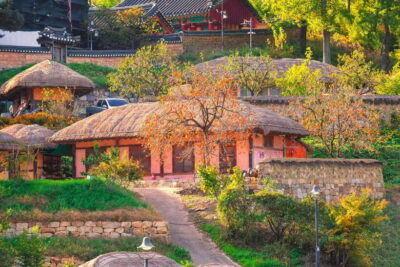
After the drive to Gyeongju, the route turns to Gyochon Traditional Village. This is a good change of pace after major monuments. Instead of looking only at royal stonework, you walk among hanok houses and historic buildings connected with local Korean life.
You get about an hour at the village, followed by another hour at Choe Jun’s House. The former home belonged to the Gyeongju Choi family, a respected noble clan whose residence continued for more than 300 years.
These stops help you connect Korea’s past with ordinary spaces: tiled roofs, courtyards, lanes, family homes, and the social customs tied to them. The setting is also close to other major Gyeongju sights, so the route does not feel like a random collection of attractions.
The limitation is that both stops are relatively short. You will see the main areas, but you will not have time to inspect every building at length. I would listen closely to the guide here, since context makes these places much more meaningful than a quick walk through attractive old houses.
Bulguksa Temple, the essential UNESCO stop
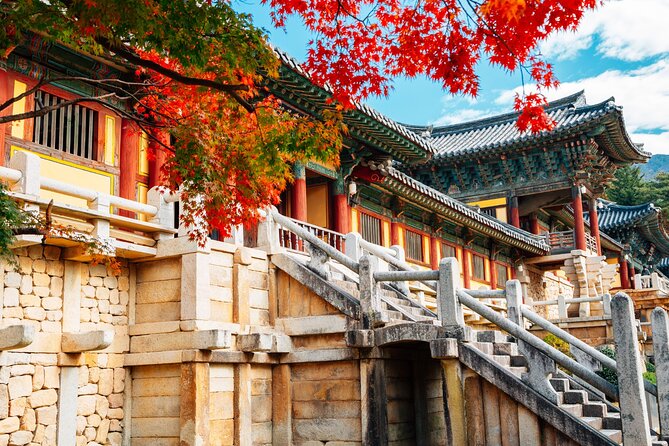
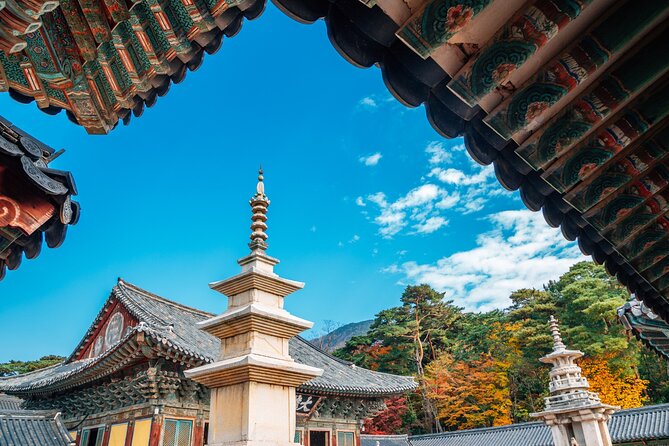
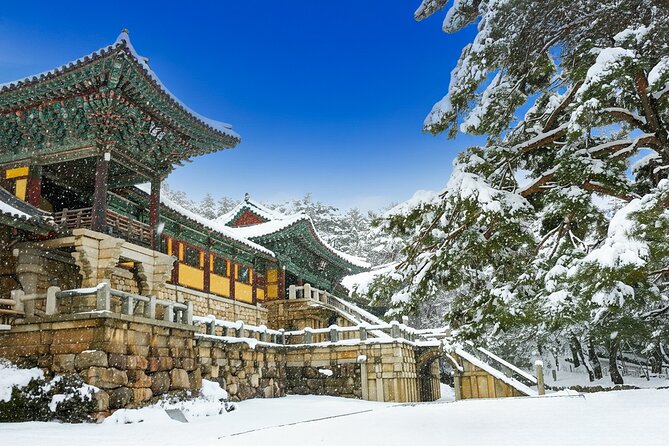
Bulguksa Temple is one of the day’s main reasons to book. Originally built in 528 during the Silla period and rebuilt in 774, it is a major Buddhist site and a UNESCO-listed cultural landmark.
The tour allows about two hours, which is more generous than the time given to several other stops. You can examine the temple’s stone terraces, gates, pagodas, halls, and hillside setting at a reasonable pace. Admission is included.
Bulguksa is best appreciated slowly. Look at how the stonework leads upward toward the temple buildings, and notice the contrast between the geometric masonry and the painted wooden structures. Your guide can explain the Buddhist meaning and the Silla setting, turning a series of beautiful buildings into a connected story.
The temple can involve steps and uneven surfaces. Nothing in the tour information suggests that you need special ability, and most people can participate, but this is not a sit-down attraction. Comfortable shoes matter.
Same country, a completely different kind of day:
- Busan: Gyeongju Guided Day Trip to Three Kingdoms Capital
★ 4.8 · 1,925 reviews - Small Group Full Day Busan Tour (Max 6 Pax)
★ 5.0 · 1,464 reviews - Busan Private Tour with licensed tour guide + private vehicle
★ 5.0 · 1,143 reviews - Busan: Coastal Treasures Beach Train, Culture Village & More
★ 4.7 · 832 reviews
The National Museum and the best Silla context

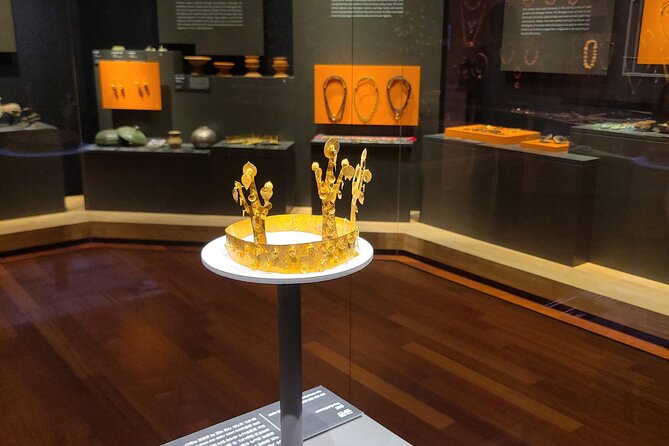
The Gyeongju National Museum normally receives about an hour. This is the stop that gives the rest of the day its framework. Gyeongju’s outdoor sites show you tombs, bridges, temples, and palace remains, but museum objects help explain the people who made and used them.
The museum focuses on the cultural heritage of the ancient Silla Kingdom. You can expect displays that make the period easier to understand, especially after seeing Bulguksa and the royal tombs in person.
An hour is enough for a focused visit, not a full museum study. I would use the time to follow the guide’s suggestions and concentrate on the main Silla material rather than trying to see every gallery.
If you prefer another outdoor site, Donggung Palace and Wolji Pond can be offered instead. Entry is not included, so you should expect an additional fee. The pond is especially appealing later in the day, when the palace ruins and water create a more atmospheric setting, but the museum is the better choice if you want a clearer historical overview.
Daereungwon Tomb Complex, grassy mounds and royal scale
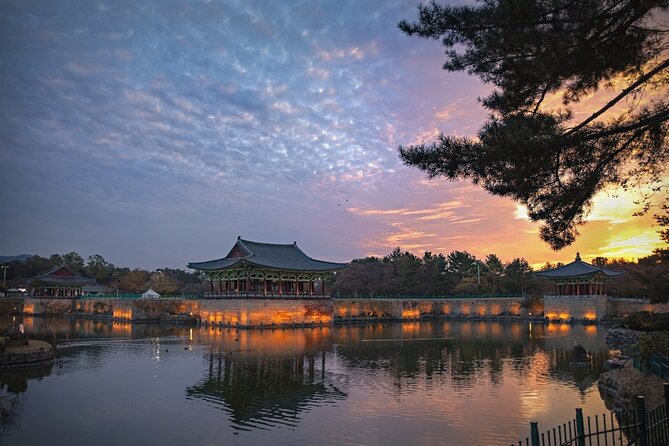
Daereungwon is a royal tomb complex from the Silla Dynasty. Its large grassy burial mounds are easy to recognize and give you a strong sense of the scale and ceremony of Silla’s ruling class.
The planned stop lasts about an hour. You walk along paths beside stone walls and rounded tombs, with trees and open grass replacing the tight streets of the village. It is a simple place to visit, but that simplicity is part of its appeal. The mounds are not hidden inside a dense museum display. They occupy the ground in front of you.
During the March 24 to April 12 cherry blossom period, Daereungwon may replace the National Museum if blossoms are in bloom. The operator decides based on conditions, and availability is not guaranteed. If you care more about spring scenery than indoor exhibits, this option could be a highlight. If you want the clearest Silla background, keep the museum.
Woljeonggyo Bridge, the day’s visual finale
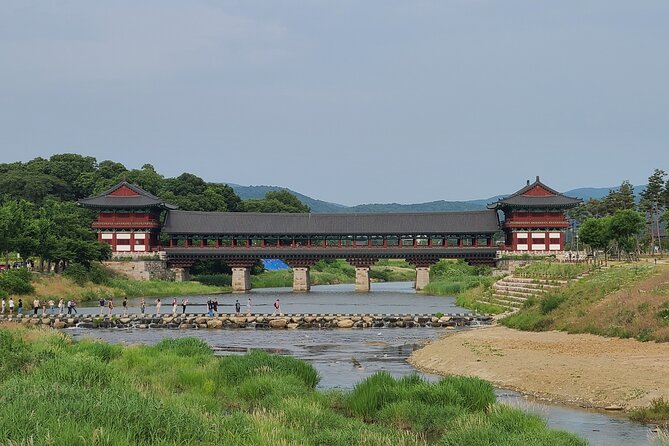
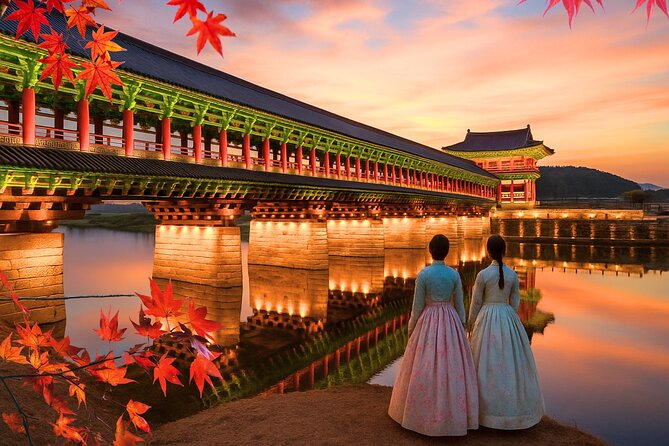
Woljeonggyo Bridge is a reconstruction of a royal bridge first built in 760 during the Unified Silla period. It connected the royal palace with the southern part of Gyeongju, and its long wooden structure makes a memorable final stop.
The schedule gives this area up to two hours. That is useful because the bridge works in daylight and after dark. Several guides also adjust the timing to make room for evening views when conditions allow.
I like ending here. After a day of temples, museum objects, family homes, and tombs, the bridge gives you a clean visual finish. Reflections, timber details, and the surrounding water make it one of the strongest photo stops on the route.
The bridge is reconstructed, so you are not looking at an untouched Silla structure. Still, the design connects the modern site with Gyeongju’s old royal center, and the evening setting adds atmosphere without requiring a separate night tour.
What the guides add to the long day
The listed guides include DK, Yaho, Kang, Chris, and Yaya, with English and Chinese-language guiding available. Names matter here because the guide’s role is not limited to translating facts.
DK is praised for high energy, humor, history explanations, careful driving, and keeping the schedule under control. Yaho is described as warm, funny, attentive, and especially good at making the day feel personal. Kang is noted for patience, local knowledge, safety, and practical care, including helping people find umbrellas during rain.
Chris has been especially useful when traffic is a concern. He has adjusted departure timing around busy holiday periods and used his knowledge of the route to keep the day moving. Yaya is noted for easy communication and a relaxed manner, including help with lunch recommendations.
Guides also visit the sights with you rather than sending you off alone at every stop. That matters at Gyochon, Bulguksa, and the museum, where a short explanation can save you from simply taking photographs without understanding what you are seeing.
English ability can vary by guide, but the strongest feedback centers on clear communication. If you have an important question, ask it directly and early. A good guide can also point out photo locations and explain changes caused by rain or traffic.
Food, transport, and the pace of the route
Lunch and dinner are not included. One guide has taken a group to a traditional Korean buffet, but that should be treated as a possible recommendation rather than a guaranteed part of the tour. Bring money for meals, drinks, snacks, and optional admissions.
Transport is by air-conditioned vehicle, with fuel, tolls, and parking covered. That removes the main headache of a Gyeongju day trip from Busan. You can relax between stops instead of studying routes and changing buses.
The tradeoff is time in the vehicle. Gyeongju is far enough from Busan that the day includes substantial driving, and traffic can affect the schedule. The route is ambitious, so do not expect long, unplanned breaks at every stop.
One booking had a serious pickup communication problem, including confusion over the vehicle and the meeting point. I would double-check the exact pickup instructions before the morning of the tour and keep the operator’s contact method available. This is especially important if you are meeting at a busy Busan location with several tour vehicles nearby.
Who should book this Gyeongju day tour
I would recommend it if you have only a short stay in Busan and want to see Gyeongju’s main cultural sights without arranging several transport connections. It also suits solo visitors, first-time visitors to Korea, and anyone who wants historical explanations throughout the day.
It is a strong fit for photographers because the route includes bamboo, hanok houses, temple architecture, burial mounds, coastal cherry blossoms in season, and an evening bridge. It also works well for small groups who want a driver and guide without paying for a fully private vehicle.
You may want another plan if you dislike long days, need a slow pace, or want to spend several hours at one site. The route covers a lot, but that means you will sometimes leave just as a place begins to feel familiar.
At $48.08, the value is strongest when you count the transport, parking, guiding, and number of locations. Ahopsan admission and Donggung Palace and Wolji Pond admission are extra, and meals are your responsibility. Even so, the price is modest for a 12-hour outing across two major Korean cities.
Should you book it?
Book this tour if you want a broad, efficient introduction to Gyeongju and prefer someone else to handle the driving. The best reasons are the mix of nature and heritage sites, the two-hour visit at Bulguksa, the evening possibility at Woljeonggyo Bridge, and guides such as DK, Yaho, Kang, Chris, and Yaya who add stories and practical help.
Skip it if you want a quiet, unhurried day or a detailed museum visit. Before booking, confirm the pickup point, check which seasonal substitutions are operating, and wear shoes that can handle hills and mud. For a first visit from Busan, though, this is a useful way to cover a wide stretch of Korea’s past in one well-organized day.
FAQ
How long is the Busan to Gyeongju tour?
The experience lasts approximately 12 hours, including the journey between Busan and Gyeongju.
What transportation is included?
Round-trip transportation from Busan is included in an air-conditioned vehicle. Fuel, tolls, and parking fees are also covered.
Is lunch included?
No. Lunch and dinner are not included, so you should budget separately for meals and drinks.
Is admission to Ahopsan Forest included?
No. Admission to Ahopsan Forest is not included in the tour price.
Is admission to Bulguksa Temple included?
Yes. Bulguksa Temple admission is included.
Are there optional alternatives during cherry blossom season?
Yes. From March 24 through April 12, Ahopsan Forest may be replaced by Dalmaji Hill, and the National Museum may be replaced by Daereungwon Tomb Complex if blossoms are in bloom. These changes depend on conditions and are not guaranteed.
Can I visit Donggung Palace and Wolji Pond instead of the National Museum?
The tour offers Donggung Palace and Wolji Pond as an alternative for people who prefer not to visit the National Museum. The entry fee is not included.
What is the cancellation policy?
You can cancel at least 24 hours before the experience for a full refund. Changes or cancellations made less than 24 hours before the start time are not accepted for a refund. If the tour is canceled because of poor weather or too few bookings, you will be offered another date or experience, or a full refund.
More Museums in Busan
- Busan: Gyeongju UNESCO Legacy Tour with National Museum
★ 5.0 · 172 reviews - Seoul: War Memorial of Korea Private Guided Museum Tour
★ 4.9 · 29 reviews - DMZ Tour + The War Memorial of Korea Museum
★ 5.0 · 28 reviews - Color Pool Museum
★ 4.0 · 22 reviews
Just added around Busan
- Real Busan Walking Experience★ 5.0 · 27 reviews
- 7 Highlights Gyeongju City One Day Small Group Tour from Busan★ 5.0 · 24 reviews
- Full Day Private car tour to UNESCO Gyeongju&Yangdong village★ 5.0 · 5 reviews
- Suncheon and Yeosu Daily Private Tour with Pickup Service★ 5.0 · 3 reviews
- Visit Busan night market and enjoy the night view of Busan harbor★ 5.0 · 6 reviews
- Busan Highlights Shore Tour – Cruise Return Assured★ 4.5 · 34 reviews
- Suncheon one day tour from Seoul, Busan or Suncheon★ 5.0 · 3 reviews
- 1 Day Private Busan Guided Tour★ 4.5 · 3 reviews
UNESCO World Heritage Tours, compared.
Gyeongju UNESCO World Heritage Guided Day Tour
Read our review →
East Jeju Essentials – Seongsan Ilchulbong (UNESCO) & Haenyeo
Read our review →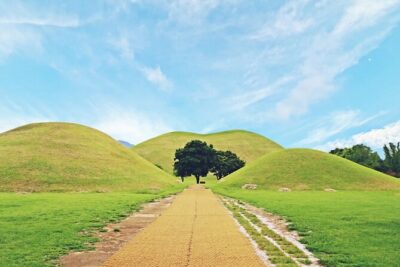
Gyeongju UNESCO World Heritage Guided Day Tour from Busan
Read our review →
Jeju Southern UNESCO Full Day Tour with Mt.Halla
Read our review →
Jeju island Southern UNESCO Day Tour With Hallasan MT
Read our review →Browse the lists this tour appears in