
Reviewed · COOKING CLASSES
Korean cooking class in Haeundae, Busan
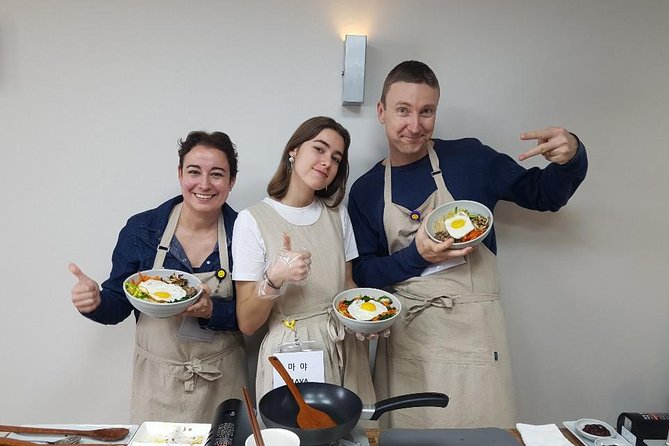
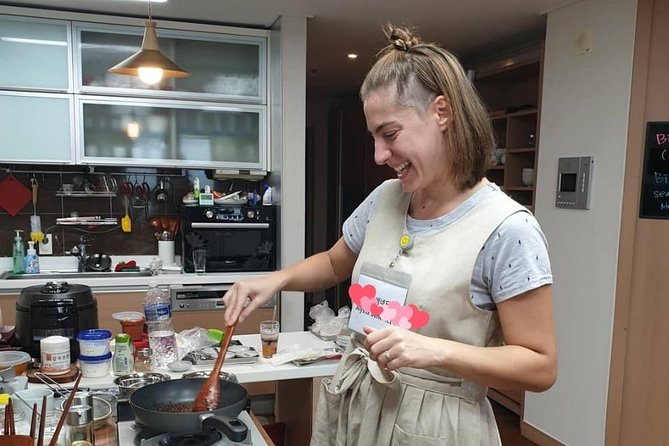
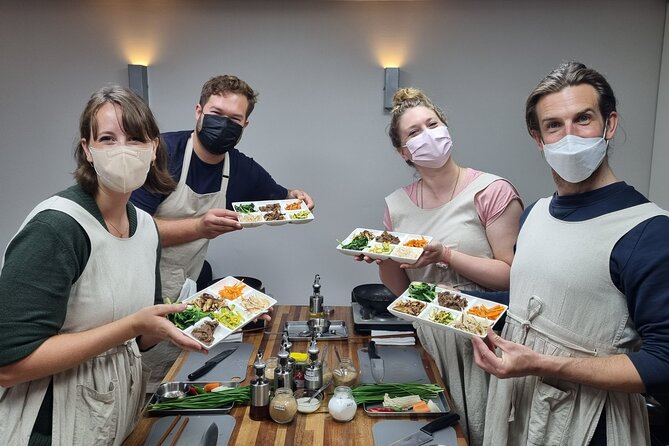
The best part of this Busan experience is that you do not simply watch someone cook Korean food. You work at your own station, wear a traditional-style apron, taste the sauces, and prepare a meal you later eat at a Korean bapsang table. Min, also known as Minkyung, leads the class with plenty of personal help.
I like the small class size, which keeps the lesson friendly rather than factory-like. I also like the cultural touches: Joseon-era cooking customs, the meaning behind the apron, Korean dining traditions, and a little menu-reading help. The main consideration is the price, $100 per person, which is more than a basic cooking lesson. You are paying for the instruction, meal, setting, dessert, certificate, and personal attention.
Key points to know before booking

- Cook at your own station: You prepare the dishes yourself instead of watching a demonstration from the back of a room.
- Meet Min: Min, or Minkyung, teaches cooking alongside Korean food, culture, language, and menu-reading tips.
- Expect a three-dish meal: The usual menu includes bibimbap, seaweed soup, and a Korean pancake, though the dishes can change by date.
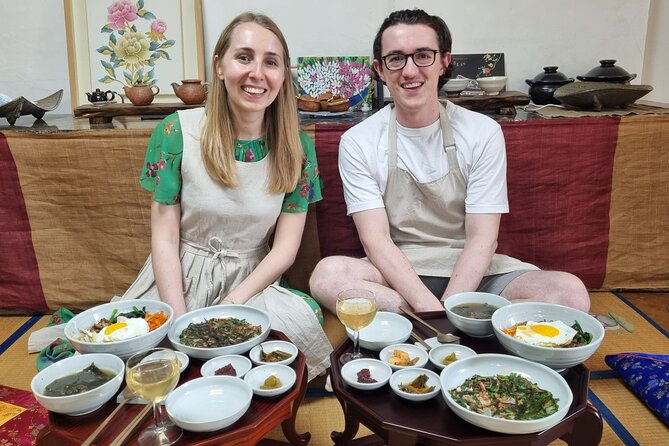
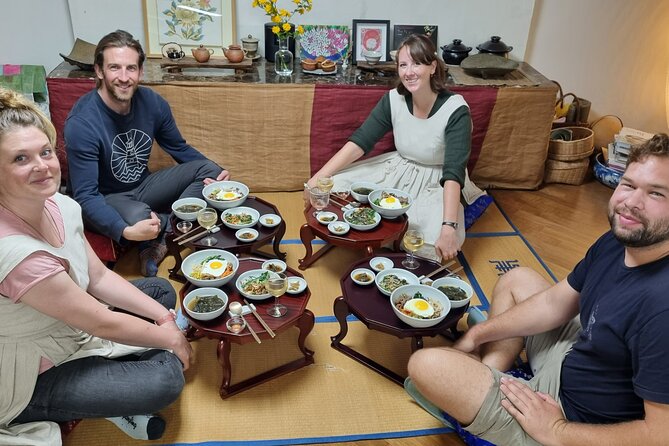
- Eat Korean-style: Your finished food is served at a bapsang, a traditional low dining table, with a chair and table available if floor sitting is difficult.
- Class size stays personal: The experience is described as having a maximum of seven people, while the booking information allows up to eight.
- Leave with a keepsake: You receive a participation certificate, and one class account also describes a small surprise gift.
What happens during the three-hour Haeundae class
The class begins at 10:00 a.m. at 37 Marine City 3-ro in Haeundae. It ends back at the same meeting point, so you do not need to arrange a separate ride after lunch.
The first moments are about setting the mood. You put on a Korean traditional apron modeled on the clothing associated with cooks in the royal palace. That is a small detail, but it gives the class a sense of place before the chopping begins. You are also served a welcome drink.
Next comes a tasting of the main Korean sauces. This is one of the more useful parts for anyone who enjoys Korean food but has trouble telling one flavor from another. Sauces carry much of the character in Korean cooking, so tasting them before using them helps you understand how a finished dish comes together.
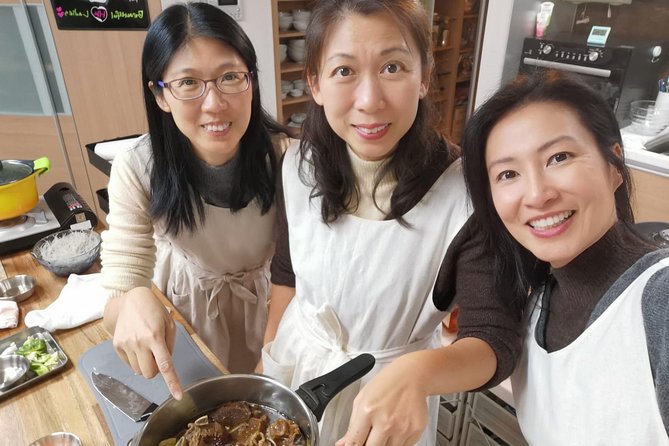
Then it is cooking time. You work through the planned menu with Min guiding each step. No previous cooking experience is required, and the format allows for one-on-one help. That matters if you are not confident with knives, unfamiliar with Korean ingredients, or simply prefer to ask questions as you go.
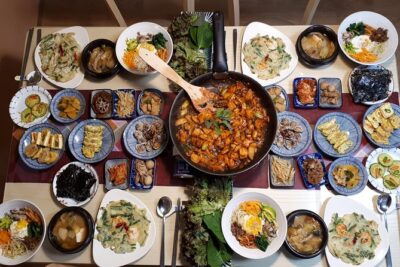
The usual menu features a bibimbap set, seaweed soup, and a Korean pancake such as chive jeon. Bibimbap gives you a practical lesson in combining vegetables, rice, and sauce. Seaweed soup offers a gentler look at Korean home cooking, while the pancake is a good hands-on dish because it is simple enough for beginners but still teaches you how texture and heat affect the result.
The menu is not fixed for every date. Special Korean dishes and temple food dates are listed separately, but no special dates are scheduled for 2025 in the information provided. If a particular dish matters to you, check the menu for your chosen date before paying.
A few more Busan trips to weigh up
- Busan Tailored Korean cooking class (Vegan OK)with market tour
★ 5.0 · 66 reviews - Busan: Small-Group Traditional Korean Food Cooking Class
★ 4.9 · 58 reviews - Busan Local Food Cooking Class with Market Tour
★ 5.0 · 53 reviews
Why Min’s teaching style matters
A cooking class succeeds or fails on the instructor. Here, Min’s role goes beyond giving out ingredients and reading instructions. She explains the dishes, talks about Korean customs, and brings in language and food etiquette along the way.
That broader approach is useful because Korean cuisine is tied closely to how food is served and shared. You learn not only what goes into bibimbap, but also why the meal is arranged in a certain way and how Korean dining fits into everyday culture. Min also gives advice about nearby Busan experiences, which can help you plan the rest of your time around Haeundae.
The class suits beginners particularly well. You do not need to arrive with professional knife skills or a long list of Korean recipes. Several class accounts describe the recipes as manageable enough to try at home, even for people who do not cook often.
Families can also make good use of the format. Min has taught children and young adults, and one family particularly appreciated how well she worked with two daughters aged 12 and 16. The atmosphere is social, with people from different places cooking together, but the small group gives you room to focus.
Dietary needs are worth raising in advance. Gluten-free and vegetarian meals have been provided, and Min has adjusted dishes for dietary requirements. The information does not promise every possible substitution, so contact the provider before booking if your restrictions are serious.
The bapsang meal is part of the lesson
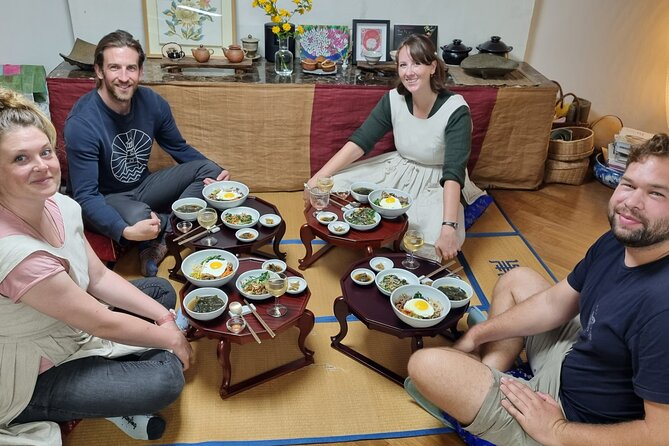
Once the cooking is finished, you eat what you made at a bapsang, the Korean traditional dining table. The table is set on the floor, creating a more distinctly Korean meal than simply sitting at a standard restaurant table.
Floor dining is not comfortable for everyone. The experience provides a table and chair if sitting on the floor is hard, so you do not need to skip the class for that reason. Still, you should mention your preference when you arrive rather than waiting until the meal begins.
Eating your own food changes the feel of the class. You can judge the seasoning, texture, and balance of each dish while the instructions are still fresh. It also gives you a better sense of how separate components become a complete Korean meal.
After lunch, you have tea and a simple Korean dessert. This is a calm finish after the hands-on work, and it gives Min time to explain traditional sweets or answer questions. The dessert is complimentary and included in the experience.
At the end, Min gives you a certificate of participation. It is not a professional cooking qualification, but it makes a pleasant souvenir and marks the class as more than an ordinary meal.
How the Haeundae location fits your day
The meeting point is in Marine City, a part of Haeundae with good access to public transportation. The class itself takes place near several well-known Busan sights, including Dongbaekseom, Haeundae Beach, The Bay 101 Yacht Club, and Nurimaru APAC House.
These places appear as the surrounding itinerary and are useful for planning your day. Dongbaekseom gives you a coastal setting and walking options, while Haeundae Beach is the area’s best-known stretch of sand. The Bay 101 Yacht Club is associated with harbor views and evening scenery, and Nurimaru APAC House is a notable waterfront building used for international meetings.
Do not assume the cooking class gives you a full guided sightseeing tour of all four locations. The core activity is the three-hour lesson and meal, and the listed start and end point remains 37 Marine City 3-ro. Treat the nearby stops as places to visit before or after class unless the provider confirms otherwise.
The 10:00 a.m. start works well for a morning activity. You finish around lunchtime, leaving the afternoon for Haeundae Beach, Dongbaekseom, or other Busan plans. Since the activity returns to its meeting point, it is also easy to pair with a nearby hotel stay.
Same country, a completely different kind of day:
- Busan: Gyeongju Guided Day Trip to Three Kingdoms Capital
★ 4.8 · 1,925 reviews - Small Group Full Day Busan Tour (Max 6 Pax)
★ 5.0 · 1,464 reviews - From Busan: Gyeongju UNESCO World Heritage Guided Day Tour
★ 4.8 · 1,250 reviews - Busan Private Tour with licensed tour guide + private vehicle
★ 5.0 · 1,143 reviews
Is $100 a fair price?
At $100 per person, this is not the cheapest way to eat Korean food in Busan. You can have a satisfying restaurant meal for much less. The value comes from the combination of instruction, ingredients, personal workspace, cultural explanation, food, tea, dessert, and certificate.
The small group makes the price easier to understand. A large class might show you the same dishes, but it cannot offer the same amount of individual correction. Here, you can ask about sauce levels, cooking timing, ingredient names, and how to repeat the recipe at home.
I would also count the meal as part of the cost, not an extra. You cook several dishes and sit down to eat them, rather than preparing one small sample and leaving hungry. The welcome drink and dessert round out the meal.
The value is strongest for people who actively want to learn. If you only want to taste Korean food, spend the money at a market or restaurant instead. If you want a practical memory you can repeat at home, the class makes more sense.
What you should know about the group size
The experience is designed as a small-group class, with a maximum of seven people in the main description. The additional booking information lists a maximum of eight participants, so the exact upper limit is not perfectly consistent.
Either way, this is a much more personal setup than a large culinary workshop. You have a dedicated station and direct access to Min. The group size also makes it easier to chat with people from different countries without losing the teaching.
A small group can feel less private if you are hoping for a one-on-one lesson. It is still a shared class, and part of the appeal is cooking with other people. If you want complete privacy, check whether a private booking is available before reserving.
Who should book this experience?
I would recommend it to first-time visitors who want a useful introduction to Korean food without needing prior skills. It is also a strong choice for couples, families, and solo visitors who enjoy meeting people during a trip.
The class works well for people who like to take recipes home. You learn dishes that can be recreated, and the instruction is paced for ordinary home cooks. It also suits anyone curious about Korean dining customs, language, and the background of familiar dishes.
This may not be the right pick if your schedule is packed or if you dislike structured activities. Three hours is a meaningful part of a Busan morning, and the $100 cost deserves more than a casual decision. You should also think twice if you do not enjoy cooking at all, though the hands-on format remains accessible to beginners.
People with food allergies or strict dietary rules should contact Min beforehand. Vegetarian and gluten-free adjustments have been made, but the available information does not list every ingredient or guarantee every type of modification.
Booking and cancellation details
Confirmation is received at booking, and a mobile ticket is provided. The meeting point is near public transportation, and service animals are allowed.
Free cancellation is available up to 24 hours before the local start time for a full refund. Changes or cancellations made less than 24 hours before the experience are not accepted for a refund. The activity requires good weather, and if poor weather causes cancellation, you are offered another date or a full refund.
The experience is often reserved well ahead of time, with an average booking lead time of about 38 days. That is a useful warning if you are visiting Busan during a busy period. Book early if your dates are fixed, especially if you need a dietary adjustment.
My call: book it if you want more than a meal
You should book this Korean cooking class in Haeundae if you want to understand Korean food by making it, eating it, and hearing the cultural story behind it. Min’s warm teaching style, the personal stations, the manageable recipes, and the traditional table setting give the morning real substance.
The $100 price is the main hurdle, and the class is not a bargain meal. But for a three-hour lesson with food, dessert, cultural context, a small group, and a certificate, it is a sensible splurge for food-focused visitors.
Book it early, confirm the menu and dietary needs, and plan to spend the rest of the day around Haeundae. If you prefer only sightseeing or restaurant meals, skip it. If you want a skill, a full lunch, and a closer look at Korean food customs, this is one of the better ways to spend a Busan morning.
FAQ
Where does the Korean cooking class meet?
The meeting point is 37 Marine City 3-ro in Haeundae, Busan, South Korea.
What time does the class start?
The class starts at 10:00 a.m.
How long does the experience last?
The cooking class lasts approximately three hours.
Where does the experience end?
The activity ends back at the meeting point.
What dishes will I cook?
The usual menu includes bibimbap, seaweed soup, and a Korean pancake. The menu may vary by date.
Do I need cooking experience?
No. Previous culinary experience is not required.
How many people can join?
The experience is described as having a maximum of seven people, while the additional booking information lists a maximum of eight travelers.
Will I eat the food I prepare?
Yes. You eat your finished dishes at a traditional Korean bapsang table. A table and chair are available if sitting on the floor is difficult.
Are dietary accommodations available?
Vegetarian and gluten-free options have been provided. Contact the provider before booking to discuss your specific dietary needs.
Do I receive anything after the class?
Yes. A participation certificate is provided. Tea, a simple Korean dessert, and a welcome drink are also included.
Can I cancel for a full refund?
Yes, if you cancel at least 24 hours before the local start time. Cancellations made less than 24 hours before the start are not refunded.
What happens if poor weather cancels the class?
You are offered a different date or a full refund if the experience is canceled because of poor weather.
Just added around Busan
- Real Busan Walking Experience★ 5.0 · 27 reviews
- 7 Highlights Gyeongju City One Day Small Group Tour from Busan★ 5.0 · 24 reviews
- Full Day Private car tour to UNESCO Gyeongju&Yangdong village★ 5.0 · 5 reviews
- Suncheon and Yeosu Daily Private Tour with Pickup Service★ 5.0 · 3 reviews
- Visit Busan night market and enjoy the night view of Busan harbor★ 5.0 · 6 reviews
- Busan Highlights Shore Tour – Cruise Return Assured★ 4.5 · 34 reviews
- Suncheon one day tour from Seoul, Busan or Suncheon★ 5.0 · 3 reviews
- Busan Beomeosa Temple & Hongbeopsa Temple with temple lunch★ 5.0 · 11 reviews
Cooking Classes, compared.
Local Home Korean Cooking Class & Market Adventure in Seoul
Read our review →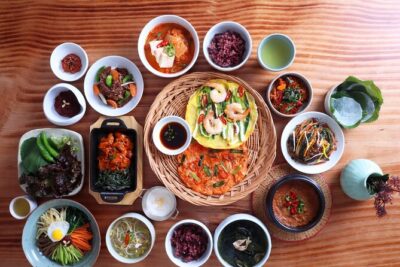
Master Korean traditional cooking with a Kimchi chef
Read our review →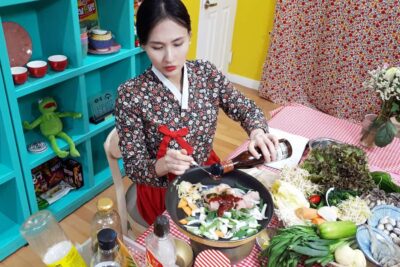
Korean Cooking Class at a Local Home and Market Tour
Read our review →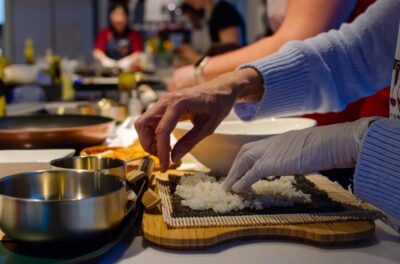
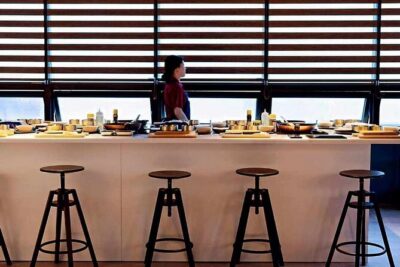

Korean Cooking Class with Grocery Shopping at Seoul Local Market
Read our review →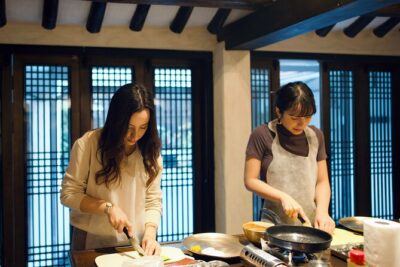
Royal Seoul Cooking Class in a 100-Year-Old Hanok
Read our review →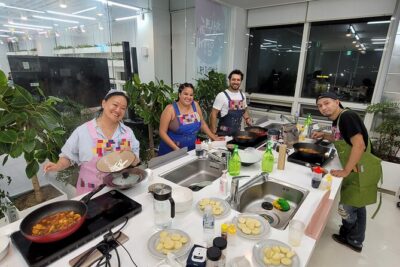
Busan Tailored Korean cooking class (Vegan OK)with market tour
Read our review →Browse the lists this tour appears in