
Reviewed · HISTORICAL TOURS
Deoksugung & Jeongdong-gil: A Walk in Korea’s Rich Heritage
Seoul’s past comes into sharp focus on this walk, where a Joseon palace, a former missionary school, an imperial library, and a modern public square all appear within one morning. The route gives you a useful way to understand how Korea moved through the late 19th and early 20th centuries.
I like the small maximum group of 15, which should make it easier to hear the guide and ask questions. I also like the mix of places: Deoksugung and Jungmyeongjeon Hall provide royal and imperial history, while Jeongdong Theater and Gwanghwamun Square show how old Seoul connects with the present.
The main consideration is the short time at each stop. This is a brisk introduction rather than a slow palace visit, and the tour requires good weather. If you want long interior visits or plenty of time for photographs, you may need to explore some sites again on your own.
Key details of the Deoksugung and Jeongdong-gil walk
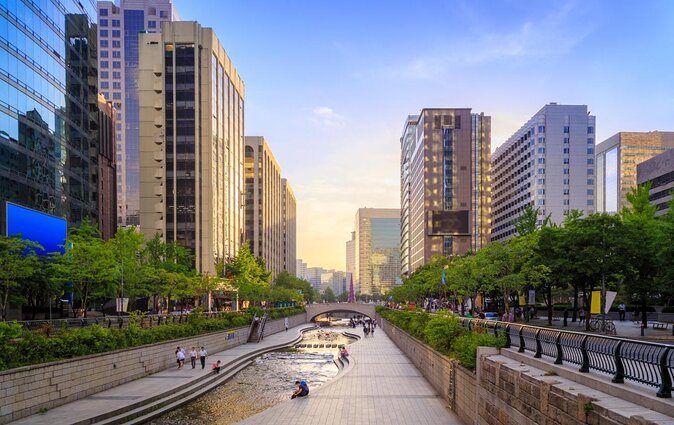
- A focused three-hour route: The morning begins at 9:30 am and ends near Cheonggyecheon Stream.
- Six contrasting stops: You visit two royal palaces, a missionary museum, a traditional arts theater, an imperial hall, and Gwanghwamun Square.
- A local English-speaking guide: Sam is one guide associated with the experience, and the tour is designed around explanation and conversation rather than simple sightseeing.
- Free admission at listed stops: The $48 price covers the professional guide, while lunch, drinks, and personal purchases are separate.
- A small group format: The group maximum is 15 people, a practical size for a walking tour with historical commentary.
- A useful first morning in Seoul: The route links royal Korea, foreign influence, national trauma, and modern civic life in one compact outing.
Why this Seoul walk works as an introduction
Many Seoul tours concentrate on one palace or one grand viewpoint. This walk takes a different approach. It uses a small area of central Seoul to show several layers of the country’s past, then finishes in a public space tied to modern city life.
That makes the route especially useful early in a Seoul visit. You get names and events that can help you make sense of later sightseeing. Deoksugung introduces the Joseon royal setting. Jungmyeongjeon Hall brings in the Korean Empire and Emperor Gojong. The Appenzeller Noble Memorial Museum explains the role of Methodist education. Gwanghwamun Square brings the story into the present.
I also appreciate the contrast between architectural styles. You will see traditional Korean palace buildings near streets shaped by later political, religious, and international influences. That mixture is one of the most important things to notice about central Seoul, and a guide can explain connections that are easy to miss when you walk alone.
The tour has earned a five-star rating from nine submitted ratings, and Sam is specifically identified as a guide who provides a fun, informative introduction to Seoul. That detail matters because this route depends heavily on storytelling. The buildings are worthwhile, but the historical links between them are the real reason to book.
A few more Seoul trips to weigh up
- Seoul: Evening Dark History, Folklore & Ghost Story Walking Tour
★ 5.0 · 593 reviews - Hanbok Photoshoot and History Tour at Gyeongbokgung Palace
★ 5.0 · 276 reviews - From Seoul: Dae Jang Geum Park Historic K-Drama Set Tour
★ 4.9 · 143 reviews
Starting at Deoksugung Palace at 9:30 am
The walk begins at Deoksugung Palace on Sejong-daero in Jung District. The palace is also known as Gyeongun-gung and dates to the Joseon Dynasty. It is one of Seoul’s central royal sites, so you begin among major historical landmarks rather than spending the first part of the morning reaching the main attraction.
The scheduled visit is about 20 minutes, with admission listed as free. That short stop should give you an orientation to the palace and its place in Korean history. You will not have time to inspect every building at length, so think of this as a guided introduction rather than a full palace tour.
Deoksugung is a strong opening because it represents the traditional royal order before the route begins showing the forces that changed Korea. Pay attention to the way the palace sits in the center of present-day Seoul. Large roads and modern buildings are close by, making the old and new appear side by side.
If you enjoy photography, the first stop gives you a chance to frame historic architecture against the city. Keep your expectations realistic, though. Twenty minutes passes quickly, especially if the guide is explaining the site and the group is moving together.
Gyeonghuigung Palace and a second royal viewpoint
The next stop is Gyeonghuigung Palace, also called Gyeonghui Palace, in Jongno-gu. It was built in 1623 during the Joseon Dynasty as a royal residence. The scheduled visit lasts about 20 minutes, and admission is listed as free.
Seeing a second palace in one morning is valuable because it lets you compare royal sites instead of treating Joseon history as one undifferentiated chapter. The guide can place Gyeonghuigung beside Deoksugung and explain how royal residences fit into Seoul’s older political center.
This stop may appeal most to visitors who want historical context rather than a single famous photo location. It also keeps the route from focusing only on the better-known Deoksugung. Still, the same limitation applies: twenty minutes is enough for a concise explanation, not for a detailed architectural study.
The walk between stops is part of the experience. You are not being moved from one isolated attraction to another by vehicle. The streets themselves help you see how palace grounds, public roads, and modern Seoul occupy the same central district.
Appenzeller Noble Memorial Museum and Korea’s school history
The Appenzeller Noble Memorial Museum is a much smaller and more specialized stop. It occupies the former home of Baekjae Hakdang, a missionary school later expanded into a university now known as Pai Chai University in Daejeon.
The museum explains the school’s history and its Methodist connection. The scheduled time is only 10 minutes, and admission is listed as free. That tells you something about the role of this stop: it is a compact historical marker, not a long museum visit.
Its importance comes from the change in subject. After royal palaces, you turn toward education, missionary work, and the introduction of Western institutions. This helps explain why the route is more than a standard palace walk. It looks at the people and organizations that shaped modern Korea as well as the monarchs who ruled it.
You should expect the guide to provide much of the context here. With only ten minutes, there may not be enough time to read everything or examine the building at leisure. If school history, Methodist missions, or early modern Korean education interest you, note the museum’s name and consider returning independently if time allows.
Same country, a completely different kind of day:
- Best DMZ Tour Korea from Seoul (Red Suspension Bridge Optional)
★ 5.0 · 41,422 reviews - DMZ Tour: 3rd Tunnel, Option(Suspension Bridge, Boat) from Seoul
★ 5.0 · 21,373 reviews - DMZ tour south Korea from Seoul (NK experience hall, defector)
★ 5.0 · 20,599 reviews - Seoul: DMZ Tour with Optional Suspension Bridge
★ 4.8 · 5,277 reviews
A pause at Jeongdong Theater
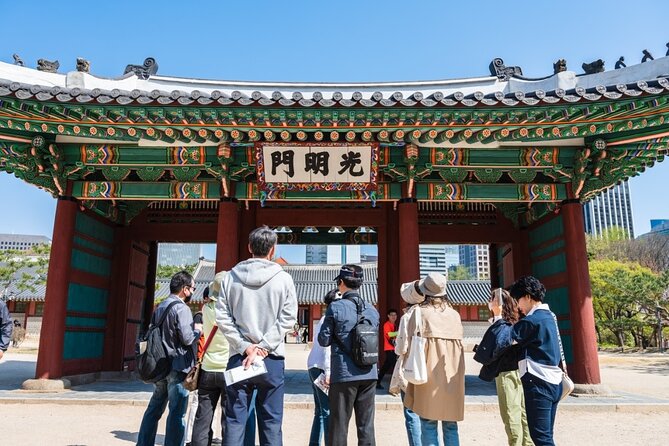
Jeongdong Theater is scheduled for 25 minutes. The theater presents concerts, plays, and musicals that include elements of traditional Korean culture. During the stop, you can get coffee or another drink and use the restroom.
This is a practical break in the middle of a walking tour, especially since lunch is not included and the route continues for several more historical stops. The pause also changes the pace. You move from palaces and museums into a working cultural venue connected to Korean performance.
The theater is not simply a rest stop. Its programming reflects the way Korean traditions continue in a modern setting. You may not attend a performance during this tour, but the building gives you a sense of how traditional culture is presented to today’s audience.
Because the stop is 25 minutes, you have more breathing room here than at the museum. The tour information does not state that a drink is included, so plan to pay for your own coffee or other refreshment. This is also a good moment to use the restroom before the final historical sites.
Jungmyeongjeon Hall and the Korean Empire
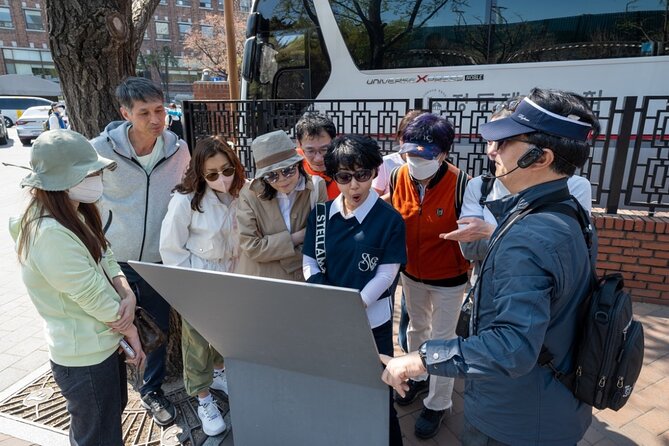
Jungmyeongjeon Hall is one of the most meaningful stops on the route. Built in 1899 as the imperial library of the Korean Empire, it later became the temporary residence of Emperor Gojong after Deoksugung Palace caught fire in 1904.
The building is also associated with the Eulsa Treaty, a major event in Korea’s painful early 20th-century history. The scheduled visit lasts 15 minutes. That is brief, but the site carries enough weight to make it a central point of the morning.
This is where the route’s historical story shifts from the Joseon Dynasty to the Korean Empire and the pressure surrounding Korea at the time. Deoksugung gives you the royal setting. Jungmyeongjeon shows a country trying to operate as an empire while facing outside political force and internal upheaval.
I would pay close attention to the guide’s explanation here. The significance is not only in the building’s appearance. It is in what happened there and why the hall became tied to Emperor Gojong’s temporary residence and the Eulsa Treaty.
The short visit is again the main drawback. You will get a clear introduction, but not a long, unhurried museum experience. If this part of Korean history matters to you, write down the details and return later rather than trying to absorb everything while keeping pace with the group.
Gwanghwamun Square and the route into modern Seoul
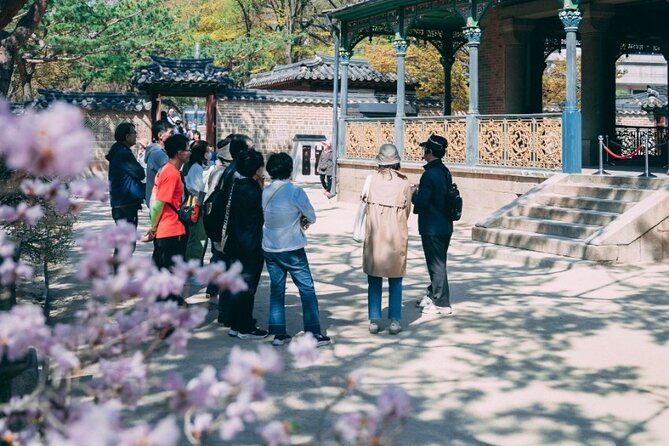
The final major stop is Gwanghwamun Square, a large public space in central Seoul built in 2009. It includes a fountain, a statue of King Sejong the Great, and several other features. The scheduled visit lasts about 20 minutes.
The square provides a fitting final chapter. You have moved through royal residences, early modern education, performance culture, imperial politics, and now a modern civic gathering place. The statue of King Sejong connects the square to an earlier Korean ruler, while the square itself belongs firmly to contemporary Seoul.
This stop also helps you orient yourself in the city. Gwanghwamun is a major central address, and the route’s historical themes become easier to connect once you see the scale of modern public Seoul around them.
After the square, the tour ends near Cheonggyecheon Stream in Jongno District. The stream is a useful place to continue exploring, stop for food, or make your own way to another central sight. Lunch is not included, so the end of the tour is a natural point to arrange your own meal.
What the $48 price gives you
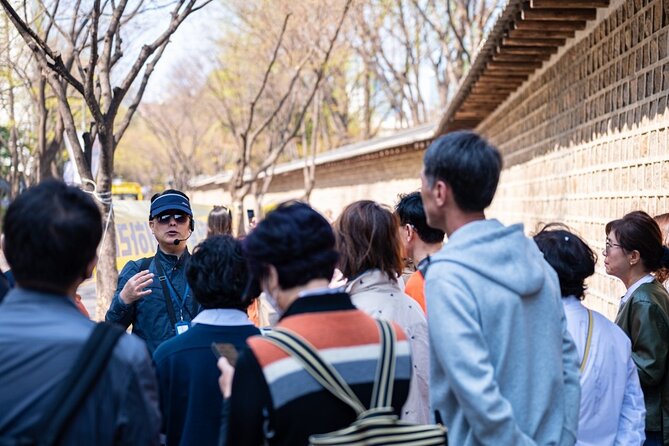
The price is $48 per person. Admission at the listed stops is free, so the main value is the professional English-speaking guide, the planned route, and the historical explanation connecting six different places.
That is a fair structure for someone who wants a guided introduction rather than a ticket-heavy attraction package. You are paying for the human context and the convenience of moving through central Seoul with a clear purpose. The small group maximum of 15 also helps justify the cost. A group of that size should be easier to manage than a large city tour, though the exact group size on your date may be smaller.
The price does not include lunch, coffee, other drinks, or personal purchases. I would carry water and plan for your own food after reaching Cheonggyecheon. The 25-minute theater stop may offer time for a drink, but that purchase is separate.
For a visitor who likes history and wants a guide to explain the connections, the price is more attractive than it first appears. For someone who mainly wants entry to palace grounds and plenty of free time for photographs, paying for a guided walk may feel less worthwhile.
Timing, pace, and practical planning
The tour starts at 9:30 am and lasts about three hours. It is best suited to someone comfortable spending a morning walking between central Seoul sights. The total route includes six stops, with visits ranging from 10 to 25 minutes, so you should expect a steady pace.
The experience is listed as being near public transportation, which makes the start and end points practical for arranging your day. Your starting point is Deoksugung Palace, at 99 Sejong-daero in Jung District. The tour finishes at Cheonggyecheon Stream in Jongno District, not back at the palace.
A mobile ticket is provided, which is convenient for keeping the booking on your phone. Confirmation is sent within 48 hours of booking, subject to availability. Since the tour depends on good weather and a minimum number of participants, avoid building an unchangeable schedule around it until your place is confirmed.
Free cancellation is available up to 24 hours before the start time for a full refund. Changes or cancellations made less than 24 hours before the local start time are not accepted for a refund. If poor weather or insufficient participation causes cancellation, you are offered another date or experience, or a full refund.
Who should choose this experience
I would recommend this walk to first-time visitors who want a clear introduction to Seoul’s historical center. It suits people who enjoy hearing the story behind a building and prefer a guide to connect separate sights into one narrative.
It is also a good choice for visitors interested in the transition from Joseon rule to the Korean Empire and the early modern period. The Appenzeller museum and Jungmyeongjeon Hall give the route subjects that a basic palace visit may leave out.
The experience may suit families and mixed-interest groups because the morning includes palaces, a museum, a theater, and a public square rather than one repeated type of attraction. The maximum group size of 15 is helpful for anyone who dislikes very large tours.
I would be more cautious about booking it if your main goal is an in-depth palace visit. The stops are short, and you will not get a long independent period at each location. The route is also weather-dependent, so a rainy forecast could affect your plans.
Should you book the Deoksugung and Jeongdong-gil walk?
Book it if you want a well-organized, three-hour introduction to Seoul’s royal, imperial, educational, and civic past. The best reason to choose it is the range of subjects packed into one walk, along with the chance to ask a local English-speaking guide questions along the way.
The strongest part is the story linking Deoksugung Palace, Jungmyeongjeon Hall, and Gwanghwamun Square. Sam is specifically associated with a fun and informative version of the tour, but guide availability may vary.
Skip it if you prefer to move slowly, spend a long time inside museums, or explore without a fixed group pace. At $48, the value rests in the guide and the connections between sites, not in paid admissions or included meals. For a history-minded first morning in Seoul, that is a sensible trade.
FAQ
How long does the tour last?
The tour lasts approximately three hours.
What time does the tour begin?
The start time is 9:30 am.
Where does the tour begin?
The meeting point is Deoksugung Palace, 99 Sejong-daero, Jung District, Seoul, South Korea.
Where does the tour end?
The tour ends at Cheonggyecheon Stream in Seoul’s Jongno District.
Is admission to the stops included?
Admission is listed as free at each of the scheduled stops.
Is lunch included?
No. Lunch, drinks, and other personal consumption are not included.
What happens if the weather is poor?
The experience requires good weather. If it is canceled because of poor weather, you are offered a different date or a full refund.
Just added around Seoul
- Gyeongbokgung palace,seoul with gigibebe hanbok rental★ 4.5 · 12 reviews
- Private tour guide service in Seoul, Korea★ 5.0 · 6 reviews
- Alpaca, Nami, Petite Fr, Italian Village, Garden of Morning Calm★ 3.5 · 5 reviews
- Private tour Lotte World,Tower,Aquarium(All Tickets are included)★ 5.0 · 12 reviews
- Gyeongju UNESCO Sites Tour by KTX train; The Museum Without walls★ 4.5 · 11 reviews
- Private day trip to Korean Folk Village & Dae Jang Geum Park★ 5.0 · 7 reviews
- Full Day Private Seoul Tour for foodies★ 5.0 · 3 reviews
- Seoul Private Custom Walking Tour with A Guide (Private Tour)★ 4.5 · 28 reviews
Historical Tours, compared.
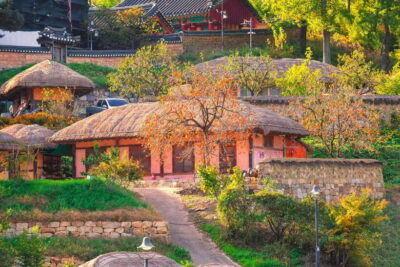
Gyeongju UNESCO World Heritage Guided Day Tour
Read our review →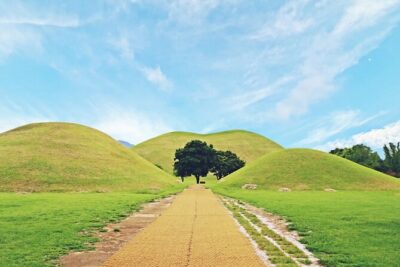
Gyeongju UNESCO World Heritage Guided Day Tour from Busan
Read our review →
Evening Dark History, Folklore & Ghost Story Walking Tour
Read our review →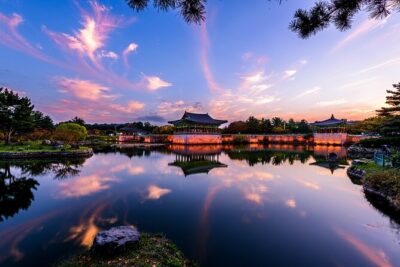
Old Korea Thousand History Tour of Gyeongju from Busan
Read our review →
Hanbok Photoshoot and History Tour at Gyeongbokgung Palace
Read our review →
UNESCO Heritage Tour Including Bulguksa Temple
Read our review →
Gyeongju UNESCO World Heritage Sites and History Full-Day Tour with Lunch
Read our review →Browse the lists this tour appears in