
Reviewed · HISTORICAL TOURS
Inwangsan hike & historical sites
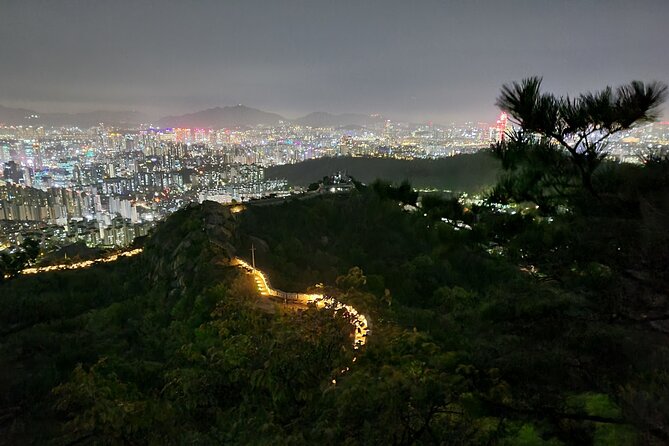
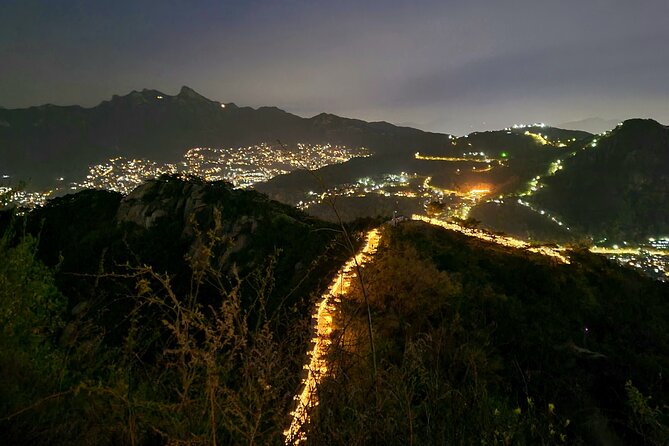
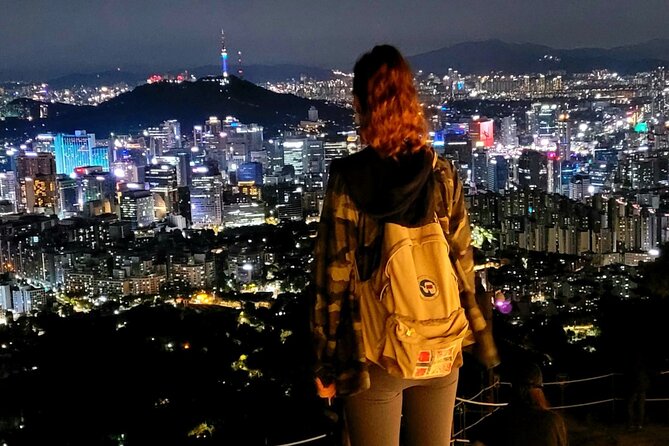
Inwangsan gives you Seoul after dark from above, with N Seoul Tower, Lotte Tower, and the city lights spread below. The climb takes less than an hour to the peak, and the route adds real history through Sajik Altar, the Dangun Shrine, and the old Seoul City Wall.
I like the small group, capped at 15 people, and the personal touch of guide Lee, who grew up in Seoul and leads the walk with warmth and local insight. I also like the mix of an easy mountain trail and serious Joseon-era history. The main catch is that the route still involves an uphill hike, and the bus ride back costs extra. Also confirm the start time before booking, since the details list 9:00 am even though the experience is described as a night hike.
Key points at a glance
- Sajik Park comes first: See the historic Sajikdan and Dangun Shrine before reaching the mountain trail.
- The summit is reached in under an hour: This is a manageable climb, but you should still wear proper walking shoes.
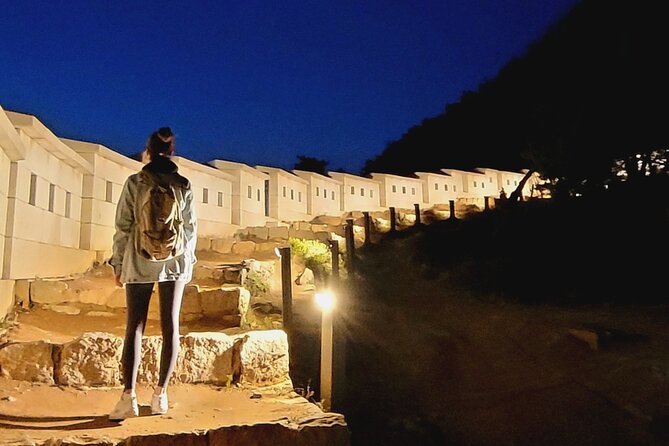
- Seoul City Wall adds purpose to the hike: You are walking beside a Joseon-era defensive wall, not just taking a viewpoint walk.
- Night views are the main reward: N Seoul Tower and Lotte Tower glow across the city without the daytime crowds.
- Lee leads the group: The guide is a Seoul native who explains local history and keeps the pace encouraging.
- Bring a little extra cash: Traditional snacks are included, but the bus back to the city is not.
Why Inwangsan works so well after dark
Many Seoul viewpoints ask you to wait in line, ride an elevator, or crowd onto a high observation deck. Inwangsan offers something more active and more local. You walk through a neighborhood park, follow a mountain path, pass old stone walls, and then reach a high point where Seoul opens out below you.
The night setting matters. In daylight, you can study the city’s buildings and traffic. After sunset, the details soften and the major landmarks take over. N Seoul Tower becomes an easy marker, while Lotte Tower rises farther across the city. The view has a calm quality because you are away from the busiest central streets.
This is not a wilderness outing. Inwangsan sits within Seoul, close to Gyeongbokgung Station and the historic center. That makes it useful for a short stay. You can spend the day among palaces and museums, then see the same city from a wooded mountain path.
The experience lasts about three hours. That gives you enough time for the park, the climb, historical explanations, summit views, snacks, and the walk back. You are not signing up for an all-day mountain expedition.
A few more Seoul trips to weigh up
- Seoul: Guided City Wall Sunset Hike with Korean Dinner
★ 4.9 · 227 reviews - Private Hiking tour to Bukhansan Peak(Baegundae: 836.5m) with Mountain Expert
★ 5.0 · 113 reviews - Fortress Night Hike & Snack at a Local Market
★ 5.0 · 112 reviews
Sajik Park and the foundations of Joseon Seoul
The walk begins at Sajik Park, near Gyeongbokgung Station. This first stop gives the hike a strong historical opening instead of sending you straight onto a trail with no context.
Sajikdan was built under King Taejo, founder of the Joseon Dynasty. Along with Jongmyo Shrine, it formed part of the ritual structure of the new capital. Jongmyo was placed east of Gyeongbokgung Palace, while Sajikdan was placed west. At Sajikdan, ceremonies honored the gods of Earth and Crops, which tells you how seriously Joseon rulers tied government, farming, and religious duty together.
You also see the Dangun Shrine, dedicated to Tangun, the legendary founder of Korea. The site connects the dynasty’s formal state rituals with a much older origin story. A good guide can make that contrast clear: one place represents the machinery of a royal capital, while the other reaches back into Korea’s founding legend.
This stop is especially useful if you have already visited Gyeongbokgung. The palace shows royal power through gates, halls, and courtyards. Sajik Park shows the beliefs and rituals that supported that power. Together, they help you see Seoul’s old center as more than a collection of attractive buildings.
The park itself also offers a gentler beginning. You can get your bearings before the uphill portion starts. Do not expect a long stop with many museum displays. The value is in the setting and the explanation from the guide.
The Inwangsan climb: easy, but still a real hike
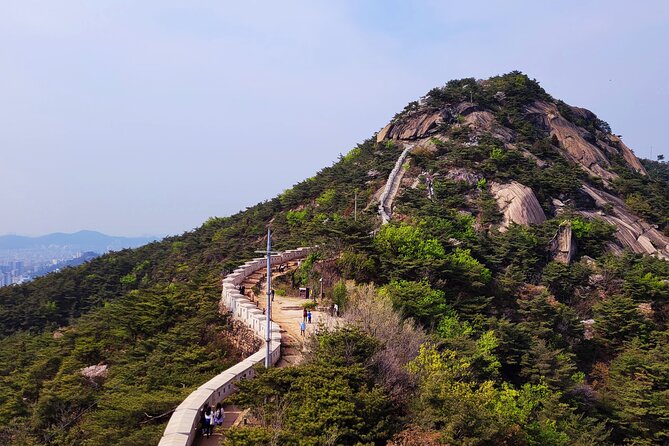
From the park, the route heads toward Inwangsan. The climb to the peak takes less than an hour, and the walk is described as easy and enjoyable. That makes it a good choice if you want mountain scenery without giving up most of your day.
Still, easy does not mean flat. You will be walking uphill, and the surface can feel more demanding after dark. Wear shoes with a firm sole, and bring water. The experience information says most people can take part, but you should be comfortable with a sustained climb and uneven trail conditions.
The guide’s role matters here. Lee is described as encouraging and attentive, with a good sense of the route. You are not left to guess which turn leads to the best view or how long the next section will take. For a first hike in Seoul, that removes much of the worry.
The small group limit of 15 is another practical advantage. A group this size can stay together without turning the walk into a slow procession. You also have a better chance to ask about the sights, Korean customs, or the city below. The experience is social, but it should not feel like a crowded bus tour.
In the darker sections, a flashlight may be needed. One account describes the final part of a dusk hike continuing by flashlight, which is a useful reminder to prepare for changing light. The exact conditions will depend on the season and the schedule, so do not treat this as a fully illuminated city walk.
Walking beside Seoul City Wall
The trail follows sections of Hanyangdoseong, also called the Seoul City Wall. Joseon rulers built the wall to protect the capital from outside attack. Today, its purpose is less practical, but the route still makes the city’s old boundaries visible.
This is where the hike becomes more than a viewpoint outing. You are not simply climbing a hill and taking photographs. You are following the edge of the historic capital, seeing how the mountain and the wall worked together as part of Seoul’s defenses.
The wall also gives the walk a strong sense of direction. In one moment, you are among trees and mountain rock. In the next, you are beside carefully laid stonework, with modern towers far beyond it. That contrast is one of the best reasons to choose this route.
The guide’s explanations help you read what you are seeing. Without context, old walls can blur into one another. With a short explanation of Joseon Seoul and the defensive system, the stones become part of a larger story.
A quiet forest library and resting area are also associated with the route. It is an unusual detail in a mountain walk so close to the city. You might find it a pleasant pause among the trees, though the main focus remains the climb, the wall, and the view.
Same country, a completely different kind of day:
- Best DMZ Tour Korea from Seoul (Red Suspension Bridge Optional)
★ 5.0 · 41,422 reviews - DMZ Tour: 3rd Tunnel, Option(Suspension Bridge, Boat) from Seoul
★ 5.0 · 21,373 reviews - DMZ tour south Korea from Seoul (NK experience hall, defector)
★ 5.0 · 20,599 reviews - Seoul: DMZ Tour with Optional Suspension Bridge
★ 4.8 · 5,277 reviews
The summit view: N Seoul Tower, Lotte Tower, and the city at night
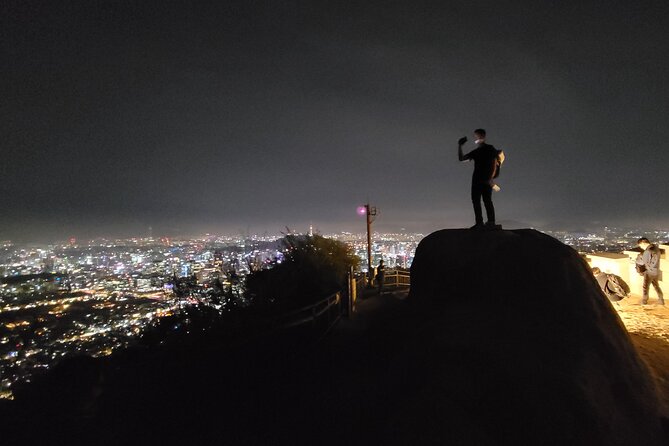
The peak is the payoff. From the top, you can pause and look across Seoul in several directions. The view includes N Seoul Tower and Lotte Tower, two of the city’s most recognizable landmarks, along with the spread of illuminated streets and buildings.
The attraction is not only height. Inwangsan gives you a different angle on Seoul than the standard tower observatories. You arrive on foot, with the wall and mountain behind you, and the capital laid out below. That sense of earning the view gives the stop more weight.
Your timing can shape the experience. A dusk departure may let you see the city change from daylight to evening, then continue once the lights come on. A later night walk focuses more directly on the illuminated skyline. Since the published start time says 9:00 am while the description repeatedly refers to night views, confirm the exact meeting time before you go.
Do not expect a formal observation platform with railings, shops, or indoor shelter. This is a mountain viewpoint. Weather, visibility, and light conditions will affect what you see. The experience requires good weather, and poor conditions can lead to a different date or a full refund.
Korean snacks and the personal guide factor
Traditional Korean treats are part of the trek. It is a small feature, but it helps the outing feel less like exercise with a lecture attached. A snack break gives you a natural moment to rest, talk with the group, and try something connected to local food culture.
The strongest personal element comes from Lee, the guide associated with Honey Trail. She grew up in Seoul and brings local familiarity to the walk. Her approach appears to be friendly and encouraging rather than formal or stiff. That suits this route, since the history is easier to absorb when it is explained along the way.
Past outings with Lee have included help with photos, encouragement on the ascent, and practical assistance after the hike. Those details matter if you are traveling alone or with a child. One family found the climb suitable for a 10-year-old, while other accounts describe the ascent as challenging but not difficult.
That said, the guide cannot remove every physical demand. If you have trouble with hills, you may find the climb tiring. The tour is also less suitable for anyone seeking a purely historical walking tour with no exertion. Its appeal comes from combining movement, stories, nature, and views.
Is $69.28 a fair price?
At $69.28 per person, this is not the cheapest way to walk up Inwangsan. You can reach many Seoul mountains independently for little money. The price is easier to justify if you value a guide, local history, a planned route, and the comfort of joining a small group.
You are paying for a certified guide leading the experience, not for transport, entrance tickets, or a long list of included extras. The traditional snack adds something, but it is not the main economic reason to book.
The value is strongest for first-time visitors who want to understand what they are seeing. A solo hiker could follow a trail, but may miss the connection between Sajikdan, Tangun, the palace district, and the city wall. You also avoid spending time working out the best route in the dark.
The bus back to the city is not included, so keep some money aside for that ride. The activity is listed as ending back at the meeting point, but the description also says the group takes a bus to the city after the hike. Confirm the final return arrangement when booking.
Who should book this Inwangsan walk?
I would recommend it to you if you want a compact outing that combines Seoul’s past and present. It suits people who enjoy walking but do not want a full-day mountain trip. It is also a good fit for solo visitors who would rather hike with a guide than find the route alone after sunset.
Families with older children may enjoy it, especially if the child is comfortable with an uphill walk. The stated maximum group size keeps the outing manageable, and Lee’s encouraging manner is useful when someone needs a short pause.
It is less suitable if you want a fully relaxed evening with no hills. It is also not ideal if you need guaranteed accessibility, since the activity takes place on a mountain trail and the available details only say that most people can participate.
The small group makes this more personal than a standard city excursion. You may hear local stories, ask about Seoul’s neighborhoods, and share snacks with people from different places. If you prefer to move at your own pace or stop for long photographs, a private outing may suit you better.
Practical details before you go
The meeting point is Gyeongbokgung Station in Seoul, near public transportation. A mobile ticket is provided, and booking confirmation is sent at the time of booking.
Bring comfortable walking shoes, water, and a light layer. Night temperatures can feel cooler on the mountain than on the streets below. If the walk takes place at dusk or later, a small flashlight is sensible, even if the guide handles route-finding.
The tour accepts a maximum of 15 participants. It includes the certified guide and traditional Korean treats, but personal expenses and the bus fare are not included.
Free cancellation is available up to 24 hours before the start time for a full refund. A cancellation inside that window is not refunded, and changes are not accepted. If bad weather cancels the hike, you are offered another date or a full refund. The same applies if the minimum number of participants is not reached.
Should you book it?
Book this hike if you want a memorable Seoul viewpoint with real historical substance, not just a quick photograph. The combination of Sajik Park, Tangun Shrine, Seoul City Wall, forest trail, Korean snacks, and the glowing summit view gives you a fuller picture of the capital.
Skip it if an uphill walk sounds unpleasant or if you need a tightly defined daytime schedule. Most of all, confirm the start time, since the stated 9:00 am meeting time does not match the repeated description of a night hike.
For the right visitor, $69.28 buys useful context, a safer route, and a friendly local guide who helps the city make sense. That is a fair exchange for three hours of walking above Seoul.
FAQ
Where does the Inwangsan hike begin?
The experience begins at Gyeongbokgung Station in Seoul, which is near public transportation.
How long does the activity last?
The hike lasts approximately three hours. It takes less than one hour to reach the Inwangsan peak.
What historical sites are included?
The route includes Sajik Park, Sajikdan, the Dangun Shrine, and sections of Hanyangdoseong, also called the Seoul City Wall.
Is the hike suitable for most people?
The activity states that most people can participate. It is still an uphill mountain walk, so you should be comfortable walking on a trail and climbing for less than an hour to reach the peak.
What is included in the price?
A certified tour guide leads the experience, and traditional Korean treats are provided during the trek. Personal expenses and the bus fare after the hike are not included.
What happens if the weather is poor?
The experience requires good weather. If it is canceled because of poor weather, you can choose another date or receive a full refund.
Just added around Seoul
- Gyeongbokgung palace,seoul with gigibebe hanbok rental★ 4.5 · 12 reviews
- Private tour guide service in Seoul, Korea★ 5.0 · 6 reviews
- Alpaca, Nami, Petite Fr, Italian Village, Garden of Morning Calm★ 3.5 · 5 reviews
- Gyeongju UNESCO Sites Tour by KTX train; The Museum Without walls★ 4.5 · 11 reviews
- Private day trip to Korean Folk Village & Dae Jang Geum Park★ 5.0 · 7 reviews
- Private tour Lotte World,Tower,Aquarium(All Tickets are included)★ 5.0 · 12 reviews
- Full Day Private Seoul Tour for foodies★ 5.0 · 3 reviews
- Seoul Private Custom Walking Tour with A Guide (Private Tour)★ 4.5 · 28 reviews
Historical Tours, compared.
Gyeongju UNESCO World Heritage Guided Day Tour
Read our review →
Gyeongju UNESCO World Heritage Guided Day Tour from Busan
Read our review →
Evening Dark History, Folklore & Ghost Story Walking Tour
Read our review →
Old Korea Thousand History Tour of Gyeongju from Busan
Read our review →
Hanbok Photoshoot and History Tour at Gyeongbokgung Palace
Read our review →
UNESCO Heritage Tour Including Bulguksa Temple
Read our review →
Gyeongju UNESCO World Heritage Sites and History Full-Day Tour with Lunch
Read our review →Browse the lists this tour appears in