
Reviewed · HISTORICAL TOURS
From Busan: Echoes of Silla Gyeongju Historical Day Tour
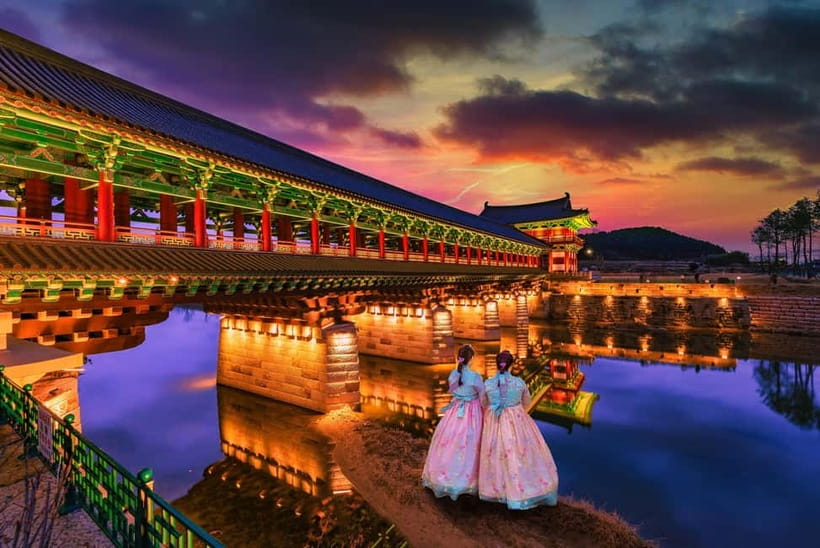
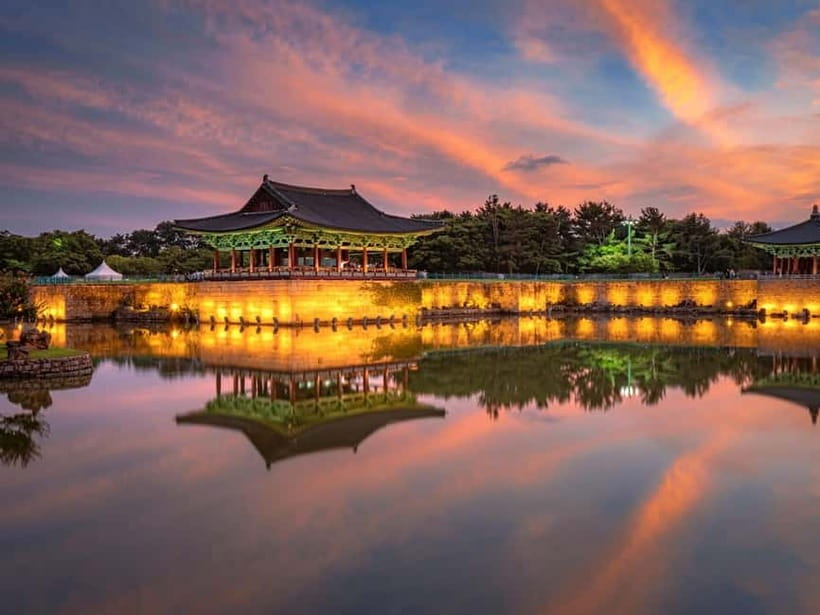
Gyeongju is Korea’s great open-air history book, and this day trip gives you a strong first chapter: a Buddhist temple, old village lanes, royal tombs, a modern cafe street, and two beautiful night views. Donggung Palace and Wolji Pond after sunset are the emotional high point, with the old buildings reflected in the dark water.
I like the smart route and the helpful guide service. You get the major Silla-era sights without working out a complicated train-and-bus plan, and guides such as Lucy, Rico, Bobby, Yoona, and Kang have been praised for clear explanations, photo help, and firm meeting times. The drawback is simple: 12 hours is a long day, and traffic can stretch the ride between Busan and Gyeongju.
Key details before you book
- Six major stops in one day: Bulguksa, Gyochon Village, Daereungwon, Hwangnidan-gil, Wolji Pond, and Woljeonggyo Bridge.
- The evening finish matters: Wolji Pond and Woljeonggyo Bridge are scheduled after the daytime sights, when lights and reflections change the mood.
- Three Busan pickup points: Choose KTX Busan Station Exit 1, Seomyeon Station Exit 12, or Haeundae Station Exit 5.
- Lunch is not included: You receive time for a meal at a local restaurant, but pay for food yourself.
- Good guide support: English, Chinese, and Korean service is available, with help on history, photos, toilets, food choices, and meeting points.
- Best for a first Gyeongju visit: The route covers the city’s most important sights efficiently, but it leaves limited time for a slower, more personal exploration.
Why Gyeongju makes a good day from Busan
Gyeongju was the capital of the Silla dynasty, and its old center feels very different from modern Busan. Instead of one compact palace complex, you find historic places spread through a city of parks, streets, temples, tombs, and ponds.
That spread is the reason a guided coach trip can make sense. On your own, you would need to connect several locations and watch the clock closely. This tour handles the long transfers and gives you a guide to explain what you are seeing, while still leaving some free time at each stop.
The trip begins from one of three useful points. KTX Busan Station works well if you are arriving by high-speed train or staying near the rail station. Seomyeon is a central choice, while Haeundae suits you if you are based near the beach district. The coach ride to Gyeongju takes about 90 minutes, though traffic can affect the timing.
At $64 per person, the price is reasonable for a 12-hour outing that includes transportation, guiding, and admission to Donggung Palace and Wolji Pond. You still need to budget for lunch and personal purchases, but the price avoids the cost and effort of arranging several separate transfers.
A few more Busan trips to weigh up
- From Busan: Gyeongju UNESCO World Heritage Guided Day Tour
★ 4.8 · 1,250 reviews - Gyeongju UNESCO World Heritage Guided Day Tour from Busan
★ 5.0 · 660 reviews - Old Korea Thousand History Tour of Gyeongju from Busan
★ 5.0 · 518 reviews
Bulguksa Temple begins the historical tour
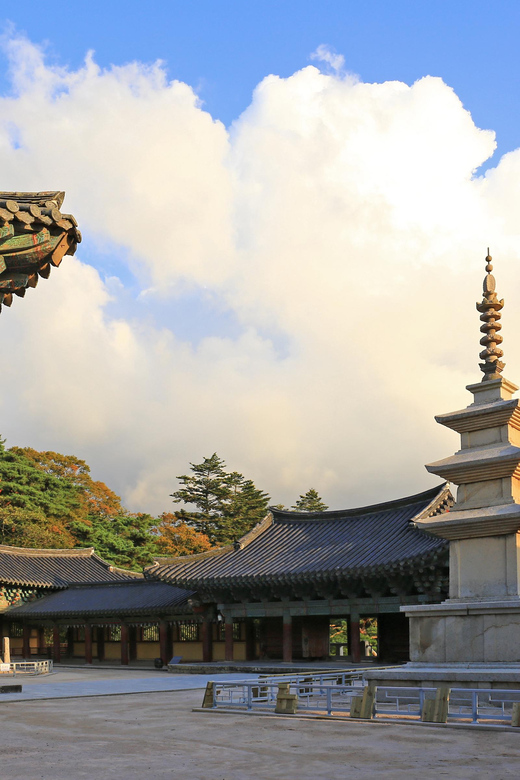
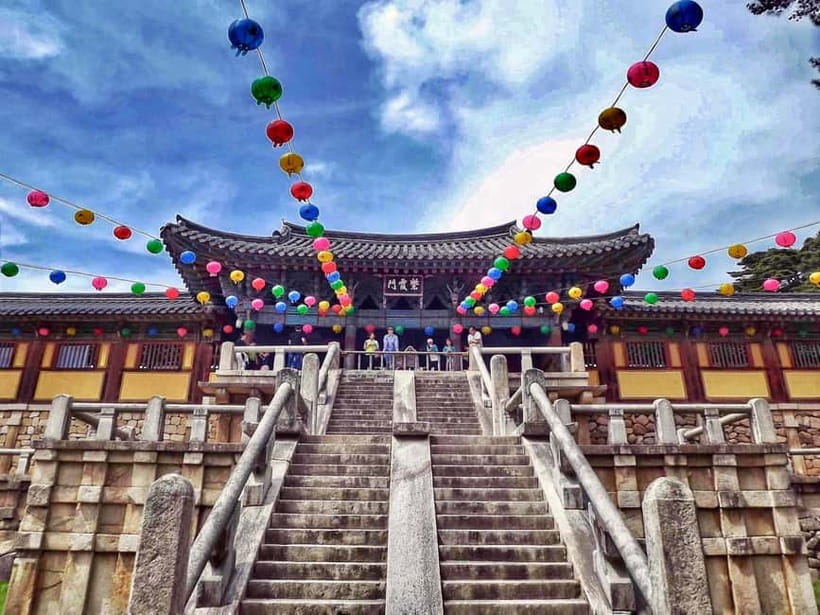
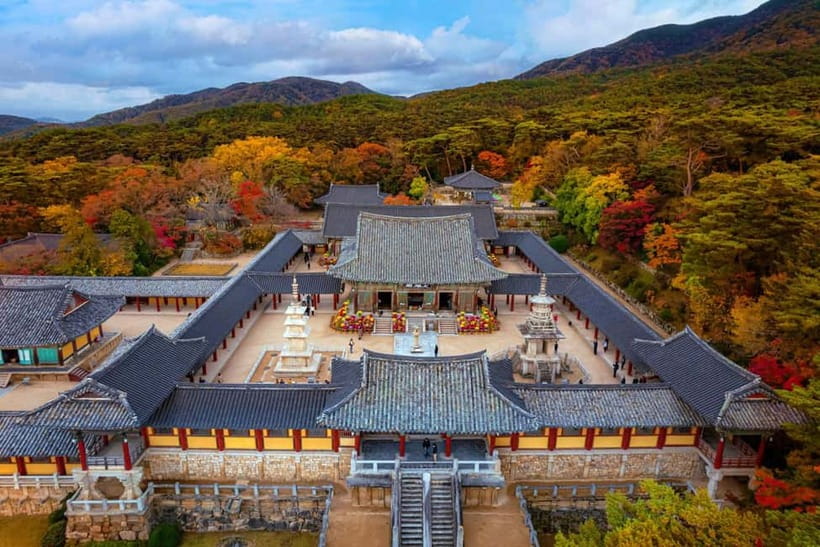
Bulguksa is the grand opening, and it earns its place. This UNESCO World Heritage site combines stone terraces, wooden halls, stairways, gardens, and carefully framed views. The setting is peaceful, but the architecture gives the visit real weight.
You have about 80 minutes here, enough for a guided walk and time to look around at your own pace. I like that the stop is not treated as a rushed photo pause. The guide can point out details you might otherwise pass without noticing, while you have room to take photographs and enjoy the grounds.
Bulguksa is also a good test of your footwear. You should bring comfortable shoes, since the day includes walking at several historic sites. The temple gardens and paths are part of the experience, not just a route between buildings.
The main limitation is time. Bulguksa deserves a longer visit if you want to study every hall and architectural detail. On this tour, you get a well-planned introduction rather than a slow architectural examination. For a first trip from Busan, that trade-off is fair.
Lunch gives the schedule a needed pause
Lunch follows at a local restaurant, with about an hour set aside. Meals are not included, so you pay directly for what you order. That arrangement gives you some choice and keeps the tour price down.
One useful feature is guide assistance with food options and meeting times. Bobby was especially praised for making sure the group knew what food was available, where the toilets were, and exactly when to return. Ken was also singled out for taking the group to a restaurant that would be easy to miss without local help.
Do not expect a long, leisurely restaurant stop. This is a sightseeing day with many scheduled visits. Still, an hour is enough to eat, rest your feet, and reset before the afternoon portion.
Gyochon Village shows a quieter side of Silla-era life
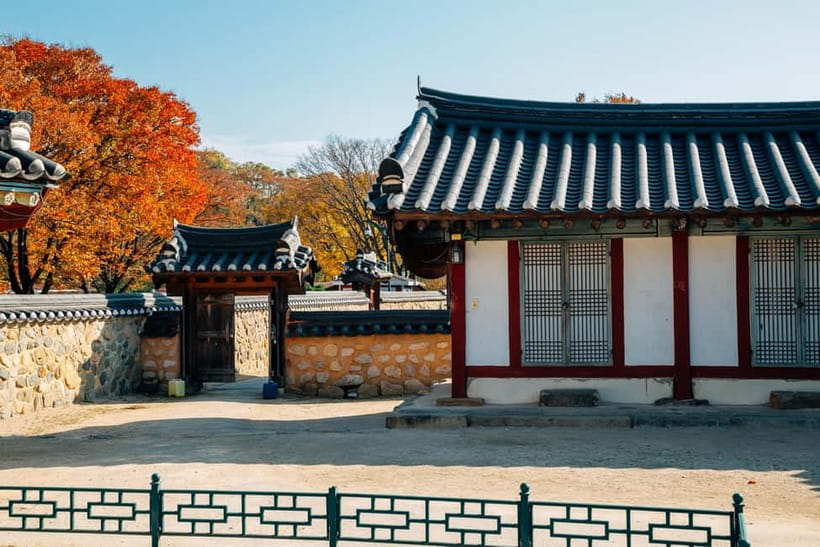
Gyeongju Gyochon Traditional Village shifts the focus from grand monuments to daily life and local customs. The village is presented as a living historic setting, where traditional buildings and older ways of life remain part of the scene.
You have roughly 100 minutes here, making it one of the more generous stops. That extra time matters. You can follow the guide for cultural context, then wander at a slower pace, look at the traditional homes, and take photographs without feeling that the bus is leaving in five minutes.
This is also a useful counterpoint to Bulguksa. The temple shows formal religious and royal-era design, while Gyochon helps you picture how people lived, worked, and organized community life.
The word village should not lead you to expect a completely untouched historic settlement. It is a sightseeing stop within modern Gyeongju. The value comes from the preserved character and the explanation provided by the guide, not from pretending the entire area belongs to another century.
Same country, a completely different kind of day:
- Busan: Gyeongju Guided Day Trip to Three Kingdoms Capital
★ 4.8 · 1,925 reviews - Small Group Full Day Busan Tour (Max 6 Pax)
★ 5.0 · 1,464 reviews - Busan Private Tour with licensed tour guide + private vehicle
★ 5.0 · 1,143 reviews - Busan: Coastal Treasures Beach Train, Culture Village & More
★ 4.7 · 832 reviews
Daereungwon turns the city into a royal cemetery
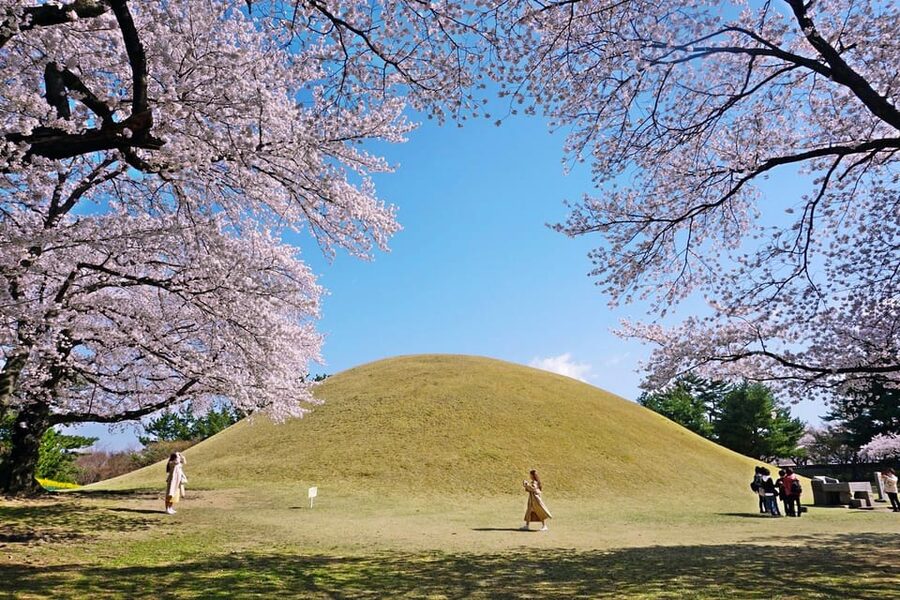
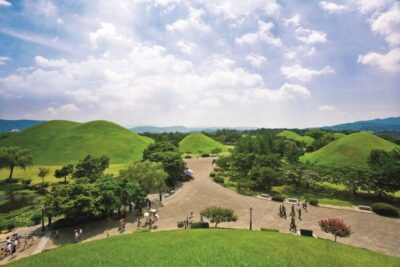
Daereungwon Tomb Complex is one of Gyeongju’s most distinctive sights. Large rounded tombs rise from green open spaces, marking the burial places of kings and nobles. The scale is striking because the tombs are not hidden away in a museum. They sit in the city as visible reminders of Silla power.
The visit lasts about an hour. Your guide can explain the purpose and age of the burial mounds, then give you time to walk among them. This is a place where the overall view matters as much as any single object. The grass-covered shapes and broad paths create a calm setting, but the tombs also make the city’s royal past feel unusually close.
You will want photographs here, especially when the light is softer later in the day. Keep in mind that Daereungwon is mainly an outdoor visit. Comfortable shoes and weather-appropriate clothing make a real difference.
Hwangnidan-gil adds cafes and local character
After the tombs, Hwangnidan-gil supplies a change of pace. This popular street has quaint cafes, small shops, and artisan goods in and around traditional-style buildings. It is a modern part of Gyeongju, but it uses the city’s older look rather than ignoring it.
The scheduled 50 minutes is enough for a walk, a drink, a small purchase, or a quick snack. It is not enough for a full shopping afternoon, so choose your priorities before you leave the coach.
I like this stop because it prevents the day from becoming a chain of monuments. You see how Gyeongju’s historic identity now works alongside cafes and small businesses. At the same time, the street can feel more commercial than Gyochon Village or Daereungwon. If your main interest is ancient architecture, this will be the least essential stop. If you want a sense of present-day Gyeongju, it earns its place.
Wolji Pond is the evening centerpiece
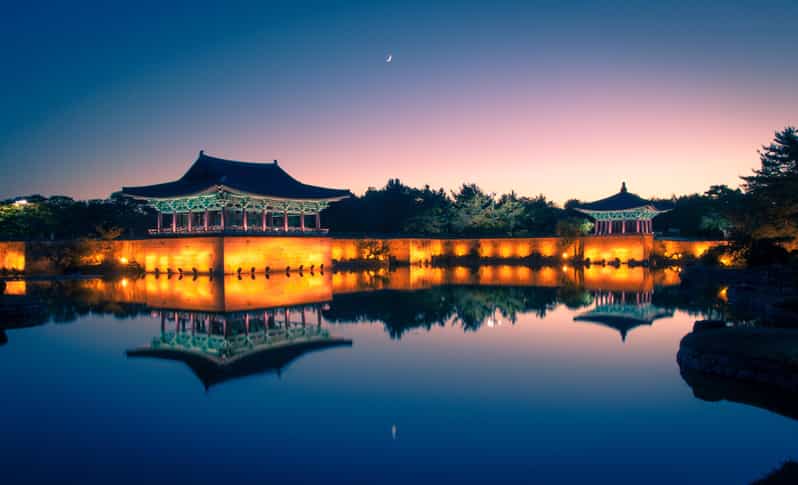
Donggung Palace and Wolji Pond arrive as daylight fades, and the timing is one of the tour’s best decisions. The site was once part of a royal garden. At night, the illuminated buildings reflect across the pond, creating a much more dramatic view than a daytime visit would provide.
You have about 40 minutes here. That is enough to walk to the main viewpoints, listen to the guide, and take photographs. It is also the point where the day’s earlier explanations begin to connect. After seeing the tombs, village, and temple, you can now picture the royal setting in which Silla court life unfolded.
The stop is called a photo stop as well as a guided visit, so photography is clearly part of the appeal. Take care not to spend all 40 minutes looking only through your phone. The reflections are best appreciated in person, and the mood changes quickly as the sky darkens.
This is one of the few places where the short time may leave you wanting more. If the group is large or the paths are busy, you will need to stay alert to the meeting time. Guides are careful about keeping people together, but you should not wander far from the agreed point.
Woljeonggyo Bridge closes the day beautifully
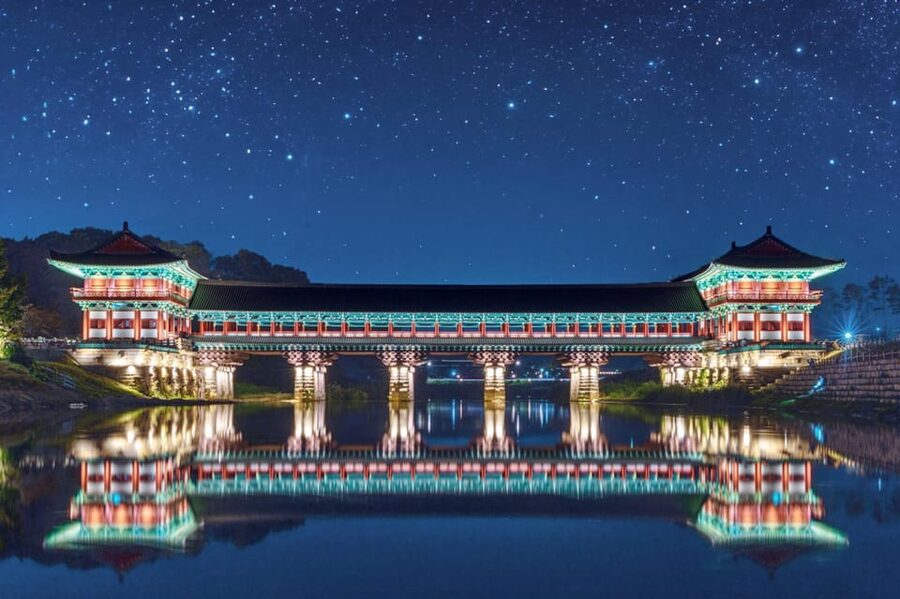
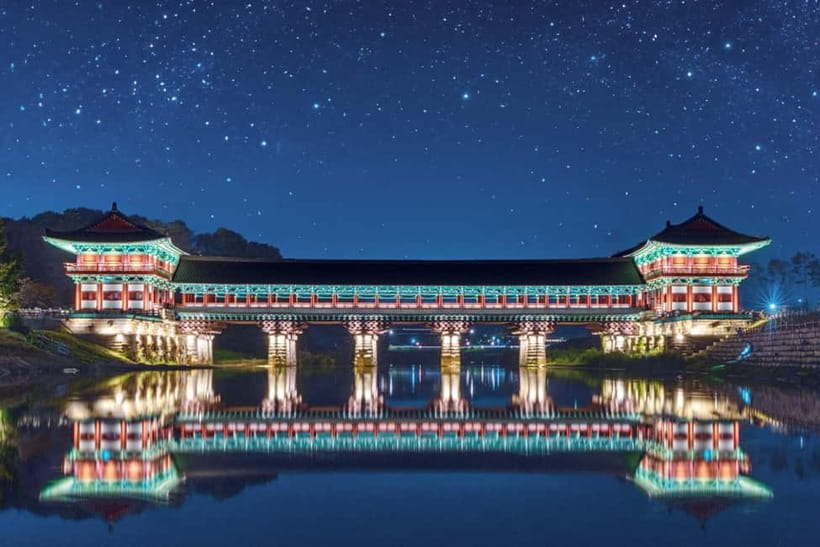
The final Gyeongju stop is Woljeonggyo Bridge, a reconstructed bridge associated with the Silla dynasty. It offers a graceful final view, especially under evening lights. The visit is brief, about 20 minutes, but the bridge is well suited to a short walk and a last set of photographs.
You may see it partly from the coach as the route approaches, then get time to walk across or near the bridge with the guide. Its strong lines and warm lighting make a clear contrast with the dark water at Wolji Pond.
The short stop is both a strength and a weakness. It keeps the day moving and gives you a memorable ending, but you will not have time for a long exploration of the surrounding area. The point is the view and the atmosphere, not an extended architectural study.
The return coach to Busan takes about 100 minutes. Drop-off is available at Haeundae Station Exit 5, KTX Busan Station Exit 1, or Seomyeon Station Exit 12. You can choose the most useful point for your evening plans, but remember that traffic and the full 12-hour schedule may make this a late return.
The guide service is a major part of the value
The quality of this tour depends heavily on the guide, and the guide role goes beyond reciting dates. The strongest examples include Lucy May keeping a full schedule moving, Rico suggesting good photo spots, Bobby organizing practical details, and Yoona explaining history in a friendly and clear way.
Other guide names associated with strong service include Juan, Vincent, Lee, Charles, Jun-a, Victoria, Sunny, Yakin, Kang, Ken, and Angela. Their reported strengths include answering questions, taking group photographs, sharing local tips, checking that nobody is missing, and allowing free time after the main explanation.
That balance is important. A guide who talks nonstop can make a historic site tiring, while too little explanation leaves you looking at attractive buildings without context. This tour appears designed around a short introduction followed by independent time, which suits most people.
English, Chinese, and Korean guiding is available, though the exact guide and language depend on the booking. Check your selected option carefully. Communication before departure can include meeting-point details and even photos of the pickup location, a useful touch when several station exits look similar.
Coach comfort helps, but the day still demands energy
The coach is a practical advantage. The outbound journey takes about 90 minutes, and the return takes around 100 minutes. Several people particularly liked the comfortable buses, with one describing seats that allow you to lean back and rest.
That matters because the tour covers a lot of ground. You are not simply sitting on a bus and looking out the window. You will walk through temple grounds, village lanes, tomb parks, shopping streets, palace grounds, and a bridge area.
The schedule is tight but not necessarily frantic. Some parts of the morning may feel rushed, while the later stops offer more breathing room. Guides are praised for clear instructions about where and when to meet, which is vital on a route with six visits.
Weather can change the experience. Rain may affect the outdoor sites, and cold weather can be especially noticeable during the night views. Bring comfortable shoes and dress for the forecast. If you plan to bring a stroller or wheelchair, notify the operator in advance. An infant can join free of charge, but no seat is provided.
Who should choose this Gyeongju day trip?
I would choose this tour if you are staying in Busan and want a strong overview of Gyeongju without changing hotels. It suits first-time visitors, history fans, photographers, and anyone who prefers having transport and timing handled by a guide.
It is also a good fit if you have only one free day and want both ancient sites and present-day Gyeongju. The route includes formal monuments, open tomb grounds, traditional streets, cafes, and evening scenery, so the day does not feel stuck in one period.
I would hesitate if you dislike early starts, long coach rides, or group schedules. You cannot linger for several hours at Bulguksa, browse every shop on Hwangnidan-gil, and wait as long as you like at the pond. Independent visitors who already know Gyeongju may prefer a slower private plan.
Cancellation is free up to 24 hours before departure, and you can reserve now and pay later. Those terms help if your Busan schedule is still shifting, but the key decision remains physical stamina. This is a full sightseeing day, not a gentle half-day outing.
Should you book it?
Book this tour if you want the efficient version of Gyeongju: the major Silla sights, a comfortable coach, a multilingual guide, and a carefully timed finish at Wolji Pond and Woljeonggyo Bridge. At $64, transportation and guiding make the cost fair, especially when you consider how spread out the sites are.
Skip it if your ideal day means lingering at one temple, shopping slowly, or setting your own pace. For most first-time visitors based in Busan, though, the combination of Bulguksa, royal tombs, traditional streets, and night scenery makes this a very useful introduction to Gyeongju.
FAQ
How long does the tour last?
The tour lasts 12 hours, including the coach journey between Busan and Gyeongju.
Where can I join the tour in Busan?
You can meet the group at KTX Busan Station Exit 1, Seomyeon Station Exit 12, or Haeundae Station Exit 5. The exact meeting point depends on the option you book.
Where does the tour finish in Busan?
Drop-off points are Haeundae Station Exit 5, KTX Busan Station Exit 1, and Seomyeon Station Exit 12.
Is lunch included?
No. Lunch is not included, but the schedule allows one hour at a local restaurant.
Which languages are available?
Guiding and staff support are available in English, Chinese, and Korean.
Are admission fees included?
Transportation and admission to Donggung Palace and Wolji Pond are included. Personal expenses and meals are not included.
What should I bring?
Bring comfortable shoes. The tour includes walking at temples, villages, tomb grounds, palace grounds, and the bridge.
Can infants join the tour?
Infants can join free of charge, but no seat is available for them. If you are bringing a baby stroller or wheelchair, inform the operator in advance.
Just added around Busan
- Real Busan Walking Experience★ 5.0 · 27 reviews
- 7 Highlights Gyeongju City One Day Small Group Tour from Busan★ 5.0 · 24 reviews
- Full Day Private car tour to UNESCO Gyeongju&Yangdong village★ 5.0 · 5 reviews
- Suncheon and Yeosu Daily Private Tour with Pickup Service★ 5.0 · 3 reviews
- Visit Busan night market and enjoy the night view of Busan harbor★ 5.0 · 6 reviews
- Busan Highlights Shore Tour – Cruise Return Assured★ 4.5 · 34 reviews
- Suncheon one day tour from Seoul, Busan or Suncheon★ 5.0 · 3 reviews
- 1 Day Private Busan Guided Tour★ 4.5 · 3 reviews
Historical Tours, compared.
Gyeongju UNESCO World Heritage Guided Day Tour
Read our review →
Gyeongju UNESCO World Heritage Guided Day Tour from Busan
Read our review →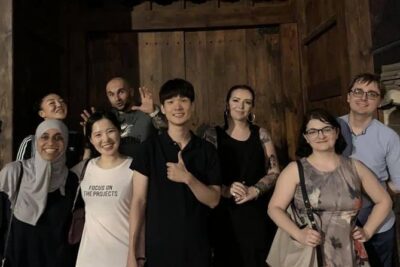
Evening Dark History, Folklore & Ghost Story Walking Tour
Read our review →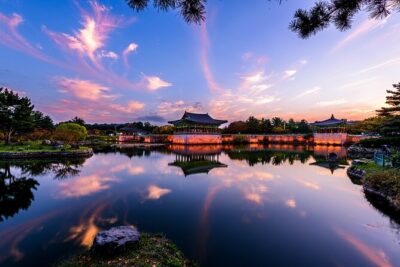
Old Korea Thousand History Tour of Gyeongju from Busan
Read our review →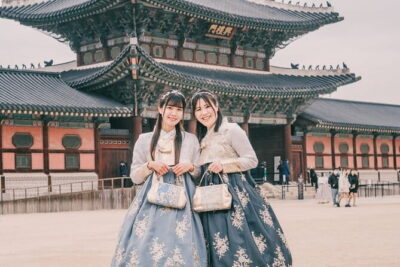
Hanbok Photoshoot and History Tour at Gyeongbokgung Palace
Read our review →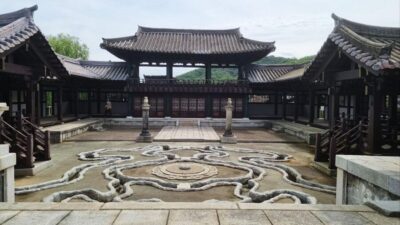
UNESCO Heritage Tour Including Bulguksa Temple
Read our review →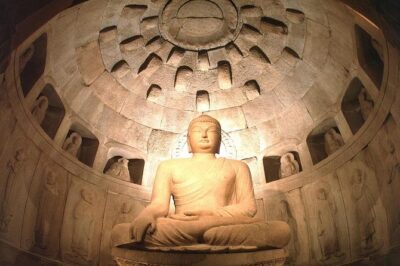
Gyeongju UNESCO World Heritage Sites and History Full-Day Tour with Lunch
Read our review →Browse the lists this tour appears in