
Reviewed · HISTORICAL TOURS
From Busan: Gyeongju Full-Day Historical Tour
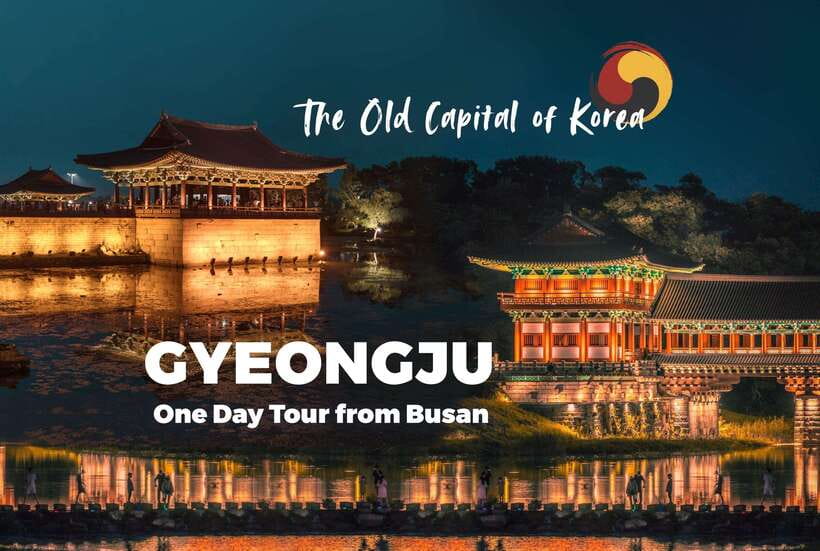
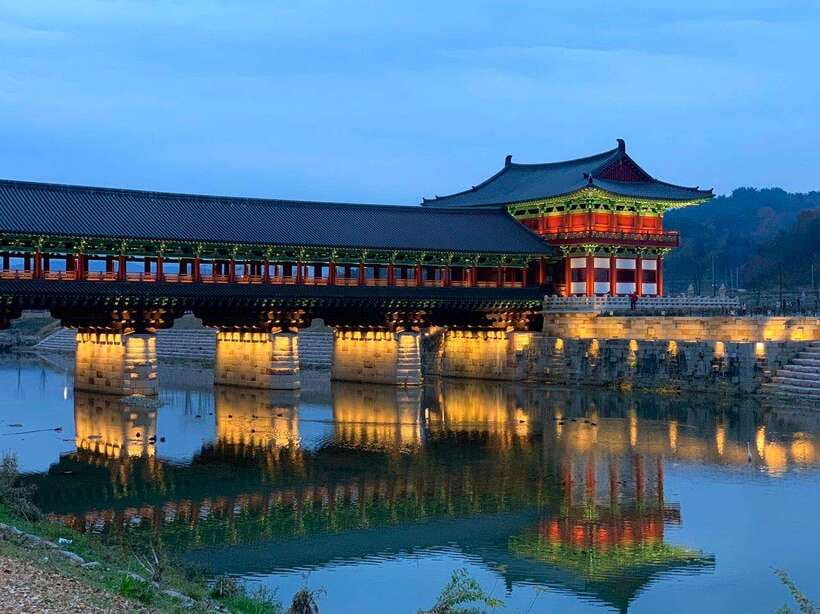
Gyeongju is Korea’s best place to see the Silla kingdom’s story in physical form. This full-day trip links a mountain temple, traditional houses, royal burial mounds, an ancient observatory, and a palace pond, giving you a broad look at the city without having to plan several separate visits. The most memorable stop is likely Donggung Palace and Wolji Pond, where the old palace buildings reflect in still water.
I like the way the tour combines major sights with Yangdong Traditional Village, a quieter stop that adds everyday Korean architecture to the royal monuments. I also like the included transport and entrance fees, which make the $60 price easy to understand. The catch is the length: this is a long day, and one review describes being in the van from roughly 11 a.m. until 9:30 p.m.
- Six important Gyeongju sights: Bulguksa, Yangdong Village, Daereungwon, Hwangridan-gil, Cheomseongdae, and Wolji Pond.
- A useful Busan escape: Central pickup and drop-off points remove the need to arrange separate intercity transport.
- A history-heavy day: Your guide explains the Three Kingdoms period and the later Unified Silla era as you move between sites.
- Some breathing room: The schedule includes a restaurant break and free time, not just nonstop guided walking.
- Plan for weather and walking: The tour runs rain or shine and is not suitable for wheelchair users or people with mobility impairments.
Why Gyeongju Makes a Good Day Trip from Busan
Busan is lively, coastal, and modern. Gyeongju feels much older and more open, with historic sites spread across a broad area. It was the capital of the Silla kingdom for centuries, and later became the center of Unified Silla after the three Korean kingdoms were brought under one rule.
That story is easier to grasp when you see the monuments in sequence. Bulguksa shows Silla religious ambition. Daereungwon shows how rulers and aristocrats were buried. Cheomseongdae points to science and astronomy, while Donggung Palace and Wolji Pond reveal the court’s taste for ceremony and beauty.
I find this kind of route useful if you have only one day. Gyeongju has enough sights for several days, but they are not all close together. A guided vehicle saves you from working out each connection, though you give up the freedom to linger wherever you wish.
Bulguksa Temple and the Silla Ideal
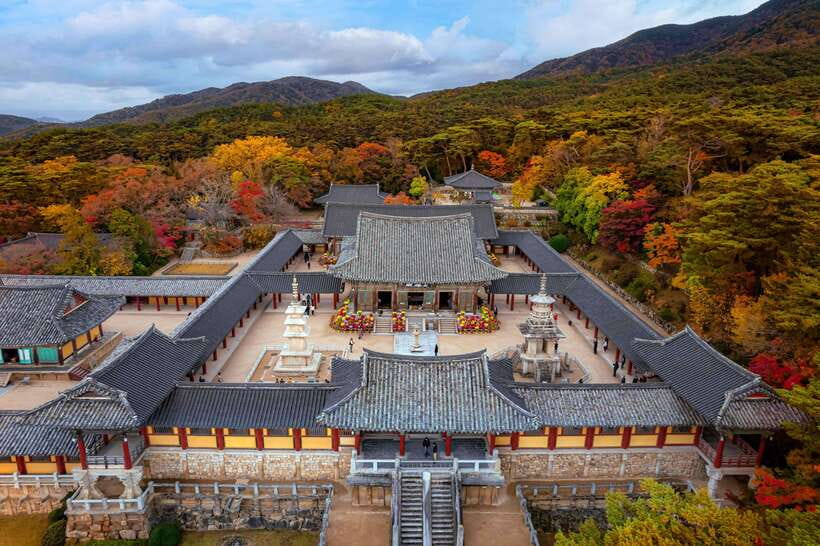
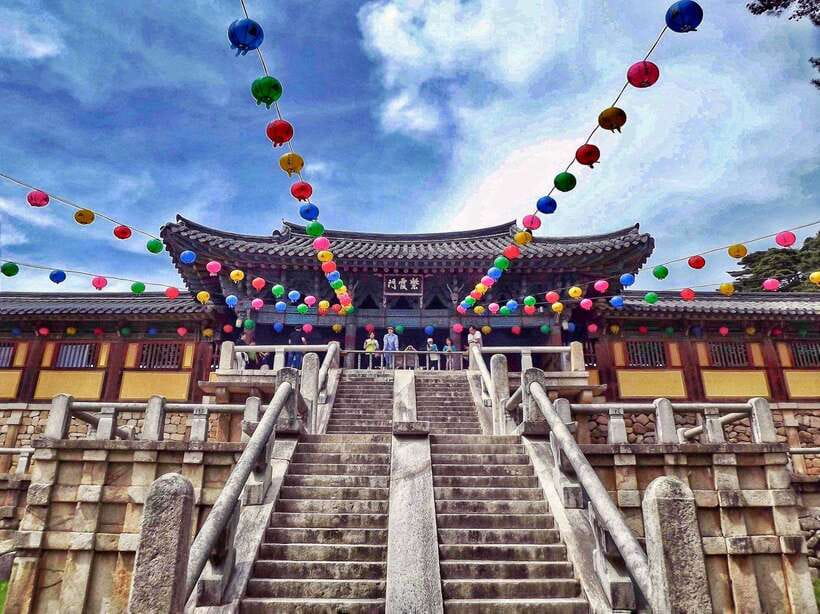
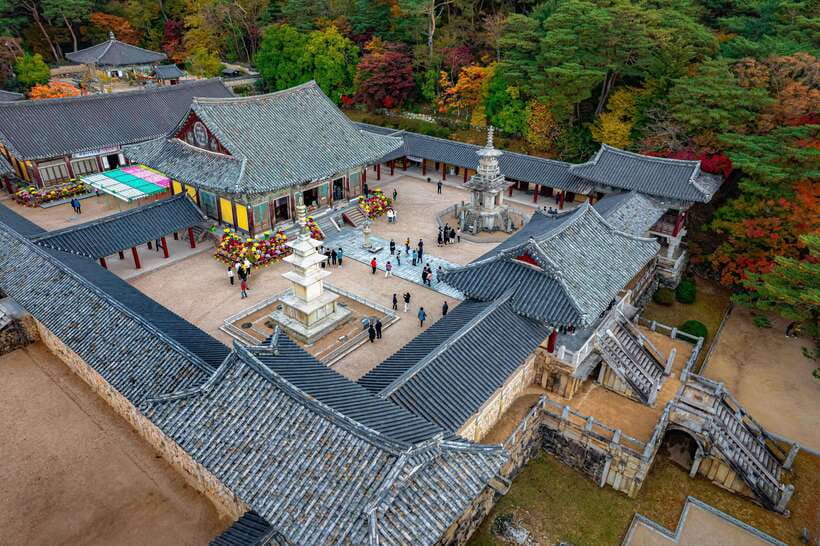
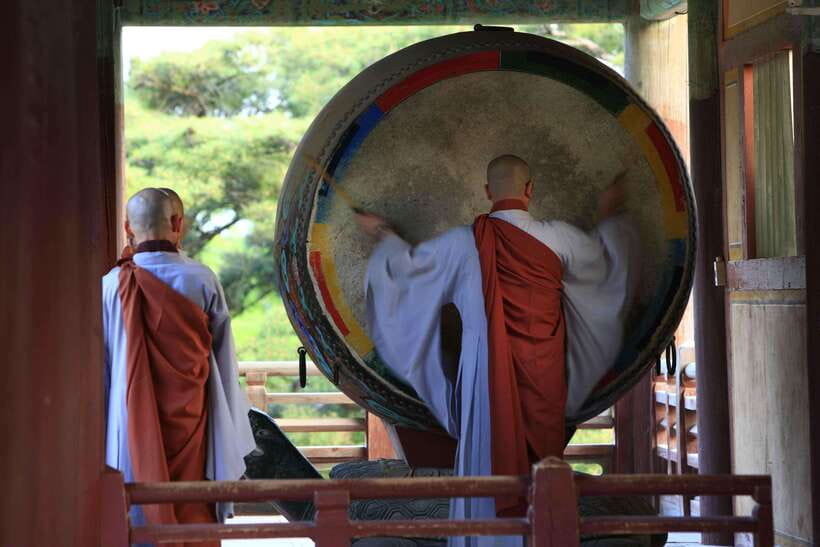
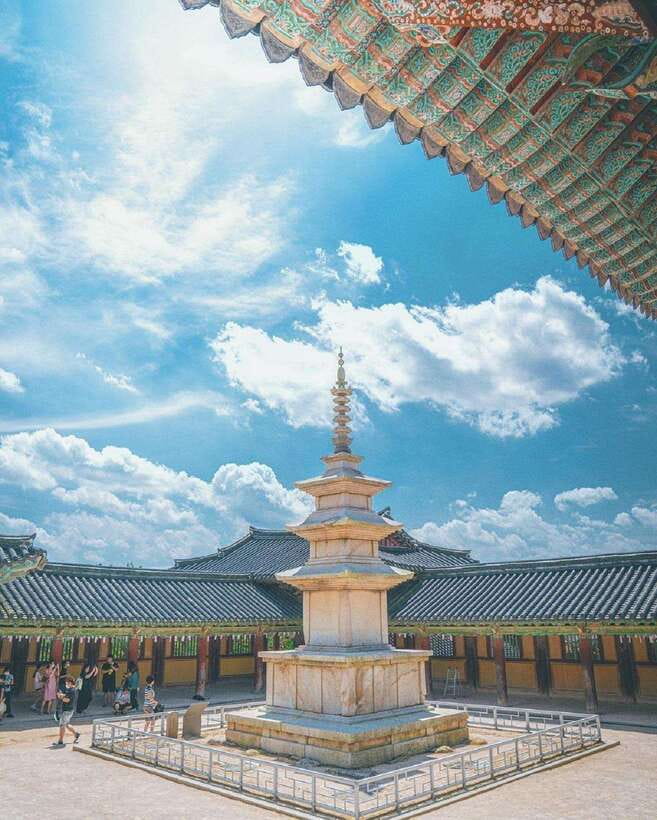
The day begins at Bulguksa Temple, a UNESCO-listed site and one of Korea’s major historic monuments. You get about 70 minutes here with the guide, enough to see the main setting and hear how the temple relates to Silla Buddhism and the surrounding hills.
The appeal is not only the individual gates, stairs, and halls. Bulguksa was designed as a meeting of architecture, faith, and nature. Your guide can help explain why the temple feels balanced rather than simply pointing out old buildings.
Seventy minutes is useful but not generous. You should expect a focused visit rather than a slow study of every corner. Wear shoes that are comfortable on uneven paths and steps. Sunscreen is sensible too, since parts of the visit are outdoors and the day includes several more open-air sites.
The temple can also be busy. That matters if you hope for quiet photographs or a calm pause in the grounds. Still, Bulguksa gives the tour a strong opening because it presents Silla culture in a way that is easy to see, not just read about.
A few more Busan trips to weigh up
- From Busan: Gyeongju UNESCO World Heritage Guided Day Tour
★ 4.8 · 1,250 reviews - Gyeongju UNESCO World Heritage Guided Day Tour from Busan
★ 5.0 · 660 reviews - Old Korea Thousand History Tour of Gyeongju from Busan
★ 5.0 · 518 reviews
Lunch and the Practical Middle of the Day
A one-hour stop at a local restaurant follows Bulguksa. Food and drinks are not included, so bring money for your meal and any refreshments.
This break is more important than it may sound. The tour covers ten hours, and the later stops involve more walking and outdoor time. Use lunch to rest your feet, refill water, and avoid turning the second half into a slog.
The exact restaurant and menu are not specified, so you should not book this expecting a particular dish or dining style. Think of it as a planned pause that keeps the schedule moving.
Yangdong Traditional Village and Old Hanok Houses
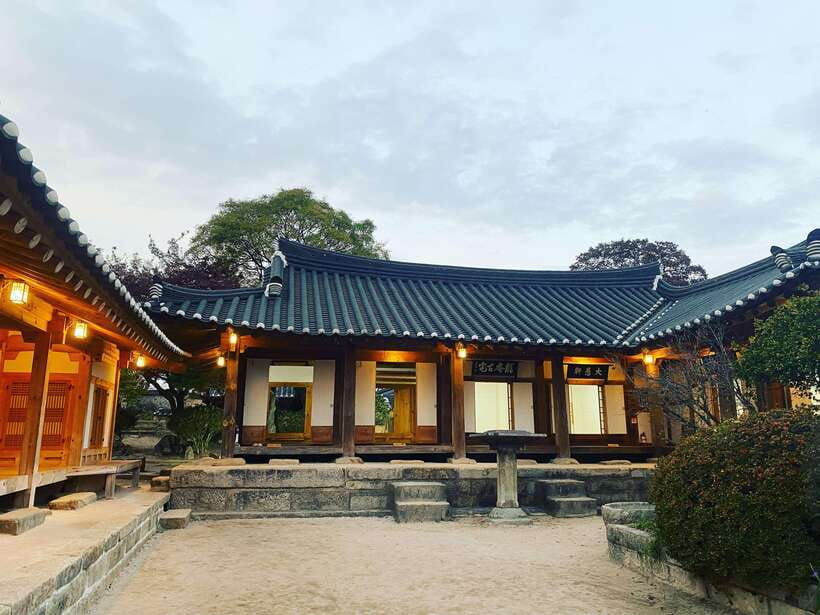
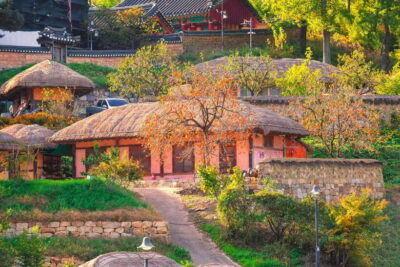
Yangdong Traditional Village adds a different side of Korean culture. Instead of palace remains and royal tombs, you see traditional hanok houses and a village setting with a more domestic feel.
The guided visit lasts about an hour. You can take photographs, look at the preserved buildings, and hear how traditional homes fit into the social structure of earlier Korea. This stop gives the day some variety, especially after the formal religious setting at Bulguksa.
I like this inclusion because many history tours focus only on kings and famous monuments. Yangdong helps you picture how status, family, and architecture worked together in a historic Korean community.
The tradeoff is distance and pace. The village is one more stop on an already full route, and you will not have unlimited time to wander down every path. If traditional houses are your main interest, you may want a separate visit with more time. On this tour, the village works best as a carefully chosen sample.
Daereungwon Tomb Complex and the Silla Royal Dead
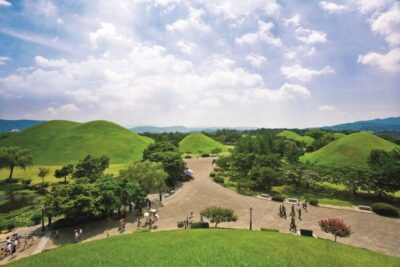
At Daereungwon, large grassy burial mounds mark the resting places of Silla monarchs, queens, and high-ranking aristocrats. The complex gives Gyeongju its distinctive visual character: rounded tombs rising from open ground instead of stone mausoleums packed into a city block.
You get about an hour with the guide. This is a good place to listen closely, since the size and layout of the tombs mean more once you understand who was buried there and why these mounds were built.
The tombs are visually simple from the outside, but that simplicity can be misleading. They represent the power and ceremony of the Silla court, and the surrounding area connects naturally with other historic sites in central Gyeongju.
You may find the visit less dramatic than Bulguksa or Wolji Pond. There are no grand interiors to explore across the whole complex, and much of the experience is walking, viewing, and listening. If you enjoy archaeology and historical context, it is a valuable stop. If you need constant visual action, this may be one of the quieter parts of the day.
Same country, a completely different kind of day:
- Busan: Gyeongju Guided Day Trip to Three Kingdoms Capital
★ 4.8 · 1,925 reviews - Small Group Full Day Busan Tour (Max 6 Pax)
★ 5.0 · 1,464 reviews - Busan Private Tour with licensed tour guide + private vehicle
★ 5.0 · 1,143 reviews - Busan: Coastal Treasures Beach Train, Culture Village & More
★ 4.7 · 832 reviews
Hwangridan-gil, Cheomseongdae, and Time to Roam
The schedule includes a short 30-minute break with time for photographs and your own exploring. The route also includes Hwangridan-gil, a street lined with carefully preserved buildings from the 1960s.
Hwangridan-gil offers a nostalgic change of pace. You can walk through an older urban setting before returning to the grander monuments. The appeal is in the atmosphere and the contrast: Gyeongju is not only ancient tombs and temples, but also more recent buildings that have kept an older visual character.
Cheomseongdae receives about 30 minutes for photographs. This historic astronomical observatory is one of Gyeongju’s most recognizable sights. The stop is brief, so expect an exterior visit and an explanation of its role rather than an extended museum-style presentation.
That short pause can be welcome after the longer guided stops. You can take photos, look around, and reset before the final major attraction. The schedule does not promise a long independent visit, so keep your expectations practical.
Donggung Palace and Wolji Pond After Sunset
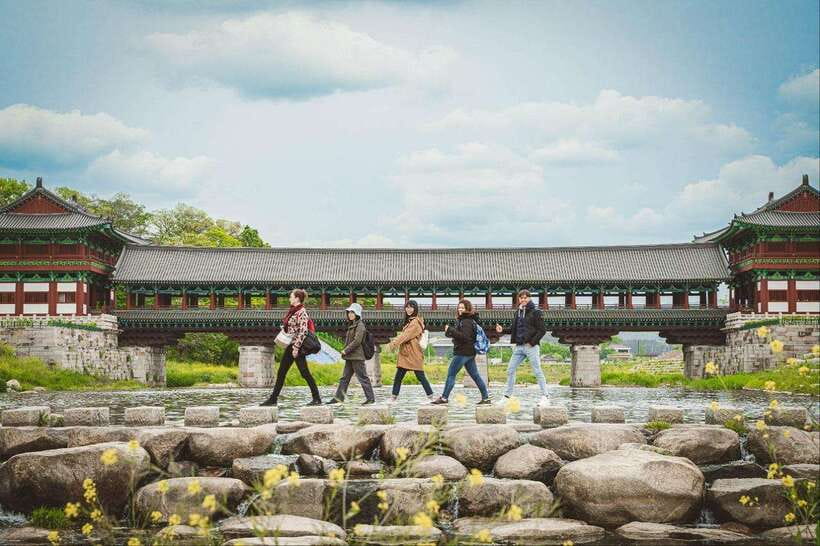
The final major stop is Donggung Palace and Wolji Pond, also known as Anapji Pond. The palace was built during the Unified Silla period, and the buildings were arranged beside a tranquil body of water used by the royal court.
This is the tour’s most atmospheric stop. The water reflects the palace structures, and the setting makes the connection between royal power and carefully planned beauty clear. Your guide leads you through the grounds and explains the site as you look at the remains and the pond.
The timing may be especially appealing if the visit reaches the late afternoon or evening, although the exact starting time depends on availability and the selected booking option. Do not assume you will get a completely quiet experience. One French guest found the places beautiful but felt crowds reduced the enjoyment.
That is a fair warning. Wolji Pond is popular, and crowded paths can make photographs and slow walks harder. Even so, it is a fitting final stop because it gathers many themes from the day: Silla court life, architecture, ceremony, water, and views.
What the $60 Price Really Covers
At $60 per person, the tour offers transport from a designated Busan meeting point, entry to the listed attractions, and an English guide. Chinese guiding is also listed among the included language options, though the additional tour information identifies English as the available language, so confirm your preferred language when booking.
The value comes from the amount of ground covered. You visit several major Gyeongju sites in one day without paying separate entrance fees or arranging a vehicle between them. For someone staying in Busan, that convenience can justify the cost.
Food, drinks, travel insurance, and personal spending are extra. The price also does not buy a private tour or unlimited time at each stop. You are paying for an organized route with a set schedule, shared transport, and historical commentary.
The main cost is your energy. A 10-hour day can stretch longer in practice when traffic or pickup arrangements are involved. One German guest described a day running from about 11 a.m. to 9:30 p.m. in the van, with everyone tired at the end. That does not make the tour poor value, but it does make it a better choice for a packed sightseeing day than a relaxed cultural outing.
Guides, Transport, and the Feel of the Day
You meet the group at one of three designated points in Busan and return to one of those central locations. The exact meeting point depends on the option you book, so check it carefully instead of relying on a familiar Busan landmark.
Transport is by a comfortable, spacious van or bus. The vehicle matters here because Gyeongju’s sights are spread out, and the road time gives you a chance to rest between visits. You also get views of the Korean countryside along the way.
The guiding is an important part of the experience. A guide named Bada is specifically associated with an informative and entertaining outing, while another booking included two friendly guides who gave many explanations. At the same time, one review notes some wandering during the drive, so the operation may not feel perfectly polished at every moment.
That mix is worth keeping in mind. The guides appear to be a major strength, but traffic, navigation, and group timing can affect the day. The best approach is to treat the schedule as a useful framework rather than a private, perfectly controlled itinerary.
Crowds, Weather, and Walking
This tour runs rain or shine. Bring comfortable shoes and sunscreen, and consider carrying water and a light rain layer even if the forecast looks good. Much of the sightseeing is outdoors, with paths around temples, villages, tombs, and ponds.
Crowds are another real factor. Popular Gyeongju attractions can feel less peaceful when tour groups and independent visitors arrive together. You may need patience at photo points, especially at Donggung Palace and Wolji Pond.
The tour is not suitable for wheelchair users or people with mobility impairments. The schedule includes walking across historic grounds and uneven outdoor areas, and the long day can be tiring even for people without mobility concerns.
If you have limited stamina, the combination of Bulguksa, Yangdong, Daereungwon, Cheomseongdae, and Wolji Pond may be too much in one outing. If you are comfortable walking and prefer seeing the major sights in one sweep, the full route makes good use of your day.
Who Should Book This Gyeongju Tour
I would choose this tour if you are based in Busan, have one free day, and want a guided introduction to Gyeongju’s major historic sites. It suits first-time visitors who value transport and context more than independent wandering.
It is also a good fit if you want a balanced route. You get religious architecture at Bulguksa, traditional homes at Yangdong, royal burial grounds at Daereungwon, an observatory at Cheomseongdae, and palace scenery at Wolji Pond.
I would hesitate if you dislike long vehicle days, crowded attractions, or fixed schedules. You may prefer visiting Gyeongju independently if you want to spend half a day at Bulguksa, linger around the tombs, or photograph Wolji Pond without watching the clock.
The tour has a rating of 4.1 from six reviews, with praise focused on friendly guides, clear explanations, variety, and good free-time periods. The reservations are equally clear: the day can be tiring, crowds can affect the main sights, and not every stop will feel equally exciting.
Should You Book It?
Book this Gyeongju tour if convenience is your priority and you want the city’s main Silla-era sights explained in one organized day. At $60, included transport and admissions make the price reasonable, especially when you are starting and ending in Busan.
Skip it if you want a slow, quiet visit or have mobility limits. For everyone else, bring good shoes, sunscreen, money for lunch, and enough energy for a long day. Free cancellation up to 24 hours before departure and the reserve-now, pay-later option also make it easier to fit into a changing Busan schedule.
FAQ
How long is the Gyeongju tour from Busan?
The tour lasts about 10 hours. One booking described being in the van from roughly 11 a.m. until 9:30 p.m., so the exact day can feel long depending on the departure and return timing.
What attractions are included?
The route includes Bulguksa Temple, Yangdong Traditional Village, Daereungwon Tomb Complex, Hwangridan-gil, Cheomseongdae, and Donggung Palace and Wolji Pond.
Is transportation from Busan included?
Yes. Transportation from one of the designated Busan meeting points is included, with return drop-off at one of the listed central points.
Is food included in the tour price?
No. Food and drinks are not included. The schedule includes a one-hour break at a local restaurant, so you should budget separately for lunch and refreshments.
What language is the tour conducted in?
The activity information identifies English as the live guiding language. English and Chinese guides are also listed among the inclusions, so confirm the language option when booking.
Is the tour suitable for wheelchair users?
No. The tour is not suitable for wheelchair users or people with mobility impairments. Comfortable shoes are recommended because the itinerary includes substantial outdoor sightseeing.
Just added around Busan
- Real Busan Walking Experience★ 5.0 · 27 reviews
- 7 Highlights Gyeongju City One Day Small Group Tour from Busan★ 5.0 · 24 reviews
- Full Day Private car tour to UNESCO Gyeongju&Yangdong village★ 5.0 · 5 reviews
- Suncheon and Yeosu Daily Private Tour with Pickup Service★ 5.0 · 3 reviews
- Visit Busan night market and enjoy the night view of Busan harbor★ 5.0 · 6 reviews
- Busan Highlights Shore Tour – Cruise Return Assured★ 4.5 · 34 reviews
- Suncheon one day tour from Seoul, Busan or Suncheon★ 5.0 · 3 reviews
- Busan Seafood Tour : Oyster village Tour with Oyster cuisines★ 5.0 · 3 reviews
Historical Tours, compared.
Gyeongju UNESCO World Heritage Guided Day Tour
Read our review →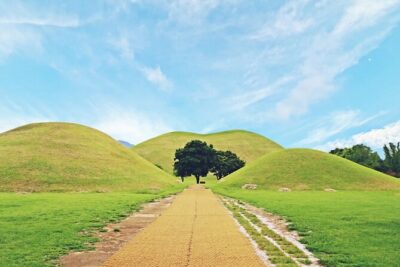
Gyeongju UNESCO World Heritage Guided Day Tour from Busan
Read our review →
Evening Dark History, Folklore & Ghost Story Walking Tour
Read our review →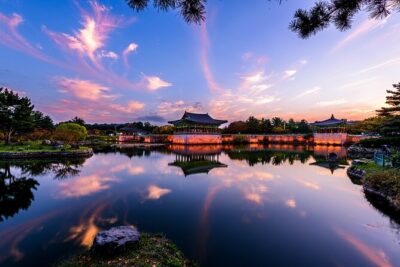
Old Korea Thousand History Tour of Gyeongju from Busan
Read our review →
Hanbok Photoshoot and History Tour at Gyeongbokgung Palace
Read our review →
UNESCO Heritage Tour Including Bulguksa Temple
Read our review →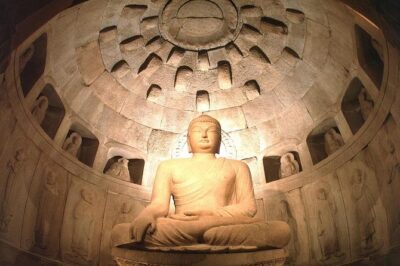
Gyeongju UNESCO World Heritage Sites and History Full-Day Tour with Lunch
Read our review →Browse the lists this tour appears in