Reviewed · GUIDED
Korean War Memorial Private Guided Tour
The most useful thing about this private Korean War tour is that it treats the conflict as both a civil war and an international war. At the War Memorial of Korea, guide Kichan Lee links the museum displays to the political breakup of Korea, the fighting itself, and the uneasy peace that followed.
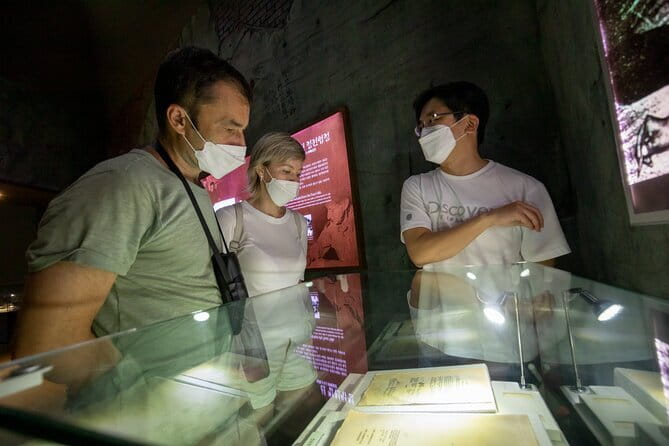
I like the one-group format, limited to your party of up to five, and the fact that the two-hour visit focuses on the museum’s Korean War Rooms I to III rather than trying to cover every gallery. I also like the added pictures and document copies, which give you something concrete to review after the tour.
The main consideration is the subject matter. This is a serious history lesson, not a light sightseeing stop. The museum is large, and two hours gives you a focused introduction rather than a complete visit, so you may want extra time afterward to explore on your own.
Key points to know before booking
- Korean War Rooms I to III: The tour concentrates on the War Memorial’s main galleries about the conflict.
- Kichan Lee as guide: Lee is an English-speaking history and peace studies specialist with experience connected to DMZ tours.
- Private group for up to five: Your party receives the guide’s full attention, with no larger group to slow questions or discussion.
- War and peace together: You examine the war’s origins, four stages of fighting, the armistice, and the creation of the DMZ.
- Extra visual material: The guide provides pictures and copies of documents to support the museum displays.
- Strong value for small groups: At $100 per group, the price works out well when shared by several people.
Why the Korean War needs a guided explanation
The Korean War can look simple in a museum: North Korea attacked, United Nations forces responded, China entered the war, and an armistice froze the front. The real story is harder to follow.
The conflict grew out of Korea’s liberation from Japanese rule and the division of the peninsula into rival political systems. The tour begins with the birth of South and North Korea, giving you the background needed to understand why the fighting began and why it became an international crisis.
That opening matters. Without it, the displays can feel like a string of battles and dates. With a guide, you can connect the political split, competing claims to legitimacy, foreign intervention, and the human cost of the war.
The experience also presents the Korean War from a peace-focused viewpoint. That does not mean avoiding military facts. It means asking what happened to civilians, how propaganda shaped public understanding, and why the armistice created an unstable pause rather than a final peace treaty.
This approach is especially useful if you know the war mainly through a few familiar names, such as the Incheon landing, the Chinese intervention, or the 38th parallel. Kichan Lee’s role is to place those events in order and explain how one stage of the war led to the next.
A few more Seoul trips to weigh up
- Private DMZ Tour (No Shopping): 3rd Tunnel & Suspension Bridge
★ 5.0 · 607 reviews - Seoul City Private Full-Day Tour Including Lunch
★ 5.0 · 469 reviews - Private DMZ the 3rd Tunnel Tour from Seoul (optional Red Bridge)
★ 5.0 · 429 reviews
Inside Rooms I to III at the War Memorial
The tour’s single stop is the War Memorial of Korea at 29 Itaewon-ro in Yongsan District. That may sound modest, but the museum is large enough that a focused route is a real advantage.
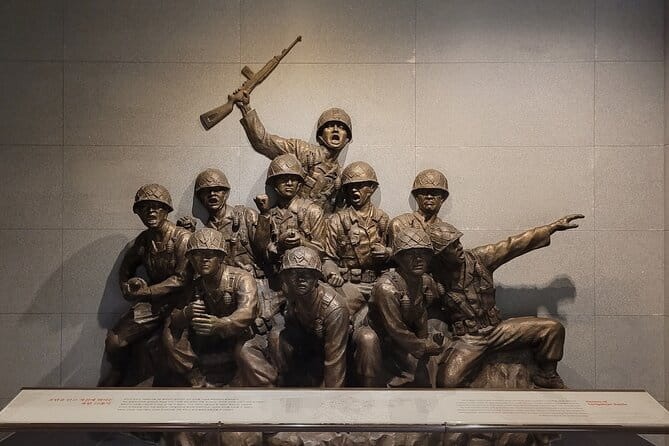
The Korean War Rooms I to III are the heart of the visit. Here, your guide explains the origins and background of the war, then follows the conflict through four broad stages. You are not simply shown objects and left to guess why they matter. The guide uses the displays as starting points for a larger explanation.
Expect the visit to move between military events and political context. Maps, photographs, and museum exhibits become easier to read when you understand the changing war situation. A private guide can also adjust the pace if your group wants to ask about a particular battle, country, leader, or policy.
The museum itself is free to enter for this activity, so your $100 payment is for the guide and the private format rather than an admission ticket. That distinction is worth noting when you compare this tour with a self-guided visit.
A self-guided visit will cost less, but it may leave you with unanswered questions. The displays cover a difficult period with many names, locations, and shifting alliances. Two hours with Kichan Lee is designed to give those details a clear order.
Four stages of war, not just a list of battles
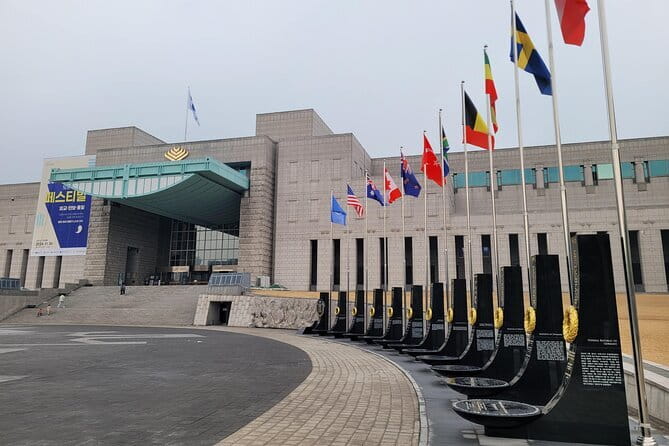
One of the tour’s strongest features is its attention to the four stages of the war situation. The supplied details do not name each stage separately, so you should not expect a printed battle-by-battle syllabus. Instead, the guide uses the museum’s displays to show how the war changed over time.
That structure helps you understand momentum. The conflict did not remain the same from its opening attack to the armistice. Front lines moved, outside powers became more involved, and the political aims of the fighting shifted.
The guide also looks at the conflict as both civil and international. This is a useful distinction. Korea’s internal division shaped the war, but the involvement of outside powers changed its scale and consequences.
You can ask questions throughout the visit because the tour is private. That makes it a good fit if your group wants to spend more time on propaganda, civilian suffering, the role of the United States and United Nations forces, or China’s involvement. The guide’s background in Korean history, peace activism, and DMZ tours supports that kind of conversation.
The experience is not designed as a quick photo stop. It asks you to pay attention, compare viewpoints, and think about how historical memory is formed. If you prefer a fast-paced tour with many attractions, this may feel slow. If you want the story behind the exhibits, the pace is a strength.
Looking past official museum displays
The tour promises stories and context that the museum exhibitions do not fully explain. That is important because a national war museum necessarily presents history through an official institutional lens.
Kichan Lee’s focus on propaganda and the difference between public messaging and historical evidence adds another layer. You are encouraged to ask what a display emphasizes, what it leaves out, and how wartime governments shaped the information people received.
This does not mean the guide treats every account as equally reliable. The value is in hearing how competing claims can be tested against events, documents, and broader context. Several parts of the experience are built around making a complex subject understandable without flattening it into a simple good-versus-bad story.
The guide also gives attention to the social cost of the war. Military history often focuses on commanders, weapons, and front lines. A peace studies perspective brings the effects on ordinary people back into the conversation.
That balance is one reason this tour may suit history students, educators, veterans’ families, and anyone trying to understand present-day relations between North and South Korea. It also helps first-time visitors who find the museum’s scale and subject matter difficult to organize alone.
Same country, a completely different kind of day:
- Best DMZ Tour Korea from Seoul (Red Suspension Bridge Optional)
★ 5.0 · 41,422 reviews - DMZ Tour: 3rd Tunnel, Option(Suspension Bridge, Boat) from Seoul
★ 5.0 · 21,373 reviews - DMZ tour south Korea from Seoul (NK experience hall, defector)
★ 5.0 · 20,599 reviews - Seoul: DMZ Tour with Optional Suspension Bridge
★ 4.8 · 5,277 reviews
The armistice and the birth of the DMZ
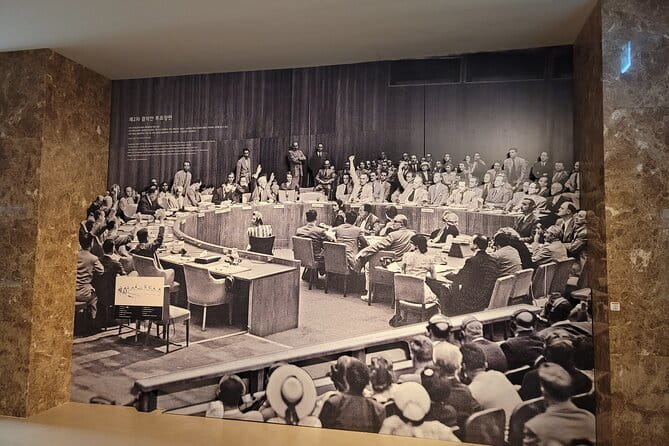
The final part of the tour follows the conflict toward the armistice and the creation of the Demilitarised Zone. This gives the museum visit a direct link to the modern Korean Peninsula.
The armistice did not resolve every political question. It stopped active fighting and created a divided zone, but it did not produce a permanent peace agreement. Understanding that difference is essential before visiting the DMZ or reading current news about North and South Korea.
A guide with experience in DMZ tours can help you see the memorial as more than a record of an old war. The armistice arrangement still shapes borders, security, politics, and daily life. The tour does not take you to the DMZ, but it provides useful preparation for a later visit.
One person who took the museum tour booked a private tour to Cheorwon the following day. That option is not part of this $100 experience, and you should not assume it will be included. Still, the connection shows how this museum visit can serve as a starting point for learning about Korea’s border areas and peace efforts.
What makes the private format worth $100
The listed price is $100 per group of up to five people. For one person, that is a significant guide fee. For five people, it comes to $20 per person, before any optional tip.
That is a fair value if you want explanation rather than simple entry. The museum admission for this activity is free, but the guide provides a structured route, English commentary, answers to questions, and supplementary pictures and document copies.
The private format also matters. You are not sharing the guide with a large bus group, and the tour can respond to your interests. If one person in your party already knows the military side of the war, you can spend more time on civilian life and politics. If your group wants dates and battle movements, you can ask for that instead.
The two-hour length keeps the cost and commitment manageable. It fits well into a Seoul day that includes other Yongsan or Itaewon sights. Still, the short duration means you should not expect every part of the War Memorial to receive attention.
If you want to see the entire museum, plan additional independent time. The guided route is focused on the Korean War Rooms, not the complete institution.
Practical planning for your Seoul visit
The stated starting point is 8-66 Yongsan-dong 1(il)-ga in Yongsan District, while the end point is the lobby of the War Memorial of Korea at 29 Itaewon-ro. Because two location details are provided, check your confirmation carefully and allow enough time to find the group inside the museum area.
The activity is offered with a mobile ticket. Confirmation arrives when you book, and public transportation is nearby. You should still arrive on time, especially because the tour lasts only about two hours and the guide may be moving through the galleries when you enter.
One past booking had a very late arrival, and the guide kept the person updated so they could join the group inside the exhibition room. That is reassuring, but it is not a reason to plan on arriving late. The tour’s value depends on a continuous explanation, and missing the opening background can make the later sections harder to follow.
The museum visit requires a moderate level of physical fitness. You should be comfortable walking through exhibition rooms for two hours. Service animals are allowed.
Tips are not included. All fees and taxes, along with the professional English-speaking guide, are included in the listed price. Free cancellation is available until 24 hours before the start time. A cancellation or change made less than 24 hours before the start time is not accepted for a refund.
Who will get the most from this tour
I would recommend this experience to you if the Korean War is a major reason for visiting the War Memorial. It is also a strong choice if you have tried reading about the conflict and found the sequence of events confusing.
The tour should suit:
- Adults and older students who want political and military context
- Visitors preparing for a separate DMZ visit
- Small families or friend groups that prefer private discussion
- People interested in peace activism and civilian consequences
- Anyone who wants an English-speaking guide with specialist training
It may not suit you if you want a broad museum tour covering every period of Korean military history. It may also be too serious if you are looking for a casual attraction with only a few quick facts.
The guide’s English is described as excellent, and the strongest praise centers on clear explanations, broad knowledge of Korean history, World War II, and politics, and the ability to answer questions directly. That matters here because the topic includes sensitive political claims and competing versions of events.
Should you book the Korean War Memorial tour?
Book this tour if you want the War Memorial to make sense, not just look impressive. The private group format, focused two-hour route, and Kichan Lee’s background offer more value than wandering through the Korean War Rooms without context.
I would especially choose it before a DMZ visit, or early in a Seoul stay if modern Korean politics and history matter to you. The $100 price is easiest to justify for two to five people. Solo visitors should consider how much they value personal guidance, since the museum itself does not charge admission for this route.
Skip it if you want a quick, self-guided museum visit or if your main interest lies elsewhere in Seoul. But for a clear, serious explanation of Korea’s division, the war, the armistice, and the DMZ, this is a focused and useful choice.
FAQ
Where does the Korean War Memorial tour take place?
The activity takes place at the War Memorial of Korea in Yongsan District, Seoul. The museum address provided for the end point is 29 Itaewon-ro.
How long does the tour last?
The guided visit lasts approximately two hours.
What part of the museum does the tour cover?
The guide focuses on Korean War Rooms I, II, and III, described as the main highlights for understanding the Korean War.
Is this a private tour?
Yes. Only your group participates, with a maximum of five people per group.
Who leads the tour?
The tour is led by a professional English-speaking guide. The guide identified in the experience information and detailed feedback is Kichan Lee.
What is included in the price?
The price includes all fees and taxes, a professional English-speaking guide, and complementary pictures and copies of documents.
Is admission to the War Memorial included?
Admission for the museum stop is listed as free. The $100 charge covers the private guided experience rather than a museum admission ticket.
Can I cancel for a full refund?
Yes. You can cancel at least 24 hours before the experience start time for a full refund. Cancellations or changes made less than 24 hours before the start time are not accepted for a refund.
Just added around Seoul
- Private tour guide service in Seoul, Korea★ 5.0 · 6 reviews
- Alpaca, Nami, Petite Fr, Italian Village, Garden of Morning Calm★ 3.5 · 5 reviews
- Gyeongbokgung palace,seoul with gigibebe hanbok rental★ 4.5 · 12 reviews
- Gyeongju UNESCO Sites Tour by KTX train; The Museum Without walls★ 4.5 · 11 reviews
- Private day trip to Korean Folk Village & Dae Jang Geum Park★ 5.0 · 7 reviews
- Private tour Lotte World,Tower,Aquarium(All Tickets are included)★ 5.0 · 12 reviews
- Full Day Private Seoul Tour for foodies★ 5.0 · 3 reviews
- Seoul Private Custom Walking Tour with A Guide (Private Tour)★ 4.5 · 28 reviews
Guided, compared.
Gyeongju Guided Day Trip to Three Kingdoms Capital
Read our review →
Gyeongju UNESCO World Heritage Guided Day Tour
Read our review →
Busan Private Tour with licensed tour guide + private vehicle
Read our review →
DMZ Guided Tour with Suspension Bridge / Gondola from Seoul
Read our review →
Gyeongju UNESCO World Heritage Guided Day Tour from Busan
Read our review →
Downtown Seoul Guided Food & Market Tour with 8+ Local Tastings
Read our review →